
Top 2026 NFL Draft Prospects Falling Down Boards
An NFL draft evaluation is a constantly evolving process. Each and every step of the cycle provides an opportunity for a prospect to improve or hurt his status. Thus, rankings must reflect new information.
The Bleacher Report Scouting Department starts the site's evaluations in August and continues until the draft itself begins. Players must always respond to what's in front of them, because the NFL and everyone else are watching closely.
Since the end of the 2025 campaign, prospects have had opportunities to compete in all-star festivities and possibly attend the NFL combine. In certain cases, injuries have occurred or come to light after playing through them during the most recent campaign. Evaluators have also gone back to the tape when necessary to reassess what they may or may not have seen after absorbing new information.
Upon the conclusion of college football's National Championship Game, B/R scouts have since taken stock of where their position groups stand, with a handful of prospects sliding significantly. The following five examples may have been highly regarded, but they haven't done nearly enough in recent weeks to warrant the same consideration as where they began the official predraft process.
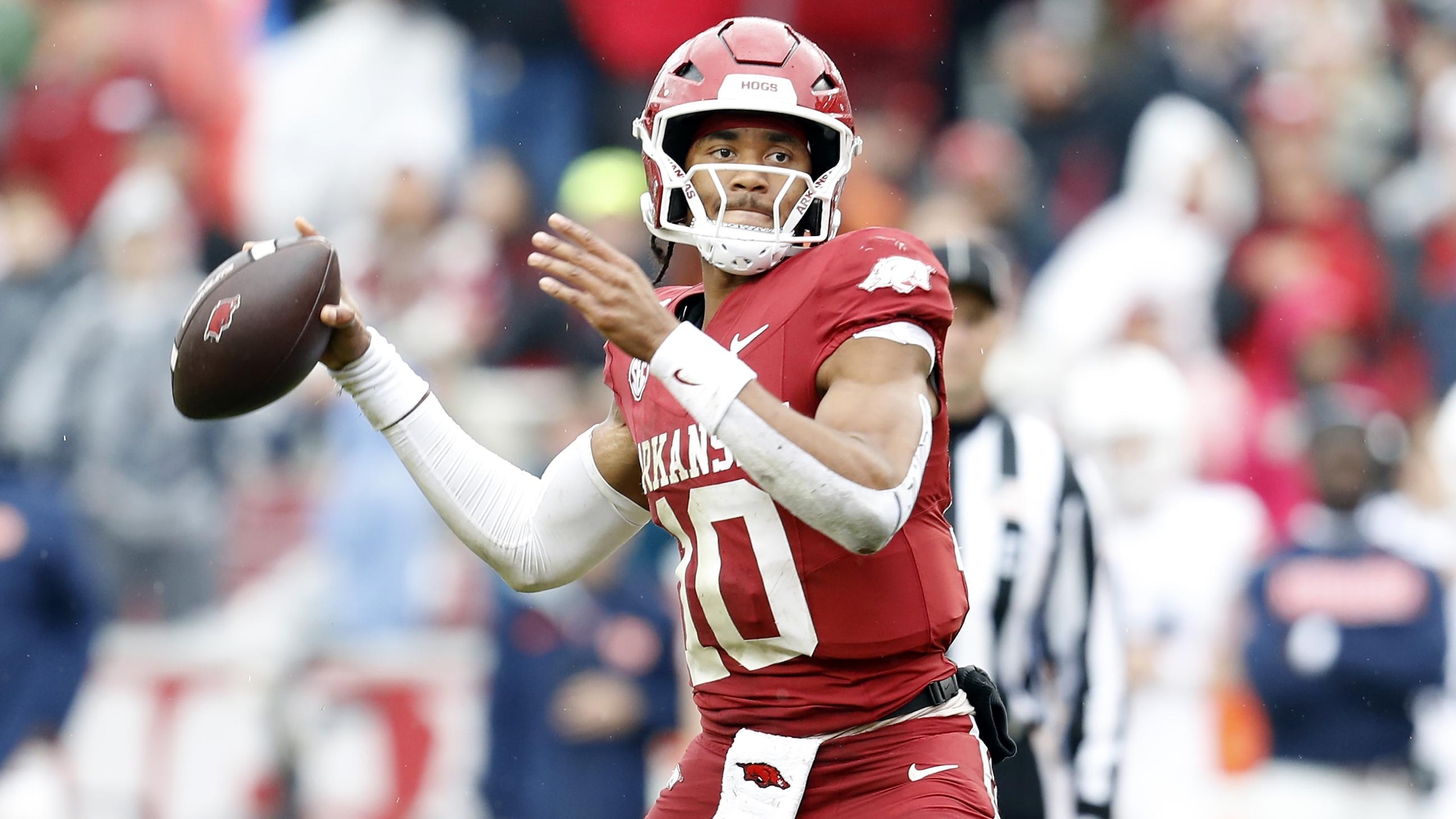
QB Taylen Green, Arkansas
1 of 5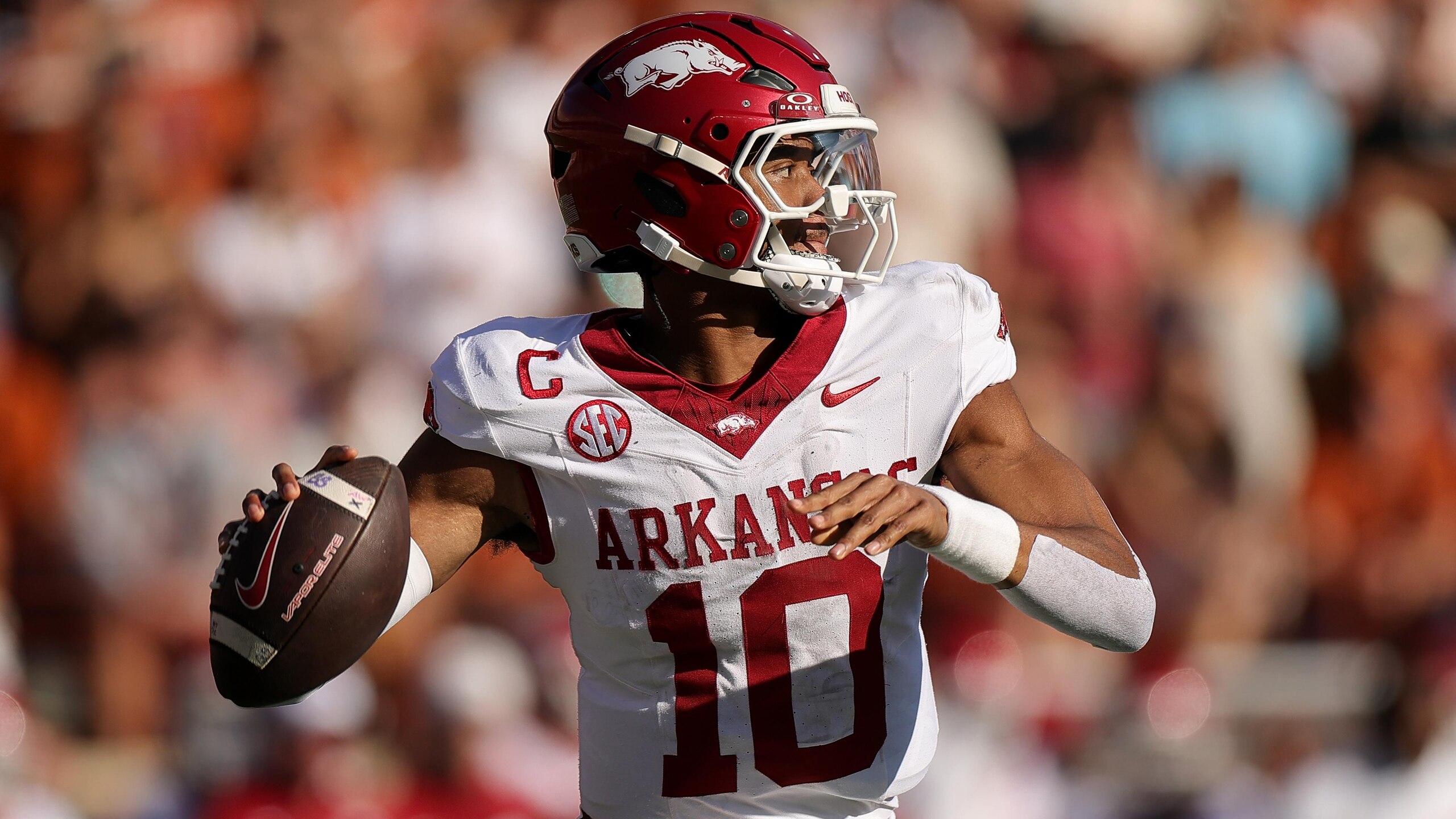
Physically, Taylen Green has everything an NFL team wants in a modern quarterback.
The 23-year-old prospect stands 6'6", weighs 227 pounds, throws to all three levels, and adds elite athleticism, with a 4.36-second 40-yard dash, 43.5-inch vertical, and 11'2" broad jump. Green can be weaponized by a creative offensive mind.
At the same time, the four-year starter remains far too inconsistent with his mechanics and accuracy.
The NFL combine's athletic testing often gets onlookers irrationally excited about a prospect's potential without taking into account the entire workout. In Green's case, he tested off the charts athletically, yet he struggled to consistently deliver the football during his throwing session.
While watching him closely, one dropback would be clean, with the Boise State transfer delivering the ball confidently and in stride. Conversely, multiple other attempts were airmailed throughout the workout. The performance served as an extension of a disappointing Senior Bowl week, in which Green was scattershot throughout practices.
The incoming quarterback's ability is obvious. Green must work to reach a point where he's mechanically sound enough, particularly with his footwork and long release, to make the simple throws on a regular basis. Right now, he's not that player.
Some NFL team may still fall in love with Green's upside, but he should be viewed strictly as a developmental project.
WR Denzel Boston, Washington
2 of 5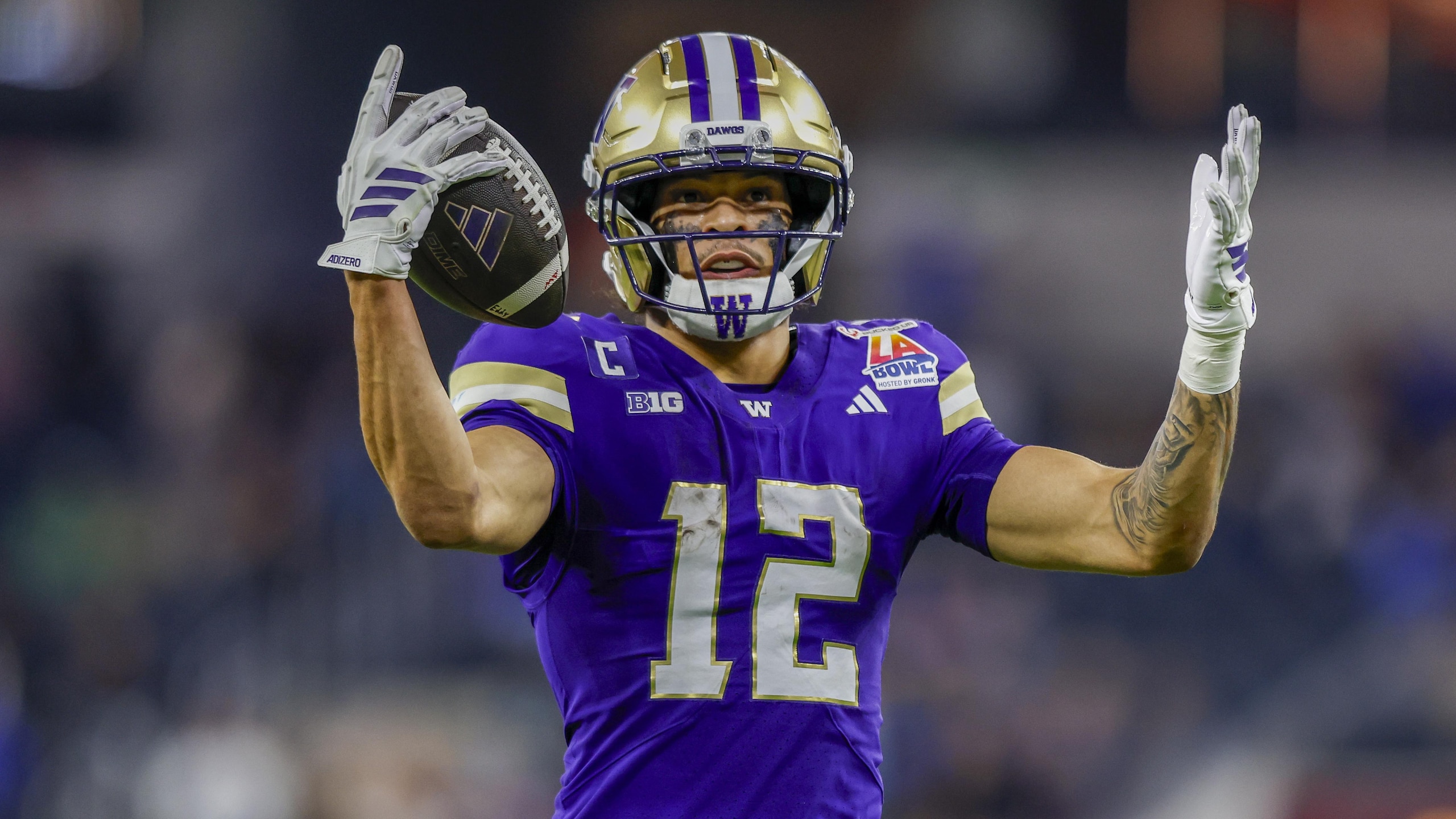
Big-bodied wide receivers aren't expected to post great straight-line speed or highly explosive testing, at least compared to the smaller, more nimble counterparts. However, a level of lower-body flexibility and urgency within an individual's route-running is expected to predict whether that target can create separation against NFL coverage.
At worst, a big target must prove to be a reliable option, even if he's not going to create much after the catch.
In the case of Denzel Boston, his NFL combine workout opened eyes, but not in a good way. The 6'4", 212-pound option didn't show the level of explosiveness expected during what little athletic testing he did participate in, particularly when it comes to a receiver who thrived in contested-catch situations, at least at the collegiate level. Furthermore, he unexpectedly dropped some passes during his positional workout.
Boston was once viewed as a first-round option because he has the traditional build of an X-receiver. His size and ability to body off defenders do create a floor for what he can contribute. The primary question is whether he has the athletic traits and reliability to defeat coverage at the highest level when cornerbacks are better overall athletes, quicker to react, and far more crafty with their technique.
In another loaded wide receiver class, organizations can go in multiple different directions to select a prospect who presents a skill set tailor-made to play in the NFL or has far more growth potential.
OL Kage Casey, Boise State
3 of 5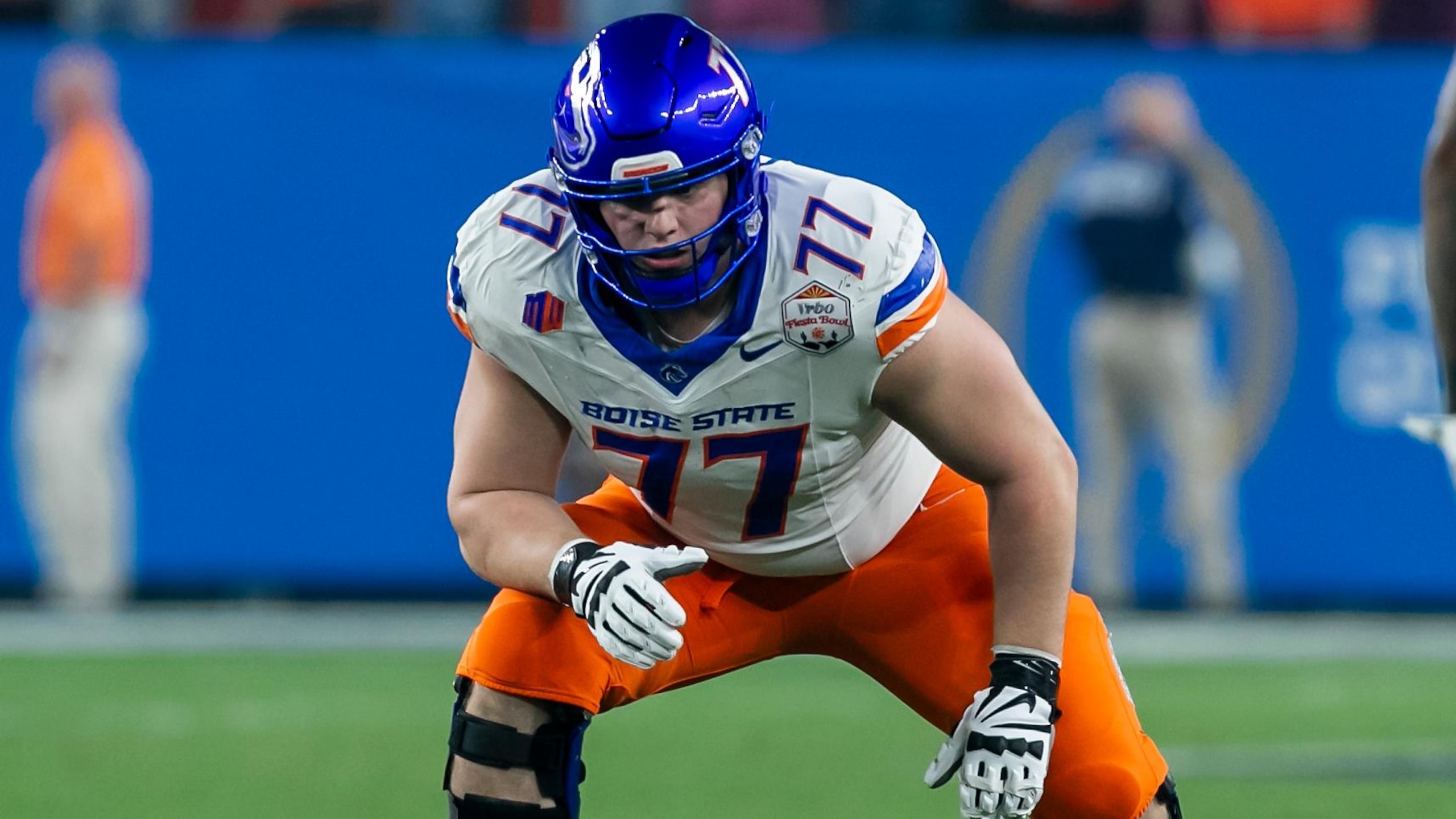
The Boise State Broncos have an underappreciated lineage of collegiate left tackles who went on to become quality NFL offensive linemen, starting with Daryn Colledge and Ryan Clady, and continuing through Ezra Cleveland. Kage Casey is the next in line, though his draft status has dovetailed over the last two months.
Casey entered this year's draft class as a junior prospect after three years as the Broncos' blindside protector. He was named first team All-Mountain West in back-to-back seasons. His profile suggests a quality prospect with extensive experience and reliability.
His status took a major hit when he struggled mightily, particularly as an offensive tackle, upon facing a higher level of competition at the Senior Bowl. Two issues became apparent in Mobile, Alabama. First, Casey lacks length. His arms are sub-33 inches, which isn't necessarily the death knell for a tackle prospect. However, the 6'6". 310-pound blocker's inability to recover, due to a stiff lower body, exposed him at times.
Obviously, a prospect tends to hold more value as an offensive tackle, as compared to a guard. But Casey seems destined to play inside at the next level. He enters a different grouping after not playing the position at the collegiate level, and the guard position is much deeper in the 2026 class. He'll try to help himself by also working out as a center during Boise State's pro day (March 24), which could improve his status to some degree.
.jpg?w=2560 "Vikings Football")

.jpg?w=2560)
DL LT Overton, Alabama
4 of 5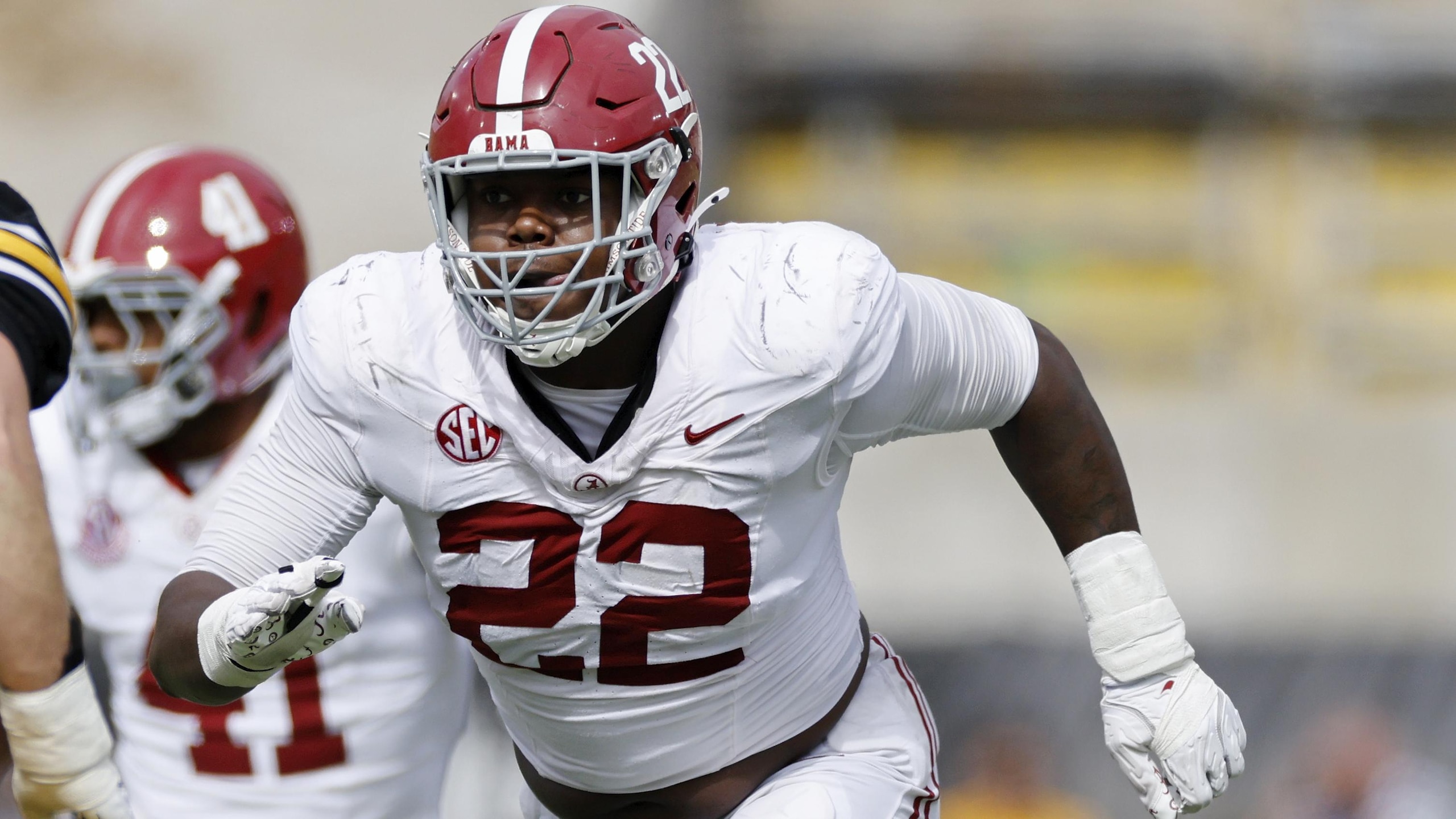
The term "tweener" isn't used as often in today's football vernacular because NFL defenses aren't as rigid with their preferred body types, and many coaching staffs now want "position-less" players capable of filling multiple roles without coming off the field. Even so, Alabama's LT Overton fits firmly and perfectly into the 'tweener category.
Overton originally entered the collegiate ranks as a heralded 5-star recruit. However, the Texas A&M Aggies didn't deploy him properly, which led to his transfer. At Alabama, the Crimson Tide staff wanted Overton to gain more weight and play with his hand in the dirt.
While the shift helped Overton at the collegiate level, it hurt him based on his draft status. Overton tended to hold a first-round grade for most of this process. But he didn't dominate to the expected levels as a senior.
To make matters worse, his skill set and 6'3", 274-pound frame don't really match up with a specific role at the professional level. Overton is powerful, but he lacks the bulk to consistently hold the point of attack against NFL offensive linemen, particularly against double-teams. If used as an edge-defender, Overton doesn't have the explosiveness to be a consistent threat as a pass-rusher. His 40-yard dash and 10-yard split both ranked among the bottom three edge prospects who participated at the NFL combine.
Overton never really differentiated himself in any way to provide a blueprint for his future usage.
S Kamari Ramsey, USC
5 of 5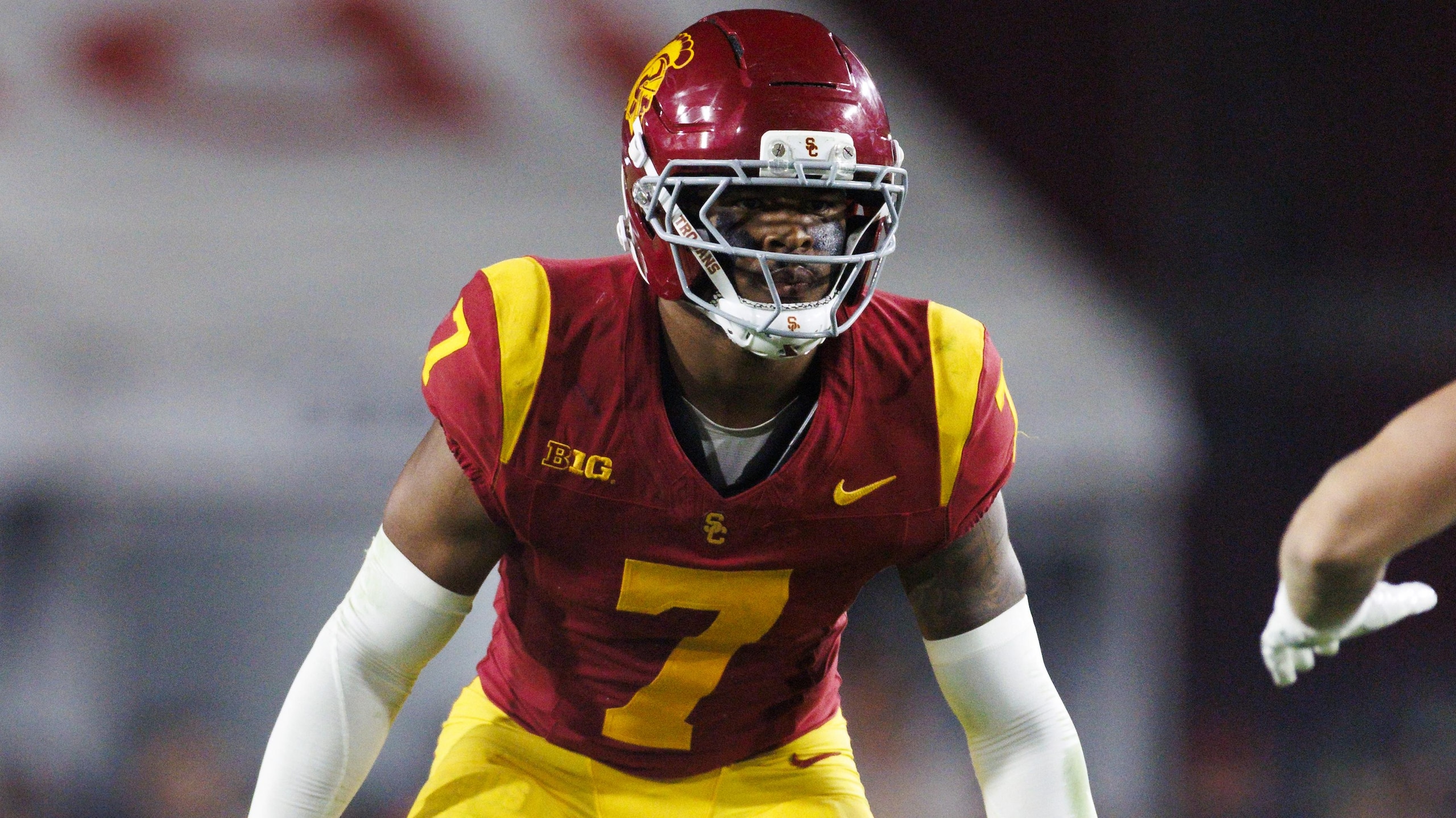
Safety isn't usually a highlighted position among a draft class. It will be this year, particularly with Ohio State's Caleb Downs included as the No. 1 overall prospect, per the Bleacher Report Scouting Department. The group's composition has hurt Kamari Ramsey's status throughout this process. Ramsey hasn't entirely helped himself, either.
The amount of athleticism and explosiveness seen among this particular position group was outstanding at the combine in Indianapolis. Ramsey didn't do poorly. At the same time, a few safeties blew the doors off of Lucas Oil Stadium.
Athletic testing is different than on-field movement, though. Ramsey's biggest issues revolve around lateral burst and being exposed in that regard, which can be a detriment for any safety. It didn't help that Ramsey's own teammate, Bishop Fitzgerald, outplayed him this past season. Fitzgerald became a consensus All-American.
Ramsey's slide is due, in part, to circumstances out of his control. Although, he could have performed better throughout the process to retain the high standard for which he was originally regarded. Instead, he now finds himself outside of B/R's top-five safety prospects.
.jpg?w=2560 "Bears Browns Football")