
Is Dante Moore Going Pro? QB's Decision Will Define 2026 NFL Draft
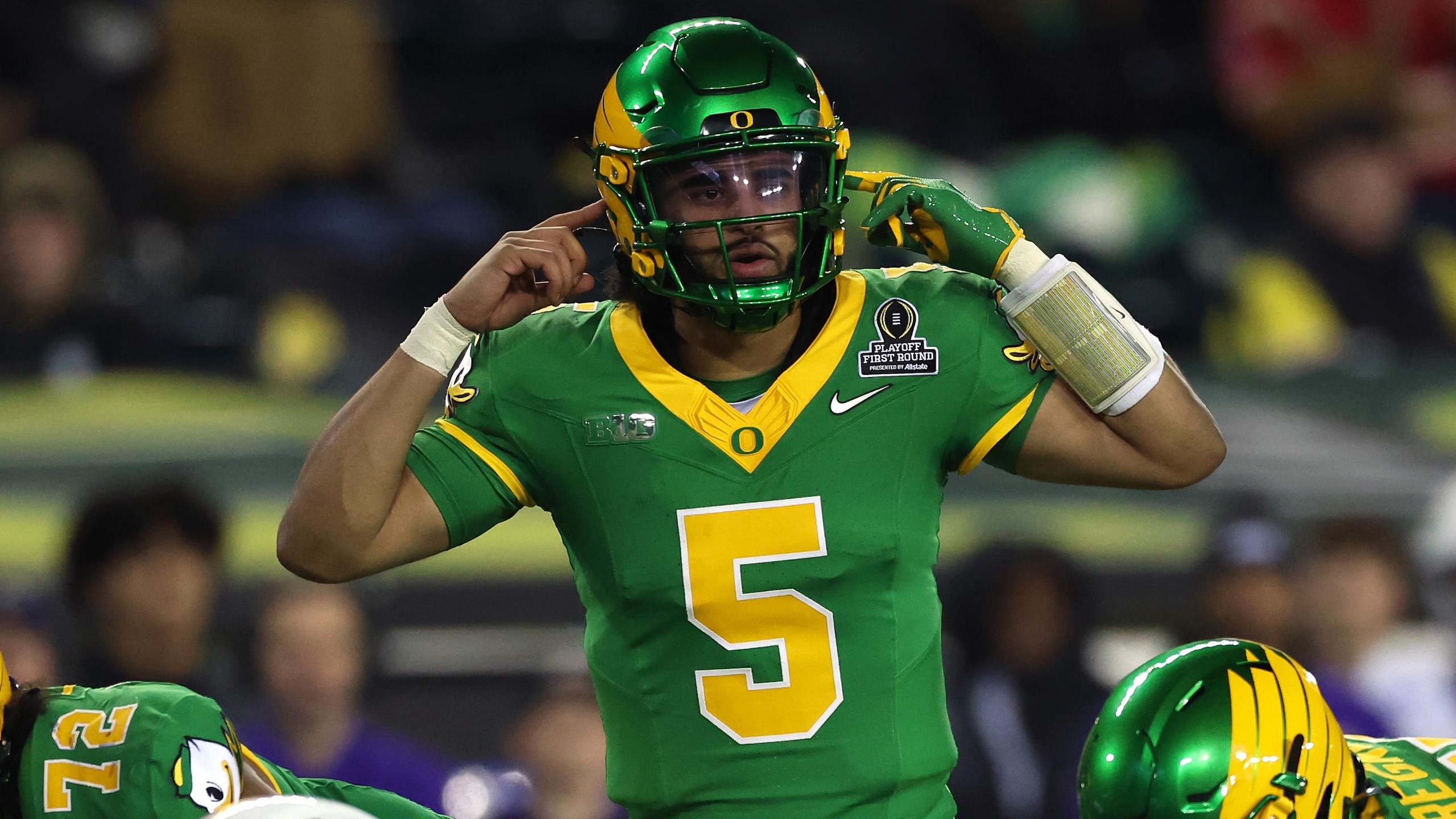
Oregon quarterback Dante Moore should be on his way to the NFL sooner rather than later. Do not pass "Go." Do not collect more NIL money. Now is the right time for him to become a professional.
Though the decision has yet to be made.
"There's no rush," Moore's father, Otha, told ESPN's Adam Rittenberg less than a month ago. "Whenever he feels like he's ready, he'll step up to that next level. Everyone says, 'Hey, you should go now, you should go now.' We don't care about the pick where he's going to go. It's just about the mental aspect."
Eligible underclassmen playing in the College Football Playoff have until Jan. 23 to officially declare for this year's NFL draft.
The 20-year-old's choice will create significant ripple effects throughout the incoming class. Currently, the quarterback class is viewed as a two-horse race, with Moore and the Indiana Hoosiers' Fernando Mendoza projected as the only Tier 1 prospects.
Moore can drastically affect the top of April's event depending on which way he leans, though his standing makes the decision far easier and somewhat obvious from an outside perspective.
Top 2 Status
1 of 5.jpg?w=2560 "Jets Ravens Football")
From a pure talent perspective, Moore is a top-10 prospect. Once the quarterback tax is added into the equation, he's nearly a lock to be one of the first two draft selections.
His B/R scouting report reads like the ideal prospect for today's NFL.
"Moore plays with a low pulse and is difficult to speed up," scout Dame Parson wrote. "... In those clutch or 'gotta have it' moments, Moore has answered the bell confidently.
"Moore is an accurate passer from inside the pocket and outside on the move. He throws a very catchable football that has good pacing and control. Moore places the football where his receivers can make a play and get yards after the catch. ... Arm talent and velocity are strengths of Moore's profile.
"... Moore is a quick processor of information, allowing him to maximize quick passing concepts and lessen the chances of the blitz impacting the play.
"Moore is also a plus-level athlete who will make plays with his legs, when necessary. He is a threat to break containment and create second-reaction throwing opportunities for his weapons down the field."
The redshirt sophomore's traits answer a lot of questions despite his age and relative lack of starting experience. Advanced statistics back up what has been seen through film evaluation.
"Moore has been one of the most efficient quarterbacks in college football this season, posting a 91.8 PFF passing grade with a 79.0 percent adjusted completion rate, 28 big-time throws and just nine turnover-worthy plays," Pro Football Focus' Trevor Sikkema wrote prior to Oregon's quarterfinal College Football Playoff appearance.
An opportunity may even present itself where the UCLA transfer makes his case to be the No. 1 overall pick by the Las Vegas Raiders, though Mendoza remains the favorite.
At this point, a potential hang-up exists.
The New York Jets are next on the clock as another franchise desperate to obtain a talented young quarterback. They are not a well-run organization, which should give any prospect pause. Though not every incoming individual has the leverage and flexibility Moore currently has.
Case For the New York Jets
2 of 5.jpg?w=2560 "Cowboys Jets Football")
No one can deny how dysfunctional the New York Jets have been in recent years.
They haven't experienced a winning season since 2015 and haven't made a postseason appearance since 2010. No head coach has lasted longer than four seasons during the last decade. The organization desperately needs stability, which only a franchise quarterback can provide.
The final point is key, because the NFL is a QB-driven league. Success at the game's most important position can elevate an entire organization, because winning cures all ills.
While some trepidation upon joining the Jets is understandable—as should be the case with any talented prospect going to one of the NFL's worst teams—New York's situation isn't as dire as perceived.
First, the Jets aren't devoid of offensive talent. In fact, exciting potential exists within the unit if New York adds a quality signal-caller.
Garrett Wilson is a legitimate No. 1 target. Fellow wide receiver Adonai Mitchell experienced positive moments after being acquired from the Indianapolis Colts in the Sauce Gardner trade.
Rookie tight end Mason Taylor finished second on the team in receiving yardage despite the squad's quarterback issues. The offensive line is set at four of the starting spots, with a pair of recent first-round picks at tackle to protect a young signal-caller. If the Jets re-sign or place the franchise tag on running back Breece Hall, the majority of the unit's supporting cast is packed with potential.
Furthermore, offensive coordinator Tanner Engstrand will be entering Year 2 of calling plays, with the possibility of doing far schematically more when not hamstrung by the team's QB setup.
On top of the individuals already in place, the Jets have significant salary-cap flexibility and draft assets to add even more talent. According to Spotrac, New York owns the fourth-most salary-cap space as the new league year approaches.
With over $93 million to potentially spend, Gang Green can improve the overall roster. Then, the front office has an extra pick in this year's first and second rounds to add even more, as well as three first-round selections in the 2027 draft.
The Jets may be down right now, but a turnaround could happen quickly by adding the right people, starting at quarterback.
Financial Realities
3 of 5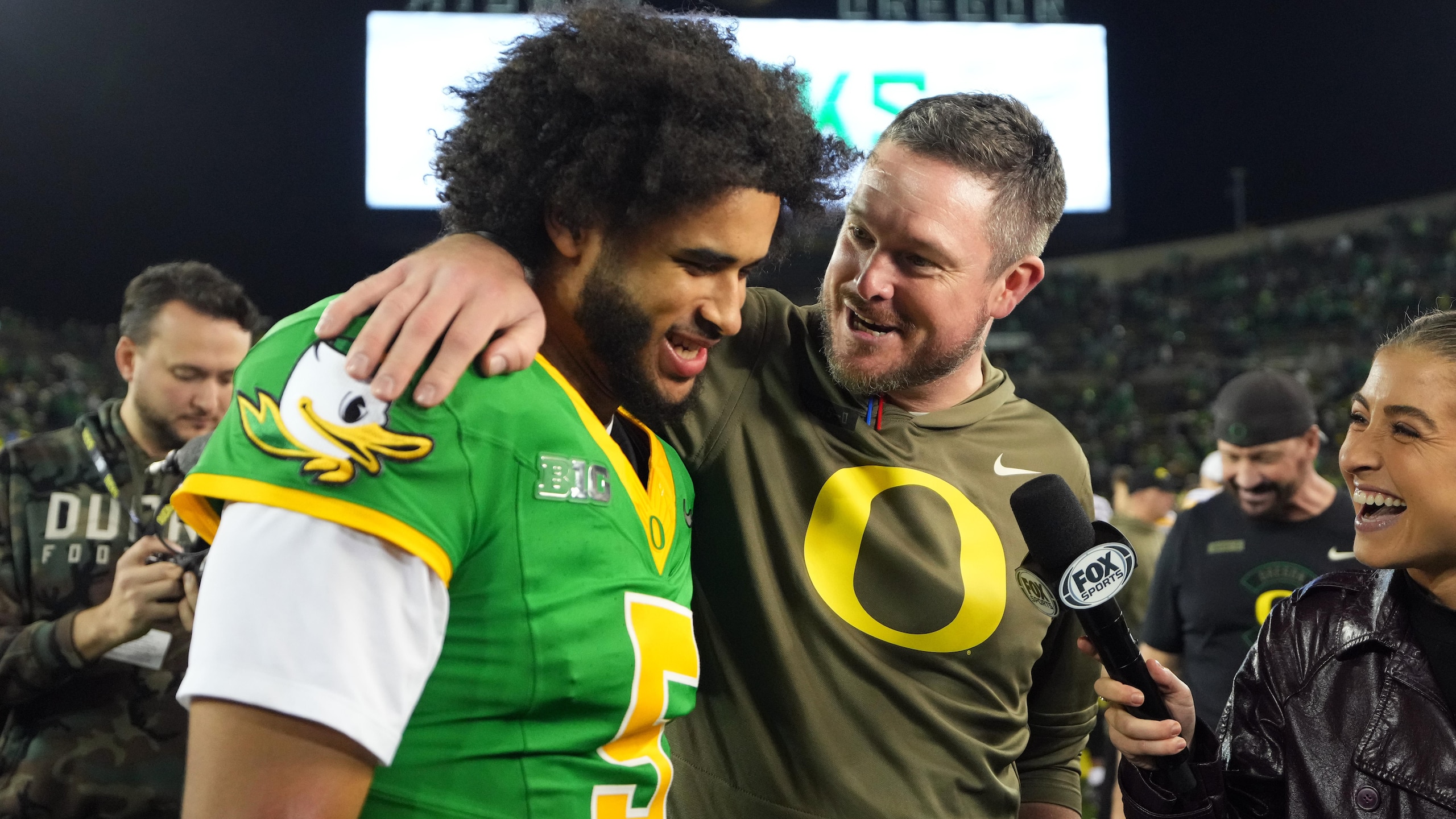
Even with today's rapidly escalating NIL deals, collegiate boosters can't rival what an NFL quarterback makes, even one on a rookie first-round contract.
This offseason, the top QB in college football's transfer portal, Brendan Sorsby, topped out at $5 million for the 2026 season. Drew Mestemaker will make $7 million over the course of two seasons with the Oklahoma State Cowboys if he chooses not to turn pro after his junior season.
For comparison, last year's No. 2 overall draft pick, Travis Hunter, signed his first professional contract worth $46.7 million. However, this discussion centers on what Moore can make in one collegiate season (or even two) compared to playing at the highest level.
Here's the kicker: Hunter's signing bonus was $30.6 million, which is paid from the onset of the deal. The entirety of the contract is also fully guaranteed.
Now, add a slight bump afforded the following year's selection after being drafted in the same slot, as well as a possible quarterback premium, and Moore's deal would near $50 million.
Each of those numbers will increase if he impresses the Raiders enough to become the No. 1 overall pick.
Also, a fourth season in college pushes a potential contract extension—where the most lucrative deals are found, with quarterbacks regularly exceeding $200 million—down the road another year.
Money isn't everything, but someone in Moore's camp should already know these numbers and must apprise the quarterback of what he could lose if he returns to Oregon.

.jpg?w=2560 "Cardinals Giants Football")
.jpg?w=2560 "Hill Injury Update Football")
Tomorrow Isn't Guaranteed
4 of 5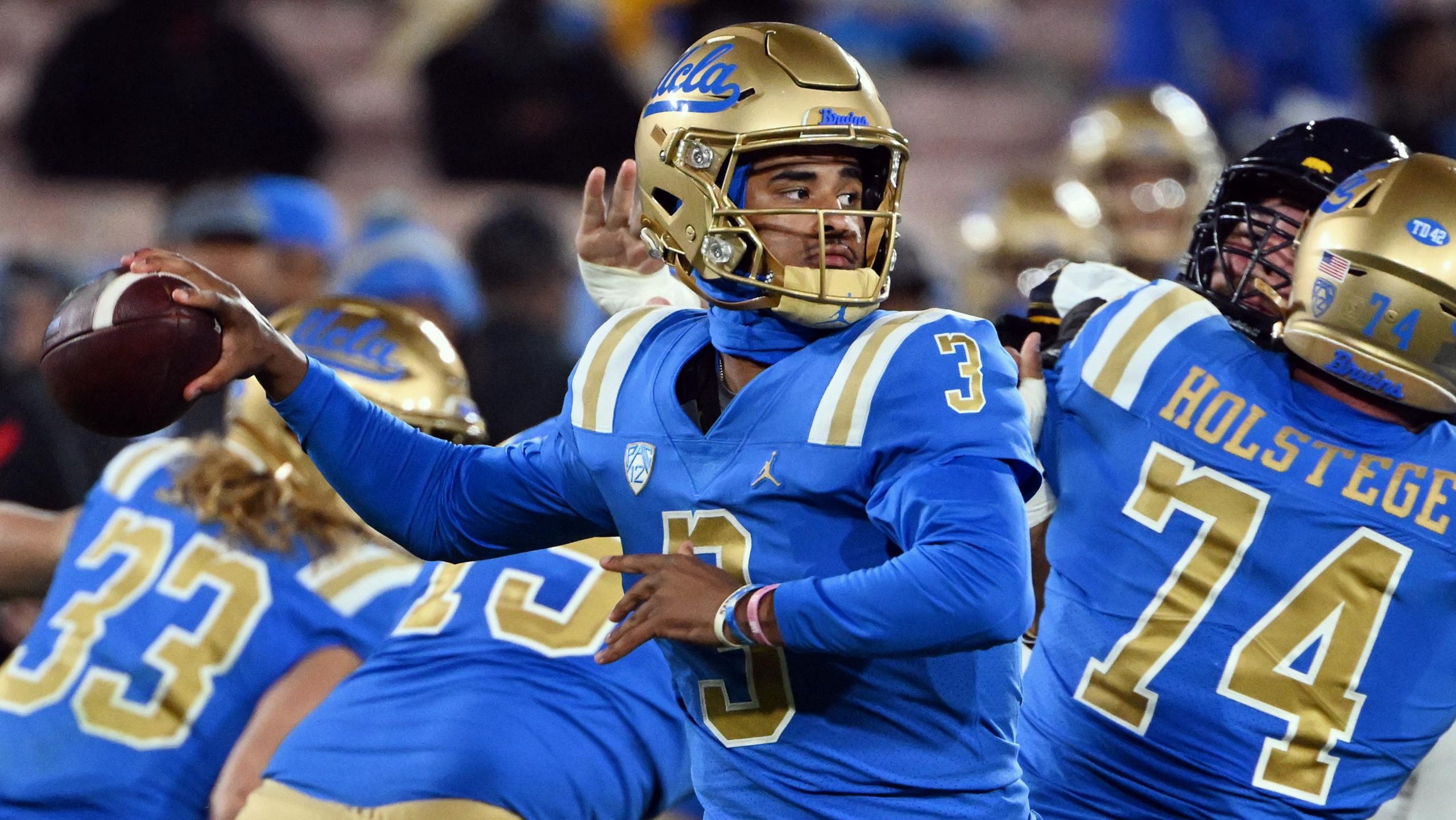
While a top-two selection isn't fully guaranteed for Moore in 2026, it's a safe bet based on his talent and how the class currently stands. The same can't be said a year from now. So much can happen during the subsequent 12 months.
A devastating injury is always a possibility. A poor performance isn't unheard of regarding prospects entering a campaign under the weight of massive expectations. Other quarterbacks may rise dramatically.
The 2027 class could easily be headlined by Texas' Arch Manning, and/or USC's Jayden Maiava. It could also include elite talents at other positions, such as Ohio State wide receiver Jeremiah Smith, South Carolina defensive end Dylan Stewart or Notre Dame cornerback Leonard Moore.
Dante Moore has every right to make the choice he believes is best for him, and no one should pressure him one way or the other. At the same time, the quarterback seems to understand the bigger picture.
"The goal, at first, from high school, was he'll learn from Bo Nix [at Oregon]," Moore's high school coach, Ty Spencer, told Rittenberg. "But it was just kind of the opposite. He tried it at UCLA, and he understood, 'Hey, I've got a lot more to learn than I think, and I'm OK with humbling myself.'"
Typically, that particular mindset signals a patient approach.
In this instance, Moore can maximize his status this year compared to next. He can do so with the understanding and experience of not starting for a season despite all of the hype.
As long as a plan is in place, a team doesn't need to rush him onto the field if he's not ready to lead an NFL offense—which may provide the best of both worlds.
Moore may even surprise and adapt sooner rather than later, but he won't know unless he makes the leap.
How The 2026 NFL Draft Goes Off the Rails Without Dante Moore
5 of 5
The Raiders will draft a quarterback with the No. 1 overall pick; everyone can be 99.9 percent certain of that.
The Jets must be holding their breath hoping Moore declares early in order to land one themselves—whether it's the Oregon product or Mendoza depending on what happens at the top of the round.
Without Moore in the mix, the Jets can't just force the pick by pushing the next quarterback up the board and saying he's good enough.
Right now, a significant gap exists between the 2026 first- and second-tier quarterback options. The Bleacher Report Scouting Department doesn't have a third QB ranked among its top 25 prospects.
Alabama's Ty Simpson could sneak into the opening frame depending on the situation. Otherwise, a group including Miami's Carson Beck, Ole Miss' Trinidad Chambliss, Clemson's Cade Klubnik, LSU's Garrett Nussmeier and Arkansas' Taylen Green are considered Day 2 options at best.
The Jets will enter a different market, likely looking for a young veteran with upside in hopes of finding the next Baker Mayfield/Sam Darnold/Daniel Jones. Then, New York will either A) take the best player available with the second overall pick or B) trade out of the slot as another suitor targets a specific talent.
As a result, position players will start coming off the board one pick earlier, which will affect every organization after the Jets' slot.
A year ago, the common theme centered on, "The 2026 quarterback class will be better than what we see in 2025." That assumption proved to be wrong. This point further illustrates why waiting another year can be a mistake.
Moore finds himself in a great position right now, which should make his decision easier.
.jpg?w=2560 "Titans Giants Football")
.jpg?w=2560 "Dolphins Bills Football")