Quade Cooper's Toulon Turnaround Depicts Rugby's Changing Transfer Landscape
Allegiance-swapping has always acted as an inevitable draw in sport. For many years, rugby was restrained in regards to players changing loyalties, but 20 years after being declared a professional forum, transfers have taken an entirely new focus.
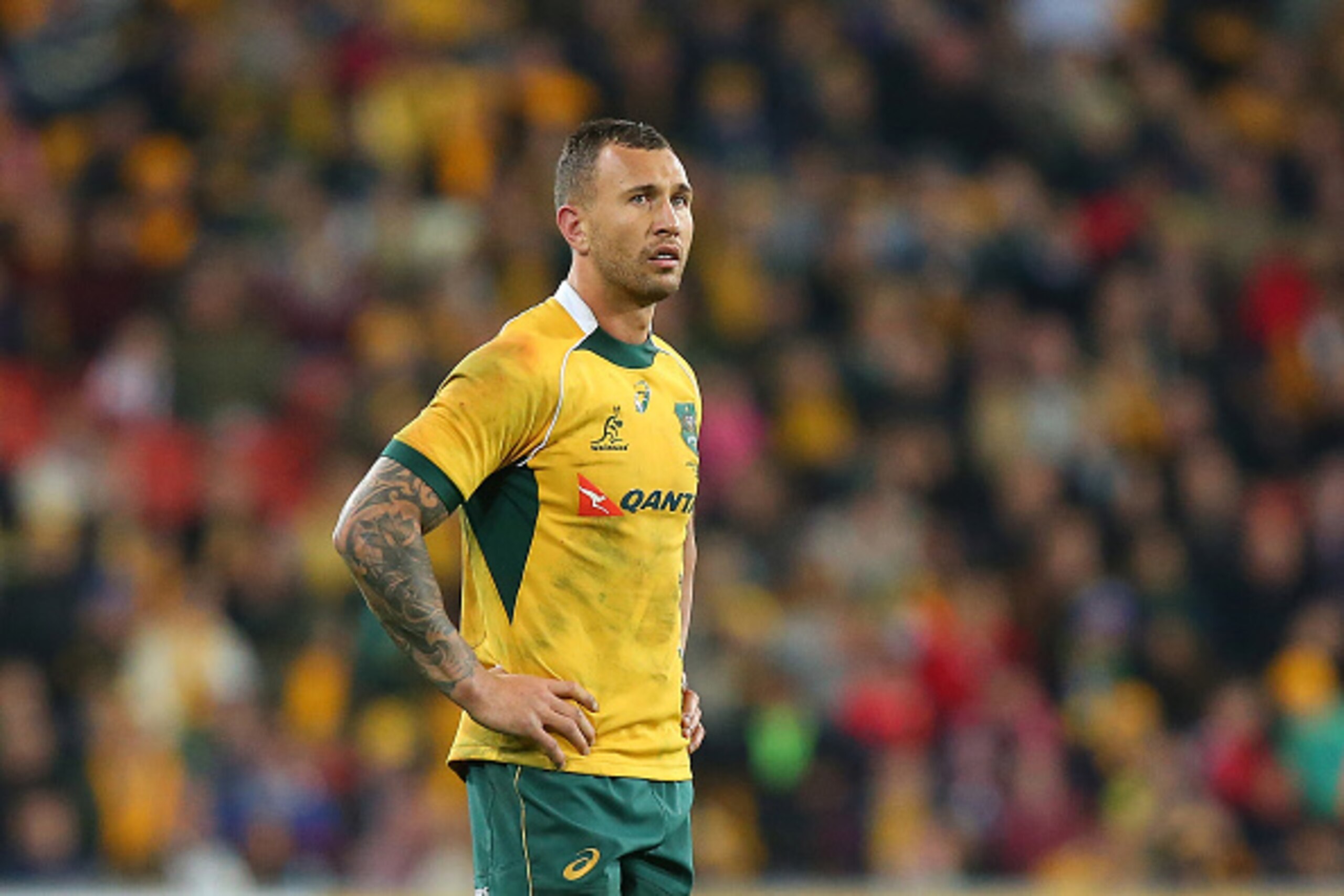
Australia fly-half Quade Cooper recently caused a stir after it emerged he will renege on an agreement to join Toulon and instead pen a new four-year deal with the Australian Rugby Union, per ESPN Scrum.
TOP NEWS
.jpg?w=2560 "49ers Giants Football")
Dart Believed to Have Sprained MCL
.jpg?w=2560)
WWE Raw Live Grades 🔠

Lane Kiffin taunted by Ole Miss players
It's a unique story unlike anything seen before, involving the irate owner of Europe's strongest club, vast sums of money, Cooper's dream to lead Australia Sevens at next year's Rio Olympics and the contractual terms that bind them.
The "irate owner" in question is Toulon's Mourad Boudjellal, the man who has already facilitated the north-bound moves of many a southern-hemisphere star, telling French radio station Sud Radio (via ESPN Scrum) of his anger at Cooper's reversal:
"They have played dirty. They are speaking to a player who they know has signed. So there is collusion there and I might sue the Australian federation to ensure our rights are respected. If Cooper doesn't come, the compensation will be in millions of euros.
He was our first choice. The damage to our image is significant. He took a photo with us, we centred our season ticket campaign around him, his jersey is on sale. What's more, we passed on other fly-halves to get him.
"
Wallabies coach Michael Cheika will seemingly want Cooper among his squad, but this kind of controversy isn't his bag, nor would it be considered so for any coach who merely desires the best options available.
Such is the kind of thing rugby has grown to embrace, though. Not "embrace" in the warm way one would a visiting aunt or uncle, but more begrudgingly accept like the distant cousin you've never really gotten along with.
As aforementioned, Cooper's 360-degree turn on the Stade Mayol is a unique example and is by no means a representative example of how things are done, but one fact remains; instances such as this are a reality now.
Perhaps it's merely a sign of the sport's growth—perhaps a good thing overall—but rugby's transfer approach is changing, for better or for worse.
Globe-Trotting and Border-Hopping
The most prevalent point of all in this changing transfer arena is the effect finances have had in recent years, with the French Top 14 and England's Premiership largely regarded as the big guns.
This has had a dramatic impact in particular on the amount of players leaving the southern hemisphere to go north of the equator, as was recently illustrated by Simon Thomas of Wales Online:
As soon as they're done with their Rugby World Cup commitments, a boat-load of Super Rugby stars are headed for European shores, with world champion All Blacks Dan Carter, Ma'a Nonu and Conrad Smith among them.
It shows us that the monetary allure being offered in Europe stretches even to the very peak of rugby, with Paul Williams of Rugby World rightly picking out France as a particular hotspot:
It's no new thing to see the greater powers of New Zealand, South Africa, Australia or the Pacific Islands completing such moves, of course; it's merely happening on a much grander scale than before.
The evergreen Ali Williams was one of those to join the money-fuelled revolution taking place at Toulon. Just prior to the club winning their third straight European crown this year, he was quoted by the Guardian's Robert Kitson acknowledging the superb opportunities in Europe while dealing a blow to the "rugby quality:"
"Without doubt there is a shift taking place. It’s not just money, it’s also about experience. I was a typical New Zealand rugby person, adamant that you don’t leave and Super Rugby is where you stay. But what you offer here is just incredible. It’s amazing. Is the rugby the best? At the end of the day maybe not but I don’t think that matters.
I wouldn’t say it’s a concern but I do think World Rugby and other bodies need to come together and say: ’What is the solution?'
"
For Williams to regard it as a non-factor that the rugby is "maybe not" the best in Europe serves as further evidence players make the switch for very obvious reasons of which perhaps few will go into detail.
As far as England, Ireland, Wales, France and the rest of Europe's ilk may be concerned, it doesn't improve their international odds greatly, either, with Murray Kinsella of The42.ie hailing the Rugby Championship recently:
So advanced is the issue that Australia have been forced to relax their policy on overseas selection in what was a historic change, and one can bet there will be a few more foreign names in the 2019 Rugby World Cup squad.
Looking toward the Home Nations, Wales and Ireland have inner struggles to contend with. Warren Gatland may have been somewhat miffed to see the likes of Jamie Roberts, George North and Dan Lydiate leave the proximity of the Welsh regions for France and England in recent years. The prospects at home were simply nowhere near as lucrative.
Meanwhile, Ireland tactician Joe Schmidt is happy to have Johnny Sexton return to Leinster this summer, as will those at the RDS Stadium following a rare jaunt for an Irishman to go abroad.
It's the manner in how transfers are perpetuated, though, that differs from the old generation. Ian Madigan recently utilised social media platform Instagram to spark talk Connacht sensation and heir apparent to Brian O'Driscoll, Robbie Henshaw, could be moving to Dublin soon:
It's harmless fun, of course, but these actions in turn act as their own source of news and provide evidence to the fact that even players are giving attention to the question of who's heading where.
Speaking of the Pro12 outfit, it was recently confirmed Australia lock Kane Douglas would see his Leinster contract terminated after "a suitable agreement" had been reached for his release.
Jim Tucker of the Courier Mail wrote Douglas will finalise a deal with the Queensland Reds, and although no direct link has been drawn between his controversial exit and the ARU, the Times' Alex Lowe believes he'll play at this year's World Cup.
For that reason, one can't state Australia were so desperate to acquire Douglas' talents that they circumvented their own recently passed law to bring him back home, but one can certainly think it out loud.
It's clear for all to see just how heavy a weight transfer business carries when even international federations have a hand in their construction, with the one-club superstar a dying breed, much like their football counterparts.
Cooper's Toulon turnaround may not be your average controversy in this new transfer world, but it definitely raises the bar in rugby, with more movement and madness sure to follow in the coming years.

.jpg?w=2560 "Commanders Vikings Football")
.jpg?w=2560 "Dak Addresses 'Dumb' Old Romo Tweet 🤣")