

Why 4-2-3-1 Should Be the Go-to Formation for Manchester City in 2015/16
One of the major criticisms of Manchester City under Manuel Pellegrini has been a perceived lack of flexibility in terms of the team’s formation.
Pellegrini has favoured 4-4-2 throughout his career. It brought him unprecedented success at both Villarreal and Malaga, and it was the bedrock of his league-and-cup-winning debut season in charge at the Etihad Stadium.
Yet a feeling persists he is too rigid and that his inflexibility has cost City, particularly in Europe against sides with more fluid formations and players with the ability to play a variety of styles.
TOP NEWS

Messi Picks Next Gen Talent 💫
Live World Football Goals and Highlights 🔥
5 Potential Replacements for Michael Carrick as Manchester United Manager Amid Rumors

The 4-4-2 system can leave the two-man central midfield exposed and sometimes overrun when up against three-man midfields. City have been outnumbered and outpassed in the middle on a number of occasions in Europe, leading to loud and, at times, vociferous criticism of Pellegrini.
For so long, he was steadfast in his refusal to budge. He has his way of playing and nothing will see him yield. He argues that trying to adapt to others can often lead to confusion and that City must play to their strengths.
Even after being torn apart by Bayern Munich at the Etihad in October 2013, he remained stoic. Bayern are one of Europe’s elite sides—losing to them is understandable, given City are more of a work in progress rather than established European superpower.
However, when Roma, a side City should be dominating if they want to achieve their ambition of becoming one of the best teams in the Champions League, also dictated play in midfield during a 1-1 draw at the Etihad last September, it became clear to most there was a problem.
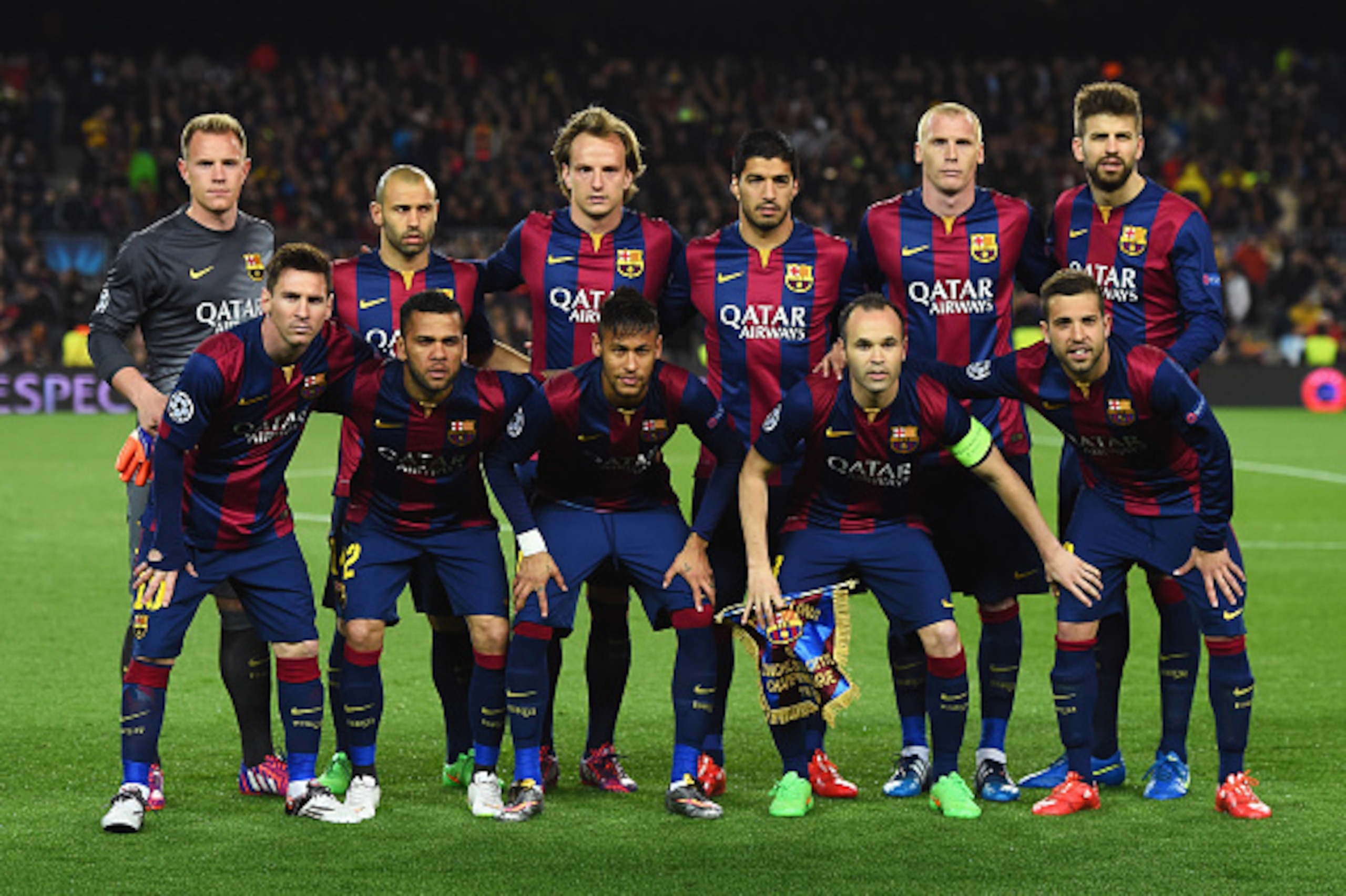
But there was still no acceptance from Pellegrini that it was an issue, and Barcelona were allowed the opportunity to cut through City too easily when they arrived at the Etihad for last season’s last-16 first-leg match. The first half saw total domination from the Primera Division giants. City couldn’t get close and found themselves two goals behind at half-time. It could have been five.
Much of that, of course, was down to Barcelona’s brilliance. Indeed, they remain the finest team on the planet, with a front three possessing speed, skill, guile and goals, but City made it too easy for them. It was naive, and they paid the price.
However, after a dreadful run of form saw their top-four status under threat toward the end of last season, Pellegrini changed tack. A 4-2-3-1 system, which had only been used fleetingly in the past, was suddenly adopted. City won six straight games, securing them second position in the final Premier League standings and allowing Pellegrini some respite from the criticism he was facing. You could argue it was a shift in thinking that saved his job.
Now it looks as though further options are set to enter the equation. During the club’s Australian tour this summer, Pellegrini has trialled a 4-3-3 system, a bold move that has left many fans excited. Pellegrini’s commitment to attacking football has always been clear, but this is further evidence of his desire to overwhelm and outscore the opposition.
It’s also the latest example of Txiki Begiristain’s vision of replicating the Barcelona model with which he is so familiar in east Manchester. Begiristain wants to see City play the same way across every age level of the club, and 4-3-3, in his eyes, is the most attractive, effective way of playing.
It leaves City with three clear options of how to set up during the coming campaign. With their squad not yet finalised and new faces expected to arrive before the season curtain-raiser away at West Bromwich Albion on August 10, it’s unclear which is the best way for Pellegrini to set his side up.
4-4-2
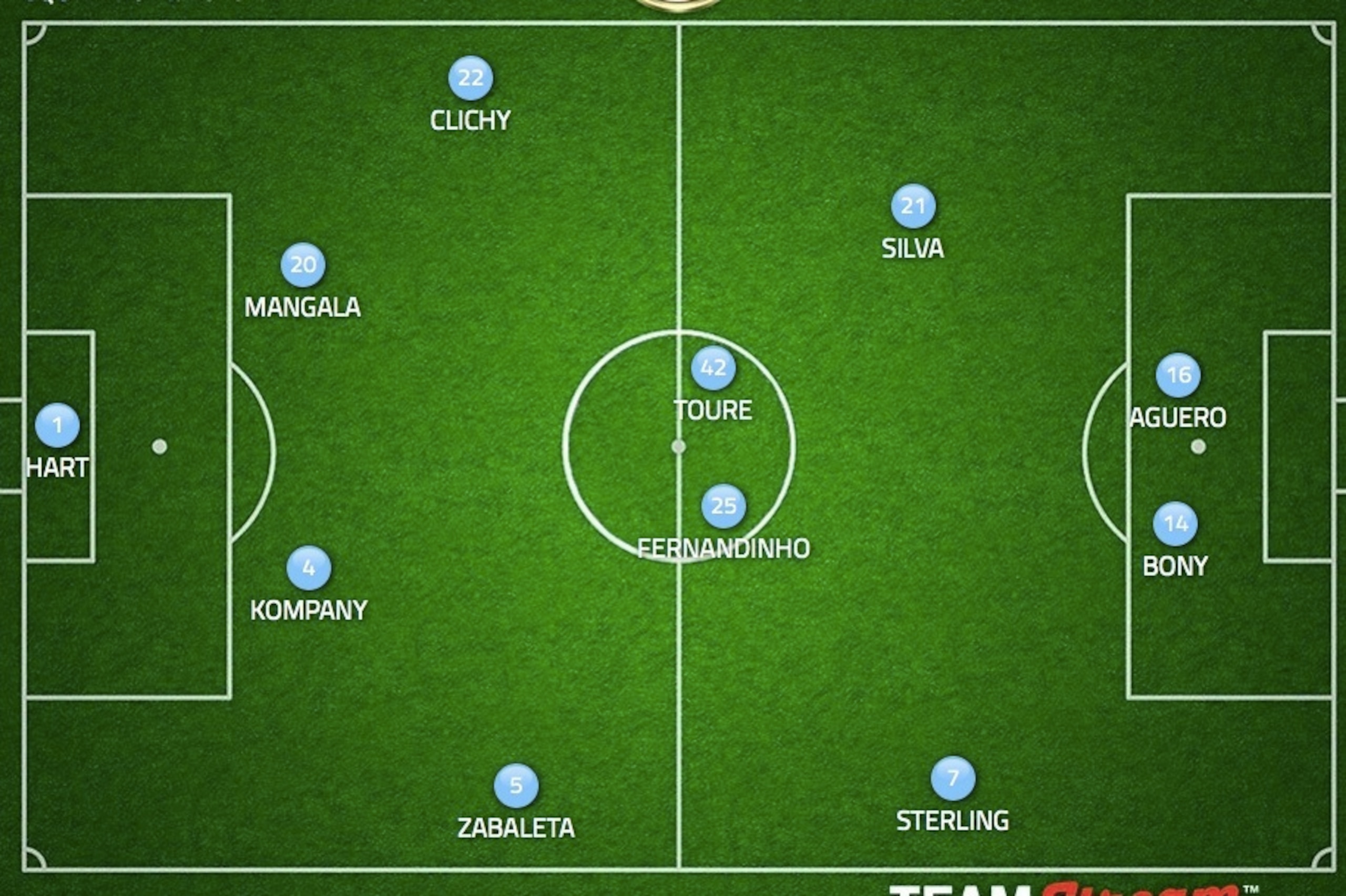
Wilfried Bony will certainly be hoping Pellegrini remains loyal to his 4-4-2 formation. Given Sergio Aguero’s brilliance, he remains the first-choice striker by some considerable distance, and it would therefore be Bony who drops out if City shift to a system that requires just one out-and-out striker.
Bony was seen as the perfect foil for Aguero when he signed from Swansea City in January. His physicality, intelligence and vision mean he produces neat flicks and passes into his strike partner. His exertions at the AFCON tournament in Equatorial Guinea and some niggling injuries saw his start to life at City disrupted, and there are now question marks over his ability to handle to step up from a mid-table side to one chasing major silverware.
He needs a good start to the season in order to assert himself in the side, and playing in a 4-4-2 gives him the best chance of doing that.
Jesus Navas, too, appears more comfortable on the right-hand side of a four-man midfield, where is pace is used to stretch the opposition. On the other flank, though, David Silva is somewhat wasted in a 4-4-2. He tends to drift inside and cause chaos with his passing ability and link-up play, but he is far more effective when starting from a central role.
It's a system that has had excellent success against the majority of sides, but against technically gifted, packed midfields, it has been overrun.
4-2-3-1

This system would see Aguero play as a lone striker with a supporting cast of attack-minded midfielders looking to supply him. It also suits City because it uses a true No. 10, and the Blues have an array of options for that role.
Silva excels there, Raheem Sterling looks capable of moving into that position eventually, and if they can sign Kevin De Bruyne from Wolfsburg before the transfer window shuts, he is certainly most comfortable in that position, where his neat through balls can be best used.
Even Yaya Toure, currently asked to make lung-busting runs from deep, could move there as he gets older. The 32-year-old could perhaps benefit from switching to a less physically demanding role, but it could take away his drive and ability to carry the ball from defensive situations, which remains his most valuable asset.
4-3-3
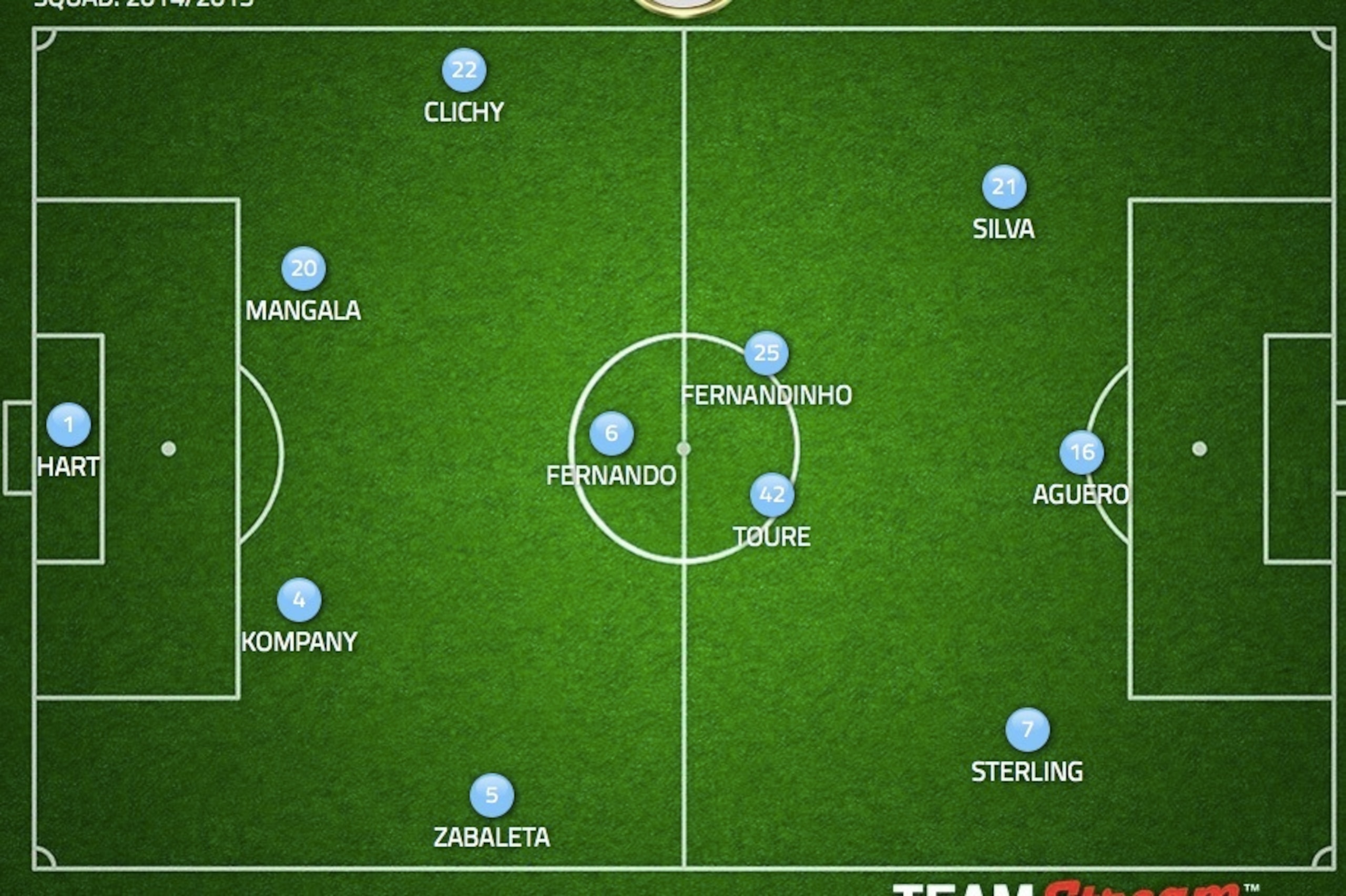
By far the boldest formation, 4-3-3 requires hard work and discipline from every player.
Playing with three players very high up the pitch could leave City exposed defensively. It’s a system that demands Pellegrini plays with an out-and-out defensive midfielder. Fernando is currently the only player on City’s books who fits the bill, so he will be keen for Pellegrini to go with 4-3-3 more often so he can show his disappointing debut season is now behind him.
A front three of Sterling, Silva and Aguero has the makings of a formidable attacking force. It may not match the Lionel Messi-Luis Suarez-Neymar triumvirate at Barcelona, but it would surely be the most complete forward line in the Premier League.
Having such flexibility gives City a better chance of success. Opponents will struggle to second guess them. And if things aren’t working out during a game, Pellegrini has the option to make a subtle change in an attempt to turn the screw.
For now, it’s arguably 4-2-3-1 that suits their players the best, but a move toward 4-3-3 looks imminent, particularly if City land their targets before the start of the season.
Rob Pollard is Bleacher Report's lead Manchester City correspondent and follows the club from a Manchester base. All quotes were obtained firsthand unless otherwise noted. Follow him on Twitter: @RobPollard.


.jpg?w=2560 "Cam Ward Says He's Not A Loser")
.jpg?w=2560 "🚨 Texans Trade for MHJ")
.jpg?w=2560 "Chargers Fall to 0-5 🤢")
.jpg?w=2560 "Grading MHJ Trade 📝")



.jpg?w=2560 "MHJ Bought Own Jugs Machine")