.jpg?w=2560 "Titans Raiders Football")

Buyer's remorse regarding the NFL draft is real and could materialize quickly in a league that no longer values patience when it comes to its yearly rookie investments.
The primary issue isn't necessarily with the rookies themselves, but the team's decisions at the time. Roster construction is critical to placing first-round prospects in a position to succeed. An overreach at a position of need or incorrect assumption of what best helps the team can quickly spiral into a situation where it becomes obvious the organization should have gone in a different direction.
As the NFL nears the halfway point of the 2025 campaign and the this year's trade deadline, five specific situations stand out as those where the team in question should have selected a different option when it was on the clock during April's draft.
RB Ashton Jeanty, Las Vegas Raiders
1 of 5.jpg?w=2560 "Raiders Commanders Football")
Replacement: OT Armand Membou
The Las Vegas Raiders forgot how to properly build a house. A strong foundation is necessary or everything falls apart.
In this case, the Raiders didn't have the pieces in place along the offensive line to overlook that position group in favor of a running back with this year's sixth overall pick. But the team envisioned Ashton Jeanty's addition as an opportunity to establish the same identity as the Seattle Seahawks had with Marshawn Lynch when Pete Carroll led that organization.
"[Jeanty's] ability to make plays when it doesn't look like there's [anything] there, Marshawn did that throughout his career," Carroll told reporters in April after the running back's draft selection. "There's a special makeup in Ashton."
Here's the thing: Jeanty isn't making enough plays when nothing is available. The offensive line isn't holding up as run or pass blockers. In the running back's case, the rookie averaged fewer than 4.0 yards per carry in five of his seven appearances so far.
Looking back, the Raiders thought they had something in last year's rookie right side, with DJ Glaze at right tackle and Jackson Powers-Johnson at guard. In truth, they're both playing out of position. Glaze is better suited to guard, while JPJ entered the NFL ranks as a top center prospect (and Rimington Trophy winner).
The addition of right tackle Armand Membou with the sixth overall pick could have solidified the entire group. Membou is highly athletic and physical to serve as a tone-setter for a unit. He's fared quite well for the New York Jets during his first season.
Quality running backs are always found later in the draft process. The Raiders had the potential to complete their offensive line, then address their backfield. Instead, they decided to invest a top-10 pick in a devalued position. The squad isn't getting anywhere near the return it hoped, with a bottom-six rushing offense.
TE Colston Loveland, Chicago Bears
2 of 5.jpg?w=2560 "Saints Bears Football")
Replacement: TE Tyler Warren
An argument can be made about whether the Chicago Bears should have even considered a top-10 tight end with Cole Kmet already on the roster. In this particular case, the mistake was simply a case of the wrong player selected at the preferred position.
Colston Loveland presents immense upside as a weapon in Ben Johnson's offensive scheme. An injury slowed Loveland's progress this season, which can't be held against him. Though the tight end had two different injuries of note prior to being selected with this year's 10 overall pick.
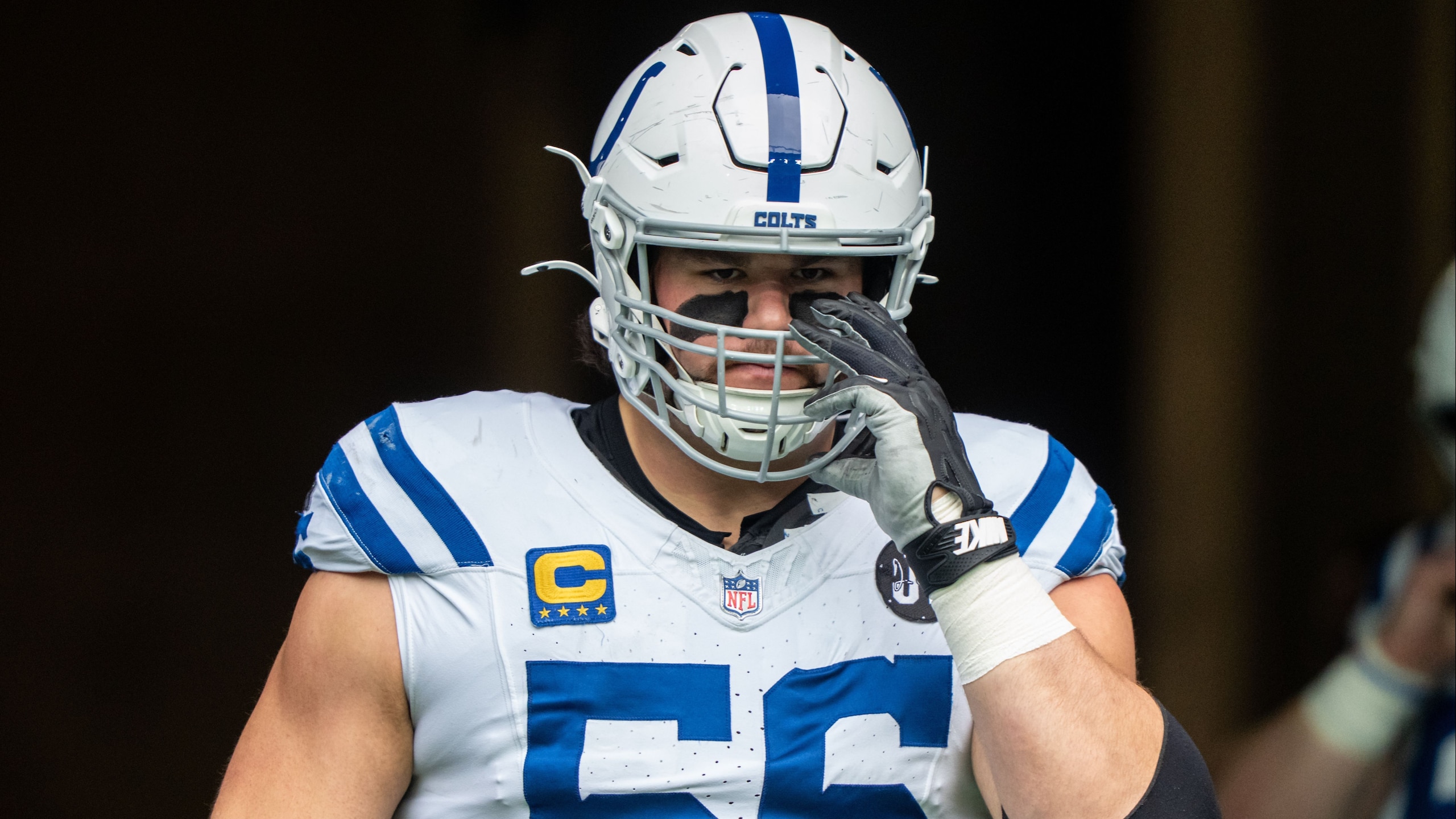
The primary issue lies with selecting Loveland over Tyler Warren, who has been healthy and a playmaker from Day 1 as a member of the Indianapolis Colts.
Warren over Loveland isn't a hindsight argument, either. The Penn State product led the Power Four conferences last season with 104 receptions. His versatility and physicality allows a creative play-caller to provide opponents with a myriad of different looks. Warren's skill set has translated. He currently leads all tight ends with 439 receiving yards. He helped open up what's become a juggernaut-level Colts offense.
Loveland, meanwhile, has yet to produce more than three catches or 31 yards in a single game. He's a better in-line option, but that doesn't matter nearly as much when the alternative already looks like one of the league's best playmakers at their respective position.
"You remind me a lot of [Sam LaPorta]," Johnson told Loveland, per ESPN's Courtney Cronin. "Obviously we did a lot of things with LaPorta ... I can see you doing a lot of those things as well."
Neither Johnson, as a play-caller, nor Loveland are doing those things. LaPorta caught 86 passes as a rookie. The Bears don't seem to have a grasp on what their rookie tight end can do.
DL Kenneth Grant, Miami Dolphins
3 of 5.jpg?w=2560 "Dolphins Bills Football")
Replacement: WR Emeka Egbuka
No one can deny the Miami Dolphins desperately needed bodies along their defensive line entering this year's draft. Therein lies the problem. Miami knew it had glaring issues in the trenches and had to address those in the first and second rounds, with players who weren't ready to step into those roles from Day 1 and flourish.
Essentially, general manager Chris Grier failed before the 2025 NFL draft even began.
It's not difficult to imagine a scenario where the Dolphins were more aggressive to bring in veterans and address both sides of the line, then looking elsewhere once they were on the clock during this year's first round.
The possibility of adding a prospect of Emeka Eguka's caliber to the wide receiver room and offset any lingering issues with Tyreek Hill after his offseason tirade could have had a much greater impact than choosing a nose tackle with this year's 13th overall pick.
To be fair, any other prospect wouldn't need to do much to create more of an impact than Kenneth Grant, who's greatly struggled to start his career.
The idea of Grant was always better than the reality anyhow. He's an superb athlete at 6'4" and 331 pounds. His movement skills, strength and explosiveness are impressive. At the same time, those natural gifts are mitigated by inconsistent-to-poor technique and pad level. He's never been a down-by-down dominator. The potential is present, but it's never been fully baked. It comes as no surprise that he's not been better as a rookie when facing professional blockers who are more refined.
The Tampa Bay Buccaneers had other positions to address yet still chose Egbuka with this year's 19th overall pick. Their foresight provided them with a new WR1 and potential NFL Offensive Rookie of the Year.

Edge Shemar Stewart, Texas A&M
4 of 5.jpg?w=2560 "Jaguars Bengals Football")
Replacement: OG Grey Zabel
Contract issues aside, the Cincinnati Bengals shouldn't have selected Shemar Stewart with this year's 17th overall draft pick. He was already viewed as a significant project, who wasn't going to immediately replace Trey Hendrickson or make a major impact in a relatively deep defensive end rotation.
Instead, the Bengals should have done what they've needed to do since drafting quarterback Joe Burrow with the first overall pick in the 2020 class—which is to get serious about their offensive line and actually do everything in the organization's power to protect and maximize the franchise's biggest investments.
Yes, Cincinnati's defense stunk last season. But the front office made their approach to roster-building crystal clear when it signed both Ja'Marr Chase and Tee Higgins to contract extensions this past offseason. The Bengals are driven by their offense. Yet they entered the fourth straight offseason still concerned about their offensive line.
To be fair, the Bengals have tried to invest in their front five. Even so, the group has never been more than average-to-below average. They had legitimate concerns at both guard spots coming into this year. The team's offensive interior should have been a priority. Instead, Cincinnati drafted guards Dylan Fairchild and Jalen Rivers—both of whom already started this season—in the third and fifth rounds, respectively.
The Bengals could have selected Grey Zabel with the 17th overall pick and added an outstanding left guard, who has helped stabilize the Seattle Seahawks' top-10 offense. Zabel displays outstanding movement skills and is a natural pass-protector after serving as a collegiate left tackle.
With Stewart, Cincinnati still ranks 31st in total defense. The rookie has yet to register a sack in only three appearances thanks to an ankle injury. Even if the defensive linemen starts to develop and plays better during the second half of the season, the Bengals are still built around their offense, with lingering concerns about proper protection.
CB Maxwell Hairston, Buffalo Bills
5 of 5.jpg?w=2560 "Bills Camp Football")
Replacement: S Nick Emmanwori
The Buffalo Bills had the right idea, just with the wrong position.
The organization needed to improve its secondary. The front office tried to do so by selecting cornerback Maxwell Hairston with the 30th overall pick.
Hairston has yet to play this season due to a knee injury. He's set to return in the near future, but the issue with this selection doesn't revolve around the cornerback's inability to contribute up until this point.
Instead, the Bills went through this process with a bigger hole at safety than cornerback. Buffalo already had corners Christian Benford, Taron Johnson and the returning Tre'Davious White on the roster before selecting Hairston.
At safety, the Bills haven't been set since the tandem of Micah Hyde and Jordan Poyer broke up two years ago. In fact, the Bills brought back the 34-year-old Poyer in late August to try and help the position. Last season, Damar Hamlin and Taylor Rapp struggled mightily. The organization planned to work Cole Bishop, whom the team selected in last year's second round, into a bigger role during his sophomore campaign. Even so, nothing was settled and certainly not solved.
Buffalo should have chosen safety Nick Emmanwori with its first-round selection to give the team a potential difference-maker in the secondary. Hairston may have enough upside to grow into an elite cover corner, but he's also not the most physical defensive back. Whereas, Emmanwori brings even more upside to the table, with the versatility, size, athleticism and physicality to completely rewire an entire secondary, as he's starting to do with the Seattle Seahawks.
Corner certainly holds a higher positional value compared to safety when all things are considered equal. In the Bills' case, the issue at safety far outweighed another investment in a cornerback.
.jpg?w=2560 "Colts Vikings Football")
.jpg?w=2560 "Colts Football")