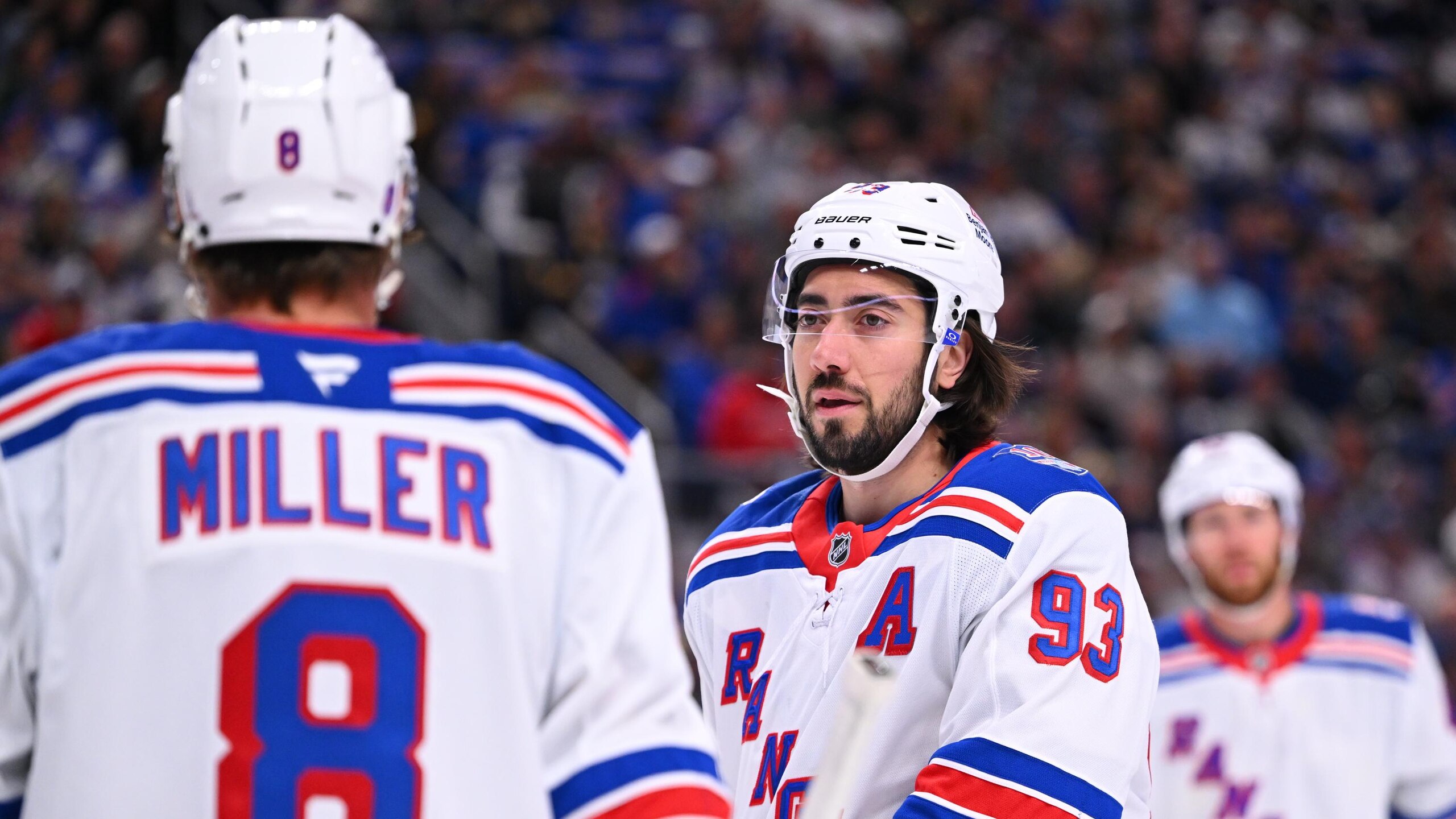

Trust the Process, the Rangers Don't Have a Growing Problem With Their Offense
Following last season's woeful season, it's no surprise New York Rangers fans are squeamish about the team's three-straight goalless efforts on home ice to start the 2025-26 campaign.
Captain JT Miller said Tuesday, following a 2-0 loss to Edmonton, that "we can all go home and sleep well knowing we played another good home game."
TOP NEWS
Re-Ranking Top Free Agents 🛒
Grades For Every Team's Prospect Pool 🔠
Canes Troll 3 Philly Teams 😅
Head coach Mike Sullivan said Wednesday: "From a process standpoint, the coaching staff has really liked the game that we put on the ice the last few games."
Team leaders often say such things as a means of damage control. They might be trying to extinguish fires in the media or prevent locker room issues. Tage Thompson preached a similar sentiment despite the Buffalo Sabres having every reason to panic.
In this case, it seems Miller and Sullivan legitimately believe the Rangers have played great hockey. I'm buying what they're selling.
Great Offensive Process, Unfortunate Results
The Rangers may not be scoring, but it's not due to a dearth of opportunities.
Per Evolving Hockey, they rank fifth overall in the NHL at five-on-five in expected goals for per 60 minutes. Clear Sight Analytics has the Rangers generating three-plus expected goals in each of the back-to-back shutout losses to Washington and Edmonton.
At such moments, coaches often claim the process is correct, but the results aren't there. But what does that actually look like?
This first clip is from the Rangers' 6-1 win in Pittsburgh on Oct. 11. That was the one night when they were lighting the lamp, but this was one of their best sequences of the season.
Adam Fox (23) sends the puck to Miller (8), who wins the initial battle and deflects it deep into Pittsburgh's zone. Artemi Panarin (10) does his job as the first forechecker, steering Kris Letang (65) to the side of the ice the Rangers have crowded and forcing a pass.
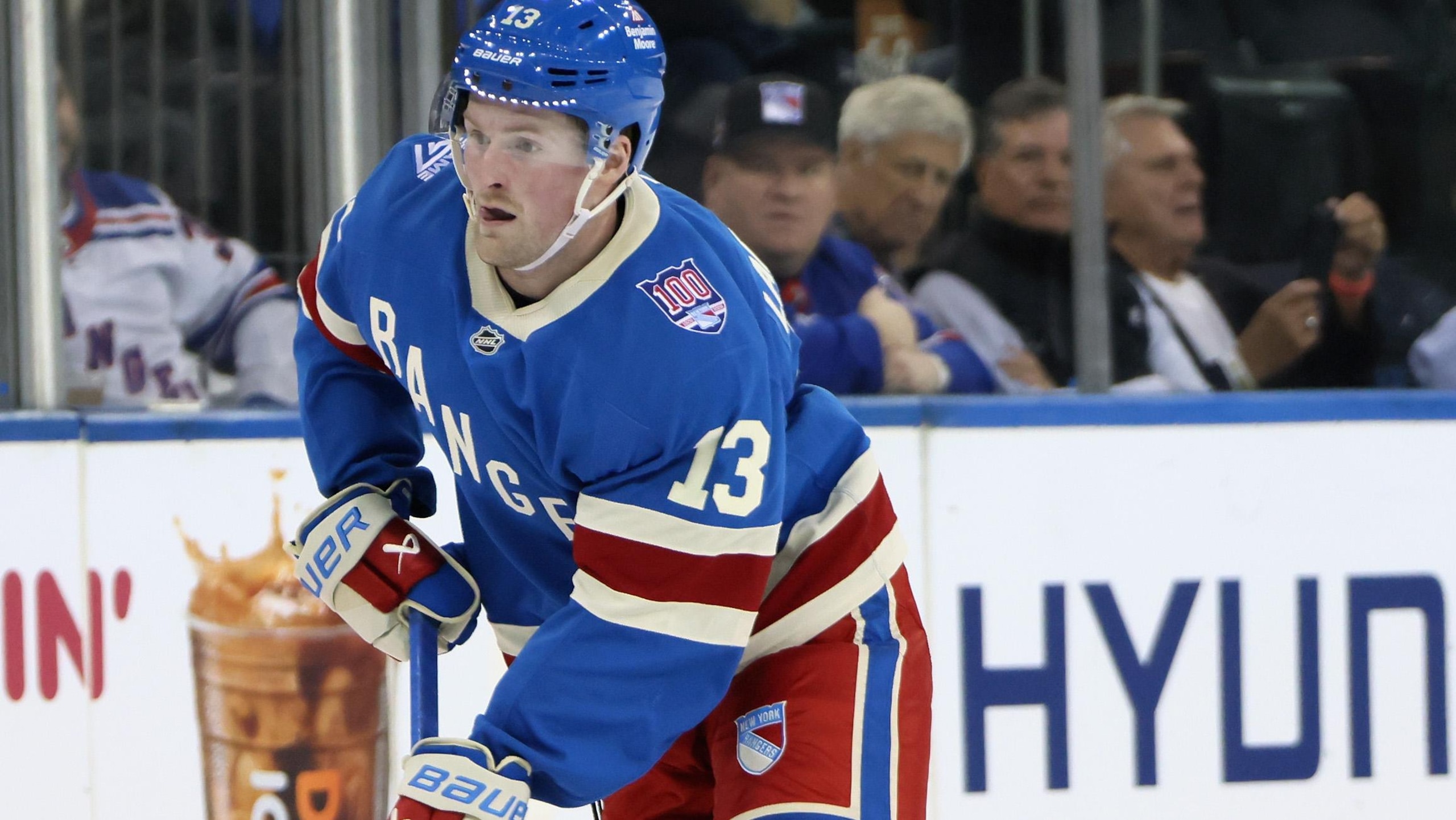
Meanwhile, Miller is at the end of his shift but digs in and hustles to the other side of the ice to harass Noel Acciari (55) as soon as he receives Letang's pass. Alexis Lafrenière (13) is in a position to take advantage and pokes the puck free.
You could not draw up a better example of how Sullivan wants the Rangers to execute his 1-2-2 forecheck.
Alexis Lafrenière immediately heads to the net. When the puck doesn't go there, he keeps his feet moving and finds a way to lose his defender before popping back in right as Zibanejad finds a lane to shoot. It's a screened deflection (one of the most dangerous chances in hockey) for Lafrenière, followed by a great rebound opportunity with goaltender Arthur Šilovs out of position.
Lafrenière has consistently buried chances like this throughout his career. His problem has been laying the groundwork for these opportunities. In this case, he did everything right, but it just didn't go his way.
Lafrenière ranks sixth in the entire NHL by individual expected goals, per Evolving Hockey. If the 24-year-old continues to apply himself like this (and Miller and Panarin do their part), then the tide will turn, and he should be able to beat his career-high 28 goals from 2023-24.
Let's split up a pivotal moment from the Rangers' 2-0 loss to Edmonton on Tuesday. In part one, we'll see New York defending the rush after its own offensive-zone possession and a line change. Last season, these moments were when the team was most vulnerable.
Fox does brilliantly against Matt Savoie (22), stickchecking and forcing him into middle ice. Mika Zibanejad (93) hustles from the bench and takes away the remaining space, initiates contact, and completes the turnover.
This type of play, where the Rangers neuter a rush by funneling a puck carrier into the middle lane and then suffocate him with an aggressive stand at the blue line and back pressure from the center, was absent last season. The quick transition from Vladislav Gavrikov (44) to Lafrenière is the cherry on top.
Last season, the play was over after that initial Lafrenière shot. One-and-dones were how the Rangers functioned. What's different this season? Let's keep watching.
Lafrenière reloads before pressuring Brett Kulak (27) on the puck. Zibanejad takes away the low passing option and Kulak is forced to flip a puck that Braden Schneider (4) holds in the zone.
Then, Zibanejad spots a 50/50 puck and jumps into the play, wins the battle against Savoie, and sends it behind the goal line. Edmonton tries to exit again, but it fumbles the puck under Rangers pressure.
The Rangers cycle the puck to the point. Lafrenière, as with the Pittsburgh example, finds his way to the net and creates the right kind of mess. A puck hits the pile and pops out the weak side.
Braden Schneider activates from the point and puts the puck exactly where it needs to go, up high where the goalie can't reach it.
The only bad thing about this play? The puck hits the crossbar. One inch lower and the New York fans are celebrating a well-executed goal that started with fantastic neutral-zone defense a full minute earlier.
Zibanejad, critical to this play, has been on the ice for 3.54 expected Rangers goals at 5v5 this season. They have not scored once. In fact, he ranks fifth in the entire NHL by individual expected goals. He's unlucky to have just one point through five games.
Ahead of Schedule
Ignore the scoreboard for a second and assess the team's checklist for fixing last season's problems.
Defense? The Rangers are giving up almost nothing. They've ceded seven goals through five games, and three were empty-netters. Igor Shesterkin and Jonathan Quick have played well, but also have not backstopped a more austere defense in their New York careers. That's a check.
Forechecking and sustained offense? Check. The 1-2-2 is working. Other teams are having a tough time getting past the Rangers' layered forecheck. They are playing an aggressive style that is forcing turnovers. New York is getting second and third chances at offense through sustained pressure.
Effort? Absolutely, a check. Lafrenière was floating last season, and Zibanejad had no confidence. Now, both have been two of the Rangers' best 200-foot players. They're buying into the layered forecheck concept, putting in the work to be in position to force turnovers as units and then create offense around the net.
The Rangers aren't a team without fault, and there are some big-picture questions about their offensive ceiling. The second and third lines lack upside, and no defenseman outside of Fox is a credible puck-mover.
Here's the thing, though: New York was trashed by management, media, and fans last season despite a 12-4 record because everyone knew the effort was bad and the play was sloppy. That was fully deserved.
Now the Rangers are playing the right way, and far sooner than anyone could have anticipated.
If you're going to hold players' feet to the fire for a bad product despite good results, you have to give them a break when they play an honest game but don't immediately get the desired reward.
.jpg?w=2560 "AD Trolls Bears WR on IG 😂")
.jpg?w=2560 "Viral Dan Campbell Presser 💙")
.jpg?w=2560 "Report: Steelers WR to Miss 'Weeks'")
.jpg?w=2560 "Buzz: MHJ Hired Agents for Trade")
.jpg?w=2560 "Cam Ward Says He's Not A Loser")

.jpg?w=2560 "Chargers Fall to 0-5 🤢")
