.jpg?w=2560 "Arbitrator Ruling Appeal Football")

How Every NFL Team Got Its Name
There are strange, ironic and sometimes obvious origins of the 32 NFL team names, from frontier icons and bird metaphors to branding brainstorms and budget jerseys.
A name says a lot. Sometimes it evokes civic pride, historic legacy or whatever sounded catchy in a boardroom meeting one night. Some upset folks on both sides of the aisle, including the U.S. President.
Here's a quick and only slightly irreverent look at how every NFL team got its name.
Arizona Cardinals
1 of 32.jpg?w=2560 "Cardinals Patriots Football")
This story sounds like a yarn spun in an episode of Pawn Stars.
Originally the Chicago Cardinals, they took their name from the faded maroon jerseys they bought second-hand from the University of Chicago. The team said they were "cardinal red," and the name stuck. Frugality has rarely sounded so poetic.
When they moved to Arizona by way of St. Louis, they wisely kept the name, which has the dual benefit of sounding noble and vaguely churchy. It's also one of the few avian names that sounds prestigious.
Atlanta Falcons
2 of 32.jpg?w=2560 "Browns Falcons Football")
In 1965, a schoolteacher won a name-the-team contest with "Falcons," symbolizing courage, grace and "fighting spirit." A strong bird name is hard to mess up.
It was either that or something peach-related. We all won that day.
Falcons sound like they’ll claw you mid-air, not hand you a fruit basket. Plus, they have one of the slickest brand identities in the NFC.
Baltimore Ravens
3 of 32.jpg?w=2560 "Texans Ravens Football")
Having a literary influence earns extra points. Named after Edgar Allan Poe's most famous work, the Ravens have a brooding, ominous and oddly poetic origin.
Fans voted for it in a 1996 poll after the franchise moved from Cleveland, and "Ravens" was a far more literary choice than the alternatives: "Marauders" and "Rhinos." Nevermore, indeed.
It helps that Poe actually lived and died in Baltimore, making the name an homage without being pretentious.
.jpg?w=2560 "Colts Football")
.jpg?w=2560)
.jpg?w=2560 "Commanders 49ers Football")
Buffalo Bills
4 of 32.jpg?w=2560 "Bills Bears Football")
Inspired by the Wild West, the team is named after frontiersman Buffalo Bill Cody. The "Bills" name was selected through a fan contest in 1947, combining bonfire legend with alliteration.
The choice reflected a deliberate effort to create a stronger identity than previous Buffalo teams, which had struggled with generic names and short lifespans.
The franchise leaned into the area's frontier history while setting itself apart in a growing sports landscape. The charging bison logo, which was introduced later, reinforced that identity with a clean, powerful image. It captured motion and regional pride without relying on cliché.
Carolina Panthers
5 of 32.jpg?w=2560 "Panthers Texans Football")
Kids say the darnedest things.
Team founder Jerry Richardson's son reportedly chose the name "Panthers" for its association with power, agility and sleek design.
The name, logo and color scheme were finalized before the franchise had officially been awarded, reflecting a bold (maybe cocky) vision for the team's identity.
Rather than playing it safe or leaning on local references, they opted for a broader, more intimidating symbol. The black-and-blue color palette reinforced that edge, giving the team a distinct and modern look from day one.
Decades later, the visual identity still holds up as sharp, clean and consistent.
Chicago Bears
6 of 32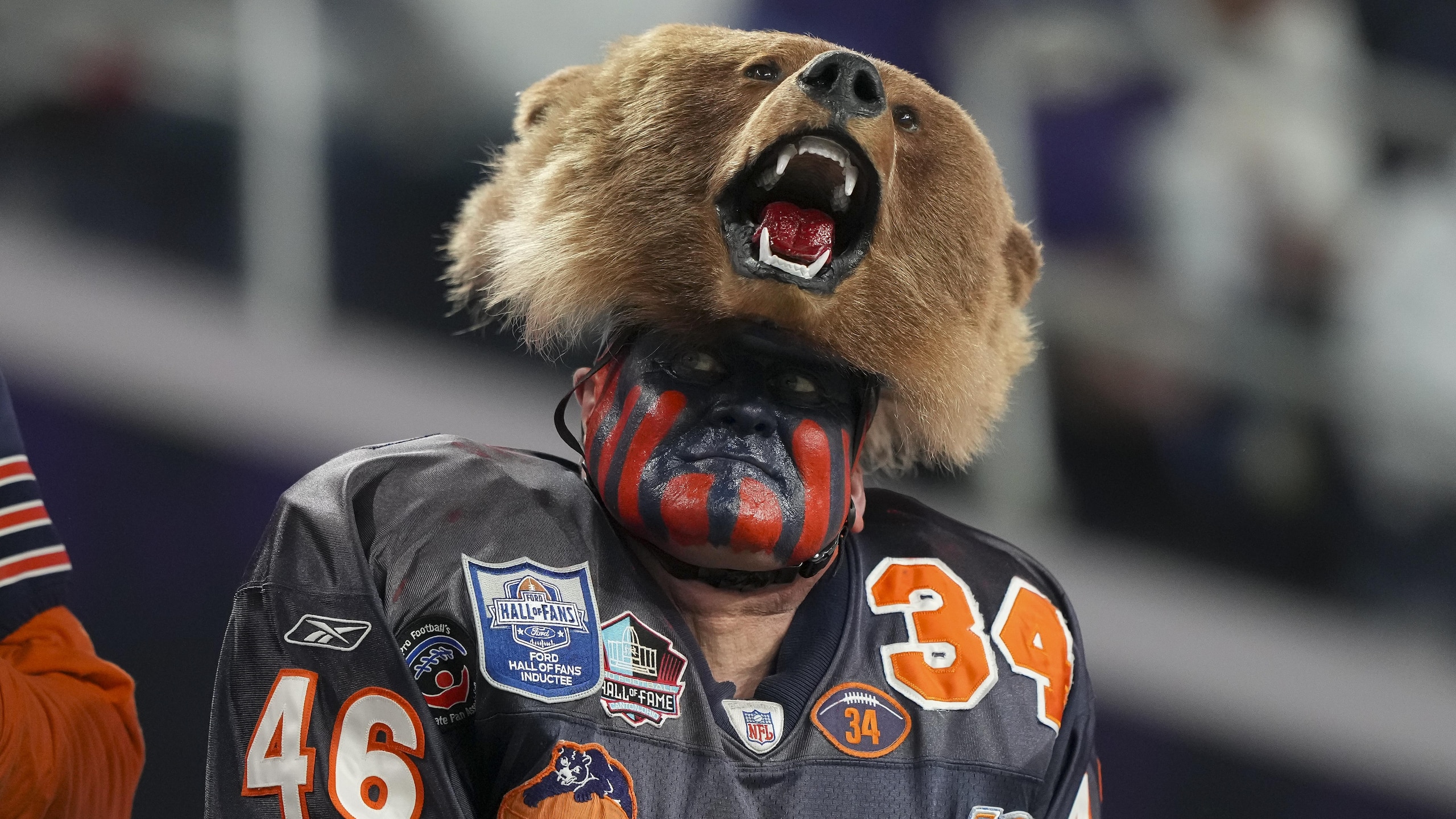
When George Halas moved his team into Wrigley Field, home of the Cubs, he figured football players were bigger than baseball players, so obviously the more fearsome-sounding "Bears" was chosen.
Plus, football players are generally bigger and more physical than baseball players, so the name reflected that distinction without straying far from the city's established sports identity.
Cincinnati Bengals
7 of 32.jpg?w=2560 "Patriots Bengals Football")
There are many ways to honor a previous Cincinnati football team from the 1930s that shared the name.
Owner Paul Brown chose the name "Bengals" as he appreciated its distinctiveness and the sharp sound it carried. The name conveyed a sense of strength without being generic, and it paired naturally with the team's loud and bold tiger-stripe helmets. Which are badass.
Unlike a weak option like "Big Cats," "Bengals" struck the right balance between identity and imagery. It gave the team a unique presence from day one, fitting for a franchise that has delivered both resilience and flashes of dominance.
Cleveland Browns
8 of 32.jpg?w=2560 "AAFC Stats")
In a shoutout to original coach and co-founder Paul Brown, as the Browns' identity is rooted in one of football's most influential figures.
Although there was a later attempt to link the name to heavyweight boxer Joe Louis, known as The Brown Bomber, the connection fell apart.
The name was always about the coach. Paul Brown was a pioneer as an innovator in play design, scouting and team organization. Naming a franchise after him was recognition of legacy.
The result is a name that carries weight, even if it's the blandest of the bunch.
Dallas Cowboys
9 of 32.jpg?w=2560 "Eagles Cowboys Football")
The team was initially going to be called the "Rangers," but that name was already taken by a local minor league baseball team.
"Cowboys" was chosen instead for a clean, regionally relevant identity that quickly took hold. The name suited the team's image and ambition, anchoring a brand built on national appeal and sharp presentation.
Over time, "Cowboys" became more than a name, drawing generations of fans into a mix of pride, loyalty and high expectations. In Dallas and beyond, the name still carries weight, evoking both loyalty and hate as one of the most recognizable brands in sports.
Denver Broncos
10 of 32.jpg?w=2560 "Broncos Bears Football")
"Broncos" was selected through a name-the-team contest in 1960 as a fitting choice for a city rooted in western history and culture.
The image of an untamed horse captured the spirit of the region and the physical intensity of professional football.
Over the decades, the team's logo has changed, modernized and adapted to new eras, but the name has remained consistent and effective. It conveys strength, speed and independence without relying on gimmicks.
Even today, the identity holds up, especially in the cold, high-altitude conditions of Denver, where toughness and resilience are more than branding; they are part of the team's DNA.
Detroit Lions
11 of 32.jpg?w=2560 "Draft Lions Football")
Adopted as their name in 1934 and inspired by Detroit's baseball team, the Tigers, "Lions" was chosen to evoke qualities such as courage, strength and leadership.
It was a deliberate effort to create a unified sports identity for the city while projecting a bold, competitive image.
On the field, though, the results have rarely matched the name's intended stature. Despite decades of struggles and missed opportunities, the name has endured as recognizable, rooted in tradition and still carrying the weight of expectation.
Whether or not the team lives up to its namesake, "Lions" remains a defining symbol of Detroit football and its loyal fanbase.
Green Bay Packers
12 of 32.jpg?w=2560 "49ers Packers Football")
The Packers' name was influenced by the Indian Packing Company, which sponsored the team when it was founded in 1919.
The company was part of Green Bay's meat-packing industry, and the team's name is a direct reflection of those working-class roots.
It's a rare example of a professional sports franchise named after a local business, and even rarer that the name has endured for over a century. In any other city, it might seem a bit dusty and outdated but in Green Bay, it fits.
The name speaks to the town's identity as practical and unpretentious, and it honors the area's labor force.
Houston Texans
13 of 32.jpg?w=2560 "Texans Patriots Football")
When the NFL brought football back to Houston, subtlety wasn't the priority.
"Texans" beat out contenders such as "Apollos" and "Bobcats" for a reason: Those names suck. "Texans" is direct, unmistakably local and leaves no confusion about where the team stands.
It may not be imaginative, but it doesn't need to be. In a state where tradition carries weight and delivers exactly what it promises, which is a clear connection to the Lone Star State's legacy on and off the field.
Indianapolis Colts
14 of 32.jpg?w=2560 "Bears Colts Football")
"Colts" started in Baltimore, chosen to honor the city's strong ties to horse racing and its equestrian culture.
When the team relocated to Indianapolis in 1984, the name remained. Partly due to the practical cost of rebranding, but also because it had already built national recognition. Plus, NFL teams can be notoriously cheap.
While Indiana has its own sports traditions, "Colts" was already part of NFL history. Alternatives like "Hoosier Horses" were never seriously considered, and shouldn't have been. The team rightly opted to preserve a name that still carried weight. Plus, colts are cool.
Jacksonville Jaguars
15 of 32.JPG?w=2560 "Titans Jaguars Football")
In 1991, the Jacksonville Zoo welcomed a rare jaguar cub. A year later, when the city landed an NFL expansion team, fans voted to name it the Jaguars.
It made sense: Fast, powerful and just exotic enough to stand out without veering into novelty mascot territory.
It also helped that "Jaguars" sounded like a real football team, unlike, say, the Armadillos, which was an actual finalist. The name was Florida enough to be regional, but not so Florida that it became a punchline. All things considered, it's one of the more sensible branding decisions to come out of early 1990s sports.
Kansas City Chiefs
16 of 32.jpg?w=2560 "Chiefs Patriots Football")
Did you know their first name was the Dallas Texans? The franchise relocated to Kansas City in 1963 and was renamed in honor of Mayor Harold "Chief" Bartle, whose nickname stemmed from his role in a Boy Scouts organization, which is way less cool than if it had been for tribal affiliation.
The Native American imagery, which appeared later, has sparked ongoing controversy and debate, though it wasn't part of the team’s original intent.
Still, history tends to get condensed into logos and mascots, regardless of context. While the name "Chiefs" began as a nod to civic leadership, the modern interpretation and all the baggage it carries illustrates how branding often outpaces nuance or accuracy.
Las Vegas Raiders
17 of 32.jpg?w=2560 "Browns Raiders Football")
Dubbed the Oakland Raiders after a name-the-team contest, the franchise almost went with "Senors." Yes, that actually happened. It lasted about as long as it took someone to realize naming a football team after a polite Spanish title wasn't exactly menacing.
"Raiders" made more sense, invoking a tougher, darker and far more suited to a team meant to intimidate. The name carries a kind of outlaw appeal that works whether they are storming the field in Oakland, Los Angeles or Las Vegas.
Geography changes. Coaching staffs come and go. But "Raiders" still sounds like a crew you wouldn't want to meet in a dark alley.
Los Angeles Chargers
18 of 32.jpg?w=2560 "Chargers-Sao Paulo Football")
Owner Barron Hilton claimed he liked the rally cry of "Charge!" at sporting events. Conveniently, he also ran a credit card company—so whether it was marketing instinct or subconscious branding is anyone’s guess. Regardless, the name stuck and moved three times.
From Los Angeles to San Diego and back again (with a pit stop in between), the Chargers haven't been models of permanence. But while the stadiums keep changing, the name hasn’t. For a team often on the move, “Chargers” ironically feels like the one thing they actually own.
Los Angeles Rams
19 of 32.jpg?w=2560 "Rams Packers Football")
First known as the Cleveland Rams, the team took its name from the Fordham Rams. But not because of any deep connection, but because the general manager liked how it sounded. Sometimes it's as simple as a gut decision. And it worked.
The name “Rams” is strong and direct, while suiting the team across multiple cities and eras. Whether in Cleveland, Los Angeles, St. Louis or back again, the name hasn't needed a dramatic reinvention. It’s adaptable.
Plus, it looks clean as hell on a helmet, and it carries the semblance of aggression without trying too hard.
Miami Dolphins
20 of 32.jpg?w=2560 "Dolphins Browns Football")
Selected in a 1965 name-the-team contest, "Dolphins" might not strike fear into opponents but at least the choice makes ecological sense.
Unlike, say, a Bronco or a Bengal, dolphins actually live in Florida waters. They're intelligent, fast, and surprisingly tough. Not bad traits for a football team.
Plus, the name has stuck for decades without needing a gritty rebrand or aggressive animal upgrade. It's not trying too hard, and that's part of the charm. You won't find many other franchises pulling off a teal-and-orange color scheme without apology.
Minnesota Vikings
21 of 32.jpg?w=2560 "Vikings Texans Football")
The name Vikings was chosen in 1961 as a tribute to Minnesota’s Nordic roots. Minnesota is a state filled with descendants of Scandinavian settlers who apparently thought pillaging football fields was the next logical step.
The branding was all in from the start with horned helmets and stoic mascots. “Skol” became a rallying cry, though it’s unclear how many fans actually know what it means. It’s a bold look but then again, when were Vikings ever known as subtle?
New England Patriots
22 of 32.jpg?w=2560 "Seahawks Patriots Football")
Patriotism was always the theme, as they were first called the "Boston Patriots," a clear reference to the American Revolution—a smart choice for American football branding.
But when the team moved to the suburbs in 1971, “New England” gave it a broader regional appeal without abandoning its colonial branding.
The imagery stuck with liberty, muskets, red, white and blue. It all somehow fits, especially when paired with decades of methodical dominance and a former coach in Bill Belichick who resembled General Patton in stoicism and general sourpuss temperament.
New Orleans Saints
23 of 32.jpg?w=2560 "Saints Patriots Football")
Most have heard the classic New Orleans anthem, "When the Saints Go Marching In." Many have associated the team's name with the song, which is tied to New Orleans' sense of identity. But it goes deeper than that. The franchise was awarded on November 1 (known as All Saints Day), because it's been said fate has a sense of timing.
According to Newsweek, a local resident won a naming contest with his nomination, and his choice was an homage to the jazz scene as well as the holy holiday.
“Saints” sounds dignified, even reverent, while also functioning just fine as something you can shout in between beers and bites of beignets with a side of symbolism.
New York Giants
24 of 32.jpg?w=2560 "Giants Patriots Football")
The Giants name dates back to the 1920s, when the team shared both a city and a name with baseball’s New York Giants. When the baseball club packed up and moved to San Francisco, the football version kept the name, as if no one would notice. Officially, they’re still the “New York Football Giants,” a title that’s somehow both oddly specific and completely asinine.
But at this point, it’s part of the brand, a holdover from a time when teams didn’t spend millions on marketing campaigns.
New York Jets
25 of 32.jpg?w=2560 "Jets-New Locker Room Football")
Originally named the Titans, the team rebranded as the "Jets" in 1963 to better reflect their proximity to LaGuardia Airport and to capture the sleek, modern image of the jet age.
Not to mention it played off the hit film West Side Story, which featured the ultra-cool street gang called the "Jets."
Of course, that spirit hasn't always translated to results on the field. Still, the name endures as clean, sharp and unmistakably New York.
Philadelphia Eagles
26 of 32.jpg?w=2560 "Cowboys Eagles Football")
The team took its name in 1933 after the Blue Eagle symbol used in Franklin Delano Roosevelt’s National Recovery Administration. So yes, the Philadelphia Eagles owe their name to a piece of New Deal marketing. That's right, a football team named after economic stimulus propaganda. Nothing says gridiron toughness like federal policy branding.
Yet somehow, it worked. The name stuck and the eagle imagery managed to transcend its bureaucratic origins. Now, it’s hard to imagine the city without it. Ironically, it may be the most successful long-term outcome of FDR's National Recovery Administration.
Pittsburgh Steelers
27 of 32.jpg?w=2560 "Chargers Steelers Football")
In an homage to Pittsburgh's steel industry, the team changed its name from "Pirates" to "Steelers" in 1940. This was a decision that finally gave the franchise its own identity rather than borrowing from the local baseball team. It stuck for good reason.
Few names align more directly with a city's character: Hard-working and no-nonsense. Not to mention a legacy of blue-collar defense.
"Steelers" reflects what Pittsburgh is: tough and relentless.
San Francisco 49ers
28 of 32.jpg?w=2560 "Jets 49ers Football")
Harking back to the fortune-seekers of the 1849 Gold Rush, the 49ers leaned all the way in with gold helmets, gold accents and a logo that hasn't changed in decades. It actually makes sense, which is rare in pro sports.
The name ties directly to California history, regional identity and, yes, a little shine for the merchandise.
There's nothing abstract. Just a simple nod to the state's past that also happens to look good on a sports jacket.
Seattle Seahawks
29 of 32.jpg?w=2560 "Browns Seahawks Football")
Like many others, Seattle's nickname was selected through a public naming contest in 1975. "Seahawk" refers to an osprey, known as a sharp-eyed bird of prey found along the coastal waters of the Pacific Northwest.
It edged out other finalists such as "Evergreens" and "Rainbeams," which, while deeply reflective of regional weather and flora, don't hold the same competitive cache.
The name choice was at least grounded in the area's geography and wildlife, unlike some team names that sound like marketing experiments.
While the bird itself isn't exactly intimidating, it's fast, focused, and hard to shake. And they dodged "Rainbeams." Count that as a win.
Tampa Bay Buccaneers
30 of 32.jpg?w=2560 "NFL Draft Football")
A nod to the Gulf Coast’s pirate lore, the Buccaneers name actually tracks. Tampa was once a haven for smugglers, privateers and all manner of maritime mischief.
The franchise leaned into the pirate aesthetic from the start, blending regional identity with marketing flair.
Later rebranding would go darker and tougher, but the core idea remained: Swashbuckling pathos with Florida heat.
Tennessee Titans
31 of 32.jpg?w=2560 "Draft Titans Football")
After relocating from Houston, the franchise needed a fresh identity to match its new Nashville address.
"Titans" was the chosen name, aiming for a blend of strength and classical authority. It's a nod to mythology, but also to a product of oversized branding that tends to show up when committees get involved.
The name implies power and presence and fits the intended tone: imposing, dramatic and the occasional cheesy lightning-bolt graphic. Subtle, it is not.
Washington Commanders
32 of 32.jpg?w=2560 "Commanders-Stadium Naming Rights Football")
After retiring its controversial name in 2020, Washington rebranded as the Commanders in 2022, opting for a title that nods to the region's ties to the military and federal government. It's inoffensive and clearly vetted—probably with a PowerPoint presentation.
While the name lacks edge or originality, it does check the boxes of geographically relevant and a clean break from the past. Whether fans embrace it or not, the organization has made its choice.
That is until the U.S. President throws another online temper tantrum.

.jpg?w=2560 "DOLPHINS-AIKMAN")








