

Ranking the 10 Best 'Small Ball' Lineups in NCAA Basketball for 2015-16
Small ball has taken the NBA world by storm in recent years, but it has been a staple in college basketball for decades, if only because there aren't nearly enough talented giants to keep 351 D-I schools happy.
Since the addition of the three-point line in the 1980s, scoring on the perimeter has been an incredible alternative to banging bodies in the post, and there are quite a few teams that will challenge for the 2016 national championship despite a shorter-than-average starting five.
Any team projected to start two players 6'8" or taller was immediately removed from consideration. Beyond that, the smaller they are and the better they are, the higher they ranked on the list.
Honorable Mentions
1 of 11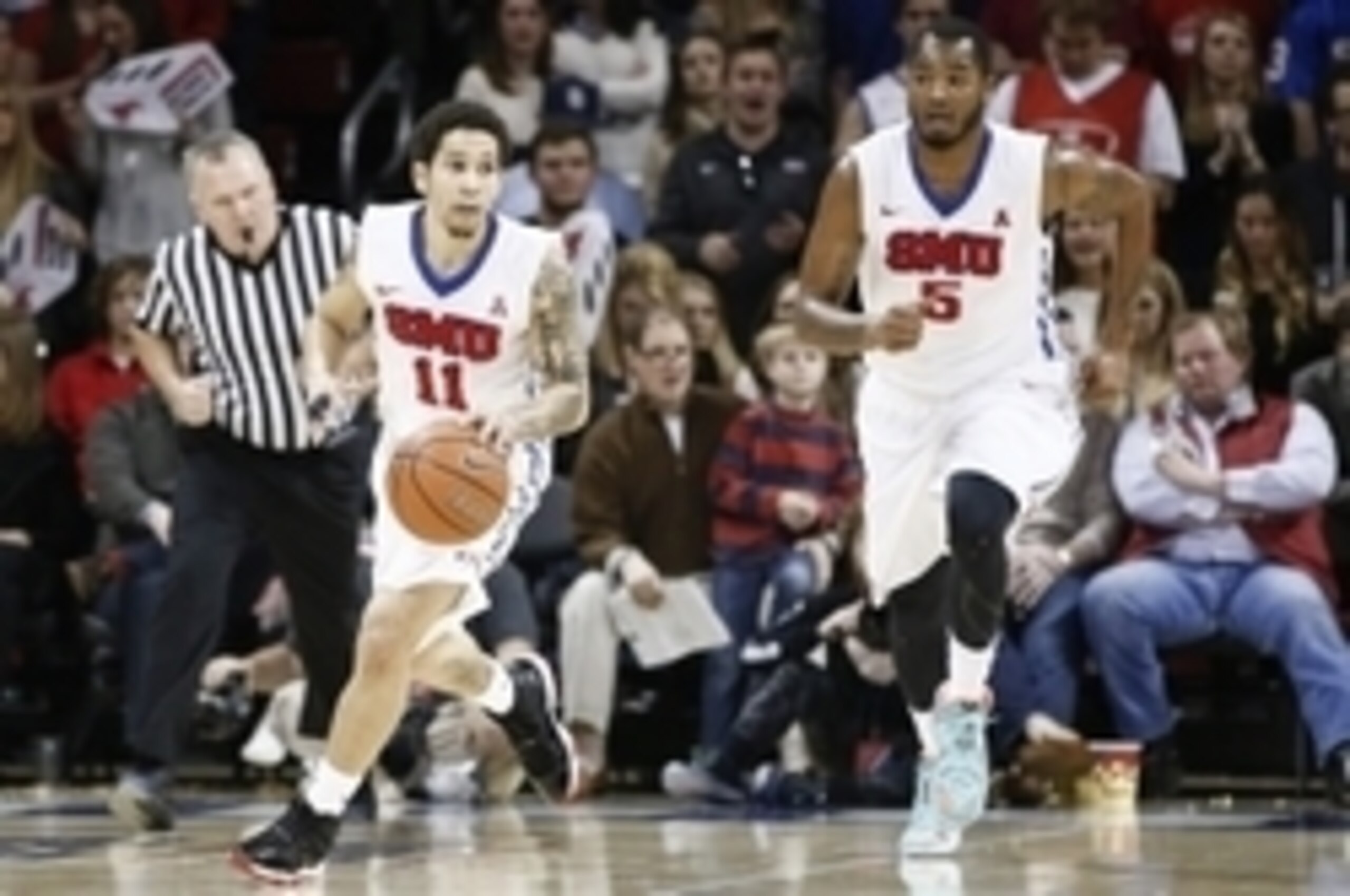
SMU Mustangs
Nic Moore, Shake Milton, Keith Frazier, Jordan Tolbert, Markus Kennedy
Connecticut Huskies
Jalen Adams, Sterling Gibbs, Daniel Hamilton, Shonn Miller, Amida Brimah
Cincinnati Bearcats
Troy Caupain, Kevin Johnson, Shaquille Thomas, Gary Clark, Octavius Ellis
These are three American Athletic Conference schools that will very likely make the NCAA tournament, but they are very much teetering on the wrong side of the definition of small ball.
The Huskies and Bearcats each have a pair of 6'7" forwards in their projected starting five in addition to a shot-blocking starting center and a big man who figures to play a ton off the bench—6'10" Coreontae DeBerry for Cincinnati and 6'9" Kentan Facey for Connecticut.
The Mustangs are much closer to a traditional small-ball squad, with three guards, a 6'7" power forward and a 6'9" center, but that's assuming that Texas Tech transfer Tolbert supplants 6'8" Ben Moore in the starting lineup, which is hardly a foregone conclusion.
Texas A&M Aggies
Anthony Collins, Alex Caruso, Danuel House, Jalen Jones, Tyler Davis
D.J. Hogg, the 6'8" freshman forward, probably won't start, but he should get a lot of playing time, as will 6'9" freshman center Elijah Thomas. Texas A&M is going to be one of the best teams in the SEC, but with House and Jones both standing 6'7", it will be hard to sell the Aggies as a small-ball team.
West Virginia Mountaineers
Jevon Carter, Jaysean Paige, Daxter Miles Jr., Jonathan Holton, Devin Williams
Nathan Adrian, the 6'9" stretch 4, had a dreadful sophomore year after serving as one of WVU's most efficient scorers as a freshman. He shot 35.8 percent from three-point range with a 10.0 turnover rate as a freshman, but he shot 17.7 percent from downtown and had a 20.2 turnover rate as a sophomore.
Given his ability to create steals and blocks, Adrian might sneak back into the starting lineup if he can break out of that sophomore slump, bumping Holton to small forward and perhaps relegating Paige to a backup role. If that happens, the Mountaineers would no longer qualify as a small-ball team.
Brigham Young Cougars
Kyle Collinsworth, Chase Fischer, Nick Emery, Kyle Davis, Corbin Kaufusi
Ohio State Buckeyes
JaQuan Lyle, Marc Loving, Jae'Sean Tate, Keita Bates-Diop, Daniel Giddens
Providence Friars
Kris Dunn, Junior Lomomba, Jalen Lindsey, Rodney Bullock, Ben Bentil
These three teams definitely come in below the height maximums, but I'm not convinced they're quite good enough. In our midsummer projected bracket from earlier this month, all three of these schools were listed in the "First 5 Out," while every team in the top 10 on this list was in the projected field.
Should any of our top 10 fail to live up to expectations, these are the schools most likely to replace them.
10. Dayton Flyers
2 of 11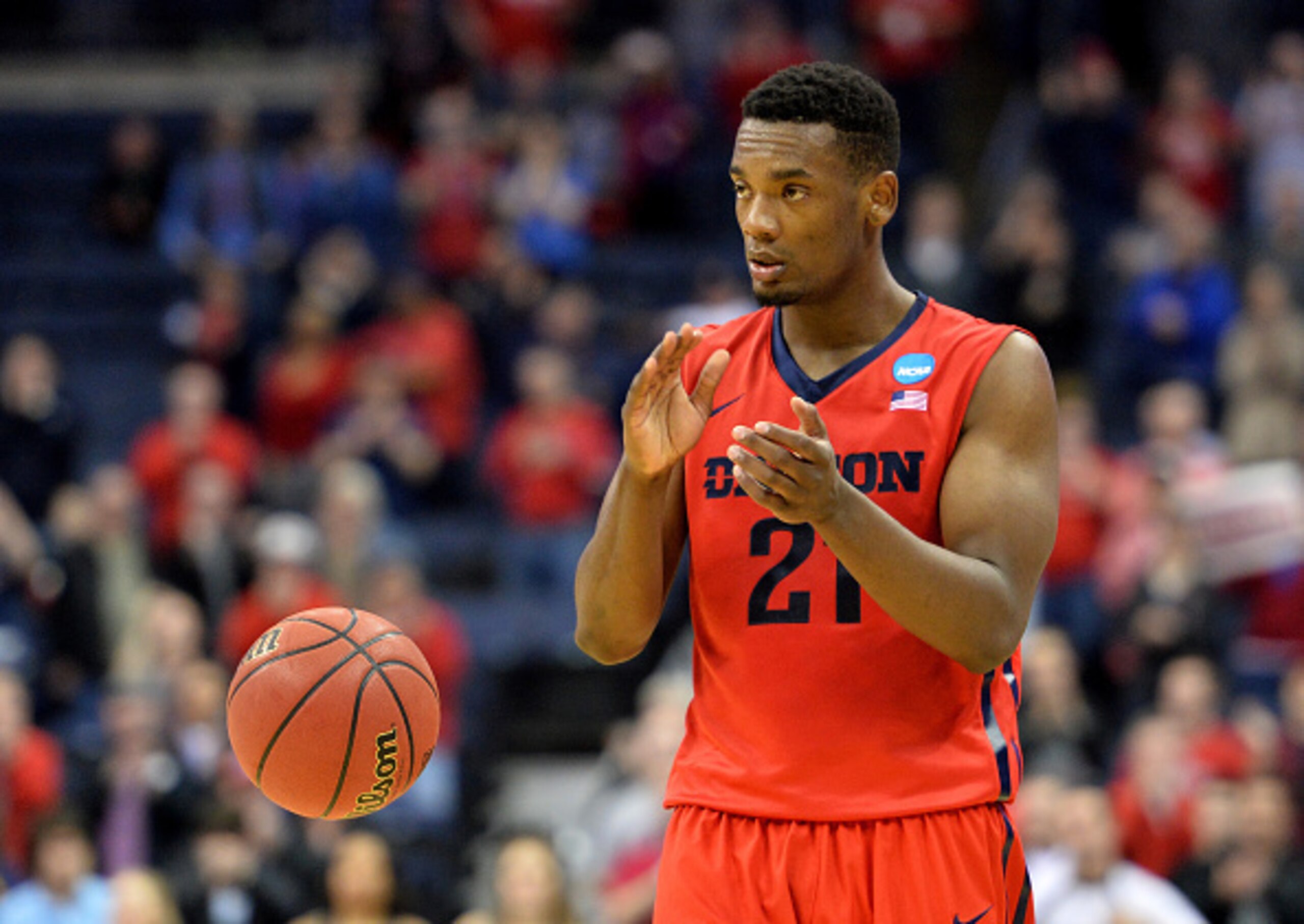
PG: Kyle Davis (6'0")
SG: Scoochie Smith (6'2")
SF: Charles Cooke (6'5")
PF: Dyshawn Pierre (6'6")
C: Kendall Pollard (6'6")
6th Man: Bobby Wehrli (6'6")
It only makes sense to get this list started with one of the smallest and most "ballingest" teams from last season.
After dismissing Devon Scott and Jalen Robinson from the program in mid-December, Dayton did not have one player taller than 6'6" log a single minute the rest of the year. Remarkably, the Flyers were a significantly above-average defensive rebounding team and ranked 29th in the nation in two-point field-goal percentage.
Let's not go pretending they were a force to be reckoned with in the paint, though. They were one of the worst offensive rebounding teams, rarely blocked shots, frequently had their own shots blocked and did a lot of their damage from the free-throw and three-point lines.
Not that there's anything wrong with that. But it gives us a pretty good idea of what to expect as Dayton remains one of the smallest teams in the nation once again this season.
Though the Flyers lose an important piece in former Ohio State transfer Jordan Sibert, Archie Miller is hoping to strike oil once again on the transfer market with James Madison product Charles Cooke. Cooke averaged 14.3 points per game two years ago and did most of his damage from inside the arc, where he also pulled down 5.0 rebounds per game.
If Cooke can bring some of that skill from Virginia to his new home in Ohio, Dayton might win the A-10 en route to a third consecutive NCAA tournament appearance. Just stating facts but the last time the Flyers went dancing in three straight years, they advanced to the 1967 national championship game.
9. Xavier Musketeers
3 of 11
PG: Myles Davis (6'2")
SG: Remy Abell (6'4")
SF: J.P. Macura (6'5")
PF: Trevon Bluiett (6'6")
C: Jalen Reynolds (6'10")
6th Man: James Farr (6'10")
At four of the five positions, Xavier's projected starters are either of average height or slightly taller than average. Myles Davis and Remy Abell will serve as one of the tallest backcourts in the Big East, and Jalen Reynolds isn't exactly a small fry at center.
However, a starting lineup with Trevon Bluiett at power forward just screams "small ball."
If a player is 6'8" or taller with three-point range, we call him a stretch 4; but why don't we have a similar moniker for guys who are built like shooting guards but need to serve as the primary power forward because of the roster's construction? Does "rebounding 3" work for the role that Bluiett will need to almost permanently fill, with Matt Stainbrook no longer a part of the Musketeers equation?
James Farr will still have a big role in the frontcourt, but there shouldn't be a ton of time when he and Reynolds are on the court together. Unless Makinde London or Sean O'Mara steps up in a big way this year, it'll fall squarely on Bluiett to be the team's secondary big man.
He's a pretty versatile weapon, though, and should be up for the challenge. And given the lackluster power forward situations at Butler, DePaul, Providence, Seton Hall and Villanova, it wouldn't take much for Bluiett to become one of the best in the Big East.
.jpg?w=2560 "49ers Giants Football")

8. Oregon Ducks
4 of 11
PG: Tyler Dorsey (6'4")
SG: Dylan Ennis (6'2")
SF: Elgin Cook (6'6")
PF: Dillon Brooks (6'6")
C: Jordan Bell (6'9")
6th Man: Dwayne Benjamin (6'7")
As far as major conference teams go, Oregon was the shortest in the country last season.
In terms of effective height—calculated on KenPom.com as the average height of the centers and power forwards—Oregon scored a minus-2.4, meaning the Ducks' frontcourt was 2.4 inches shorter than an average one. (Kentucky, for the record, was plus-6.9 inches.) The next-shortest frontcourt from a major conference school was Indiana at minus-1.3 inches.
Long story short, the Ducks weren't mighty tall.
They did have one freshman who was large and in charge, though, as Jordan Bell joined Karl-Anthony Towns and Myles Turner on the list of three freshmen who ranked in the top 25 in the nation in block percentage. Oregon didn't use him much on offense, but he was efficient when his number was called, converting on 59.7 percent of his field-goal attempts.
The Ducks also had a pair of pretty formidable forwards in Elgin Cook and Dillon Brooks, and a tenacious rebounder in JUCO transfer Dwayne Benjamin—though, Bill Walton prefers to just call him "Snoop."
And that's just the list of returning players. Dana Altman also has a 6'9" incoming 4-star freshman by the name of Trevor Manuel, as well as 6'10" JUCO transfer Chris Boucher.
The Ducks technically meet our specifications for small-ball lineups, but they would tower over most of the other squads on the list. It's whether the new backcourt of Tyler Dorsey and Dylan Ennis can hit the ground running that will likely determine just how good Oregon could be.
7. Rhode Island Rams
5 of 11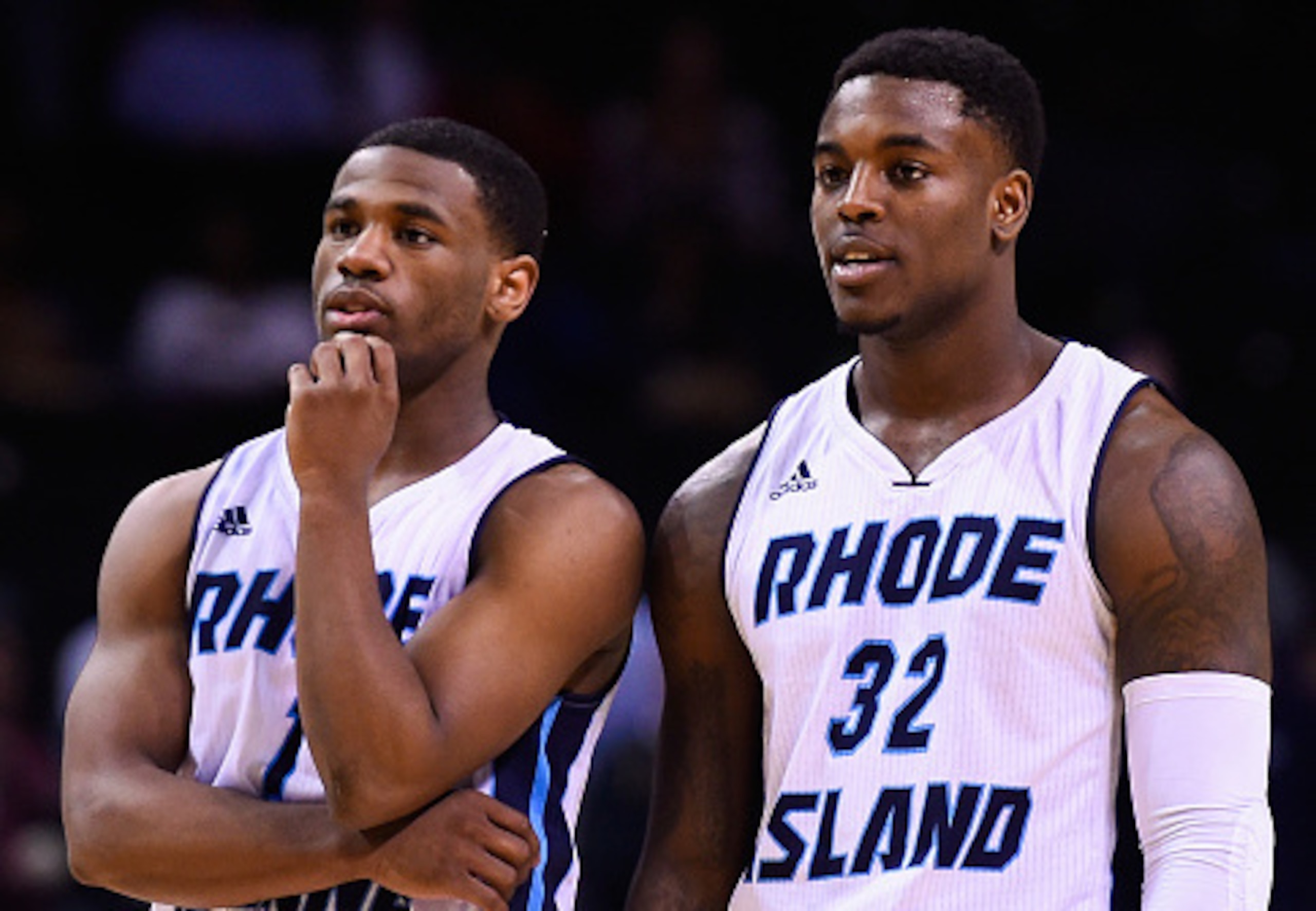
PG: Jarvis Garrett (6'0")
SG: Jared Terrell (6'3")
SF: E.C. Matthews (6'5")
PF: Kuran Iverson (6'9")
C: Hassan Martin (6'7")
6th Man: Four McGlynn (6'2")
Rhode Island got bigger when it added 6'9" Memphis transfer Kuran Iverson. However, he's much more of an oversized small forward than an undersized center, so don't expect the Rams to suddenly start mowing down the opposition in the paint.
In fact, they may play even smaller than last season, now that they no longer have Gilvydas Biruta. In his senior season, the 6'8" forward was their best offensive rebounder and one of their most efficient offensive weapons.
Now, it's pretty much Hassan Martin or bust in the paint, which is actually more promising than it sounds. The 6'7" center averaged 11.4 points, 7.7 rebounds and 3.1 blocks per game last year. He attempted 7.2 two-point field goals per game and converted on 61.1 percent of them. In a 59-47 win over La Salle in early January, he came one rebound away from recording a triple-double. He was kind of a big deal.
Rather than worrying about Martin's ability to handle himself down low, the bigger unknown for the Rams is whether they'll actually be able to shoot the ball this year. This has been a poor-shooting team for the past six years, but 2014-15 was particularly bad, as Rhode Island shot 30.3 percent from three-point range.
E.C. Matthews, Jared Terrell and Jarvis Garrett were responsible for more than 80 percent of the team's three-point attempts last season, but not one of them converted more than 32.5 percent of the attempts. If one of them gets hot this year, Rhode Island is a tournament team. If all three improve considerably, look out.
6. Butler Bulldogs
6 of 11
PG: Tyler Lewis (5'11")
SG: Kellen Dunham (6'6")
SF: Roosevelt Jones (6'4")
PF: Andrew Chrabascz (6'7")
C: Tyler Wideman (6'8")
6th Man: Kelan Martin (6'6")
Small ball is frequently synonymous with three-point barrage. After all, if you aren't tall enough to consistently score in the paint, you have to do it from somewhere.
Butler takes a different approach, though, with its center trapped in a point guard's body.
Despite standing at a very conventional height for a shooting guard, Roosevelt Jones has yet to make a three-pointer in his college career. Yet, he is consistently one of Butler's leading scorers. He led the team in assists last year and ranked second in rebounds.
If Jones were 6'9" or taller, the only "weird" thing about that set of skills would be the impressive number of assists he racks up for a big man. At 6'4", though, he's one of the more unique players in the country.
Of course, it's more than just Jones that makes Butler a small-ball team. Tyler Wideman is the only player taller than 6'7" who scored more than 15 points last season, and his 2.3 points per game weren't really worth writing home about. Andrew Chrabascz figures to start at power forward, even though he finished last season with more three-point attempts than defensive rebounds.
When Kellen Dunham is raining threes, though, it doesn't much matter how tall the rest of the team is or plays. Butler is almost always an elite defensive team and should remain one of the best teams in the Big East for a second straight season.
5. Michigan Wolverines
7 of 11
PG: Derrick Walton Jr. (6'0")
SG: Zak Irvin (6'6")
SF: Aubrey Dawkins (6'6")
PF: Caris LeVert (6'6")
C: Ricky Doyle (6'9")
6th Man: Spike Albrecht (5'11")
Michigan is one of several repeat offenders, as the Wolverines rank in our top five for the second consecutive year.
This makes sense, though, because not a whole lot has changed about their roster. They add a 6'9" power forward in Moritz Wagner, but they also lost a power forward when Max Bielfeldt chose to transfer to Indiana. Other than that, John Beilein neither adds a new player nor loses any of his top 10 scorers from last season.
And few teams played smaller ball than Michigan last season. The Wolverines ranked 325th in offensive rebounding percentage and 340th nationally in block percentage while attempting more than 40 percent of their field goals from beyond the three-point arc.
That was while playing half the season without Caris LeVert, half the season without Derrick Walton Jr. and half the season without knowing just how good Aubrey Dawkins was. If LeVert and Walton can stay healthy while welcoming Dawkins to their starting rotation, this might be the most three-point reliant team in the nation.
This is hardly a new phenomenon for Beilein-coached teams, though. In 13 of the past 14 years, his teams have ranked in the top 50 in percentage of field-goal attempts coming from three-point range, including eight years ranked in the top 13.
Duke has gotten quite the reputation for living and dying by the three, but Beilein knows more about relying on the long ball than perhaps any coach in the country.
4. Indiana Hoosiers
8 of 11
PG: Yogi Ferrell (6'0")
SG: James Blackmon Jr. (6'4")
SF: Robert Johnson (6'3")
PF: Troy Williams (6'7")
C: Thomas Bryant (6'10")
6th Man: Nick Zeisloft (6'4")
Speaking of three-point shooting Big Ten teams, Indiana brings back every single noteworthy perimeter player from a roster that made 40.6 percent of its 23.1 three-point attempts per game last season.
Yogi Ferrell and James Blckmon Jr. led the way with a combined 159 triples, but Robert Johnson and Nick Zeisloft weren't far behind. Collin Hartman was actually the most accurate of the bunch, sinking 47.5 percent of his 61 attempts. All five gunners will be back.
The big difference for this team is in the frontcourt where freshman big men Thomas Bryant and Juwan Morgan should be a significant upgrade over the dismissed Devin Davis and Hanner Mosquera-Perea.
Indiana was routinely pummeled in the paint last season. On seven occasions, the Hoosiers made at least 10 three-pointers in a losing effort, because they had little hope of stopping opponents from dropping in two-point buckets at will.
Bryant isn't Shaquille O'Neal or Anthony Davis, but he is an above-average blocker and rebounder, which is really all you need as a team that is this proficient from three-point range.
Big Ten opponents averaged 19.8 made two-pointers per game against the Hoosiers last year and shot 54.3 percent in the process. A little bit of Bryant and Morgan could go a long way toward fixing that massive problem.
3. Villanova Wildcats
9 of 11
PG: Jalen Brunson (6'1")
SG: Ryan Arcidiacono (6'3")
SF: Josh Hart (6'5")
PF: Kris Jenkins (6'6")
C: Daniel Ochefu (6'11")
6th Man: Phil Booth (6'3")
How about one more team that has been extremely reliant on the long ball for the past few years?
Villanova lost a pair of outstanding shooters when Darrun Hilliard graduated and Dylan Ennis transferred to Oregon, but Jay Wright still has quite a few guys who can stroke it from deep.
Phil Booth shot 48.5 percent from downtown last season, and Josh Hart was only slightly less lethal at 46.4 percent. Ryan Arcidiacono and Kris Jenkins each converted 37.2 percent of the time. True freshman Jalen Brunson should be one of the team's best shooters. Redshirt freshman Mikal Bridges could also fit that description.
Basically, if neither Indiana nor Michigan leads the nation in made three-pointers, it's likely because Villanova makes too many to be caught.
What really makes this a small-ball team, though, is Jenkins. Darryl Reynolds (6'8") should get a fair amount of playing time in the frontcourt, but mostly as a reserve when Daniel Ochefu needs a breather. Jenkins should be Villanova's primary "power forward," even though he does almost all of his shooting from three-point range and averaged just one rebound for every 9:09 on the court.
Even Creighton's Ethan Wragge averaged a rebound every 6:19 on the court, while attempting 93.3 percent of his shots from beyond the arc. Here's hoping Hart can continue to be one of the Wildcats' better rebounders, or else it'll be up to Ochefu to grab at least 15 rebounds per game.
2. Wichita State Shockers
10 of 11
PG: Fred VanVleet (6'0")
SG: Ron Baker (6'3")
SF: Evan Wessel (6'4")
PF: Rashard Kelly (6'7")
C: Anton Grady (6'8")
6th Man (First Semester): Shaquille Morris (6'7")
6th Man (Second Semester): Conner Frankamp (6'1")
Even with the crucial addition of Cleveland State transfer Anton Grady, Wichita State figures to play pretty small for a second consecutive season.
Unlike the three aforementioned teams that will continue to launch three-pointers like their lives depend on it, Wichita State's version of small ball is more of an intense focus on limiting mistakes and second-chance opportunities with a lineup that will quite often be shorter than its opposition.
The latter portion of the equation is perhaps the most impressive and the one where Grady will be indispensable. The Shockers have ranked in the top 40 in the nation in defensive rebounding percentage for 13 straight years, including 10 seasons in the top 15.
Since adding turnover-free offense to the Wisconsin-like formula, the Shockers have been nearly unstoppable and should remain as such in the final year of the collegiate careers of Fred VanVleet, Ron Baker and Evan Wessel.
Here's a somewhat bold prediction: If Grady does anything close to what he did last year for the Vikings (14.2 PPG, 7.9 RPG, 1.4 BPG), get ready for Wichita State to flirt with perfection again this season. If the Shockers can get through the Orlando Classic unscathed (potential games against Dayton, Notre Dame and Xavier), a neutral court game against Utah will be their toughest challenge before what should be a fairly weak Missouri Valley Conference schedule.
1. California Golden Bears
11 of 11
PG: Tyrone Wallace (6'5")
SG: Jordan Mathews (6'3")
SF: Jabari Bird (6'6")
PF: Jaylen Brown (6'7")
C: Ivan Rabb (6'11")
6th Man: Sam Singer (6'4")
With a 6'5" point guard and a 6'11" center, California clearly found a loophole in our small ball definition by having a slightly undersized power forward.
Of course, that temporary power forward may well be the first small forward drafted in June 2016, so no one is going to pity the Golden Bears for giviing Jaylen Brown as many minutes as possible at the 4.
Though Cal doesn't have quite the size that juggernauts like Arizona, Kentucky and Wisconsin had last season, the Golden Bears will be very much in the running for a No. 1 seed with one of the best backcourts in the country and one of the best freshman frontcourt tandems in history.
Barring a catastrophic injury or some woeful underperforming, California might follow in Duke's footsteps by winning a national championship with a 6'11" freshman center and a freshman small forward who dominates against opposing power forwards.
All advanced stats via KenPom.com and Sports-Reference.com. All heights are as listed on ESPN.com.
Kerry Miller covers college basketball for Bleacher Report. You can follow him on Twitter @kerrancejames.
.jpg?w=2560 "Commanders Vikings Football")
.jpg?w=2560 "WWE Raw Live Grades 🔠")
.jpg?w=2560 "Dak Addresses 'Dumb' Old Romo Tweet 🤣")

.jpg?w=2560 "Follow Raw As It Happens 👊")