
Ranking the 15 Best NBA Finals Resumes Since 2000
We’re ranking the 15 best NBA Finals résumés since Michael Jordan's Bulls faded into history post-1999, when the lockout hit reset on the league and a new era took shape. What followed were dynasties born and broken, style overhauls and the rise of player empowerment.
To measure true Finals greatness, we looked at four things: raw production (points, boards, assists, efficiency), rings and Finals MVPs (weighted heavily), how much they actually swung the series, and the moments burned into memory. Longevity matters too. Doing it once is impressive, but doing it over time is legendary.
Honorable Mentions: Manu Ginóbili, Robert Horry, Pau Gasol, Kevin Garnett, Jaylen Brown, Jason Kidd
15. Ray Allen
1 of 15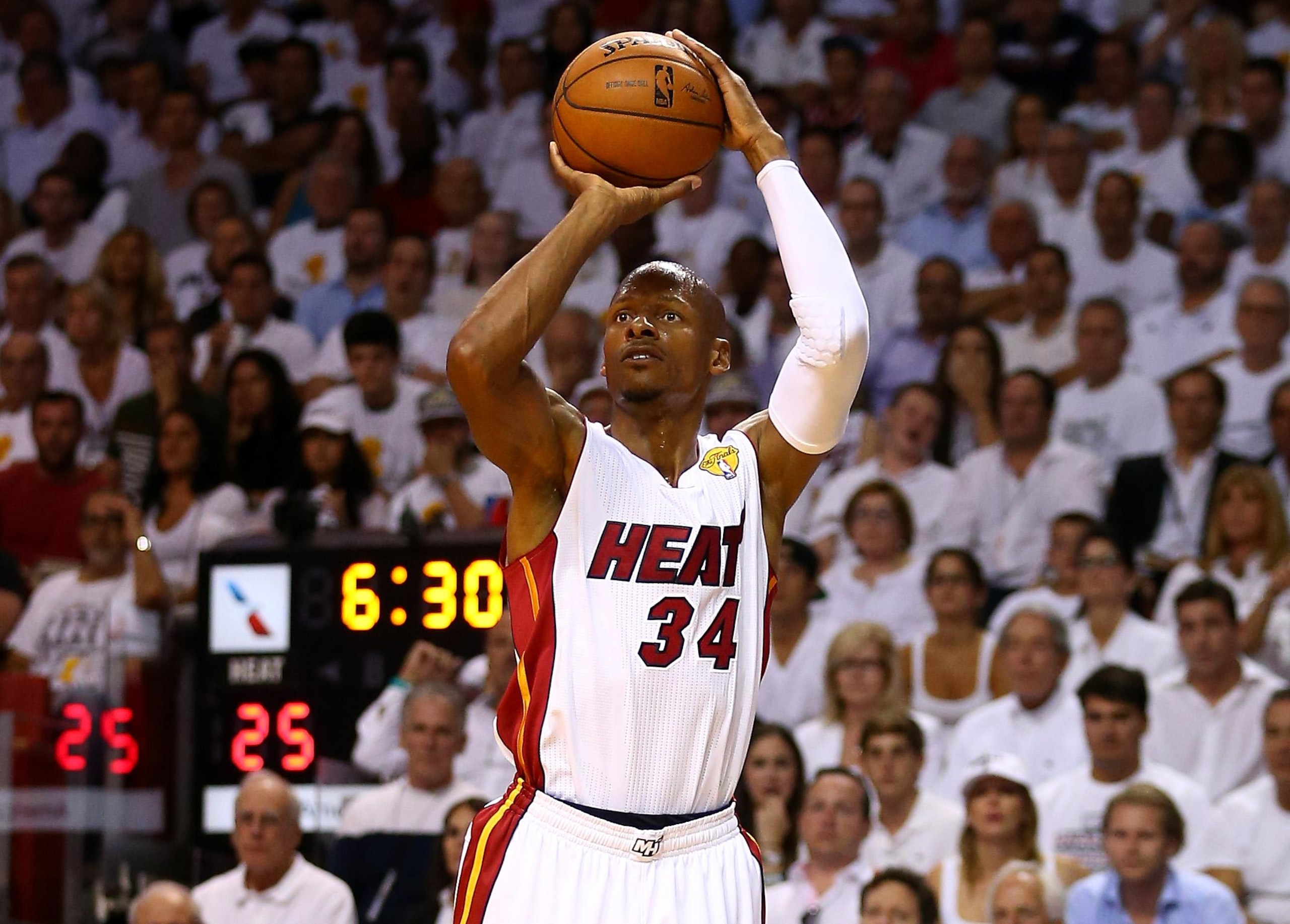
Finals Appearances: 2008, 2010, 2013, 2014
Championships: Two (2008, 2013)
Finals MVPs: None
Finals Averages: 25 games, 13.9 PPG, 3.2 RPG, 1.9 APG, 0.9 SPG, 0.2 BPG, 44.8% FG, 43.3% 3PT, 90.7% FT
Signature Moment: Backpedaled into immortality in Game 6 in 2013 with the cleanest corner three ever—Miami should build him a statue (just don't use the same artist as Dwyane Wade's).
Ray Allen wasn't a dominant Finals performer, but his placement here is earned because he authored one of the most iconic moments in championship history. Unlike his tenures in Seattle and Milwaukee, he wasn’t the best player on either of his championship teams with the Celtics and Heat. But in 2013, with Miami 5.2 seconds from elimination, Allen ran back to the corner and hit the shot that saved the Heat’s dynasty.
That three in Game 6 didn’t just force overtime and lead to a title, it also changed legacies. Most importantly that of LeBron James, who nabbed his second ring.
Across his first three Finals appearances, Allen averaged 14.9 points per game. Solid, not spectacular. But his value was never just in the box score. He warped defenses with his off-ball movement, opened the floor and showed how a superstar can transition into a specialist without ego. Which is a rarer feat than one would expect.
You could argue Pau Gasol or Kyrie Irving had flashier numbers, but Allen's résumé has a singular moment that helps define the 2010s.
14. Klay Thompson
2 of 15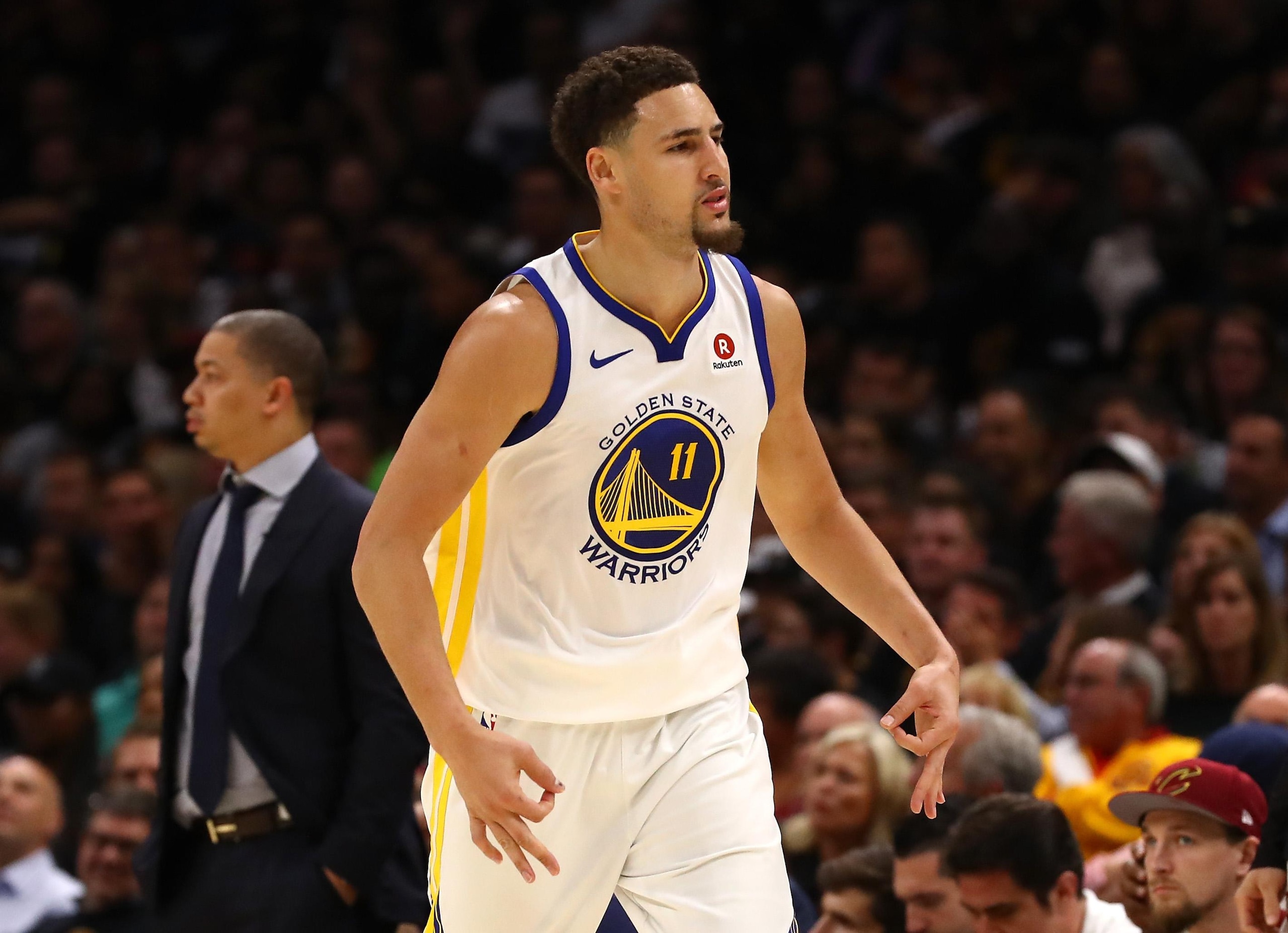
Finals Appearances: 2015, 2016, 2017, 2018, 2019, 2022
Championships: Four (2015, 2017, 2018, 2022)
Finals MVPs: None
Finals Averages: 33 games, 18.5 PPG, 3.9 RPG, 1.9 APG, 0.8 SPG, 0.5 BPG 43.5% FG, 39.8% 3PT, 84.6% FT
Signature Moment: Tore his ACL in 2019 and walked back from the tunnel to make two free throws.
Klay Thompson cracks the list at No. 14 because rings still matter, and he’s got four of them. While he was never the No. 1 option, his impact in shaping the Golden State Warriors dynasty is undeniable.
Thompson showed up on both ends of the floor, consistently guarding the opponent’s best perimeter player while delivering backbreaking threes with a cold-blooded calm.
His best Finals stat line came in 2019 (26.0 PPG on 54/59/90 shooting), and if not for that torn ACL in Game 6, the Raptors series they eventually lost might’ve gone seven—expanding the Warriors' legacy.
The reason Thompson lands behind someone like Paul Pierce is because Pierce was the guy in 2008: Finals MVP, lead scorer and clutch shot-taker/maker. Thompson’s résumé is more about excellence in a specific role than all-around command. But that role? Part of the best dynasty of the century. You don’t win four titles and two Game 6 road closeouts in hostile environments without Klay Thompson.
He may not talk the loudest, but the resume speaks volumes: elite two-way play, legendary shooting and a killer’s poise when the lights were brightest.
13. Andre Iguodala
3 of 15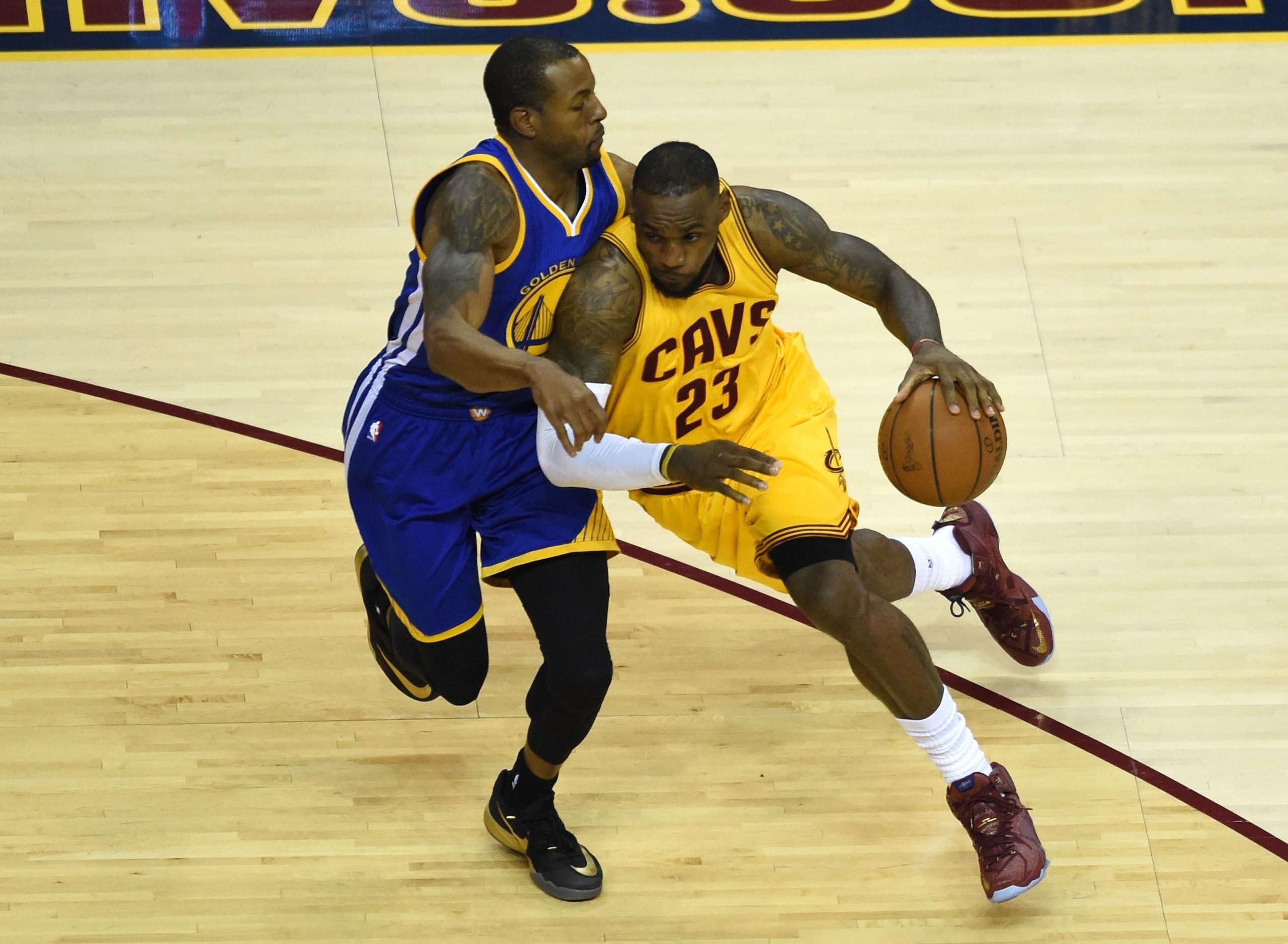
Finals Appearances: 2015, 2016, 2017, 2018, 2019, 2020, 2022
Championships: Four (2015, 2017, 2018, 2022)
Finals MVPs: One (2015)
Finals Averages: 36 games, 8.5 PPG, 4.0 RPG, 3.1 APG, 0.9 SPG, 0.6 BPG, 49.0% FG, 36% 3PT, 37% FT
Signature Moment: Locked up LeBron James just enough in 2015 to steal Finals MVP and launch a decade of “valuable role player” discourse.
Some will balk at Andre Iguodala even cracking the list. But this isn’t just about box scores. It’s about impact. And in that department, few role players ever reshaped a Finals series the way Iggy did in 2015. He won Finals MVP not for his scoring but for his defense on LeBron James, who still got his numbers but had to claw for every bit of them.
Iguodala turned the tide of that series when inserted into the starting lineup, altering Cleveland’s rhythm and giving birth to the Warriors’ "Death Lineup." His Finals averages (8.5 PPG, 4.0 RPG, 3.1 APG in 36 games) don’t pop, but this is about situational greatness: timely steals, deflections and momentum-shifting plays.
He ranks ahead of Klay Thompson not because he was the better scorer or shooter (he wasn’t), but because of what he represents in Finals history. Iguodala won a Finals MVP on a roster that featured Stephen Curry in his unanimous MVP prime. That matters. It speaks to how indispensable his contributions were in 2015, when Golden State needed a tactical shift to unlock Cleveland’s defense and slow LeBron.
The coaching staff turned to Iggy, and he delivered on both ends.
Thompson has had monster Finals moments, no question, but he’s never been the reason the Warriors won a title. Iguodala was. That singular accomplishment, on top of his connective value across six Finals appearances, pushes him just ahead on this list.


12. Draymond Green
4 of 15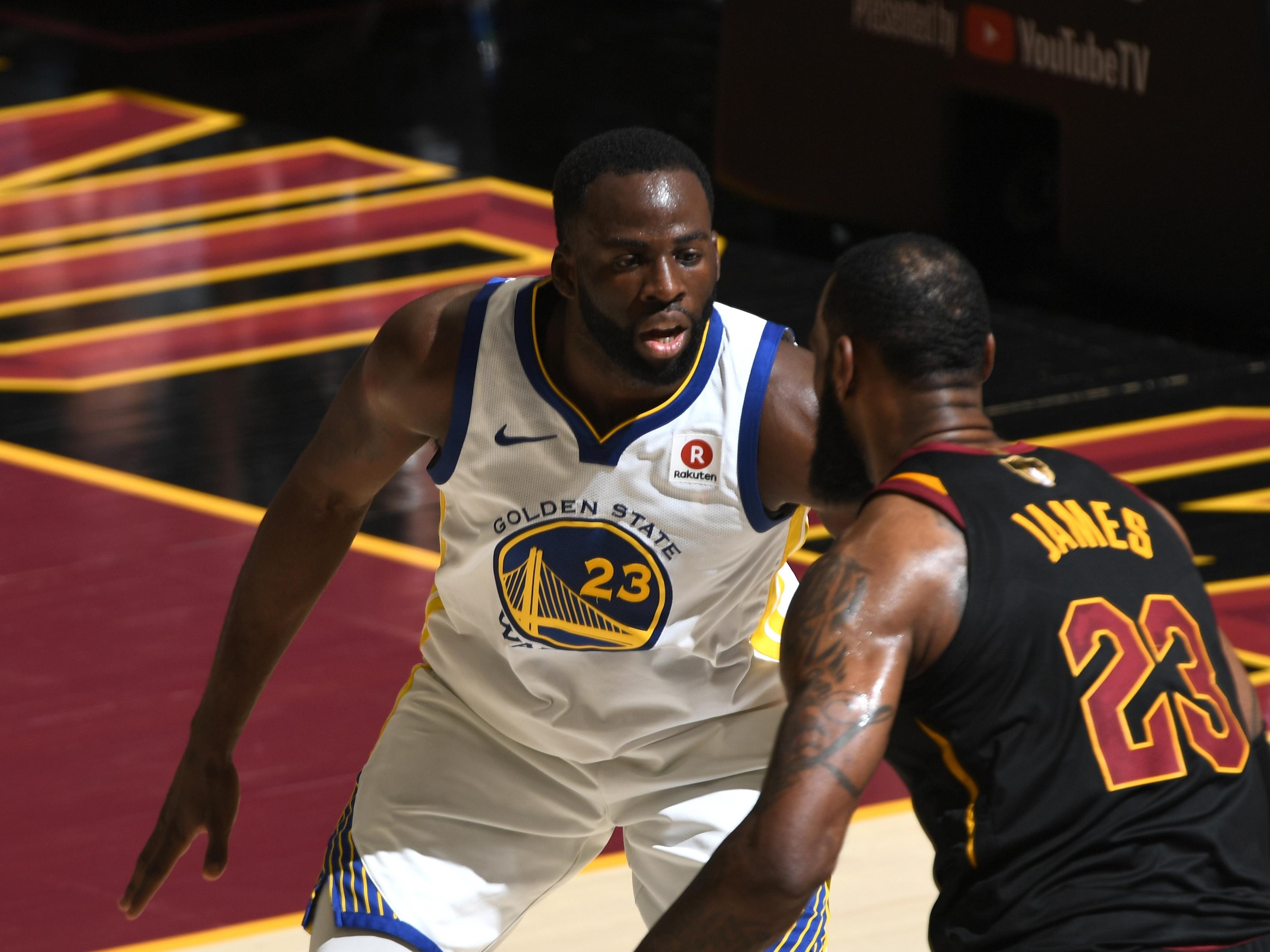
Finals Appearances: 2015, 2016, 2017, 2018, 2019, 2022
Championships: Four (2015, 2017, 2018, 2022)
Finals MVPs: None
Finals Averages: 33 games, 11.6 PPG, 9.1 RPG, 6.6 APG, 1.8 SPG, 1.0 BPG, 41.4% FG, 28.0% 3PT, 74.5% FT
Signature Moment: Held the Warriors together with a near-triple-double in Game 7 in 2016, but his Finals legacy will always teeter between glue guy and grenade.
Draymond Green lands at No. 12 because winning basketball doesn’t always come wrapped in scoring titles and highlight reels. Since 2015, Green has been the heartbeat of the Warriors dynasty as the connective tissue that tied together Steph Curry’s gravity and Klay Thompson’s shooting with his own defensive genius and playmaking instincts.
He, along with Thompson and Curry were the foundational trio behind nearly a decade of playoff contention. There is something to be said about being hated to the degree Green is (fans, coaches, players, media, refs, former teammates), and maintaining the ability to deliver in every facet of the game when it matters most (especially against LeBron James).
He’s appeared in six NBA Finals, winning four titles, and was the Defensive Player of the Year during the 2017 run. But the 2016 Finals still haunts his résumé—suspended for Game 5 after he swung his arm toward LeBron's groin as the Cavs star stepped over him, he returned with a 32-point, near-triple-double in Game 7, but by then the momentum had shifted.
Green’s Finals stats won’t overwhelm: 11.6 points, 9.1 rebounds, 6.6 assists across 33 games. But his fingerprints are everywhere on defensive stops, on hockey assists, on momentum-swinging plays that don’t show up in the box score. His ability to guard all five positions and quarterback the offense earns him a place here.
He ranks ahead of Iguodala and Allen not because of box-score dominance, but because of impact. Green changed how Finals basketball was played in the 2010s and on. He forced small-ball evolution and defensively anchored a historic team. That matters.
11. Tony Parker
5 of 15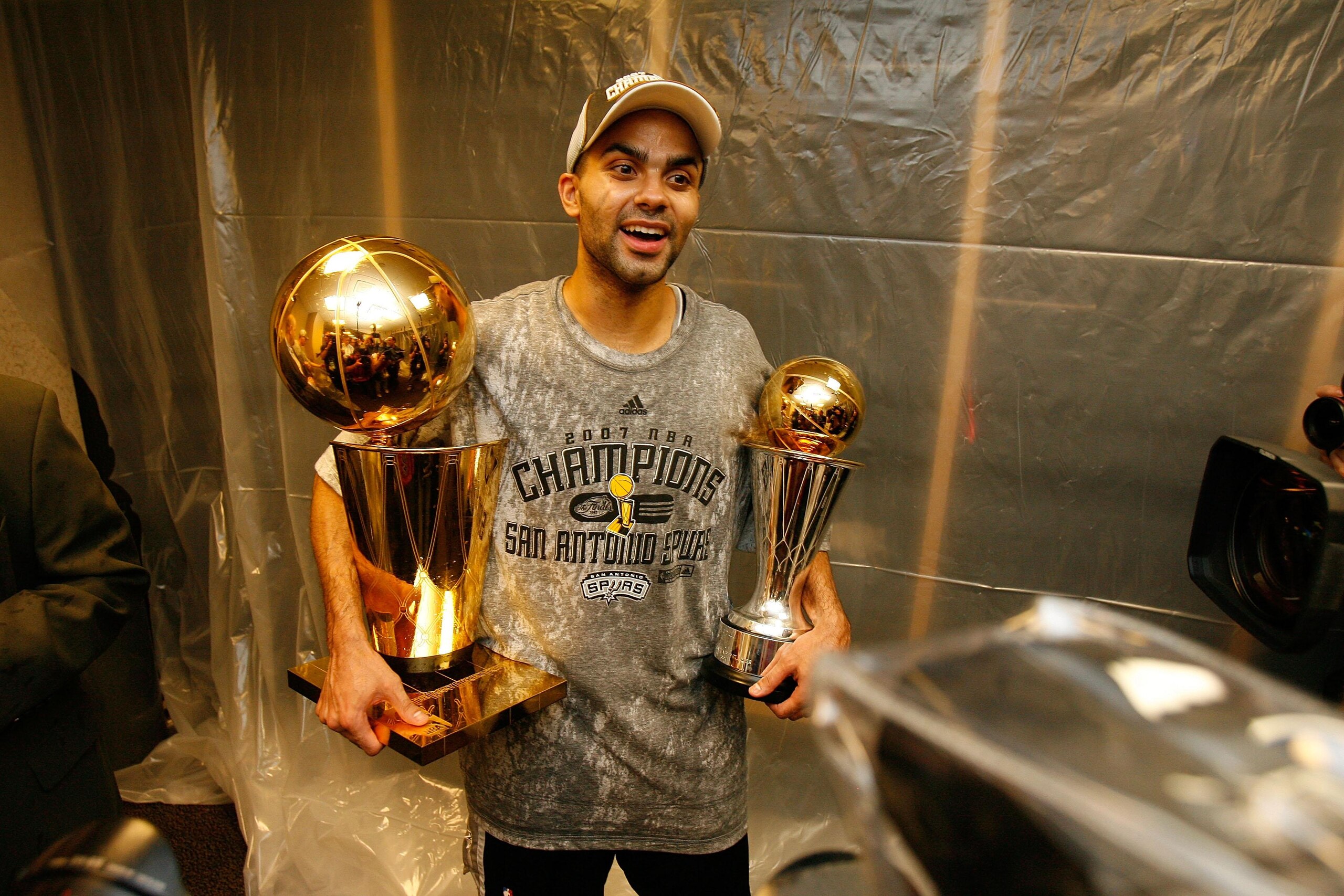
Finals Appearances: 2003, 2005, 2007, 2013, 2014
Championships: Four (2003, 2005, 2007, 2014)
Finals MVPs: One (2007)
Finals Averages: 29 games, 16.5 PPG, 4.5 APG, 2.4 RPG, 0.6 SPG, 0.1 BPG, 45.6% FG, 35.2% 3PT, 63.1% FT
Signature Moment: Roasted Cleveland in 2007 with floaters and spin moves, becoming the first European to snatch a Finals MVP.
Tony Parker didn’t just ride shotgun during the San Antonio Spurs dynasty—he took the reins from the greatest power forward of all time in Tim Duncan, winning Finals MVP in 2007.
A four-time NBA champion, Parker played in five Finals from 2003 to 2014 and posted consistent, efficient numbers in an era before the three-point revolution. He earned most of his points attacking the rim and in pick-and-roll navigation.
From 2005 to 2014, he averaged 17.2 points and 4.6 assists in 23 Finals games while shooting over 47 percent from the field. His 2007 run was a surgical dismantling of a young LeBron James and the Cavs, where Parker averaged 24.5 points per game and became the first European-born player to win Finals MVP. Which is an incredible feat when you think about how that Cavs team was built on size and defense.
Parker ranks below players like Kawhi Leonard or Kevin Durant on this list not because of impact but role. No one will ever argue Parker was better than Duncan, but in the 2007 Finals, nobody was more important to confounding the Cavs defense like Parker. His offense at the point-of-attack would become the blueprint for the modern scoring lead guard of today.
Parker, in contrast, was always exceptional but rarely singular. Still, no list of modern Finals greatness is complete without him. He thrived in the biggest moments, led with poise, and helped usher in the NBA’s globalization while dominating in an era stacked with Hall of Fame guards.
10. Paul Pierce
6 of 15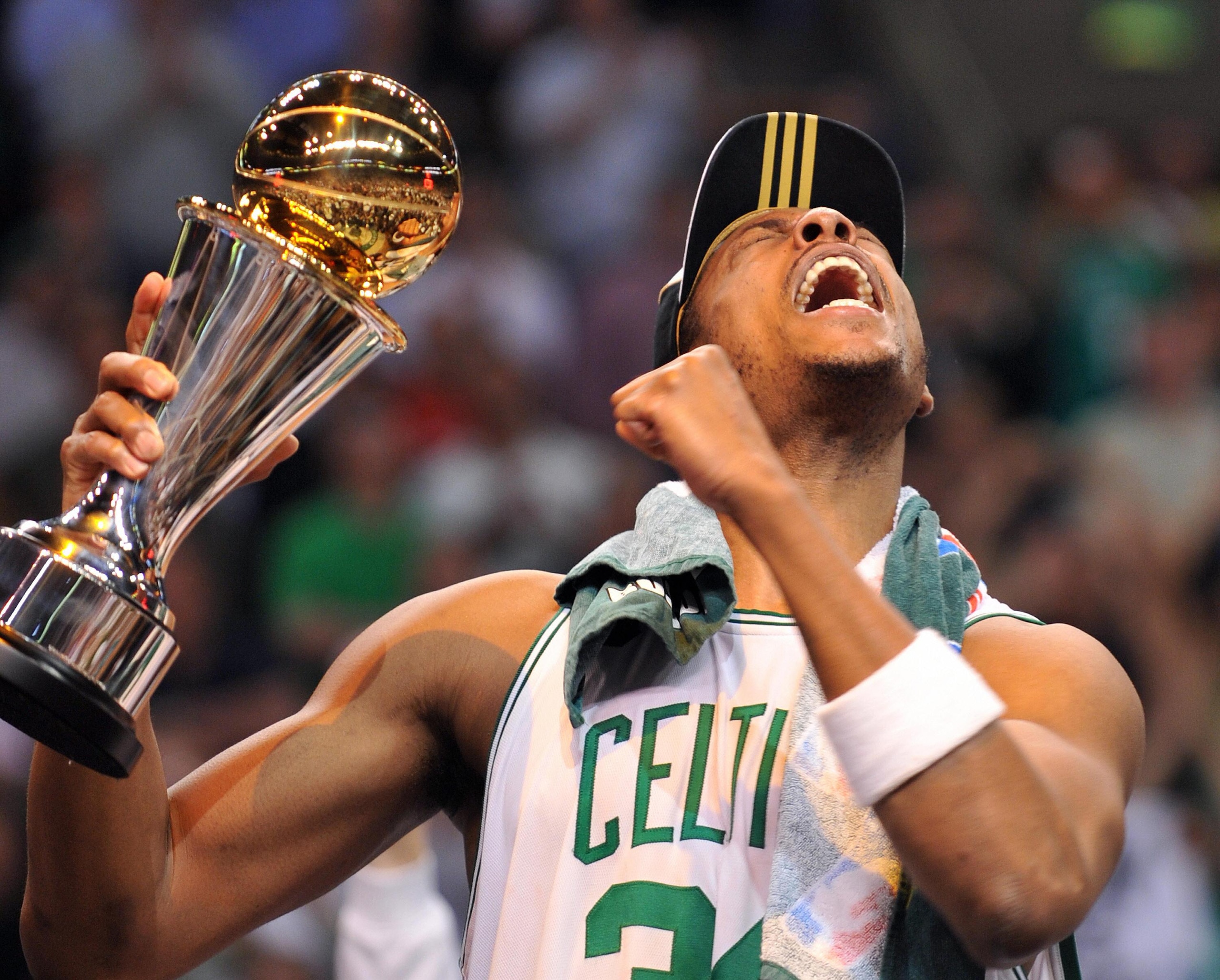
Finals Appearances: 2008, 2010
Championships: One (2008)
Finals MVPs: One (2008)
Finals Averages: 13 games, 19.8 PPG, 4.9 RPG, 4.5 APG, 0.9 SPG, 0.6 BPG, 43.3% FG, 39.6% 3PT, 84.4% FT
Signature Moment: Got wheeled off during Game 1 in 2008 like he was dying, then jogged back in and torched the Los Angeles Lakers. Corny? Maybe. Effective? Absolutely.
Paul Pierce's Finals résumé isn’t deep, but it’s sharp.
In 2008, after years of the Boston Celtics being mired in mediocrity, Pierce finally got the superstar help he needed in the forms of Kevin Garnett and Ray Allen, and made it count.
It was the first successful superteam of modernity. And as the 1A option, he averaged 21.8 points, 6.3 assists and 4.5 rebounds per game against Kobe Bryant’s Lakers, won Finals MVP and delivered Boston its first title in over 20 years.
With that chip, he saved the greatest sports franchise in history from irrelevance. Even with Garnett and Allen riding shotgun, it wasn’t a shared moment. That was his Finals. The wheelchair game, the staredowns, the iso buckets: Pierce owned the series.
He ranks here because he was The Man for a team that came with championship-or-bust expectations. Pierce didn’t need multiple rings or viral stats to make his case. He got one clean shot at glory and turned it into another banner in the Boston Garden.
9. Dirk Nowitzki
7 of 15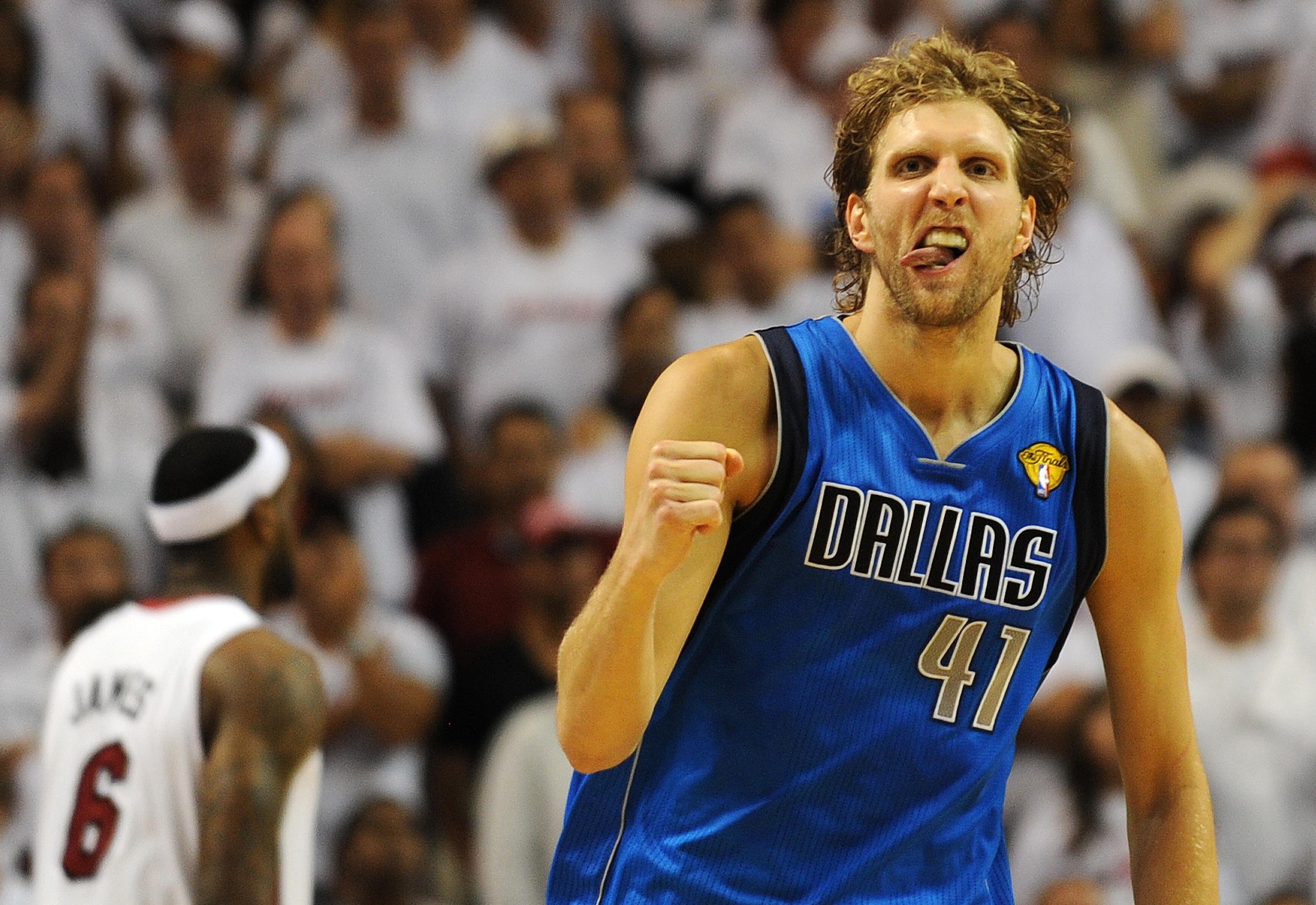
Finals Appearances: 2006, 2011
Championships: One (2011)
Finals MVPs: One (2011)
Finals Statistics: 12 games, 24.4 PPG, 10.3 RPG, 2.3 APG, 0.7 SPG, 0.7 BPG, 40.4% FG, 30.2% 3PT, 93.1% FT
Signature Moment: Shoved the “soft Euro” label down the league’s throat by torching LeBron James, Dwyane Wade and Chris Bosh in 2011, dragging Dallas to a title and rewriting his legacy in blood.
In 2011, Dallas Mavericks star Dirk Nowitzki exorcised a decade of playoff demons. Before that run, his postseason legacy was riddled with flameouts: the 2006 Finals collapse, the 2007 MVP year spoiled by the No. 8-seeded Warriors ambush, and a string of underwhelming exits that painted him as soft. But then came the greatest title run of the millennium.
Two Finals appearances don’t usually land you this high on a list like this, but context matters. Dirk’s 2011 run was a bloodbath. Hia Mavs swept the defending champion Lakers, outdueled a young Oklahoma City Thunder core featuring future MVPs Kevin Durant, Russell Westbrook and James Harden, and then dismantled the Heat’s freshly assembled superteam in six games.
No other star on this list won a title without another All-Star. Dirk did it with Jason Terry, JJ Barea, Tyson Chandler and a cast of aging vets.
He averaged 26.0 points and 9.7 rebounds in the Finals, hitting every clutch shot he had bricked or deferred in '06. Not many players get to exact revenge on the team that embarrassed them in a previous Finals choke.
Not only that, it happened perhaps the greatest accumulation of superstar talent to that point. Dirk’s path was steeper than those of his peers and his ring hits harder than most. One chip. No co-stars. All dawg.
8. Kawhi Leonard
8 of 15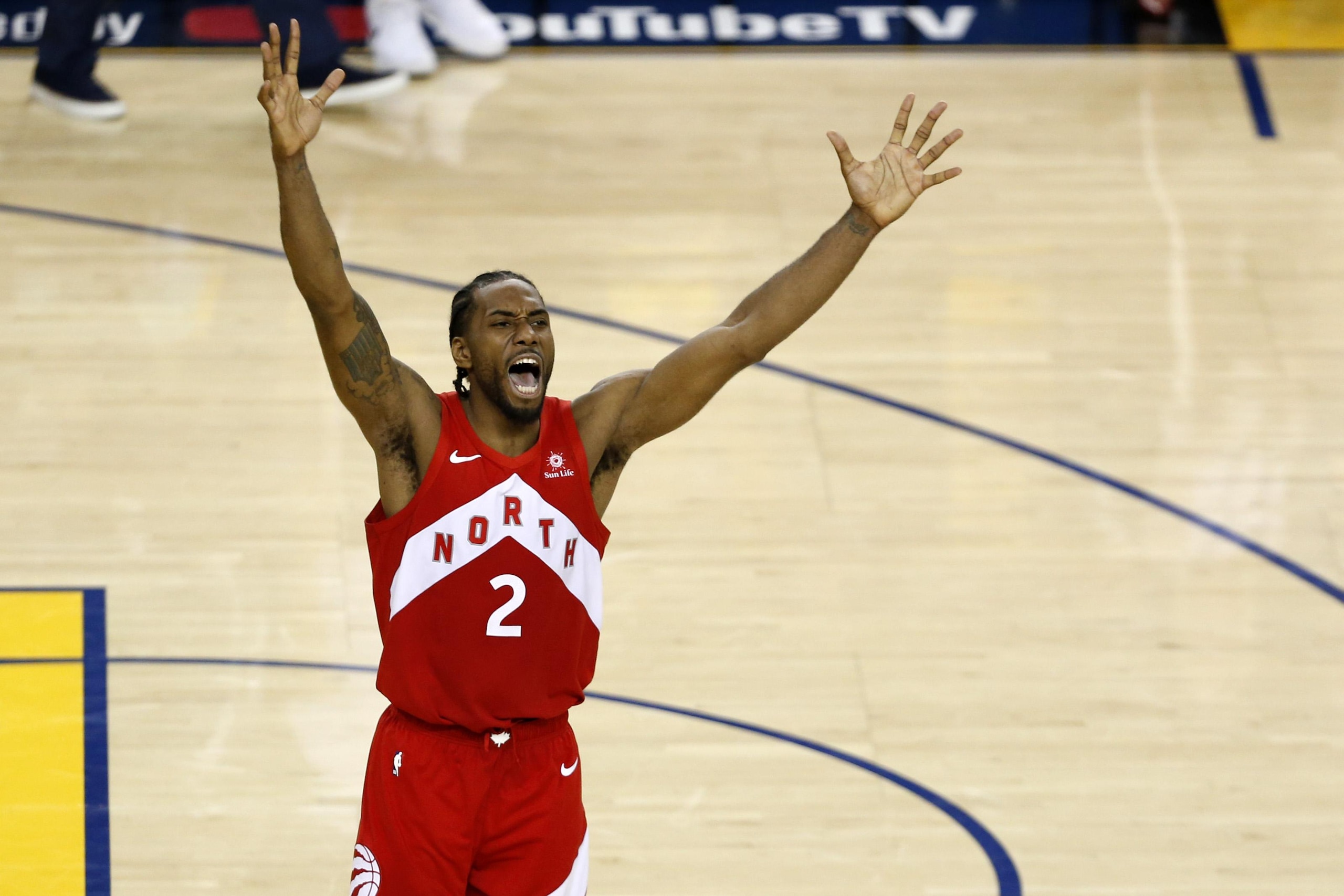
Finals Appearances: 2013, 2014, 2019
Championships: Two (2014, 2019)
Finals MVPs: Two (2014, 2019)
Finals Statistics: 18 games, 20.1 PPG, 9.4 RPG, 2.3 APG, 1.9 SPG, 0.9 BPG, 49.6% FG, 40.5% 3PT, 84.6% FT
Signature Moment: Turned load management into a championship blueprint, dismantling the Kevin Durant-era Warriors in 2019 and, in true Terminator fashion, never broke a sweat.
In 2014, Kawhi Leonard bodied LeBron James and the Miami Heat in a revenge tour for the San Antonio Spurs, winning MVP at 22. In 2019, he took a flammable Toronto Raptors roster to the mountaintop, outlasting injuries and burying the Durant-Warriors dynasty with a cold, surgical 28.5 points per game in the series.
That Finals was bloodsport. Klay went down, KD tore his Achilles, but Leonard? Barely blinked.
Why No. 8? His production isn't as sustained as others ranked above. He’s played in only three Finals, compared to Steph Curry’s six or Kobe Bryant’s seven since 2000.
But no one ranked below him owns two Finals MVPs or has flipped two different franchises’ destinies on their heads. Leonard’s resume is short, sharp and mean—like a rusty shiv between the Miami Heat and Golden State Warriors dynasties.
Nowitzki, who ranked just behind him, was more durable and evolved how the game was played from the perimeter as a big. But Leonard's peaks cut deeper as one of the most dependable two-way playoff performers ever. He was an ethos of defense, midrange violence and deadpan dominance. He didn’t smile. He didn’t celebrate. He just ended runs. And then he left.
7. Dwyane Wade
9 of 15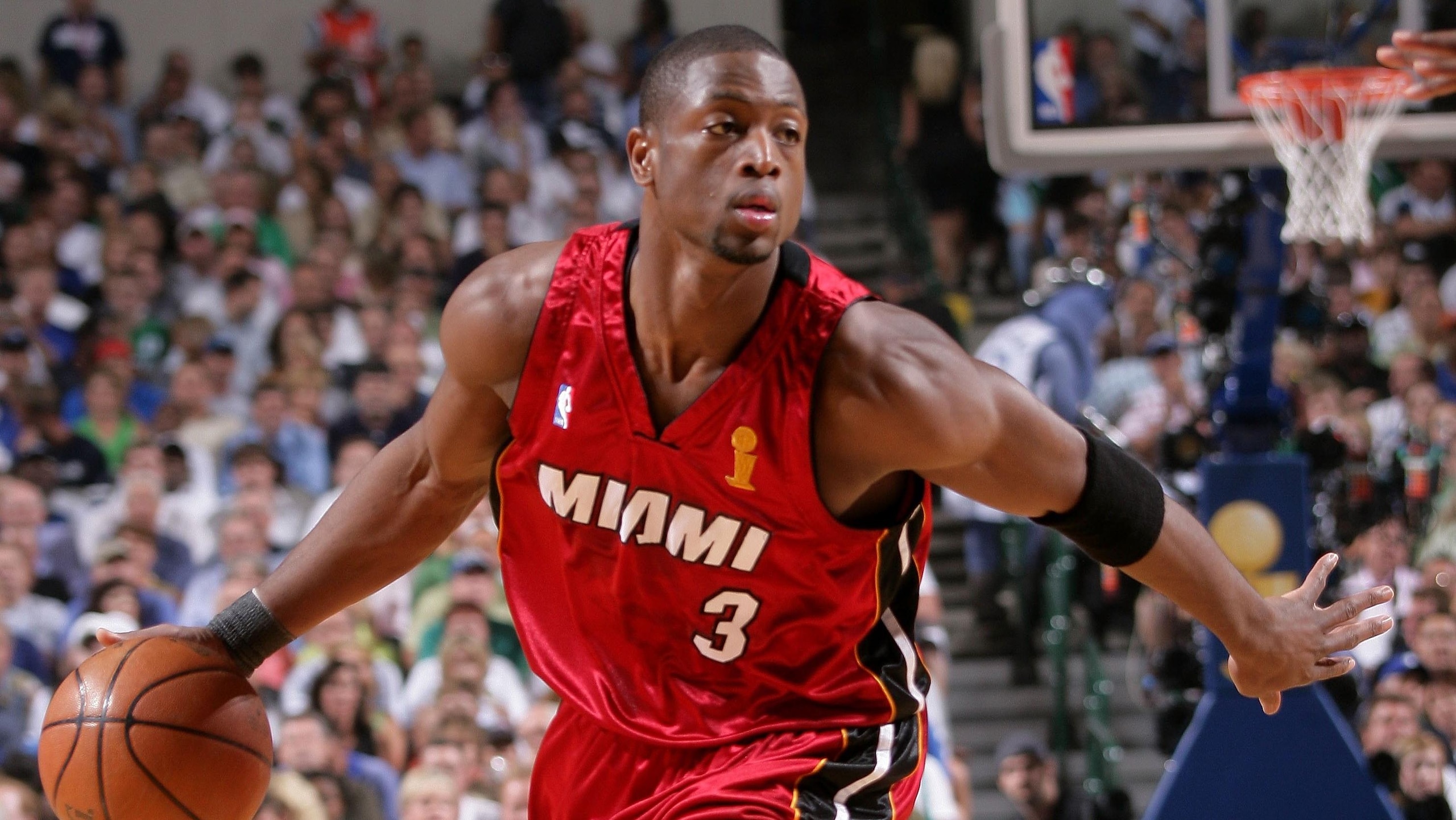
Finals Appearances: 2006, 2011, 2012, 2013, 2014
Championships: Three (2006, 2012, 2013)
Finals MVPs: One (2006)
Finals Statistics: 29 games, 23.9 PPG, 5.7 RPG, 4.3 APG, 1.8 SPG, 1.0 BPG, 47.6% FG, 31.1% 3PT, 74.8% FT
Signature Moment: Put the entire 2006 Finals on his back and told the Dallas Mavericks “hell nah” while averaging 34.7 points and drawing controversial whistles.
You don’t drop a 34.7-point Finals average in your third season and not make this list. Dwyane Wade’s 2006 explosion remains one of the most dominant performances in modern Finals history. Just ask his opponent, Nowitzki.
Entering as the series underdogs, Wade was a one-man avalanche that buried the Mavericks that was helped, of course, by a whistle so generous it felt like the refs were from South Beach.
He earned Finals MVP, a ring and full control of Miami’s franchise identity from that moment forward. This led to the eventual formation of the Heatles, which earned him another four Finals appearances and two more chips.
Across five Finals, Wade averaged 23.9 points, 5.7 rebounds, 4.5 assists and 1.8 steals per game, shooting 47.6 percent from the field. Once LeBron James and Chris Bosh arrived in 2010, he sacrificed numbers during the Heatles era, letting LeBron cook while still delivering game-saving plays and two-way excellence.
Why not higher? Wade’s résumé is more top-heavy than consistent. While 2006 is immortal, the 2011 collapse against Dallas and two lopsided Finals losses to the San Antonio Spurs ding his case. Compared to, say, Kobe Bryant—whose Finals MVPs came via relentless heroics and dagger jumpers—Wade’s legacy rides a more emotional wave than statistical dominance.
But make no mistake: Wade didn’t just rise to the moment. He was the moment, and his 2006 run is still the blueprint for solo superstardom in June.
6. Kevin Durant
10 of 15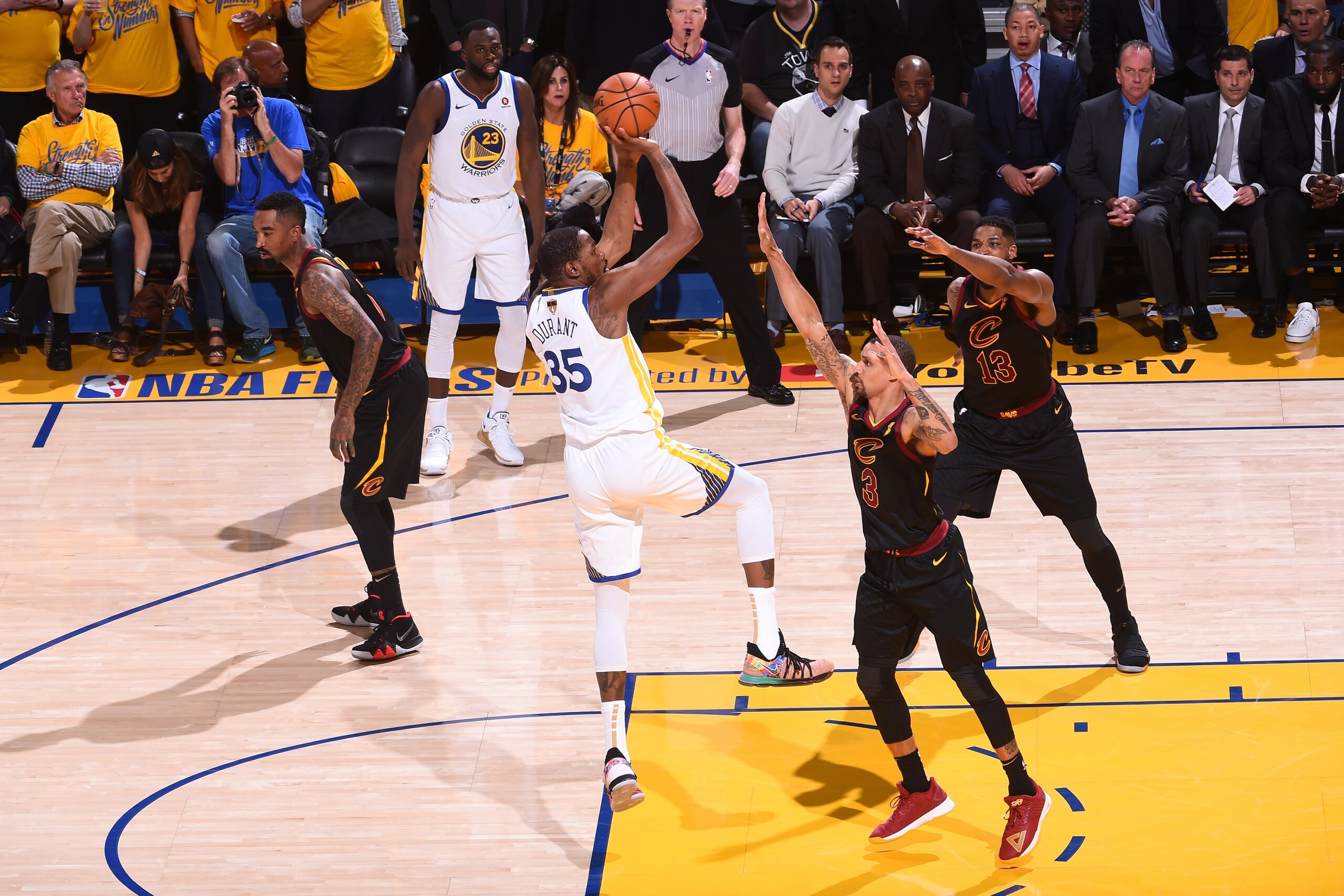
Finals Appearances: 2012, 2017, 2018, 2019
Championships: Two (2017, 2018)
Finals MVPs: Two (2017, 2018)
Finals Statistics: 15 games, 30.3 PPG, 7.7 RPG, 4.5 APG, 1.0 SPG, 1.5 BPG, 54.6% FG, 44.8% 3PT, 91.1% FT
Signature Moment: Hit a clutch three-pointer over LeBron James in Game 3 of the 2017 Finals with under a minute to play, shifting momentum in favor of the eventual-champion Warriors.
Two rings. Two Finals MVPs. Two deathblows delivered to LeBron. Kevin Durant turned a Warriors contender into basketball’s equivalent of a tech monopoly. In back-to-back Finals, he averaged over 30 points combined on elite efficiency, drilling cold-blooded shots within a system so overwhelming it broke the league.
The aftermath was so seismic, the Collective Bargaining Agreement was reshaped to prevent anything like it from happening again.
Game 3 in 2017 and 2018 both saw dagger moments, the latter a near-identical situation to the former. No one else ranked below Durant list authored two Finals-deciding plays in two straight years with that level of precision.
The knock? He joined a 73-win team and never faced real adversity in those runs. But the beauty of Durant’s Finals résumé is in how undeniable he made himself. You don’t have to like the context to respect the execution.
But the way he did lands him behind Tim Duncan, who did it more often, across more eras, and with leadership styles that didn’t fracture locker rooms or spark existential debates about team-building ethics. Durant’s Finals peak is arguably top three all-time. But the résumé ends too soon and left too many scorched bridges in its wake.
5. Steph Curry
11 of 15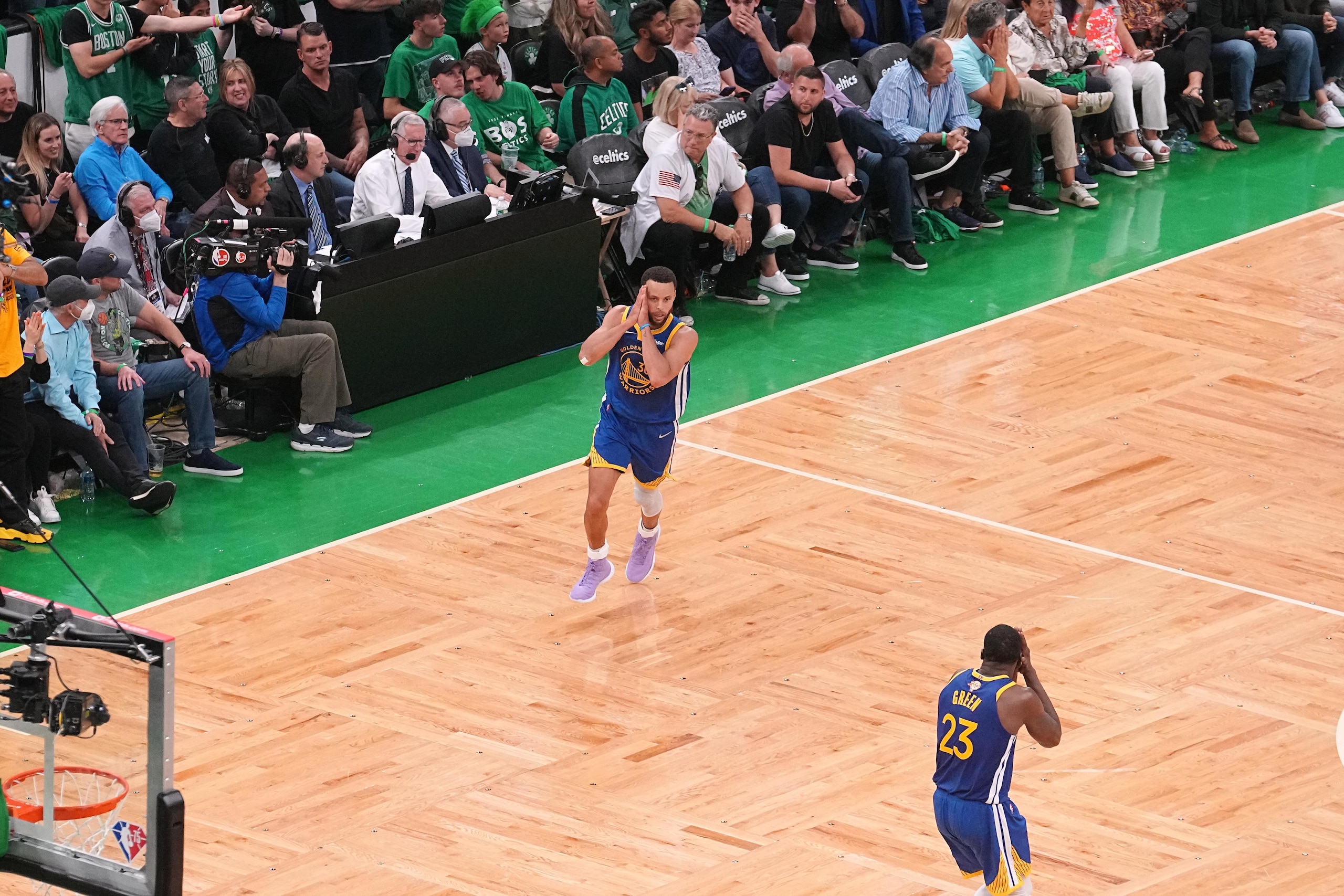
Finals Appearances: 2015, 2016, 2017, 2018, 2019, 2022
Championships: Four (2015, 2017, 2018, 2022)
Finals MVPs: One (2022)
Finals Statistics: 34 games, 27.3 PPG, 5.8 RPG, 6.0 APG, 1.6 SPG, 0.3 BPG, 43.2% FG, 39.5% 3PT, 91.7% FT
Signature Moment: Torched Boston in Game 4 of 2022 to silence every Finals MVP critic and remind folks the Golden State dynasty runs through him.
Stephen Curry made the NBA Finals his summer residency for the better part of a decade, shifting the geometry of the sport and dragging defenses into uncharted territory at the logo. Curry averaged 27.3 points per game in six Finals, and when the Golden State Warriors needed him most, he delivered.
That includes a 31.2 PPG clinic against Boston in 2022, where he single-handedly broke the Celtics' spirit and finally claimed the one thing critics held against him: Finals MVP.
So why not higher than No. 5? Two things: early inconsistencies and context. Curry’s 2016 collapse. His team blew a 3-1 lead to the Cleveland Cavaliers while being outplayed by Kyrie Irving, which still haunts his legacy. And in 2017 and 2018, Kevin Durant was the engine of those Warriors titles, stealing the shine and the Finals MVPs. The second point isn't his fault; the first is.
But Curry’s résumé isn’t about dominance through brute force. It’s about transformation. He changed what greatness looks like: no longer a 6'8" wing bulldozing to the rim, but a 6'2" wizard raining threes from 30 feet. That revolution gets him in the top five. But it’s why someone like Tim Duncan who is less flashy but far more consistent edges him out.
4. Kobe Bryant
12 of 15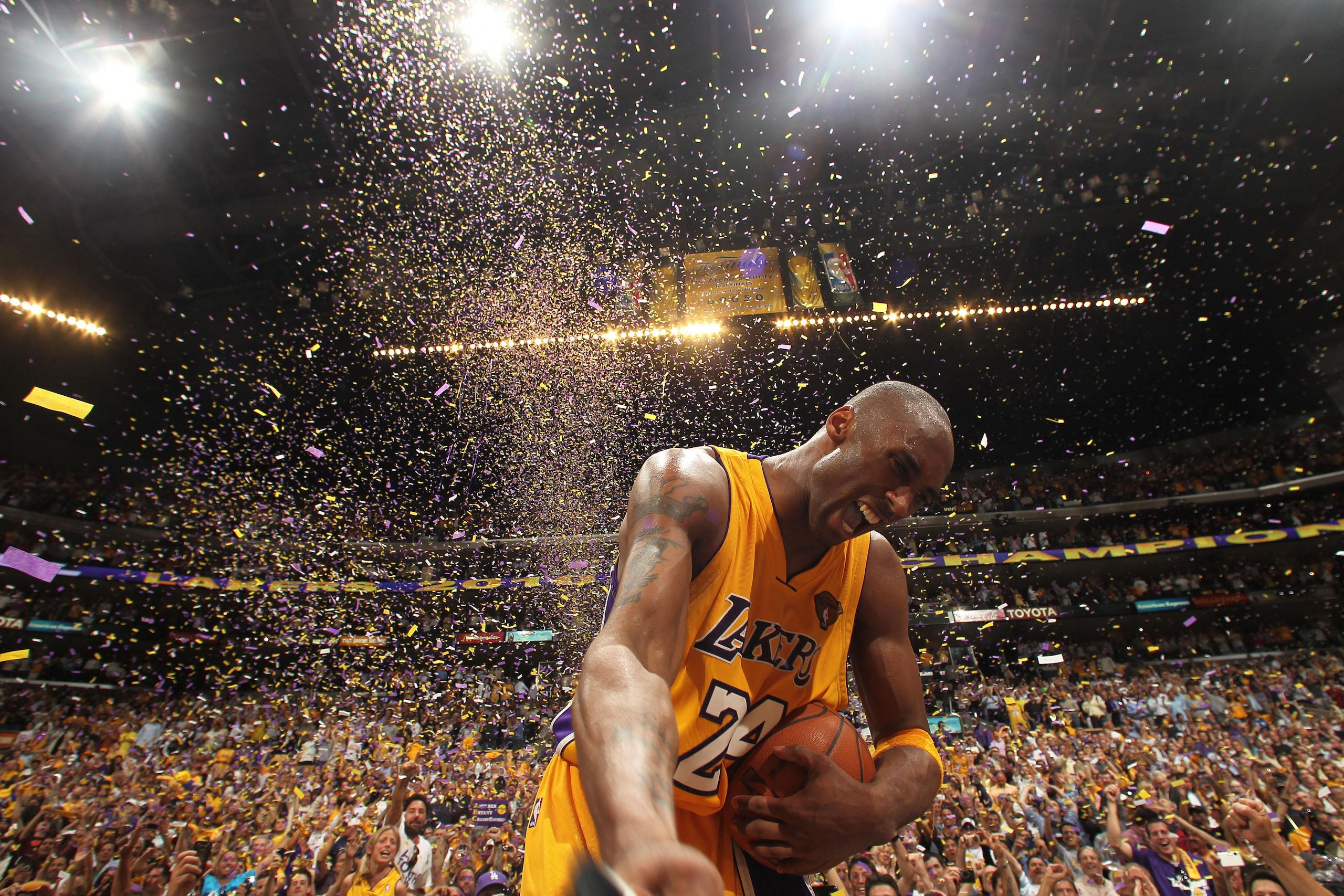
Finals Appearances: 2000, 2001, 2002, 2004, 2008, 2009, 2010
Championships: Five (2000, 2001, 2002, 2009, 2010)
Finals MVPs: Two (2009, 2010)
Finals Statistics: 37 games, 25.3 PPG, 5.7 RPG, 5.1 APG, 1.8 SPG, 0.9 BPG, 41.2% FG, 31.4% 3PT, 84.8% FT
Signature Moment: Shot bricks in Game 7 of 2010 but still dragged the Los Angeles Lakers across the finish line against Boston with sheer will and 15 rebounds.
Kobe Bryant’s Finals résumé is a tale of two careers. As Shaquille O'Neal’s co-star, he was the younger, erratic, electric second option. Then he remade himself into the alpha and dragged two more titles out of the West’s concrete. Five rings in seven appearances. Two Finals MVPs.
He’s not higher because the early 2000s runs belonged more to Shaq, who was the most unstoppable Finals force of that era. Kobe’s numbers from 2000 to 2002 were solid, sometimes spectacular, but not dominant.
He didn’t truly own the Finals stage until 2009 and 2010, when he shed the sidekick narrative and proved he could win without Diesel. Those two years were peak Black Mamba: 32.4 points per game in 2009, 28.6 in 2010, slicing through defenses like a real mamba snake through blades of grass.
Still, he’s edged out by players with more sustained Finals brilliance or singularly iconic performances on the biggest stage. He wasn’t perfect—Game 7 in 2010 was a brick-fest. But he rebounded, played defense and trusted his guys.
That counts. As did the clutch three-pointer by Metta World Peace, who Kobe passed the rock to in a moment of supreme trust. Kobe mirrored his idol and near-facsimile, Michael Jordan, in having to evolve into a leader. That growth, that fire, cements him in the top five.
3. Tim Duncan
13 of 15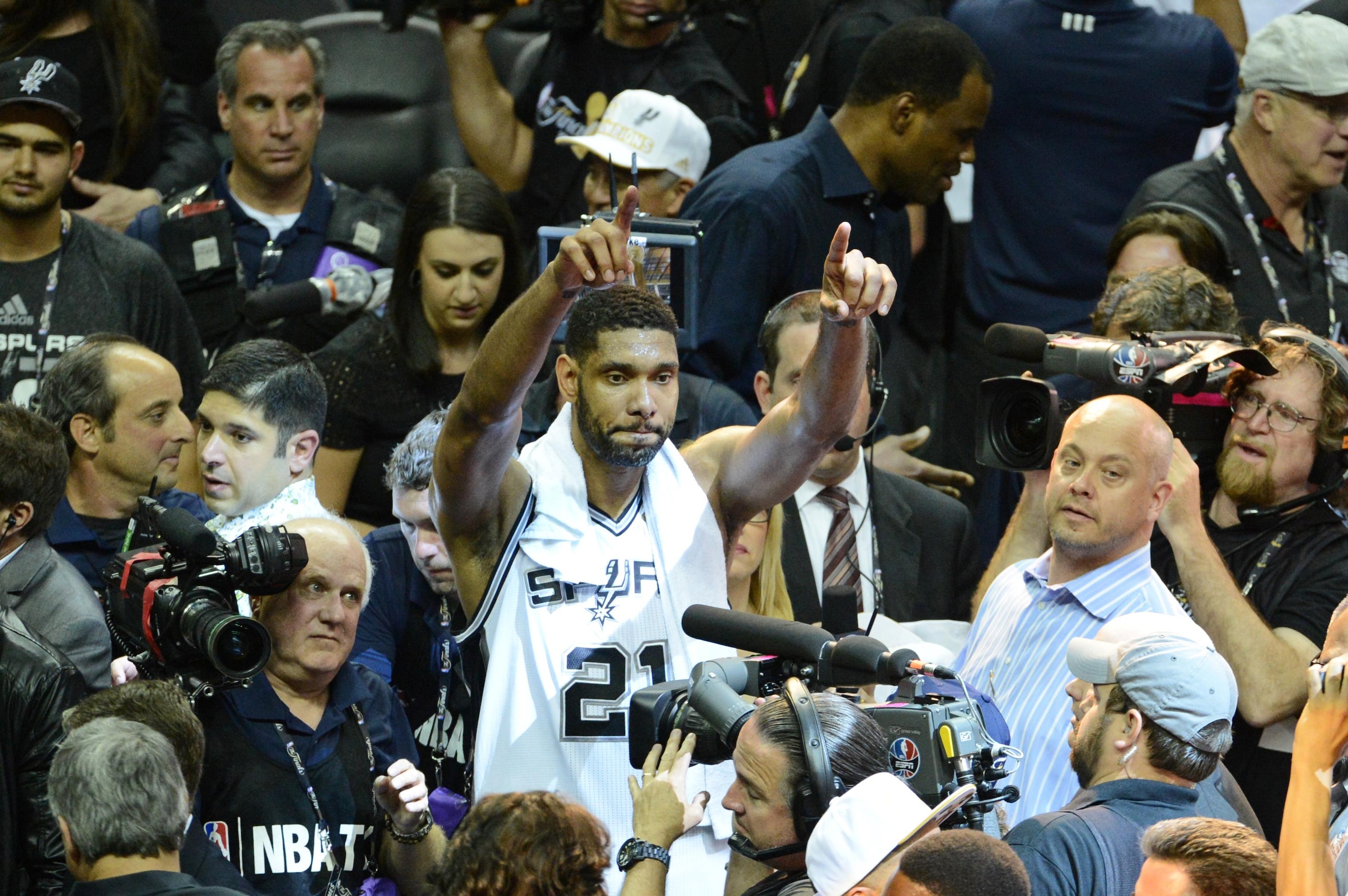
Finals Appearances: 2003, 2005, 2007, 2013, 2014
Championships: Four (2003, 2005, 2007, 2014)
Finals MVPs: Two (2003, 2005)
Finals Statistics: 29 games, 19.7 PPG, 13.2 RPG, 2.8 APG, 2.4 BPG, 0.8 SPG, 47.4% FG, 69.8% FT
Signature Moment: In Game 6 of the 2003 Finals, nearly pulled off a quadruple-double—21 points, 20 rebounds, 10 assists, eight blocks—just to remind everyone who he was.
Because of our cutoff, Tim Duncan loses the San Antonio Spurs' 1999 championship here. But from 2003 onward, he played in five Finals and walked away with four rings, two Finals MVPs and a stat sheet christened in control: nearly 20 points, 13 boards, and over two blocks per game, all while anchoring the league’s most ruthless system of discipline, patience and passing.
In 2005, he dragged his squad past the Pistons in a bloodbath of a Game 7. In 2007, he swept LeBron before the King ever built a throne.
Even in 2014, at age 38, he was still grabbing 10 boards a night and shooting nearly 57 percent, all while passing the torch to Tony Parker and Kawhi Leonard with humility most stars wouldn’t fake.
His Finals greatness wasn't built on ceremony. He quietly and methodically imposed his will time and time again, across eras, making long-term, sustainable winning feel routine. It's the definition of fundamentals good enough to cement him in the top three. In a league that worships noise, Duncan made silence violence.
2. Shaquille O'Neal
14 of 15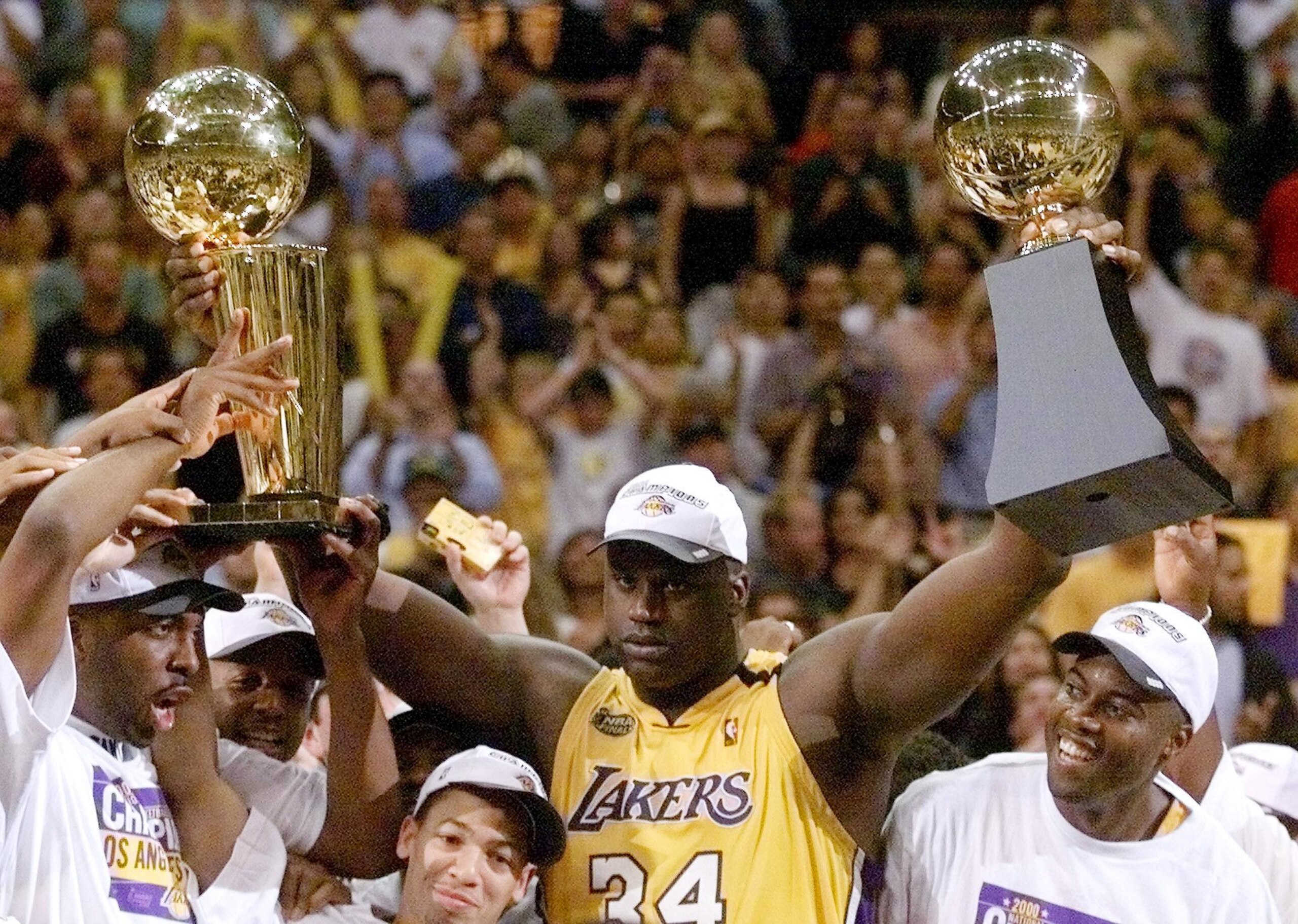
Finals Appearances: 2000, 2001, 2002, 2004, 2006
Championships: Four (2000, 2001, 2002, 2006)
Finals MVPs: Three (2000, 2001, 2002)
Finals Statistics: 26 games, 28.9 PPG, 13.2 RPG, 3.0 APG, 0.6 SPG, 2.0 BPG, 60.3% FG, 47.4% FT
Signature Moment: Turned the 2000 Finals into his personal demolition derby, averaging 38 and 17 while no one on earth could stop him.
Watching early-2000s Shaquille O'Neal was like watching Godzilla in a Lakers jersey. Ask the centers who guarded him in the Finals: Todd MacCulloch, Rik Smits or Matt Geiger, who are still nursing bruises from guarding the big man. Shaq was big, loud and flattened cities in his path to greatness.
From 2000 to 2002, Shaq went three-for-three in the Finals, winning MVP each time and averaging 35.9 points, 15.2 rebounds and 2.9 blocks across that stretch. Those numbers are cartoonish. Peak Shaq was the cheat code that broke basketball.
His résumé includes four championships, six Finals appearances (though his 1995 Magic run wasn't up for consideration here) and a reputation for ending series before they ever started because of his ability to draw fouls and force opposing coaches to adjust to him.
He made all-time great defender Dikembe Mutombo look like a traffic cone in 2001 and clowned the entire Pacers front line the year before. In 2006, he took a backseat to Dwyane Wade but still averaged a double-double and overwhelmed Eric Dampier in the paint to bring Miami its first title.
So why isn’t he No. 1? Longevity. Shaq’s Finals dominance burned hot, then dimmed due to conditioning, injuries and commitment to dominance. Compare that to our No. 1, who made it a full-time job. But make no mistake: Nobody hit the Finals harder. And for three straight years, he made sure no one else even sniffed the trophy.
1. LeBron James
15 of 15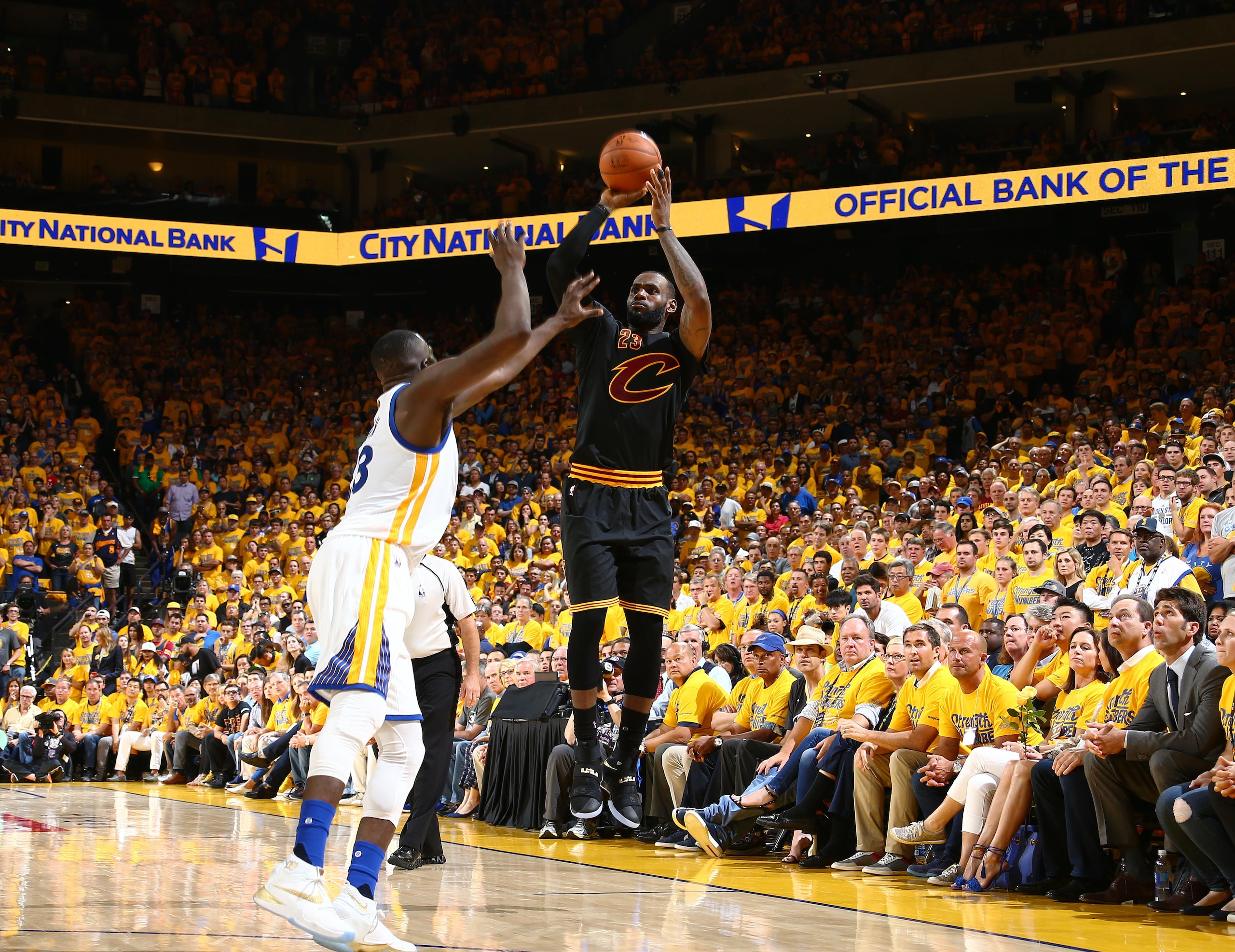
Finals Appearances: 2007, 2011, 2012, 2013, 2014, 2015, 2016, 2017, 2018, 2020
Championships: Four (2012, 2013, 2016, 2020)
Finals MVPs: Four (2012, 2013, 2016, 2020)
Finals Statistics: 55 games, 28.4 PPG, 10.2 RPG, 7.8 APG, 1.7 SPG, 0.8 BPG, 48.4% FG, 35.2% 3PT, 73.1% FT
Signature Moment: Sent Andre Iguodala's layup to hell with the most iconic block in Finals history, crowning the greatest 3-1 comeback ever and delivering Cleveland its first title.
LeBron James is the final boss of NBA Finals résumés. Since 2000 (so there's no GOAT debate involving Michael Jordan), no player has come close to matching his combination of longevity, volume and unrivaled narrative gravity. He’s made the Finals 10 times since 2007—winning four, losing six and dominating every discussion in between. That alone vaults him above the rest. But it’s the how that separates him.
He led both teams in points, rebounds, assists, steals and blocks in a single series (2016), which was a 3-1 comeback against the 73-win Warriors. He averaged 35.8 points in a losing effort (2017) and then dropped a 51-point masterclass in a Game 1, the highest-scoring Finals game in a loss, only to get betrayed by J.R. Smith’s clock meltdown. From Miami to Cleveland to L.A., the Finals were almost a guarantee during the 2010s.
Critics knock the 4-6 record, but that’s lazy. Context matters. He dragged rosters that had no business being there (2007 and 2018 Cavs) and still turned them into contenders.
Through stints with the Cavs, Heat and Lakers, every era-defining team (Warriors, Spurs, Celtics) had to go through him. He's shaped the 21st century in a way only Jordan and Bill Russell can claim to over an era. His greatest accomplishment is returning to Cleveland to deliver his hometown a long-awaited championship in 2016, completing his hero arch as Ohio's prodigal son.
He’s the closest we’ve come to the archetypal hero outlined by philosopher Joseph Campbell—called to adventure, tested by impossible odds, transformed through suffering and destined to return, again and again, to face the fire. When it comes to Finals greatness in the 21st century, it’s LeBron and then everybody else.

.jpg?w=2560)


.jpg?w=2560 "Latest Peyton-Colts Rumors")
.jpg?w=2560 "Ugly Jets Scoring Stat 😳")
.jpg?w=2560 "Landing Spots for Trade Candidates 📍")