

Day 2 of the 2025 NFL draft is when the fun really begins.
This year's class was short on top-end talent, but evaluators were fond of the amount of depth that can be found throughout the group.
B/R's NFL Scouting Department had 150 players with grades between the second and fourth round, which means potential impact-to-immediate role players should be found throughout Day 2 and early Day 3. A full 300 prospects had draftable grades this cycle, although the draft only has 257 picks in total.
A few high-profile options were still on the board at the start of Day 2, starting with Colorado quarterback Shedeur Sanders, Missouri wide receiver Luther Burden III and Michigan cornerback Will Johnson. Each of them were available for a reason, but they're exceptional values at this point of the draft.
Here, we graded every pick made Friday night in Rounds 2 and 3. These selections and tomorrow's picks form the backbone of every NFL team's roster.
33. Cleveland Browns: Carson Schwesinger, LB, UCLA
1 of 70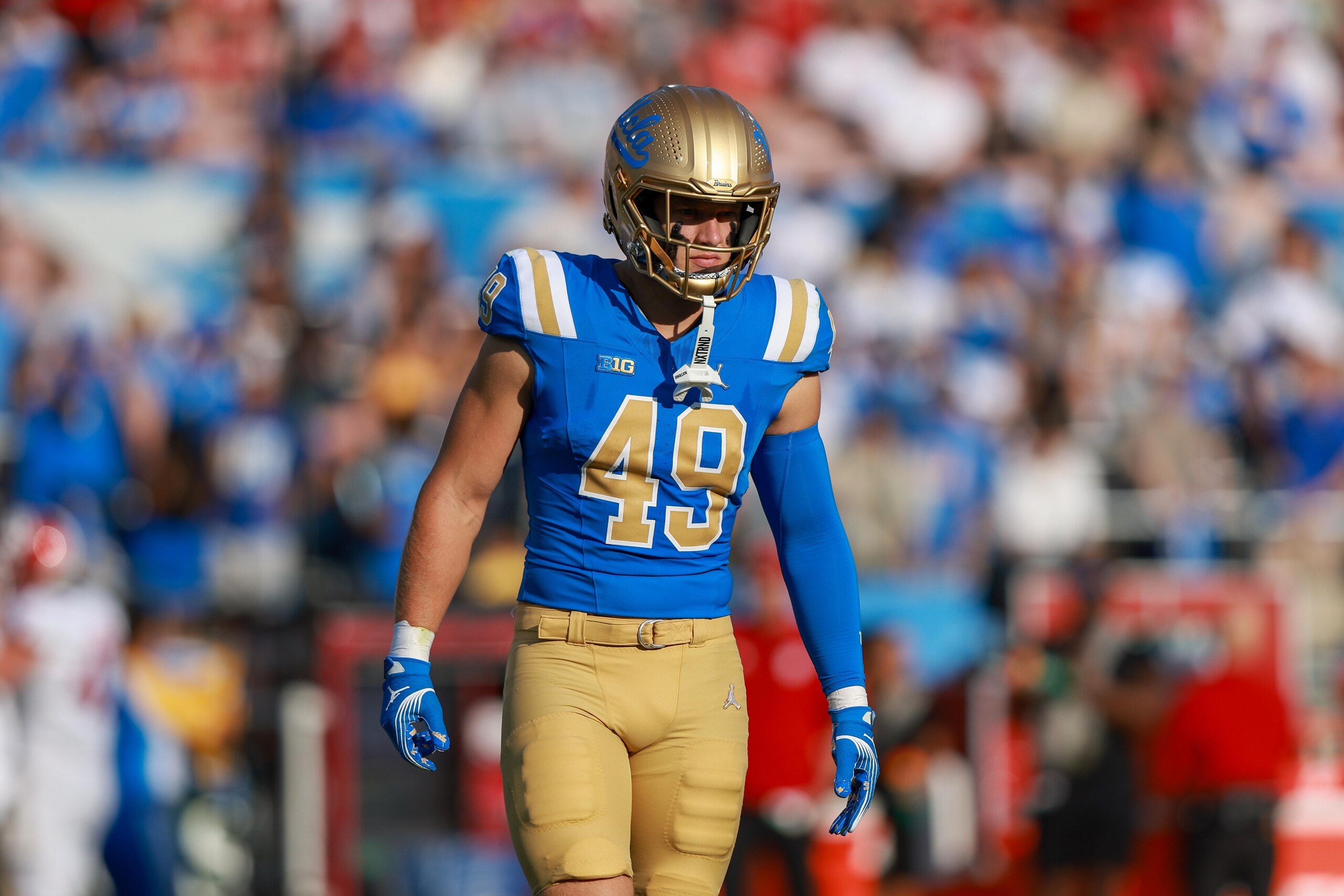
Strengths: Instinctual run defender who triggers downhill quickly, comfortable working in space, excellent movement skills
Weaknesses: Poor at taking on and shedding blocks, still lacks experience
Grade: B
The Cleveland Browns haven’t invested heavily in the linebacker position under general manager Andrew Berry aside from the acquisition of Jeremiah Owusu-Kormaoah. Instead, they've tried to piece together a solid second line of defense.
UCLA’s Carson Schwesinger finally gives the Browns a running mate for JOK as long as the latter is healthy and cleared from last season’s neck injury. Both will fly all over the field and make plays behind the team’s star-studded defensive front. If JOK isn’t cleared, Schwesinger is a tailor-made replacement for him.
Schwesinger didn't become a collegiate starter until the third game of his redshirt junior season. Once the former walk-on finally cracked the lineup, he rapidly developed into one of college football's top linebackers. He finished last season with 136 total tackles, nine tackles for loss and four sacks.
During his time on special teams and building up to start, Schwesinger went from 215 pounds to 242. He's clearly a natural at the position with near reckless abandon. He just needed time and then the opportunity to prove himself. He did.
34. Houston Texans (via NYG): Jayden Higgins, WR, Iowa State
2 of 70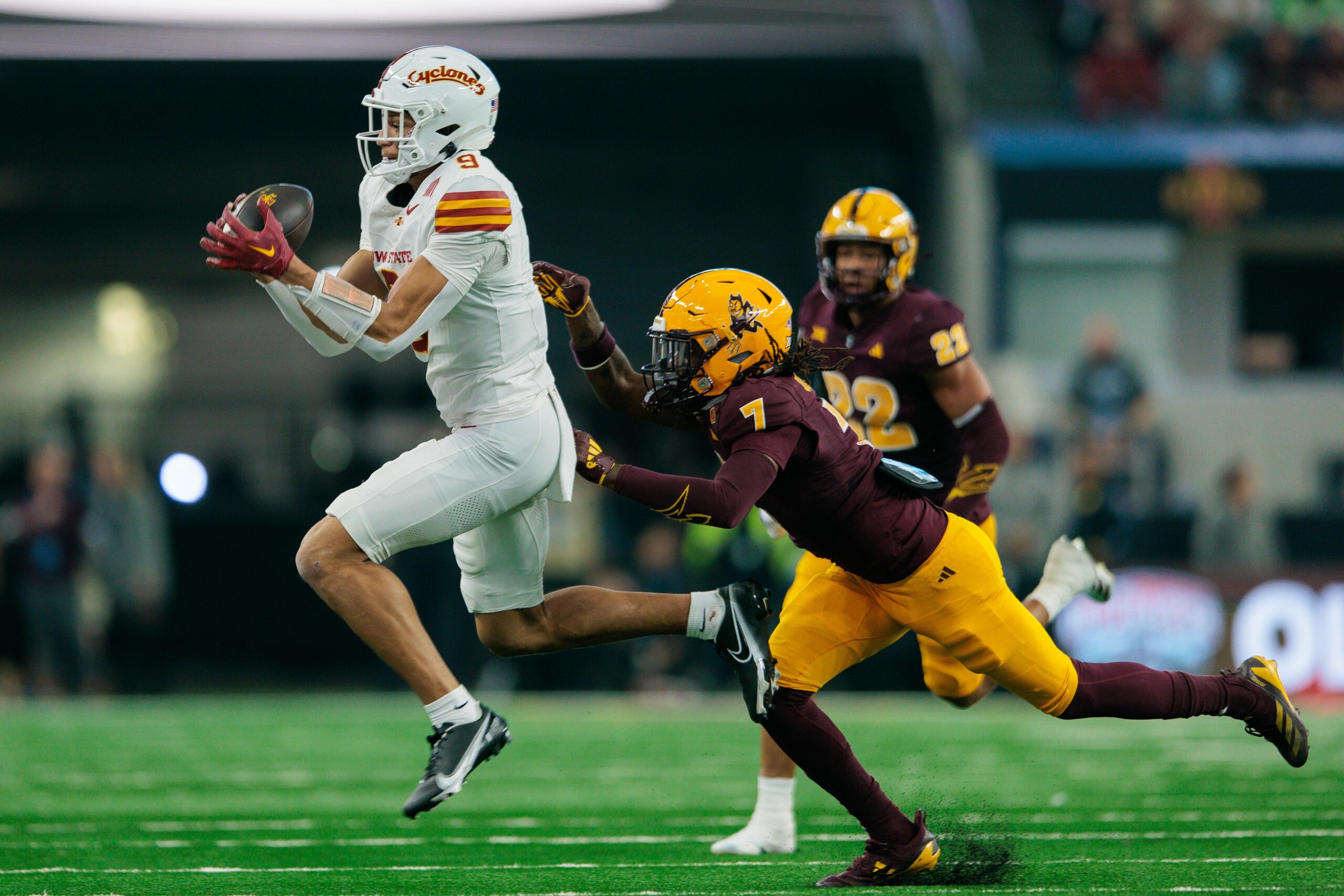
Strengths: Big target, soft hands, contested catches, adept at finding soft spots in zone coverage
Weaknesses: Slow off the line, doesn't play as fast as timed speed, middling blocker
Grade: B+
The Houston Texans needed a huge boost to their wide receiver corps this offseason. Stefon Diggs is no longer with the team. Tank Dell suffered two major leg injuries in back-to-back seasons. Star wideout Nico Collins needs help.
More importantly, quarterback C.J. Stroud needs weapons to look more like the 2023 version of himself and not the one who took a slight step back during his sophomore campaign. Having two big and athletic targets on the outside will definitely help.
Iowa State’s Jayden Higgins checks off three specific areas that the Texans' coaching staff will love.
First, he has a 6'4" frame and big catch radius. He knows how to use his size, too. Second, he's not going to drop passes. According to The 33rd Team, Higgins had the lowest drop rate among any of this year's top wide receiver prospects. Finally, the second-team All-Big 12 selection is an outstanding all-around athlete who posted a 9.62 relative athletic score, per Kent Lee Platte.
35. Seattle Seahawks (via TEN): Nick Emmanwori, Safety, South Carolina
3 of 70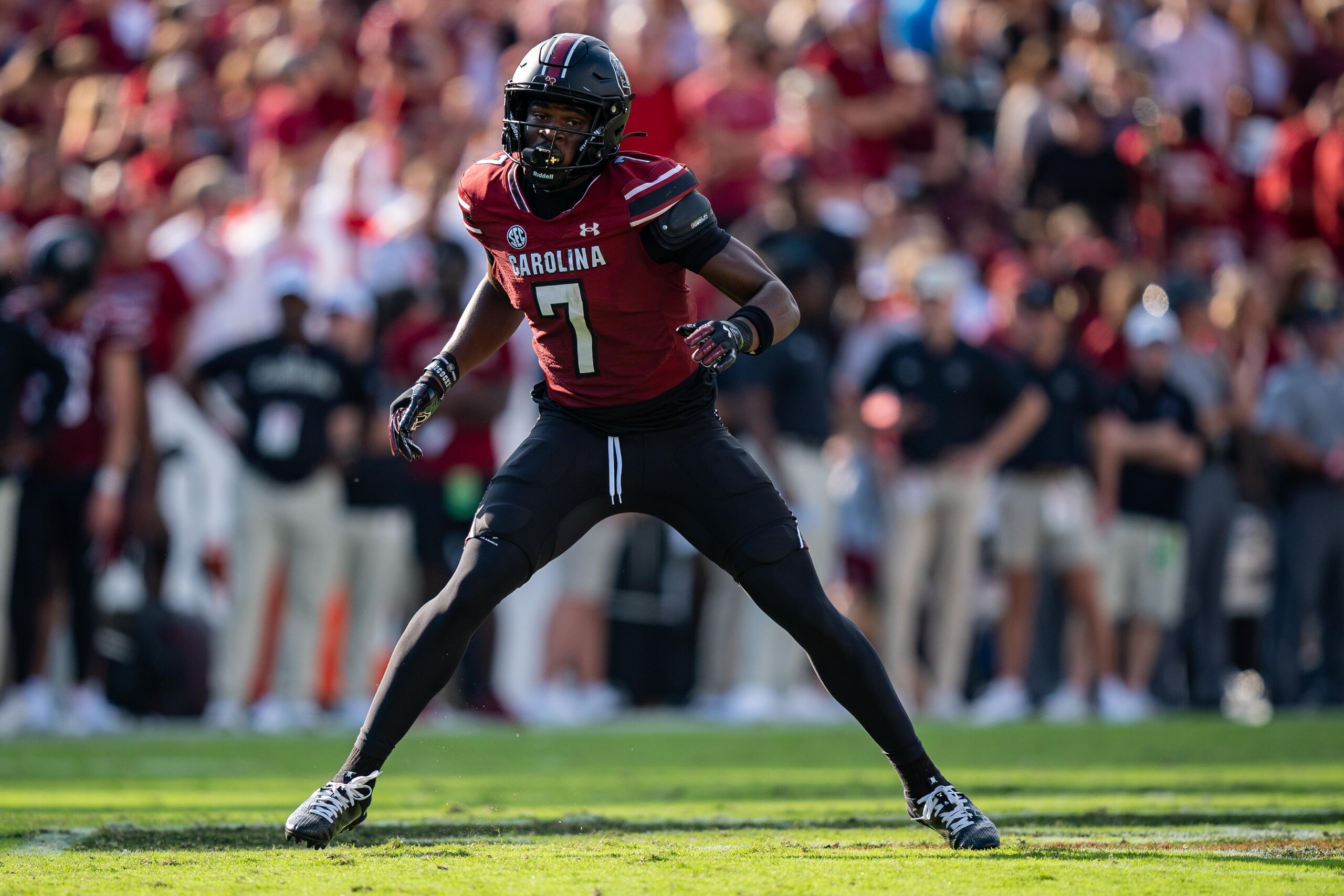
Strengths: Rare athlete, huge frame, quick downhill trigger, strong tackler, quick feet in coverage
Weaknesses: Not a true center fielder, slow reactions when reading pass game, gets overly physical when trying to recover in coverage, a bit stiff in the hips
Grade: A
For most of the 2010s, the Seattle Seahawks had a position-defining strong safety in Kam Chancellor. South Carolina’s Nick Emmanwori may not help recreate the Legion of Boom, but his rare physical skill set has the potential to completely change Mike Macdonald’s defense.
Physically, the 6'3", 220-pound Emmanwori is similar to Chancellor and Baltimore Ravens safety Kyle Hamilton, whom Macdonald previously coached as a defensive coordinator. However, Emmanwori is faster and more explosive than both.
The first-team All-American scored a perfect 10 relative athletic score in his predraft testing, per Kent Lee Platte, which ranks first among all safeties since 1987. When that type of rare athlete is available, he's well worth any downside found in his film.

36. Cleveland Browns (from JAX): Quinshon Judkins, RB, Ohio State
4 of 70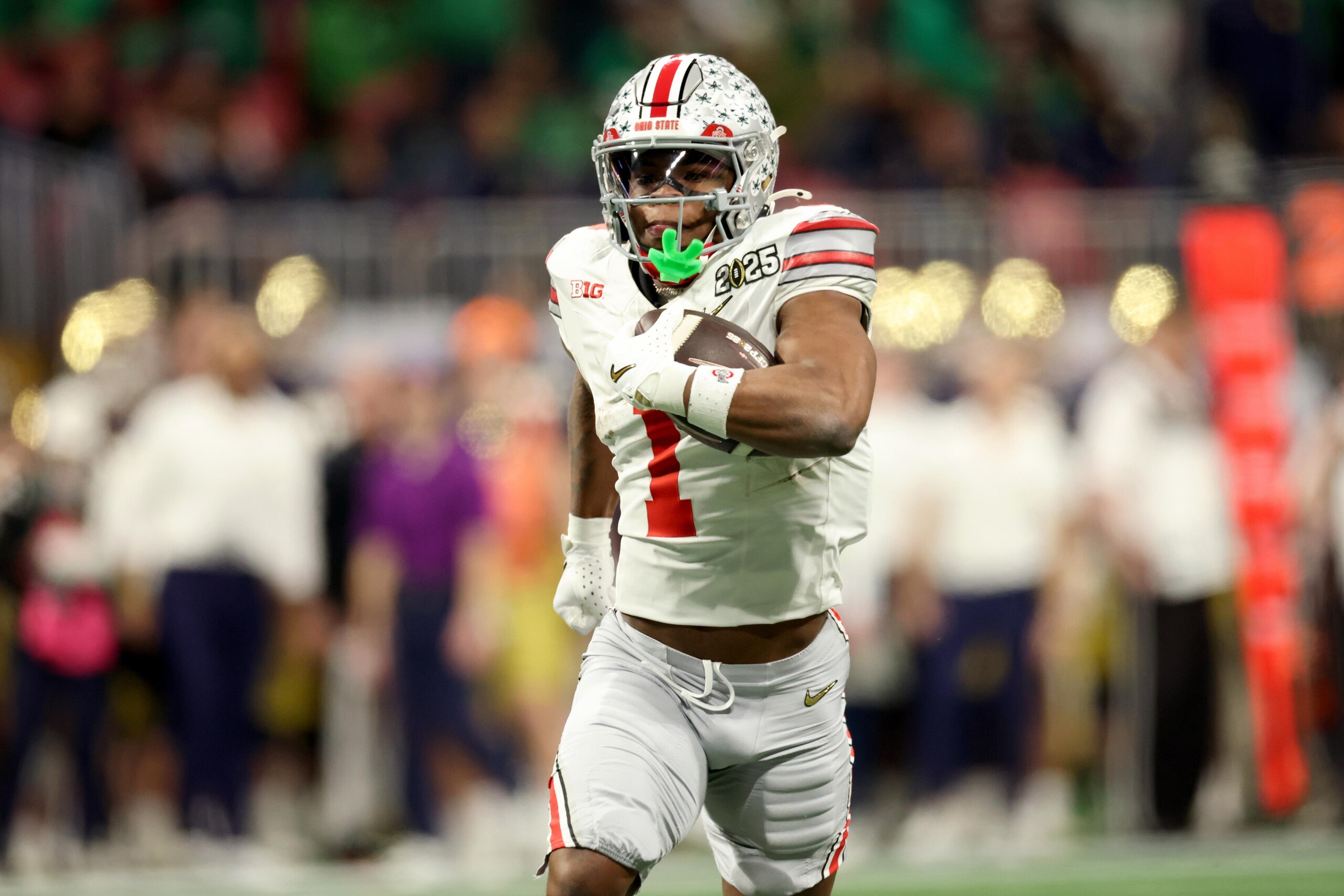
Strengths: Thick and powerful lower body, top-notch initial burst through first and second levels, natural pass-catcher
Weaknesses: Work in progress in pass protection, lacks tempo and patience when waiting for play to develop
Grade: C
Nick Chubb still may return to the Cleveland Browns, but general manager Andrew Berry saw an opportunity to replenish the team’s ground attack by selecting Ohio State’s Quinshon Judkins.
Cleveland is going to need a strong run game, because it doesn’t have a quarterback who's capable of consistently threatening opposing defenses. The zone-running game is the root of Kevin Stefanski’s offensive scheme, so the Browns can deploy Judkins more like how he was used at Ole Miss than what he did last season at Ohio State.
A year ago, Judkins had a legitimate shot at being the top ball-carrier in this draft class after two straight seasons with 1,100 yards and 15 touchdowns in SEC play. The 21-year-old did still eclipse the 1,000-yard mark and ran for 14 scores last year at Ohio State, but he wasn't a true featured back anymore.
However, Judkins reminded everyone exactly the caliber of athlete that he is when he posted a 9.88 relative score prior to this year's draft, per Kent Lee Platte.
37. Miami Dolphins (via LVR): Jonah Savaiinaea, IOL, Arizona
5 of 70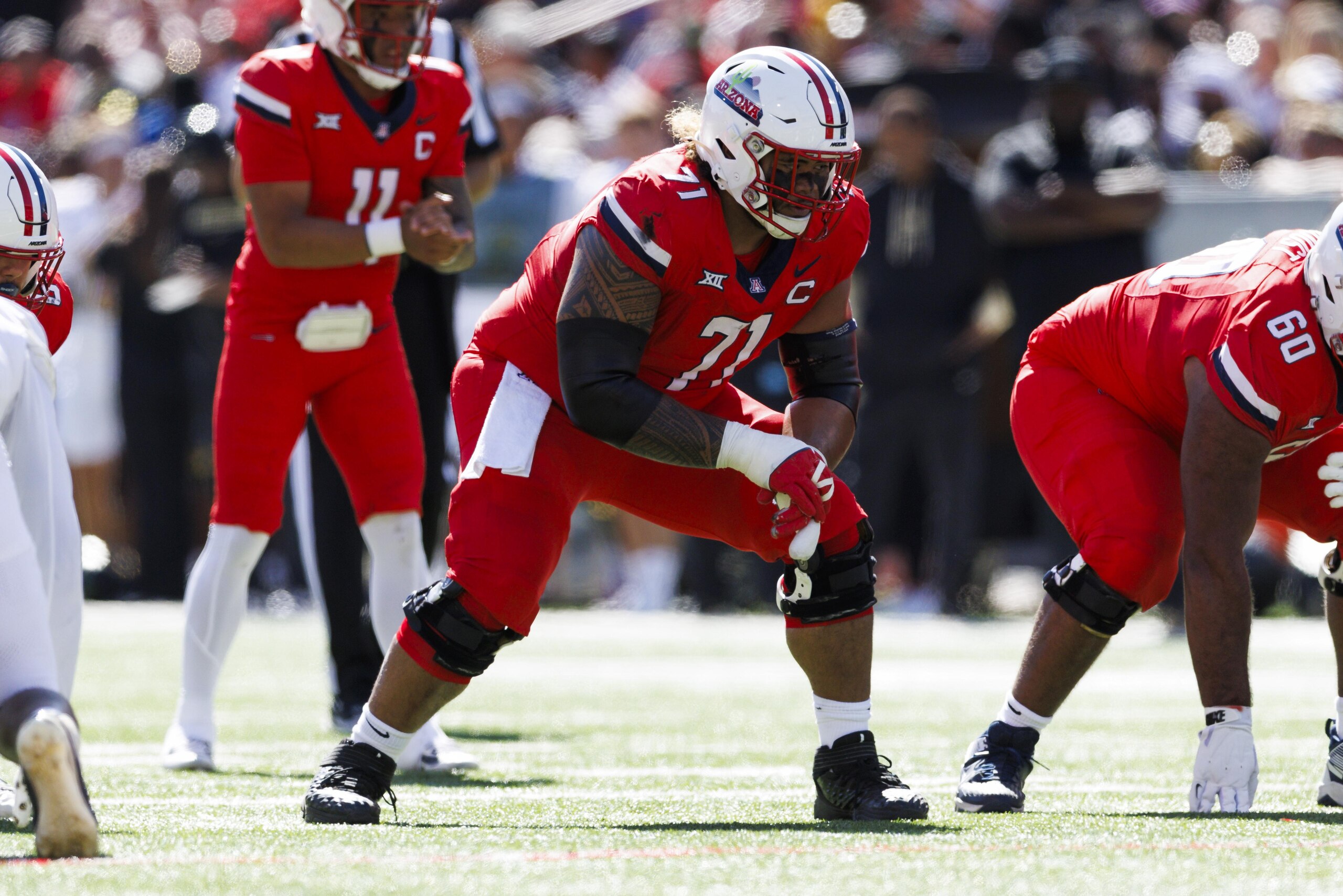
Strengths: Thick, powerful frame, strong hands, quick out of his stance, comfortable working in space
Weaknesses: Struggles to recover after initial pop or set, slow to anchor, opens up too early
Grade: A
The Miami Dolphins traded up No. 37 overall and surrendered a late third-rounder to ensure they improved in the trenches, which they desperately needed.
On Day 1 of the draft, Miami prioritized getting stronger at the point of attack on defense. Arizona’s Jonah Savaiinaea should help the Dolphins do the same on the other side of the line of scrimmage. He can be an immediate tone-setter along the offensive interior, particularly at right guard.
Savaiinaea started games at right guard, right tackle and left tackle at Arizona. Versatility is a huge part of his game.
Offensive linemen often discuss how odd it is to flip sides and forgo years of built-in muscle memory. Savaiinaea doesn't feel the same way.
"I can play both sides in the league," Savaiinaea told reporters at the NFL Scouting Combine. "I'm super grateful for the opportunity to play outside and inside. Home for me is I want to put hands on guys right now and just stone them on the line."
38. New England Patriots: Treveyon Henderson, RB, Ohio State
6 of 70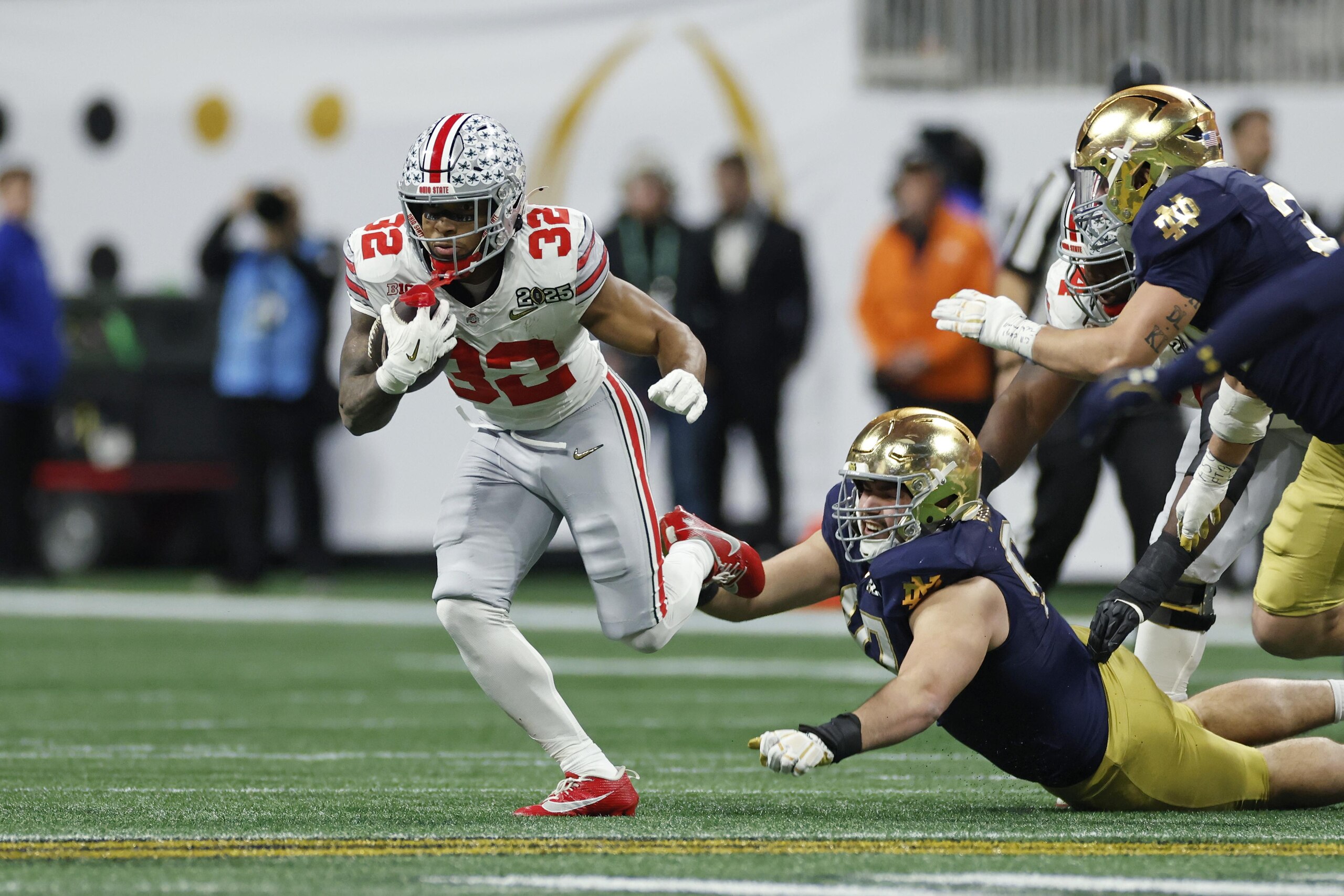
Strengths: Breakaway speed, sudden change-of-direction quickness, aggressive pass-blocker
Weaknesses: Marginal contact balance, injuries prevented him from being a true lead back
Grade: A
The New England Patriots helped quarterback Drake Maye on Day 1 of this year's draft by seleting left tackle Will Campbell. A quarterback needs to remain upright before he can thrive.
Offensive linemen aren’t the only players who help in pass protection, though. The Patriots also needed a running back who can contribute on all three downs. They landed the class’ best in that regard by taking Ohio State’s TreVeyon Henderson in Round 2.
Two traits immediately jump out when looking at Henderson and what he adds to an offense. He's both an explosive runner who's capable of creating chunk plays in the ground game and is an excellent pass protector.
Henderson has legitimate 4.43-second 40-yard-dash speed and was also a significant contributor on third downs as a pass-catcher and blocker. Last season, he was the only FBS running back who averaged 7.0 or more yards per carry while racking up at least 1,000 rushing yards and 250 receiving yards.
39. Chicago Bears (via CAR): Luther Burden III, WR, Missouri
7 of 70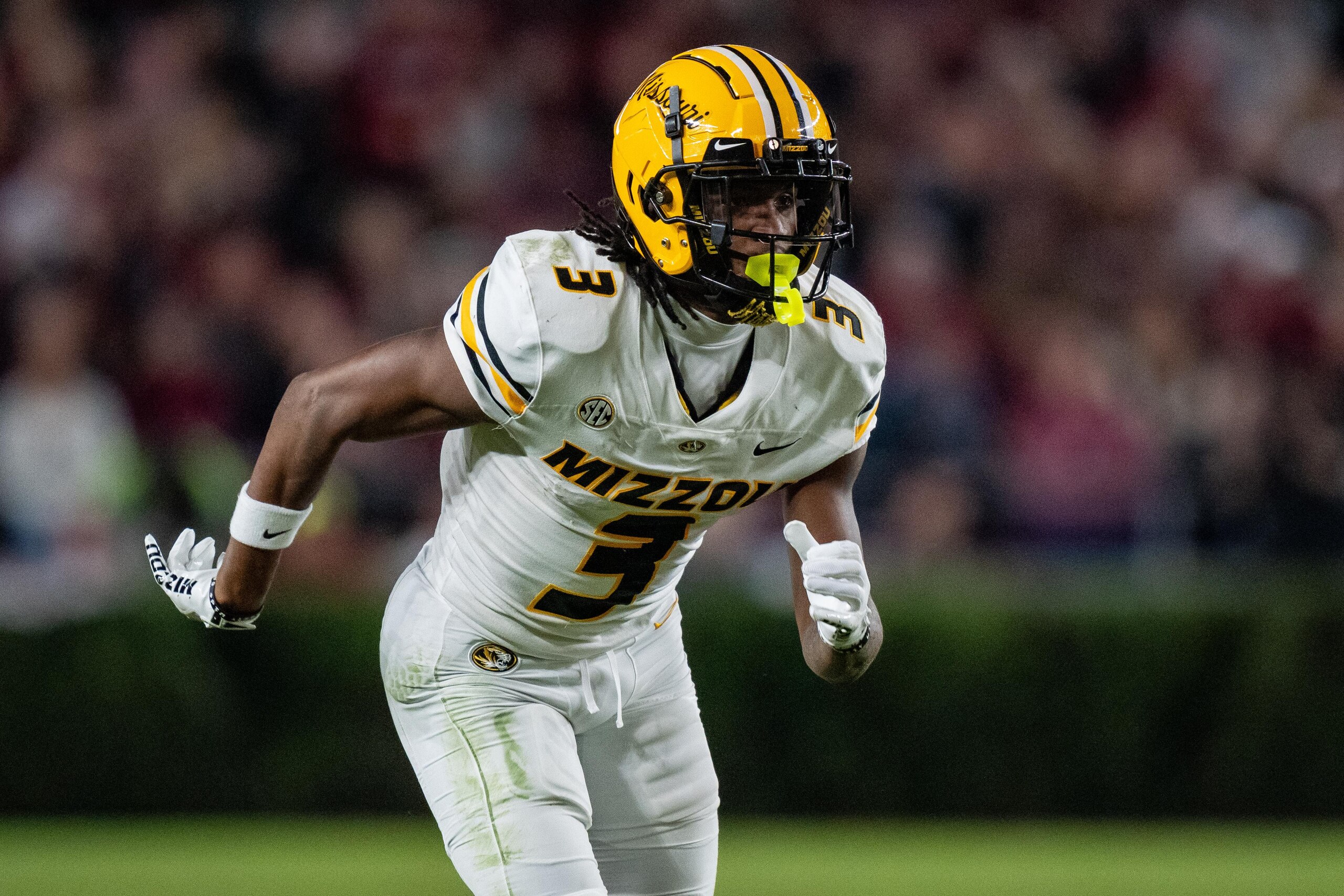
Strengths: Excellent working in space, YAC star, formation flexible, thickly built
Weaknesses: Dropoff in production during final season on campus, slot dominant over last two seasons, press coverage can rattle him
Grade: A
The Chicago Bears just found their Keenan Allen replacement by taking Missouri’s Luther Burden III with the 39th overall pick. They're now loaded at the skill positions after adding tight end Colston Loveland in the first round and Burden in the second round.
Sophomore quarterback Caleb Williams should benefit greatly from these additions, as well as the fortifications that general manager Ryan Poles made along the offensive interior in free agency.
Entering this past season, Burden was generally viewed as a top-10 talent. Against LSU in 2023, he was the best wide receiver on the field in a game that also featured Malik Nabers and Brian Thomas Jr.
However, the 2024 campaign didn’t go as expected for him. The 5-star recruit struggled to produce and didn't mesh all that well with Missouri's offensive scheme.
Burden also received plenty of flak from sources prior to the draft. Todd McShay of The Ringer said some NFL teams were labeling him as a "diva." But Burden's ability is obvious when he's on his game.
40. New Orleans Saints: Tyler Shough, QB, Louisville
8 of 70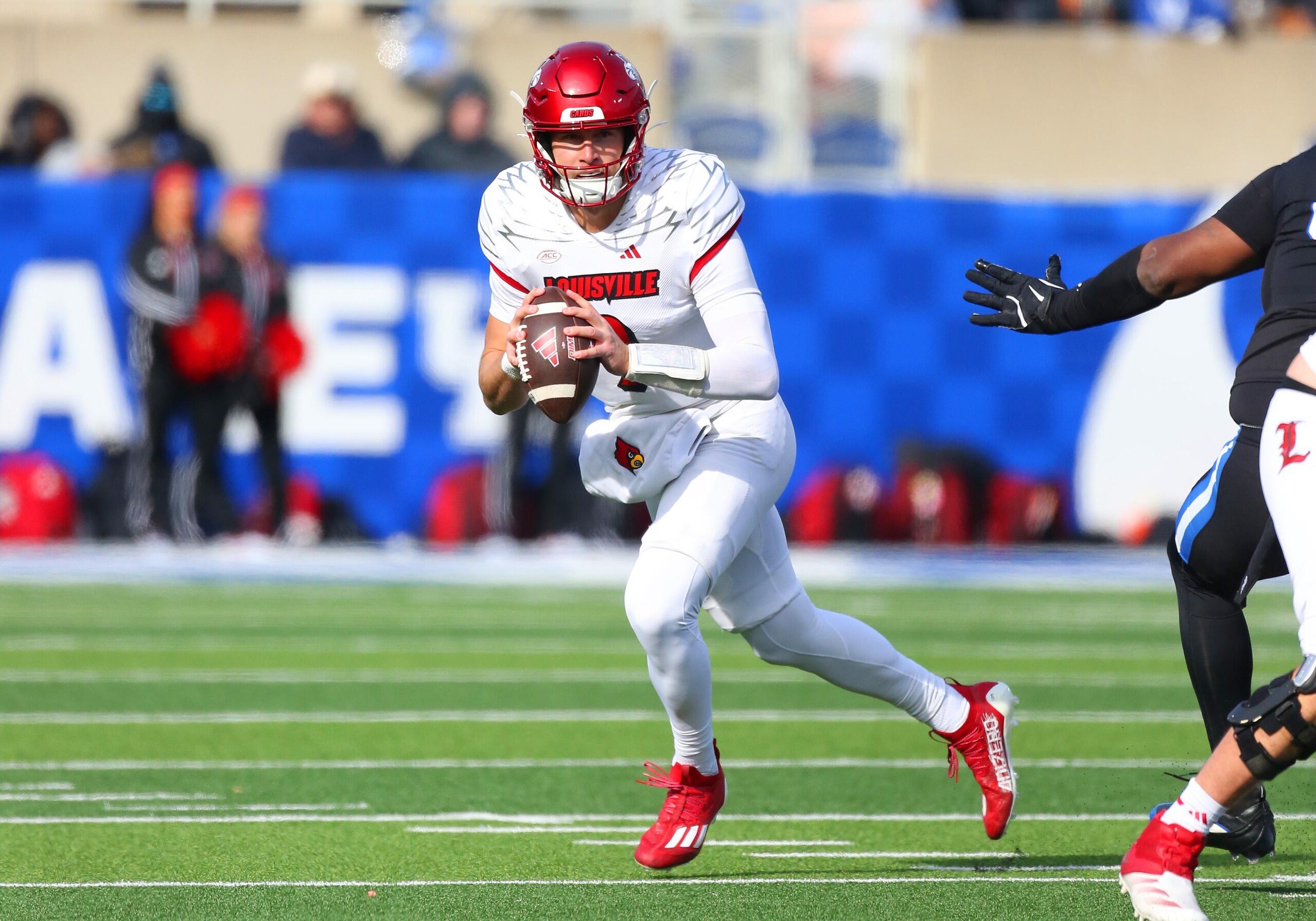
Strengths: Reads entire field, strong thrower on or off platform, drives ball to all three levels, good movement skills
Weaknesses: Needs to improve footwork, only one full year as starter, extensive injury history
Grade: D
The New Orleans Saints desperately needed a quarterback, so selecting Louisville’s Tyler Shough with the 40th overall pick isn’t a total organizational failure. However, passing on Shedeur Sanders for an older, injury-plagued quarterback with only one year of production is a draft travesty.
Derek Carr's shoulder injury and uncertain status for the 2025 season might have forced the Saints' hand. Maybe they believe Shough can move into the starting lineup immediately. However, he's not the caliber of prospect to take at this point in the draft and assume he can be exactly what the Saints need.
Shough is turning 26 at the end of September. He does have the natural tools to be considered among the best quarterback options in this year's draft class, but he also backed up Justin Herbert for two years at Oregon. Herbert is now entering his sixth season in the NFL.
41. Buffalo Bills (via CHI): T. J. Sanders, DL, South Carolina
9 of 70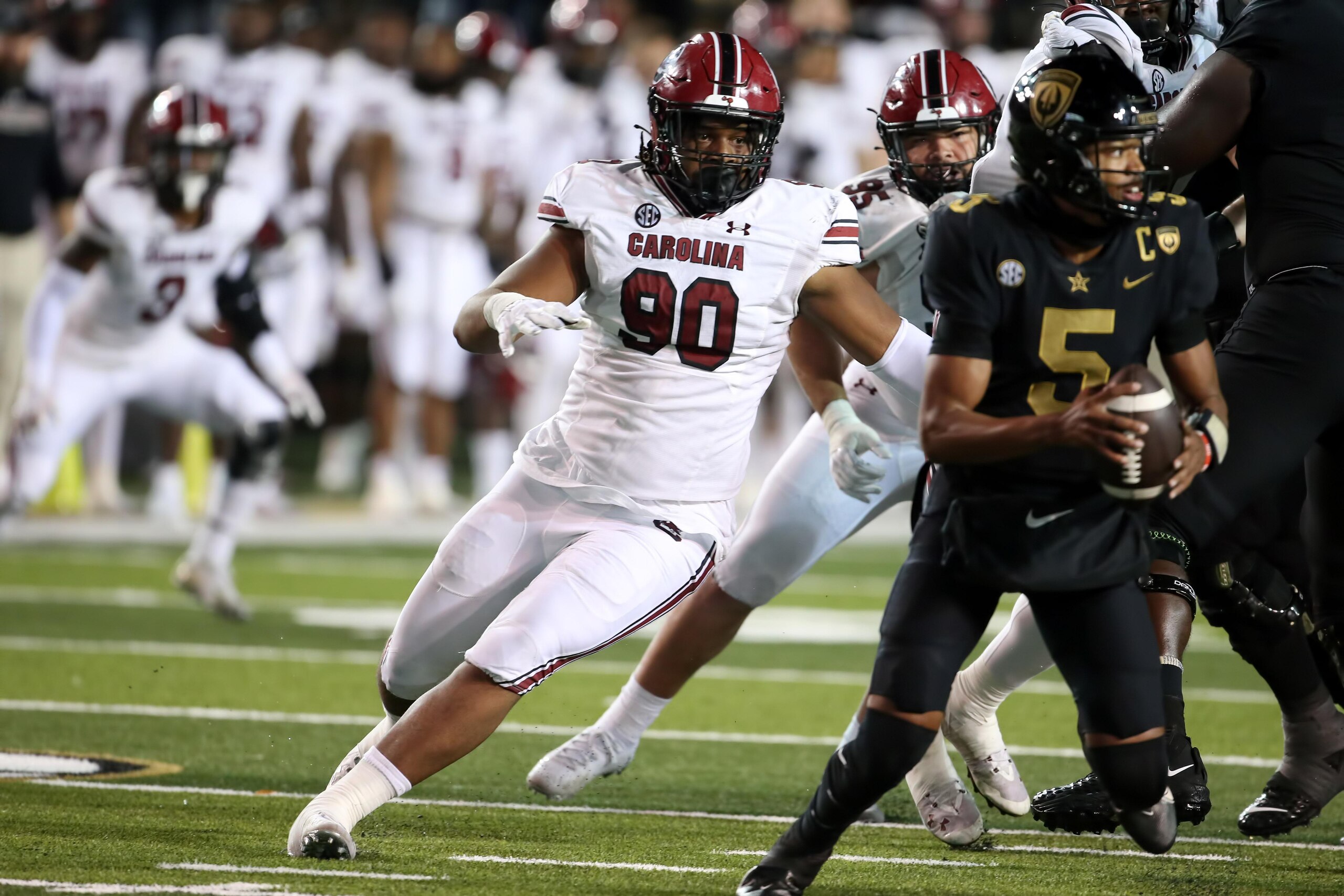
Strengths: First-step quickness, uses hands well as pass-rusher, stout at point of attack
Weaknesses: Pad level needs to improve, stops feet upon contact, more a straight-line athlete
Grade: B
The Buffalo Bills understood the assignment on Day 2 of the draft, because they traded up to No. 41 and drafted a defensive tackle in South Carolina’s T.J. Sanders.
Buffalo brought in Larry Ogunjobi as a free agent, but he’s suspended for the first six games of the season for violating the NFL’s PED policy. Meanwhile, veteran nose tackle DaQuan Jones is entering the last year of his current contract.
Sanders isn’t a nose tackle, but he is a disruptive upfield defender with positional flexibility. The Bills needed to add quality depth and talent along their defensive line this offseason. The incoming rookie should pair well with Ed Oliver.
Football originally wasn't supposed to be in Sanders' future. He thought a future on the hardwood would be his calling.
Instead, he gave football a try again as a junior in high school, and interest in his game took off. That background definitely shows up in how he plays, particularly as a pass-rusher.
"I was a hooper. I wasn't touching no football," Sanders told reporters at his pro day. "One minute you think you are going to the NBA and the next thing you are doing things for the NFL. Crazy how your life can change in the blink of an eye."
42. New York Jets: Mason Taylor, TE, LSU
10 of 70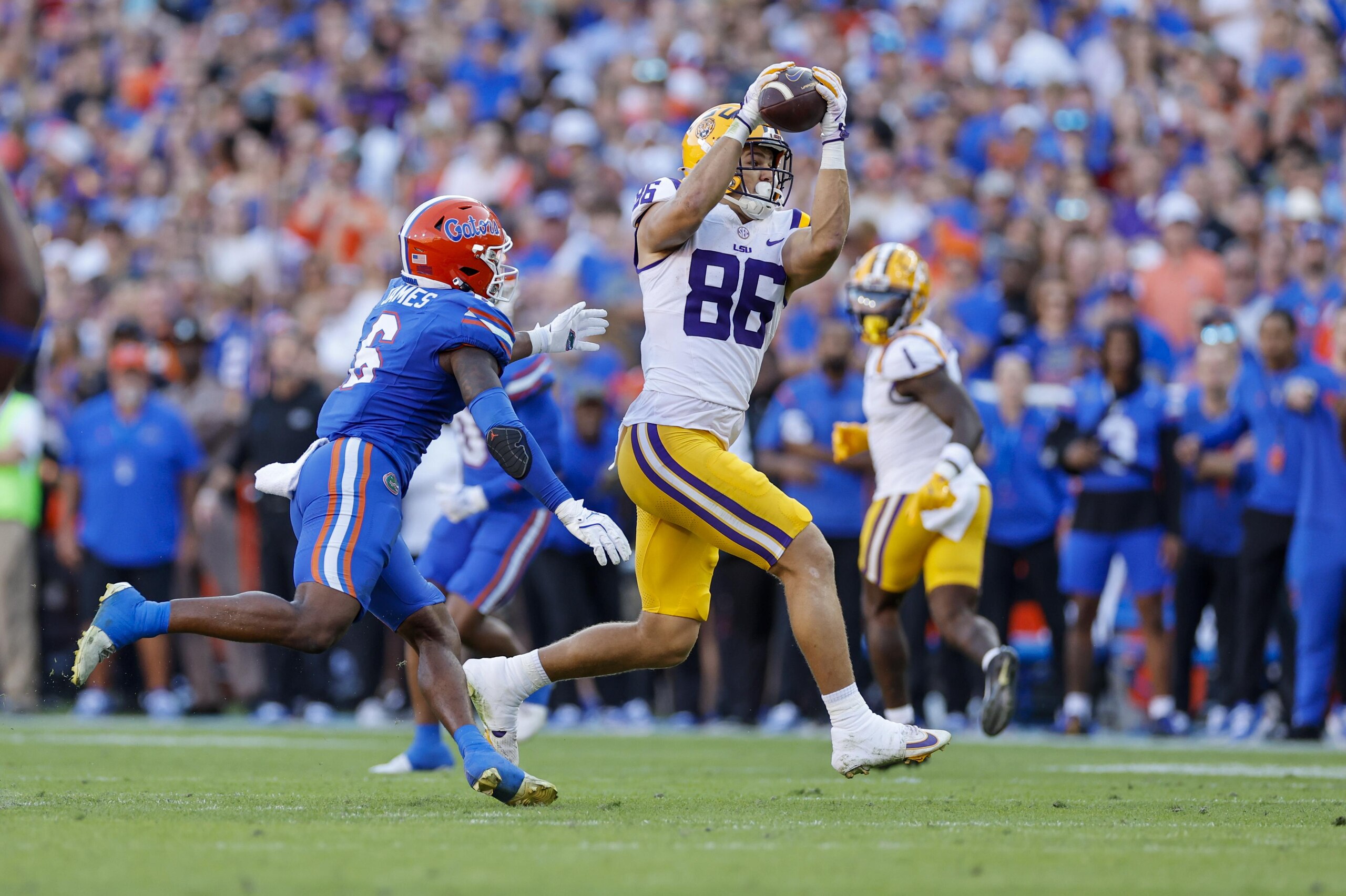
Strengths: Smooth route-runner and separator, reliable option on money downs, strong hands
Weaknesses: Plays high when working in-line, marginal play strength, only adequate production
Grade: A
Jason Taylor nearly ended his Hall of Fame career with the New York Jets. His son, Mason, will now begin his NFL career with Gang Green.
The Jets are taking the right approach to building around new starting quarterback Justin Fields. First, they finished their offensive line with the first-round selection of right tackle Armand Membou. Taylor now gives New York a legitimate threat at tight end, which it severely lacks, especially after Tyler Conklin left in free agency.
Some prospects seem born to play in the NFL. Taylor is one of them.
Taylor flew under the radar to a degree as a 3-star high school recruit. He was never fully featured in LSU's offense, either. Yet it's obvious how smooth the 20-year-old is and how well he's been coached with his route-running. He has immense upside as a weapon at tight end.
43. San Francisco 49ers: Alfred Collins, DL, Texas
11 of 70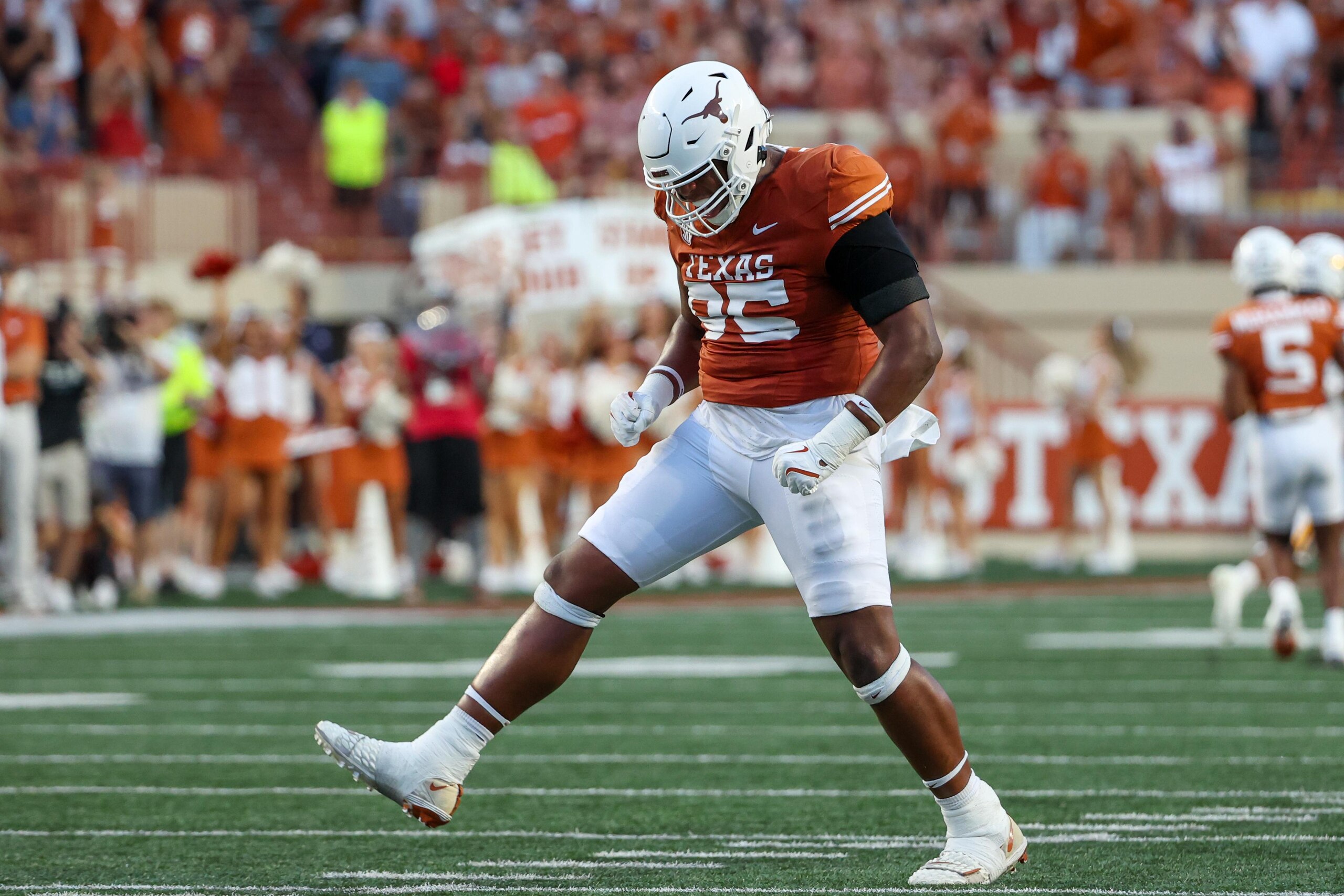
Strengths: Mountainous frame, long arms, absorbs blocks and violently sheds them, resets line of scrimmage
Weaknesses: Not an every-down player, adds little as a pass-rusher, stops feet on contact
Grade: C
The San Francisco 49ers’ plan is becoming crystal-clear after their first two picks in this year's draft. They’re getting bigger and more physical at the point of attack on defense.
First-rounder Mykel Williams is far more advanced as a run defender than a pass-rusher at this point in his career. Between Williams and Texas’ Alfred Collins, the Niners now have two bullies who can control the line of scrimmage and allow Nick Bosa to run wild off the edge.
Collins is a 6'6", 332-pound nose tackle. The first-team All-SEC defender is going to excel against the run and clogging lanes, but he doesn't provide much as a pass-rusher.
Collins did muster seven sacks at Texas, although they came over a five-year span. He never surpassed two in a single campaign. Bottom line, he's a space-eater who allows others to make plays.
44. Dallas Cowboys: Donovan Ezeiruaku, EDGE, Boston College
12 of 70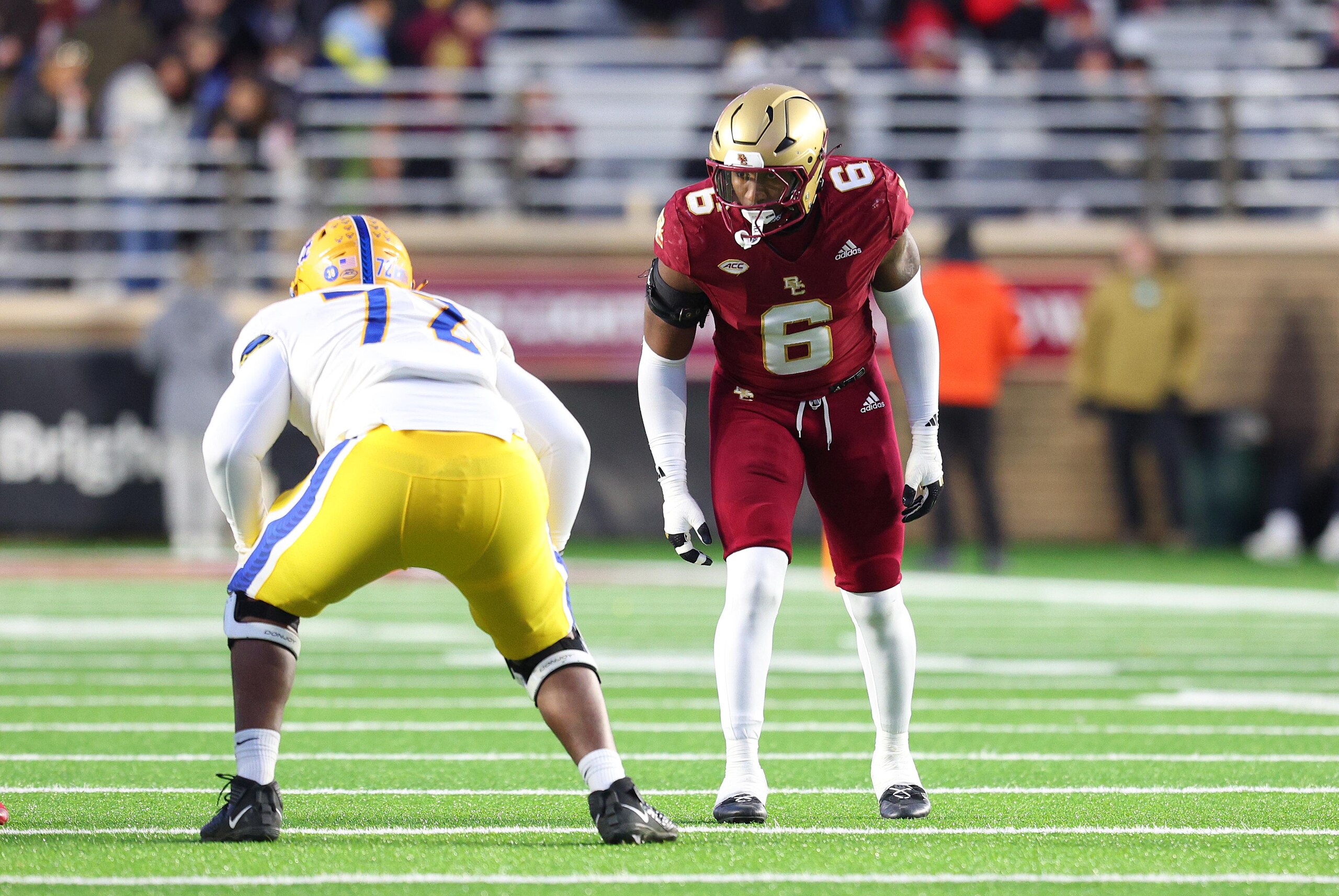
Strengths: Full pass-rush arsenal, natural and flexible edge-rusher, long arms despite 6'2" frame
Weaknesses: Lacks bulk and strength when facing offensive linemen at point of attack, tries to guess against run, more smooth than explosive pass-rusher
Grade: B
Micah Parsons is a wild man coming off the edge to harass opposing quarterbacks. However, he didn’t have a running mate coming into this year's draft.
DeMarcus Lawrence left the Dallas Cowboys in free agency to join the Seattle Seahawks, while Carl Lawson remains unsigned.
Boston College’s Donovan Ezeiruaku, whom Dallas selected with this year’s 44th overall pick, does one thing, and he does it very, very well. Ezeiruaku is one of the class' most gifted pass-rushers, although he may never be an every-down player because of his inadequacy against the run.
"I thought he was a monster [pass-rusher]," an anonymous collegiate offensive line coach told The Athletic's Bruce Feldman. "He's got a lot of moves and counters to beat you with. I don't think people talked enough about this kid considering how good he actually was."
45. Indianapolis Colts: JT Tuimoloau, EDGE, Ohio State
13 of 70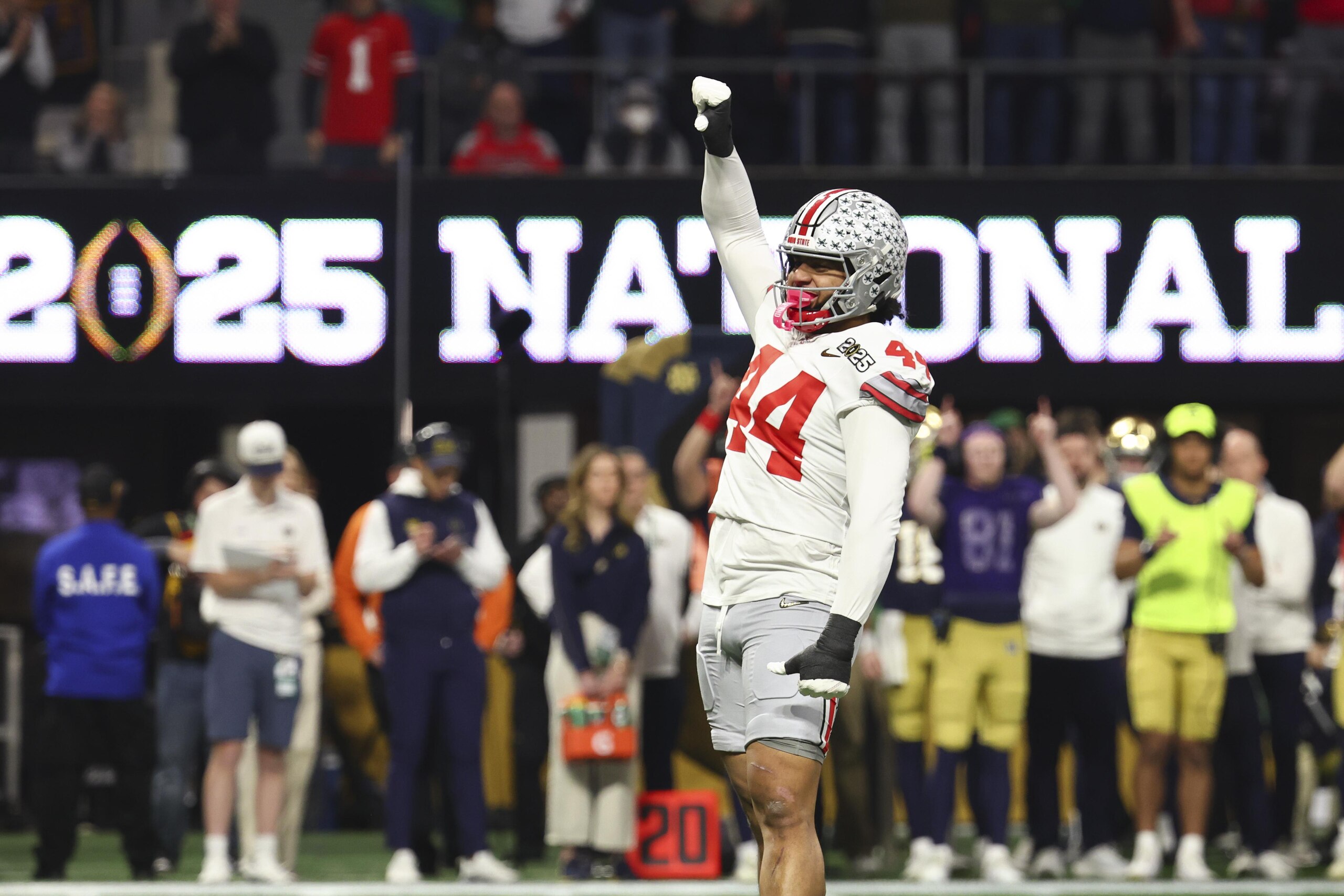
Strengths: Three-down defender, sets edge, good run defender, impressive bull rush, relentless effort
Weaknesses: Straight-line pass-rusher, inconsistent pad level, erratic initial strike
Grade: B
Last year, Indianapolis Colts general manager Chris Ballard openly laughed and looked thrilled when UCLA defensive end Laiatu Latu fell to his team in the first round. Latu flashed as a rookie, but he didn’t provide as much pass-rush juice as expected.
Making matters worse, starting defensive end Dayo Odeyingbo left in free agency this offseason to sign with the Chicago Bears. Meanwhile, Samson Ebukam is coming off a season-ending injury, Kwity Paye is on the last year of his rookie contract and Tyquan Lewis is a rotational contributor.
Ohio State’s JT Tuimoloau is the Colts' future long-term bookend opposite Latu.
The three-time first-team All-Big Ten selection came to Ohio State as a 5-star recruit, and he improved every single year while on campus. However, Tuimoloau's skill set is limited as an pass-rusher because he doesn't have the burst or flexibility to consistently threaten the edge. He is an excellent power-rusher with a motor that runs hot and a strong run defender, which makes him a safe bet.
The upside of a prospect is oft-discussed. Their floor doesn't come up nearly as often. Tuimoloau is an excellent example of selecting a prospect based on a high floor.
46. Los Angeles Rams (from ATL): Terrance Ferguson, TE, Oregon
14 of 70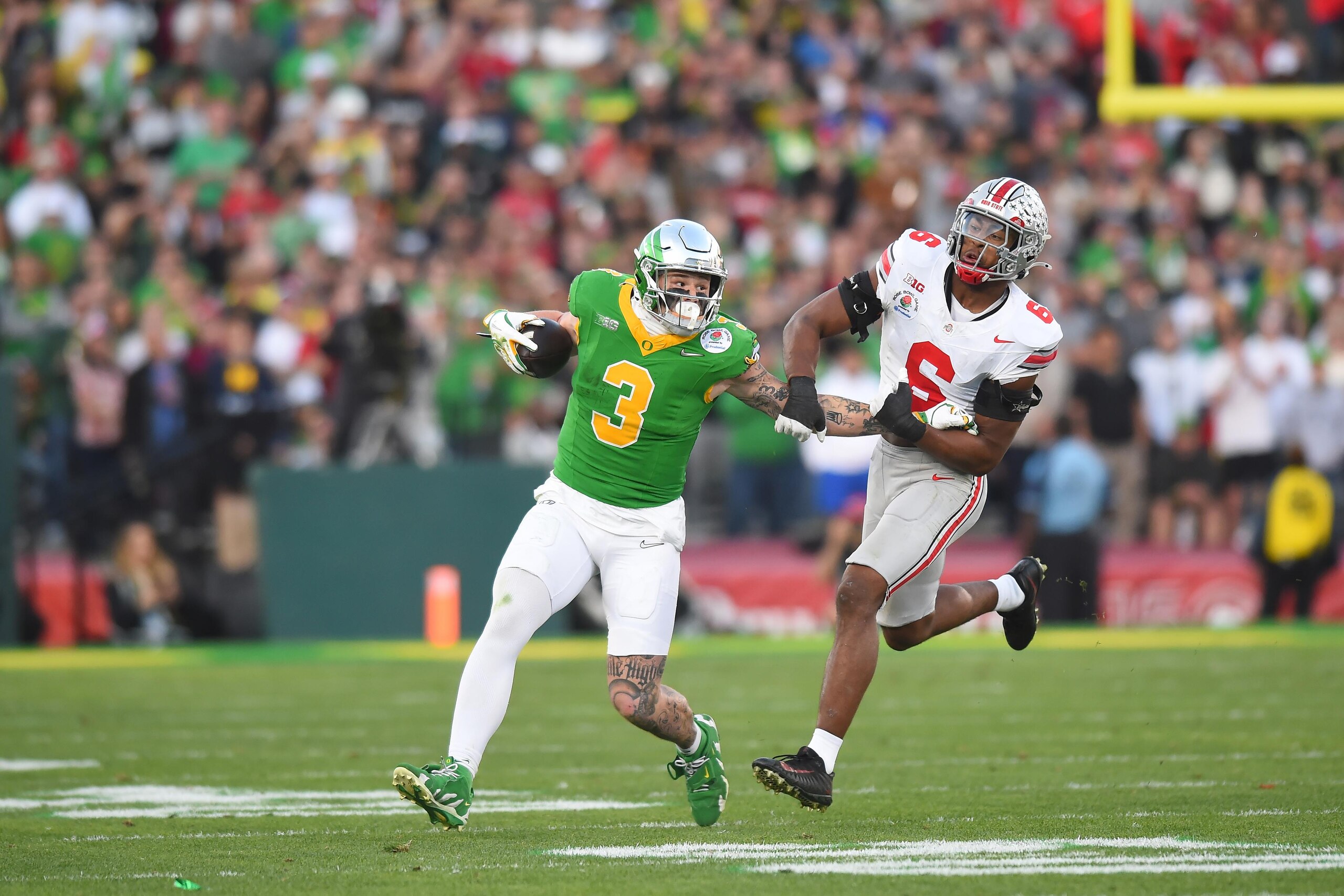
Strengths: Knack for fighting soft spots in zones, threatens seam, large catch radius
Weaknesses: Marginal in-line blocker, can do a better job receiving through contact, not sudden to always create separation
Grade: B
After trading out of the first round, the Los Angeles Rams finally made their first pick of this year's draft by selecting Oregon tight end Terrance Ferguson at No. 46.
Ferguson, who was at this year’s Senior Bowl–which the Rams love–gives Los Angeles an actual weapon at tight end. Tyler Higbee never developed into that player despite signing two contract extensions. Head coach/offensive play-caller Sean McVay should be able to get the most out of his new tight end, while the Rams will benefit from the extra first-round pick that they acquired for next year's draft.
There are two ways to look at Ferguson as a prospect. Either he was a highly regarded recruit who didn't quite live up to expectations at Oregon, or he became a sleeper prospect in this year's class because he still has plenty of untapped potential.
In reality, he's a little bit of both.
"I think I don't get the credit I deserve for some of the stuff I did in my career," Ferguson said, per Bri Amaranthus of Oregon Ducks on SI. "I played a lot of football at Oregon and I produced every year I was there."
47. Arizona Cardinals: Will Johnson, CB, Michigan
15 of 70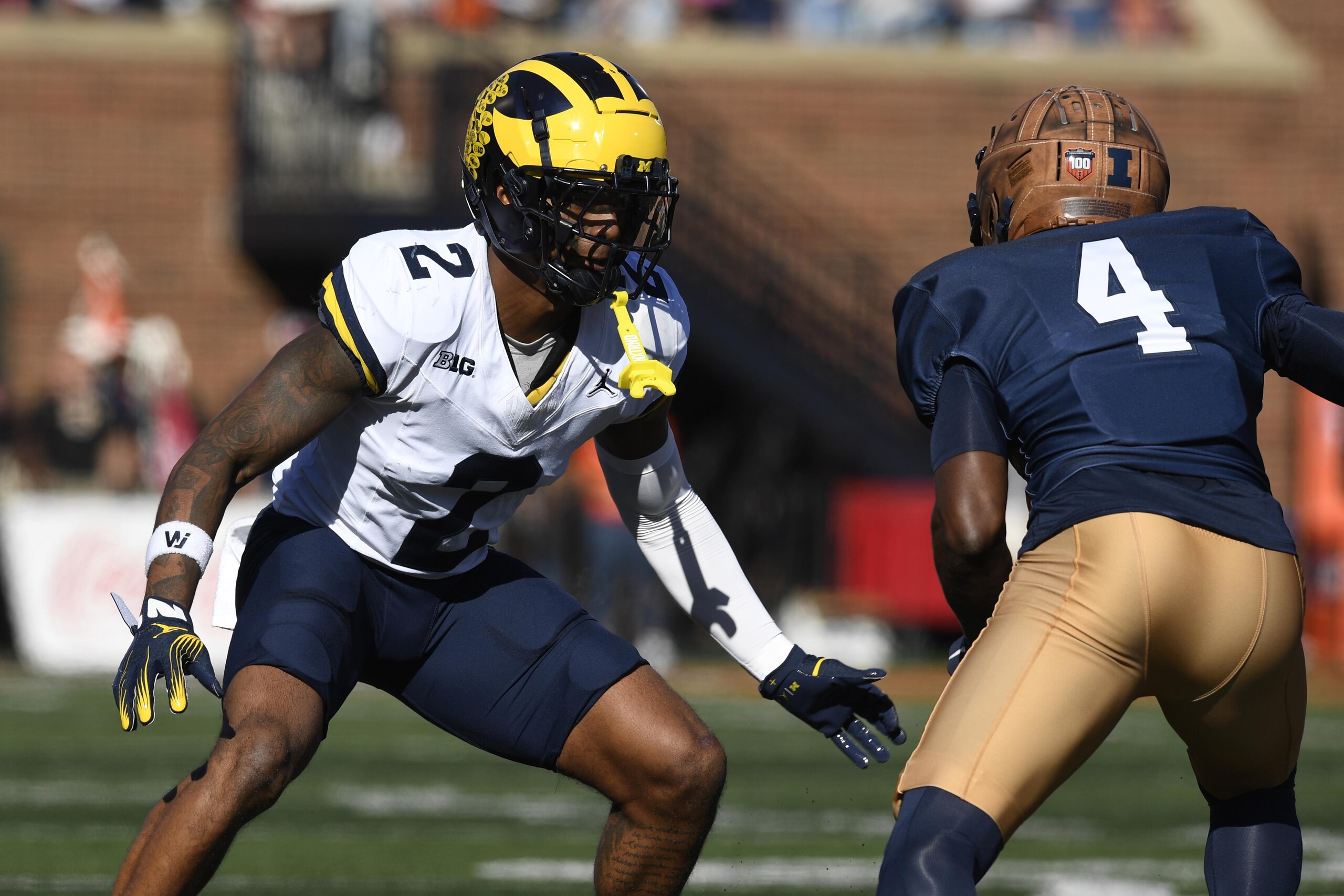
Strengths: Excellent size and length, scheme diverse, smooth backpedal and breaks, plays through ball
Weaknesses: Recent rash of injuries, will take chances, can be grabby when working downfield
Grade: A
The Arizona Cardinals' stopped Will Johnson's slide by taking the Michigan cornerback with the 47th overall pick. The value was too overwhelming to let him fall any further, medical risk be damned.
The B/R NFL Scouting Department graded Johnson as a top-five prospect in this year’s class, although it didn’t have access to his medical records. A fully healthy version of Johnson is an elite talent. He just needs to stay healthy, because injuries likely played a huge role in why he fell this far.
Coming off a national championship and first-team All-American recognition in 2023, prognosticators earmarked Johnson as a potential top-10 draft pick. Even with Colorado's Travis Hunter in the same class, many still viewed Johnson as the best pure corner in the class.
However, he played in only six games last season due to shoulder and toe injuries. He then tweaked a hamstring during the lead-up to his pro day. A lingering knee issue also created plenty of concern. That string of injuries factors into the evaluations.
Still, Johnson is a 6'2", near-200-pound cover corner with the ability to excel in multiple schemes. His value as a player didn't diminish because of a few missed games, especially not at a premium position where teams are always looking for top coverage defenders.
48. Houston Texans (via LVR): Aireontae Ersery, OT, Minnesota
16 of 70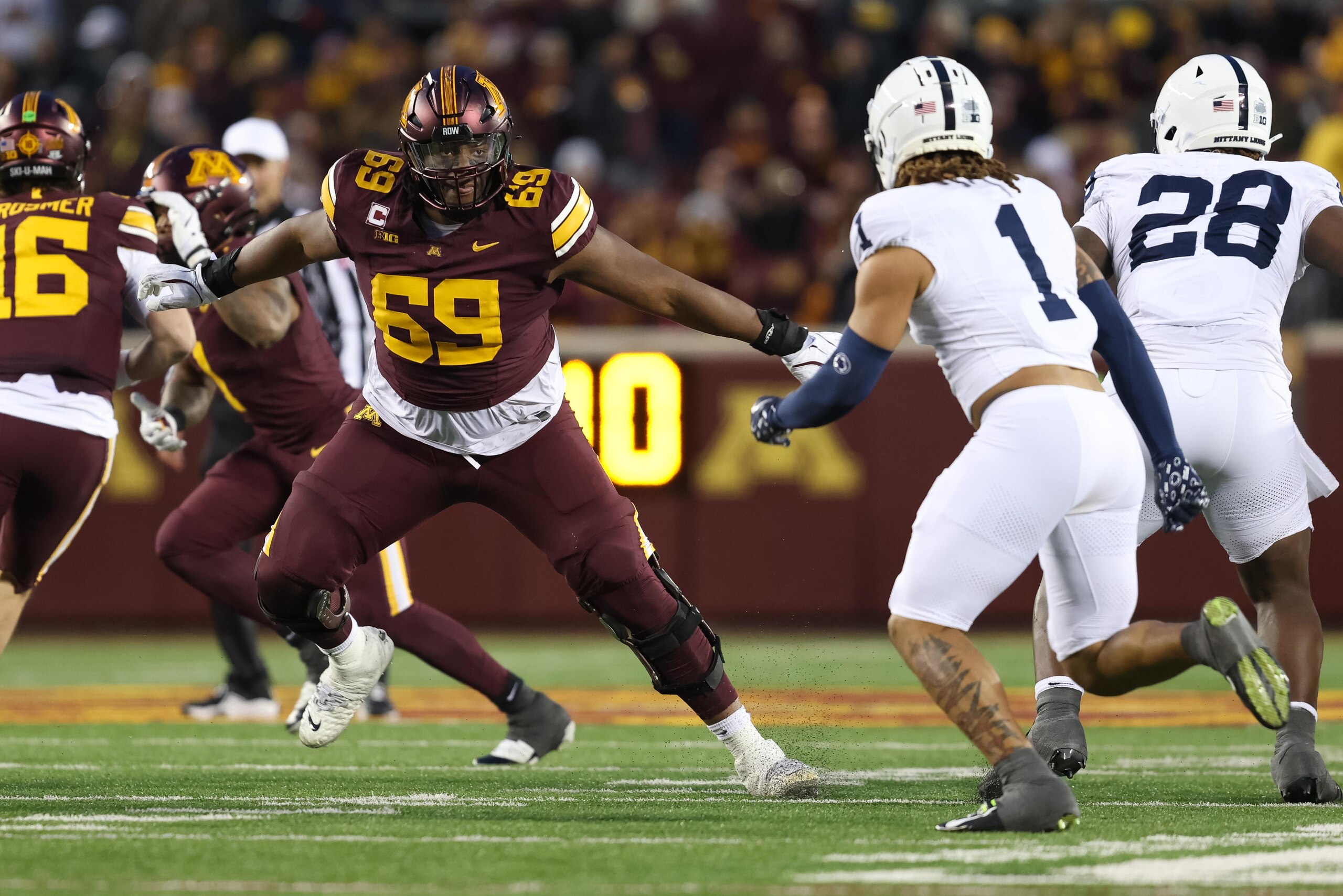
Strengths: Clear pass set to hit aiming points, powerful punch, good athlete, picks up D-line movement
Weaknesses: Poor pad level, lunges, inconsistent timing with hand strike, bites on moves
Grade: B
The Houston Texas had a glut of Day 2 draft picks and decided to use them as leverage to target specific prospects. They surrendered the 99th overall pick to acquire the 48th overall selection and make sure they have a long-term plan along their offensive line.
After trading Laremy Tunsil to the Washington Commanders, the Texans brought in Cam Robinson to handle left tackle. They also drafted Minnesota’s Aireonae Ersery to develop.
Maybe Ersery becomes the Texans’ long-term left tackle or finds a home at guard. Either way, the Texans now have more talent up front to solidify C.J. Stroud’s protection.
There's sometimes a disconnect between a prospect's athletic profile and his playing style. Ersery serves as a prime example. The reigning Big Ten Offensive Lineman of the Year is a 6'6", 331-pound, three-year starter from a major conference. He also posted an impressive 9.42 relative athletic score before the draft, per Kent Lee Platte, which put him in the top 100 of all offensive tackles since 1987.
However, Ersery's technique and effort levels seen on tape don't match his natural ability. One issue can be coached up, but the other knock is far more nebulous.
49. Cincinnati Bengals: Demetrius Knight Jr., LB, South Carolina
17 of 70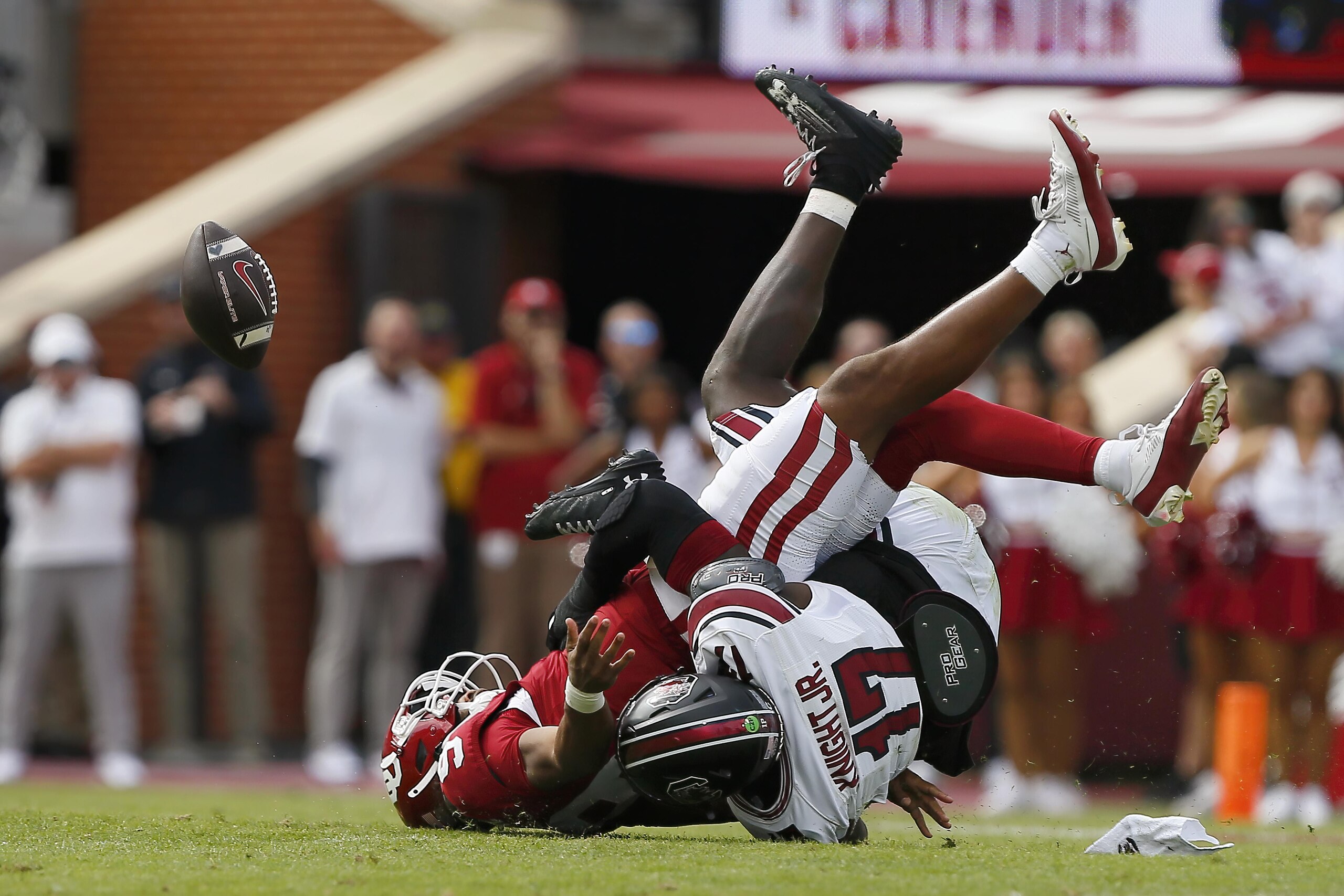
Strengths: Instinctive run defender, uses hands well to shed blocks, quick downhill trigger against run and when sitting in zone
Weaknesses: Can develop better feel in coverage overall, tight in hips which affects lateral movement
Grade: B
The Cincinnati Bengals faced a philosophical debate entering this year’s draft. They could either build on a strength and make their offense even more potent after signing wide receivers Ja’Marr Chase and Tee Higgins to contract extensions this offseason, or they could rebuild a sagging defense. They appear to have chosen the latter.
First-round edge-rusher Shemar Stewart should help offset the retirement of Sam Hubbard. Second-round linebacker Demetrius Knight Jr. can replace Germaine Pratt, who requested a trade earlier this offseason.
When watching Knight play on defense, it's hard to believe he was recruited as a quarterback.
"If you would have told me after my freshman year that I'd be right here as a linebacker, I probably would have cried or said that doesn't sound right," Knight told reporters at the NFL Scouting Combine.
Knight is an older prospect–he already turned 25–but he comes into the league as a fully formed linebacker who's ready to contribute after racking up 178 total tackles, 14 tackles for loss and four interceptions over the last two seasons.
50. Seattle Seahawks: Elijah Arroyo, TE, Miami
18 of 70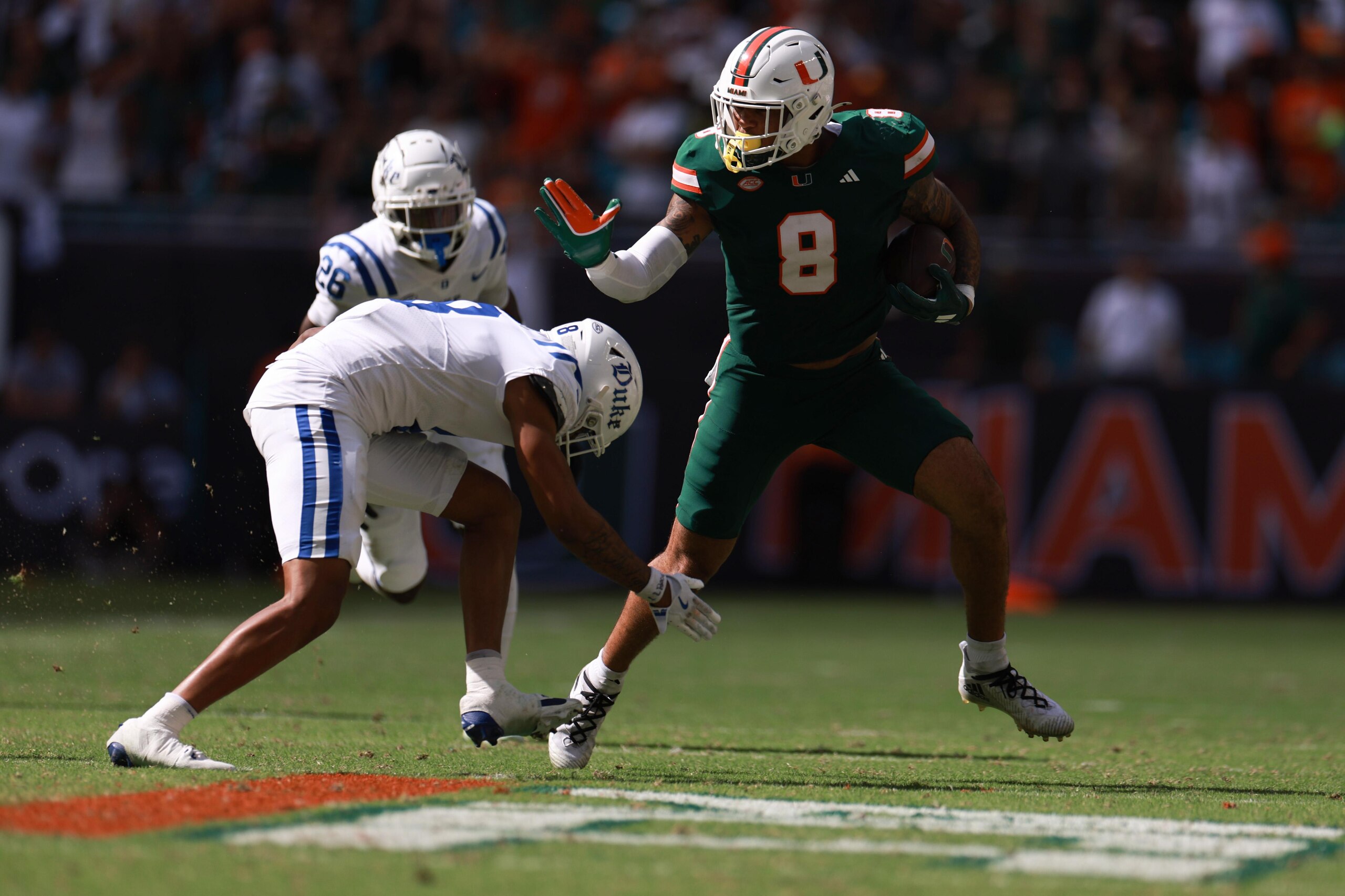
Strengths: Creates after the catch, massive seam threat, knows how to sell routes and create separation
Weaknesses: Marginal play strength, not much of an in-line blocker, only one season of production
Grade: B
Noah Fant has yet to turn into the player whom the Seattle Seahawks hoped he’d be when they acquired him as part of the Russell Wilson trade. In Fant’s three seasons with the team, he hasn’t eclipsed 50 catches or 500 yards in a single season.
Miami tight end Elijah Arroyo is a separator by nature. At the Senior Bowl, no one could cover him. He’s very young and is still developing his overall game, too.
Arroyo took a different path than everyone else in the class, having primarily learned the game during his formative years in Mexico.
"It was cool because most of everything I learned about football, I learned it in Spanish first," Arroyo told reporters at the NFL Scouting Combine. "That was cool, learning different routes and coverages and the details of the game. I learned all of that down there and when I moved [back to the United States], I got to kind of translate it and I kind of figured out the different names of things and all that."
Arroyo showed extensive improvement during his final season on campus. If he continues on that trajectory, he could become a major weapon for new Seahawks quarterback Sam Darnold.
51. Carolina Panthers (from DEN): Nic Scourton, EDGE, Texas A&M
19 of 70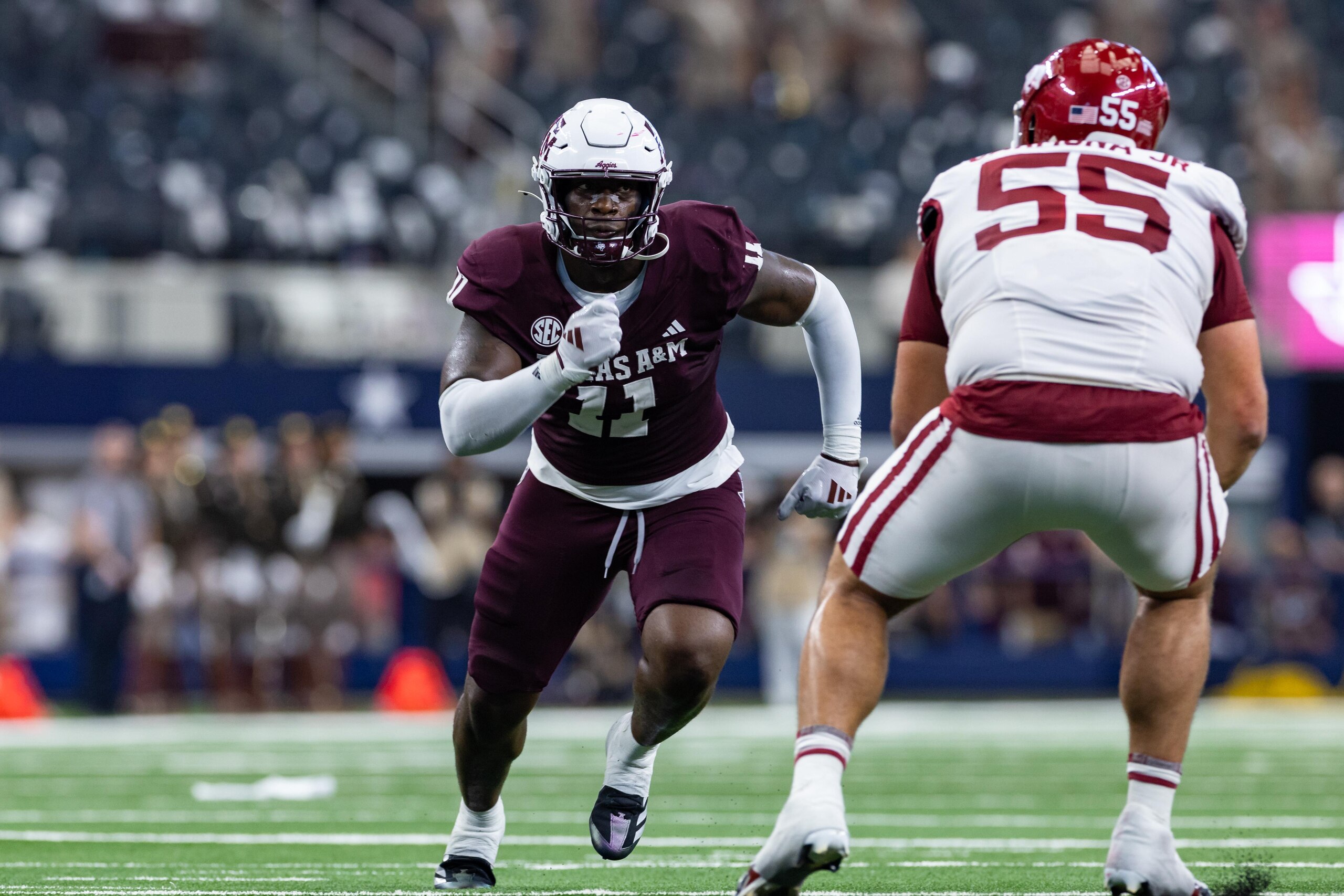
Strengths: Solid-to-good in all areas, reads keys well, diverse pass-rush plan (sick spin move), thickly built and physical
Weaknesses: Lacks initial burst, poor leverage, stiff in the hips when trying to bend and anchor against run
Grade: B
The Carolina Panthers' decision to trade up for Texas A&M’s Nic Scourton is fascinating. He’s not necessarily a true stand-up edge-defender.
Scourton is slimmer now than he was when he played at Texas A&M, which could change that. But his game featured a lot of power moves as a base end. He now gives the Panthers someone to replace Jadeveon Clowney sooner or later.
Scourton was supposed to raise his profile by transferring from Purdue to Texas A&M this past season, but that didn't exactly go according to plan. He still made first-team All-SEC, although his overall production and pressure rate dropped.
In 2023, the then-Boilermaker led the Big Ten with 10 sacks. He had only five last season with the Aggies.
To be fair, Scourton is a well-rounded, every-down defender with a strong pass-rush repertoire. He just didn't up his game last season.
52. Tennessee Titans (via SEA): Oluwafemi Oladejo, EDGE, UCLA
20 of 70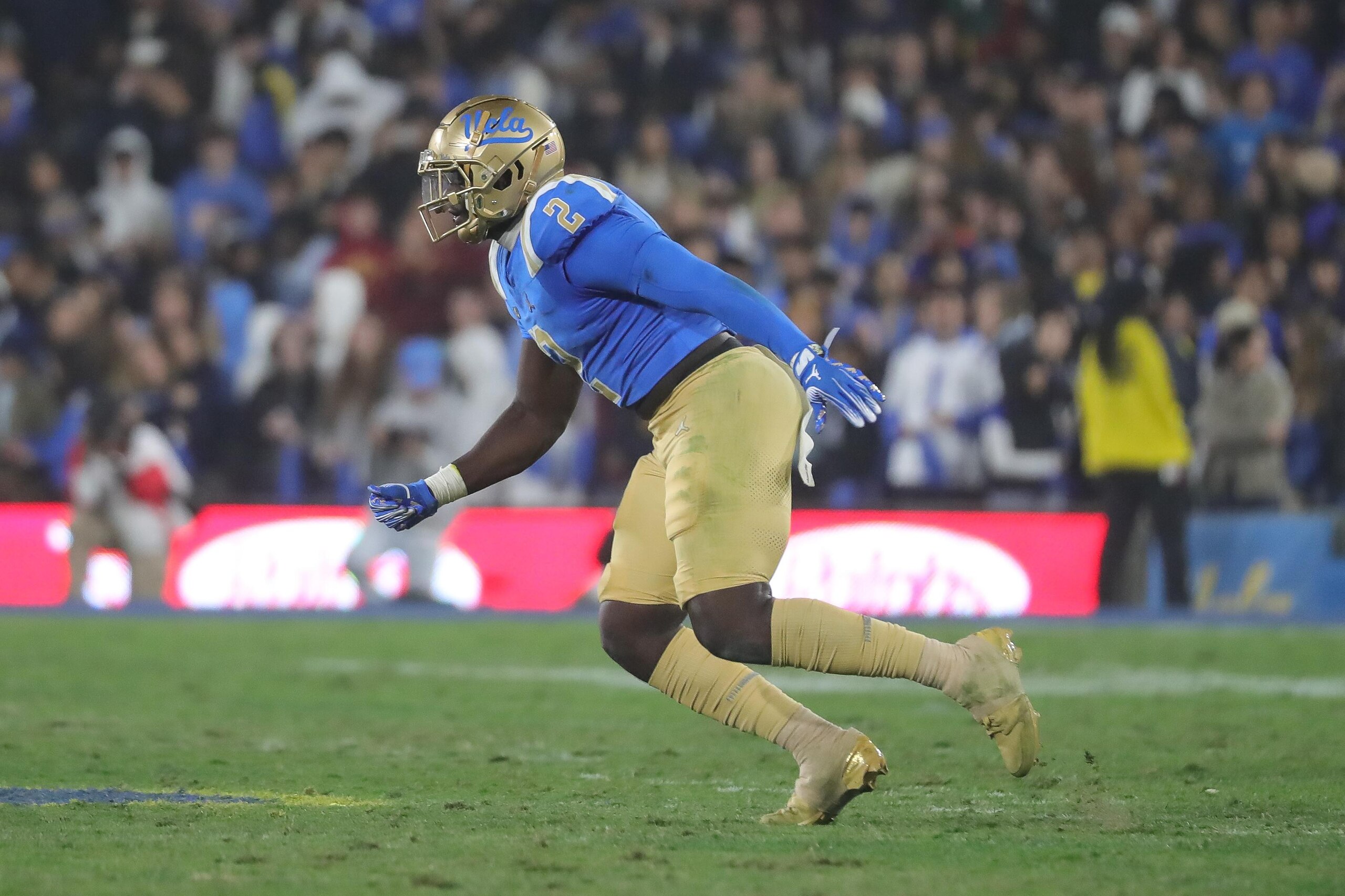
Strengths: Explosive strength, first-step quickness, motor runs hot, linebacker versatility
Weaknesses: Raw, needs to develop a pass-rush plan and counters, can improve with key recognition
Grade: B
With Harold Landry III gone, the Tennessee Titans severely lacked quality edge-rushers. Arden Key, Lorenzo Carter and Jaylen Harrell remain on the roster, but they needed another legitimate option.
UCLA’s Femi Oladejo is still a work in progress, but he has upside and a skill set similar to Landry. The Titans shouldn't expect the 52nd overall pick to immediately provide that same caliber of play, but he has that potential one day.
Upside abounds with Oladejo since he has yet to be an edge-defender for a full season. In fact, the 21-year opened the 2024 campaign as an off-ball linebacker before converting in the Bruins' third game of the season.
Oladejo was a productive linebacker before converting to an edge-rusher. At Cal in 2022, he registered 91 total tackles. He registered only 4.5 sacks after transitioning, but he has the potential to become a consistent presence as a pass-rusher thanks to his explosive traits.
53. Tampa Bay Buccaneers: Benjamin Morrison, CB, Notre Dame
21 of 70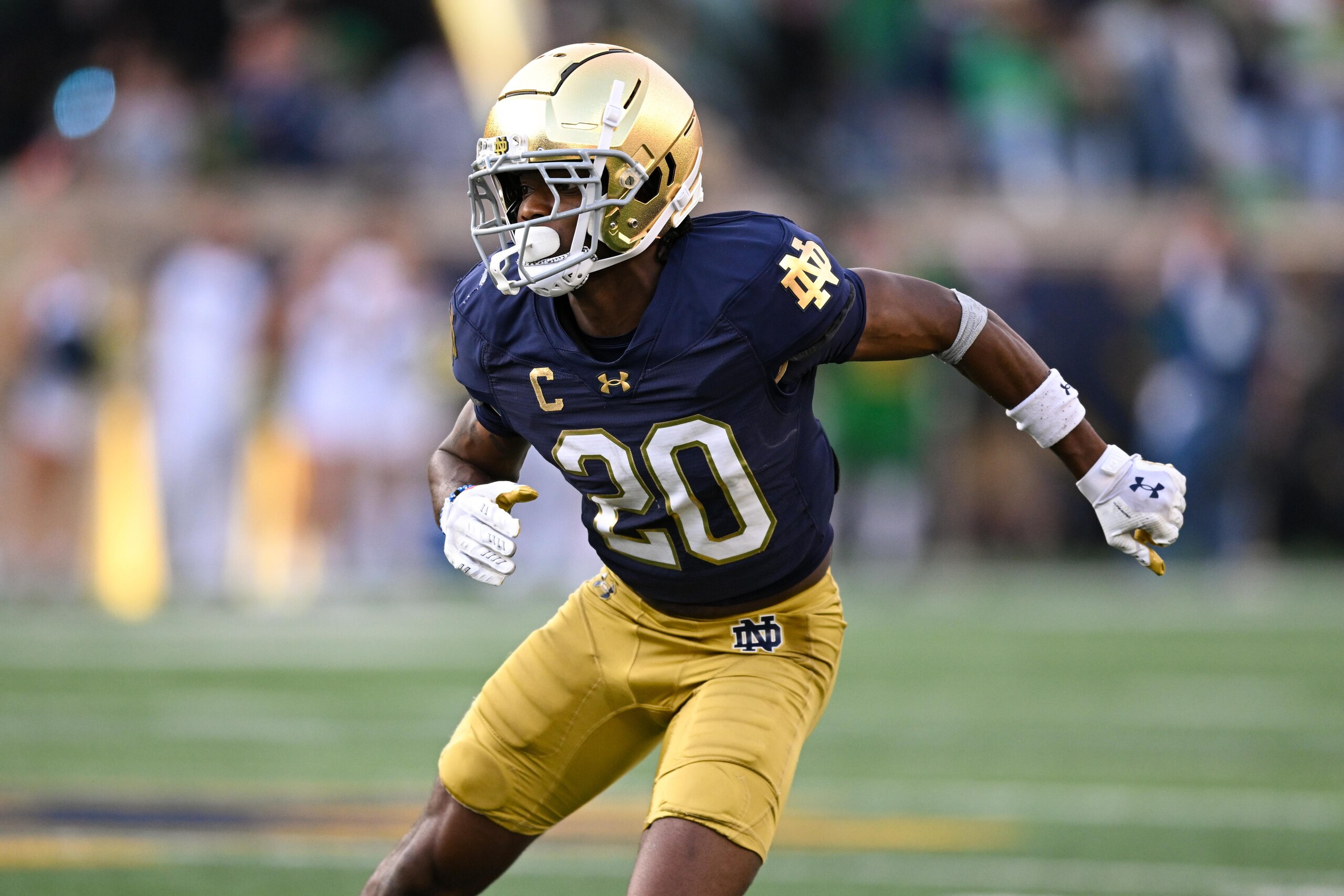
Strengths: Natural and fluid athlete with good balance, understanding of leverage and angles, ball skills
Weaknesses: Injury history, lacks elite closing speed, feel for zone coverage can be suspect
Grade: A
Notre Dame’s Benjamin Morrison tried his best to make NFL teams feel comfortable with the torn labrum he suffered in his hip last season by doing a personal pro day just days before the draft started.
Morrison is a first-round talent who had bad injury luck. The Tampa Bay Buccaneers took advantage of that by selecting him with the 53rd overall pick. He may become their top cornerback sooner than later.
Morrison entered the 2024 season as a potentially elite prospect. Unfortunately, he played in only six games before suffering his season-ending injury. That hampered his draft status since he wasn't able to work out for teams until late in the process. He also had shoulder surgery prior to last season.
When healthy, Morrison has the natural tools to be a team's No. 1 cover corner. He allowed only a 29.2 passer rating into his coverage in 2023, according to Pro Football Focus' Max Chadwick, which ranked fifth nationwide among cornerbacks.
54. Green Bay Packers: Anthony Belton, OT, N.C. State
22 of 70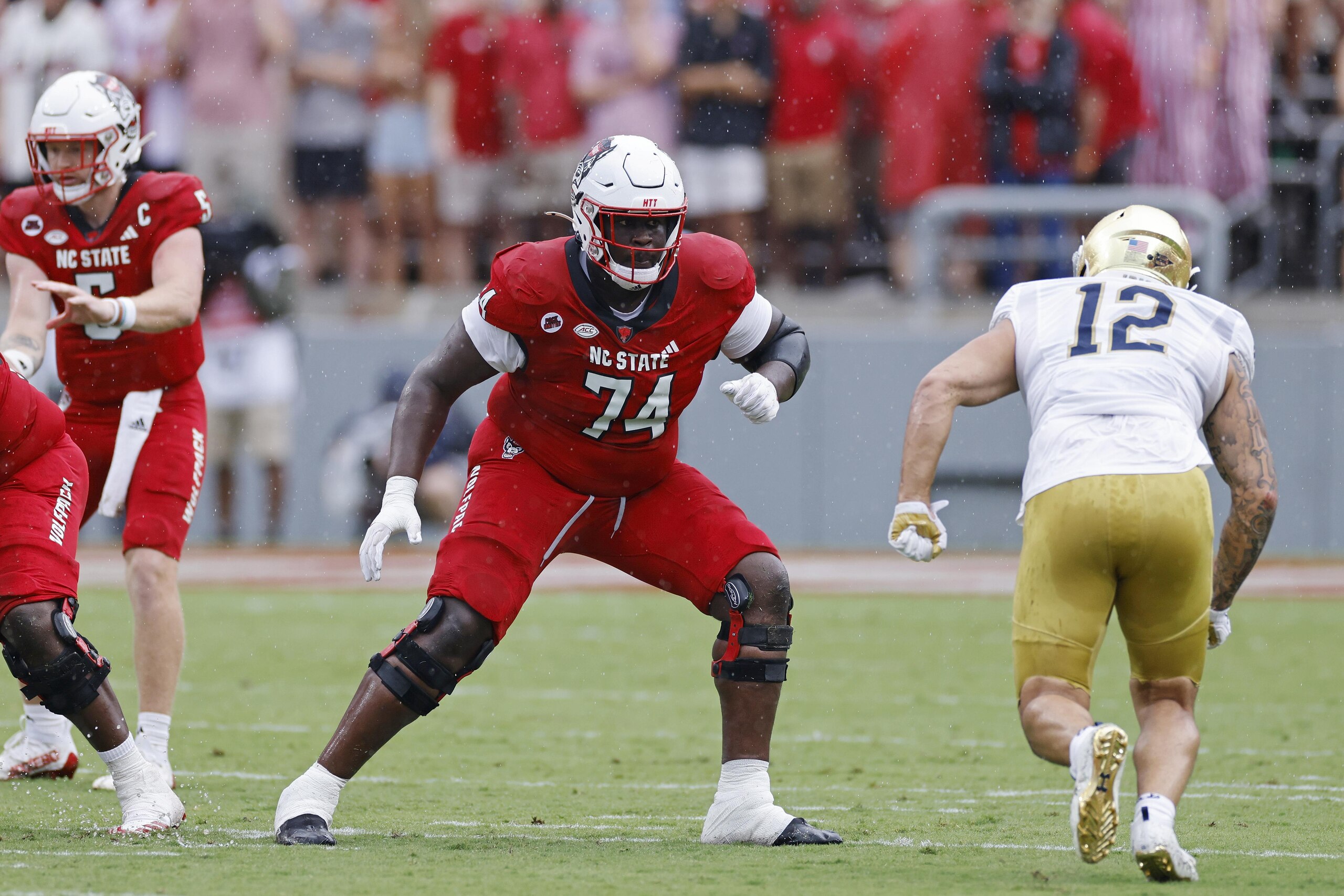
Strengths: Massive power and strong hands, displaces defensive linemen, aggressive mentality
Weaknesses: Suspect covement skills, can become an adventure when working on an island at offensive tackle
Grade: C
The Green Bay Packers wanted to address their blind side. They did so by taking North Carolina State’s Anthony Belton with the 54th overall pick.
Left tackle Rasheed Walker is competent but could be upgraded. Besides, Walker is a free agent after this season. The big questions about Belton are his movement skills and whether he’ll keep his weight in check.
If Belton stays in shape, he can be a big-time left tackle. If not, the Packers will have to move him inside to guard.
Prior to the 2024 season, North Carolina State offensive line coach Garett Tujague told Bleacher Report that he had multiple discussions with Belton, and the lineman finally had his weight in check. True to his coach's word, Belton weighed 345 at the Senior Bowl and showed up at 336 for the NFL Scouting Combine.
While Belton is still a very large person, the man nicknamed "Escalade" played at heavier weights at times. He now appears fully committed to his workout regimen.
55. Los Angeles Chargers: Tre Harris, WR, Ole Miss
23 of 70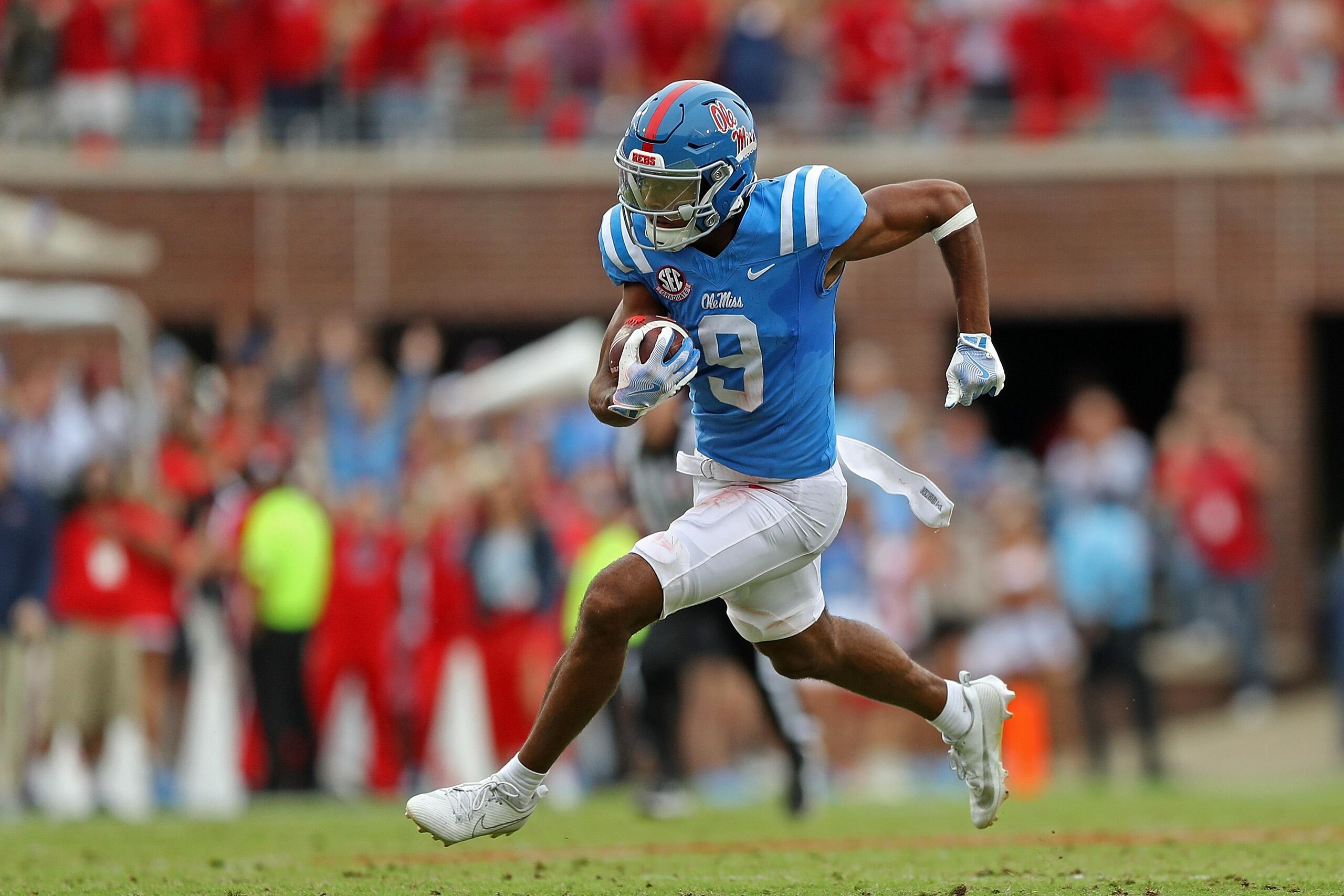
Strengths: Prototypical X-receiver, top-notch body control, tremendously strong at catch point
Weaknesses: Poor acceleration, lacks top gear, limited route tree
Grade: A
In 2024, the Los Angeles Chargers bypassed wide receiver in the first round and landed Ladd McConkey on Day 2. History repeated itself this year. They chose running back Omarion Hampton in the first round, then doubled back with wide receiver Tre Harris in the second.
Harris gives the Chargers a legitimate X-receiver after the disappointing start to Quentin Johnston’s career. Between right tackle Joe Alt, McConkey, Hampton and Harris, Chargers quarterback Justin Herbert has to be one of the happiest people in the NFL at the moment.
A few years ago, a pair of Ole Miss wide receivers weren't deemed top prospects because of their utilization and supposed flaws. AJ Brown and DK Metcalf went on to be fine in the NFL.
Harris isn't as physically intimidating as his fellow Rebel alumni. But some similarities can be seen in his dominant profile and excellent production, even though he played in a gimmicky offense.
While Harris lacks the top-end speed to impress, he still has explosive traits and the ability to sell his limited route tree to consistently create separation.
56. Chicago Bears: Ozzy Trapilo, OT, Boston College
24 of 70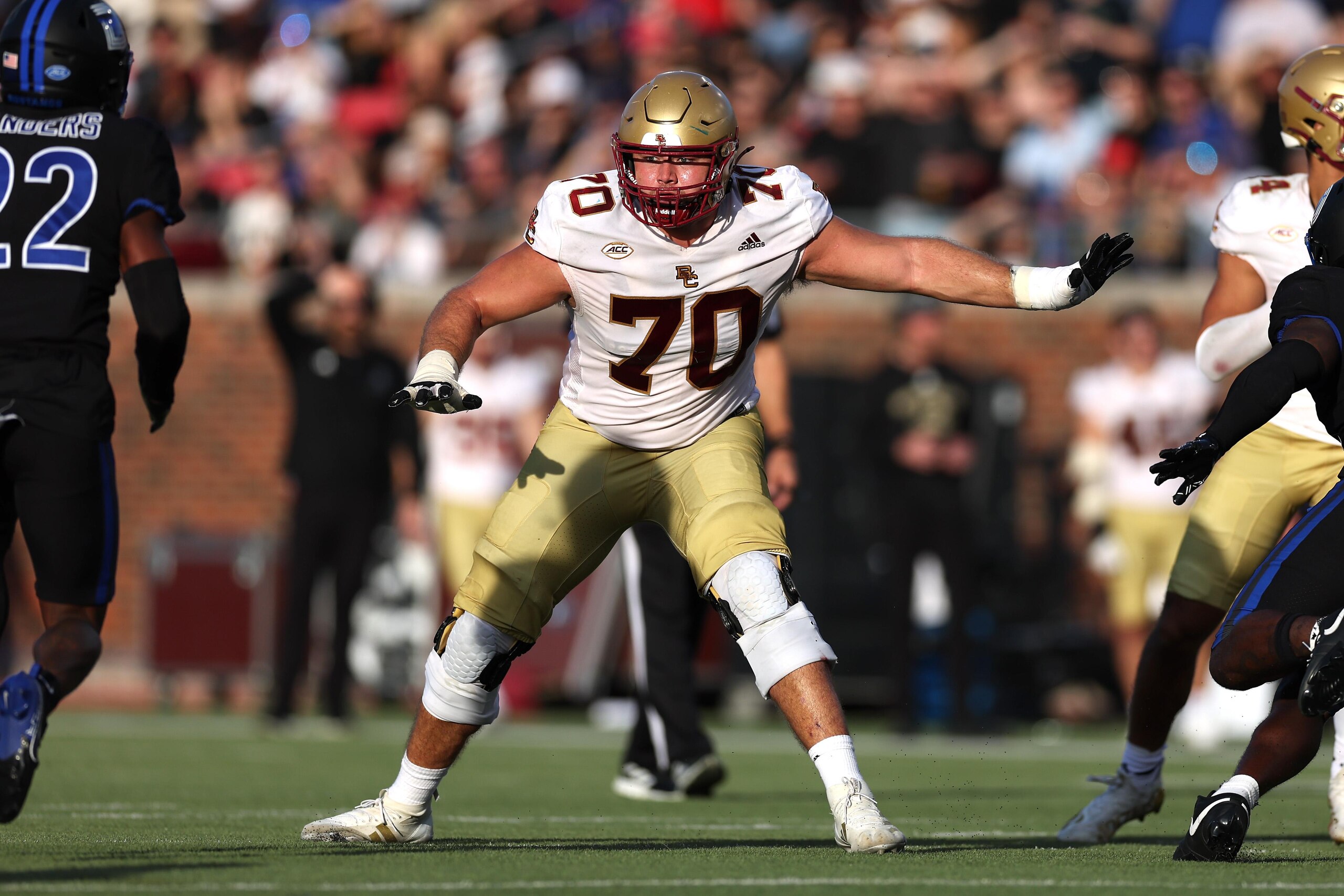
Strengths: Experienced starter at left and right tackle, gets out of stance quickly, understands spacing and timing, skilled hands
Weaknesses: Lacks lower-body flexibility, can get turned in his pass set, sometimes take poor angles in run game
Grade: C
The Chicago Bears' addition of Ozzy Trapilo is somewhat perplexing.
Trapilo is a quality prospect with an NFL pedigree. His father played six seasons in the NFL. But Trapilo spent the last two seasons playing right tackle at Boston College. The Bears don’t need a right tackle unless they move Darnell Wright to the blind side.
Trapilo does have experience playing left tackle, having started 12 games there to begin his collegiate career. Chicago probably views Trapilo as a swing tackle unless Braxton Jones isn’t healthy to start the 2025 campaign.
In a class where pure offensive tackle prospects aren't plentiful, Trapilo stands out. The 6'8", 316-pounder started 44 games during his time at Boston College. More importantly, he's a grinder, which NFL coaches love.
"Ozzy's the type of guy who is just the same guy every day," Eagles head coach Bill O'Brien told reporters at Boston College's pro day. "Never misses practices. Very tough, very talented, very smart—he's got a master's degree from Boston College. He'll be excellent in the locker room. He'll do whatever the coach asks him to do: he'll play right tackle, he'll play left tackle, he'll play guard if you want him to."
57. Detroit Lions (via DEN): Tate Ratledge, IOL, Georgia
25 of 70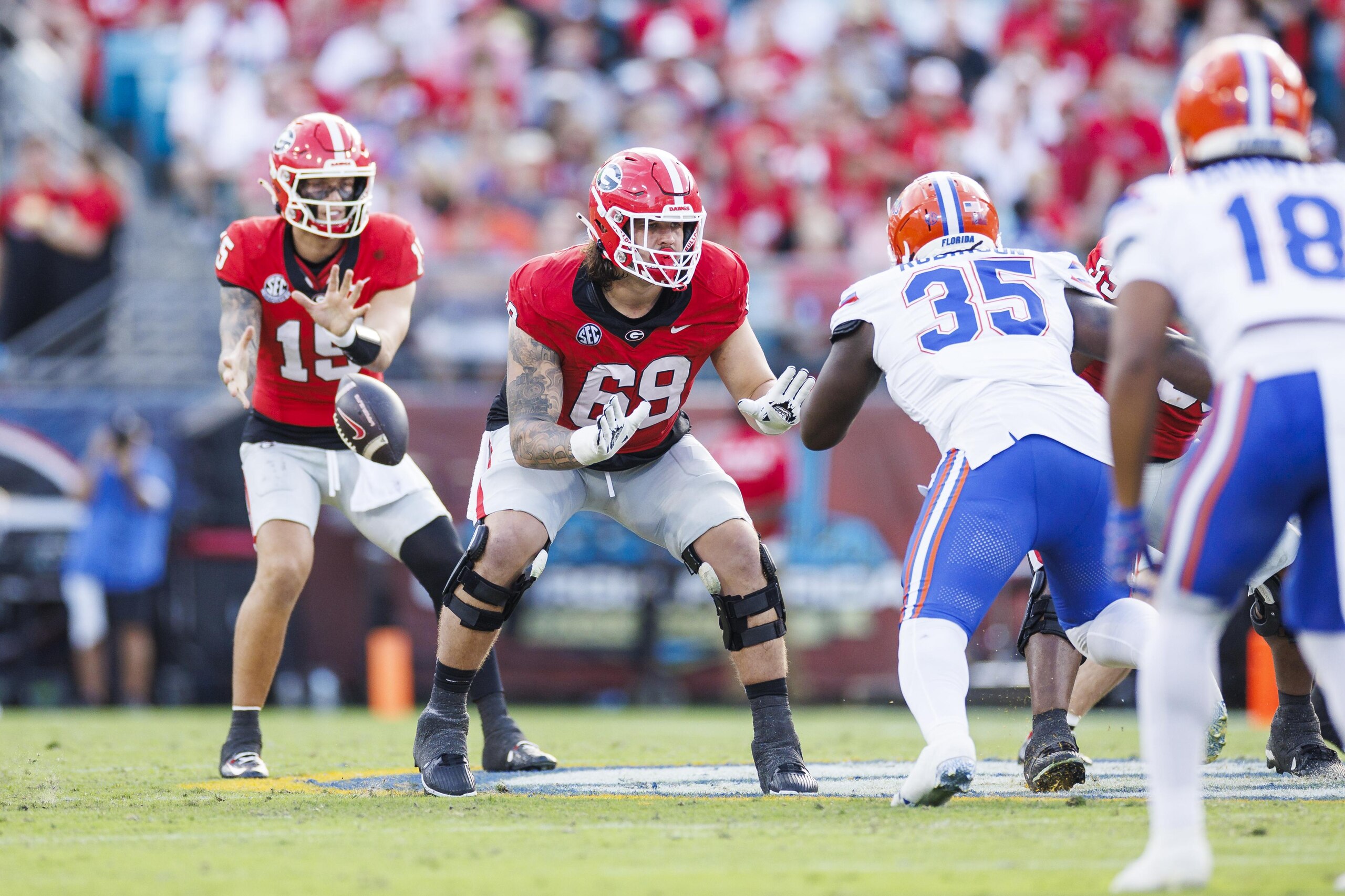
Strengths: Top-notch play strength, good pad level despite height, can unlock his hip and doesn't need to play in a phone booth
Weaknesses: Inconsistent hand usage, lacks positional versatility
Grade: A
The Detroit Lions already featured the league’s best or second-best offensive line, depending on how one feels about the Philadelphia Eagles' front. But right guard Kevin Zeitler moved on this offseason and signed with the Tennessee Titans.
Georgia’s Tate Ratledge required tightrope surgery this past season, which cost him multiple games. Still, he’s a plug-and-play guard who has the right attitude and personality to play for Lions head coach Dan Campbell.
Ratledge might have the most finely coiffed head of hair in this year's draft class, but he plays with his hair on fire. He weaponizes his mulleted dome to make him one of the most feared blockers entering the NFL.
The near-6'7", 308-pound guard prospect is downright nasty and highly athletic, with a staggering 9.96 relative athletic score, per Kent Lee Platte. Had he not undergone surgery last season, Ratledge might be regarded even more highly in this year's class.
58. Las Vegas Raiders (via HOU): Jack Bech, WR, TCU
26 of 70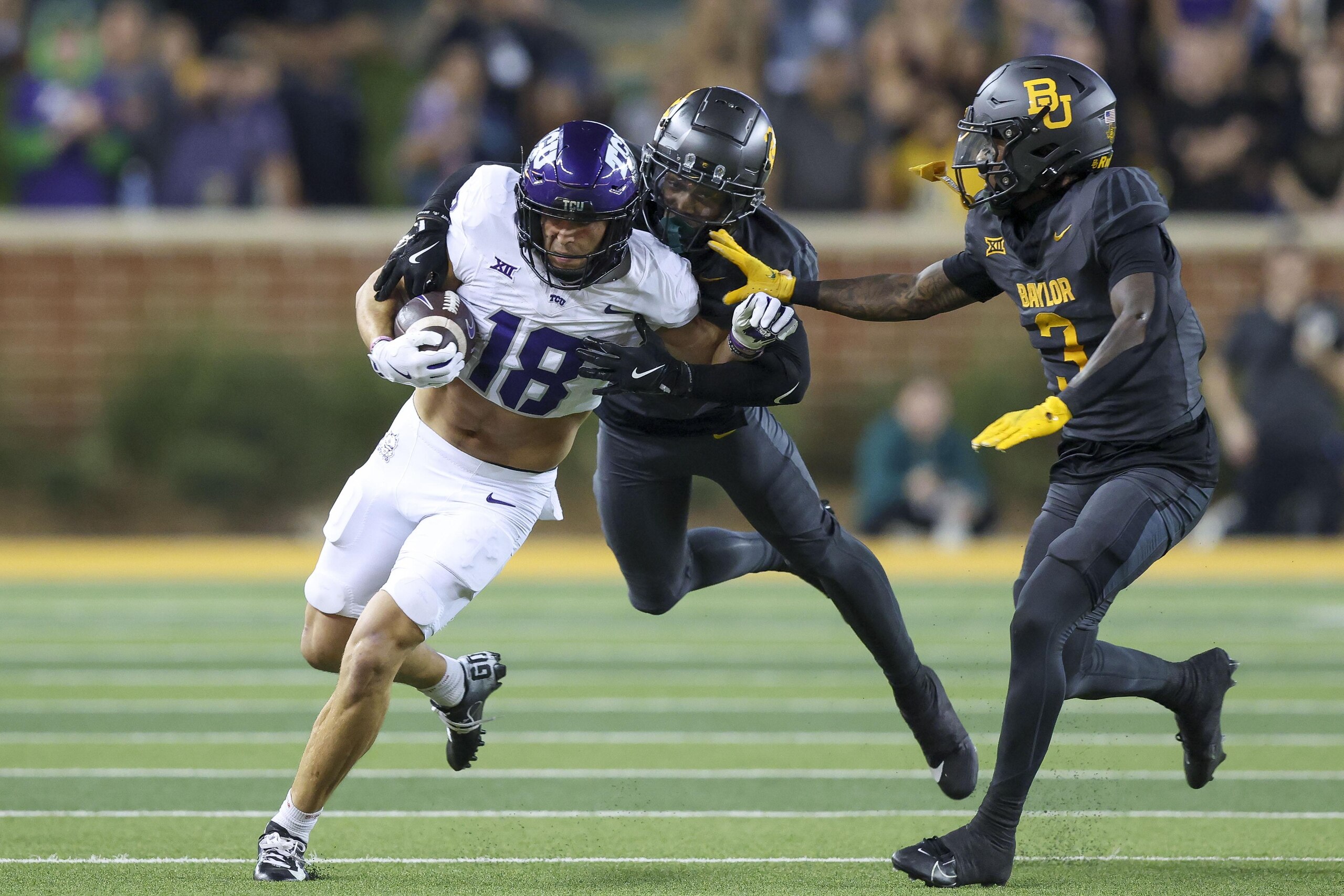
Strengths: Excellent hands and doesn't drop the ball, big body to thrive from the slot, good short-area quickness and burst to create separation
Weaknesses: Lacks top-end speed, one year of production, former TE who isn't the most athletic option
Grade: A
Tight end Brock Bowers is the Las Vegas Raiders’ top target. He’ll continue to be for a long time. However, the Raiders needed another reliable option at wide receiver.
TCU’s Jack Bech is an ideal pick in that regard. He has some of the most reliable hands in this draft class, along with the ability to consistently win contested catches.
But nothing that happens on the field will ever be more difficult than what the Bech family endured earlier this offseason. Bech's brother, Tiger, was a victim of the Jan. 1 terror attacks in New Orleans. Bech has used the horrific event as inspiration.
"All the big brother does in life is want to see his little brother succeed," Bech said after winning this year's Senior Bowl MVP. "He's been my role model my whole life, the person I looked up to, the person I wanted to be. He was the best big brother I could ever ask for. My whole goal in the rest of my life is to live his legacy on."
59. Baltimore Ravens: Mike Green, EDGE, Marshall
27 of 70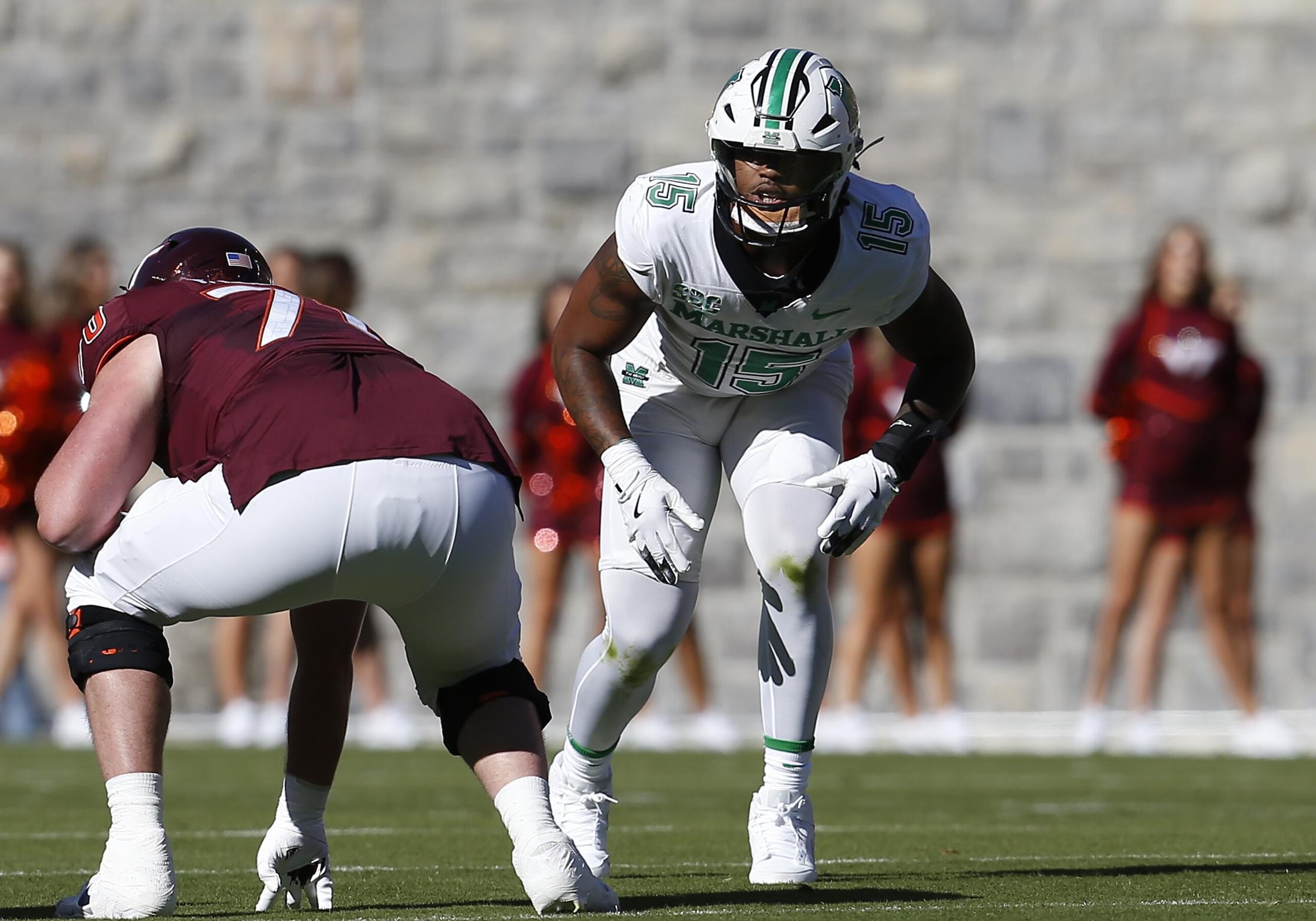
Strengths: Quick-twitch athlete with explosive first step, bends edge well, pass-rush plan, nation's sack leader in 2024
Weaknesses: Light frame with below-average play strength, guesses instead of trying to consistently set edge
Grade: A
The Baltimore Ravens did it again. They see value and draft it, just as they did in the first round with Georgia safety Malaki Starks.
Marshall’s Mike Green is the most natural pass-rusher in this year’s draft class not named Abdul Carter. He actually led the FBS with 17 sacks this past season.
Despite being a first-round talent, Green fell to the second round presumably because of his background. At the NFL combine, he revealed to reporters that he had been accused of sexual assault twice–once in high school and once at the University of Virginia before being suspended from the team and transferring to Marshall. Green stated that he had "done nothing wrong" and had never been charged or even questioned about those allegations.
On the field, Green's explosiveness off the edge is undeniable. He has the traits to be a long-term elite pass-rusher. However, the Ravens had to be completely comfortable with his past before selecting him.
60. Denver Broncos (from DET): RJ Harvey, RB, UCF
28 of 70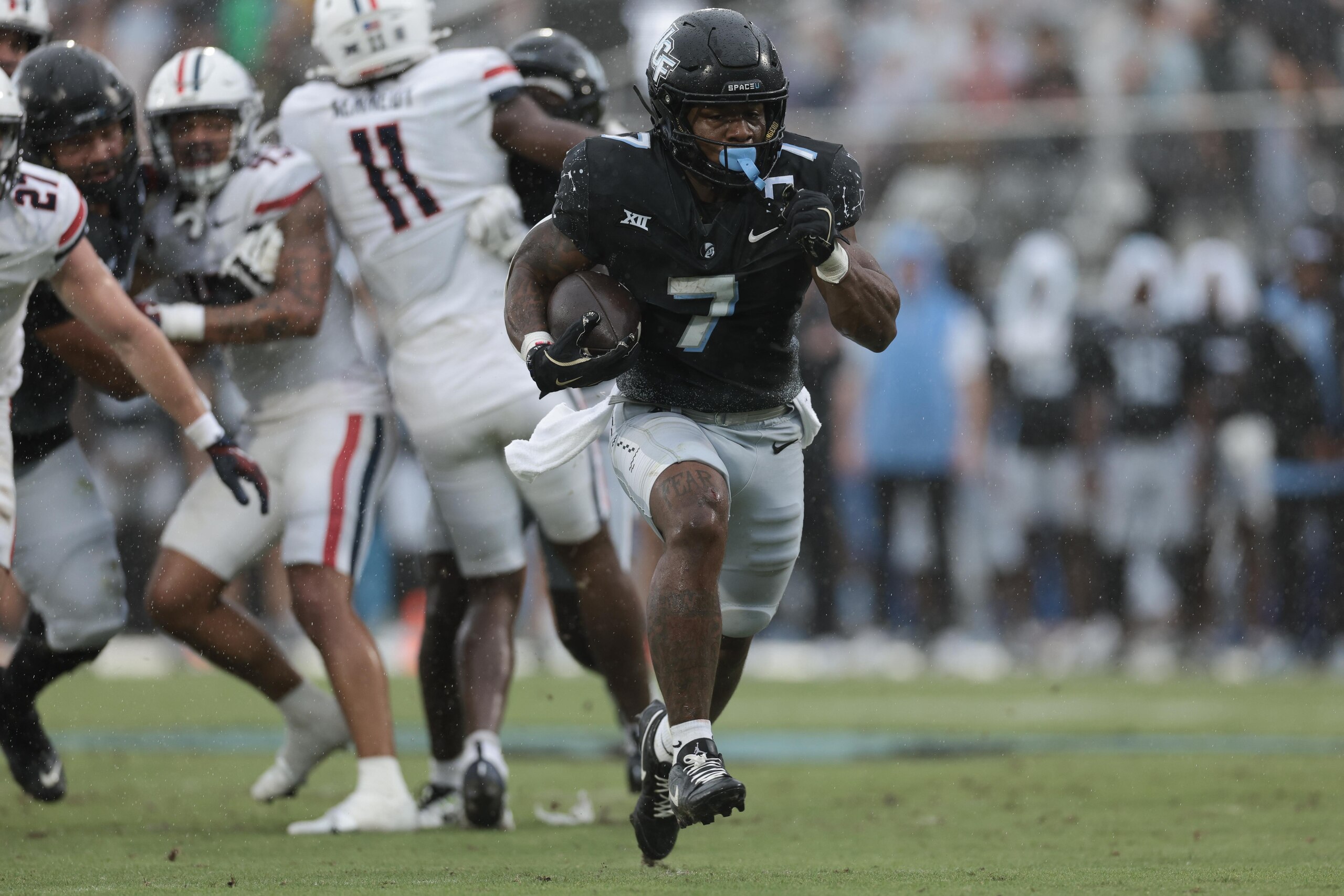
Strengths: Patient runner, explosive short-area movements, understands how to set up blocks
Weaknesses: Lacks elite speed, poor pass protector, already turned 24
Grade: D
Denver Broncos head coach Sean Payton knows what type of running back he wants in his offense. At the same time, the Broncos front office has to find the best value with each pick, even if it means manipulating the draft in their favor.
The B/R NFL Scouting Department had UCF's RJ Harvey as its 17th-ranked running back. He did amass 2,993 rushing yards and 41 total touchdowns over the last two seasons.
Still, this pick should viewed as a reach given some of the other ball-carriers still on the board.
61. Washington Commanders: Trey Amos, CB, Ole Miss
29 of 70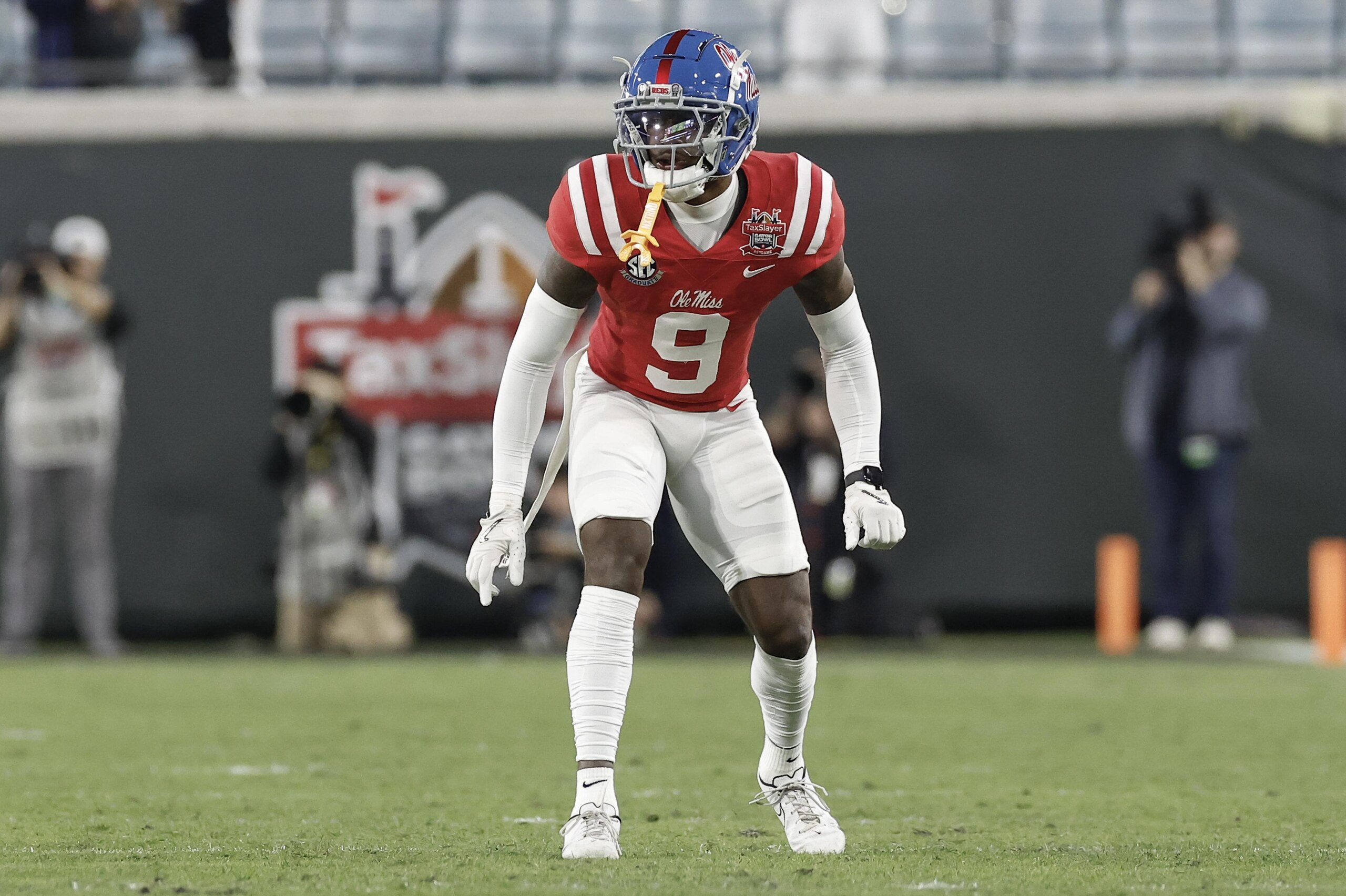
Strengths: Great press technique, fluid athlete with good top-end speed, triggers downhill and tackles
Weaknesses: Overaggressive in coverage and run angles, out of control at times when attempting to tackle
Grade: A
Last year, rookie Mike Sainristil played out of position as an outside corner. He can be a defensive weapon as a nickel corner, but the Washington Commanders needed him on an island.
Between Marshon Lattimore (if healthy) and Ole Miss’ Trey Amos, Washington now has a pair of legitimate bookend outside corners. Amos fits the type of big, physical corner that Commanders head coach Dan Quinn prefers.
Amos never received significant fanfare, but he impressed every step along the way. He began his collegiate career at Louisiana before transferring to Alabama, where he started only one game. He thrived at Ole Miss this past season, though.
En route to a first-team All-SEC selection, he posted an 85.6 coverage grade and allowed a 54.5 passer rating, per Pro Football Focus. Amos then performed quite well at the Senior Bowl, particularly in one-on-one coverage drills, before pulling out of the event with a slight injury. He sealed a strong draft cycle with a 4.43-second 40-yard dash.
"I'm a great press-man cornerback," Amos said in an interview with The Draft Network's Justin Melo. "I can play zone coverage as well. I can come downhill and tackle as well."
62. Chicago Bears (via BUF): Shemar Turner, DL, Texas A&M
30 of 70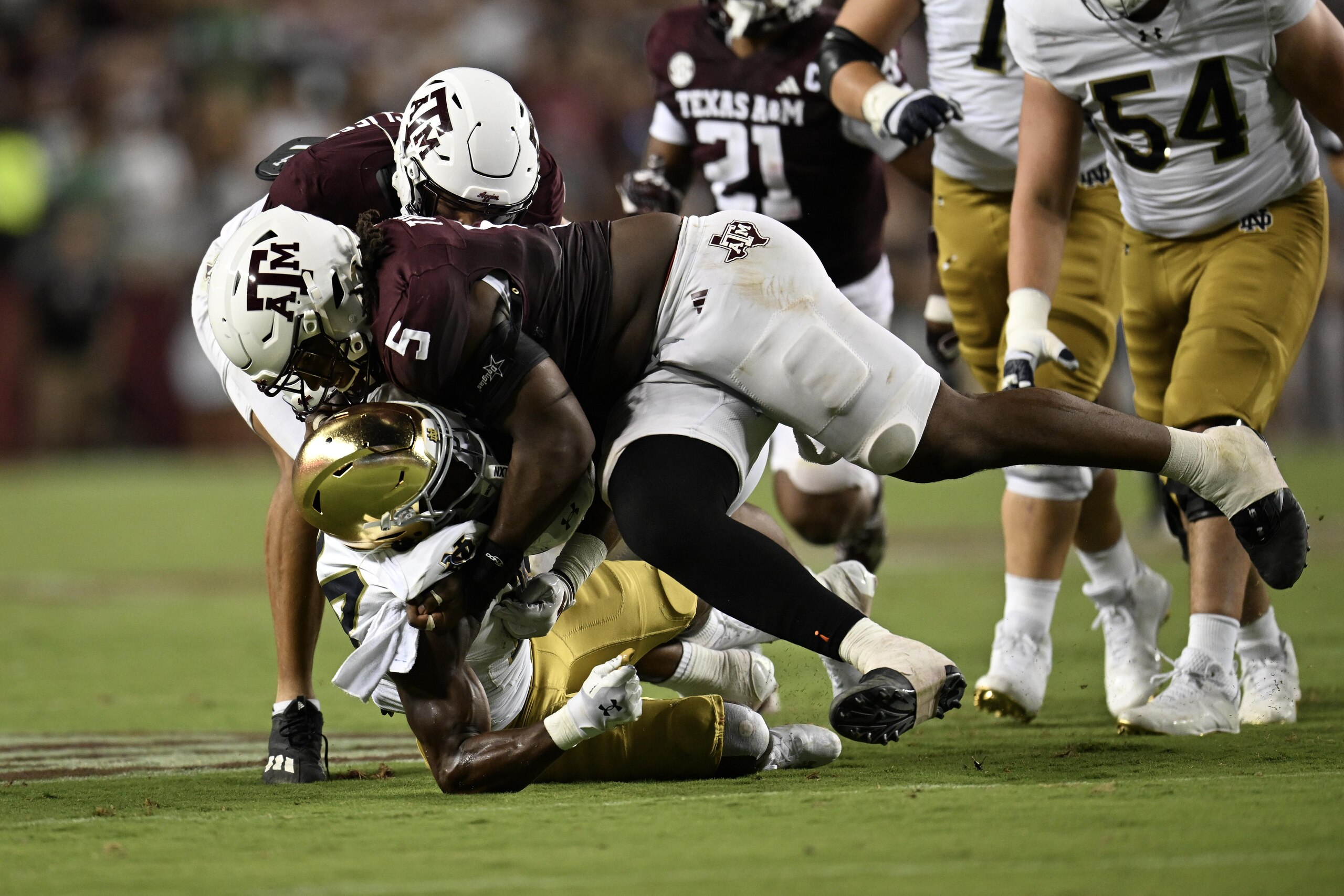
Strengths: Good athlete along interior, quick off the ball, high-effort pass-rusher
Weaknesses: High pad level, narrow base, poor hand usage, lacks pass-rush plan, low production
Grade: C
The Chicago Bears clearly prioritized bolstering their defensive line this offseason. They brought in defensive end Dayo Odeyingbo and defensive tackle Grady Jarrett in free agency, and they continued to build their front seven by taking Texas A&M’s Shemar Turner with the 62nd overall pick.
Chicago seemingly isn’t looking for defensive linemen who will consistently win at the point of attack. Instead, the Bears feature upfield disruptors. Stewart fits that bill. He and Odeyingbo can be interchangeable pieces.
Pass-rush upside doesn't belong exclusively to one Texas A&M product. Turner is in the same boat as Shemar Stewart, albeit as an interior option. The latter converted from being a true edge-defender to an interior prospect, which could pay dividends in the long run.
"Had a talk with [Aggies defensive line coach Tony Jerod-Eddie] about me being a really good 3-tech player and an NFL 3-tech, so I needed to put some weight on," Turner told reporters at the NFL Scouting Combine. "Last year, [I played] between 306 and 296. The year before that? 270."
He added, "For how athletic I am, for how strong I am at 290, I feel like I have a real advantage on the inside. A guard is really going to have a problem with me in the league."
63. Kansas City Chiefs: Omarr Norman-Lott, DL, Tennessee
31 of 70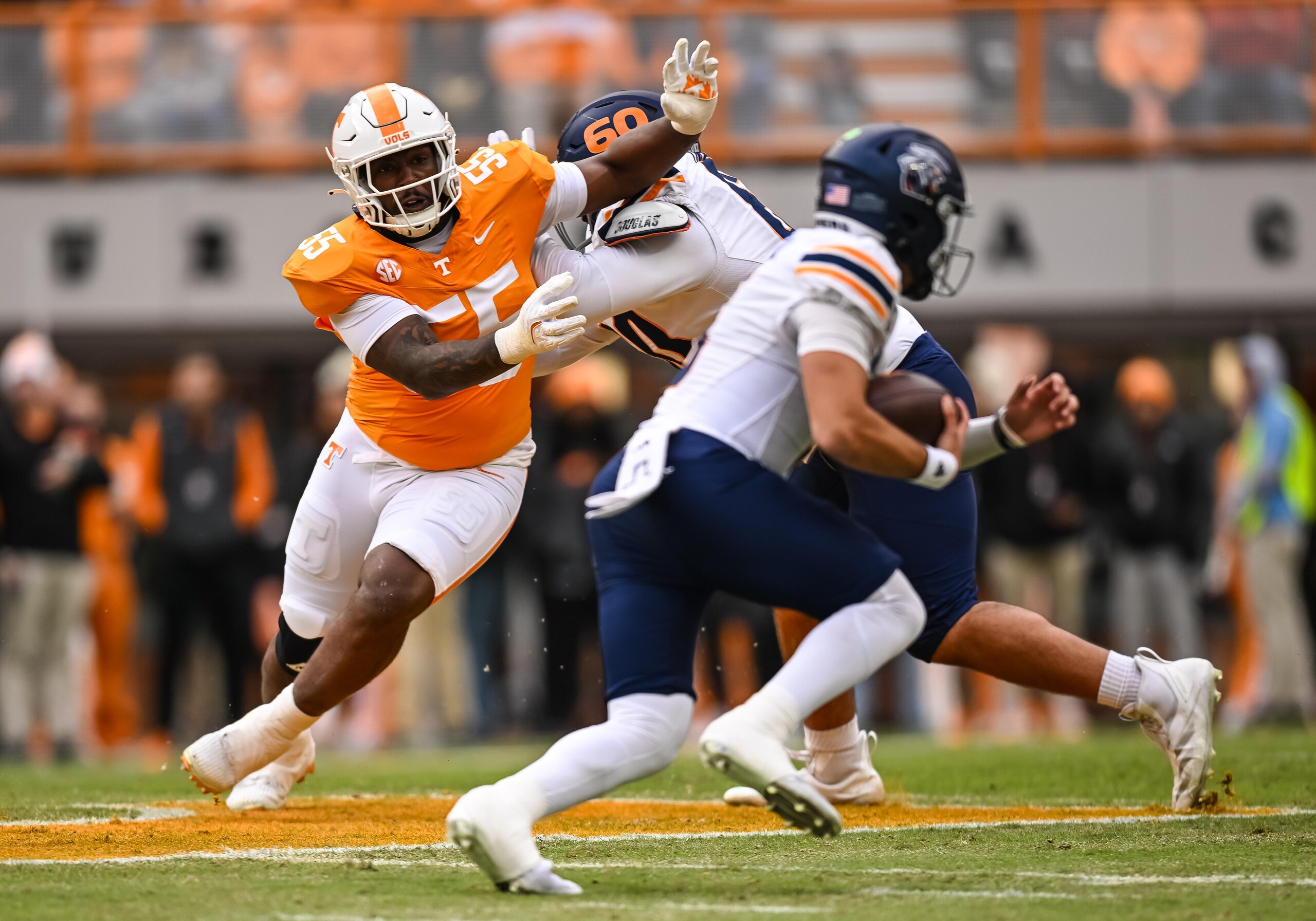
Strengths: Initial quickness to win off snap, brings interior pass-rush potential, good movement skill along defensive front
Weaknesses: Poor play strength, can be driven off ball and washed out of plays, limited experience as a starter
Grade: C+
The Kansas City Chiefs are looking to take some pressure off Chris Jones. Defensive end George Karlaftis has posted 18.5 sacks over the last two seasons, but the Chiefs lost Jones’ interior running mate when Tershawn Wharton signed with the Carolina Panthers in free agency.
WIth Jones, Jerry Tillery and Tennessee’s Omar Norman-Lott as their new defensive tackle rotation, the Chiefs aren't going to consistently win at the point of attack. They may not need to as long as Patrick Mahomes and the offense continues to play at a high level.
Norman-Lott started only five games during his collegiate career. He played in all 13 games last season as part of Tennessee's defensive line rotation but didn't start a single time.
When Norman-Lott is in the game, he's easy to notice because he's highly disruptive. After transferring from Arizona State, he registered 9.5 sacks during his two years with the Volunteers.
Norman-Lott is going to shoot gaps and get into the backfield. The 6'2", 291-pound prospect's skill set can make him a valuable part of the Chiefs defense if he isn't asked to do too much.
64. Philadelphia Eagles: Andrew Mukuba, Safety, Texas
32 of 70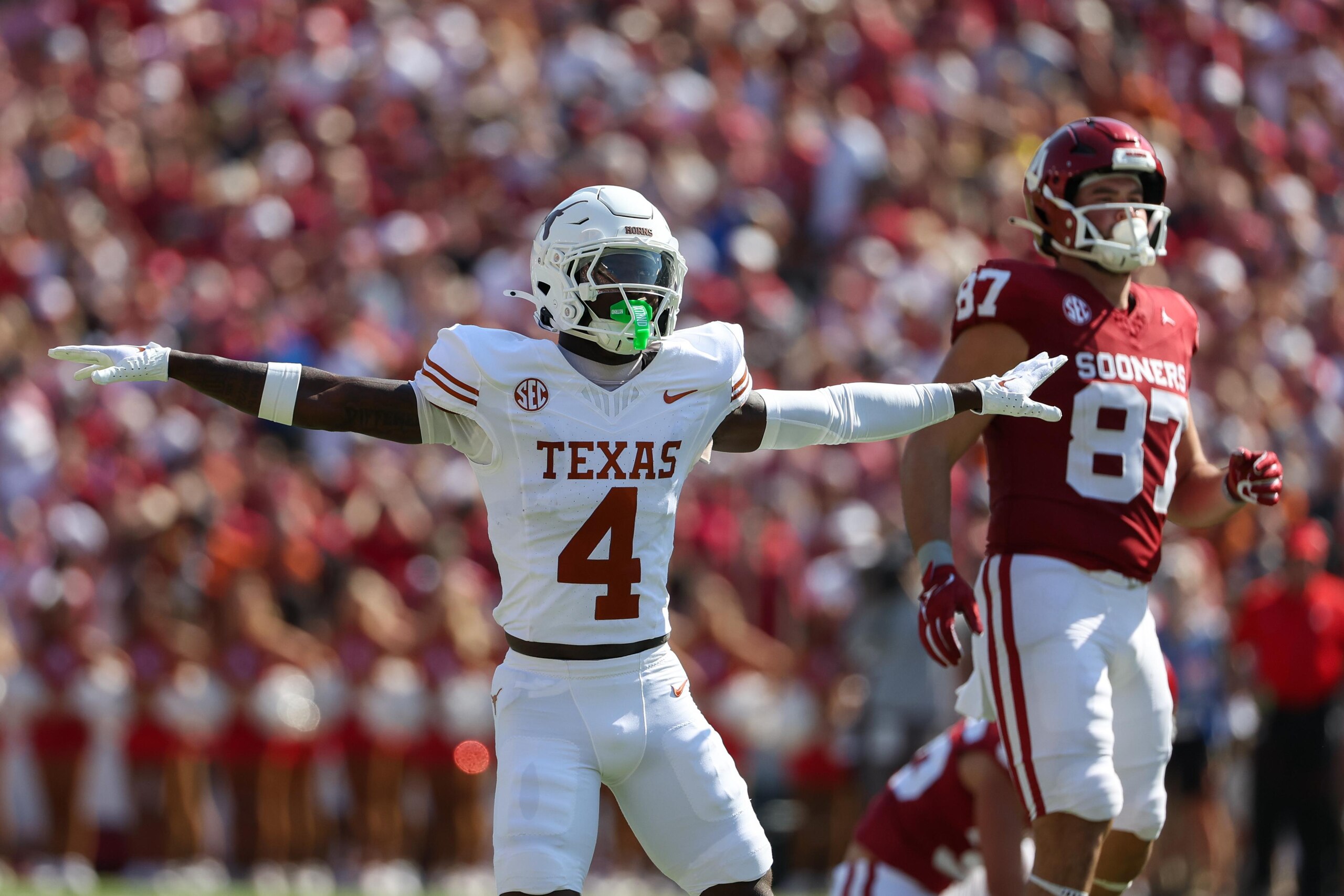
Strengths: Instinctive and athletic free safety, good ball skills, willing to stick nose in against the run
Weaknesses: Thin frame, not much of a physical presence, doesn't add much working in the box
Grade: C
The Philadelphia Eagles struck secondary gold twice in last year’s draft with the selections of Quinyon Mitchell and Cooper DeJean. They went back to the well this year, but they aren't getting the same value with Texas’ Andrew Mukuba as they did a year ago.
Mukuba does give the Eagles better range along the back end than Reed Blankenship can provide. Still, he wasn’t the best safety prospect on the board. There were multiple other higher-graded options.
The Eagles drafted the player who isn’t going to take his career for granted.
Mukuba was born in Zimbabwe before his parents immigrated to the United States when he was nine years old. Now, he has a chance to make a long career as a professional athlete thanks to everything he accomplished between Clemson and Texas.
"We came here for a better life, because, back home, it was kind of rough with everything going on," the safety prospect said in a 2021 interview with TigerNet's Nikki Hood.
65. New York Giants: Darius Alexander, DL, Toledo
33 of 70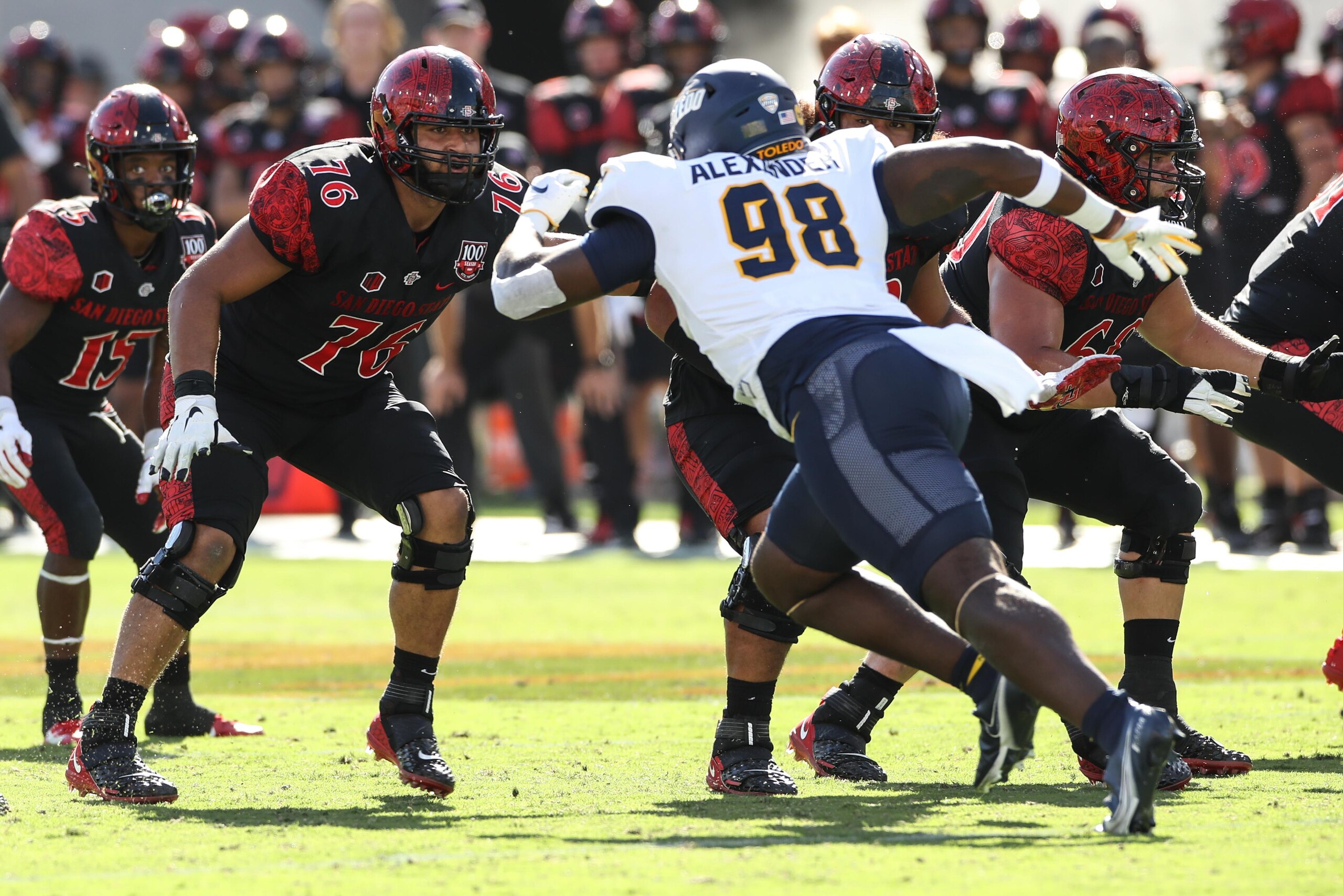
Strengths: Long limbs and strong frame, strong hands and powerful, provides some upside as interior pass-rusher
Weaknesses: Straight-line athlete, little stiff in the hips, lack of lateral movement can be hindrance in run game
Grade: B
The New York Giants continued what they started in the first round by taking another defensive lineman at the top of the third round.
Toledo’s Darius Robinson joins Abdul Carter as part of what could be a terrorizing defensive front for Big Blue. Robinson has the size and length to play 4i- to 0-technique depending on what defensive package the Giants employ on a down-by-down basis.
Michigan's Mason Graham held a top-five grade from nearly everyone entering this year's draft. Alexander didn't. But they were the only two to post an overall grade and run-defense grade above 90 last season, per Pro Football Focus. The MAC product also produced a higher pressure rate, albeit against lesser competition.
Alexander performed well during the Senior Bowl to quell some of his level-of-competition concerns. But he also turns 25 before the start of the 2025 season.
66. Kansas City Chiefs (from TEN): Ashton Gillotte, EDGE, Louisville
34 of 70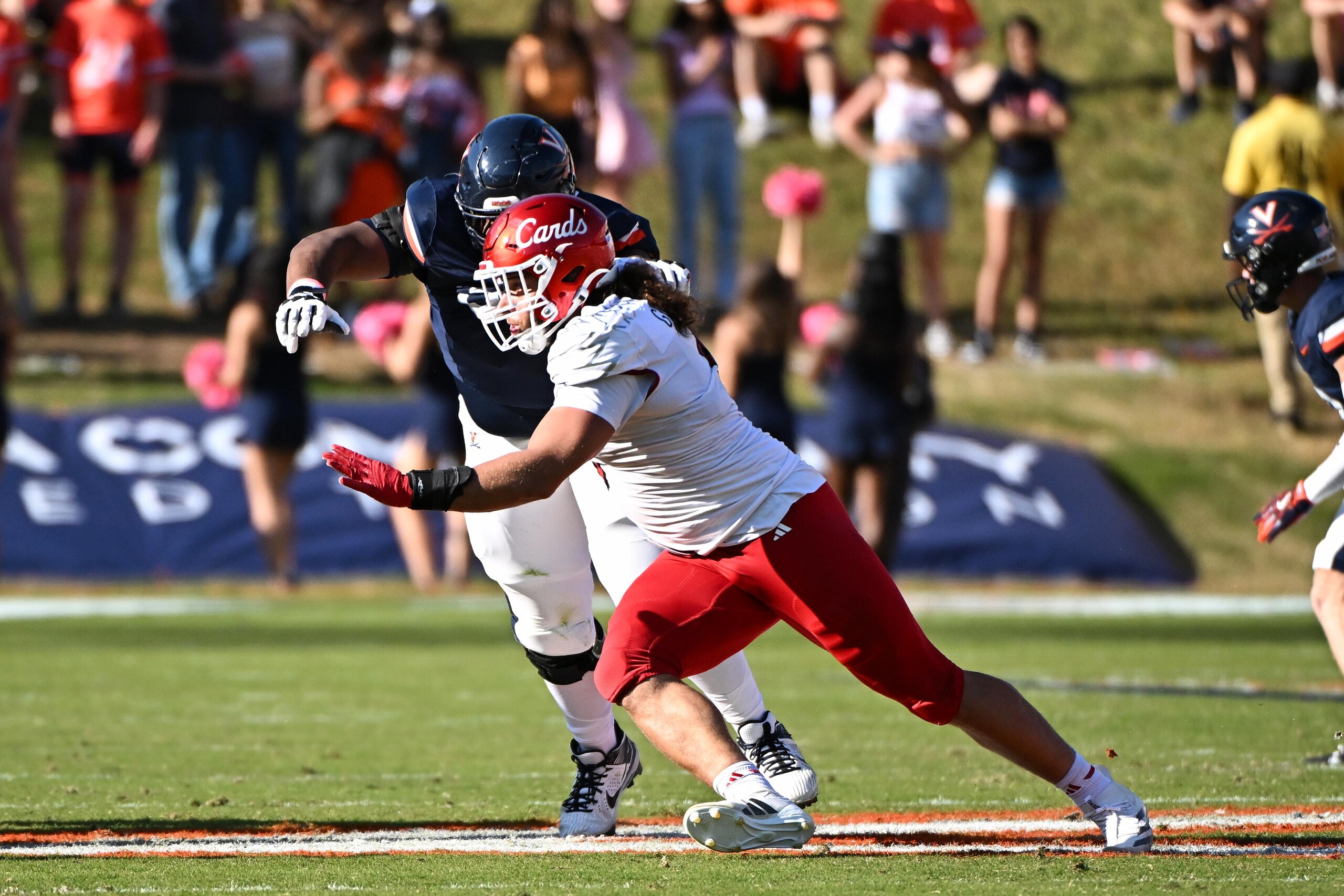
Strengths: Powerful as a pass-rusher and at the point of attack, thickly built and explosive, motor runs hot
Weaknesses: Can expand pass-rush repertoire, poor at shedding blocks, loses contain
Grade: B
In a matter of four picks, the Kansas City Chiefs improved their pass rush with defensive tackle Omarr Norman-Lott and defensive end Ashton Gillotte.
Gillotte can help offset the disappointment of 2023 first-round pick Felix Anudike-Uzomah, who's gotten his NFL career off to a slow start.
A pass-rush plan begins with a go-to move. Gillotte converts speed to power as well as anyone in the class.
Gillotte is able to use his 4.63-second 40-yard dash speed and bull through bigger and longer offensive linemen, which ultimately sets up everything else. That approach led to 115 total pressures over the last two seasons.
67. Cleveland Browns: Harold Fannin Jr., TE, Bowling Green
35 of 70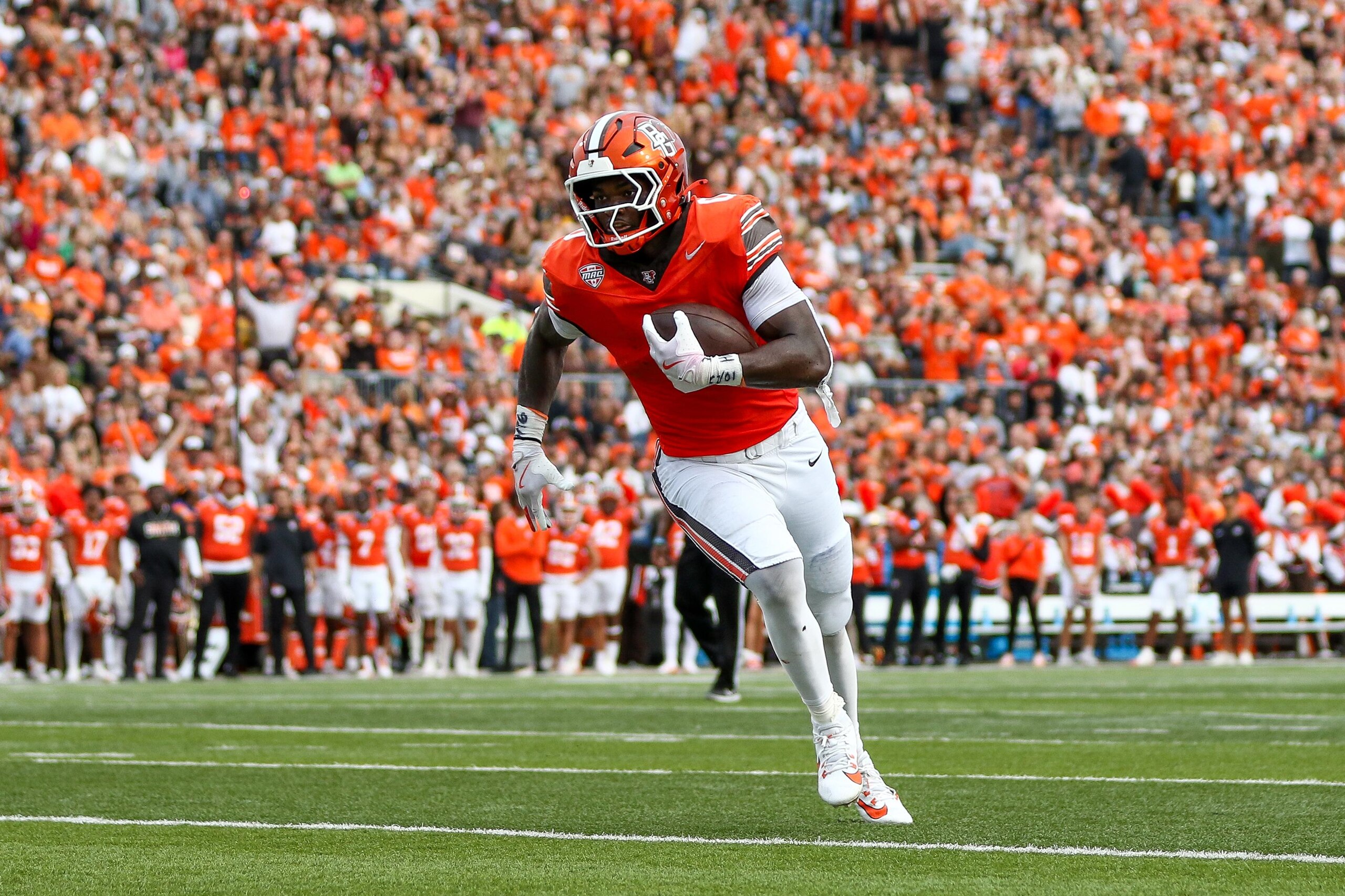
Strengths: Historic production, vertical threat down the seam, excellent after the catch and working in space, scheme versatile
Weaknesses: Undersize frame/H-back, lacks blocking strength, can improve release package
Grade: B+
Here’s the problem with the Cleveland Browns right now: They're building a strong supporting cast with running back Quinshon Judkins and tight end Harold Fannin Jr, but they still don't have a viable long-term quarterback.
They’ve now passed on the game’s most important position with four different picks. At least Fannin should be a fantastic security blanket for whomever is under center this fall.
Fannin left Bowling Green as the most productive receiving FBS tight end of all time. He led the nation (not just tight ends) with 117 receptions for 1,555 yards this past season. Both figures broke positional records.
"One of my biggest assets is my ability to catch in traffic," Fannin told The Draft Network's Justin Melo. "I take that very seriously. I'm the tight end and I want my quarterback to think of me as his safety valve. I'd definitely like to say I thrive at catching the ball in traffic.
68. Las Vegas Raiders: Darien Porter, CB, Iowa State
36 of 70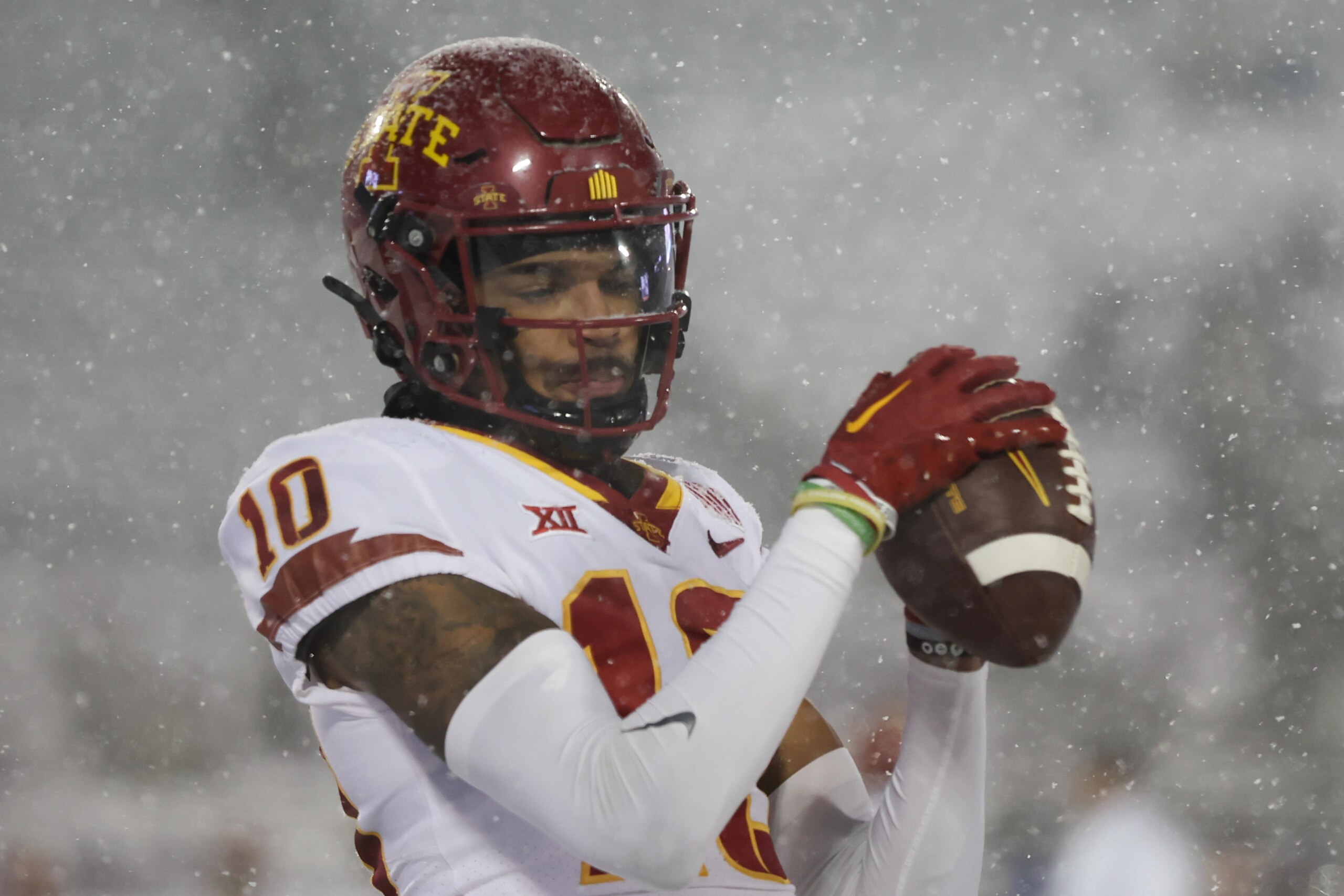
Strengths: Rare size and length, elite top-end speed, plays ball in the air and through the catch point, understands and excels in zone coverage
Weaknesses: Very thin, tight hips, struggles at times to tackle in space
Grade: B
Dating back to his Legion of Boom defense in Seattle, Las Vegas Raiders head coach Pete Carroll has a type of cornerback whom he prefers. Porter is a tarantula who can completely overwhelm opposing wide receivers. There’s no reason to compare him to Richard Sherman, another former wide receiver, but the similarities have been noted.
When a wide receiver comes to the line of scrimmage and sees Porter lined up opposite him, he'll see one of the biggest and most athletic defensive backs the NFL has to offer.
Porter is a 6'3", 195-pound defensive back with 33⅛-inch arms. Cornerbacks with that type of length are already difficult to deal with, but receivers usually have an advantage from a quickness or speed perspective.
However, Porter is the second-fastest prospect in this year's class with a 4.30-second 40-yard dash. He also posted a staggering 9.99 relative athletic score, according to Kent Lee Platte.
69. New England Patriots: Kyle Williams, WR, Washington State
37 of 70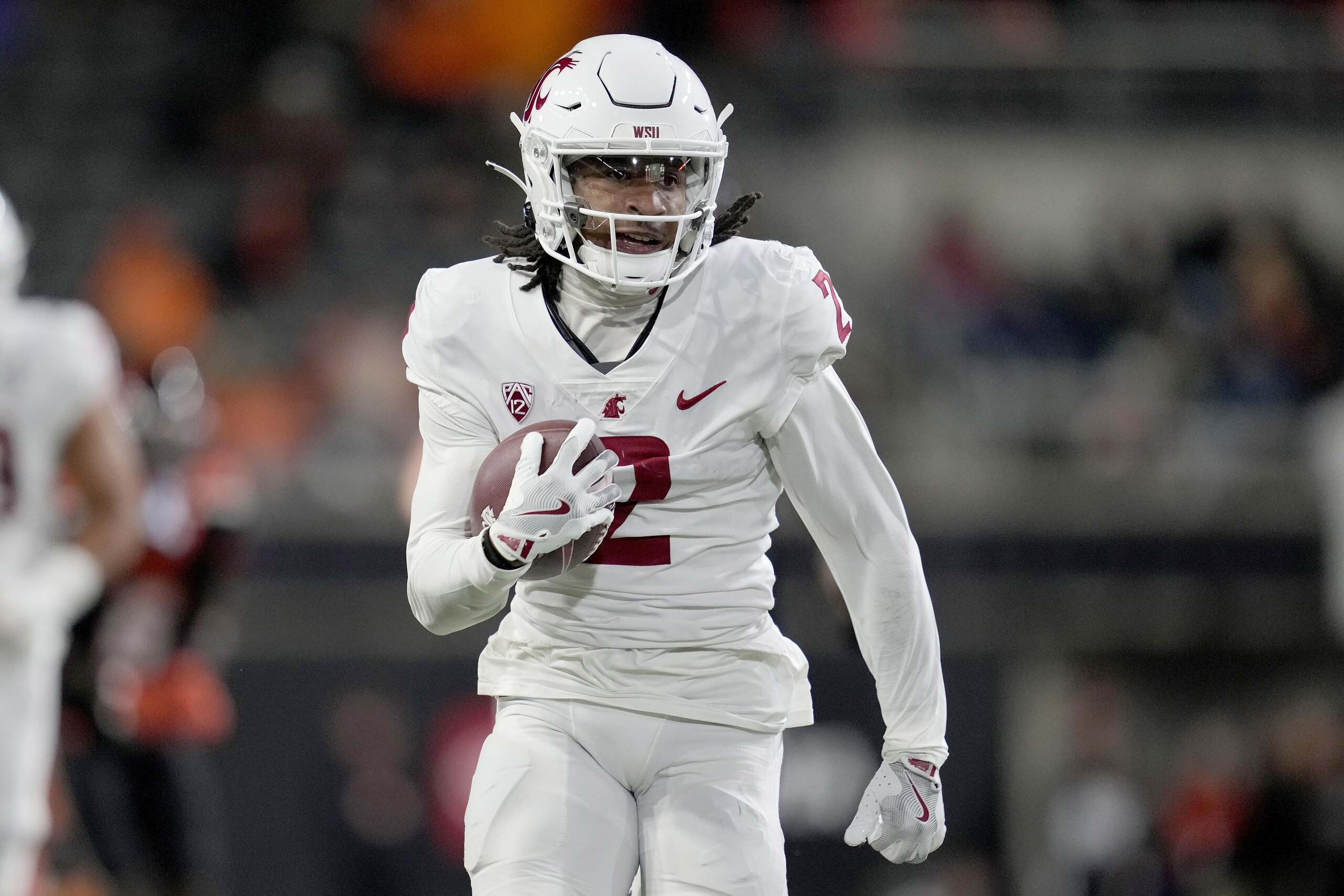
Strengths: Elite release package, vertical threat, tremendous body control to make contorted catches, creates after catch
Weaknesses: Poor play strength, imprecise routes, concentration drops
Grade: A
The New England Patriots need to have a Mr. Burns GIF added to their draft class, because it’s been excellent thus far.
First, they found a blindside protector for Drake Maye in Will Campbell. TreVeyon Henderon will take over as their lead running back. And Washington State’s Kyle Williams may be the Patriots' second-best wide receiver before he even steps into the locker room.
Williams knew he had to show he was more than a vertical threat after playing with quarterback Cam Ward in 2023 and making some highlight-reel catches. He developed as a far more well-rounded option this past season while leading the Cougars with 1,198 receiving yards and 14 touchdown receptions.
"I always felt like I was an all-around receiver," Williams said in September, "but I feel like not enough people have seen it. So for me, it was just coming out, showing the things that a lot of people haven't seen. So running after the catch, just making more contested catches."
70. Detroit Lions (from JAX): Isaac TeSlaa, WR, Arkansas
38 of 70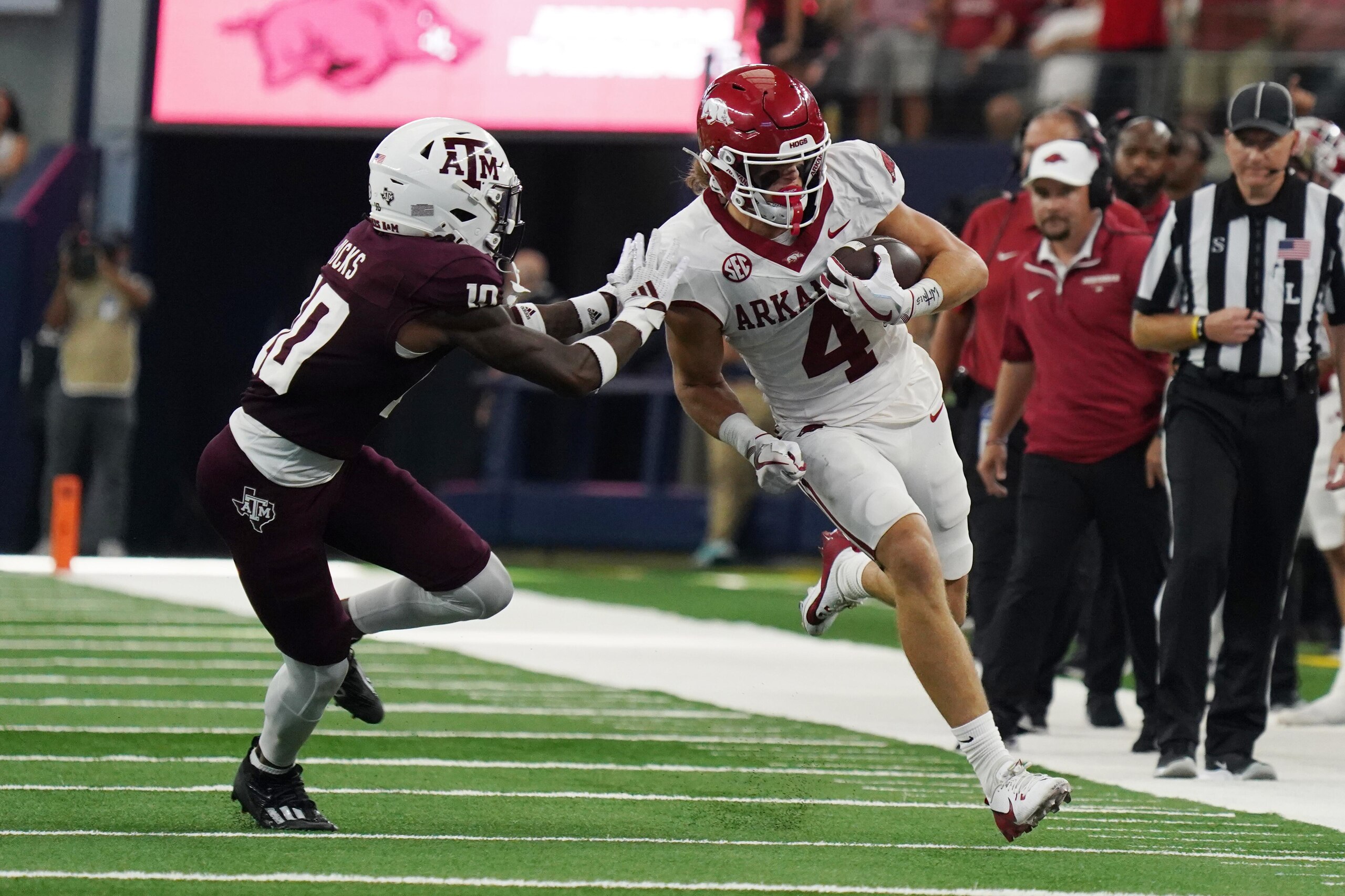
Strengths: Big frame, bodies smaller defensive backs, reliable hands, excellent buildup speed
Weaknesses: Sluggish off the line, shorter arms, lacks top-end production
Grade: B
Much like a basketball team, a wide receiver corps should feature varying skill sets. Amon-Ra St. Brown is clearly the point guard of the Detroit Lions' pass-catchers with how he runs the offense. Jameson Williams has a little shooting guard in him with his big-play ability. Tight end Sam LaPorta is essentially the small forward.
Arkansas’ Isaac TeSlaa now gives the unit a power forward.
More can be mined from TeSlaa's skill set. The Divison II transfer didn't exactly explode onto the scene at Arkansas, where he racked up 896 receiving yards over the last two seasons.
However, the 6'4", 214-pound TeSlaa consistently beat defensive backs during Senior Bowl week. He then posted a staggering 9.97 relative athletic score during predraft testing, which ranked 11th among all wide receiver prospects since 1987, per Kent Lee Platte.
71. New Orleans Saints: Vernon Broughton, DL, Texas
39 of 70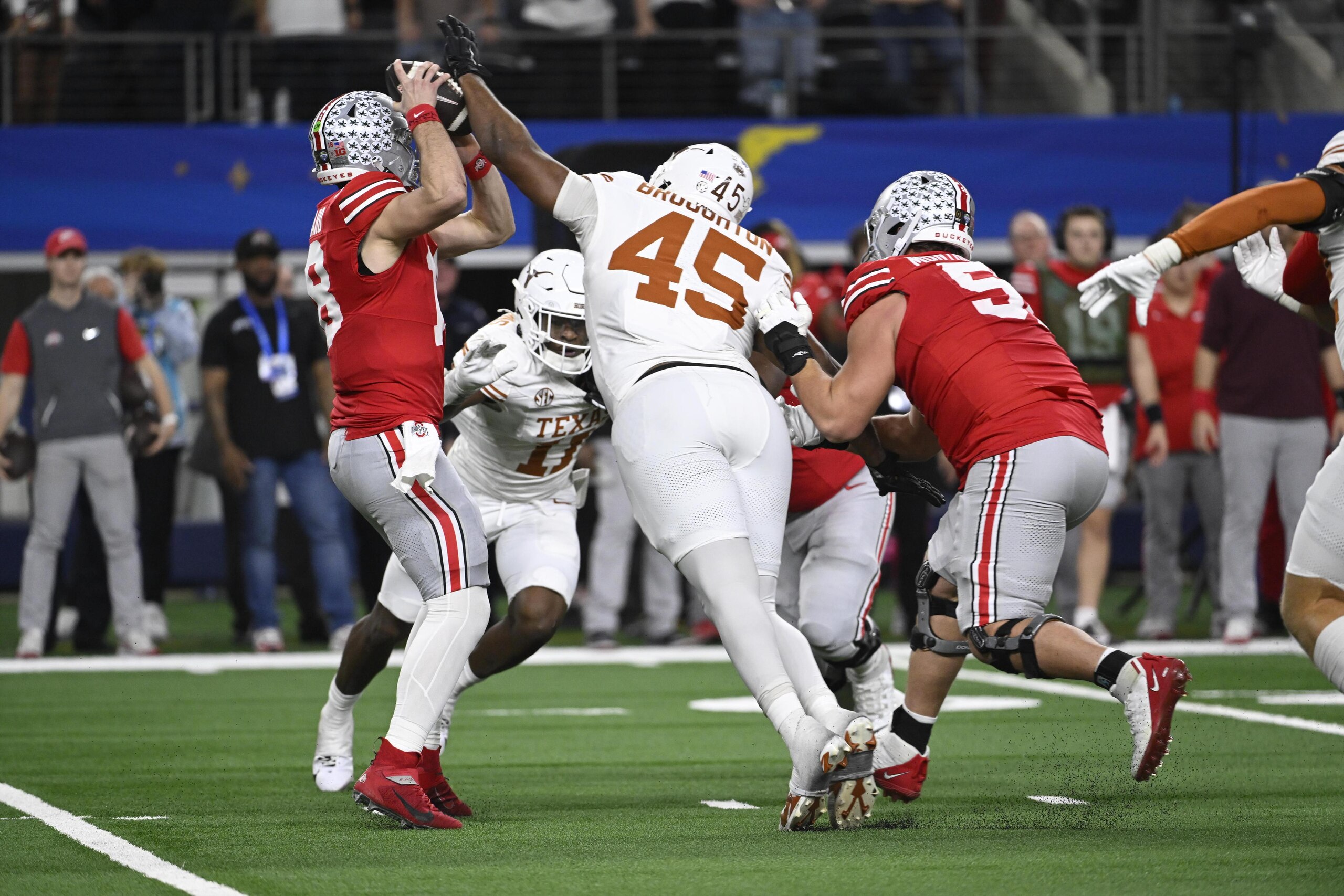
Strengths: Good size and length, strength at point, study base
Weaknesses: High pad level, poor hand usage
Grade: D
The New Orleans Saints have been all over the board, and not in a good way.
They reached for Kelvin Banks Jr. in the top 10. They took a 26-year-old quarterback in the second round despite other viable options at the game’s most important position. And now they reached on Texas defensive Vernon Broughton.
Broughton is a big body who can man the middle of the Saints defense, but the B/R NFL Scouting Department had him ranked as the 21st-best defensive tackle in this year's class.
72. Buffalo Bills (via CHI): Landon Jackson, EDGE, Arkansas
40 of 70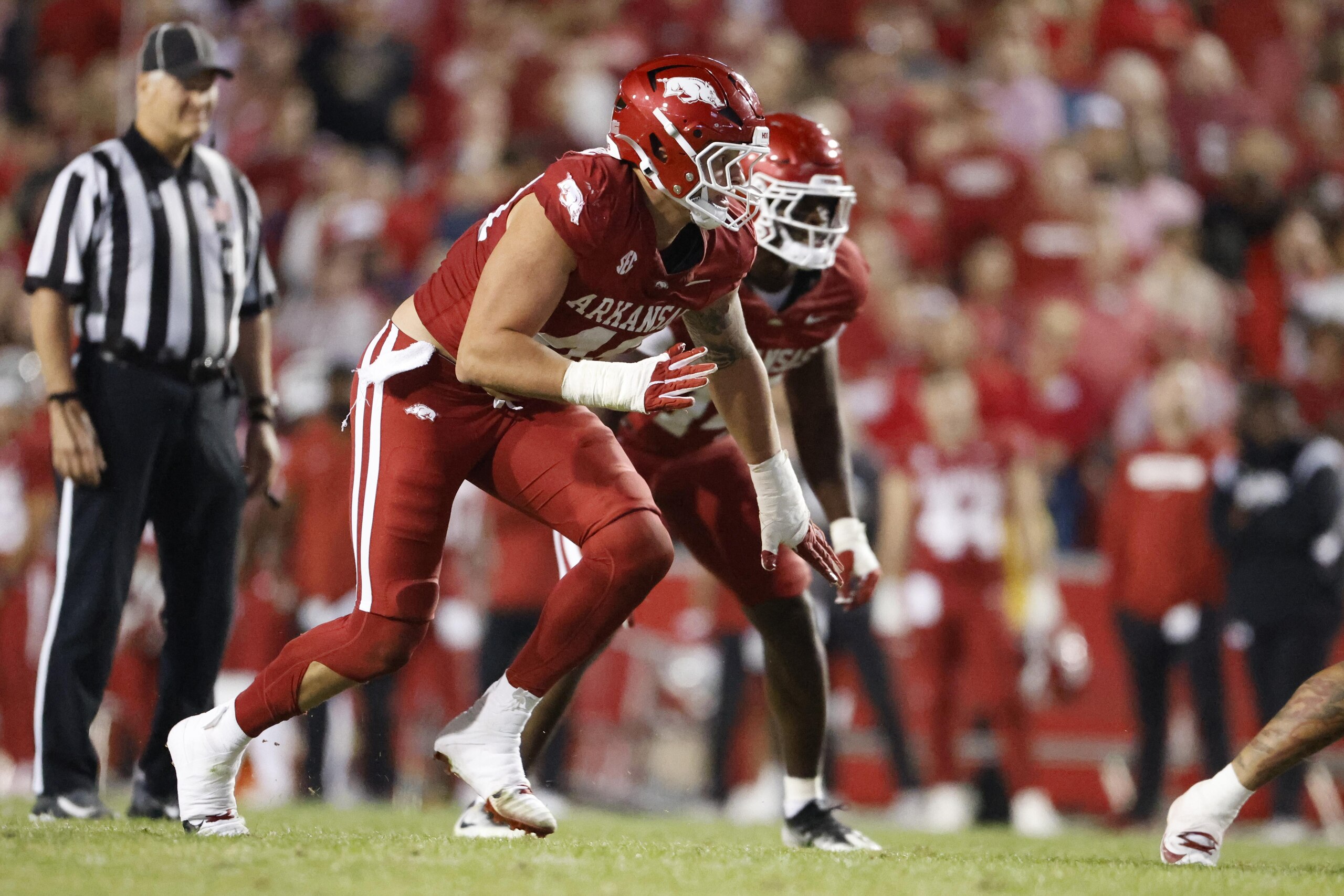
Strengths: Ideal frame for position, physical at point of attack, sets the edge, active hands, high motor
Weaknesses: Straight-line athlete, tends to work down middle of blockers, needs to be more violent shedding blocks
Grade: C+
The Buffalo Bills have a type, and Arkansas’ Landon Jackson fits the bill. He’s another long and powerful edge-defender who doesn’t have the bend or flexibility to consistently threaten the edge against NFL pass protectors.
Jackson has the size (6'6", 264 lbs), length (33¼-inch arms) and athleticism (9.78 RAS) that every NFL team wants in its defensive ends. However, he lacks consistency.
His best games often came against the best competition that he faced, which is a positive. But he's never been a full-time dominant defender.
Jackson looked like a game-wrecker when he racked up 3.5 sacks against Alabama in 2023. Throw in last season's two-sack performance against the Ole Miss Rebels, and that makes up 5.5 of his 13 sacks over the past two years.
73. New York Jets: Azareye'h Thomas, CB, Florida State
41 of 70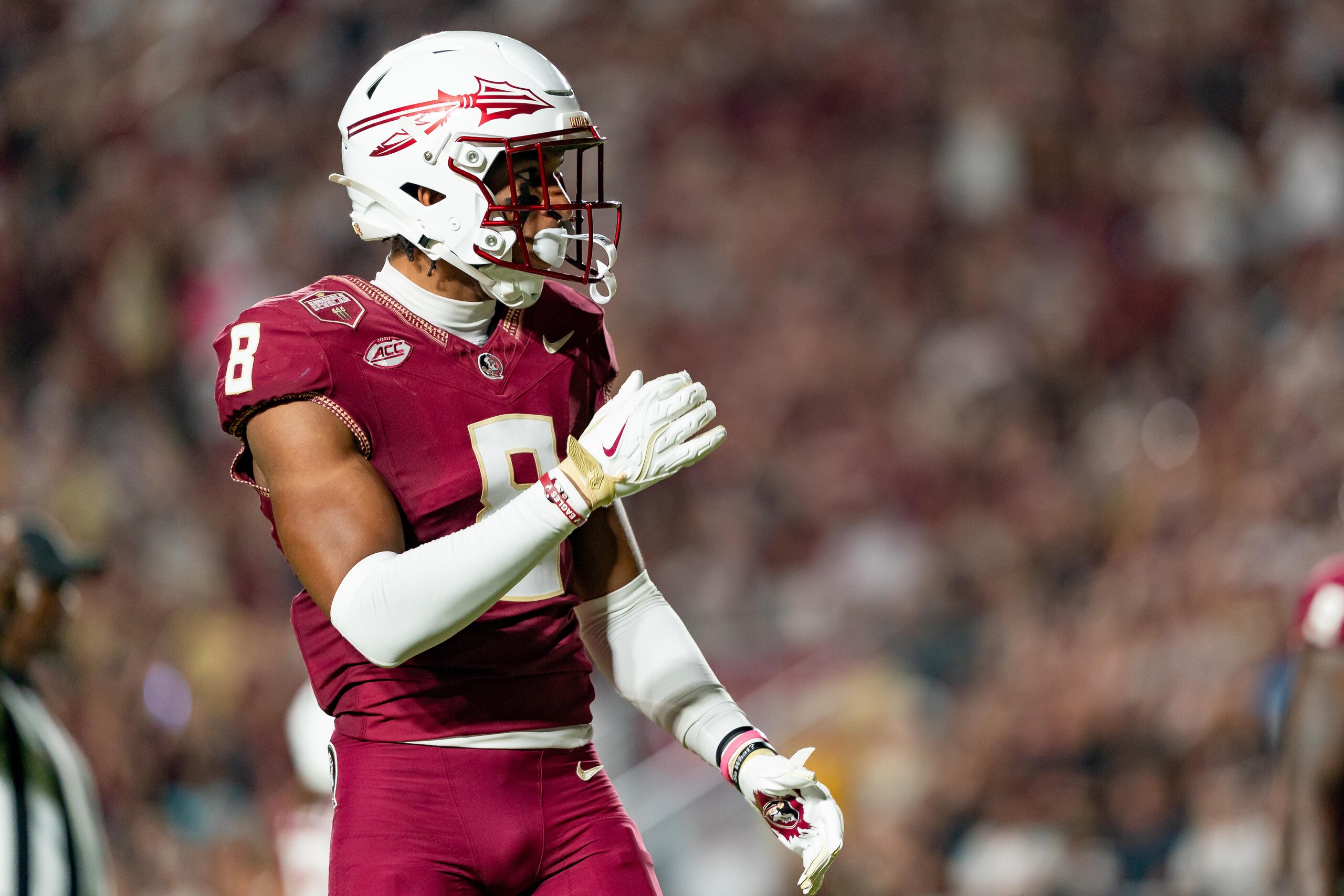
Strengths: Big, long frame, excellent body control, physical in coverage and against the run
Weaknesses: Needs to improve understanding of angles, thrives in press yet can improve his initial jam, suspect ball production
Grade: B+
New York Jets head coach Aaron Glenn understands cornerback play after his 15-year NFL career. He had to see enormous potential in Florida State’s Azareye’h Thomas, whom the Jets selected with the 73rd overall pick.
The Jets are looking to replace D.J. Reed despite bringing in Brandon Stephens this offseason. Sauce Gardner has yet to sign a contract extension, too. Thomas has time to grow with this group.
Breakout age is not often discussed, but it can hold significant weight in a prospect evaluation. The younger a player is when he experiences success, the more likely he is to experience a high level of success at the next level in theory.
Thomas won't turn 21 until July. He boasts significant upside as a long and physical cornerback who can smother targets thanks to a nearly 6'2", 200-pound frame.
While bigger corners are often knocked because they're not as fluid or shifty as smaller ones, Thomas has the potential to thrive as a press-man corner thanks to his natural gifts.
74. Denver Broncos (from CAR): Pat Bryant, WR, Illinois
42 of 70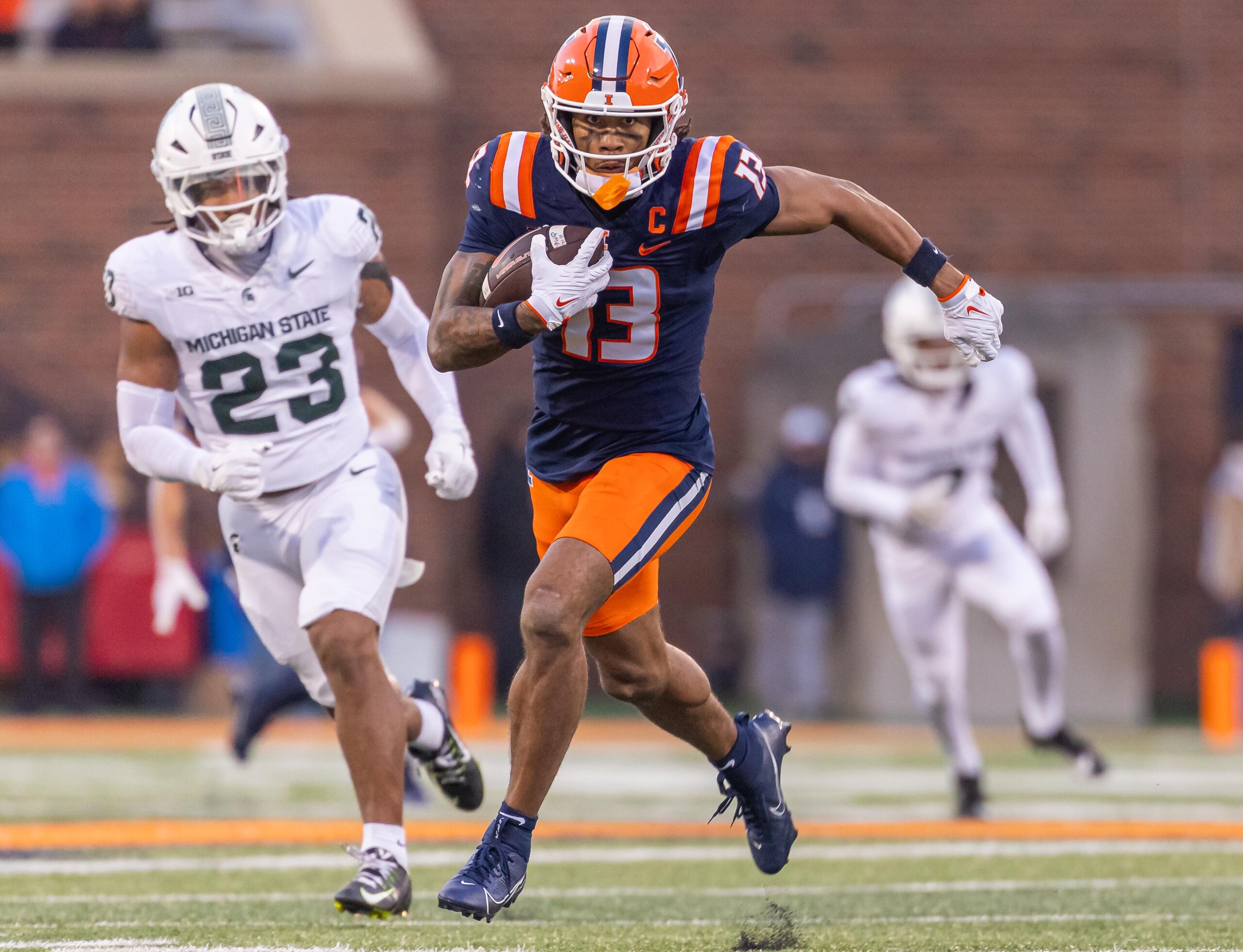
Strengths: Ball skills, strong at contested catches
Weaknesses: Lacks explosiveness or top gear, unpolished route tree
Grade: F
The success of the Bo Nix pick last year shouldn’t overrule every selection that’s viewed as a reach by the Denver Broncos.
Head coach Sean Payton understands what he wants in his offense. Maybe he sees Marques Colston in Illinois wide receiver Pat Bryant.
But it’s difficult to overlook the fact that Bryant doesn’t run or separate well. He figures to struggle to get open in the NFL.
75. San Francisco 49ers: Nick Martin, LB, Oklahoma State
43 of 70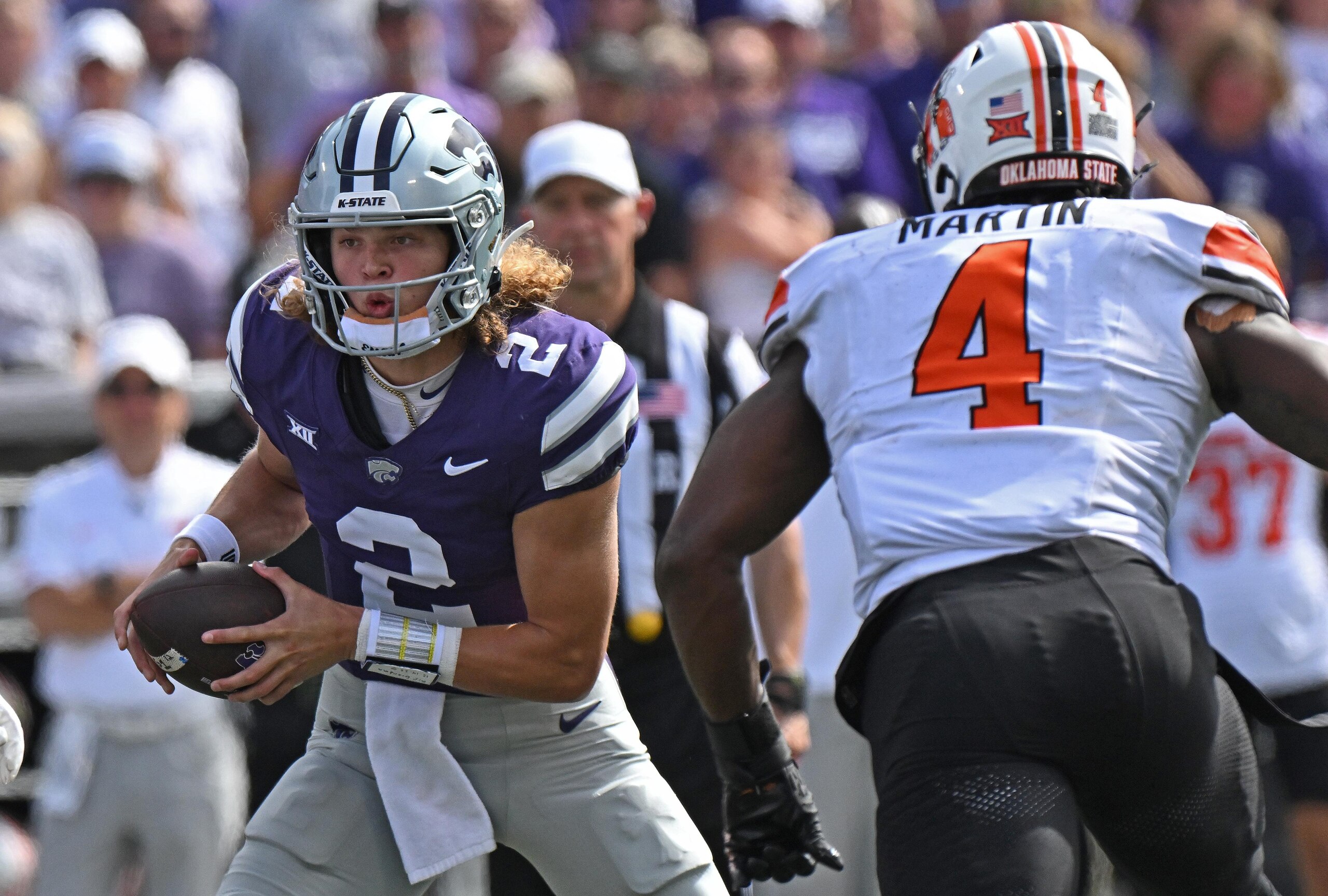
Strengths: Physical player, productive, moves well sideline-to-sideline
Weaknesses: Undersized, misses tackle in space, struggles in coverage
Grade: D
San Francisco 49ers head coach Kyle Shanahan must see a little Sam Mills in the sub-6’0”, 221-pound Nick Martin.
Martin put up huge numbers at Oklahoma State in 2023 with 140 total tackles and 16 tackles for loss. However, a knee injury held him back this past season.
The Niners can only hope that Martin comes in and eventually replaces Dre Greenlaw.
76. Dallas Cowboys: Shavon Revel Jr., CB, East Carolina
44 of 70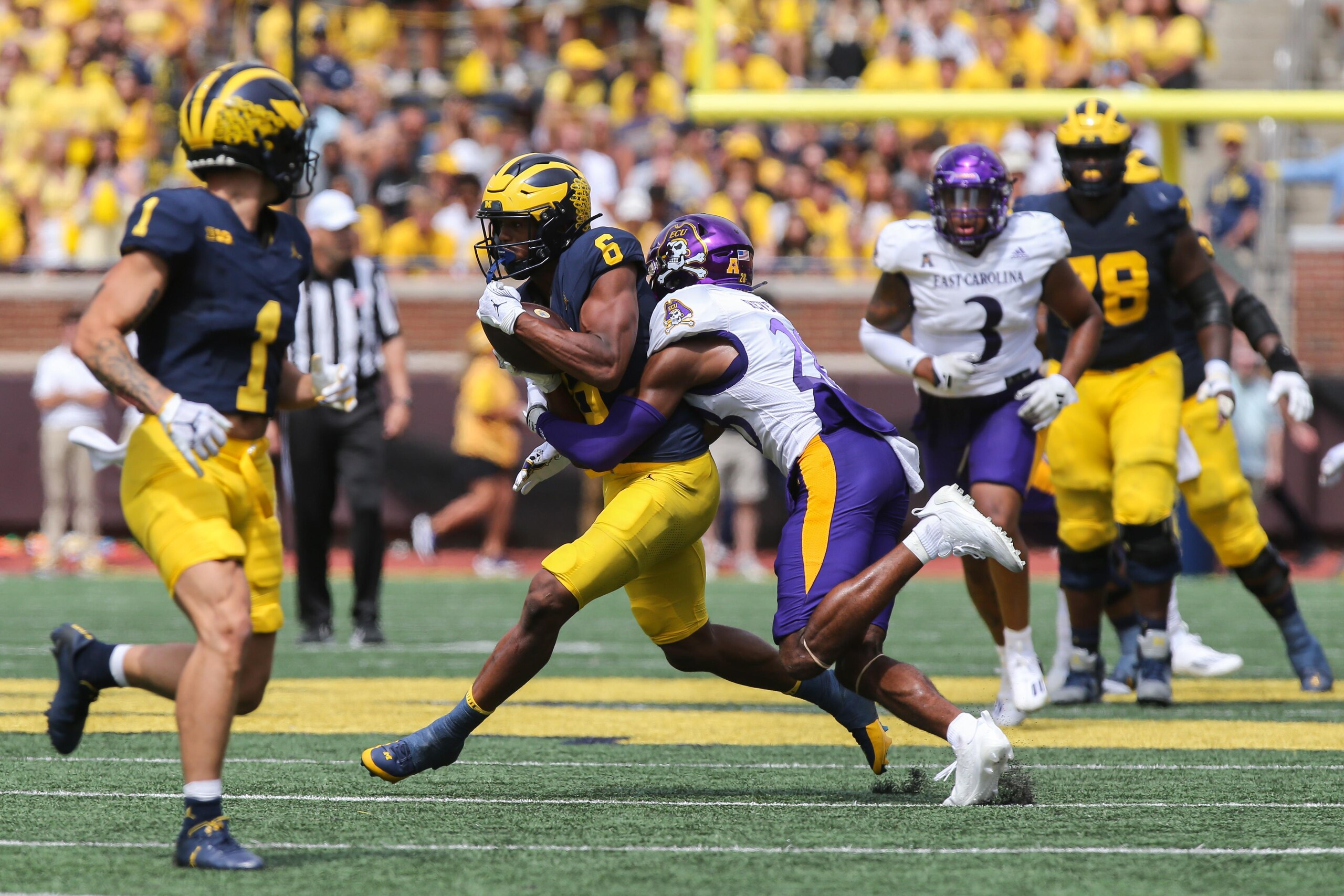
Strengths: Long with big frame, excellent recovery speed
Weaknesses: Extensive injury history, a 6'2" corner who plays too high at times, poor ball skills
Grade: B
Considering the current state of the Dallas Cowboys’ cornerbacks, East Carolina’s Shevon Revel Jr. is an ideal risk to take in the third round.
Trevon Diggs is coming off back-to-back major knee injuries that prematurely ended his 2023 and 2024 seasons, while DaRon Bland is entering the last year of his current contract. Revel is a buy-low prospect who has the potential to deliver a big return.
A torn ACL during his final season on campus wasn't enough to keep Revel from making the NFL, not after he had to put in long hours at an Amazon warehouse before a tryout that earned him a scholarship at East Carolina.
"They took a chance on somebody who had a 2.0 [graded point average]," Revel said of the East Carolina coaching staff, per ESPN's Chris Low. "It wasn't like a lot of schools were lining up to offer somebody a scholarship that had a 2.0 in junior college. I never forgot that."
Revel is now a college graduate who's ready to realize his NFL dream.
77. Carolina Panthers (from NE): Princely Umanmielen, EDGE, Ole Miss
45 of 70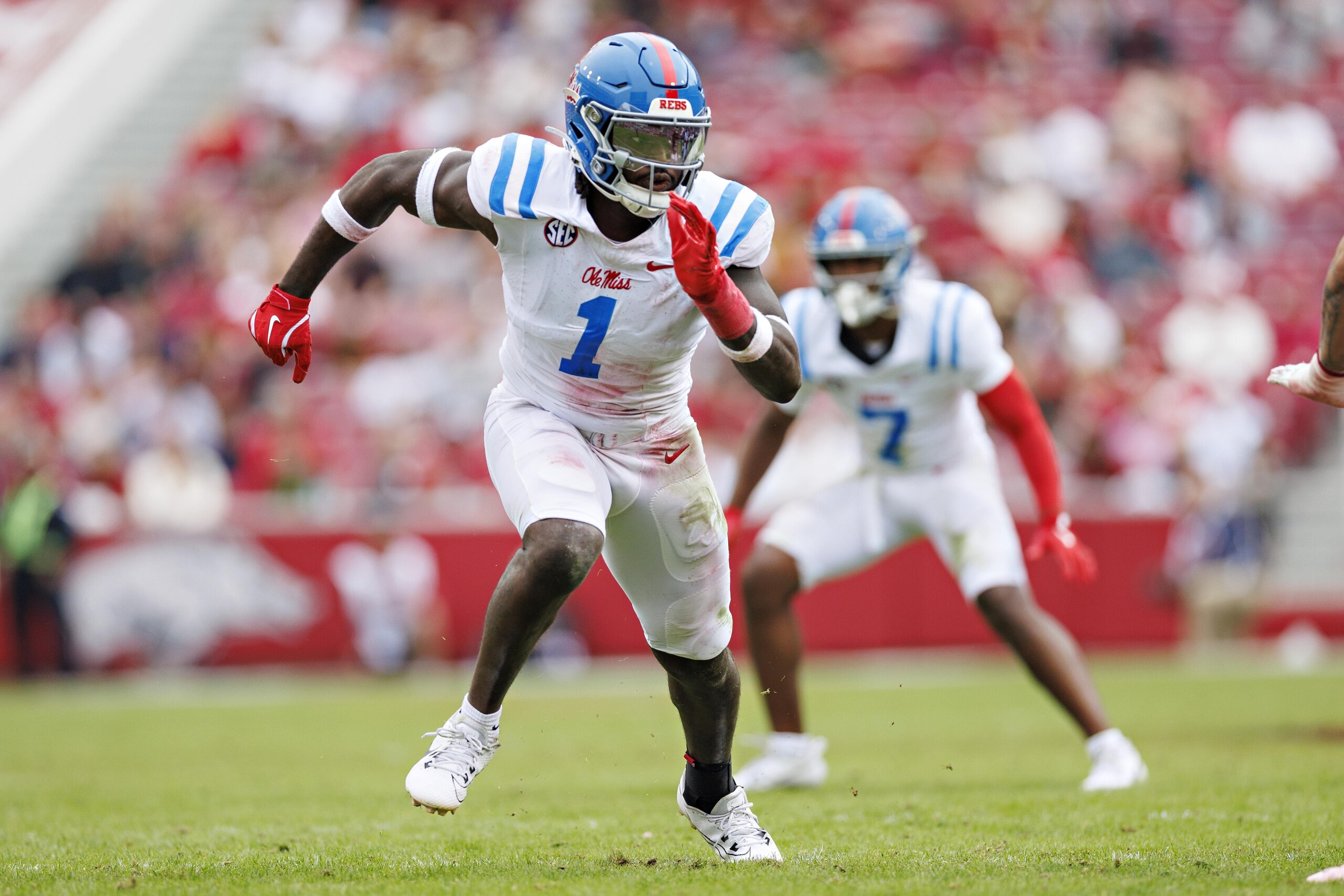
Strengths: Smooth athlete, first-step quickness, block recognition, sets the edge
Weaknesses: Lacks elite speed to quickly turn edge, struggles to get off blocks, pad level has a tendency to get high
Grade: B
The Carolina Panthers are loading up on edge-rushers on Day 2 of this year's draft. After taking Texas A&M’s Nic Scourton in the second round, they added Ole Miss’ Princely Umanmielen in the third.
The duo adds to the rotation behind DJ Wonnum and Jadeveon Clowney while giving the Panthers long-term bookends.
Umanmielen was born in Nigeria before his parents moved him and his brother to the United States. The future defensive end didn't pick up a football until he was seven.
"When we moved to Austin, Texas, me and my brother, we never played football before, and we didn't know how to catch," Umanmielen told reporters, "so we asked our parents to buy us one, and they bought us one and how we learned how to catch is we stood very, very close to each other, threw the ball, took a step back, throw the ball."
The defensive lineman emerged as a 4-star recruit, but he clearly needed time to develop and improve with each season on campus, particularly since he often had to play along the interior despite his lean frame.
78. Arizona Cardinals: Jordan Burch, DL, Oregon
46 of 70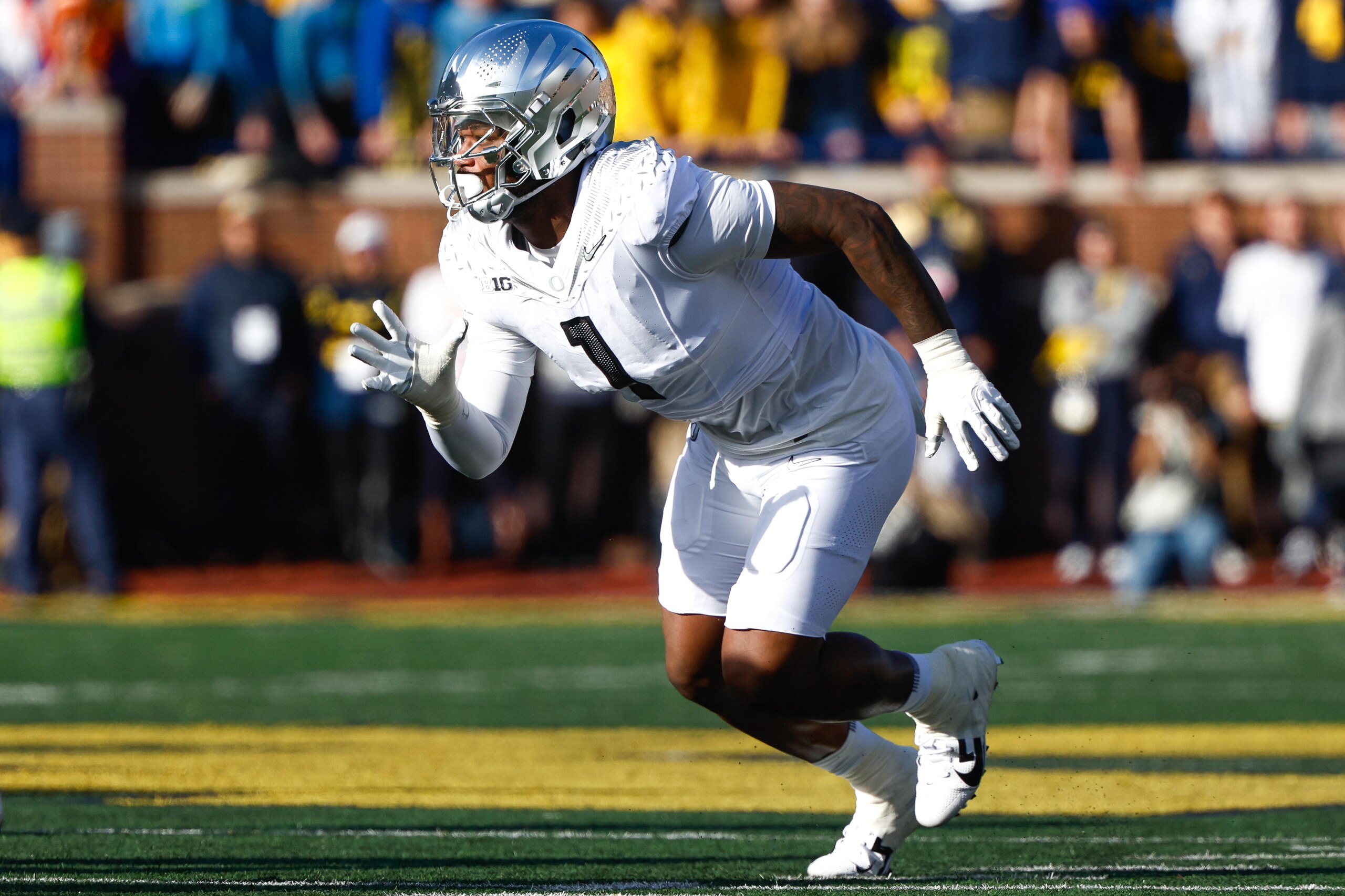
Strengths: Excellent build, powerful run defender, consistent motor, uses hands well
Weaknesses: Not explosive off the snap, lacks burst as a pass-rusher, can get stuck on blocks
Grade: B
The Arizona Cardinals weren’t done adding to their defensive line after selecting Walter Nolen in the first round. Oregon’s Jordan Burch will give them significant flexibility with his ability to play base end, 3-tech, 1-tech and even from a two-point stance.
Burch is the type of prospect who left the college ranks with everyone still wanting to see more. The defensive lineman originally joined South Carolina as a 5-star recruit, but he never looked the part in the SEC.
At Oregon, Burch finally began showing signs of being an elite defensive lineman who can serve as a base end and then reduce down over the interior in sub-packages. He racked up a career-high 11 tackles for loss and 8.5 sacks this past season.
Burch still seems to have an immense amount of untapped potential, but he might not. He could just be a strong run defender with limited upside as a pass-rusher.
79. Houston Texans: Jaylin Noel, WR, Iowa State
47 of 70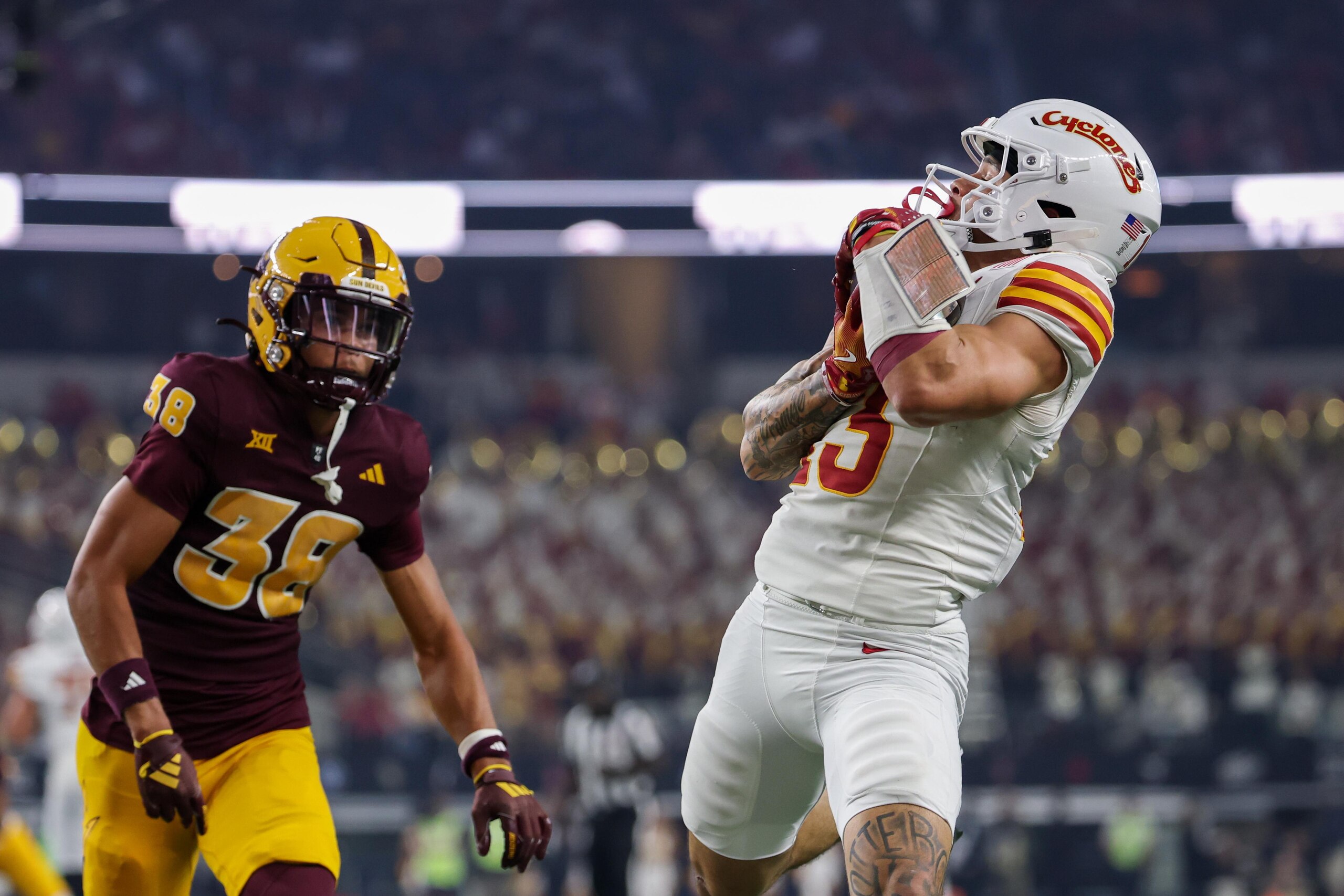
Strengths: Instant separator, sub-4.4 speed, special teams value as a returner
Weaknesses: Drops throughout career (though he improved each season), not strong when facing contact after catch
Grade: B
The Houston Texans apparently didn’t want to break up the pair of Iowa State wide receivers in this year’s class. After selecting Jayden Higgins with their first pick, they reunited him with Jaylin Noel in the third round.
Higgins is the outside bookend to Nico Collins, while Noel will help out of the slot to offset Tank Dell’s latest knee injury.
Iowa State isn't known as a pass-first team, but the Cyclones were one of two FBS teams last season to feature a pair of 1,000-yard wide receivers. The reigning national champion Ohio State Buckeyes were the other.
Noel led the Cyclones with 1,194 receiving yards, just ahead of Higgins (1,183), who led the team in 2023. The latter has typical NFL traits, whereas Noel is smaller, shiftier and has far more ability to separate and create. In fact, Noel was one of the Big 12 Co-Special Teams Players of the Year this past season thanks to his work as a returner.
80. Indianapolis Colts: Justin Walley, CB, Minnesota
48 of 70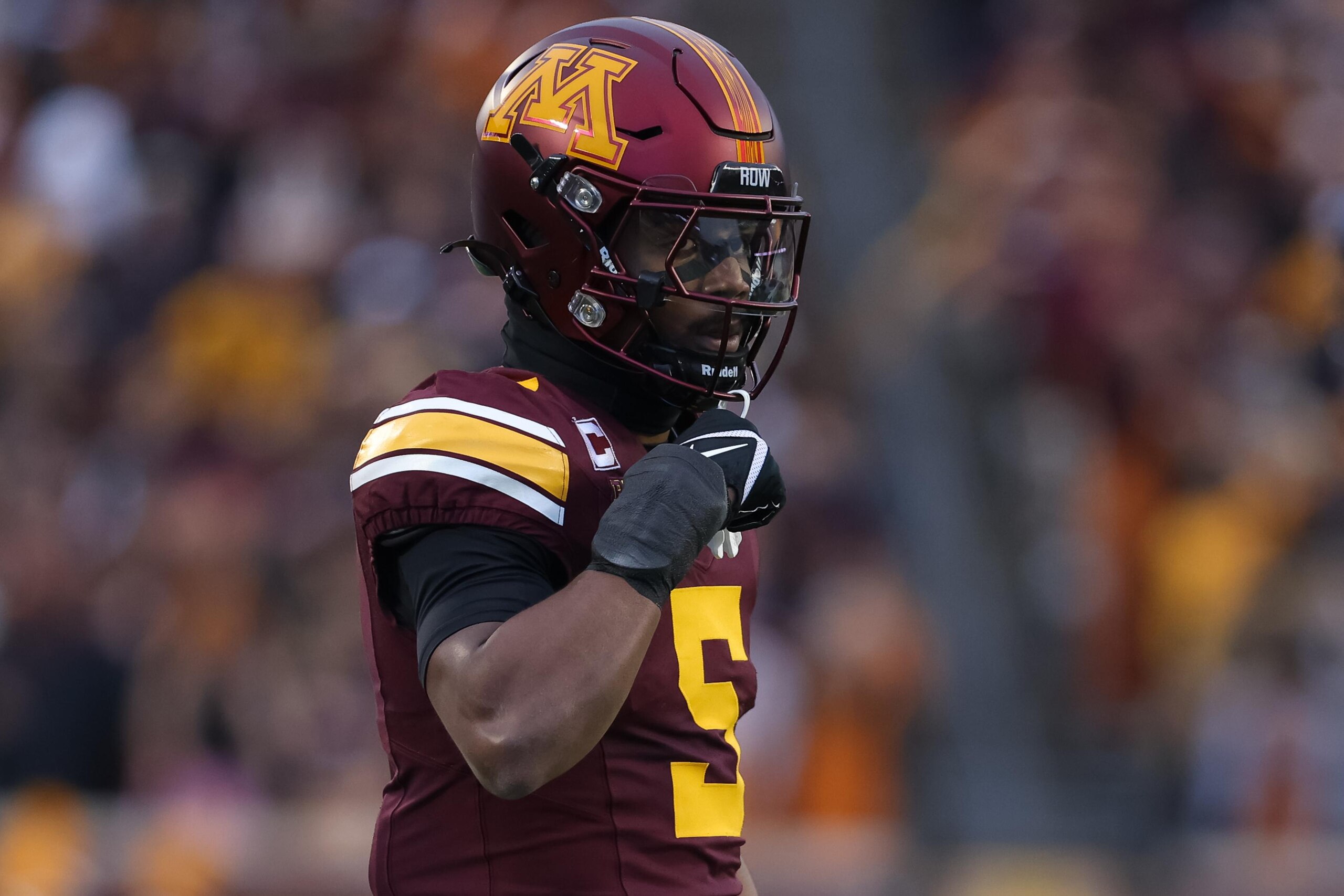
Strengths: Great short-area quickness, legit top-end speed, sinks hips, fluid transitions, good ball skills
Weaknesses: Inconsistent tackler, takes poor angles at times
Grade: C+
The Indianapolis Colts are transitioning away from Gus Bradley’s outdated zone-heavy defensive scheme. They needed cornerbacks who can play in Lou Anarumo’s system.
General manager Chris Ballard prioritized veteran Charvarius Ward in free agency to be the Colts' new CB1. Kenney Moore II remains a stellar nickel corner. Jaylon Jones and Samuel Womack will remain part of the team's secondary rotation.
Minnesota's Justin Walley provides a different skill set with his raw speed and natural coverage traits. His quickness can be seen in his ability to cover the hitch route, which he graded better at than anyone else in this year’s class, per Pro Football Focus.
81. Cincinnati Bengals: Dylan Fairchild, IOL, Georgia
49 of 70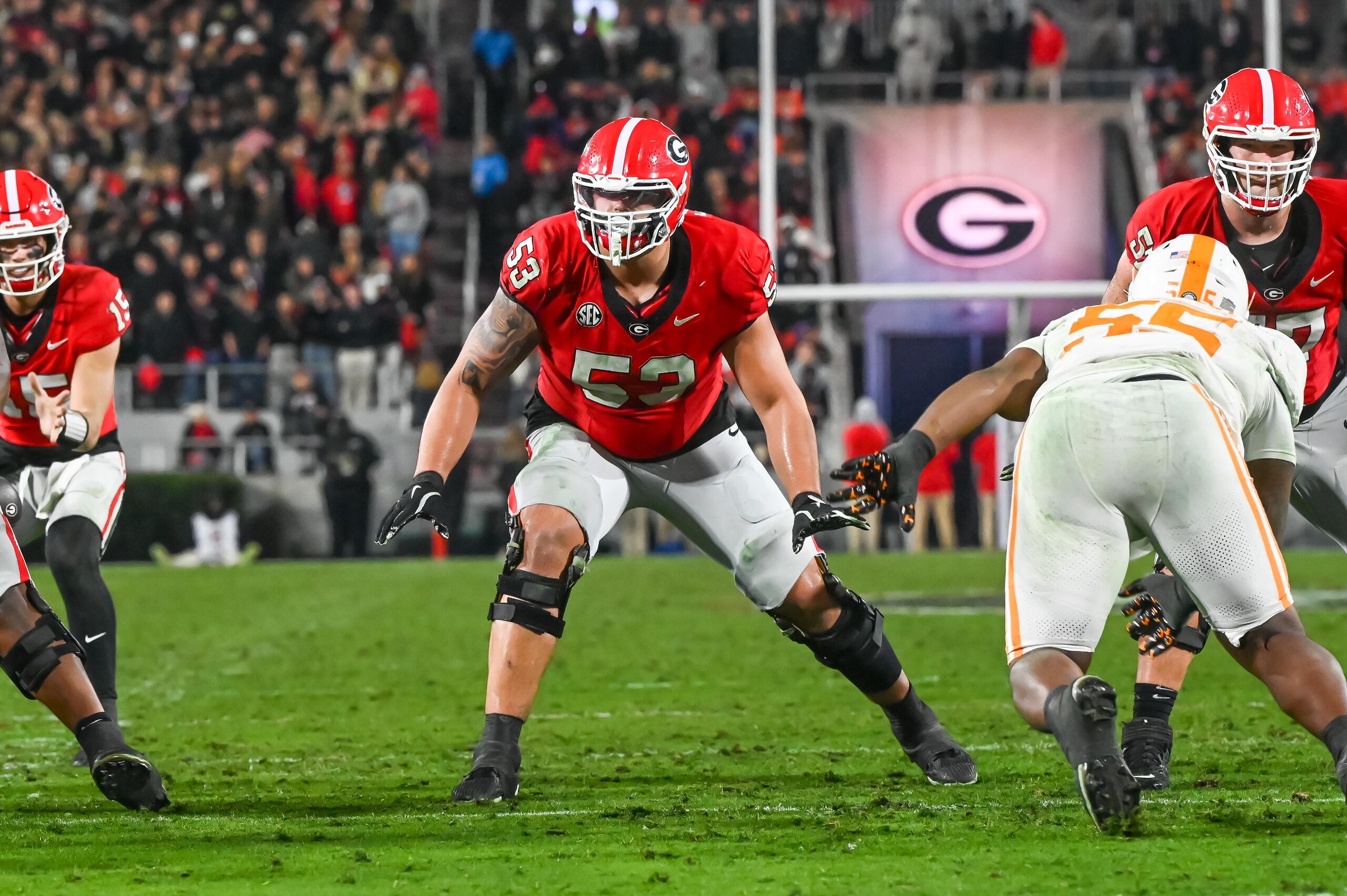
Strengths: Quick and powerful, drives defenders off the ball, good body control, nasty demeanor
Weaknesses: Can take poor angles, erratic hand placement, one season as a full-time starter
Grade: B+
The Cincinnati Bengals needed to upgrade at guard. Georgia’s Dylan Fairchild can be a stellar starter and tone-setter in time, but he’s raw right now. The Bengals are looking ahead with this selection to eventually move past Cordell Volson and Cody Ford.
Fairchild's surname may be slightly off. Wild child may be a more apt description. He's explosive, physical and aggressive.
The 21-year-old still has plenty of work to do in refining his technique and becoming a more consistent blocker. But he has starter upside and possibly even elite potential.
82. Tennessee Titans (from SEA): Kevin Winston Jr., Safety, Penn State
50 of 70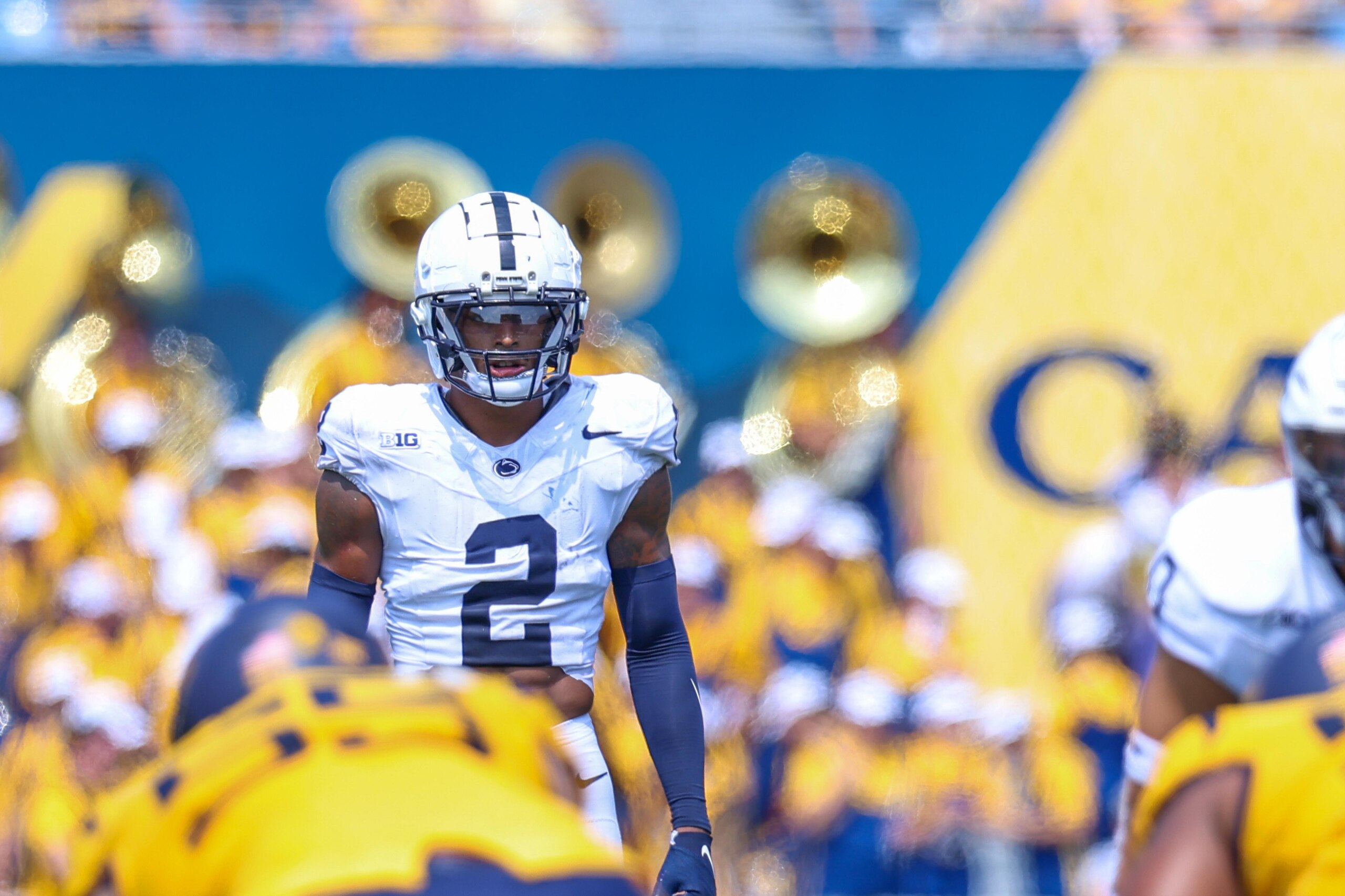
Strengths: Ideal frame and length for a safety prospect, strong tackler, can cover all tight ends
Weaknesses: Coming off significant injury, lacks smooth backpedal, slow to react
Grade: B
Amani Hooker and Xavier Woods are capable safeties along the Tennessee Titans’ backline. However, neither should be viewed as physical defensive backs whom opponents are going to fear.
Penn State’s Kevin Winston Jr. brings that element to Brian Callahan’s defense. He’s a powerful downhill defender who should be fully ready for the 2025 campaign.
Winston went overlooked throughout the predraft process after suffering a partially torn ACL in Week 2 of the 2024 season. Despite the injury, he still declared for the NFL draft.
"There was no doubt in my mind that I was ready to tackle, to go out there and compete with the guys in the NFL. But mentally, it was a big part for me," Winston told reporters at the NFL Scouting Combine. "I had to make sure I was mentally ready for the NFL."
Winston is expected to be fully healthy by the start of training camp.
83. Pittsburgh Steelers: Kaleb Johnson, RB, Iowa
51 of 70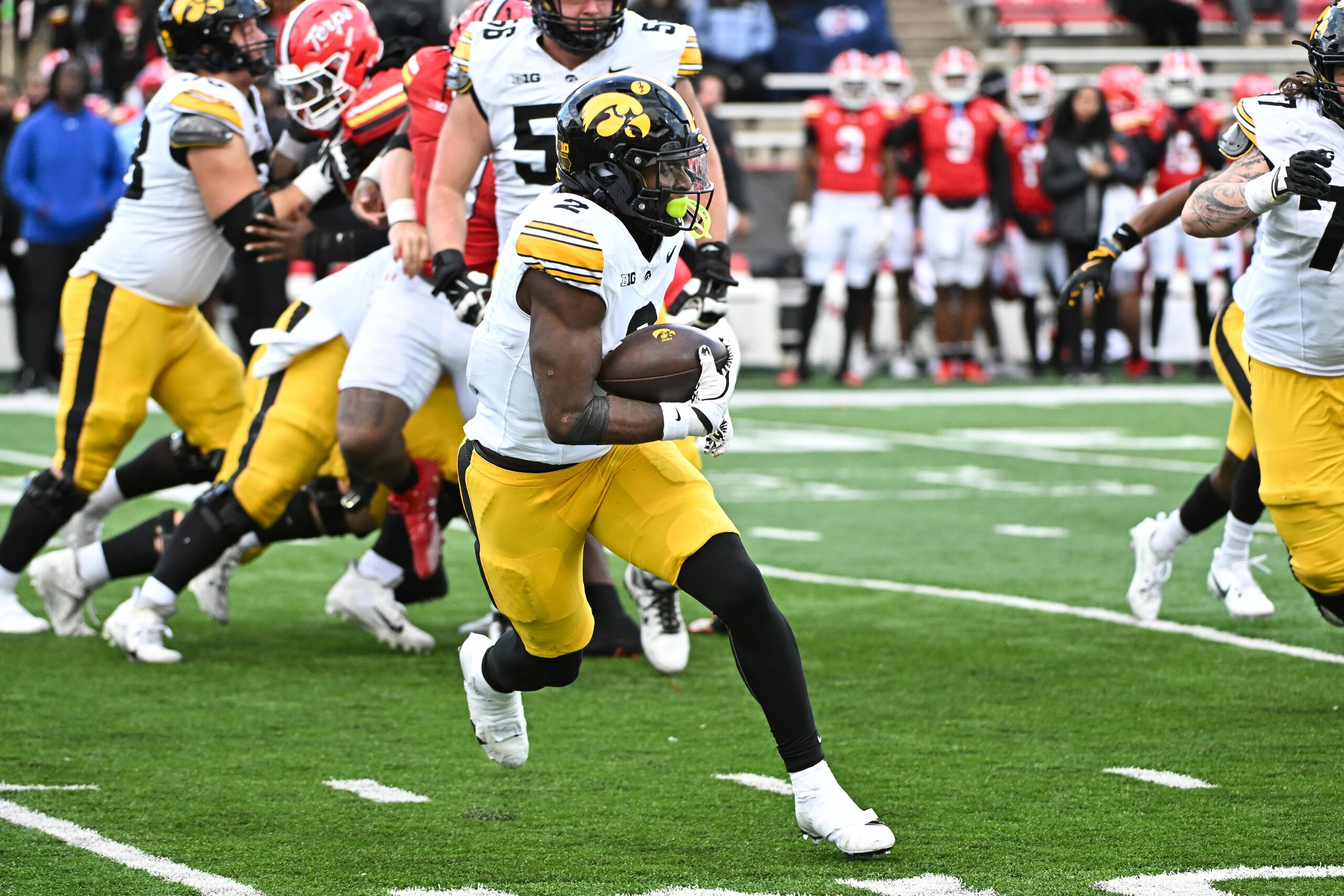
Strengths: Good vision, patient, quick feet, thick frame to run between the tackles and through contact, has burst through hole
Weaknesses: Lacks breakaway speed, lacks suddenness for elite cutting ability, adds little in passing game
Grade: F
Everything fell in the Pittsburgh Steelers' favor on Day 2. They didn’t have a second-round pick thanks to the DK Metcalf trade. What does it matter if they don't have a quality quarterback to throw the ball to him?
Aaron Rogers isn’t worth the wait. Kirk Cousins isn’t worth the contract. Colorado’s Shedeur Sanders was right there for the taking, yet Pittsburgh passed on him again.
Pittsburgh's arrogance to believe it can win no matter who's behind center is laughable at best. Go ahead and run the ball with Kaleb Johnson and Jaylen Warren. See how far that gets a team in a conference that features Lamar Jackson, Joe Burrow, Patrick Mahomes and Josh Allen.
The running back position has evolved over the last two decades, but Johnson does look like a Steelers throwback. He's a thickly built and muscular workhorse who's coming off a career-high 1,537 rushing yards and 23 total touchdowns.
Despite the issues often cited about Iowa during the season, Kirk Ferentz's coaching staff knows how to prepare talent for the NFL partly because of the pro-style systems and preparation they employ. Johnson has clear RB1 potential.
The Steelers just need to find a QB1 now.
84. Tampa Bay Buccaneers: Jacob Parrish, CB, Kansas State
52 of 70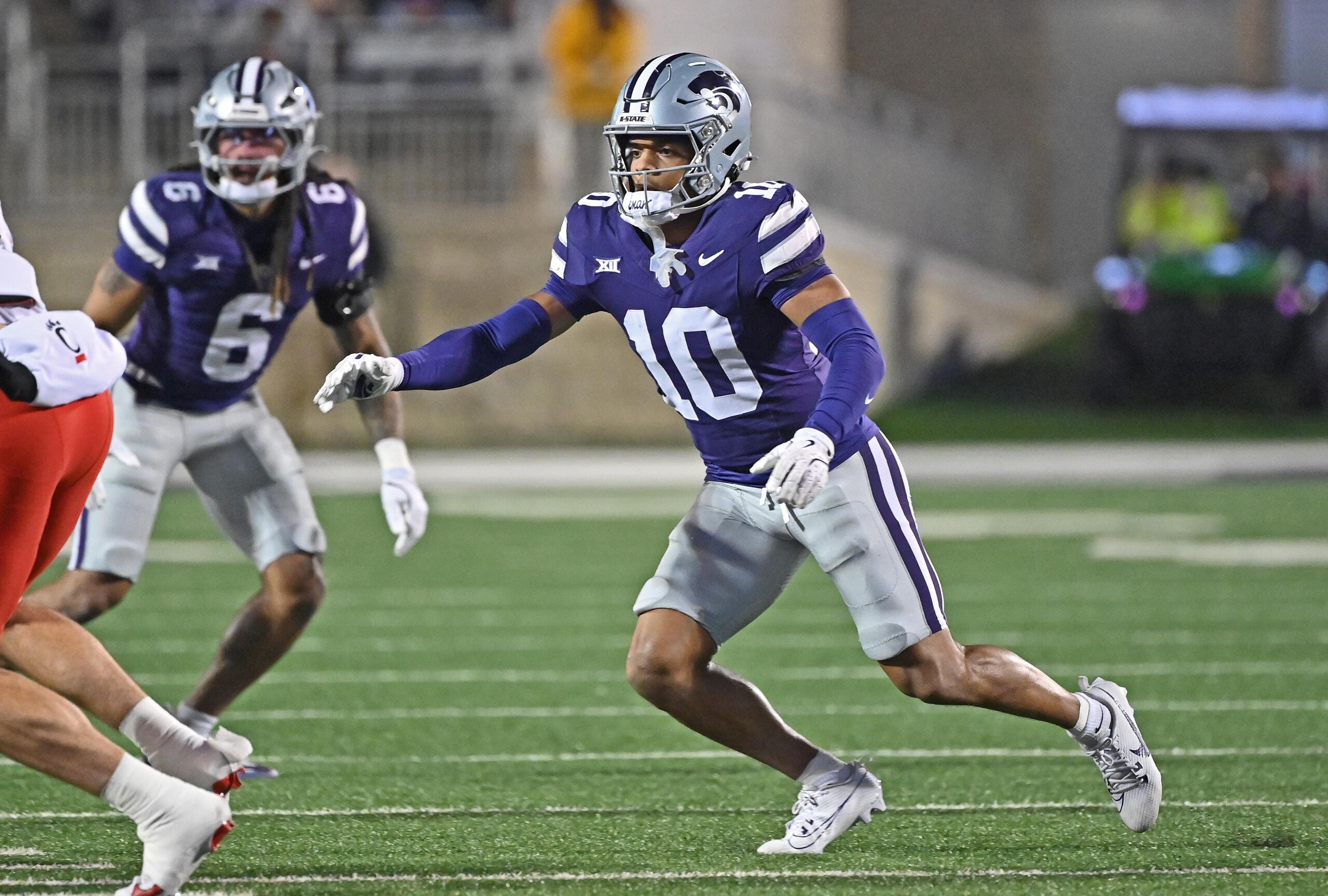
Strengths: Very flexible and fluid lower body, top-end speed, acceleration to close quickly, good tackler
Weaknesses: Lacks length and size, needs to improve overall coverage awareness, gets stuck on blocks
Grade: B
The Tampa Bay Buccaneers decided to go with back-to-back cornerbacks on Day 2, but Benjamin Morrison and Kansas State’s Jacob Parrish play different positions.
Morrison is a traditional outside cornerback, whereas Parrish will line up over the slot. The two rookies give Tampa Bay significant depth and flexibility along the back end.
Cornerback play is all in the hips. How fluid a defensive back is in his lower body is the best indication of how well they can play in the NFL.
Parrish will struggle against bigger and more physical NFL targets, but he's as smooth as anyone in this year's class with how he works through his backpedal and transitions. That allows him to stay in phase with tight coverage.
85. Kansas City Chiefs (from NE): Nohl Williams, CB, Cal
53 of 70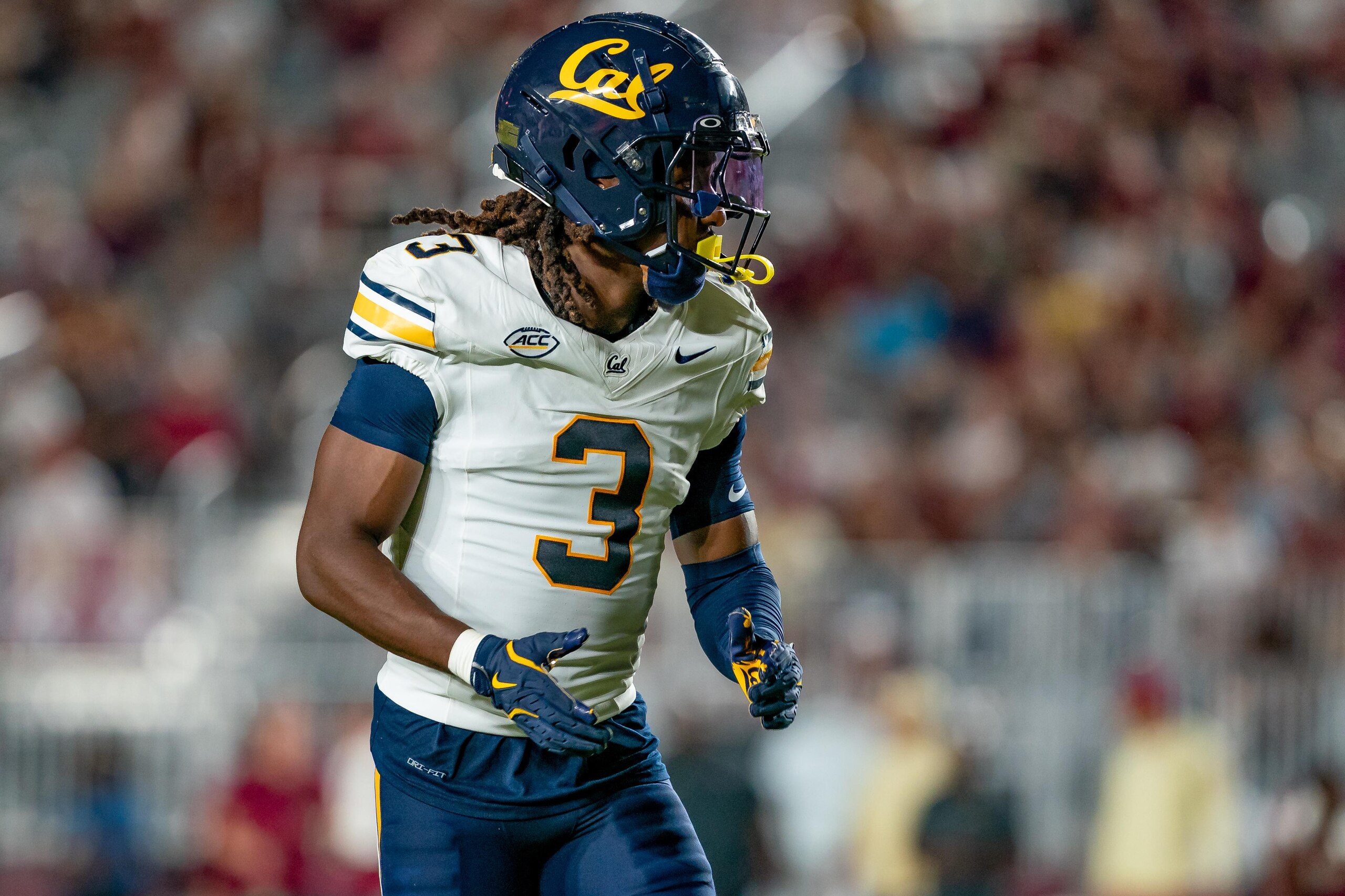
Strengths: Ball skills, reads quarterback and anticipates, thrives in zone
Weaknesses: Average athlete, gets grabby, lacks closing speed
Grade: C+
The Kansas City Chiefs are the kings of finding mid-to-late round defensive backs and developing them into standouts. They know exactly what they want from the position, and they stick to the plan.
Cal’s Nohl Williams is a natural ballhawk. His pure coverage skills are suspect. However, he led the FBS this past season with seven interceptions.
86. Los Angeles Chargers: Jamaree Caldwell, DL, Oregon
54 of 70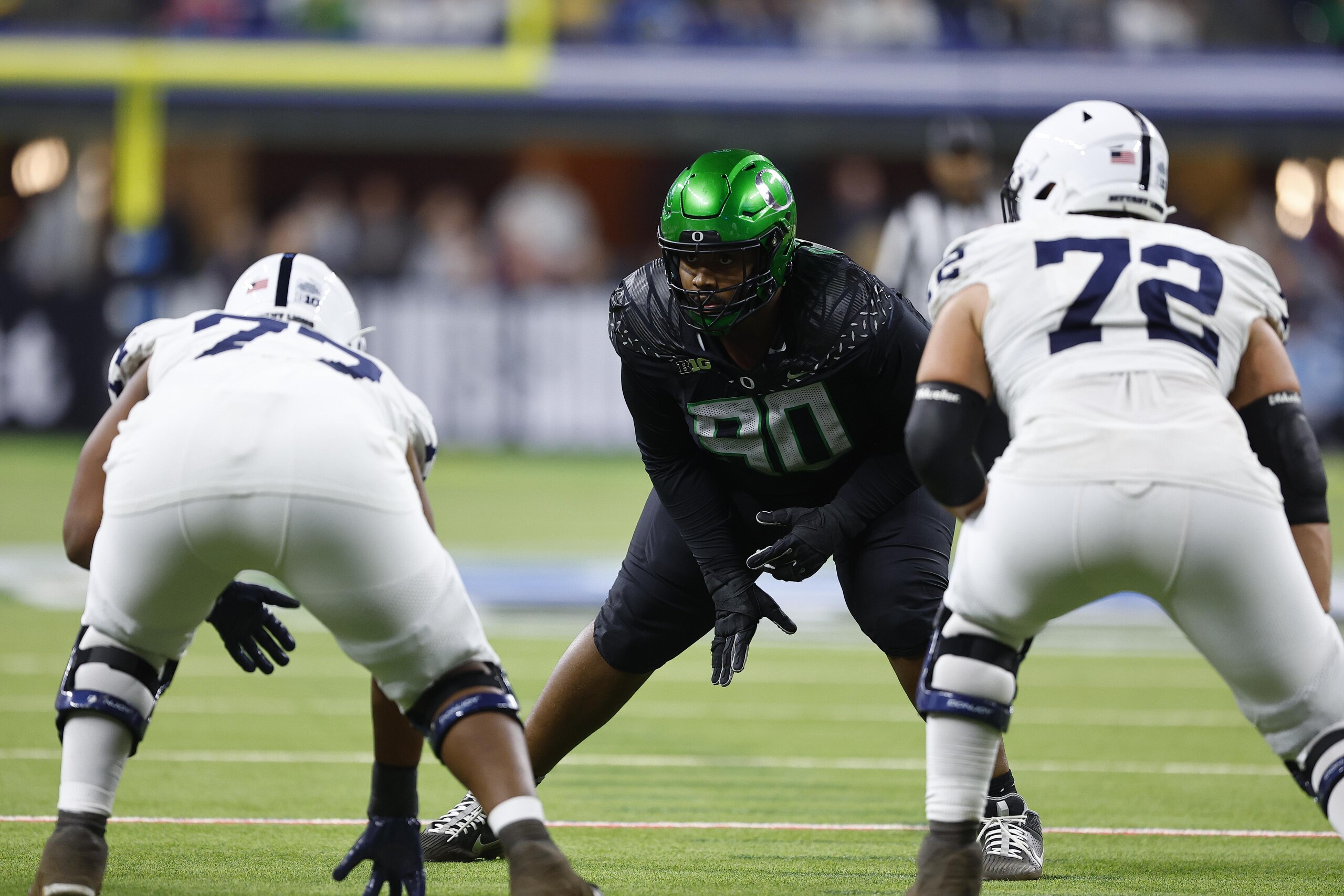
Strengths: Huge frame, quick out of his stance, good pad level, strong base
Weaknesses: Shorter arms, weight fluctuates, not mucho of a pass-rush participant
Grade: B
The 332-pound Jamaree Caldwell is an ideal NFL nose tackle, which the Los Angeles Chargers desperately needed.
Jim Harbaugh brought in the likes of Mazi Smith and Kenneth Grant during his time as the Michigan Wolverines' head coach. He needs a mountain of a man to hold the point of attack and allow others to make plays.
Caldwell with join Teair Tartt to accomplish that job.
87. Green Bay Packers: Savion Williams, WR, TCU
55 of 70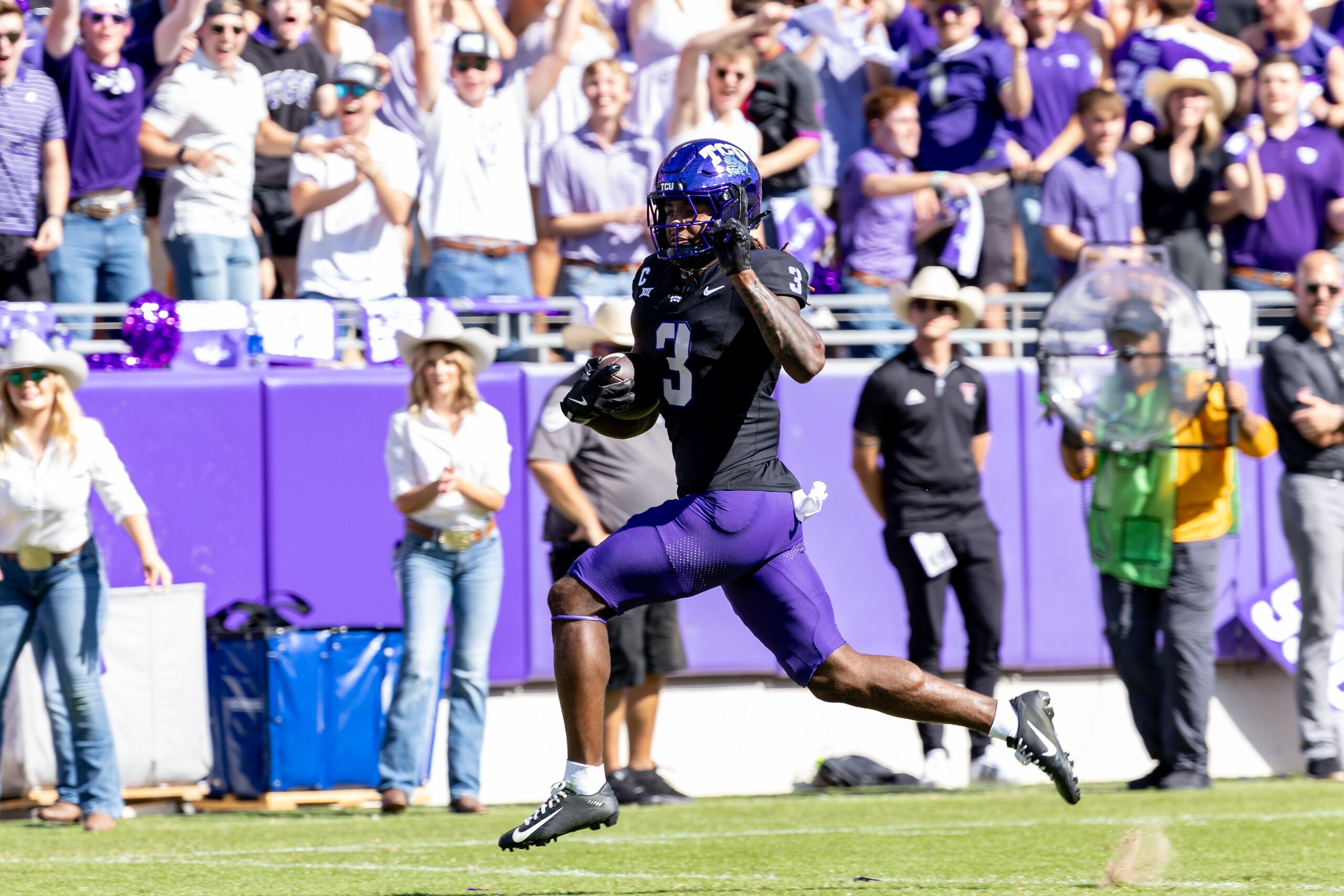
Strengths: Height-weight-speed athlete, explosive after the catch, presents upside at two positions
Weaknesses: Drops, fights the ball, needs development as a route-runner
Grade: C
If Green Bay Packers fans weren’t pleased with Matthew Golden’s projected fit in the offense, never fear. TCU’s Savion Williams is the type of physical standout/project whom Green Bay loves to add.
Certain prospects are described as offensive weapons without any clear designation of how to properly utilize them. Williams falls into that category, particularly because of the creativity that may be needed for him to reach his full potential.
At times, the 6'4", 222-pound Williams looks unstoppable working down the field. Other times, he looks completely unnatural at wide receiver. He's also a threat as a runner out of the backfield, having rushed for 322 yards last season.
Williams thinks of himself as a wide receiver, but he could get plenty of dual-threat usage similar to Cordarrelle Patterson.
88. Jacksonville Jaguars (from MIN): Caleb Ransaw, Safety, Tulane
56 of 70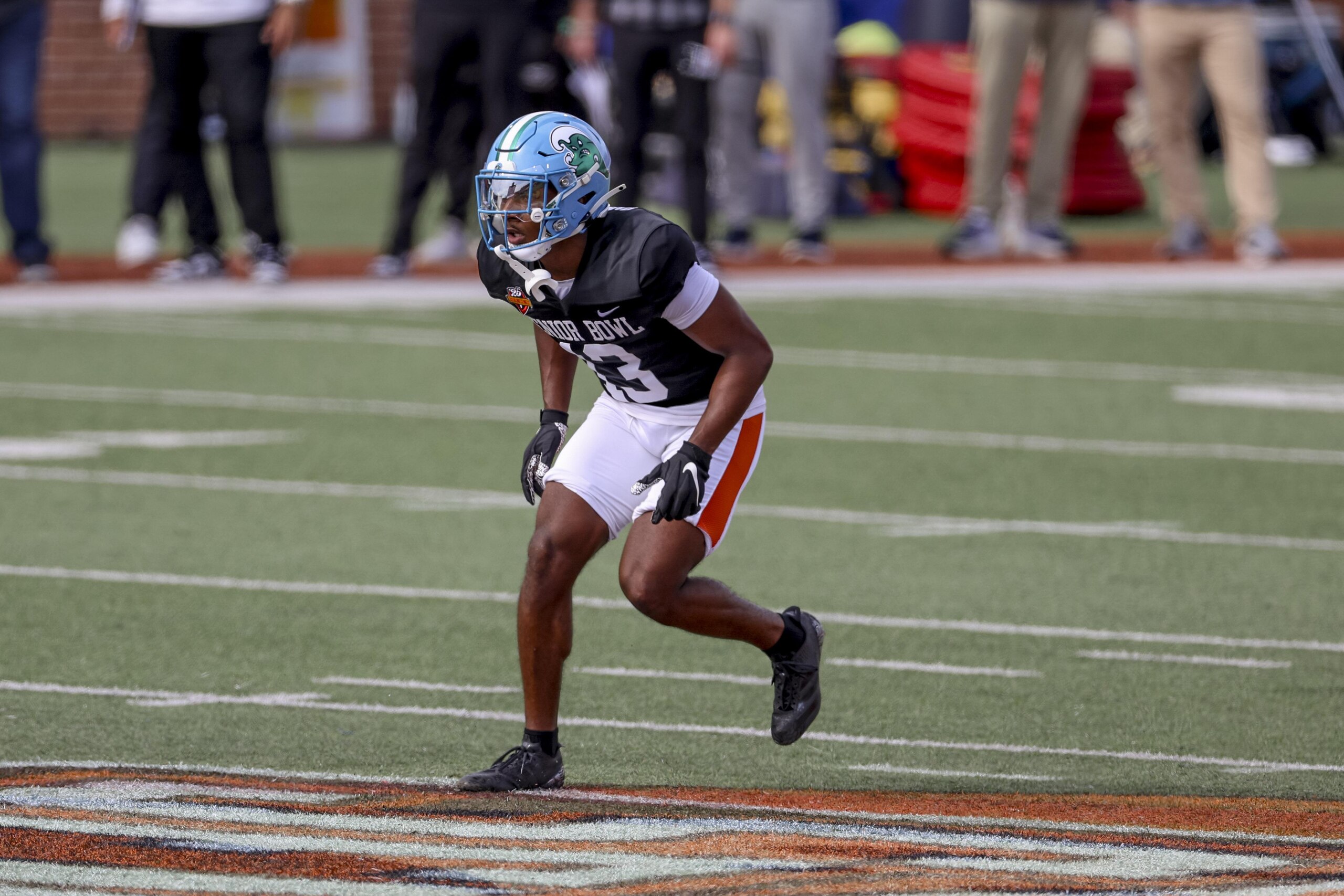
Strengths: Elite speed and explosive traits, physical when rerouting receivers, wrap-up tackler
Weaknesses: Middling change-of-direction skills, shiftier targets can create separation
Grade: C
The Jacksonville Jaguars already added to their secondary by trading up for the second overall pick and bringing in Travis Hunter. However, they've already said that Hunter will primarily play wide receiver while learning the defense.
Even so, Hunter is an upgrade at outside corner opposite Tyson Campbell. Meanwhile, Tulane’s Caleb Ransaw can help cover the slot against multiple-receiver sets when Jarrian Jones can't get the job done.
"I can play man and zone," Ransaw told reporters at the NFL Scouting Combine. "I'm versatile. I can play any defensive back spot—nickel, corner, strong, or free [safety]."
Ransaw is often listed as a safety, though he primarily played nickel corner last season. He can bump out wide if need be.
His sub-200-pound frame and play style indicates he should be regularly used in coverage or off the ball, which is perfectly fine considering the versatility he brings to the table.
89. Jacksonville Jaguars (from HOU): Wyatt Milum, IOL, West Virginia
57 of 70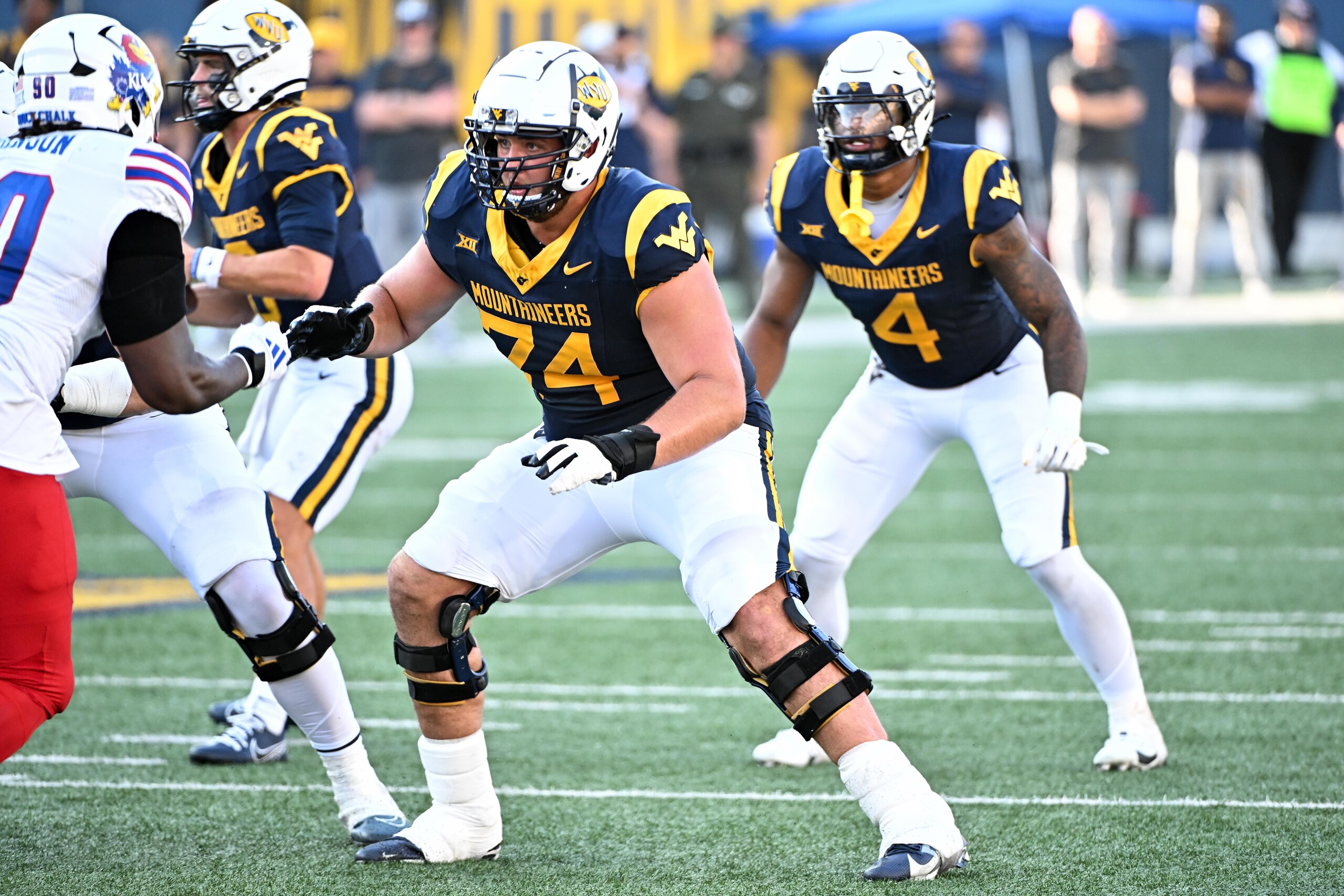
Strengths: Top-notch run-blocker, heavy hands, good play strength, understands angles
Weaknesses: Lacks lower-body flexibility, gets caught leaning at times, doesn't redirect well, has only tackle experience
Grade: B+
The Jacksonville Jaguars are settled along their offensive line…sort of. They can still improve at left tackle over Walker Little, while they can get out of left guard Ezra Cleveland's contract after this season. West Virginia’s Wyatt Milum could potentially take over either spot.
Milum went from throwing high heat on the mound to protecting the person who throws the ball all over the yard. The near-6'7", 313-pound prospect originally gave Marshall a verbal commitment to join its baseball program as a pitcher before changing course and going to West Virginia as a high-profile in-state recruit.
The reigning Big 12 Offensive Lineman of the Year developed into an elite run-blocker.
"I'm really good at being physical and getting after dudes in the run game," Milum told The Draft Network's Justin Melo. "I also feel like I'm very effective in pass protection. There are a few things I'm working to clean up as well. At the end of the day, I feel like I'm an athletic lineman with power.
90. Los Angeles Rams: Josaiah Stewart, EDGE, Michigan
58 of 70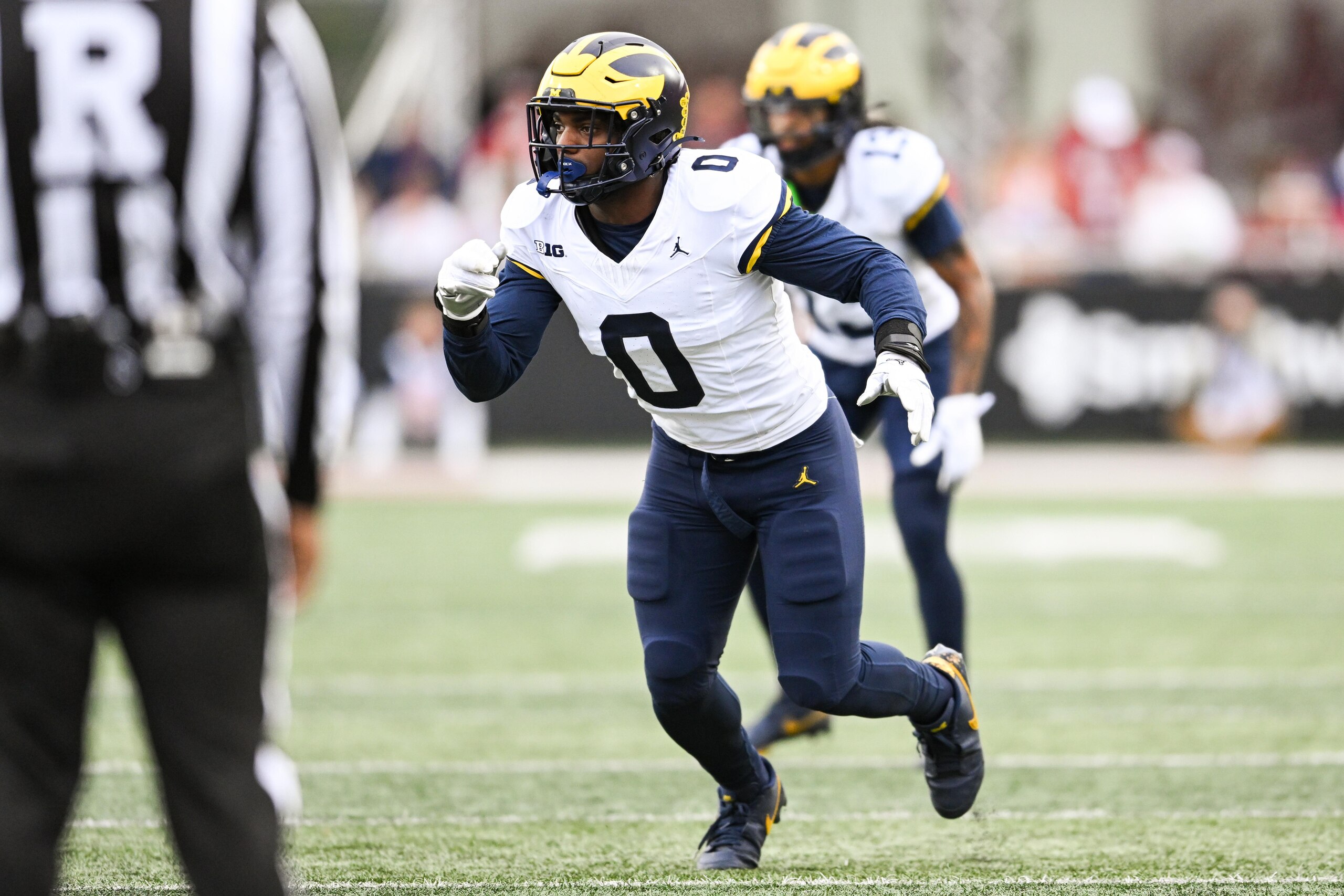
Strengths: Good initial burst, productive, physical and plays with leverage
Weaknesses: Lacks bulk and sand, questionable bend, short arms
Grade: C
The Los Angeles Rams have excelled at identifying talent in the draft, particularly in the middle rounds. Last year, they hit home runs in the first and second rounds with defensive linemen Jared Verse and Braden Fiske, respectively.
Along with Kobie Turner and Byron Young, the Rams already have one of the league’s best young defensive fronts. It might have only gotten better on Friday.
Michigan’s Josaiah Stewart is a natural edge-rusher who will immediately add to the Rams' defensive rotation. He'll help them have multiple different looks and packages to harass opposing quarterbacks.
91. Baltimore Ravens: Emery Jones Jr., IOL, LSU
59 of 70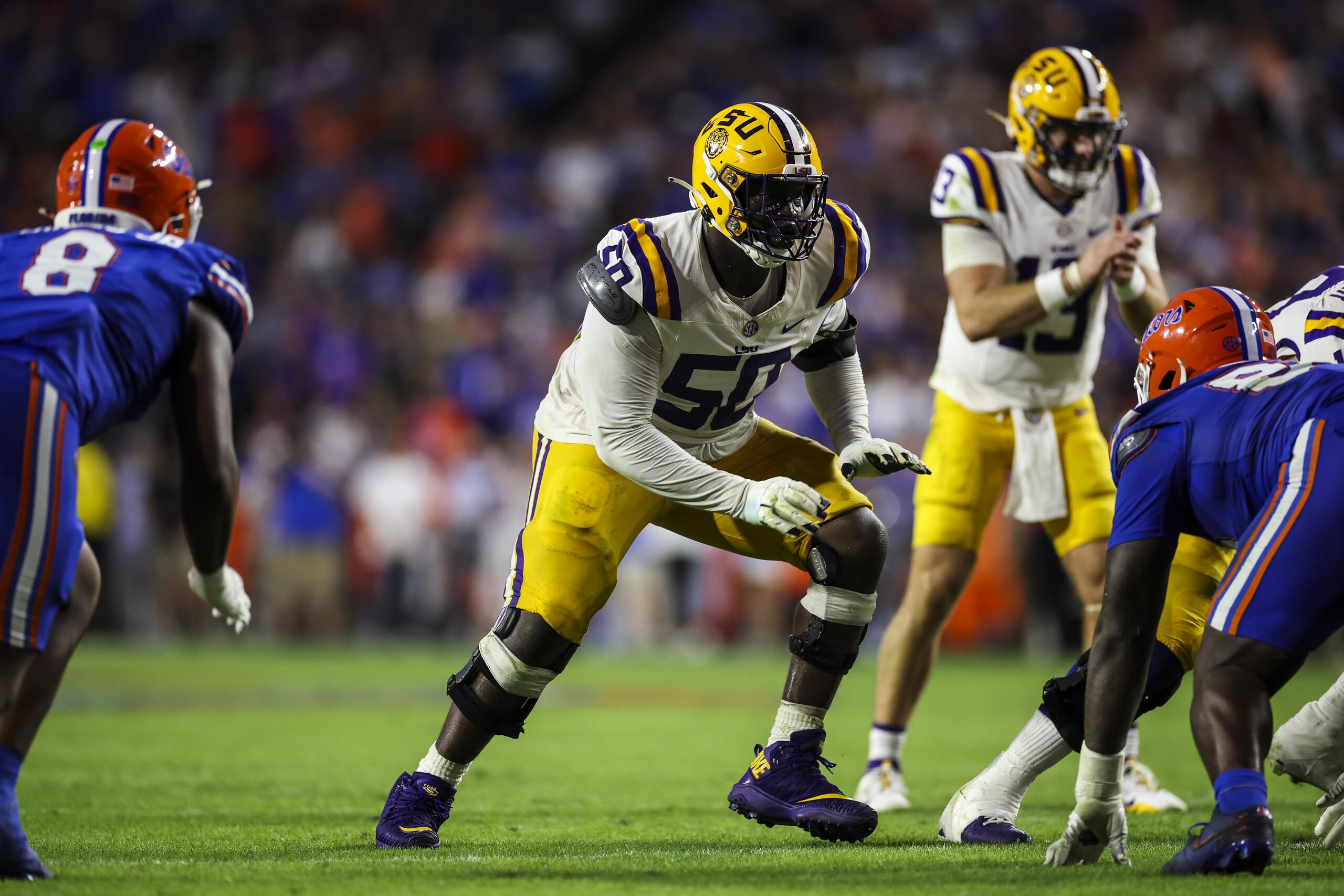
Strengths: Play strength, uproots defenders, aggressive nature, works to demoralize opponents
Weaknesses: Too upright, questionable balance, marginal movement skills
Grade: C
The Baltimore Ravens love big, physical and burly offensive tackles. They don’t necessarily worry about polish or exactly where they’ll play. They want to dominate at the point of attack.
LSU’s Emery Jones Jr. fits their profile to a T.
Much like former LSU teammate Will Campbell, Jones stepped into the Tigers' starting lineup as a true freshman and never relinquished the job. Also like Campbell, many projected the right tackle as a conversion project to guard.
The biggest difference between the two is Jones' lack of polish. He’s a bully in the trenches who isn’t a great athlete and needs to drastically improve his technique.
92. Seattle Seahawks (via LVR): Jalen Milroe, QB, Alabama
60 of 70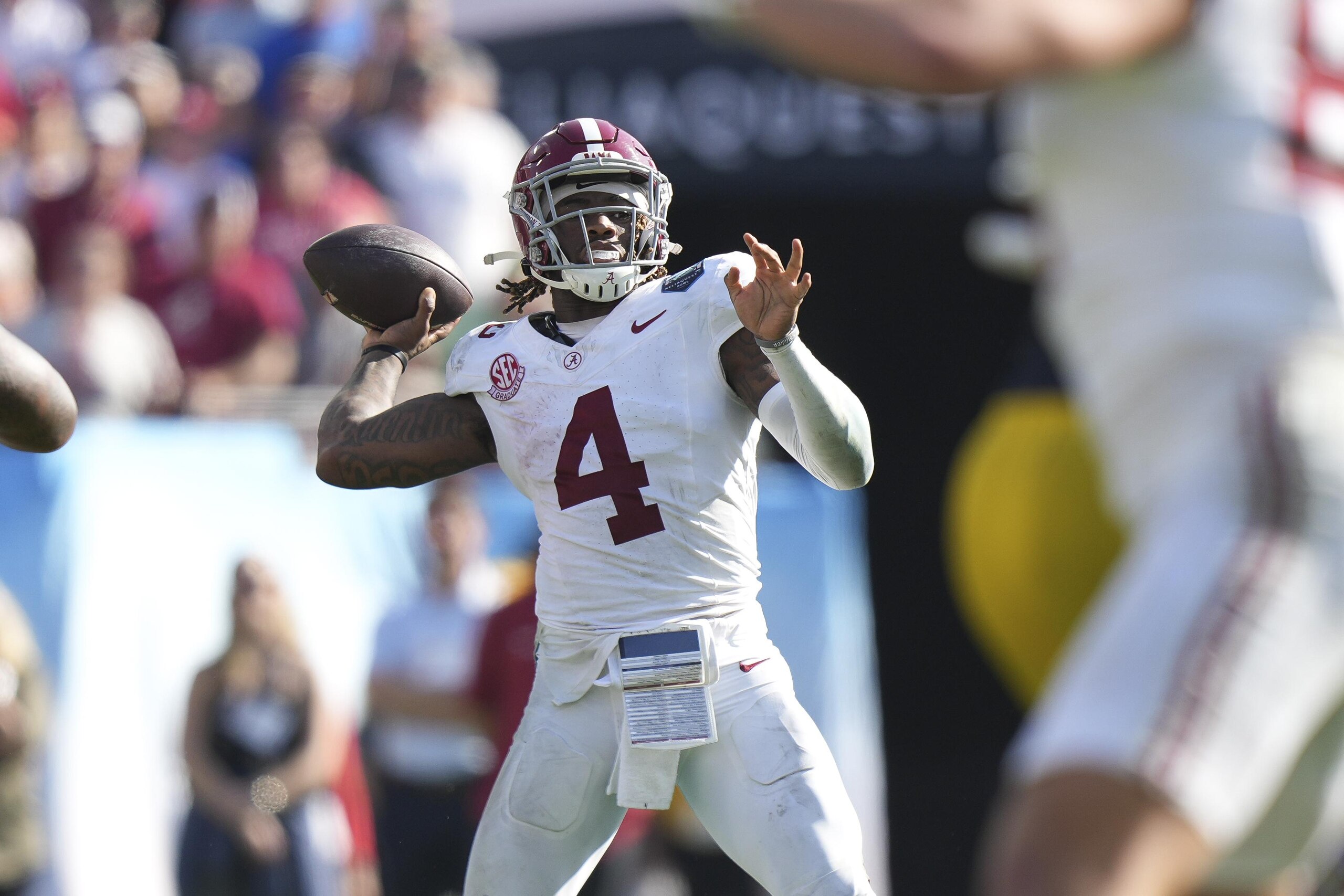
Strengths: Elite athletic profile, strong arm to excel as vertical passer, reigning William V. Campbell Trophy winner (a.k.a. academic Heisman)
Weaknesses: Not an anticipatory thrower, poor footwork, doesn't always trust what he sees, default setting is to run the ball
Grade: A
The Seattle Seahawks made a massive overhaul at quarterback this offseason. They traded Geno Smith to the Las Vegas Raiders, signed Sam Darnold to a three-year, $100.5 million deal and just spent the 92nd overall pick on Jalen Milroe.
Seahawks head coach Mike Macdonald came from the Baltimore Ravens, where he saw Lamar Jackson every day. If Darnold doesn't work out for the Seahawks, they could instead build around Milroe’s athletic profile.
Purely based on physical tools, Milroe arguably has the highest ceiling of any quarterback in this year's draft class. However, he also has the lowest floor.
Milroe posted a blazing 4.37-second 40-yard dash at Alabama's pro day. He's dangerously fast. The 22-year-old also has a huge arm when he can drive the football.
However, it quickly became evident at the Senior Bowl that Milroe isn't comfortable in a traditional offensive setup and needs to drastically improve his footwork to ever reach his ceiling as a passer. Luckily, he should have a chance to sit and learn behind Darnold in Seattle.
93. New Orleans Saints (from WAS): Jonas Sanker, Safety, Virginia
61 of 70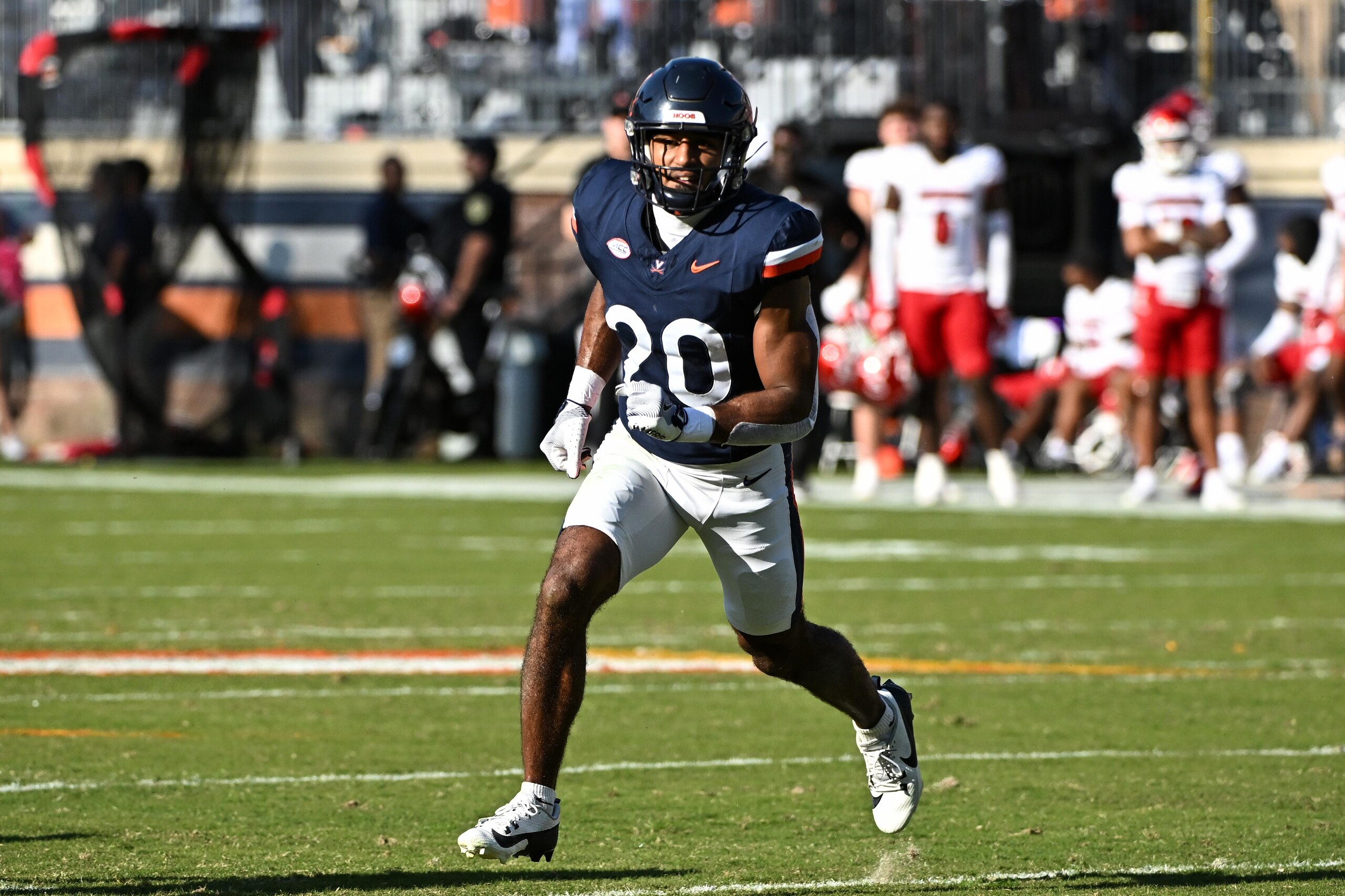
Strengths: Fluid athlete, varied skill set, instinctual in coverage
Weaknesses: Can be a little tight through his transition, bites on double-moves, missed tackles
Grade: C+
Tyrann Mathieu and Justin Reid are getting older, so the New Orleans Saints needed to build quality depth at safety.
Virginia’s Jonas Sanker has the ideal skill set to learn from Mathieu and Reid. He’s capable of playing either safety spot and cover the slot.
With Mathieu on the last year of his deal, Sanker could be his replacement in 2026.
94. Cleveland Browns (from BUF): Dillon Gabriel, QB, Oregon
62 of 70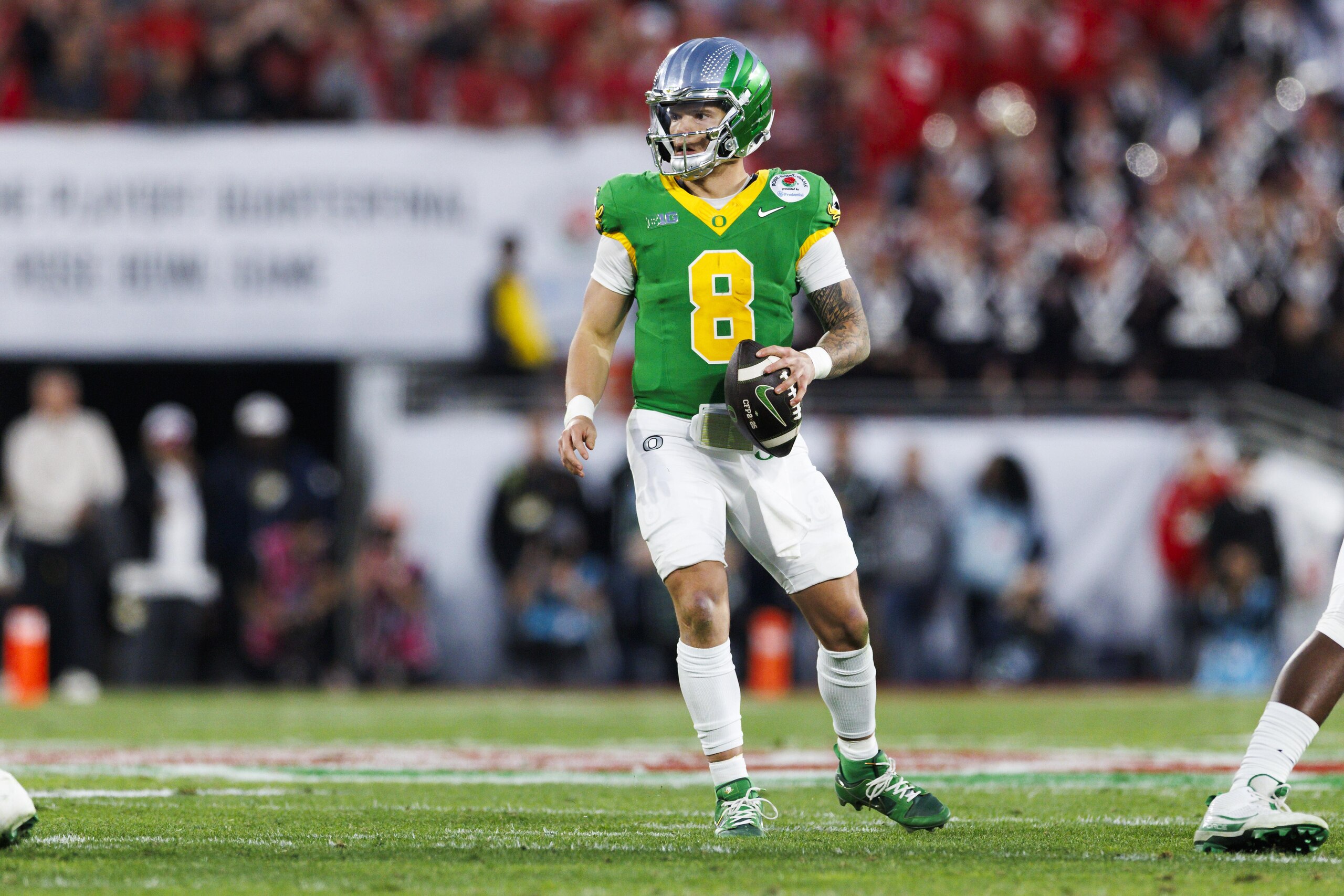
Strengths: Good accuracy, timing and anticipation, highly experienced and productive, decent pocket movement and ability to extend plays
Weaknesses: Small frame, average arm talent, struggles to throw against tight coverage
Grade: D
Imagine going into an offseason and thinking the solution to a disastrous quarterback room is 40-year-old Joe Flacco, a first-round bust in Kenny Pickett and an undersized, marginal thrower in Oregon’s Dillon Gabriel.
Yes, the Cleveland Browns had to draft a quarterback at some point. But they passed on doing so four times before drafting Gabriel, whose upside is basically a long-term backup.
Gabriel started at three different programs, tied an FBS record with 155 touchdown passes and became only the second quarterback ever to throw for more than 18,000 career yards. Yet the conversation around him will always come down to size.
The 5'11", 205-pound Gabriel doesn't have Baker Mayfield's arm talent, Kyler Murray's arm talent or Bryce Young's playmaking creativity. He's an excellent distributor with marginal traits.
95. New England Patriots (from KC): Jared Wilson, IOL, Georgia
63 of 70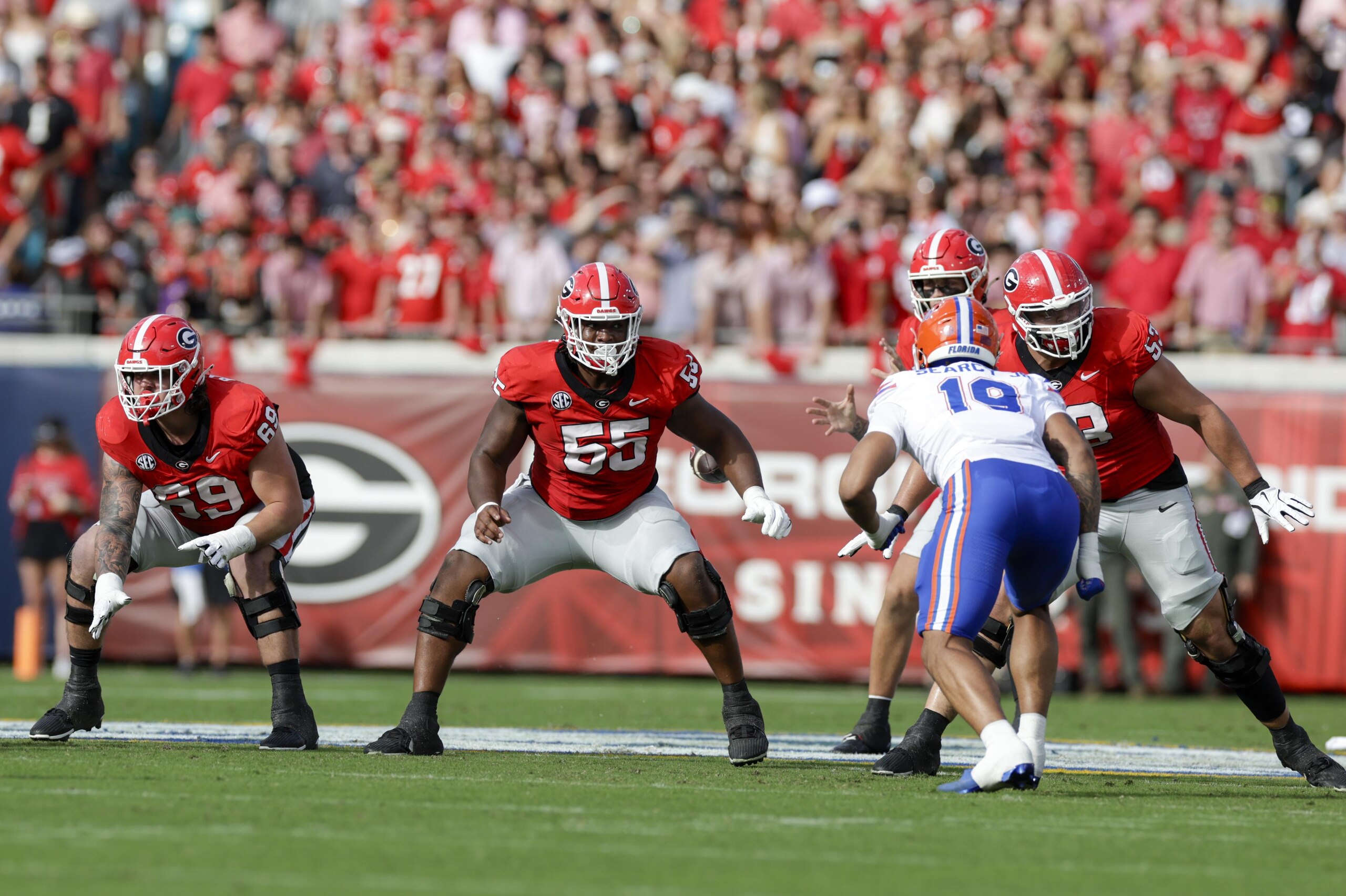
Weaknesses: One-year starter, can be bullied a bit by bigger nose tackles
Grade: A
David Andrews' retirement forced the New England Patriots to reset at center. They’ve done so with gusto.
Veteran Garrett Bradbury has started 88 games throughout his six-year NFL career. He’s likely to continue doing so with the Patriots. But Georgia’s Jared Wilson is the class’ best pure center prospect and an elite athlete.
How deep was Georgia's roster? Well, Wilson served as a backup, primarily behind Sedrick Van Pran-Granger. He finally became a starter, then worked his way into becoming this year's top pure center prospect.
Wilson was a second-team All-SEC selection in 2024. He also pieced together an exceptional predraft workout that placed him as the 12th-most athletic center since 1987, according to Kent Lee Platte.
The Patriots added even more protection for second-year quarterback Drake Maye, which was among their top priorities this offseason.
96. Atlanta Falcons (from PHI): Xavier Watts, Safety, Notre Dame
64 of 70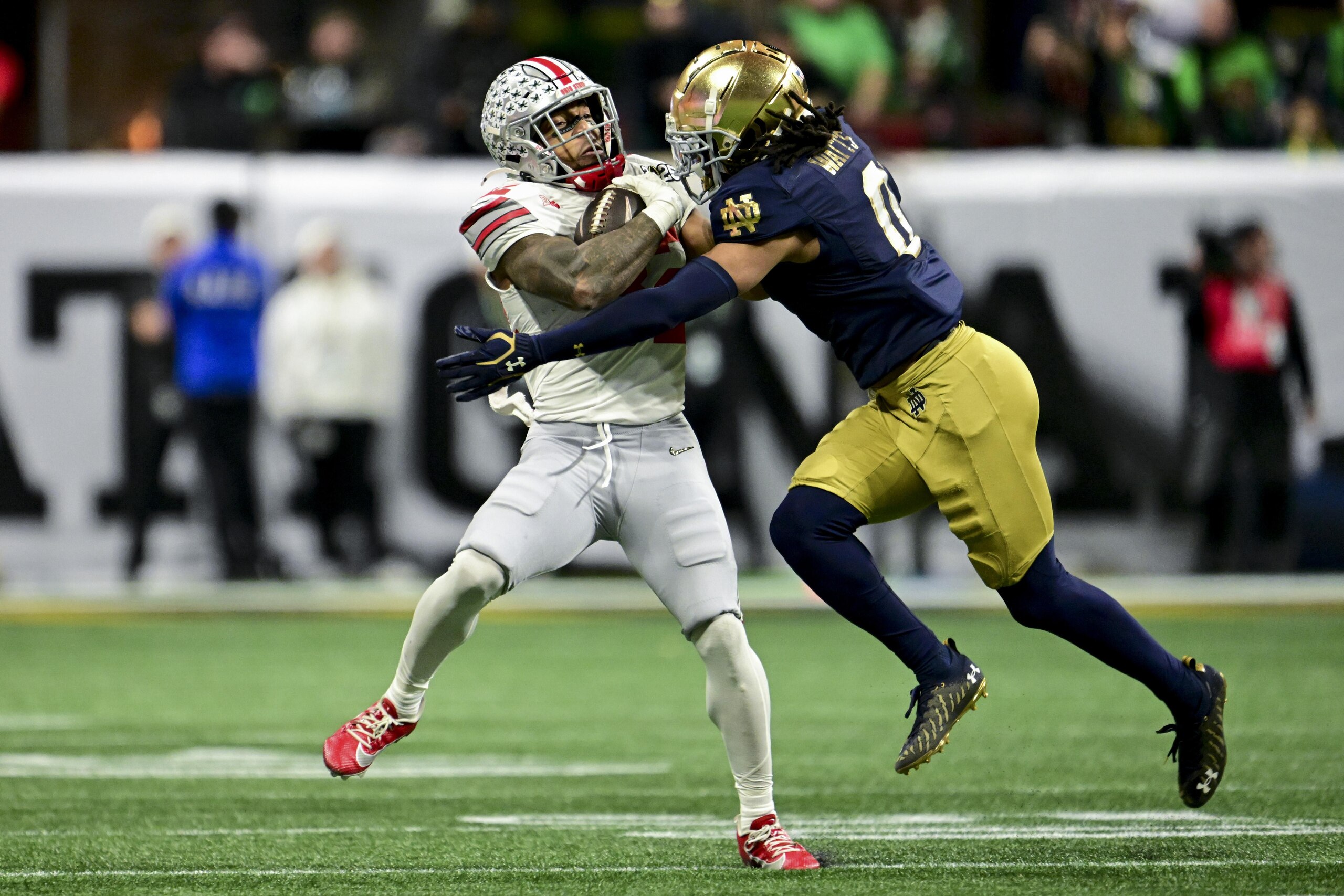
Strengths: Intense competitor, high-motor athlete, excellent ball skills, fearless against the run
Weaknesses: Marginal athlete, some tightness in coverage, feel for zone coverage
Grade: A
After spending top-10 picks on offensive prospects in four straight drafts, the Atlanta Falcons went all-in on their defense this year. The Falcons spent all three of their Day 1 and 2 picks on defenders, with Notre Dame safety Xavier Watts being the latest after they traded up for the standout defensive back.
Watts and Jessie Bates III could become an elite safety tandem even though the former slid to the back end of the third round.
On paper, Watts is a ballhawk with elite coverage skills. His 13 interceptions over the last two seasons led the FBS. According to Pro Football Focus, the two-time All-American posted a 90.3 coverage grade during that stretch and didn't allow a single touchdown in 830 coverage snaps.
However, Watts posted a mediocre 6.99 relative athletic score in predraft testing, per Kent Lee Platte.
The 2023 Bronko Nagurski Trophy winner is at his best when he can read plays in front of him to trigger downhill to fill quickly against the run.
97. Houston Texans: Jaylin Smith, CB, USC
65 of 70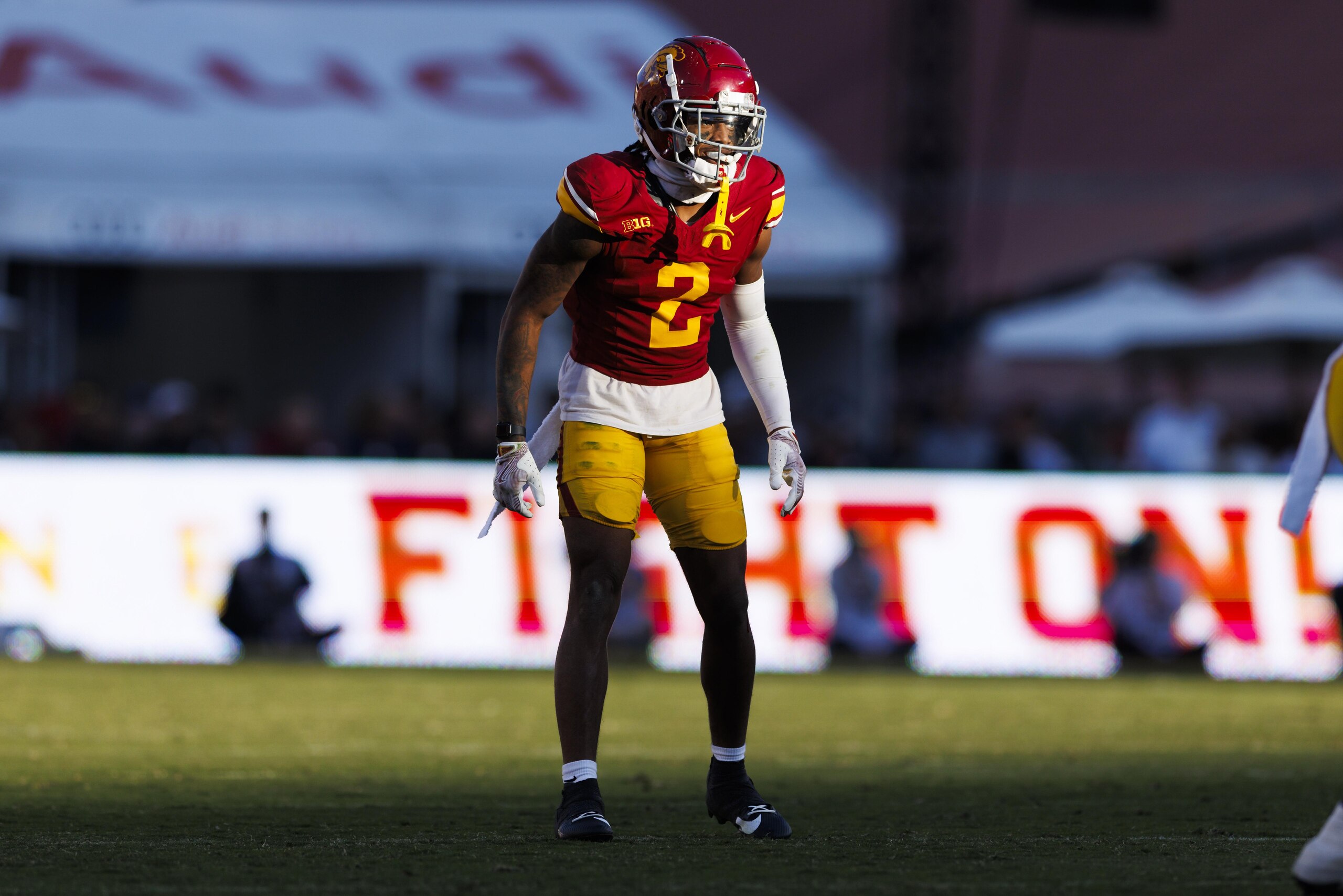
Strengths: Fluid runner with good speed, scheme versatile, strong hands
Weaknesses: Thin, poor ball skills, not always cognizant of route combinations
Grade: C
The Houston Texans’ run on offensive players stopped with USC cornerback Jaylin Smith.
Smith can help Jalen Pitre at nickel since the latter has dealt with injuries. Meanwhile, Derek Stingley Jr. and Kamari Lassiter have the outside locked down.
Smith can play any of the cornerback spots, which creates more flexibility along the Texans’ secondary.
98. Las Vegas Raiders: Caleb Rogers, IOL, Texas Tech
66 of 70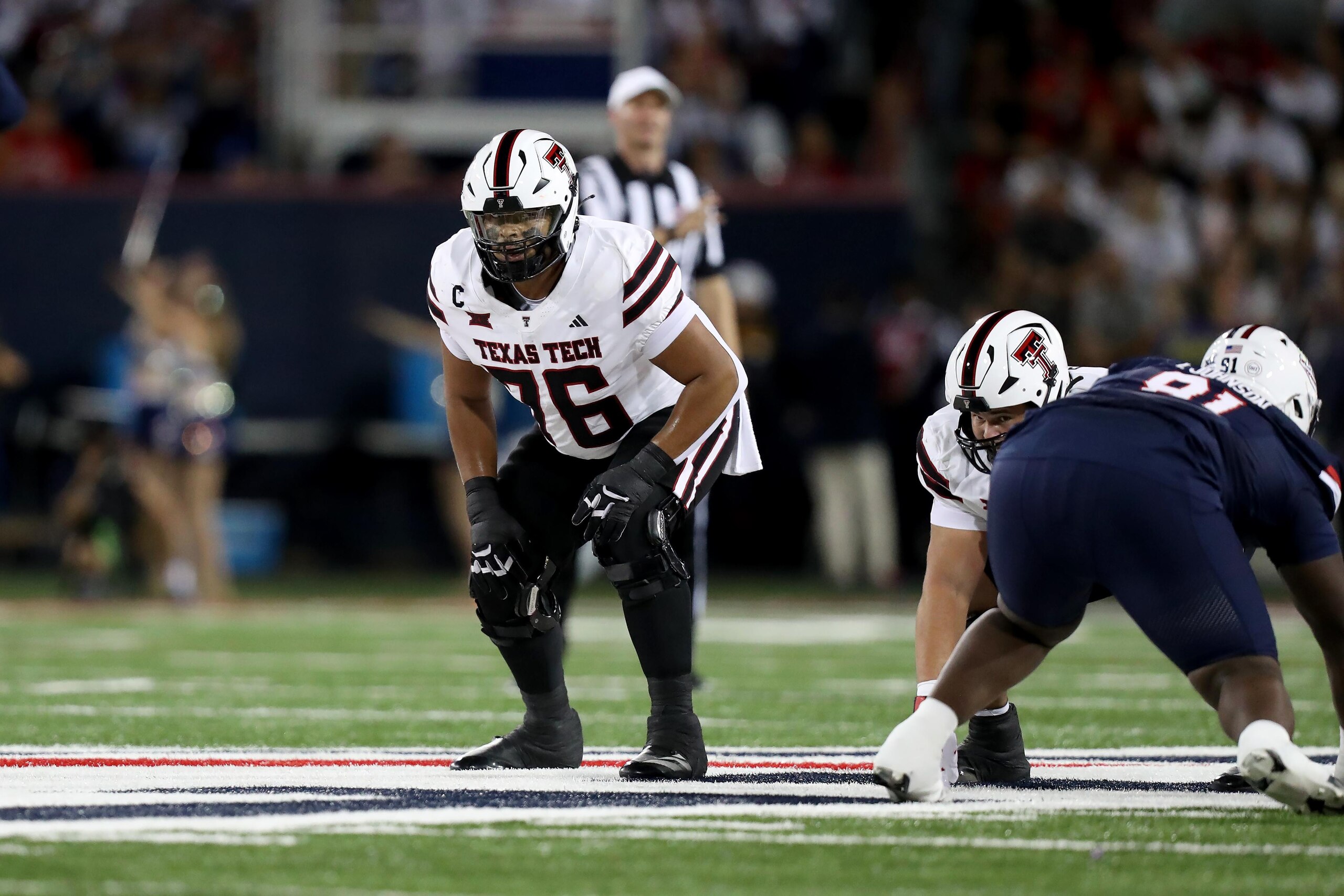
Strengths: Good length, strong hands, proper run fits, positional flexibility
Weaknesses: Marginal lateral movement, stiff in lower body, doesn't always identify movement along defensive front
Grade: C
Every roster needs a utility lineman like Caleb Rogers, who started 55 career games at Texas Tech. He primarily played right tackle during his collegiate career, though he has starting experience at left tackle and both guard spots and also practiced at center.
The Las Vegas Raiders did sign Alex Cappa in free agency, but he shouldn’t be viewed as a long-term solution. Rogers can compete or be prepared to take over at right guard eventually.
His versatility also allows him to provide an insurance policy at multiple other positions.
99. Las Vegas Raiders: Charles Grant, OT, William & Mary
67 of 70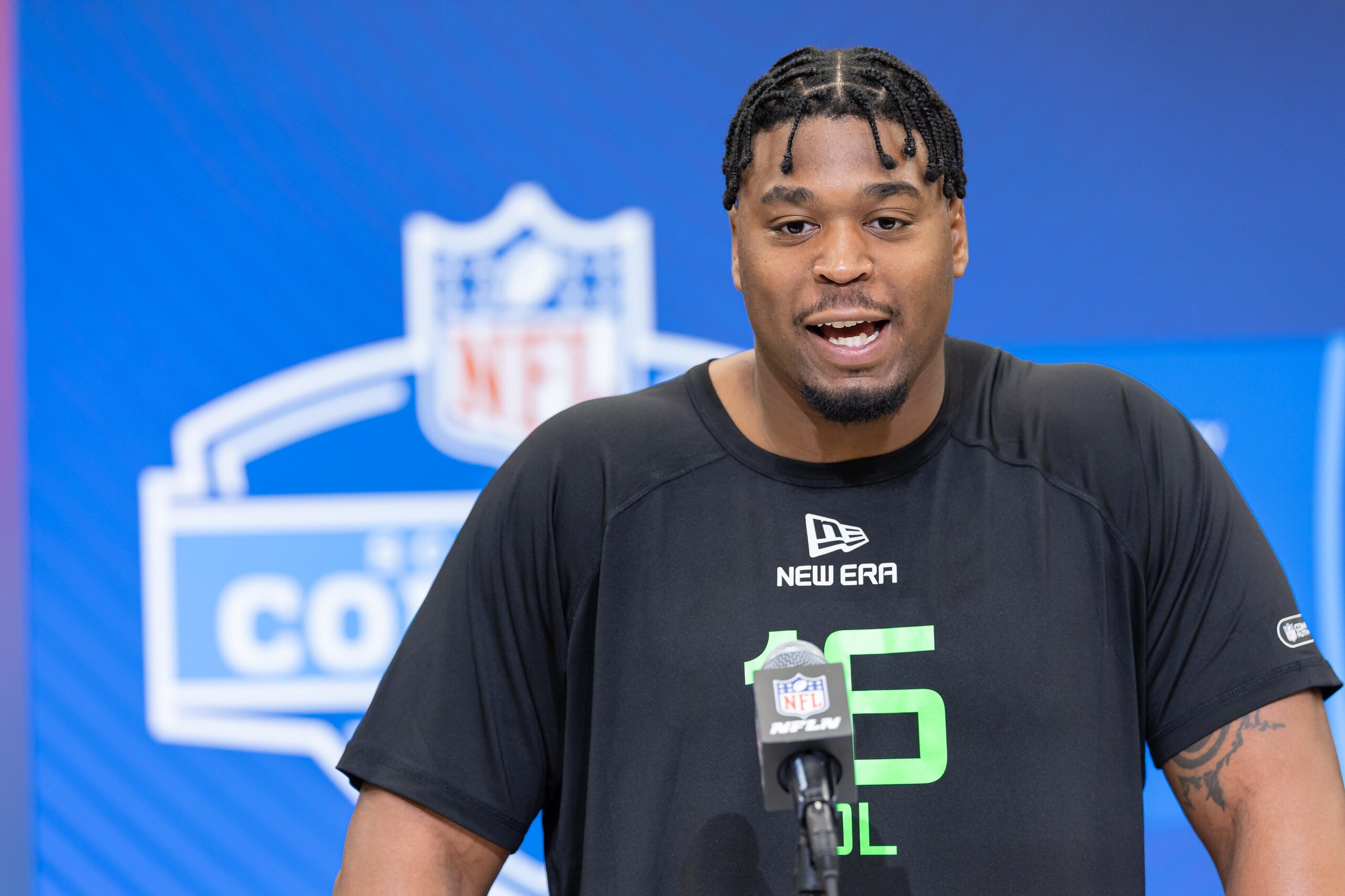
Strengths: Long arms, good mover, gets out of his stand quickly, hits his aiming points, works to finish blocks
Weaknesses: Can still add mass and strength, overall technique can be refined
Grade: B
The Las Vegas Raiders spending back-to-back picks on offensive linemen near the end of the third round signals the coaching staff’s displeasure with the current unit’s depth and the front office’s long-term vision for the group.
Left tackle Kolton Miller turns 30 later this year, and he’s heading into the last year of his contractl. William & Mary’s Charles Grant gives the Raiders a developmental left tackle option with the potential to start down the road.
Grant isn't a natural football player. His athletic career centered on wrestling until his junior year of high school, when he finally found his way to the gridiron.
Grant was inexperienced and weighed only 240 pounds when he arrived at William & Mary. He's since grown into one of the most intriguing talents in this year's class.
The three-year collegiate starter could very well become a long-term NFL starter at left tackle if given time and guidance to hone his footwork and improve his play strength.
100. San Francisco 49ers: Upton Stout, CB, Western Kentucky
68 of 70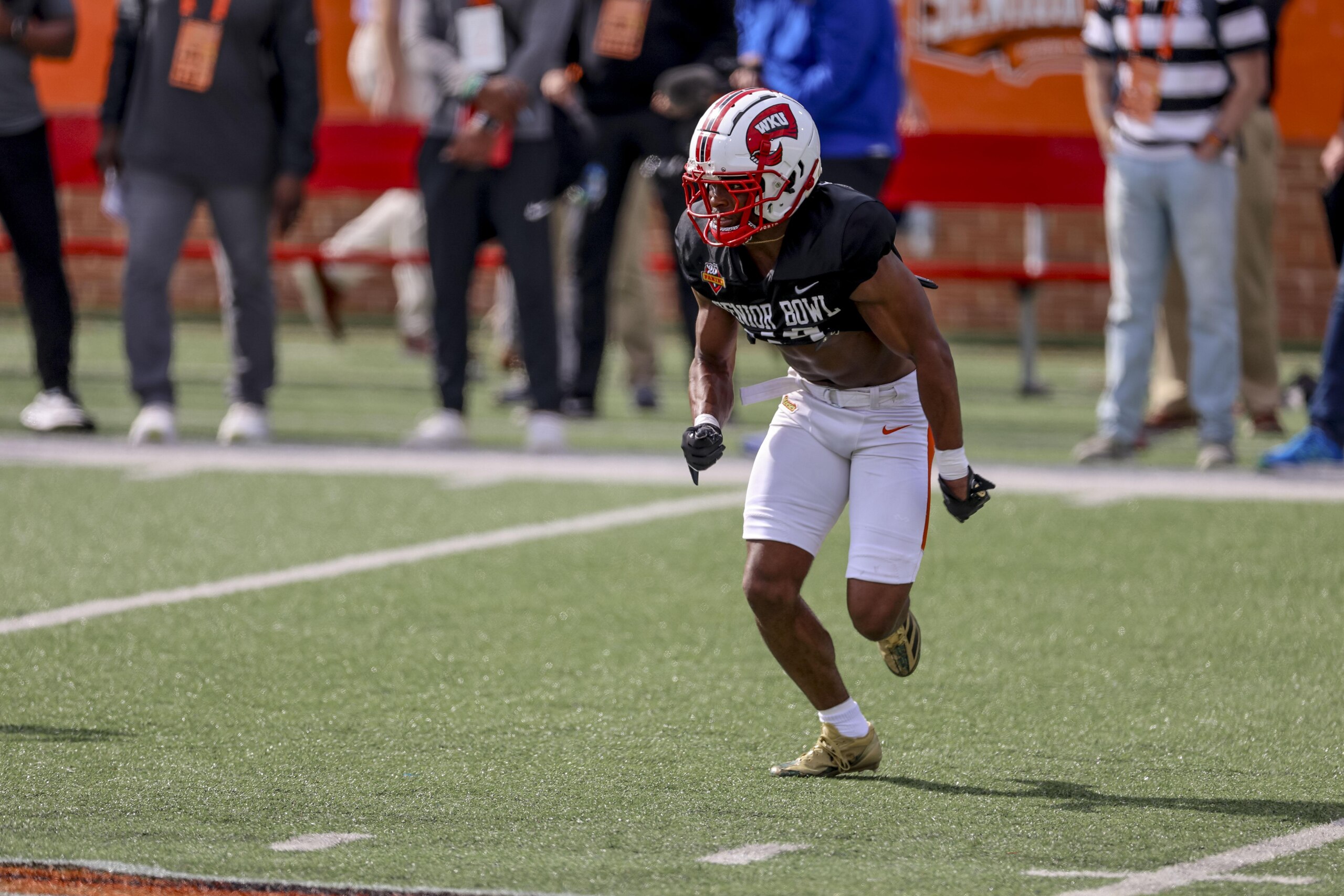
Strengths: Swivel hips, aggressive in all phases, plays with more physicality than size indicates
Weaknesses: Tiny frame, lacks length and top gear, bigger receivers can take advantage
Grade: B+
Renardo Green should be bumping to outside corner this offseason after the San Francisco 49ers selected Western Kentucky’s Upton Stout with the 100th overall pick.
Don't judge Stout by his size. He has enough potential to become a Jedi master at nickel corner.
The sub-5'9", 181-pound cornerback doesn't have any margin for error when it comes to how and where he plays. However, you'd be hard-pressed to find a cornerback in this year's class who shows more fluidity in his movement skills and competitiveness in style of play.
Stout will force any receiver to work for everything he can get in a route while acting like a rogue one with his toughness against the run.
101. Denver Broncos (from PHI): Sai'vion Jones, DL, LSU
69 of 70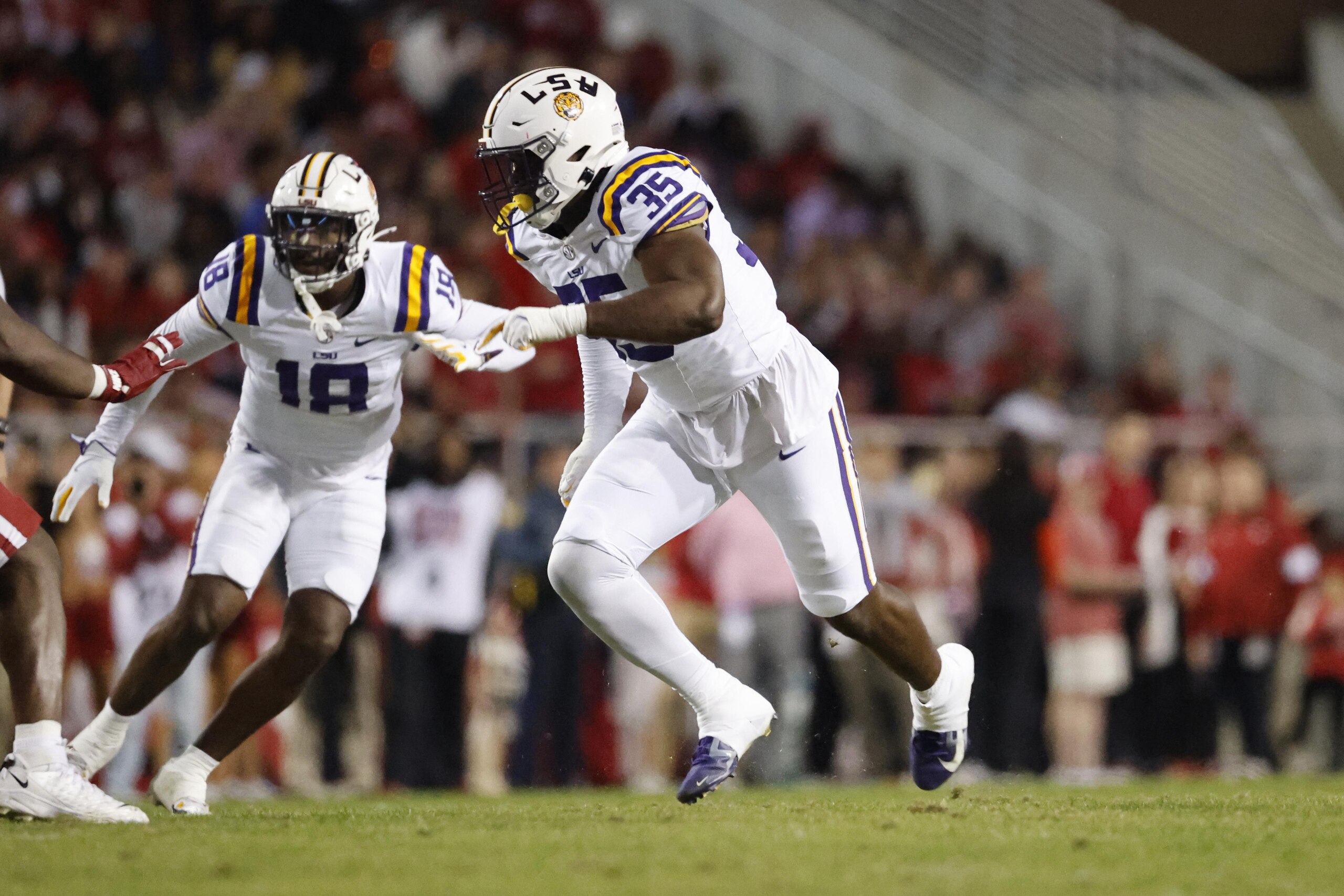
Strengths: Edge and interior flexibility, good block recognition, good strength and arm length
Weaknesses: Gets off ball late, questionable lateral movement, poor hand usage
Grade: B
At the Senior Bowl, LSU’s Sai’vion Jones looked like an all-world defensive lineman capable of being a disruptive force at defensive end or tackle. However, he didn’t always look that way at LSU, which is why he fell to the 101st overall pick.
In Denver, the 6'5", 280-pound Jones has the perfect body type and skill set to play in odd fronts and allow for some creativity when deployed in defensive sub-packages.
102. Minnesota Vikings: Tai Felton, WR, Maryland
70 of 70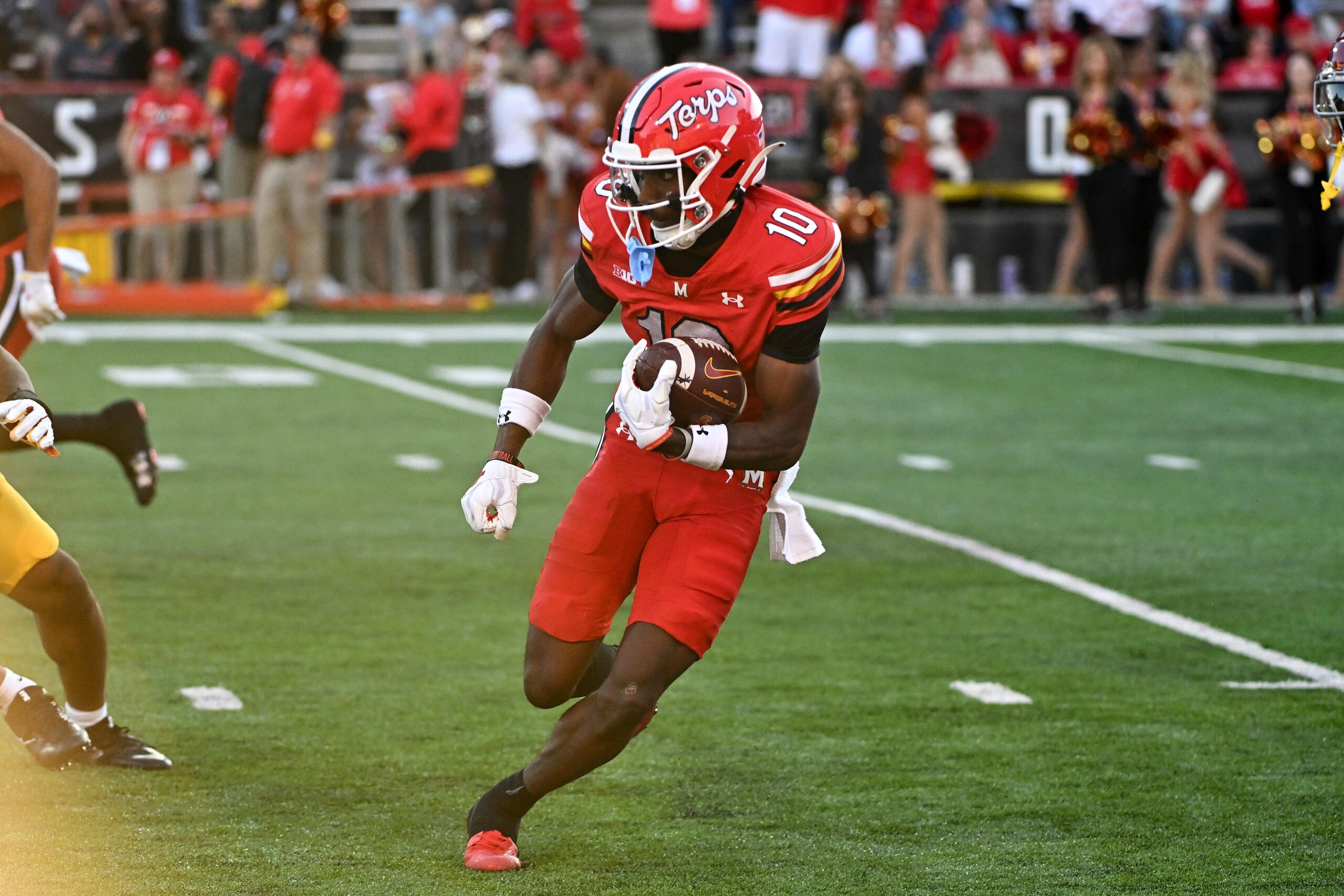
Strengths: Quick in and out of his breaks, natural separator, knows how to tempo routes to find soft spots in defense
Weaknesses: Struggles when facing physical jam and coverage as well as through catch point
Grade: B
Even with only two picks on Days 1 and 2 of this year's draft, the Minnesota Vikings’ approach is crystal-clear. They want to put quarterback J.J. McCarthy in the best position to succeed.
First-round offensive lineman Donovan Jackson should immediately take over left guard and secure the offensive interior alongside Ryan Kelly and Will Fries. Maryland wideout Tai Felton gives McCarthy another electric option in his pass-catching corps.
Granted, Felton projects to be the Vikings' WR3 at best. But when the sophomore signal-caller drops back, he can now look to Justin Jefferson, Jordan Addison and the third-round rookie along with tight end T.J. Hockenson.
While playing alongside multiple talented targets during his first three seasons at Maryland, Felton didn't demand the ball. But he asserted himself this past season, even with Kaden Prather on the same roster. Felton easily eclipsed everyone on the squad with 96 receptions, 1,124 receiving yards and nine touchdown receptions.

.jpg?w=2560 "LA Premiere of \"Chad Powers\"")