

Lionel Messi Can Be Compared to Diego Maradona, but in the Correct Way
There was something baffling about the reaction to Lionel Messi’s performance in last Saturday’s Copa America final, which Argentina lost on penalties to Chile. It wasn’t just that he was criticised for his performance—which was understandable enough given how little impact he made on the game—it was the clear glee certain people took in the assessment and, most particularly, in the negative comparisons with Diego Maradona.
Messi bottled the final, numerous posts on Twitter claimed; Maradona wouldn’t have bottled the final. It’s a ludicrous way of looking at football.
Messi was restricted in the final. Stats from WhoScored.com show he had only 63 touches in normal time—his lowest tally for the tournament. Jorge Sampaoli, the Chile coach, devised a tactical plan to stop him, and it worked—just as Maradona was negated in the 1986 World Cup final by Lothar Matthaus, if we have to make the comparison.
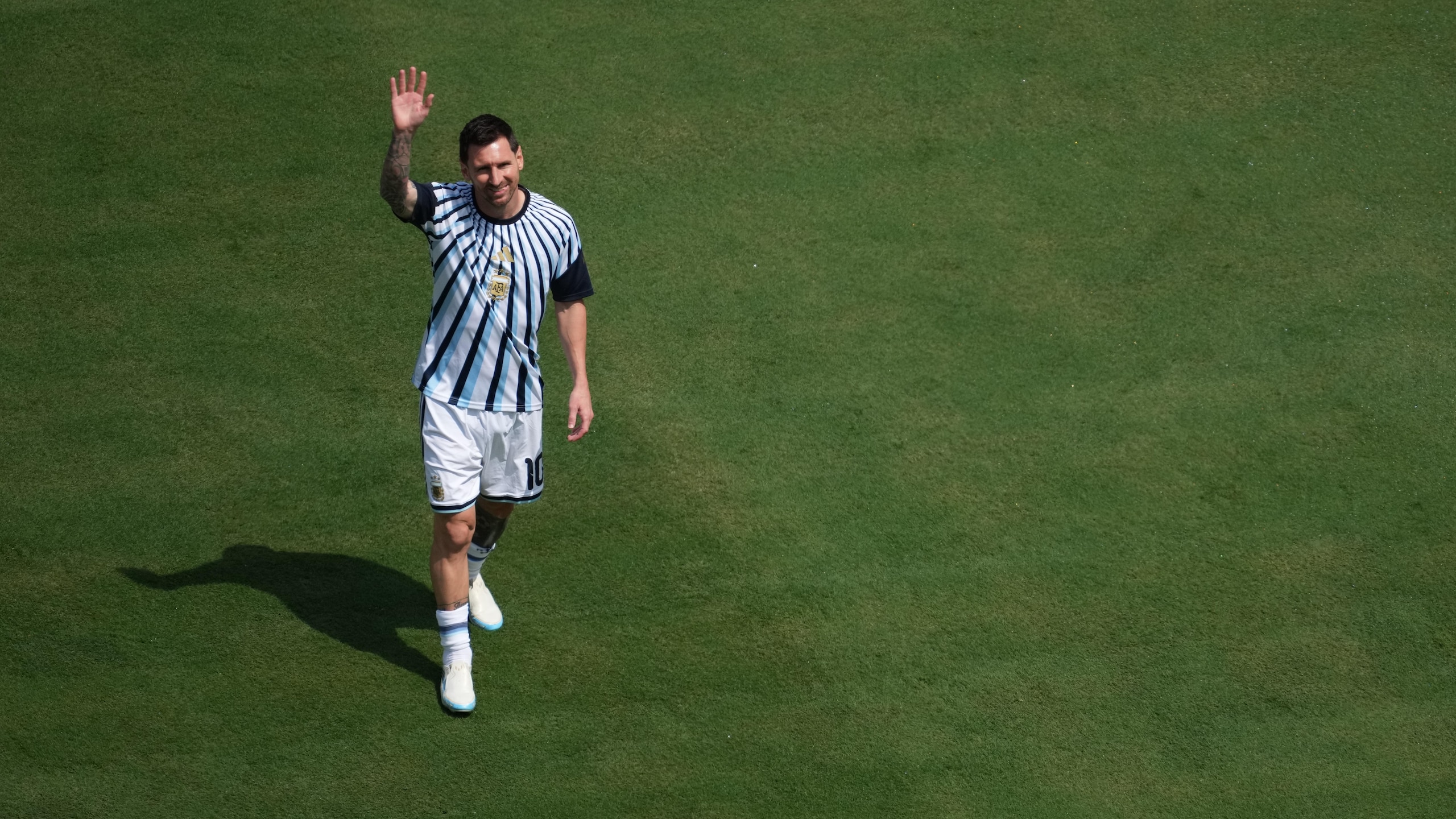

With Argentina 2-0 up, Matthaus was forced into a more attacking role, and West Germany came back to level. That gave Maradona more space, and he used it to play Jorge Burrachaga through to score the winner. Much, in fact, as Messi suddenly found space late on and played a perfect through ball for Ezequiel Lavezzi, who played a poor cross to Gonzalo Higuain to skew wide from a narrowish angle.

Maradona’s main contribution in the 1990 World Cup final, meanwhile, was to barge referee Edgardo Codesal after he’d sent off centre-forward Gustavo Dezotti.
Criticise Messi for his performance by all means, and particularly the way he seemed to allow frustration to take hold to such an extent that in extra time he was bullied by Mati Fernandez, but don’t do it by pretending Maradona was always brilliant in finals.
What if Higuain had scored? What if Messi had played the pass that led to the winning goal in the Copa America final? Would that make him undisputedly the best of all time? Of course not. What if Higuain hadn’t missed his penalty (and Messi, as poorly as he played, took a fine penalty in the shootout; if we’re doing pointless comparisons, have a look a Maradona’s weak effort against Yugoslavia in the shootout in the 1990 World Cup quarter-final)?
Or suppose, as he might easily have done, Higuian had scored both that chance in the final minute last Saturday and his opportunity in the World Cup final. Suppose Argentina had won both games 1-0 as a result. Would that make Messi better than Maradona?
There’s a paradox here, of course, which is that part of the argument for Maradona’s superior greatness is the supposed weakness of his supporting cast, yet he won the World Cup because his team-mates took chances in the final while Messi’s didn’t. Would Messi be the greatest ever if he'd played alongside Jorge Valdano rather than Higuain?
Break the issue down like that and it’s apparent how ridiculous much of the argument is. The debate itself is perfectly valid (even if it tends rapidly to become boring because of blinkered partisanship on both sides)—of course, we naturally compare two such outstanding players, particularly when they come from the same country and have such obvious similarities of style.
There are those who claim you can’t compare across eras because the laws were applied differently—and Maradona took a far greater kicking than Messi ever has—but that surely is just part of the debate.

The problem, rather, is the claim that Messi can’t be as great as Maradona because he hasn’t won an international competition. Maradona never won the European Cup (while Messi has won three, playing a leading role in each final).
Ah, those who stick to this line of reasoning will say, but he never played for a side as good as the modern Barcelona. Which is true, but why is that a defence for Maradona and not Messi? Although Messi has played with a lot of extremely good players with the national side, he’s never played in an extremely good national side—no coach has ever found the right blend.
Now you could argue that is in part Messi’s fault, but again, that is part of the debate—perhaps he isn’t tactically flexible enough. But simply pointing out who’s won what and drawing sweeping conclusions on the basis of individual games isn’t enough.
.jpg?w=2560 "49ers Giants Football")

.jpg?w=2560 "Ertz Returning to Eagles")
.jpg?w=2560 "Dak Addresses 'Dumb' Old Romo Tweet 🤣")
.jpg?w=2560 "WWE Raw Live Grades 🔠")

.jpg?w=2560 "🚨 Puka Out for MNF")