

The first step is simple: stay humble.
NFL training camp can be a harrowing experience for all participants. It can be particularly overwhelming for incoming rookies getting their first taste of being a professional. Still, some find the ability to dig deep and not only become competent contributors during their first season but also find ways to assume a leadership role within their respective locker rooms.
It's a process, though, which requires the right mental approach necessary to earn respect from those veterans who spent years honing their craft.
TOP NEWS
.jpg?w=2560 "Chiefs Giants Football")
Mahomes Told Teammate to Leave Meeting

Geno Explains Wilson Exchange

McCarthy Wins 1st Giants Start
“You just have to bring in a good work ethic right off the bat," Michael Bennett, a sixth-round selection by the Jacksonville Jaguars in May's NFL draft, said. "You can't expect to lead men who have been in the league for multiple years. They're veterans. You have to learn how to follow and just work your butt off. That's part of being a leader. You can lead by example without saying anything to anybody."
Hard work from a rookie and keeping one's head down is merely the starting point. No one in the NFL can do it alone. Hard work can be a wonderful thing, but it can also be counterproductive if a young player isn't doing things in the way the team asks of him.
Mike Minter played 10 seasons with the Carolina Panthers. Once his career ended after the 2006 campaign, Minter began coaching and currently serves as the head coach of the Campbell Fighting Camels.
In 1997, Minter became a rookie starter at safety. The Nebraska product started 11 games during his first season and went on to start 141 career contests, including every game during his final five seasons.
The right mental approach with a willingness to learn from those around him became keys to his early success.
“These guys need the right perspective," Minter said. "My vision and goal was always to come in and start right away. All of these rookies must go in and win a job. That's the first thing they have to have in their minds. 'I'm here to win a job. I need to find me a veteran to learn from, and I'll grab him right now. I'll spend a whole lot of time with him so he can teach me how to be a professional.' Not everyone knows that when they come out of college. Everyone thinks they know, but they don't.
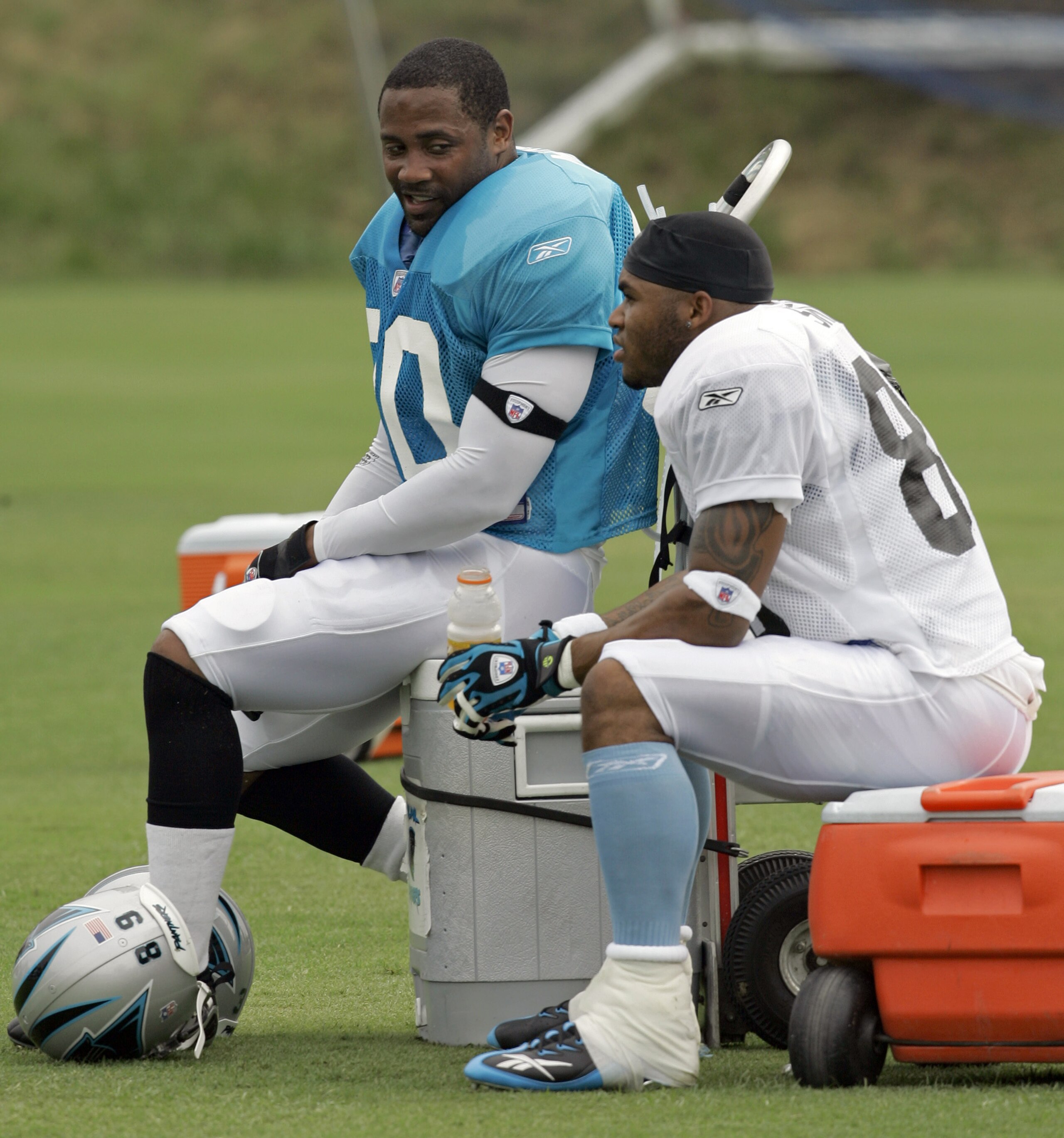
“The guy I talked to was Eric Davis. I grabbed him, and he must have thought I was his shadow because I wasn't going anywhere.
“The second thing is that you must look at someone who is in the role that you want to be like. Sam Mills was that guy for me. I looked at him and said, 'OK, I'm going to watch every move he makes. I'm going to watch how he carries himself. I'm going to watch this thing. I want to emulate someone I want to be like on the football team that has that type of respect.' Sam was that guy.
“I picked out the people I needed from my team, because you can't do it alone. There are those who think, 'It's all about me. I'm going to do it by myself.' They're sadly mistaken. Everyone needs to get some people that can help them along the way."
Last season in Cleveland became the template of what not to do for a first-round rookie trying to establish himself in the locker room. The Browns experienced exactly what it was like when two first-round rookies weren't humble and presumably thought they could do it alone based on their previous success at the collegiate level.
Johnny Manziel and Justin Gilbert were nothing short of disappointments after being selected as potential franchise building blocks at critical positions.
Instead of showing everyone his creative on-field improvisations, Manziel's first season became synonymous with his off-field antics. Concerns over his understanding of the offense, work ethic and ability to perform at the professional level gave way to the quarterback eventually admitting he had a problem, and he entered a clinical treatment facility.
Cornerback Justin Gilbert never realized his tremendous potential during his first season. The eighth overall pick in the 2014 NFL draft saw himself outplayed by fellow rookies K'Waun Williams, an undrafted free agent, and Pierre Desir, a fourth-round pick.
“The only thing you can do is show up and play ball," LeCharles Bentley, a former Pro Bowl offensive lineman and owner of LeCharles Bentley O-line Performance, said. "What happens is every rookie, especially now, shows up with so many different layers. What I mean by layers is the whole draft process builds these guys up into these larger-than-life caricatures. Then you have the agent layer. Then you have the hangers-on. You have their family. There is just so many different layers.
"As they're going into the machine that is football, it starts to peel back all of the bullcrap they come into the league with. Next thing you know: It's a year or more, and you finally see the core of that person and player.
"Unfortunately for some of these guys, they don't understand that until it's too late. What ends up happening is they become isolated in the locker room and the media. Plus, this perception of you has been formed. Unfortunately in this business, perception is reality. Now, those same young players try to go back upstream and correct some of the things that were improperly done. Normally, though, it's difficult—if not nearly impossible—to do.
“In Cleveland, we don't have to look very far for examples—be it the young rookie quarterback they drafted last year or wide receiver Josh Gordon. It all catches up with you at some point regardless of what these guys do moving forward. That's always going to be their baseline. That's what people will remember and talk about them. They'll have to spend a lot of time rebuilding their image and who or what they are before anybody wants to believe anything that comes out of their mouth."
While Gordon is suspended this fall for another violation of the substance-abuse program, both Gilbert and Manziel showed a willingness this offseason to prepare at a much higher level entering their second year. But these two were prime examples of very talented players not ready to make the mental leap.
It's the little things that add to a player's work ethic and ability to act like a sponge.
Center Alex Mack became an instant starter for the Browns after being a first-round pick in the 2009 NFL draft. The Pro Bowl performer admitted he struggled during his initial campaign, but consistency and reliability can prove to be the great equalizer in the eyes of veterans.
“Show up and do the right thing," Mack said. "Be the same guy every day. Show up on time. Pay attention at meetings. And when you're out there on the field, know what to do. Take coaching. Just absorb as much of the learning process as you can. Then go out on the field and show you can do it."
Whereas Manziel and Gilbert struggled to grasp what being a professional truly was, a second-round pick in Oakland took over the Raiders offense as a rookie and never looked back.
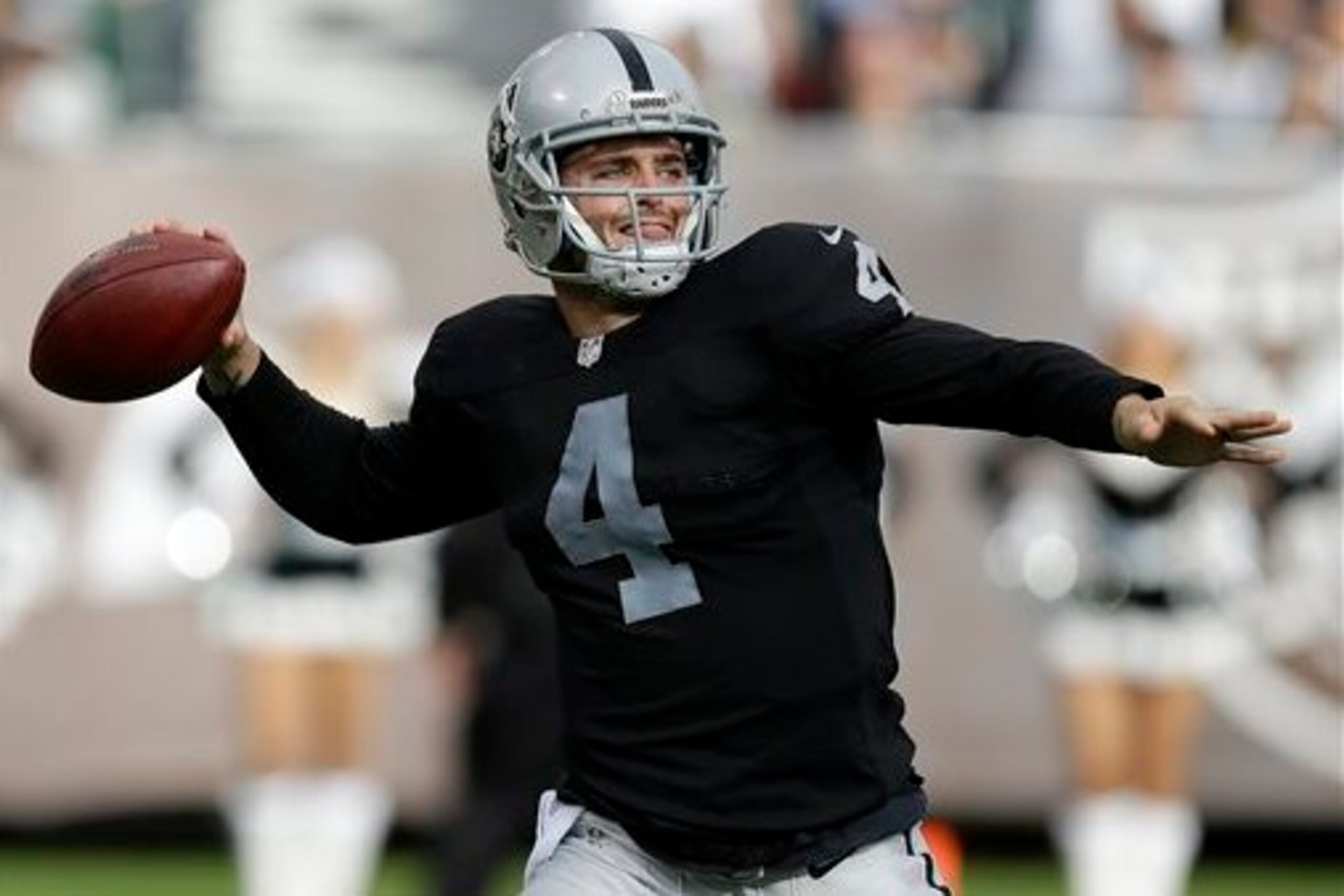
Derek Carr wasn't supposed to start during his first year. The Fresno State product was deemed the future of Raiders football. The organization orchestrated a trade last offseason for Matt Schaub, a 10-year veteran at the time, and the proven quarterback immediately restructured a new deal with the team.
In the end, then-head coach Dennis Allen decided to start the young gun instead of the old hand.
“Beforehand, you know it's his team," Carr said. "It's what the coaches told you. You know your role is to come in, work hard, compete to make the team better, and eventually you'll be the guy. At first, that's what I was trying to do.
"I then became the starter. It was now, 'You get the plays. You break it down. You tell receivers how to run routes the way you like them and how you expect to see the offense work.' That's when you do your thing.
"At first, Matt was doing it his way. I learned from him, and he helped me. When it was my time, there wasn't too much of a difference. My voice was obviously going to be heard after that, and we just took it and ran with it."
Carr became the opening-day starter for the Raiders. When he stepped into the huddle for the first time Sept. 7 against the New York Jets, veterans such as James Jones, Donald Penn and Darren McFadden were leering back at him.
Naturally, there is bound to be resistance from veterans for any rookie until he proves himself on the field of play.
“To be frank, nobody cares about rookies," Bentley said. "I don't care if you're the quarterback or center. You're still a rookie.
"By the time you get to the core of the player and person you are in the league, you're so jaded. You're like, 'Whatever.' Whoever is coming into the locker room, you're not going to believe in them. They have no street cred, and they're trying to tell whomever it may be, 'We're going to set the tempo this way.' Please. Veteran guys just get into their groove. They just figured it out themselves. And they're not going to let some kid who just came in there and has been blown up being told how awesome he is and make him into Captain America. It just doesn't happen."
Bentley added, “It takes time. This business is so honest. Just because a rookie is anointed a job or your job description details you should be looked at as a leader, you're only going to get back the truth. You can't manufacture a locker room. It will just happen or not."
Certain positions, such as quarterback, are often thrown into the fire, and they must walk a fine line. There is an inherent oxymoron built into playing those positions.
The cliche states: Rookies are best seen and not heard. However, a quarterback, center, middle linebacker and safety are often relied upon to be vocal participants each Sunday. A quarterback, even a rookie gunslinger, must be able to effectively communicate the offense, play calls and checks at the line of scrimmage.
This is where trust begins to be truly build between a rookie and those veterans around him. Until then, it can be a difficult proposition.
“At first, it is," Carr said. "If you can show them that you know what you're talking about and what you're doing, they'll respect what you have to say. That's the point we got to last season. But I give a lot of that credit to my coaches. I was also blessed to have a big brother who played. He taught me football, blitzes and pass protections. I was in the game and started making protection calls as a rookie as well as making other calls. These are things I probably shouldn't be doing until a couple years into my career. They then thought, 'Maybe, we can listen to this guy.' From there, it went on.
"At first, it's definitely what they think. I guarantee it, because you have to prove it."
And this is the entire crux of rookie leadership and how it's presented.
A high-profile rookie isn't going to be viewed as any type of savior in the locker room. Grown men competing for their jobs aren't fans of college football, and they don't expect young players to step in from the first day and be anything other than rookies.
Rookies are essentially the lowest common denominator in an NFL locker room. As Bentley pointed out, the worst thing you can do is be considered a typical rookie.
“That's all you can ask of a young guy is to come in and, ultimately—and this is so cliche—just be a pro," Bentley said. "Don't be the guy that's late, for example. I always tell my guys, 'Don't be that guy. Don't be that guy that's a distraction. Don't be that guy who is the last one on the football field. Be that guy who is going to be first into meetings, onto the field and into the building.' That's how you start building what I call a player's 'brand equity.'
"People start to look at you and treat you a little differently. But when you come in and are just a complete immature jackass, that's not going to lead you into becoming a good football player at all. At that point, your performance on the field is subpar. Your performance off the field is subpar. It puts you in a position where you'll be labeled a typical rookie. That's the last thing anyone wants to be is a typical anything in this league."
Performance, however, can trump most situations.
Yes, a rookie's approach should always veer toward studying his playbook, working hard and keeping his mouth shut, and then good things tend to happen. If anything, those young players are starting to build a positive reputation.
As that reputation builds and those same young players start to flash on the field, those around him begin to take notice.
“There is somewhat of a hierarchy in the NFL, but ultimately your destiny in the league is determined by your ability to work and will yourself to do," Seattle Seahawks defensive end Greg Scruggs said.
What's truly special about an NFL locker room is an ability to fit completely unrelated pieces together to form a greater whole.
Once upon a time, the Seattle Seahawks weren't viewed as one of the NFL's best teams. Head coach Pete Carroll and general manager John Schneider worked tirelessly to upgrade their roster and eventually built their team into one of the league's most fearsome defenses with an opportunistic offense.
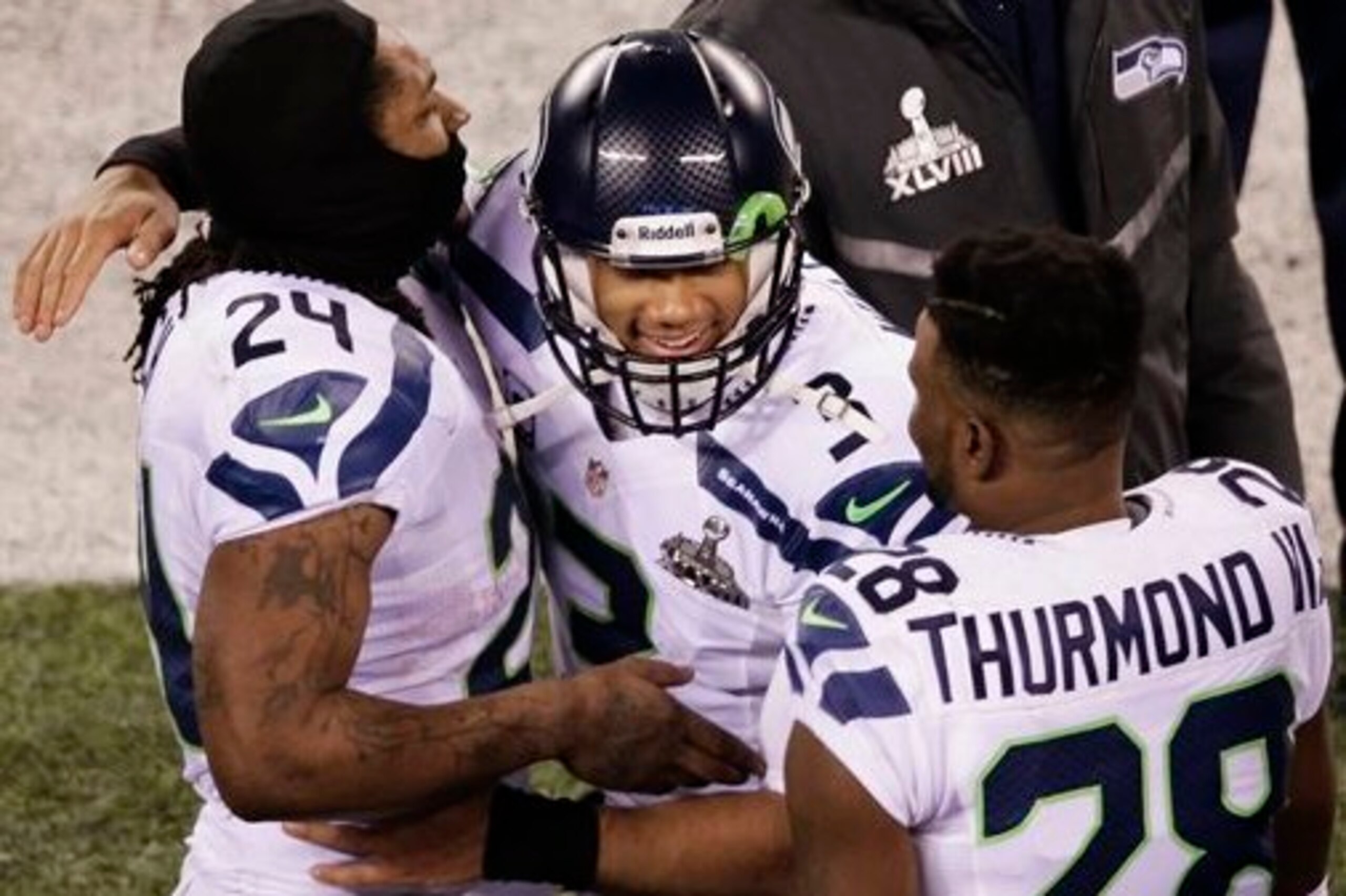
In the end, the Seahawks claimed a Super Bowl XLVIII victory because everything came together at the right time with the right mesh of talent.
Whether a player was a rookie or a 10-plus-year veteran, each found a way to express himself and play off one another.
“There are going to be other guys that carry the leadership role," cornerback Walter Thurmond, who served as the Seahawks' nickel corner during their Super Bowl run, said. "Everyone on the team is a leader, and the young players can get advice from other leaders.
"When you have that mentality, it gives you more confidence. It shows you that the organization and teammates have trust in you. Everyone leads in their own kind of way. Some lead by example. Some are a little more vocal. Some lead by experience. But to be a great leader, you have to be a great learner. It will translate throughout your career."
Being the leader of a team, even as a rookie, starts with the right mental approach and ends with the physical ability to back up all of a player's preparation.
Reliability, on and off the field, can be the driving force behind a successful career or a cautionary tale. And there is a sliding scale that dictates whether a team is willing to provide some leeway or go in another direction.
“This is probably the most important facet of the business," Bentley said. "I call it 'social currency.' You don't have a lot of it to spend, and guys need to understand that they need to divvy it up properly. If not, you end up socially bankrupt. When you're socially bankrupt in this league, I don't care how good you are. It doesn't matter how big, fast or strong you are. They will find someone to replace you.
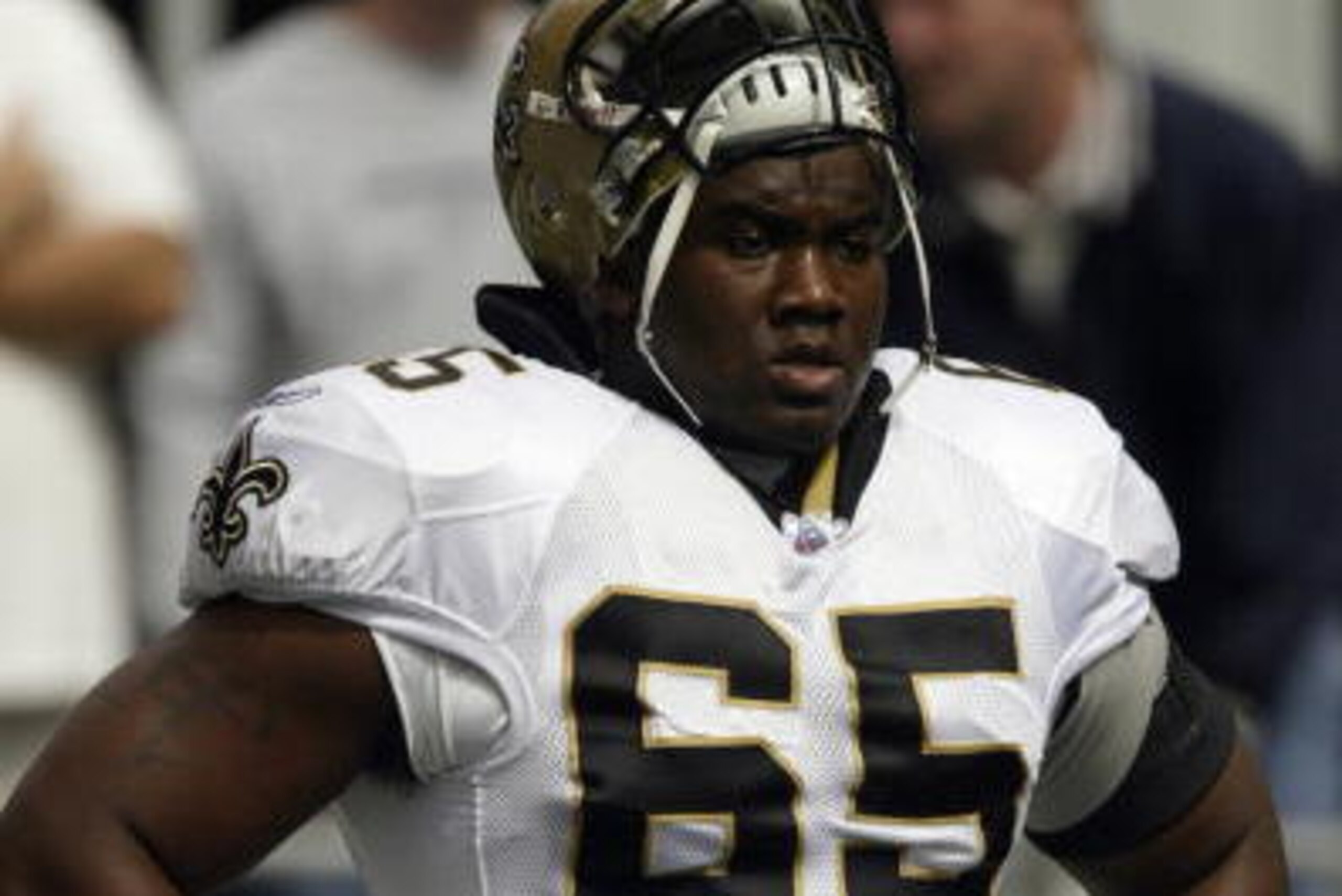
"On the flip side of that, if your social currency is high and your performance might not be where you want it to be, you'll at least have some time. And that's all players can ask for in this league. Just give them a little bit of time to set themselves up for an opportunity to be successful.
"The reality of low social currency and poor performance equals being out of the league. You're gone. If you can just stay above water and keep that social-currency level high, and your performance catches up to the social aspect, you then have a ballplayer."
Until a player finally reaches that point—some never do—it can be a difficult trek.
While relationships are eventually built in the locker room, rookies are entering their situation with a blank slate. What happened at their university of choice no longer matters. What they were told by family, agents or scouts throughout the draft process means exactly zilch.
The NFL is the ultimate meritocracy. And the second a rookie enters the locker room, he must do so with the full understanding his opportunity was provided because it was taken away from another with the same hopes and dreams as him.
For a rookie to transcend his station and become a leader, he must show up every day and prove himself. He will be afforded very little credit, and it's up to him to earn his way into the league.
“It's a tough task," Carr said. "You can say whatever you want and do everything in practice, but, until you do it in the game and show your teammates you are capable of winning games, it's a hard thing to do.
"As a rookie, they expect mistakes. They expect you to go out there and, obviously, not be perfect. They know it's going to happen. But you still have high expectations, and you're trying to do all right from the beginning. It's not always going to work that way, but until you go out there and do it, that's how you gain respect.
"You throw the ball and take a hit. You have your offensive linemen help you up, laugh it off and see you completed the pass. Until those kinds of moments happen, it's hard for them to believe in you."
Because of the nature of today's NFL, high-profile rookies aren't placed in an enviable position.
While veterans in the locker room are essentially telling them to prove it on a daily basis, their organizations are selling them as the new faces of their respective franchises.
The Tampa Bay Buccaneers certainly expect the No. 1 overall pick, quarterback Jameis Winston, to take the reins of their offense as a day-one starter and become a productive performer. The Tennessee Titans selected Marcus Mariota with the second pick and already named him the team's starter as well.
But these two being handed a starting position won't make them instantaneous leaders.
To become a respected player in the NFL, the formula isn't difficult: absorb everything, be reliable and produce. In doing so, even rookies can develop into leaders of their respective teams.
“At the end of the day, you have to show up on the practice field," Minter said. "If you're not making plays, I don't care who you are or what you previously did, you're not going to get the respect. That's the first thing you got to earn. You can't talk about respect. It doesn't matter how much money you bring into the door. Respect only comes from what you do on the football field. If you're on the football field making plays when it counts, you'll get your respect."
Unless otherwise noted, all quotes obtained firsthand by Brent Sobleski, who covers the NFL draft for Bleacher Report. Follow him on Twitter @brentsobleski.
.jpg?w=2560 "🚨 Week 8 AP Top 25 Poll")


.jpg?w=2560 "Updates from EVERY NFL Game 🏈")
.jpg?w=2560 "Baker Gets Glove From Rays 🧤")