
Predictions for the 2025 Men's NCAA Tournament Selection Committee's Top 16 Reveal
At 12:30 p.m. ET this Saturday (Feb. 15) on CBS, the selection committee will provide its one and only peek behind the proverbial curtain with the "Top 16 Reveal" for the 2025 men's NCAA tournament.
It's worth noting this will be an "if the season ended today" snapshot of the top four seed lines and not even remotely a guarantee of where teams will be seeded one month from now on Selection Sunday.
However, history has shown that every team in the reveal eventually at least makes it into the bracket, and that it might be impossible to get a No. 1 or No. 2 seed if you aren't already in the top 16.
TOP NEWS

NFL Season Shaping Up To Be Unpredictable 🗣️
.jpg?w=2560 "Lions Cardinals Football")
Viral Dan Campbell Presser 💙
.jpg?w=2560 "Packers 49ers Football")
AD Trolls Bears WR on IG 😂
In fact, in each of the past three years, all 16 teams who appeared in the reveal ultimately earned a No. 6 seed or better on Selection Sunday. And in each of the seven seasons with both a Top 16 reveal and an NCAA tournament, there has not been a single No. 1 or No. 2 seed in the final bracket that wasn't at least a No. 4 seed in the reveal.
So, you know, it's a pretty good sneak peek of what's to come in a month.
That said, who should we expect to see where in the reveal?
After doing weekly bracket projections since this regular season began and doing this bracketology thing for the better part of two decades at this point, here's my educated guess at the top 16:
East Region (Newark)
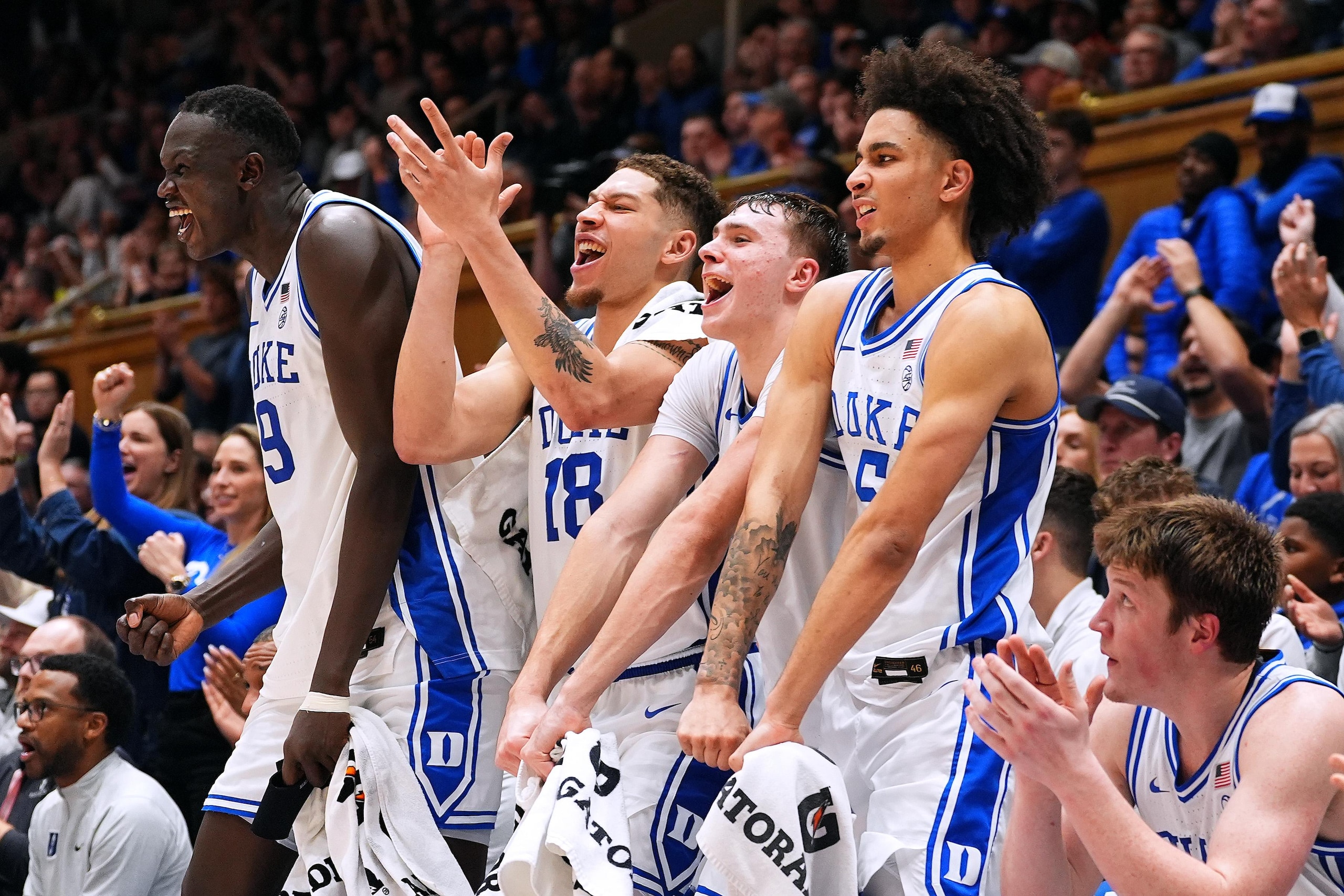
No. 1: Duke Blue Devils (overall: 3)
No. 2: Tennessee Volunteers (overall: 5)
No. 3: Texas Tech Red Raiders (overall: 12)
No. 4: Michigan Wolverines (overall: 13)
Midwest Region (Indianapolis)
No. 1: Alabama Crimson Tide (overall: 2)
No. 2: Texas A&M Aggies (overall: 7)
No. 3: Iowa State Cyclones (overall: 9)
No. 4: Wisconsin Badgers (overall: 16)
South Region (Atlanta)
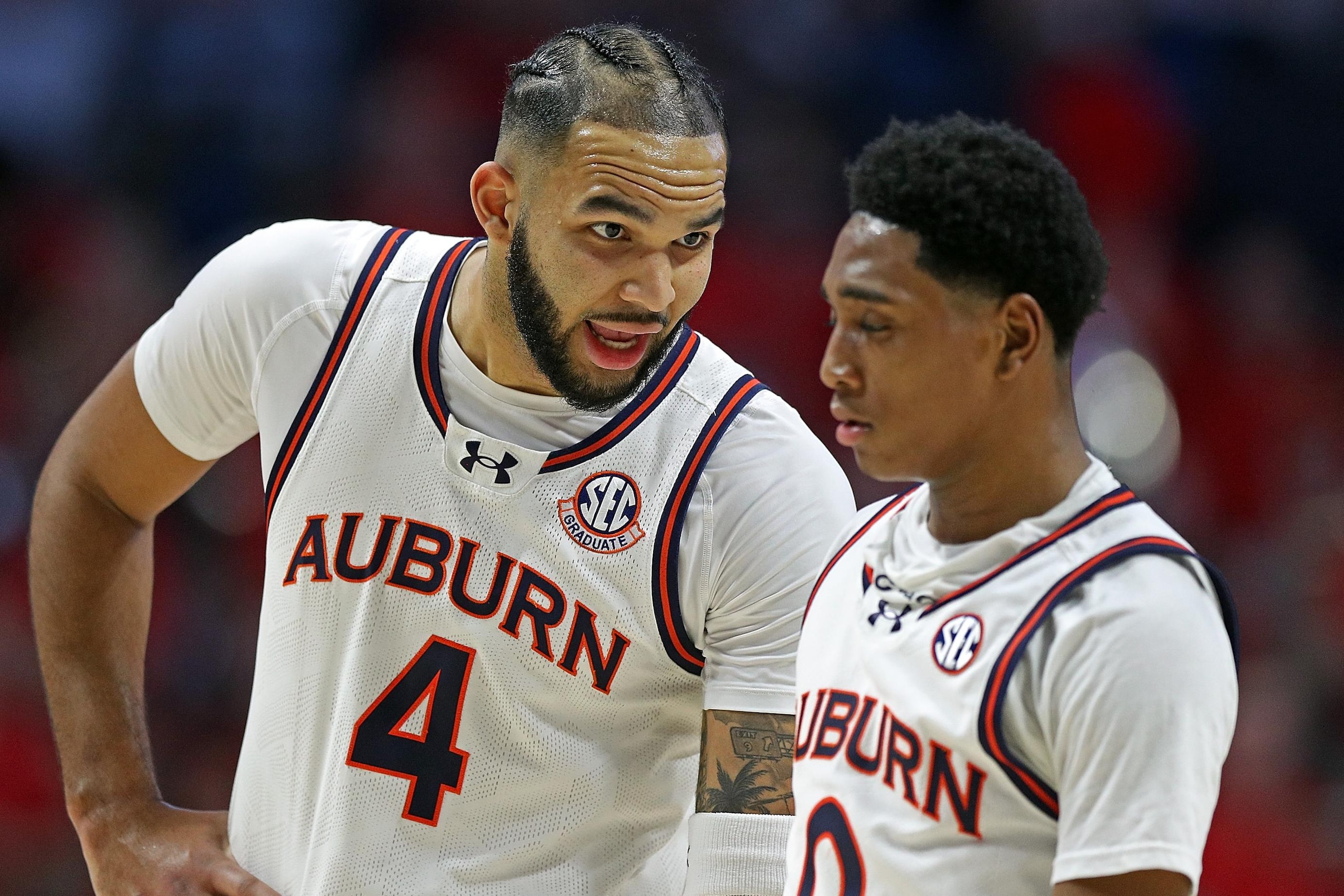
No. 1: Auburn Tigers (overall: 1)
No. 2: Houston Cougars (overall: 6)
No. 3: Kentucky Wildcats (overall: 10)
No. 4: St. John's Red Storm (overall: 15)
West Region (San Francisco)
No. 1: Florida Gators (overall: 4)
No. 2: Purdue Boilermakers (overall: 8)
No. 3: Arizona Wildcats (overall: 10)
No. 4: Kansas Jayhawks (overall: 14)
First Four Out: Memphis, Marquette, Ole Miss and Illinois
Top Line Looks Pretty Cut and Dry
It might change a few hours later when Alabama hosts Auburn, but there's really no question that it will be Auburn (with 13 Quad 1 wins) at No. 1 overall and Alabama at 15-3 vs. Quad 1-2) at No. 2 overall in the reveal.
Though it previously has not happened in a Top 16 reveal, the selection committee will have no qualms about having two teams from the same conference in those spots. After all, the ACC's Duke, Virginia and North Carolina were the top three overall seeds in the 2019 bracket.
Speaking of Duke, seeing the Blue Devils at No. 3 overall also feels inevitable, and it's very likely Florida will be the fourth No. 1 seed, following a Tuesday night two-step in which the Gators won at Mississippi State while Tennessee lost to Kentucky.
It's plausible the Volunteers could still land ahead of Florida at No. 4 overall, as they do have eight Quad 1 wins to Florida's five. However, the Vols entered Thursday at No. 5 in the NET, No. 5 in the resume metrics and No. 5 in the predictive metrics, which feels like a pretty strong message on where they belong.
No. 2 Seed Line Seems Straightforward, Too

There's plenty of debate to be had on the order of the No. 2 seed line, but there's a relatively clear line in the sand right now between the top eight resumes and the rest of the country.
The four teams that seem destined for the No. 2 line are Tennessee, Houston, Texas A&M and Purdue.
The only somewhat debatable one is Houston, as the Cougars only have one marquee win (at Kansas, in double overtime). But all the metrics adore them, and it's not like they've played poorly against top-tier competition, losing in overtime to each of Alabama, Texas Tech and San Diego State, their only other loss coming in a fantastic early November game against Auburn.
While it'd be a little surprising if Houston doesn't land a No. 2 seed, if the committee gives it to Kentucky instead with its 7-4 record against the top half of Quad 1, no real arguments here.
What Matters Most From There?
The No. 3 seed line is where it starts to get mighty interesting, and where we'll get a sense of what matters most to this particular iteration of the selection committee—which is the main reason we pay so much attention to this snapshot every February.
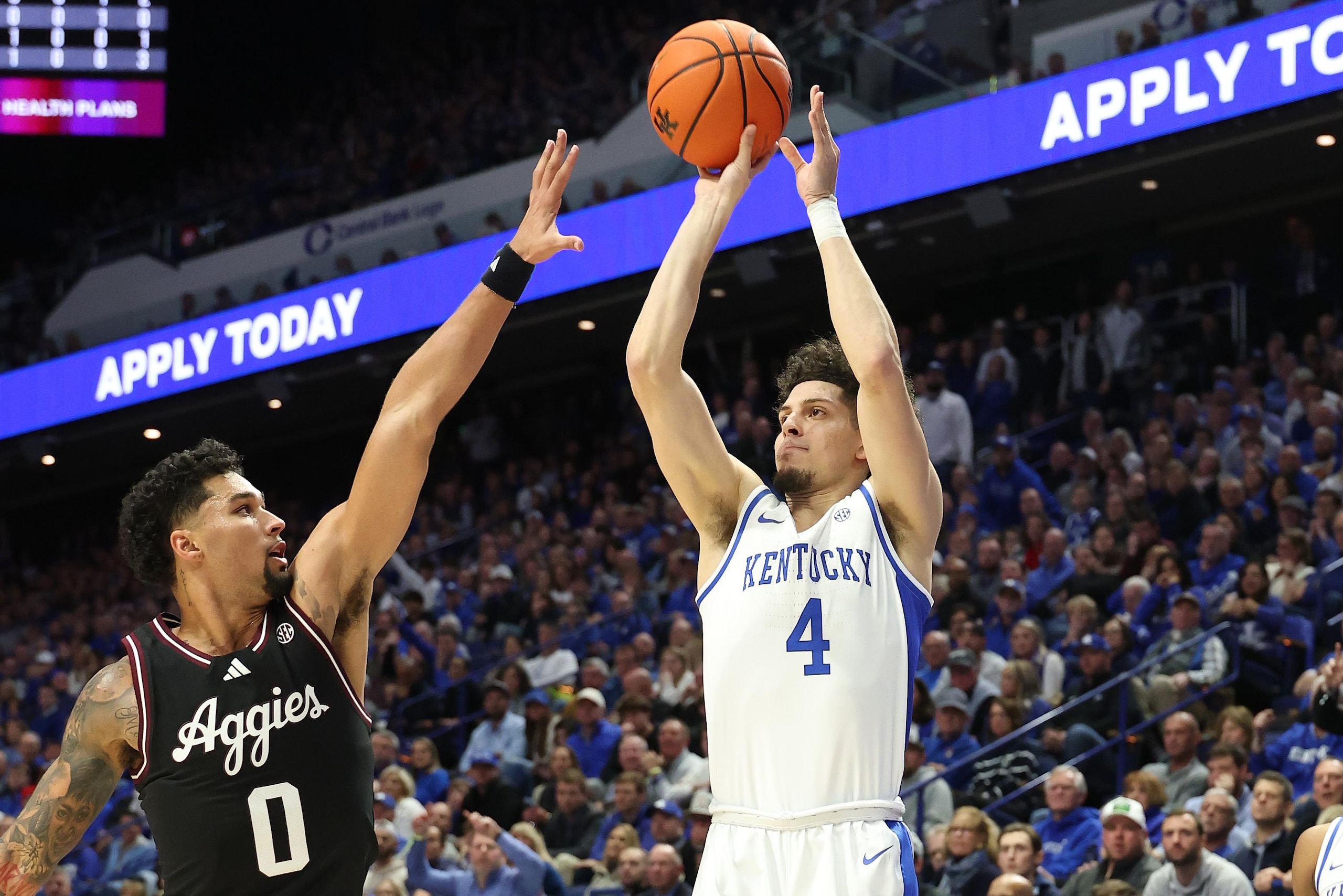
As already mentioned, Kentucky is absolutely loaded with upper-echelon wins, including a sweep of Tennessee, a neutral win over Duke and home wins over Florida and Texas A&M. But most of the Wildcats' metrics point to a No. 4 seed, probably mostly due to their 0-1 record against Quad 2 and the fact that they don't play much defense.
Michigan (10.7 average) and Wisconsin (11.0 average) both have excellent resume metrics, but they don't have as many (or as impressive) top-tier wins as most of the teams in the mix here, nor do the predictive metrics think they're top 10 teams.
Then you've got Texas Tech and Arizona, who combined to go 0-7 in nonconference play against top-100 foes, but who have great NET and predictive metrics after racking up a bunch of quality wins in Big 12 play.
At least Arizona played a good nonconference schedule, even if it struggled against it, but the Wildcats are not currently top-16 in any of the three resume metrics (KPI, SOR and WAB). Is that enough to keep them out? Meanwhile, the committee might penalize Texas Tech for not even trying to play anyone for the first two months of the season, save for the neutral loss to Texas A&M.
And what about Memphis? The Tigers have five Quad 1 wins, five Quad 2 wins, four total losses and a resume metrics average that screams "top 16," but they are barely top-50 in NET and the predictive metrics. Can the committee look past their modest scoring margin and seed them on the quality of their wins, a la "narrow wins" specialist Providence from three years ago?
Of the bunch, I'm most interested in the placement of Kentucky and Wisconsin.
I have the Wildcats more than a full seed line ahead of the Badgers, but one could easily argue that Wisconsin has the better resume if solely looking at Quadrant records and metrics while not really drilling down to the individual results—where even Kentucky's seventh-best win is probably better than Wisconsin's best.
Does St. John's Still Earn a Top 16 Spot?
A big topic of conversation/point of contention over the years has been at what point in the process the results stop mattering to the selection committee.
It has become relatively clear that conference tournament games—especially the ones played over the weekend of Selection Sunday—don't matter as much as we want/think.
But the selection committee's meetings ran through Thursday afternoon, with contingency plans to account for potential impact games occurring on Thursday or Friday. (Thursday's Memphis at South Florida game is probably the only one they may have needed to consider.)
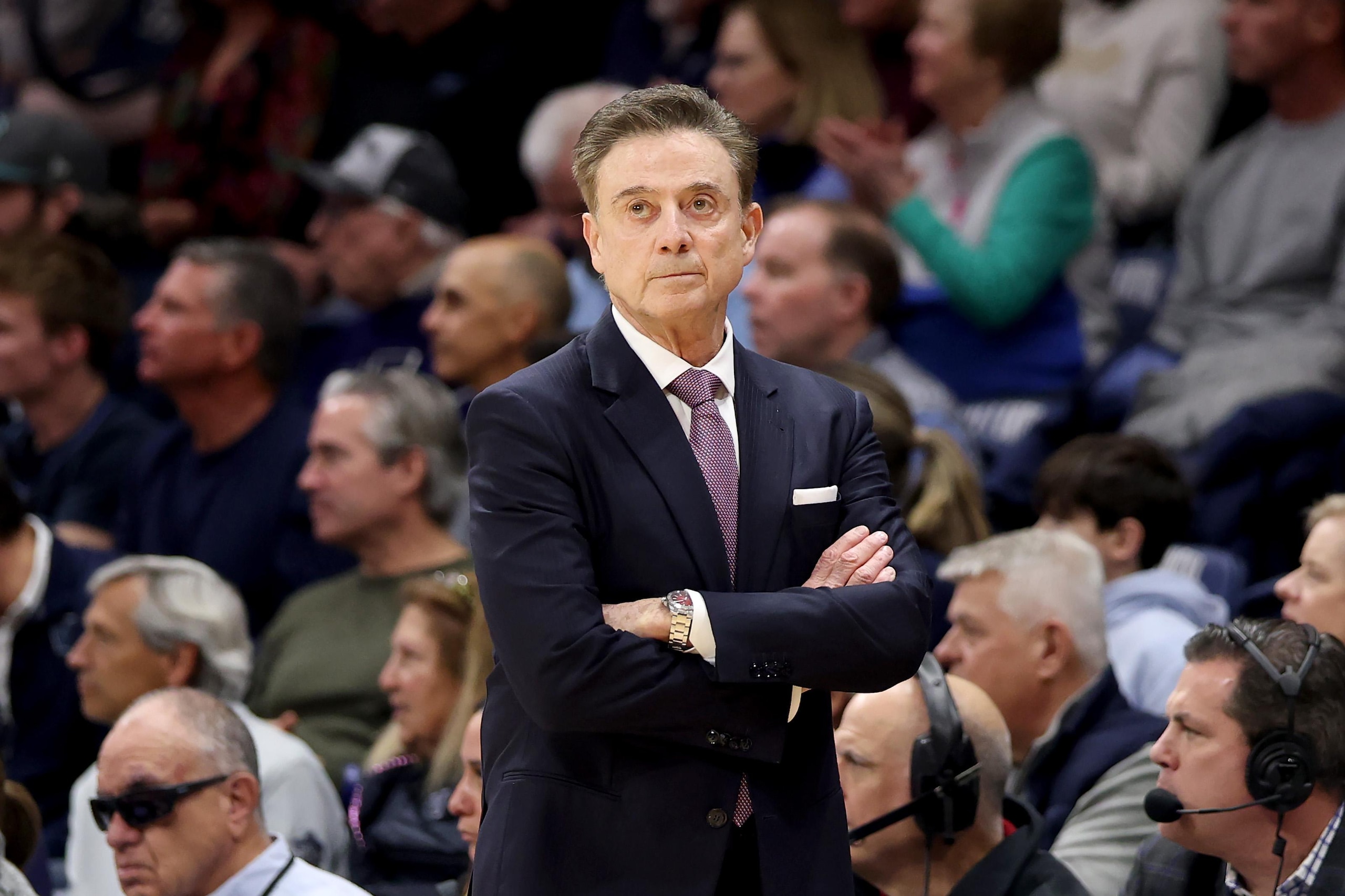
As such, St. John's losing at Villanova Wednesday night definitely should have been taken into consideration before the committee put together its final product. And if they did factor that result in, the Red Storm are probably No. 15 overall, at best. It wouldn't be stunning if they fall out altogether, now sitting at just 3-4 vs. Quad 1.
If St. John's is still a No. 3 seed on Saturday, though, that might as well be the selection committee sending bracketologists an official memo to not update anything other than the auto bids from Friday-Sunday of selection weekend.
How Will They Bracket All the SEC Teams?

It's one thing to have three teams from the same conference projected for No. 1 seeds, but the SEC also has two projected No. 2 seeds, a projected No. 3 seed and Ole Miss as a potential top 16 surprise team who would make it seven teams from the same conference.
In recent years, the bracketing principles stated that when multiple teams from the same conference land within the top four seed lines, they must go in different regions. For example, we have the Big Ten's Purdue in the West, Michigan in the East and Wisconsin in the Midwest, and that's not by accident. They're supposed to be separated.
But when one league produces five or more of the top 16 teams, rules need to be bent or broken.
Of particular interest is where the SEC's fifth team (Texas A&M, most likely) lands in the bracket, as the Aggies are going to be forced to be paired up with one of the SEC's No. 1 seeds.
They're only doing the top 16 on Saturday, but the SEC's bracketing just gets wilder from there, with upwards of 14 teams making the NCAA tournament. There may well be a situation where we end up with three SEC teams on the No. 1 seed line, as well as multiple SEC teams on the No. 8/9 seed lines, which would necessitate a rare conference showdown in the second round of the dance. (If it doesn't happen on the 1/8/9 lines, it'll probably happen on the 2/7/10 lines.)
Should be fun to get a first glimpse at how they deal with this unique mega conference situation.
.jpg?w=2560 "Texans Titans Football")
.jpg?w=2560 "Broncos Chargers Football")
.jpg?w=2560 "Report: Steelers WR to Miss 'Weeks'")