

Realistic Expectations for Charlotte Hornets Rookie Frank Kaminsky
The Charlotte Hornets filled a need in the NBA draft by selecting big man Frank Kaminsky at No. 9 overall.
With Al Jefferson having led the league in post-up possessions, per NBA.com, the Hornets clearly saw value in adding a complementary frontcourt shooter.
And though there is plenty more to his game, there is no debating the fact that the main attraction to Kaminsky is his jumper.
He's one of two 7-footers since 2004 to make at least 41 percent of his threes on at least 100 attempts. Kaminsky shot 41.6 percent from downtown (42-of-101) as a senior at Wisconsin. For what it's worth, he nailed 78 percent of his free throws.
He has a fluid, natural-looking stroke that should ultimately carry right over to the pros. Expect to see Kaminsky frequently used as both a spot-up and pick-and-pop weapon throughout his career.
Chances are Hornets coach Steve Clifford will give Kaminsky minutes at the 4, given his ability to stretch the floor and create spacing for Jefferson while also providing driving lanes for Kemba Walker.
Kaminsky isn't your traditional above-the-rim power forward, but he's mobile and surprisingly nimble, which can make him tough to contain in face-up situations.
Odds are he sets up in Charlotte's offense on the perimeter from the elbows out to the arc.
Clearly a threat to shoot, Kaminsky can also make defenders pay for closing out too hard. He's developed a good handle and some terrific footwork which allow him to put the ball on the floor and make shots on the move.
On the downside, Kaminsky's lack of bulk and athleticism, which has always held him back in the NBA draft conversation, should limit his interior presence.
Don't count on many double-doubles from Kaminsky, whose 9.8 boards per 40 minutes last season were fairly underwhelming.
He also isn't likely to offer much rim protection. Without bounce or length (short 6'11" wingspan), his 4.5 percent block percentage was one of the lowest we've seen from any recent big man taken with a lottery pick.
It's fair to question how well a Kaminsky-Jefferson pairing will work defensively for long stretches at a time.

On the bright side, Kaminsky has a high basketball IQ, and though he isn't particularly disruptive or intimidating, he plays sound team defense. While playing 279 more minutes as a senior than he did as a junior, he also finished with 31 fewer fouls.
Still, Kaminsky can be vulnerable to getting outmuscled down low, and that may work against him at both ends in the pros. Though Kaminsky has been able to dominate at times in the post, where he can score over either shoulder, earning position and separating will be a much greater challenge against stronger and longer bigs.
Physical limitations aside, Kaminsky's feel for the game is tough to teach, and it plays into his high-end role-player potential.
He's one of those mistake-free players who won't hurt Charlotte's offense with poor shot selection or decision-making. Despite a giant 28.6 percent usage rate, he turned the ball over just 1.9 times per 40 minutes.
Kaminsky's turnover rate was extraordinary last season. In comparison, he coughed it up 32 fewer times in 168 more minutes than Jahlil Okafor, whose usage rate was similar (27.6 percent).
Kaminsky has also improved as a passer. He averaged 3.1 assists per 40 minutes, having raised his assist percentage as a senior to 18.4 percent from 11.4 percent.
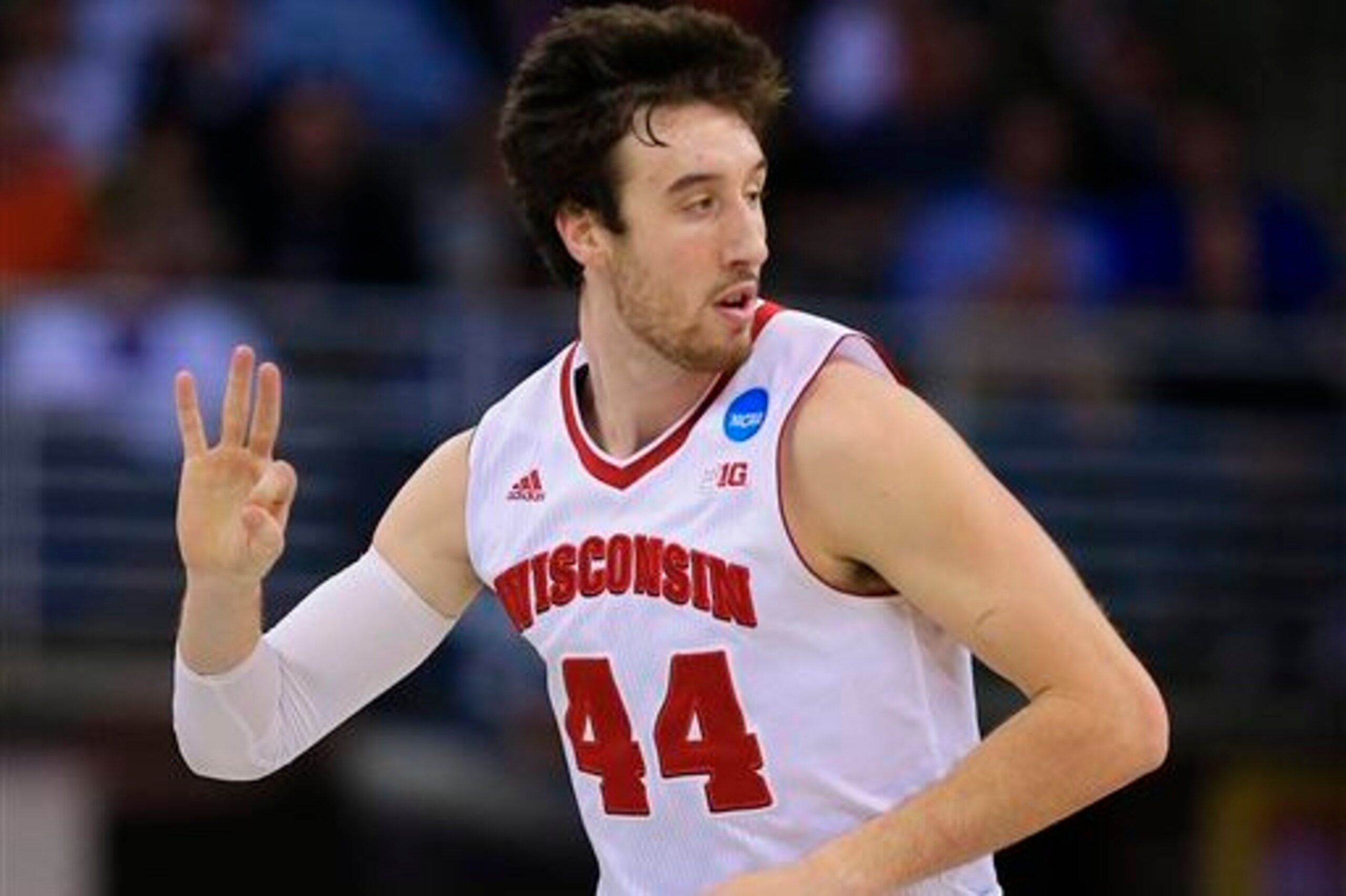
But despite the size, high skill level and four years of college, I wouldn't peg Kaminsky as an All-Rookie first-teamer. It typically takes most big men longer to adjust, and that should hold especially true for Kaminsky, who possesses below-average strength and explosiveness.
And considering Wisconsin played at one of the slowest paces in all of college basketball—61.1 possessions per game, ranked No. 346 out of 351 schools, per Team Rankings—the NBA's uptempo style will be a major change.
“He was kind of rusty today. First-day jitters maybe,” said Charlotte's summer league coach Patrick Ewing, via the Charlotte Observer's Rick Bonnell.
"Defensively it’s a lot different than what we did at Wisconsin, Kaminsky told Bonnell. "That’s just the nature of the NBA—it’s a faster game, there’s not as much time in the shot clock to make decisions. Some similarities but also some differences."
I'd imagine we'll see mixed results early from Kaminsky, who should be good for regular, rotational minutes—just not consistent, two-way production.
| Minutes | FG Pct. | Points | Rebounds | 3PT Pct. | Blocks |
| 20.8 | .470 | 9.8 | 4.6 | .360 | .400 |
Though Kaminsky's ceiling seems to fall short of All-Star heights, long-term, his jumper and versatility should carry him to a long NBA career, as bigs who can shoot are always in demand. His ability to face the basket and make a move can also create matchup problems up front.
Realistically, Kaminsky's best-case projection is similar to what Andrea Bargnani's was out of Italy.
But in 2015-16, look for Kaminsky to give the Hornets a reliable shot-maker and opportunistic scorer around the key, as well as an all-around efficient presence in the lineup.
Unless otherwise noted, statistics courtesy of Sports-Reference.com.

.jpg?w=2560 "Jaxson Dart Ruled Out of MNF")

.jpg?w=2560 "Ertz Returning to Eagles")
.jpg?w=2560 "Dak Addresses 'Dumb' Old Romo Tweet 🤣")
.jpg?w=2560 "WWE Raw Live Grades 🔠")

.jpg?w=2560 "🚨 Puka Out for MNF")