Casemiro Exclusive: Brazil Star on His Evolution at Porto and Copa America Hopes
In the latter stages of the 2012/2013 season, on-loan Brazilian Carlos Casemiro played alongside midfield orchestrator Luka Modric in Real Madrid’s comfortable 3-1 home win against Real Betis.
Casemiro was a modest name in a lineup that included Cristiano Ronaldo and Mesut Ozil. His contribution to the game was fair, neither bad nor outstanding. Jose Mourinho had given the Brazilian a chance as he was resting his stars ahead of an all-important Champions League fixture with Borussia Dortmund.
Later that summer, Real Madrid president Florentino Perez, who’d splash out £34 million for Asier Illarramendi and £23 million for Isco, signed Casemiro on a permanent deal for around £8 million. Casemiro had previously played for Castilla, Real Madrid’s B team. He was a talent that needed polishing; the arrival of Carlo Ancelotti, Mourinho’s successor in the Spanish capital and a specialist in fine-tuning midfielders, came at the right time.
TOP NEWS
FIFA to Change Red Card Rule
Wednesday's UCL Top Moments 🤩
.jpg?w=2560)
Top Trade Targets Entering Week 6 🎯
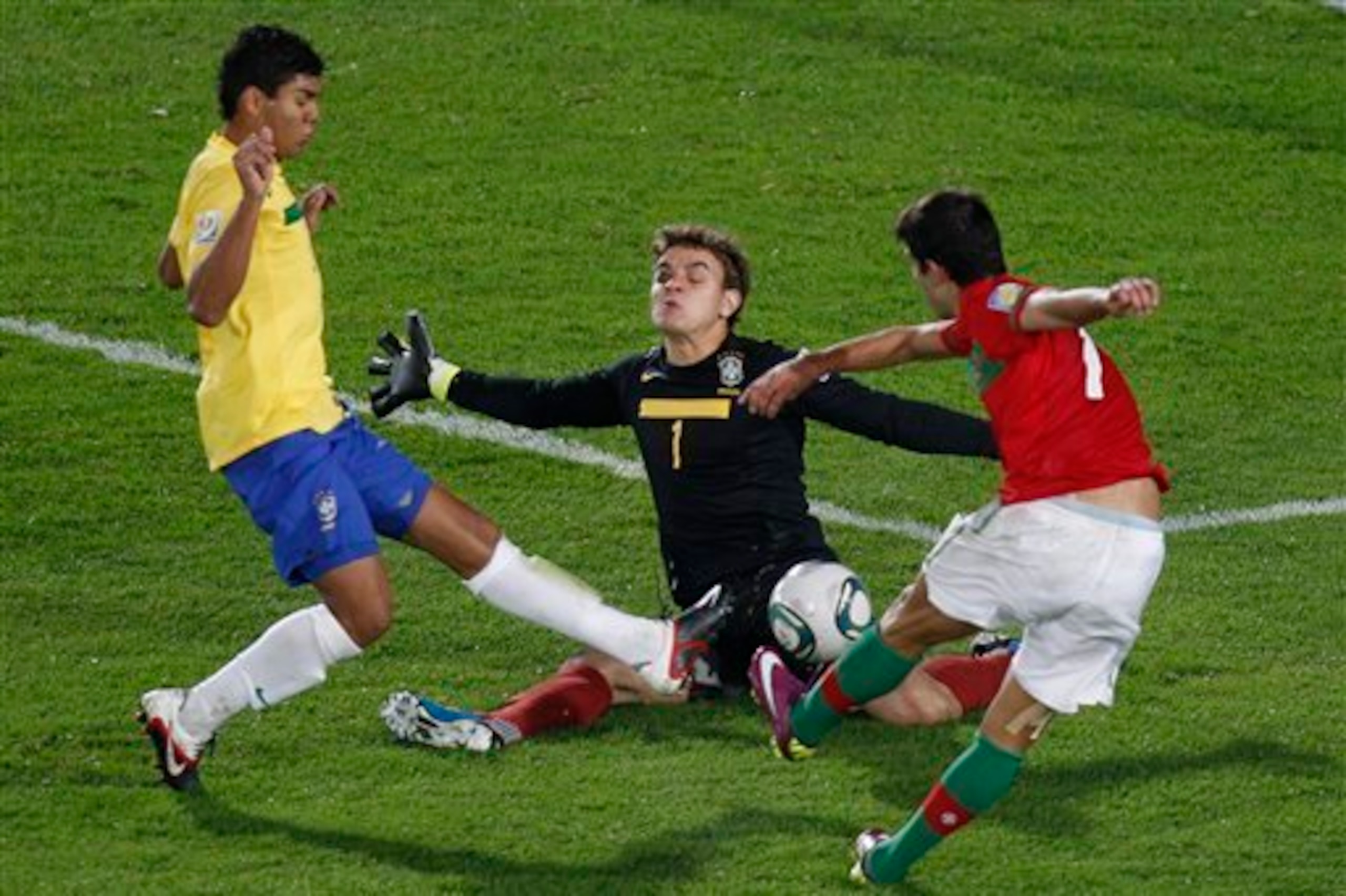
Casemiro’s progress looked like that of his peers. In 2011 Brazil had won the U20 FIFA World Cup in Colombia, where Oscar ensured final victory with a hat-trick against Portugal. Casemiro played in all seven games during the tournament, alongside Danilo and Philippe Coutinho. They played at Porto and Liverpool respectively, while Oscar was blossoming into a formidable asset at Chelsea.
"I gained a lot of experience playing for the youth sides of the Brazilian team," Casemiro told Bleacher Report. "I developed a lot as a professional and as a person. That title was very important for my career and for that whole generation."
While his compatriots were beginning to find their feet at their new clubs, Casemiro played just 275 minutes in 12 matches during the entire season for his club. Real Madrid’s riches in Xabi Alonso, Sami Khedira, Modric, Mesut Ozil, Isco, Illarramendi, all in central midfield, were too much for Casemiro to deal with.
Madrid loaned Casemiro to Porto on a season-long deal. There, the 23-year-old became a cornerstone of the club’s renaissance under Spanish coach Julen Lopetegui. The Dragons also signed attacker Adrian, Oliver Torres, Yacine Brahimi, Bruno Martins Indi and Cristian Tello. They would battle with Benfica for the Portuguese title and reach the quarterfinals of the Champions League, losing 7-4 on aggregate to Bayern Munich.
"All defeats have a bitter aftertaste," says Casemiro of the elimination by the German club. "Nobody likes losing. But we have a calm conscience, because our team did not lack desire to win. We tried to do our best. It was a positive season, but it lacked a title as a crowning achievement of our work.
“I managed to have a sequence of games and I could develop my football even more. It was a very positive and productive season for me, both from a tactical and technical point of view."
Casemiro came into his own as a No. 6, roaming in front of his defenders and linking the play to Porto’s attacking midfielders in a 4-3-3 system. Brazil’s coach Carlos Dunga has rewarded his stellar season by selecting Casemiro for the Copa America. Dunga observed Casemiro only for brief spells as a substitute against Turkey and Austria, but it was enough for Dunga to invest the same confidence Real Madrid and then Lopetegui had shown in the midfielder.
"A player has to approve every minute at the Brazilian team and always do the best he can do, be it in training or during games,” explains Casemiro of his approach to being part of the Selecao. Like at Real Madrid, Casemiro’s status is that of a fringe player with Manchester City’s Fernandinho and Corinthians’s Elias higher in the pecking order (Luiz Gustavo has been ruled out injured). Casemiro is adamant that he can play a role for Brazil during the Copa America.
"The Copa America is one of the most traditional tournaments in the world, with a very big representative value,” says the midfielder. "We have to think in terms of doing our best in each game with the motivation of winning the matches and fighting for the title. I am with my head with the Selecao, thinking about having a good performance at the Copa America."
A victory in the Copa America would help Brazil in seeking redemption after the unforgiving 7-1 defeat at the World Cup against Germany. The Germans showcased the best of modern football: Plenty of ball possession, swift transitions, quick-fire passing, superb movement and lethal counterattacking. Brazilian football became outdated, outmoded and irrelevant.
"The shirt of the Brazilian team has always been respected the world over," says Casemiro. "That defeat won’t change that. The best way forward is to work a lot, because work gets you good results, wins and titles. I think that Brazil is on the right track to have a good Copa America."
Under Dunga, Brazil is slowly recovering from that annihilation. They have once more become difficult to beat.
Up front, Dunga prefers a mobile striker rather than a fixed No. 9. The team demonstrate the same sturdiness and hard-tackling that last won Brazil the Copa America in 2007, when Dunga was at the helm and Robinho became the Copa America’s topscorer with six goals. "Dunga formed a very strong team and won the title. Robinho played very well," remembers Casemiro.
As we look ahead to Copa America 2015, the strength-in-depth of South American teams is at its highest level ever. In the past two World Cups all participating representatives from South America progressed to the round of 16, with the exception of Ecuador, who missed out by a whisker after a key loss at the hands of Switzerland last summer.
"Colombia had an excellent campaign at the World Cup. Venezuela have grown year by year and Peru always present quality football," says Casemiro. He recognizes that there won’t be any walkovers for Brazil in group C, or, for that matter, throughout the entire tournament.
All quotes were gather firsthand, unless otherwise stated.

.jpg?w=2560 "Bleacher Report's Expert NFL Picks 🔮")

.png?w=2560 "Muncy Sums Up LA Offense 💩")