

Is This Barcelona Side Even Greater Than the 2011 Champions League Winners?
On the evening of May 28, 2011, I was at Wembley Stadium among a crowd of over 87,000 to see Barcelona win the Champions League with a 3-1 victory over Manchester United in the final.
It was a special night—watching a team become champions of Europe always is—but each member of that crowd, both the celebrating Barcelona fans and the vanquished United fans, knew they had witnessed something more profound.
Arguably the greatest club side of all time had delivered their signature performance: a masterclass of attacking football.

From my vantage point in the press box near the halfway line, Barcelona were utterly dominant throughout the 90 minutes.
They were a blur of speed and control, swarming over United with wave after wave of attacks as they greedily refused to let their opponents anywhere near the ball.
Even now, it seems strange this final finished in an almost respectable 3-1 defeat for United when the yawning gulf in class between the sides would have been better illustrated if the game had finished 10-1 to Barcelona.

This was not just any team to be bullied; this was Manchester United, playing in their third Champions League final in four years. The winners in 2008 and finalists in 2009, managed by Sir Alex Ferguson, United had just become champions of England again.
But at times, the final was uncomfortable to watch. United were not just beaten—they were humiliated. They were reduced to mere bystanders.
In his autobiography #2Sides, former United defender Rio Ferdinand spoke about the game with raw and unflinching honesty.
Ferdinand said United were "destroyed" and the game was a "trauma" and a "nightmare" for him. "We came off the pitch embarrassed," he said.
But even as Lionel Messi ran through the United defence, Ferdinand knew he was witnessing history: "You couldn't catch [Messi]. I thought: 'That is...special. That is different. You're not going to see that ever again in your lifetime.'"
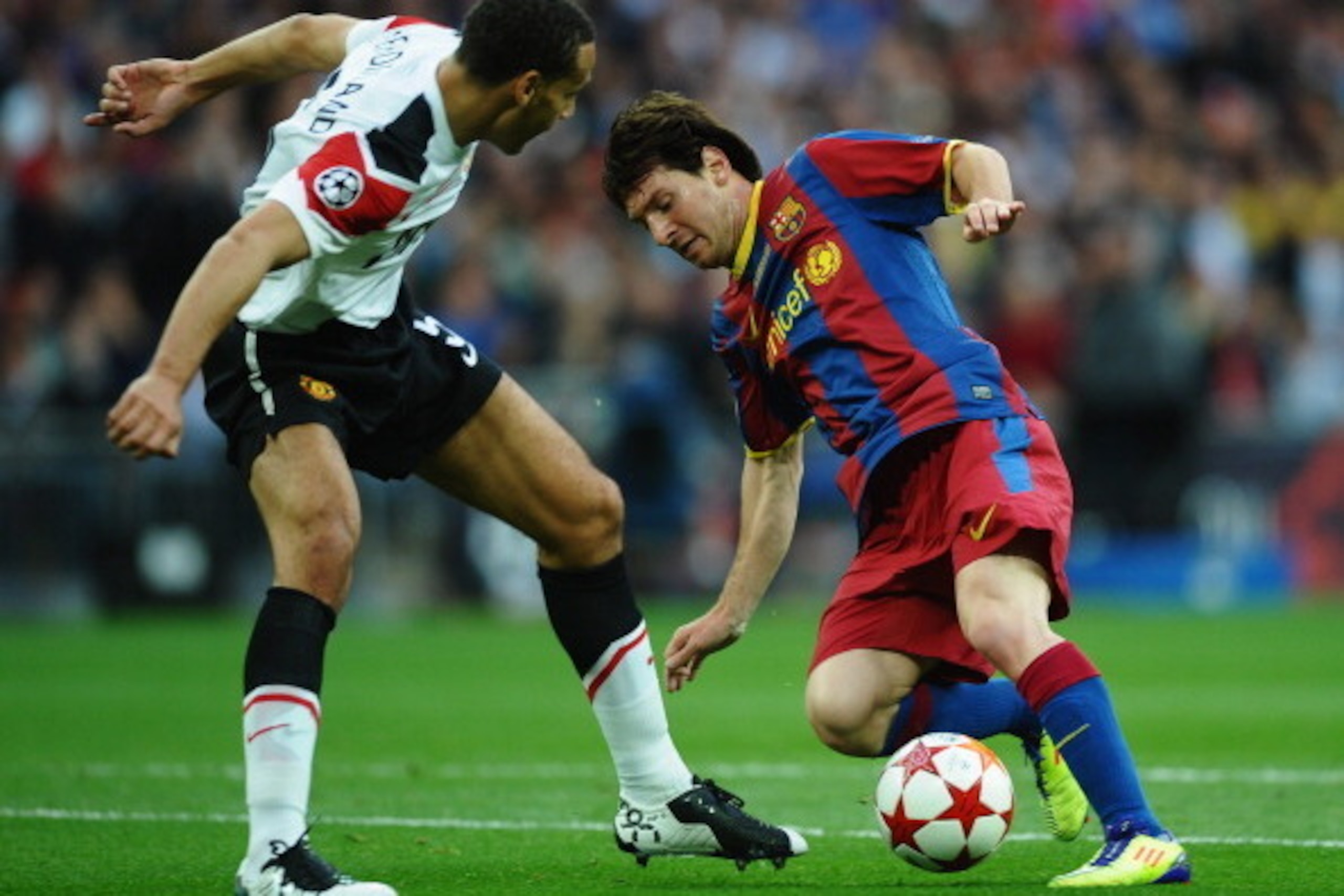
The final was the climax to a season in which Barcelona had already won La Liga and finished as runners-up in the Copa del Rey.
Under their then-mentor and manager, Pep Guardiola, Barcelona had developed a style of football that effortlessly maintained possession with a series of quick and short passes before surging forward into space and creating a host of chances.
If the opposition did get hold of the ball, they had to get past a defence of Victor Valdes, Dani Alves, Eric Abidal, Gerard Pique and either Carles Puyol or Javier Mascherano.
During the 2010-11 season, the midfield trio of Andres Iniesta, Sergio Busquets and Xavi were the fulcrum of Barcelona's power and reigned supreme.
In front of them, Messi was, well, Messi, scoring 53 goals during the season. In a front three, the Argentinian was flanked by Pedro and David Villa, who contributed another 45 goals between them.
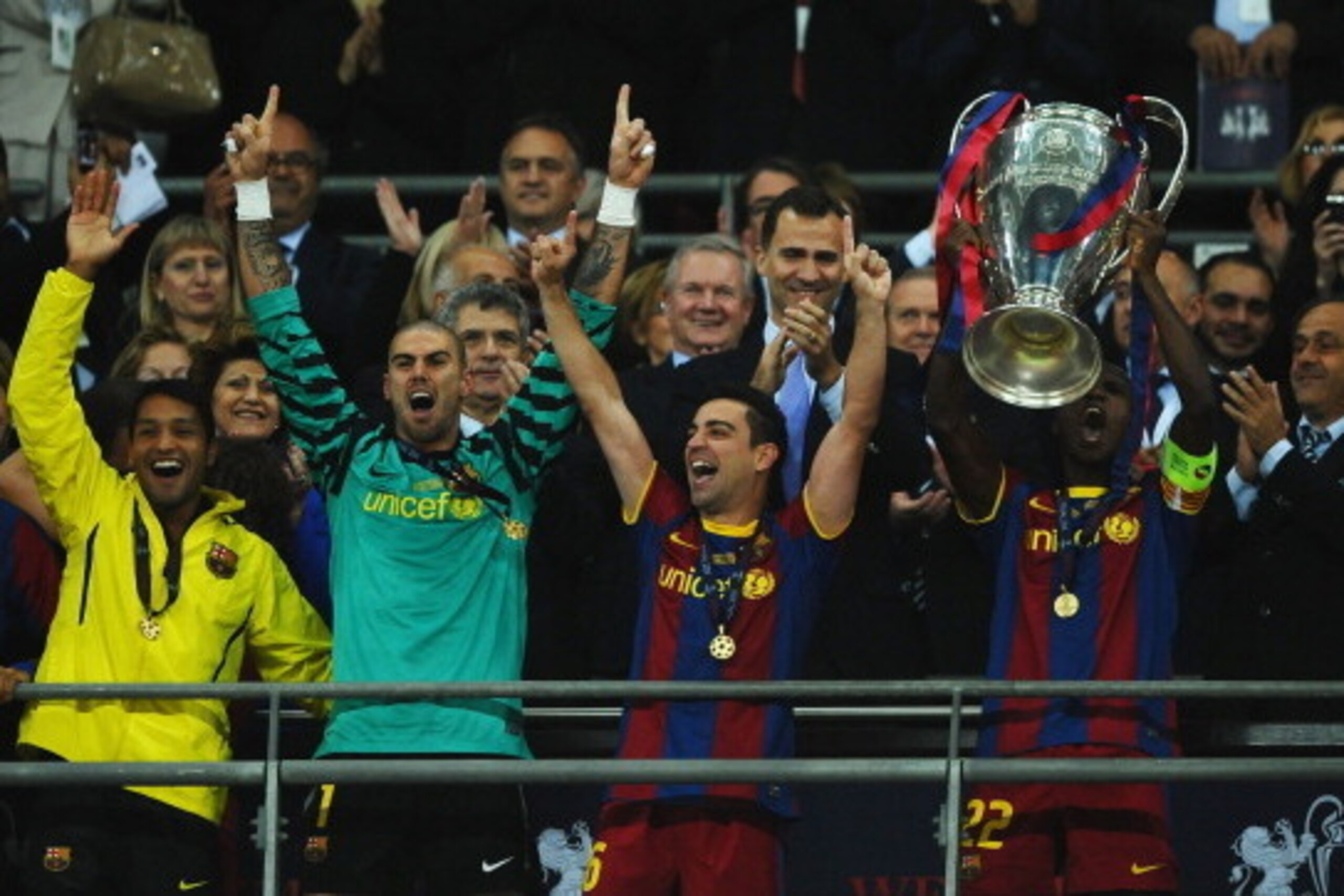
At the final whistle, as Barcelona celebrated in the centre of the pitch by tossing Guardiola in the air, few could have argued that these players shouldn't be called the greatest European club side of all time.
Now, only four years later, we find ourselves seriously contemplating whether the current Barcelona side could be even greater than the revered class of 2011.
This season, Barcelona have already won La Liga and the Copa del Rey. On Saturday, they will attempt to emulate Guardiola’s side by winning the Champions League in the final against Juventus.

The 2015 side still possesses the heart of the 2011 side, boasting six of the same players—Alves, Pique, Mascherano, Iniesta, Busquets and Messi—and as many as eight if you include Xavi and Pedro, who, while no longer starters, have still appeared in plenty of games this season.
The new faces are in goal, where Marc-Andre ter Stegen and Claudio Bravo have fought for the role, Jordi Alba in defence, Ivan Rakitic in midfield and Luis Suarez and Neymar up front alongside Messi.
Do these new players, and their feats, which have taken them to within one game of completing the treble, make them better than the Champions League and Liga winners of 2011?
The current side first needs to triumph in Berlin on Saturday night to earn the right to be compared to the 2011 side, but even if they do return to Barcelona with the club’s fifth Champions League title, it's arguable that they will still not have overtaken them.
At the back, Valdes was superior to either of his 2015 counterparts, and while the defence is largely the same, 2011 also has the edge as Barca could still call on the immense experience of Puyol.

Up front, the dynamism of Suarez and Neymar trumps Pedro and David Villa from the 2011 side because they have helped Messi score more goals than four years ago while also contributing more goals themselves—the pair have 67 goals between them.
While Barcelona scored 95 goals in La Liga in 2010-11, they beat that this season with a total of 110.
But it is in the middle of the pitch where the 2011 side comprehensively defeats their current-day counterparts.
In 2011, the trio of Busquets, Iniesta and Xavi, fresh from winning the World Cup with Spain the previous summer, were at their absolute peak and three of the finest midfielders the game has ever seen.
Barcelona could win the Champions League in the German capital on Saturday evening, but the 2011 side, the heroes of Wembley, will remain the original and the best.

.jpg?w=2560 "FIFA Congo Player Eligibility")


.jpg?w=2560 "Weather Channel Trolls Texans-Titans 💀")

.jpg?w=2560 "Report: Seahawks Not Signing Mixon 😯")