
Ranking the 10 Most Surprising Runs in French Open History
No. 88-ranked Alison Van Uytvanck was an unlikely quarterfinalist in this year's French Open, but she needed to do more to earn a place on our list of the most surprising runs in French Open history.
In formulating our rankings, we considered only players who reached at least the semifinals of the French Open since the start of the Open era in 1968. Taken into account were the ranking and recent results of the player coming into the French Open as well as how far the player advanced at Roland Garros and the caliber of players he beat.
In short, we gauged just how surprised we were by what the player accomplished.
We start with five players who nearly made our list, then count down the top 10 most surprising runs in French Open history.
5 Who Came Close
1 of 11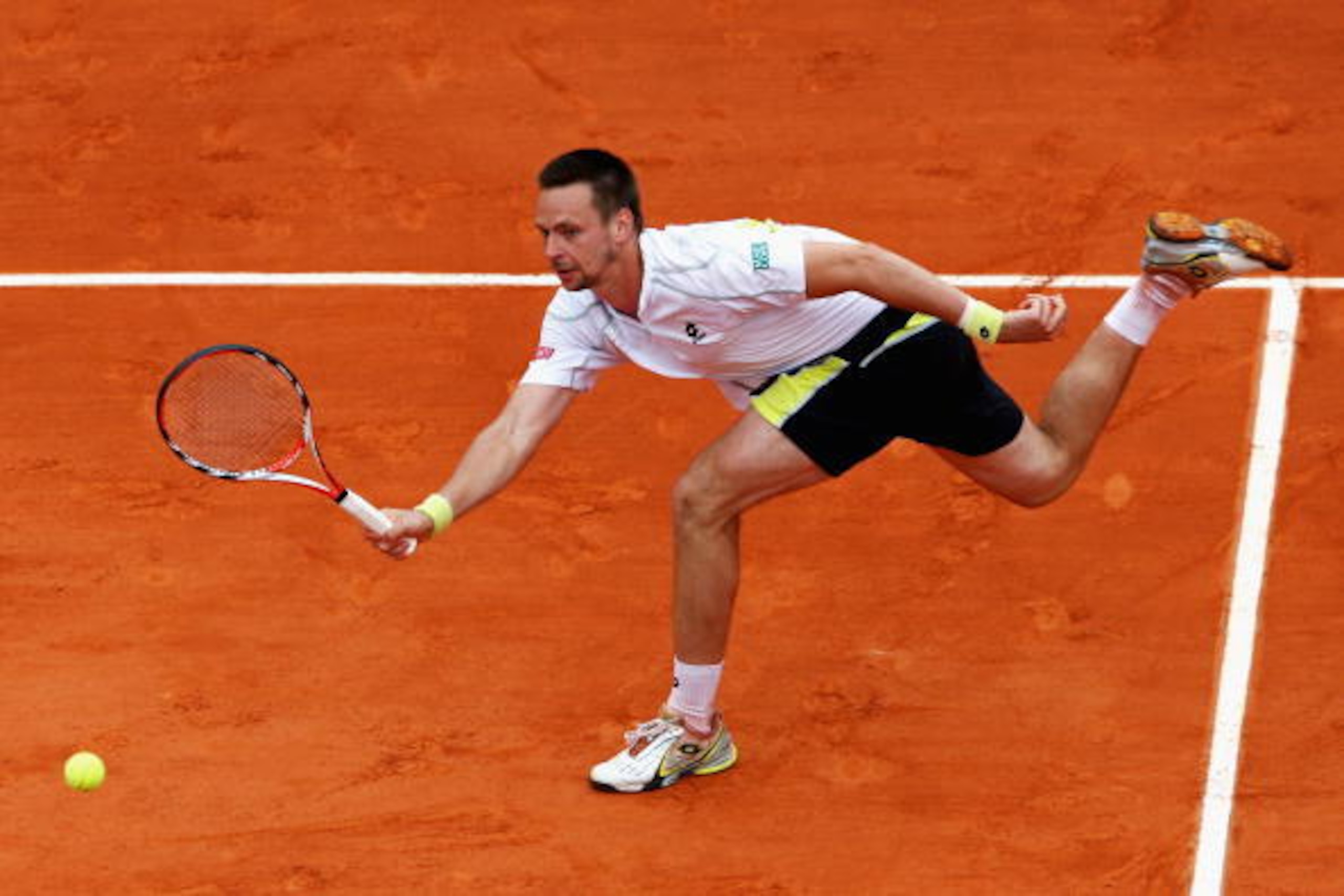
Five surprising runs in the French Open that barely missed being included in our list:
Nadia Petrova, 2003 semifinalist—Petrova was ranked No. 76 when she knocked off Monica Seles and Jennifer Capriati before losing to Kim Clijsters in 2003. However, Petrova had reached the fourth round of both the French Open and Wimbledon in 2001 before injuries and a period of inactivity caused her ranking to drop.
Robin Soderling, 2009 finalist—Soderling was ranked 25th when he handed Rafael Nadal his only French Open defeat until Novak Djokovic beat him this week. Soderling lost to Roger Federer in the finals.
Monica Seles, 1989 semifinalist—Seles was an unseeded 15-year-old when she beat Manuela Maleeva and Zina Garrison and took a set from Steffi Graf. Seles had beaten Chris Event earlier that year, so this was not a complete shock.
Mary Pierce, 2005 finalist—Pierce was ranked No. 23 when she beat three top-10 players, including No. 1 Lindsay Davenport, before losing to Justine Henin in the title match. Pierce had won the French Open in 2000.
Mikael Pernfors, 1986 finalist—The 27th-ranked Pernfors beat three top-10 players—Stefan Edberg, Boris Becker and Henri Leconte—before losing to Ivan Lendl in the finals.
10. Clarisa Fernandez, 2002 Semifinalist
2 of 11
Clarisa Fernandez's name may not ring a bell. Unless you paid close attention to the 2002 French Open, there is no reason it should.
Fernandez had to play qualifying rounds in all eight of her 2002 tournaments heading into the French Open that year. She had been ranked 139th just a month before the French Open and was lodged at No. 87 when competition at Roland Garros began.
For the first time since the previous October, she got into the main draw of a tournament without having to qualify. That in itself was a major accomplishment for Fernandez, who had lost in the first round of qualifying to a player ranked 139th in her only previous bid to play in the French Open in 2001.
The 20-year-old Fernandez had never won a singles match in a Grand Slam event before she beat qualifier Lubomira Bacheva in the first round of the 2002 French Open. That and her second-round victory over 76th-ranked Jelena Kostanic Tosic did not receive much attention.
Things changed in the third round, though. Her opponent, Kim Clijsters, was seeded No. 4 and had been a finalist in the 2001 French Open. When Fernandez easily brushed Clijsters aside 6-4, 6-0 in just 66 minutes, the media focused on Clijsters' poor play rather than Fernandez's performance.
Fernandez continued her unlikely success in the round of 16 by stunning 13th-seeded Elena Dementieva in three sets. This time Fernandez's upset was upstaged by a quirky incident in the match in which Dementieva was allowed to serve in consecutive games. She served the final game of the second set, and after Fernandez took a bathroom break, Dementieva served the first game of the third set with no one noticing.
Fernandez advanced to the semifinals with a mild upset, a 2-6, 7-6, 6-1 victory over Paola Suarez, who was ranked No. 47.
Venus Williams ended the surprising run with a straight-sets victory over Fernandez, who was called "a waifish little-known player from Argentina" by the New York Times.
Fernandez upset Mary Pierce in the first round of the 2003 French Open, but she lost in the second round and was forced to play qualifying rounds in her three subsequent French Opens. She did not compete at Roland Garros after the age of 24.
9. Henri Leconte, 1992 Semifinalist
3 of 11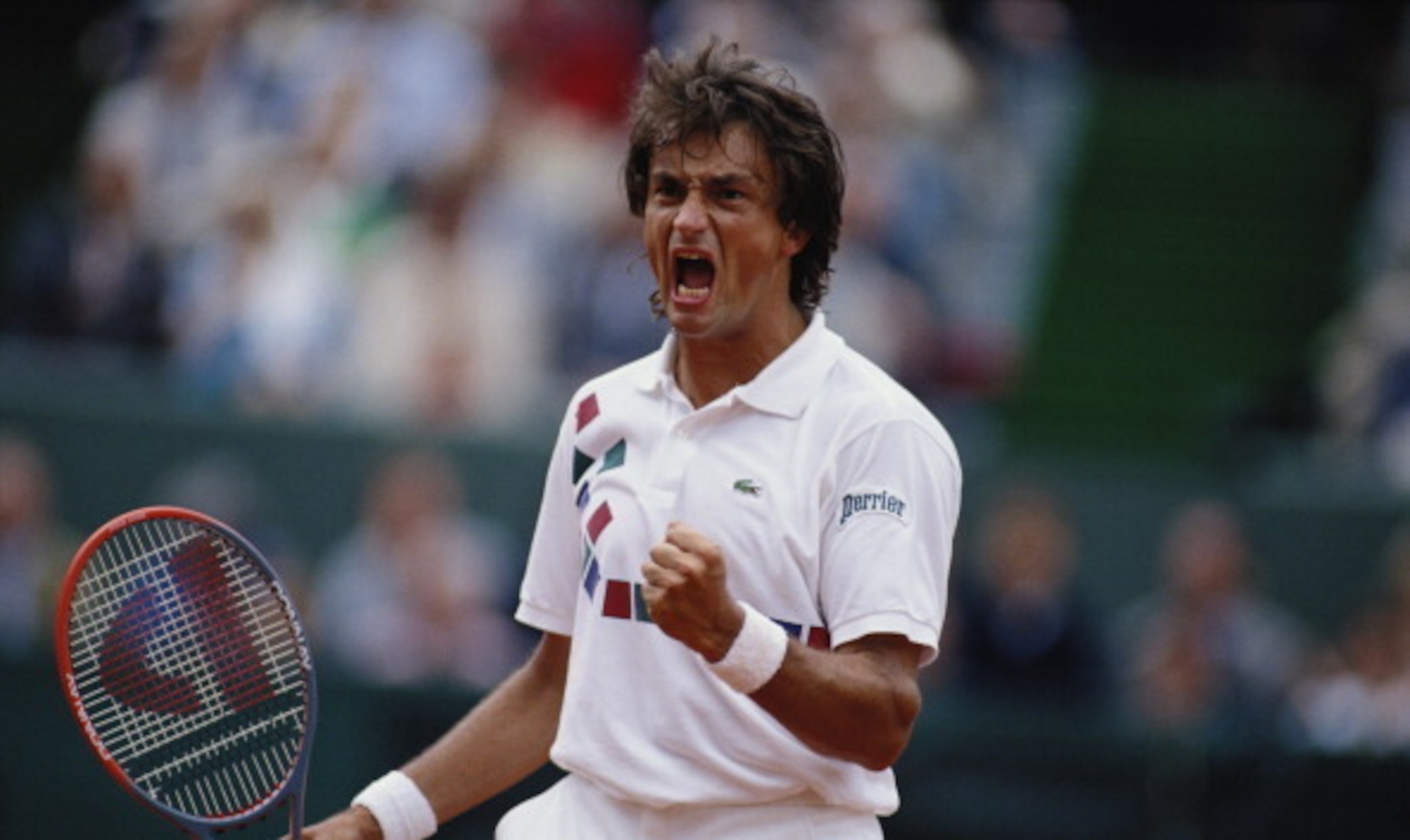
Frenchman Henri Leconte reached the finals of the 1988 French Open, but four years later he was a shell of his former self, still struggling to get his game back after undergoing his third back surgery the previous September.
Entering the 1992 French Open, Leconte had lost in the first round in four of his six tournaments that year, and that included opening-round defeats in the Australian Open and both clay-court tournaments immediately before the French Open.
He was ranked No. 200 and needed a wild card simply to get into the main draw at Roland Garros.
Leconte did well to get past his first two opponents, Massimo Cierro and Jim Grabb, but this became a special tournament for Leconte when he knocked off No. 5-ranked Michael Stich, the defending Wimbledon champion and a French Open semifinalist in 1991.
Leconte's style was to go for winners or virtually every shot, an approach that leads to some embarrassing losses but can facilitate unlikely victories at times. He was making every shot in his straight-sets victory over Stich in the third round, and he continued to play well in a fourth-round victory over Marcelo Filippini.
His run of strong play seemed to end in the quarterfinals, when he lost the first two sets to 94th-ranked Nicklas Kulti. That's when the French crowd began to cheer him on by clapping and chanting his name. Leconte responded by coming back from an 0-2 deficit for the first time in his career, winning 6-7, 3-6, 6-3, 6-3, 6-3.
"The people gave me a lot of energy," Leconte said, according to the Sun Sentinel report on the match. "It was fabulous. I am happy for me and for them."
Leconte's tournament ended with a straight-sets loss to No. 8-ranked Petr Korda in the semifinals.
It proved to be the last hurrah for the 28-year-old Leconte, who lost in the first round in all three of his subsequent French Open bids and never made it to the quarterfinals of another Grand Slam event. He still ranks among the best players never to have won a major.


8. Martin Verkerk, 2003 Finalist
4 of 11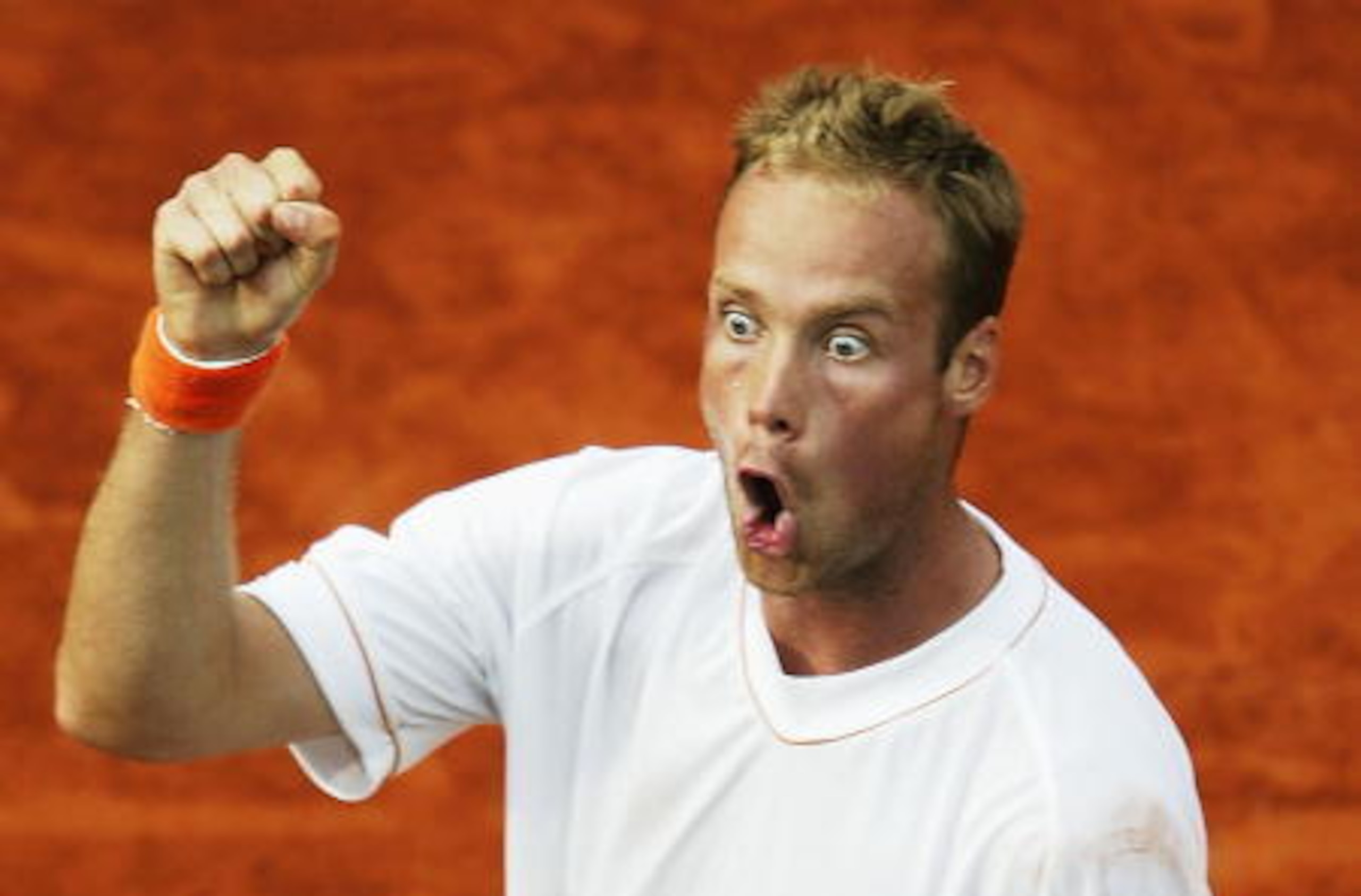
Martin Verkerk had never won a match in a Grand Slam event when the 2003 French Open began. He had lost in the first round of the two preceding majors, falling to a player ranked 104th in the 2003 Australian Open, and had lost in the qualifying rounds of the only other two majors he entered.
Verkerk was eliminated in the first round of the first four clay-court events he played in 2003, including one defeat to a player ranked 232nd. He began to show promise in his final two clay-court events before the French Open, getting to the quarterfinals of one and to the semifinals of the other. However, the only top-25 player he beat in the process was Andy Roddick, who never performed well on clay.
His ranking had risen to No. 46 by the time the French Open started, but he was still a relative unknown.
The 6'5", 24-year-old Verkerk relied on a big serve and hard, flat groundstrokes, not exactly the typical recipe for clay-court success. Nonetheless, he proceeded to beat four seeded players, including two ranked in the top 10, to get all the way to the finals.
Verkerk got a break when fifth-seeded Roger Federer lost in the first round to Luis Horna, who became Verkerk's second-round opponent. The 88th-ranked Horna had Verkerk all but put away when he had a triple match point with Verkerk serving at 2-5, 0-40 in the fourth set. Verkerk used big serves to fight off all three match points, then dominated the rest of the match for a 4-6, 6-4, 4-6, 7-5, 6-2 victory.
He pulled off two more surprises in the next two rounds, eliminating 32nd-ranked Vincent Spadea in four sets and wiping out 11th-ranked Rainer Schuettler in straight sets.
Verkerk's run figured to be over with No. 4-ranked Carlos Moya waiting in the quarterfinals. However, Moya, the 1998 French Open champion and 2003 Australian Open finalist, could not wear down Verkerk, who eked out a five-set victory, 8-6 in the fifth.
Seventh-ranked Guillermo Coria was next, and again Verkerk was a heavy underdog against a player who had just won the clay-court event in Hamburg. Verkerk took Coria apart in straight sets in the semifinals, winning the third-set tiebreaker at love.
''I cannot explain this,'' Verkerk said after that win, according to the New York Times. ''I mean, this is a dream. This is actually a little bit of a joke.''
The dream ended in the finals when No. 3-ranked Juan Carlos Ferrero rolled past Verkerk 6-1, 6-3, 6-2. The most noteworthy aspect of that match was the appearance of a streaker on the court.
Verkerk would crawl back into anonymity after that French Open, losing in the first round of his next three tournaments and never again getting past the third round of a Grand Slam event.
7. Francesca Schiavone, 2010 Champion
5 of 11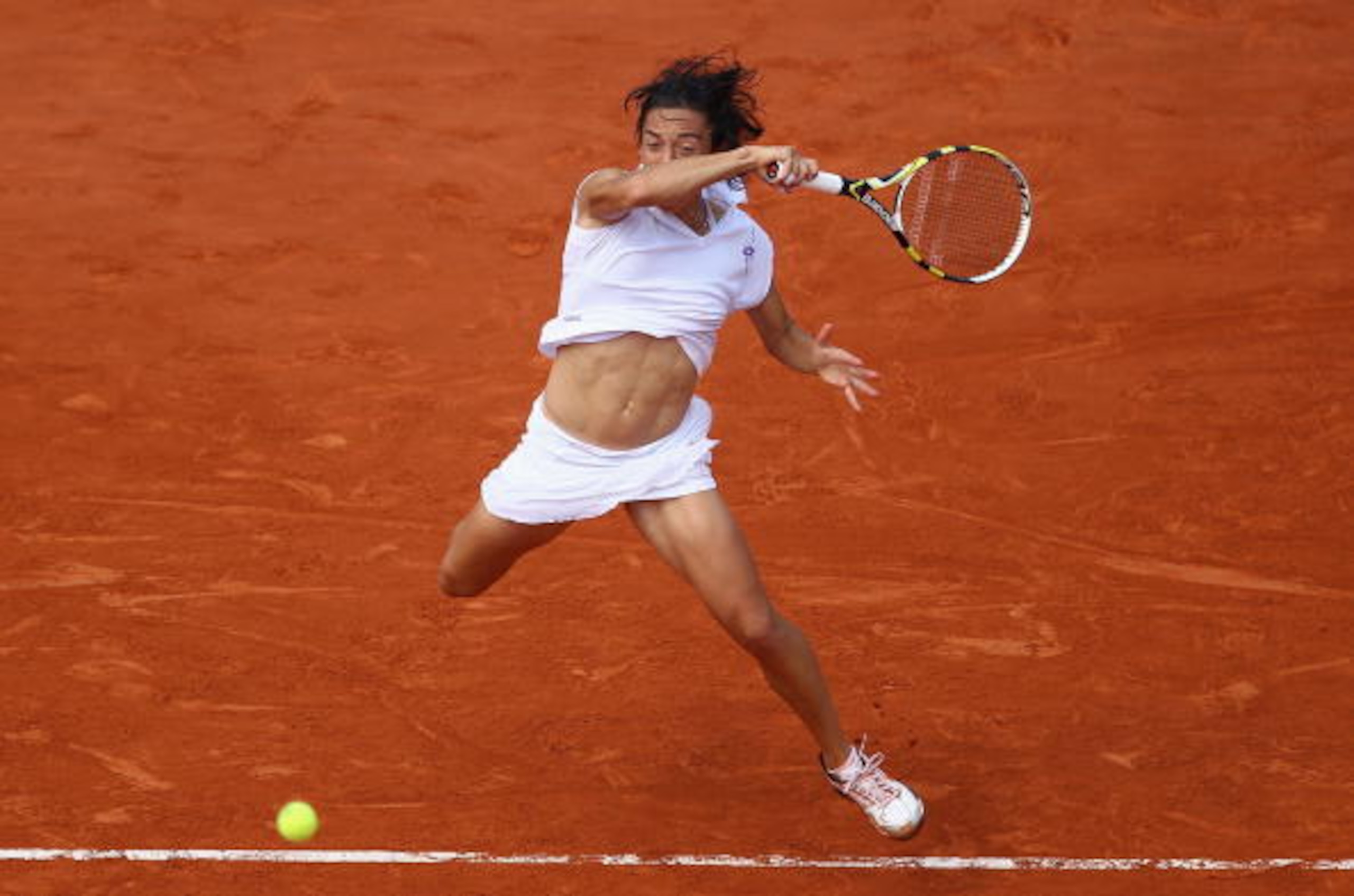
No one seeded lower than 10th had won the women's French title in the Open Era before Francesca Schiavone came along in 2010. Schiavone was the No. 17 seed when she got past four players ranked in the top 12, including three in the top seven, to win her first Grand Slam singles title two weeks shy of her 30th birthday.
She had never been past the quarterfinals of a Grand Slam event before the 2010 French Open, and she figured to be past her prime.
She had lost in the first round of the 2009 French Open to Samantha Stosur, and she finished her unexpected run through the 2010 French Open by beating Stosur in the finals.
Before beating the seventh-ranked Stosur, Schiavone had beaten No. 12-ranked Li Na, No. 3 Caroline Wozniacki and No. 5 Elena Dementieva, who retired after losing the first set to Schiavone. Schiavone was the first Italian woman in the Open era to get to the semifinals of a Grand Slam tournament, much less win one.
Rarely does someone this far back in the pack win a major women's singles title. In fact, the next lowest seeded player to win a women's French Open singles title was Justine Henin, who had already won three Grand Slam singles titles, including the 2003 French Open, when she won the 2005 French title as a No. 10 seed.
A long period of inactivity due to a debilitating virus had caused Henin's ranking to drop, but she was hardly a surprise winner in 2005, which was the first of three consecutive French Open titles for Henin.
Although Schiavone was the lowest-seeded woman to win a French Open in the Open Era, she was not the lowest-ranked woman to do so. Sue Barker was ranked No. 18 when she won it in 1976, and Virginia Ruzici was No. 17 when she took the 1978 title.
But the French Open fields were so poor in those two years that Barker was seeded No. 1 and Ruzici No. 2 in their title runs.
6. Christophe Roger-Vasselin, 1983 Semifinalist
6 of 11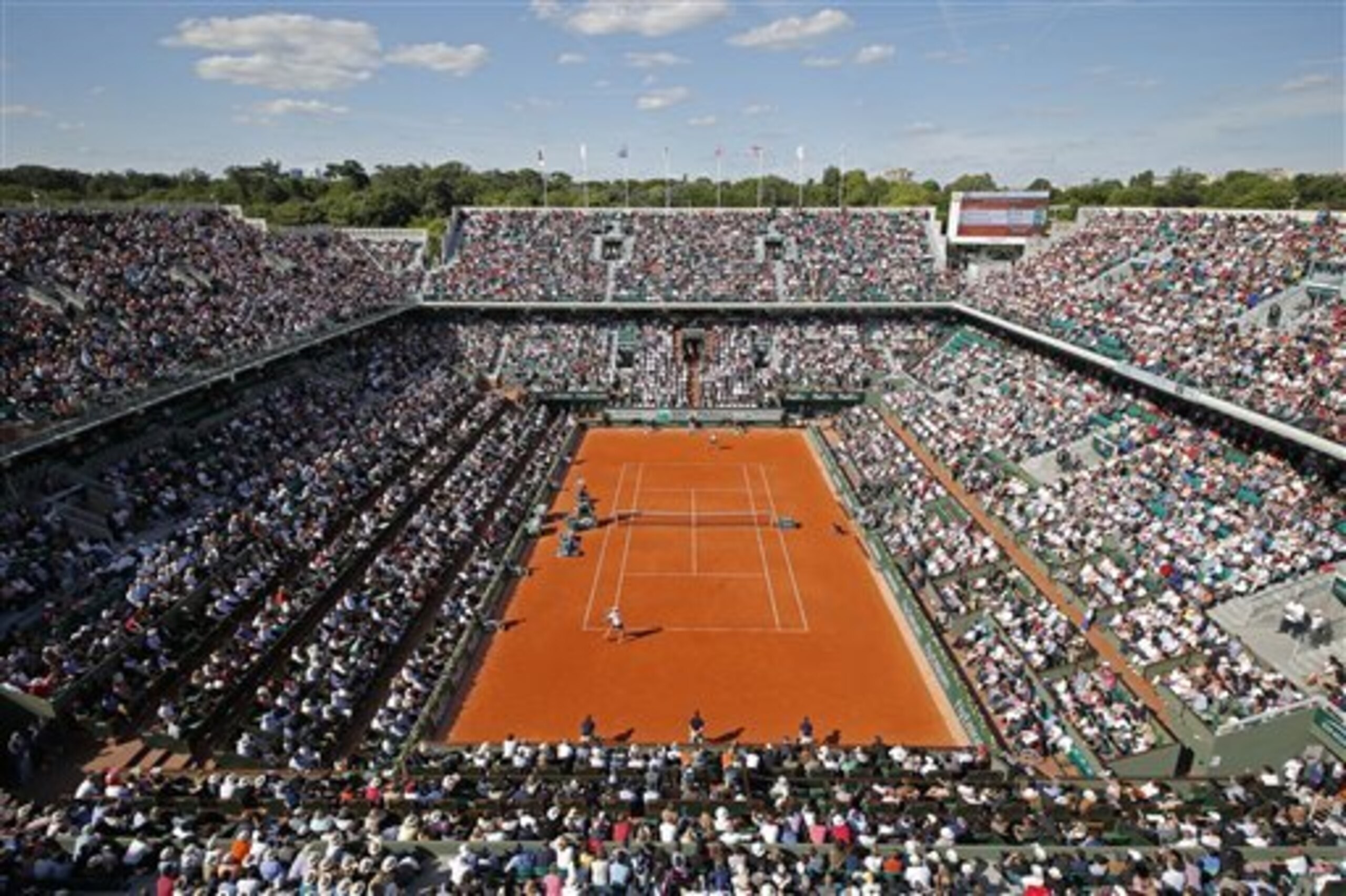
Christophe Roger-Vasselin's run in the 1983 French Open may be the most inexplicable of all. The only reason it is not ranked higher is that he failed to reach the finals.
Roger-Vasselin entered the 1983 French Open ranked 230th, according a 2008 New York Times article. From October 1982 until his first-round match at Roland Garros the following year, the 25-year-old Frenchman had played eight tournaments and had won exactly one match.
Inspired by the backing of the French crowd, he produced the best tennis of his career at the 1983 French Open. He was aided by the fact that the two seeded players in his quarterfinal bracket, Wojtek Fibak and Jose-Luis Clerk, were eliminated before he had to face them. Nonetheless, it was still a major surprise that Roger-Vasselin beat Bernard Balleret, Bernard Fritz, Heinz Gunthardt and Fernando Luna to reach the quarterfinals.
Awaiting at that point was top-seeded Jimmy Connors. Clay may not have been Connors' best surface, but he had won the 1976 U.S. Open on clay, beating clay-court masters Guillermo Vilas and Bjorn Borg in the final two rounds. In 1975, the other year the U.S. Open was played on clay, Connors beat Borg in the semifinals before losing to Manuel Orantes in the finals.
Presumably Connors would have no trouble with Roger-Vasselin, who had lost to Connors in the first round of the 1981 French Open in their only previous meeting.
Roger-Vasselin not only beat Connors for one of the biggest upsets in Grand Slam history, but he did so in straight sets, 6-4, 6-4, 7-6.
The level of Roger-Vasselin's obscurity was reflected in this New York Times passage:
"Even here in his home country, Christophe Roger-Vasselin is known hardly at all. If he ever doubted that, today was proof as the fans at Roland Garros Stadium could not figure out his first name when the time came to urge him on in his quarterfinal match against Jimmy Connors.
"
Roger-Vasselin was no match for countryman Yannick Noah in the semifinals as Noah breezed to a straight-sets victory on his way to the title.
Roger-Vasselin promptly lost in the first round of his next two tournaments after the French Open and also lost in the first round of the French Open the next two years.
Many remember that Noah's 1983 championship represents the last time a Frenchman won a French Open men's singles title. Few remember that another Frenchman had a more surprising run in that tournament.
5. Michael Chang, 1989 Champion
7 of 11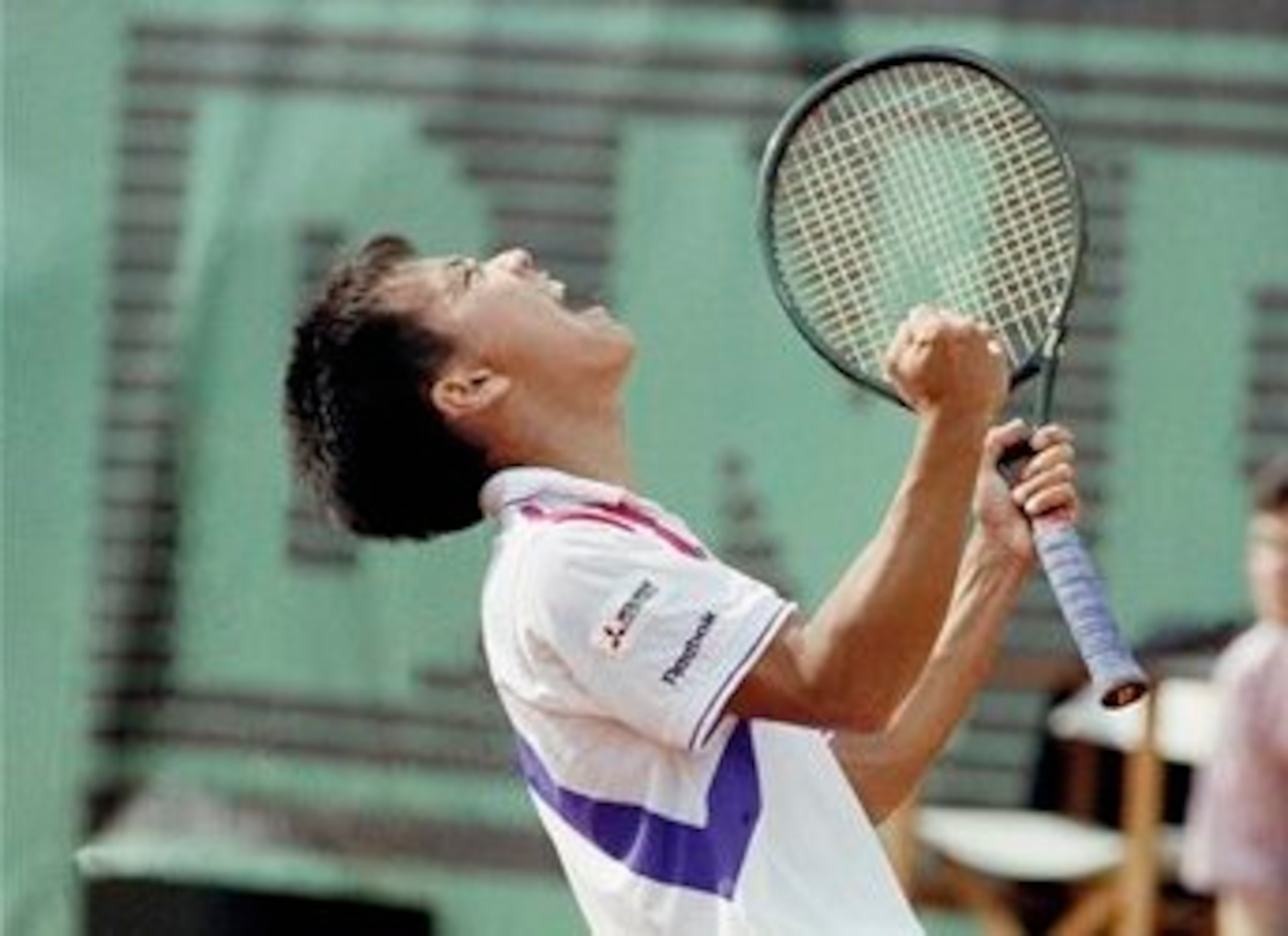
Michael Chang had been a pro for just 13 months when he arrived at the 1989 French Open as the No. 15 seed and No. 19-ranked player in the world. He had not gone past the semifinals of a single tournament prior to the French Open that year, and he did not beat any top-20 players when he captured his only title, in San Francisco the previous September.
More significantly, Chang was 17 years old and an American, two attributes that typically did not translate into success on Roland Garros' red clay. Nonetheless, he beat two top-three players in marathon five-set matches on his way to becoming the first American male since 1955 to win a French Open title and the youngest player ever to capture a Grand Slam men's singles title.
Chang's victory over No. 3-ranked Stefan Edberg in the finals was heroic, as he rallied from being down a service break in the fourth set after losing two of the first three sets.
However, Chang's most memorable match in the tournament was his five-set, fourth-round victory over No. 1-ranked Ivan Lendl. Lendl had won the French Open in 1984, 1986 and 1987 and had captured the Australian Open title earlier in 1989. He had won four of his five tournaments immediately before the French Open, including both clay-court warm-up events. Lendl rolled through his first three matches at the French Open without the loss of a set.
When Lendl cruised through the first two sets against Chang 6-4, 6-4, it seemed Chang would make his expected exit.
Things changed.
Chang managed to win the third set 6-3, and Lendl began to get flustered, complaining to the umpire about line calls and rulings. Late in the fourth set, Chang began cramping, and it was obviously getting worse as he captured the fourth set to even the match. He had begun hitting moon balls, which did not please the crowd, but helped Chang stay in the match.
The cramps continued to worsen, and by the third game of the fifth set, Chang could barely move. Although he was leading 2-1 in the deciding set, Chang began walking toward the umpire's chair with the intention of retiring from the match.
"I was really close to quitting," Chang said later in a story in the Guardian. "I started to say to myself: 'Who am I kidding here? I'm 17 years old and I'm playing against the No1 player in the world. It wouldn't be so bad to just call it a day'."
Before he reached the umpire, he changed his mind and decided to continue.
Leading 4-3 but down 15-30 on his serve in the eighth game, Chang did the unthinkable: He hit an underhand serve to the No. 1 player in the world. Chang won the point and the game, and broke Lendl's serve again in the ninth game to finish off a 4-6, 4-6, 6-3, 6-3, 6-3 victory.
Chang then beat Ronald Agenor and Andrei Chesnokov to get to the finals and his match with Edberg.
4. Mats Wilander, 1982 Champion
8 of 11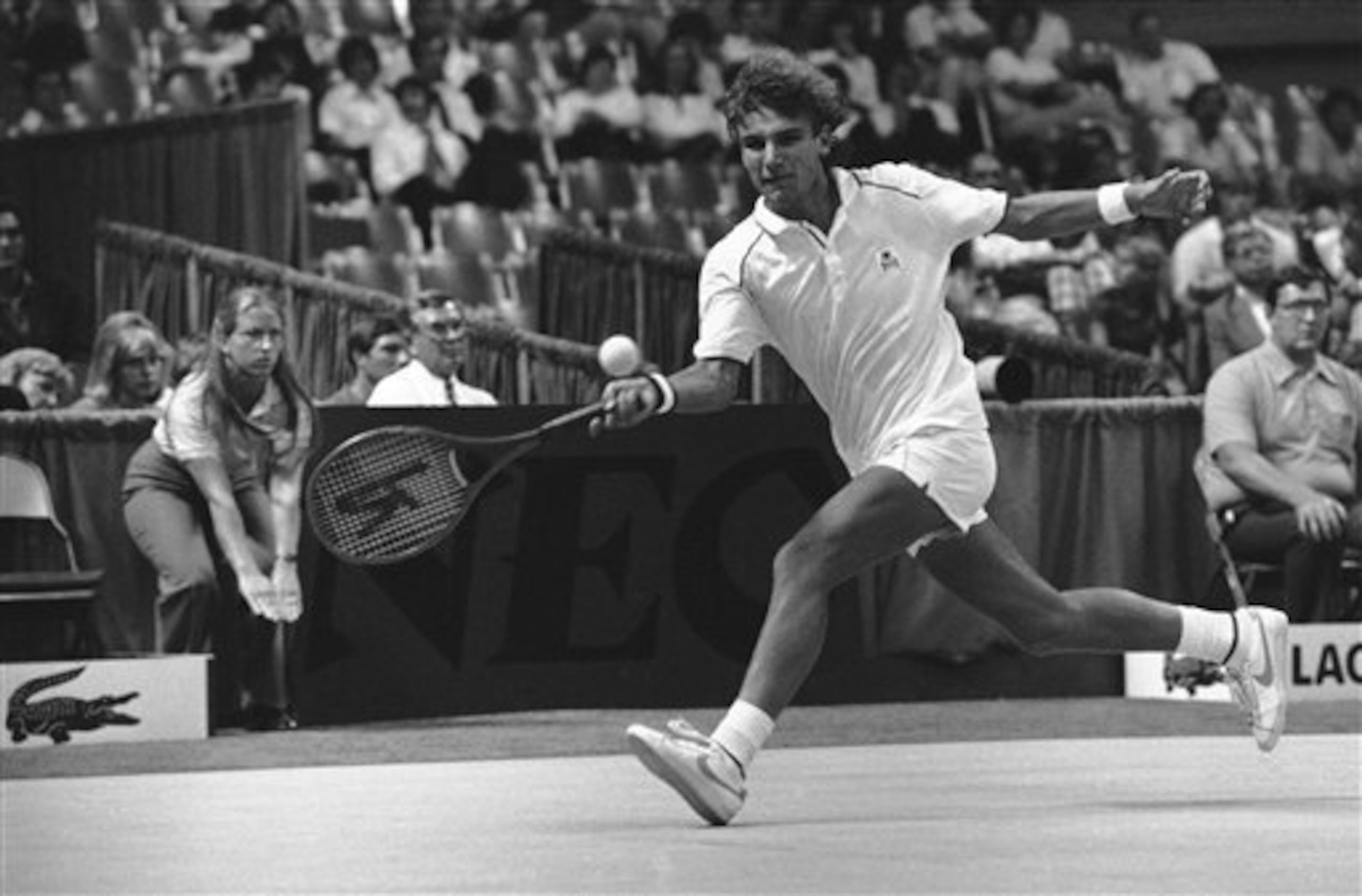
Mats Wilander was not a complete unknown when he entered the 1982 French Open. He had reached the quarterfinals and semifinals of the two clay-court events immediately before the French Open and was up to No. 18 in the rankings.
However, he had been ranked No. 69 when the year began and was unseeded at the French Open. More significantly, he was a 17-year-old playing in his first French Open. To that point, the youngest male to win a Grand Slam singles title in the Open era was his Swedish countryman Bjorn Borg, who was 18 when he won the 1974 French Open.
Wilander simply did not seem to have the experience needed to win a major title on clay, especially when the era was packed with some of the best clay-court players in history.
Wilander did not attract a lot of attention by beating Alejandro Cortes, Cassio Motta and Fernando Luna in his first three French Open matches. But up next, in the round of 16, was Ivan Lendl, the No. 2 seed and 1981 French Open finalist. Lendl won two of the first three sets, but Wilander rallied to win 4-6, 7-5, 3-6, 6-4, 6-2 in a major upset.
Wilander then knocked off No. 5-seeded Vitas Gerulaitis in four sets in the quarterfinals and eliminated No. 4 seeded Jose Luis Clerc, a 1981 French Open semifinalst, in four sets in the semifinals.
In the finals, Wilander faced No. 3-seeded Guillermo Vilas, a clay-court specialist who was playing the best tennis of his career. Vilas had won four of his previous five tournaments and had beaten Wilander in straight sets on clay a month earlier.
Vilas rolled through his first six matches of the French Open without the loss of a set, and he seemed headed for the title when he won the first set of the finals 6-1. From that point, Wilander simply refused to miss, winning the long exchanges against Vilas to record a 1-6, 7-6, 6-0, 6-4 victory that lasted 4 hours, 47 minutes—five minutes longer than the previous record for a French final set in 1929.
Wilander became the youngest male champion of a Grand Slam singles event in the Open era, a record later eclipsed by Michael Chang. Wilander was also the first unseeded player to capture the French Open, and he did it by beating four top-six players in succession.
3. Andrei Medvedev, 1999 Finalist
9 of 11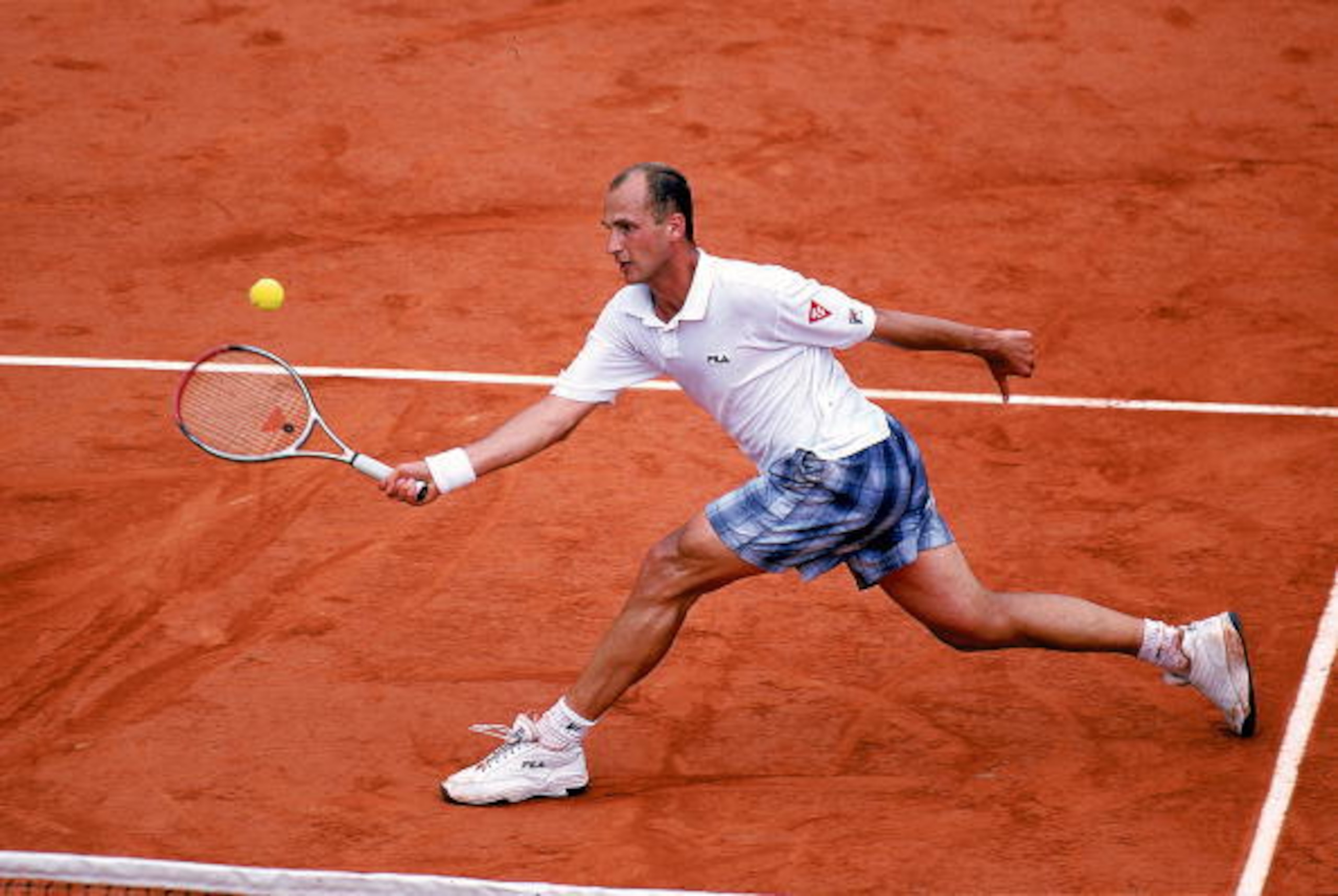
Andrei Medvedev had been ranked as high as No. 4 in 1994, but five years later he found himself outside the top 100, wondering why he should keep playing tennis following a series of injuries.
He had lost in the first or second round of all eight tournaments he played in 1999 before the French Open, and that included first-round defeats in his two most recent clay-court events.
It was after his embarrassing 5-7, 6-0, 6-1 loss to 196th-ranked Ivan Ljubicic at Monte Carlo in April that Andre Agassi, according to his book Open: An Autobigraphy by Andre Agassi, ran into Medvedev at a pub. "He threw himself into a chair at our table and announced that he was quitting tennis," Agassi said in the book.
Agassi said he helped talk Medvedev out of quitting, but the Ukrainian did not play another tournament match until the French Open. By that time the 24-year-old Medvedev was ranked No. 100 and was presumed to be a non-factor at Roland Garros.
After a layoff of more than a month, Medvedev inexplicably recaptured the magic of his earlier years. He knocked off second-seeded Pete Sampras in four sets in the second round, then pulled off a shocker in the quarterfinals by beating No. 8-ranked Gustavo Kuerten, the 1997 French Open champ, in straight sets.
Medvedev had an explanation for his play against Kuerten, as noted in the Baltimore Sun account:
"What you see here is the difference between a miserable playing guy and a happy playing guy. Who do you think is going to win? I am the happiest man in the world, really. I can't imagine anyone being happier than me. You know, when there is love, you are inspired. You write poems, you can write music, you can play good tennis. . . . No, really, it is true. I am in love with a girl.
"
The girl was German tennis player Anke Huber, with whom Medvedev had renewed a relationship.
Medvedev got past Fernando Meligeni in the semifinals, earning him a place in the finals against the 19th-seeded Agassi. Medvedev blew by Agassi in the first two sets of the finals 6-1, 6-2, and it seemed he would become the first man with a triple-digit ranking to win the French Open.
Instead Agassi turned the match around, winning the final three sets 6-4, 6-3, 6-4 to capture his first and only French Open title.
That was the only time Medvedev reached the finals of a Grand Slam event, and he did it as the No. 100-ranked player.
2. Gaston Gaudio, 2004 Champion
10 of 11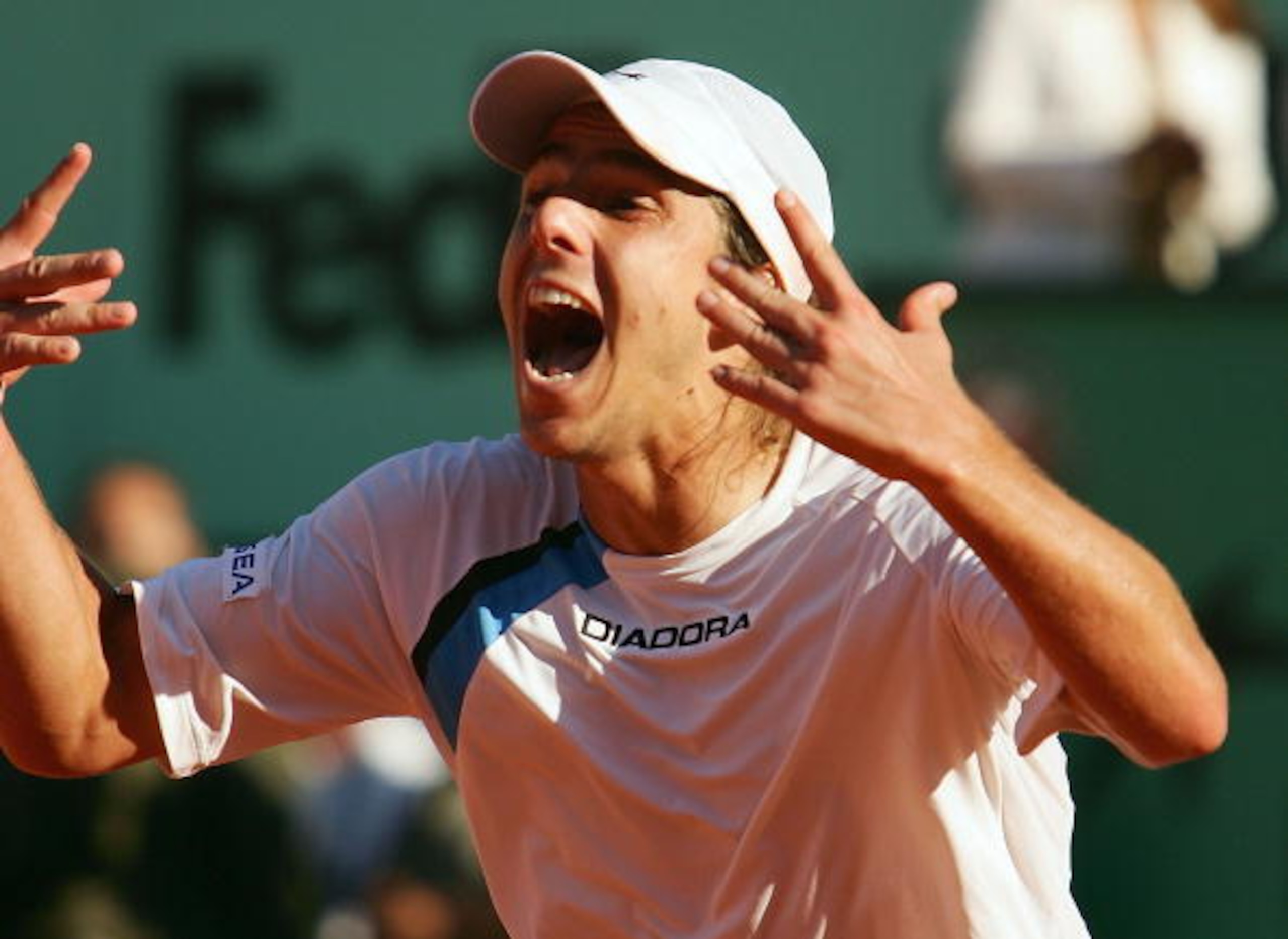
Thirty-two players were seeded in the 2004 French Open, but that still was not enough to include Gaston Gaudio of Argentina.
The 44th-ranked Gaudio became just the third unseeded player in the Open era to win a French Open title, joining Gustavo Kuerten (1997) and Mats Wilander (1982). Kuerten was the only champion with a lower ranking than Gaudio.
It's noteworthy that the 2004 French Open was the last time until the 2012 U.S. Open that neither Roger Federer nor Rafael Nadal was in the semifinal of a Grand Slam event, a streak of 33 consecutive majors.
Nadal would not play his first French Open until 2005, and the top-seeded Federer was beaten in the third round in 2004 by Kuerten, who had already won three French Open titles.
Nobody was paying much attention to Gaudio, who had never advanced past the fourth round in any of his 20 previous Grand Slam tournaments and had been past the third round just once.
Gaudio had been ranked as high as No. 19 in March 2003, but he had slipped considerably since then. He lost in the first round in three of his five clay-court events before the French Open, including a loss to 121st-ranked Florian Mayer. Gaudio did manage to get to the finals in Barcelona, so there was a hint he might win a few matches at Roland Garros.
Gaudio won five-set matches in the first two rounds of the French Open, the second coming against 14th-ranked Jiri Novak. He then got past Thomas Enqvist and Igor Andreev in his next two matches before facing former No. 1 player Lleyton Hewitt in the quarterfinals.
Gaudio simply outsteadied the 12th-ranked Hewitt, making 19 unforced errors to Hewitt's 43 in a straight-sets victory. In the semifinals, Gaudio beat countryman and No. 8-ranked David Nalbandian 6-3, 7-6, 6-0 and cried into his towel after winning.
”All those practices, all those sacrifices, all the people who helped me, it was all playing like a movie in my head,” he said, according to the New York Times.
Gaudio was not finished. In a bizarre finals, Gaudio fought off two match points against him to beat third-ranked Guillermo Coria of Argentina 8-6 in the fifth. Coria had won 37 of his previous 38 matches on clay, and he streamrolled Gaudio in the first two sets, 6-0, 6-3.
But just when Gaudio's dream run seemed to be ending, Coria developed cramps. At one point in the fourth set, Coria was barely moving and lobbing in 60mph serves, according to the USA Today report.
Coria's cramps eased in the fifth set when he served for the match at 5-4 and 6-5. He had two match points in the 12th game but failed to convert either. Gaudio won the final three games and the match.
"I don't know how, but I won," Gaudio said, per USA Today.
Including qualifying rounds, Gaudio played in 34 Grand Slam singles tournaments in his career, and the 2004 French Open was the only time he advanced as far as the quarterfinals.
1. Gustavo Kuerten, 1997 Champion
11 of 11
Gustavo Kuerten would eventually win three French Open titles, but nobody would have predicted that when he stepped on to the court for his first-round match of the 1997 version.
Kuerten was 20 years old and playing in just his third Grand Slam event. He had lost in the first round of the 1996 French Open and was beaten in the second round of the 1997 Australian Open.
He did nothing in the early clay-court season to suggest he would be a factor at the 1997 French Open. In his five clay-court events leading up to it, he lost in the first round in three of them and the second round of a fourth. All those losses were to players ranked outside the top 50 and one was to a player ranked 133rd.
Kuerten did win a small non-tour clay-court event just before the French Open, but he beat no one ranked in the top 150 to do it.
Entering the French Open, Kuerten was ranked No. 66 in the world. He was, quite simply, a nobody.
He became a star over the next two weeks. He pulled off his first significant upset when he dispatched 23rd-ranked Jonas Bjorkman in four sets in the second round. Then came his magical run of three consecutive five-set victories, two of which were against players ranked among the top five.
Kuerten lost the first set to No. 5 Thomas Muster, the 1995 French Open champ, in the third round but won the match 6-4 in the fifth. He then dropped the first set to 20th-ranked Andrei Medvedev in the fourth round before winning 7-5 in the fifth.
In the quarterfinals, Kuerten found himself behind two sets to one against No. 3-ranked Yevgeny Kafelnikov, the defending French Open champ, but pulled that one out by winning the last two sets 6-0, 6-4.
Kuerten got by Filip Dewulf in the semifinals, and that left Sergei Bruguera as Kuerten's final-round foe. Bruguera had won the French Open in 1993 and 1994 and had reached the semifinals in 1995. But he was merely roadkill for the inspired Kuerten, who blew off Bruguera 6-3, 6-4, 6-2 in less than two hours.
Kuerten is the lowest ranked player in the Open era to win a French Open crown, and he did it by beating three former French Open champions along the way.
His prize money of $660,000 for winning the French Open was nearly five times his total career earnings to that point.
"Money? I think I put it in my account because I don't want to buy anything," he said, per the Los Angeles Times. "I have all that I need right now. I have my mom's car that I use a little bit. I am happy."
Kuerten would win the French Open again in 2000 and 2001 and was ranked No. 1 in 2000. In retrospect, his 1997 title run might not seem so surprising. At the time, it was a stunner.

.jpg?w=2560 "Weather Channel Trolls Texans-Titans 💀")

.jpg?w=2560 "Report: Seahawks Not Signing Mixon 😯")