Forget Twenty20, It's Dead Pitches That Will Kill Test Cricket
“A pitch that will suit bowlers who take the pace off the ball.” There are few more depressing phrases that a commentator can utter at the start of a day's Test cricket.
It conjures up a diet dibbly-dobbly seamers, slow bowlers firing the ball in at leg stump and attacking batsmen unable to time their shots. A slow, dead pitch is punishment for the players the spectators really want to see—the genuine fast and nasty bowlers, the flashy stroke makers and spinners who give the ball a rip.
Too often these days, spectators are being asked to watch Test matches on surfaces that encourage tedious, defensive cricket. Too often they're battles of attrition rather than festivals of flair. Dead pitches are the cricketing equivalent of snooker grinder extraordinaire Cliff Thorburn or boring, boring Arsenal under George Graham. Pragmatic, safe and dull.

.jpg?w=2560 "Steelers Saints Football")
.jpg?w=2560 "Rams Raiders Football")
Take the first Test between the West Indies and England in Grenada. A deadly slow surface stifled attacking shots from the batsmen and adventure from the bowlers. As a spectacle it made for pretty grim viewing. No wonder people want to watch pyrotechnic Twenty20 action in the Indian Premier League.
Even five-day cheerleaders such as Simon Hughes found Grenada hard going. The TV analyst tweeted:
"I do love test cricket but at this precise moment I'd rather watch Kohli and de Villiers bat than Bell and Ballance. #embarassmentofriches
— simon hughes (@theanalyst) April 13, 2015"
That's not to single out the West Indies for special criticism. Dead pitches are a disease spreading around the cricketing world.
The first Test in Khulna between Bangladesh and Pakistan produced 1,515 runs for the lost of just 25 wickets. Hardly an even contest between bat and ball.
MS Dhoni has bemoaned the state of pitches in India. Speaking in a press conference reported by ESPN Cricinfo, the skipper has expressed hopes that Indian wickets will turn “right from start, or as soon as possible so that the toss doesn't become vital."
English Test grounds have produced a succession of chief executive-friendly pitches. Even the ICC put the boot into Trent Bridge after the deadly slow surface served up for last-year's snorefest against India.
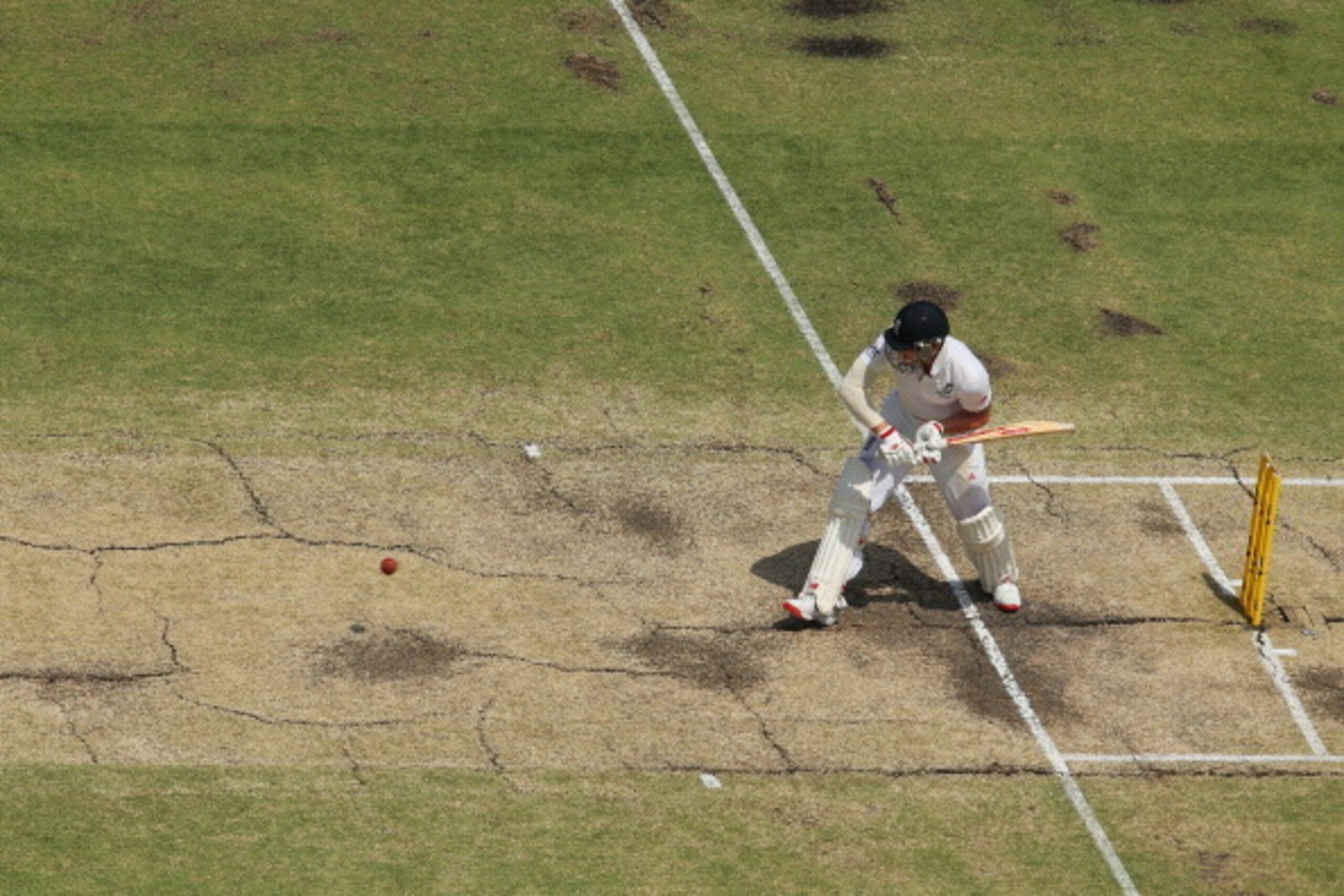
It should come as no surprise that the country that consistently produces the fastest bowlers and most attacking batsmen is also home to the quickest pitches.
Would Mitchell Starc, Mitchell Johnson and Pat Cummins have topped 150 km/h on the speed gun if they'd had their cricketing education in England rather than Australia? Or would they have sacrificed pace and aggression for something more pragmatic? Probably, yes.
The advantages on offer from pacey pitches didn't go unnoticed across the Tasman Sea. New Zealand managed to inject some life into their playing surfaces. Add a little stardust from captain Brendon McCullum and the Kiwis have become one of the most watchable sides in world cricket.
As former Aussie skipper Steve Waugh noted at Stuff.co.nz: “The pitches in New Zealand are much quicker and bouncier, which promotes much better cricket; it's also encouraged fast bowlers and strokeplay and you see they're much more positive in their cricket.”
The days of Gavin Larsen, Rod Latham and Chris Harris are long gone.
Of course, the climate in Birmingham and Bangladesh is very different to that in Brisbane. The rain in Manchester hasn't stopped Old Trafford from regularly delivering the quickest Test pitch in England.
Cricket is supposed to be in the entertainment business. While Twenty20 attracts huge crowds around the world, the Test game struggles to put bums on seats.
Is there anything more thrilling than watching a high-class batsman take on an express bowler on a fast and bouncy track. Apart perhaps from the same batsman taking on a quality leggie on a turner. We want pitches that provide a genuine contest between bat and ball. Ones that offer pace and carry and reward attacking and daring cricket.
So what can be done to create them? The drainage systems at English Test grounds may have lessened delays because of wet outfields but they've also sucked the life out of many pitches. Leaving a little more moisture in would certainly even up the balance between bat and ball. As would more grassy surfaces.
This salient Tweet during the final Test between West Indies and England in Barbados said everything about the state of the Test game today:
"Test cricket proving that when its bad it's unwatchable and when it's good its unmissable.
— Sim Mahon (@SimUKCricket) May 3, 2015"
Too often it's the former. Getting some life into pitches would go a long way towards ensuring more of the latter.
.jpg?w=2560 "AP Poll Top Five Week 9")
.jpg?w=2560 "Chiefs Giants Football")
.jpg?w=2560 "Lamar Being Out Shocked Ravens")

.jpg?w=2560 "Packers Safety Slams Refs 🤬")