
NFL Draft 2015: Best Available Players for Saturday
For the best available players in the 2015 NFL draft, there is only one chance remaining to be a top-100 pick. With Rounds 1 to 3 of the draft in the books, the Tennessee Titans will kick off Day 3 at No. 100 overall, which will be followed by 156 more selections before the event culminates with the Arizona Cardinals’ selection of Mr. Irrelevant.
That’s not to say, however, that there is only one player left on the board who should be considered a top-100 talent. In reality, there are more than a dozen players thought to be such who go into Saturday still waiting to hear their names called.
For one reason or multiple, each of the following players went overlooked on the first two days of the draft despite having eye-catching skill sets. Some of these players have evident weaknesses in their on-field games that likely spurred their draft drops, but it’s also likely behind-the-scenes aspects of the draft process, such as medical evaluations and interviews, are affecting many of these players at this point.
Either way, we can take a look at why each of these players—in order of the best left on the big board of Bleacher Report's Matt Miller—might still be on the board and why teams should be giving serious thought to drafting these prospects early in Round 4 anyway.
Draft Tracker
1 of 14Still catching up on who each team picked during Days 1 and 2 of the draft? The widget above enables you to look at what has happened by round and team.
Matt Miller's Best Available
2 of 14To see which players on Matt Miller's big board are still available for selection, click the "All Players" tab and select "Undrafted."
Due to his ongoing off-field situation, LSU offensive lineman La'el Collins has not been included in this article. Prior to the second and third rounds of the draft Friday, NFL.com's Ian Rapoport reported that Collins would not sign his contract if he is drafted by a team on Day 3 and would try to enter the 2016 draft, which makes it likely he will not be drafted Saturday.
However, Rapoport later reported that a source told him, "If Collins is not drafted, he becomes a free agent. With no eligibility, he will not be eligible for another draft."
1. Gerod Holliman, FS, Louisville
3 of 14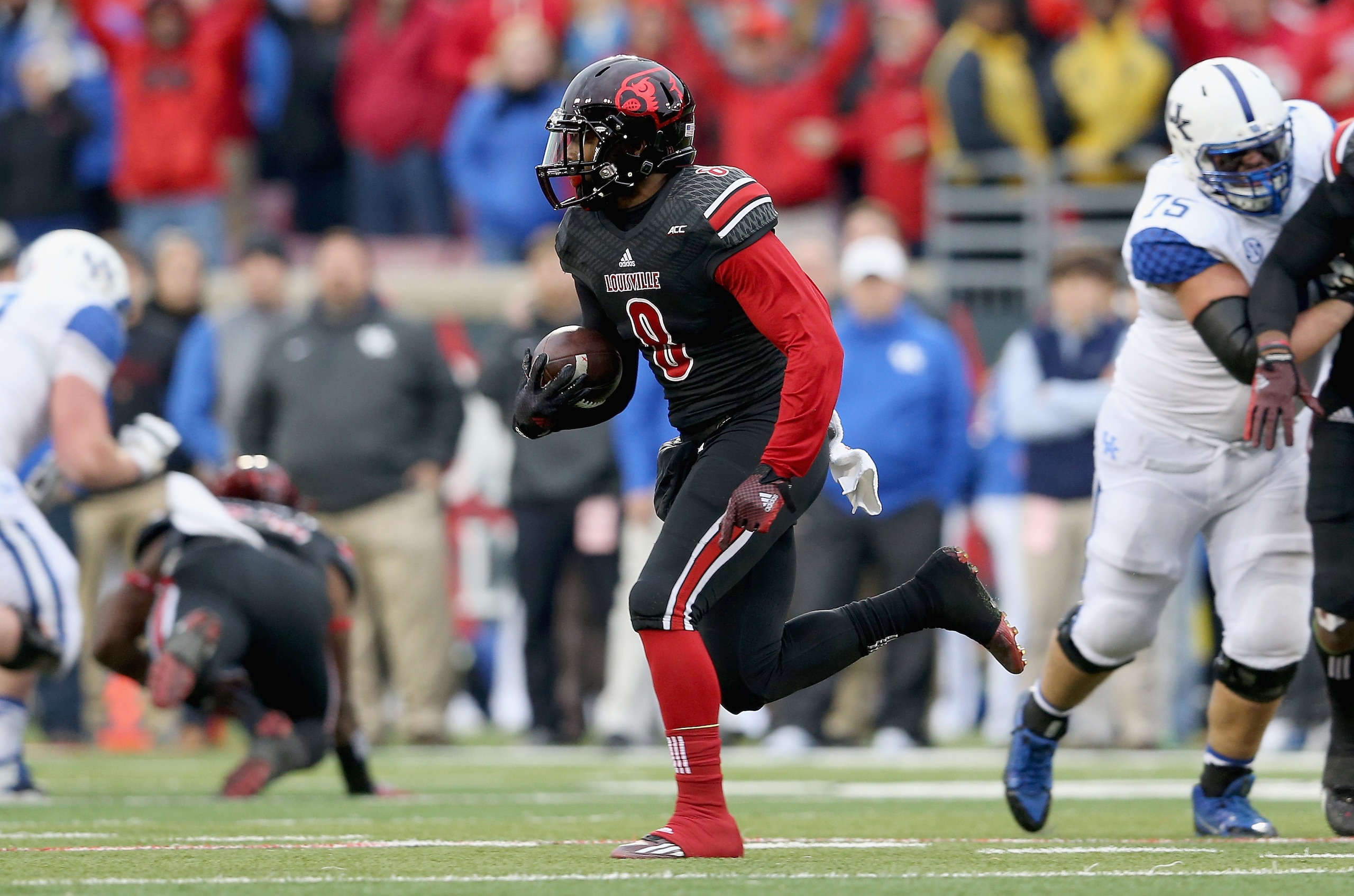
In a breakout season for Louisville as a redshirt sophomore last year, Gerod Holliman left no doubt about his ability to make plays on the ball. With 14 interceptions—an average of more than one per game—Holliman tied the Football Bowl Subdivision record for most interceptions in a season set by Washington’s Al Worley in 1968.
It came as no surprise that Holliman, striking while the iron was hot, decided to declare for the draft this year. No matter how great a ball hawk he might be, it’s hard to imagine he could have topped that total by returning to college football for another year.
Given that the ability to make plays on the ball and create turnovers is one of the most highly valued traits for a defensive back prospect—and Holliman is better at it than anyone else in the draft class—it seemed like he would be selected on Day 2. With that being said, the room for doubt he has left in other aspects of his game is why he is still waiting for a phone call going into the draft’s final day.
While Holliman may have the best ball skills of any safety in the draft, it can also be argued that he is the worst tackler in the safety class, at least among draftable players. According to NFL.com’s Lance Zierlein, Holliman “had 44 total tackles with 20 missed and/or broken tackles, which was the worst ratio for an FBS starter” last season.
Holliman’s predraft workouts also didn’t help his cause. After sitting out on-field drills at the NFL combine, he completed the 40-yard dash at his pro day in just 4.65 and 4.68 seconds, times quite slow for a defensive back.
It’s clear Holliman has a nose for the football. He has good size for a safety at 6’0” and 218 pounds, and his upside as a coverage playmaker is high. Concerns about his athleticism and ability to play in run support, however, could potentially prolong his fall on Day 3.
.jpg?w=2560 "Rams Raiders Football")

.jpg?w=2560 "Steelers Saints Football")
2. T.J. Clemmings, OT, Pittsburgh
4 of 14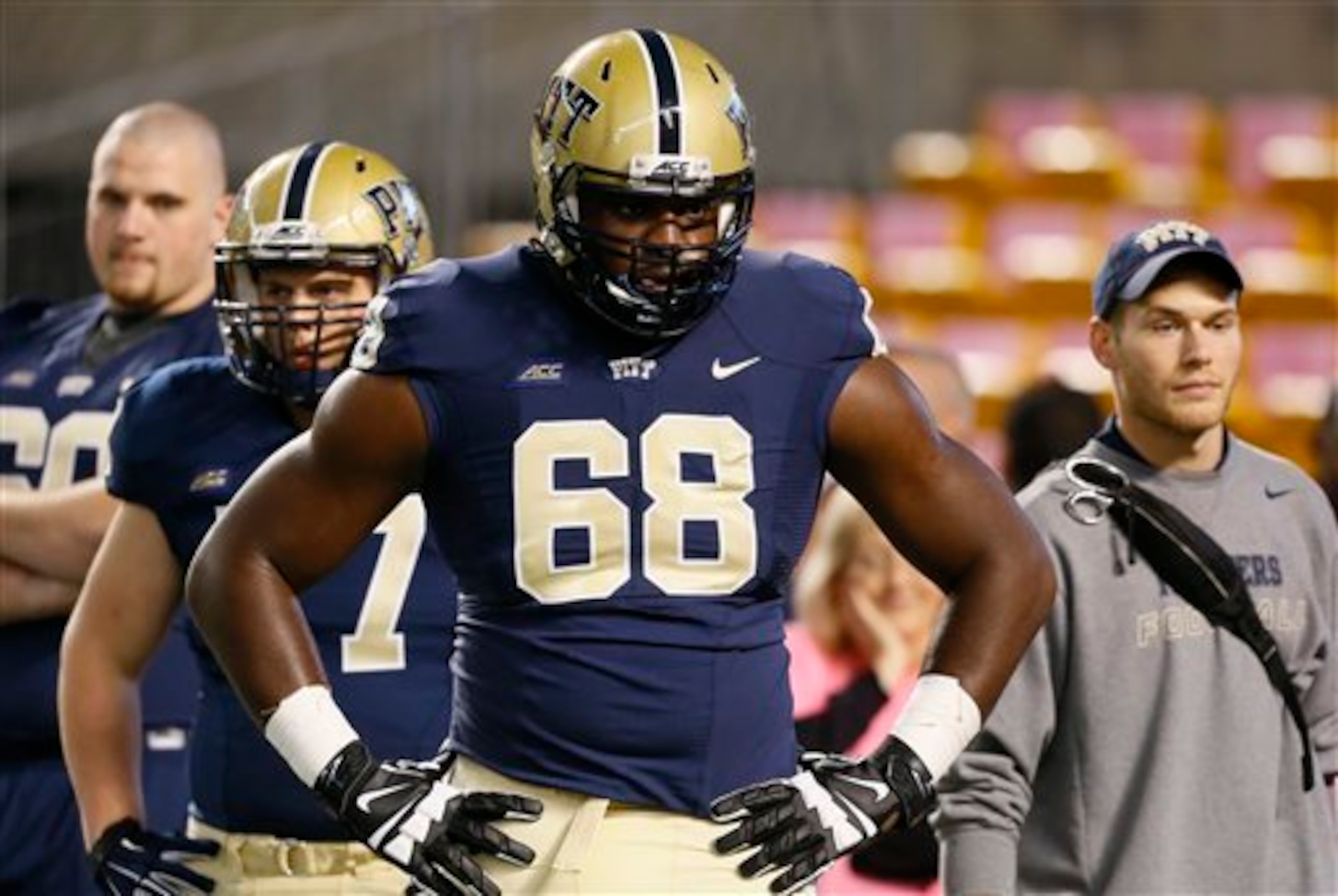
Projected in most mock drafts to be a late first-round or early second-round selection, T.J. Clemmings is the player whose presence on the board is the most surprising going into Day 3.
A 6’5”, 309-pound lineman with tremendous arm length (35 1/8 inches) and quick feet for a man of his size, Clemmings has archetypal physical tools for an NFL offensive tackle. As he proved in two seasons playing right tackle at Pittsburgh, he has tremendous power and can bulldoze opponents away from the ball.
With his ability to drive block off the line and move his way to the second level, Clemmings has the skills to be an invigorating run-blocker right away. His struggles in pass protection, as exposed at this year’s Senior Bowl, leave reason for concern.
Still raw at his position after playing defensive line during his first two years at Pittsburgh, Clemmings must significantly improve his pass-blocking technique to be able to hold up on the outside against NFL edge-rushers.
The biggest reason Clemmings has yet to be selected, however, might very well be medical. Ian Rapoport reported last week that Clemmings has a stress fracture in his foot. Although Clemmings’ agent, Mike McCartney, told NFL Media the stress fracture “causes Clemmings no pain and that he never has had to do any rehab on his foot,” it appears to have had a real effect on his draft stock.
Given his immense physical upside, it’s a surprise Clemmings even made it out of Round 2, let alone Round 3. But the fact that he remains a project on the field, coupled with the news he is not fully healthy, makes him a risky selection teams might consider more justifiable on Day 3.
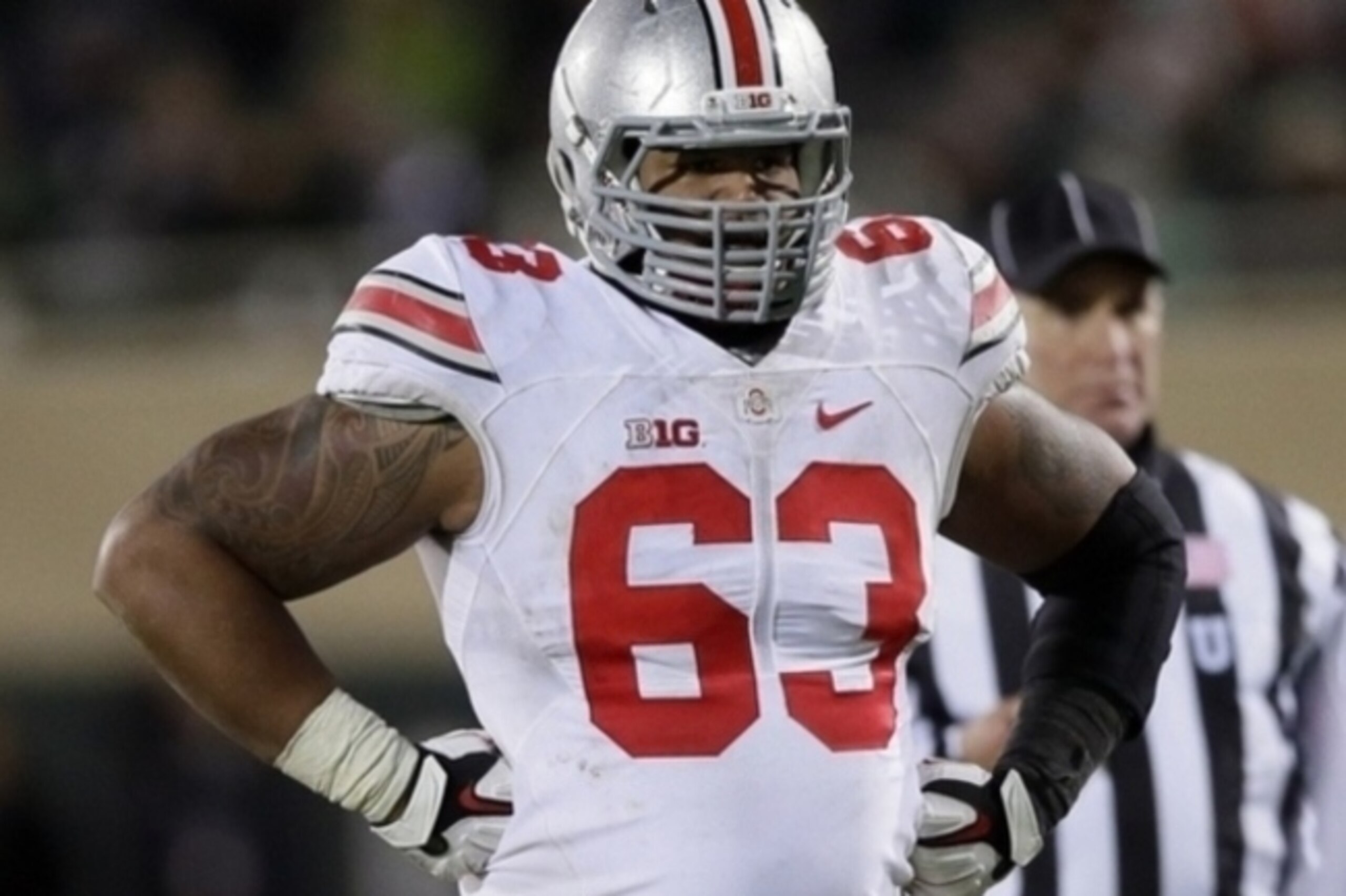
3. Michael Bennett, DT, Ohio State
5 of 14With his play down the stretch of Ohio State’s national championship run this past season, Michael Bennett looked as though he could be on his way to a first-round selection. A quick, explosive interior penetrator with good hand skills, Bennett was a disruptive force for the Buckeyes late in the year.
There is reason to believe Bennett’s production could translate well to the NFL. He fires off the snap quickly, generates power effectively off his burst and is a strong tackler for a defensive lineman. Additionally, Bennett was a team captain at Ohio State who should stand out from a character standpoint.
The biggest reason for concern with Bennett as he moves to the NFL is his size. At just 6’2” and 293 pounds, he is small for an NFL defensive tackle. His limited size and strength are evident in his game film when teams run directly at him.
He could have trouble holding his ground at the point of attack against NFL interior offensive lineman and might be best suited to either kick out to defensive end versus the run or be a situational interior pass-rusher. His lack of size also limits his appeal to teams that run 3-4 defenses, as he does not have the length teams typically look for in a two-gapping defensive end.
This year’s draft has shown that NFL teams are not putting high value on undersized defensive linemen, no matter how athletically gifted they might be. Washington State’s Xavier Cooper, another athletic but undersized interior penetrator believed to be a possible second-round pick, ended up lasting until the Cleveland Browns traded up to draft him at No. 96 overall.
Another factor that might be causing Bennett’s slide is that he was injured throughout most of the predraft process. As Sports Illustrated’s Andy Staples highlighted in an April feature, a lingering groin injury limited Bennett in the College Football Playoff National Championship and forced him to sit out both the Senior Bowl and the combine. When he did participate at Ohio State’s pro day, he suffered a hamstring injury running the 40-yard dash.
Bennett has the skills to be an immediate difference-maker on an NFL defensive line, but concerns about his size and durability have been enough to keep him on the board as Saturday begins.
4. Grady Jarrett, DT, Clemson
6 of 14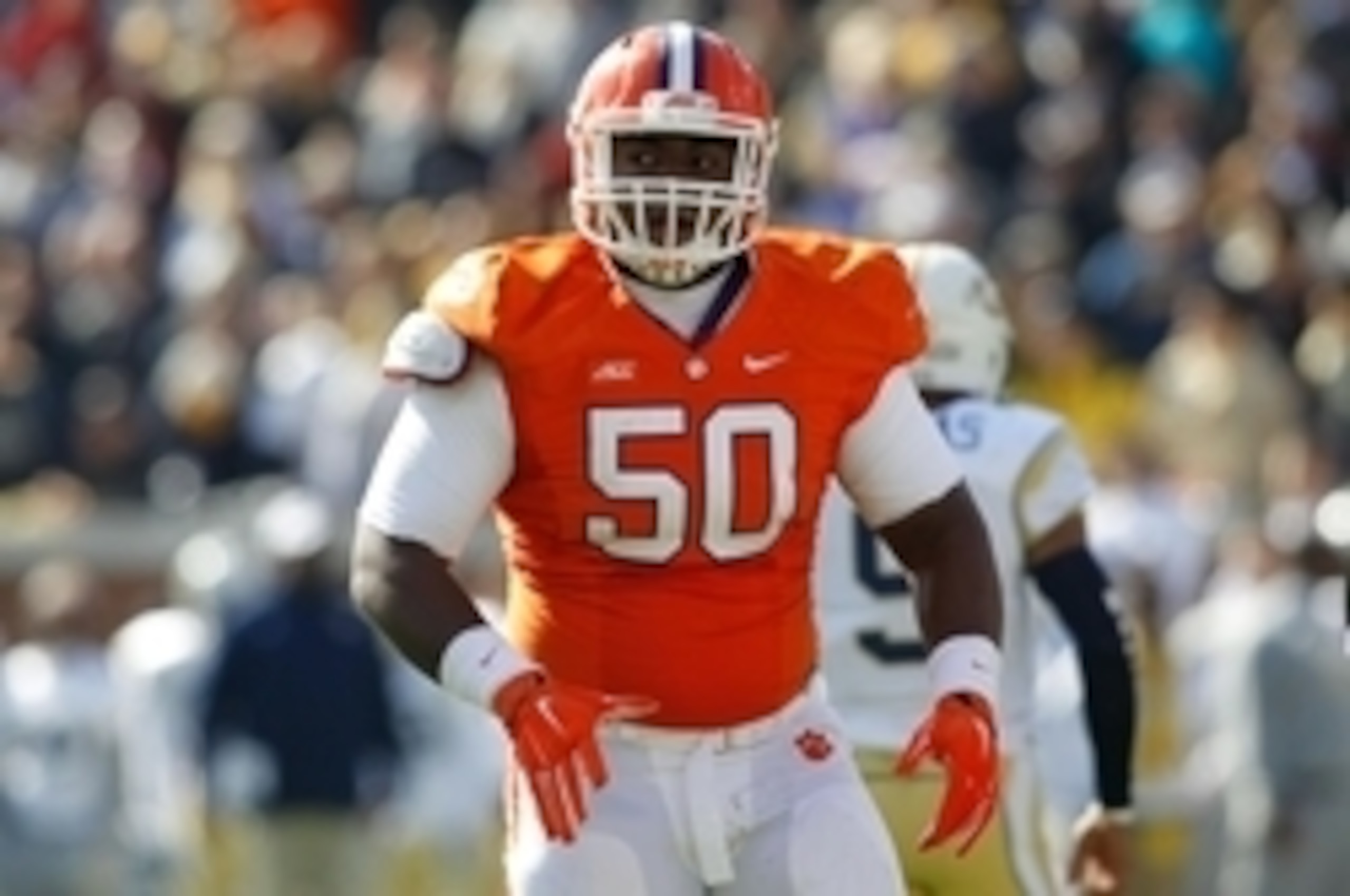
Although two other players from Clemson’s defense, edge defender Vic Beasley and linebacker Stephone Anthony, were first-round draft picks, some analysts—including CBS Sports’ Pete Prisco—deemed defensive tackle Grady Jarrett the best player on the entire unit.
Quick off the snap, Jarrett combines his burst with violent and effective hand usage to work his way past blockers at the line of scrimmage and into the backfield. When he is not penetrating, Jarrett also shows that he can hold his ground stoutly at the line of scrimmage as an interior run defender.
That said, Jarrett has the same problem Ohio State's Michael Bennett does: He is undersized. At just 6’1” and 304 pounds, Jarrett is well-built but undeniably short for a defensive tackle.
Although Jarrett plays like a nose tackle, he does not have the size to continue being one at the next level. There’s no reason he can’t succeed as a 4-3 defensive tackle, given his strength, athleticism and technical skill. However, like Bennett, Jarrett is unlikely to draw much attention from teams who run 3-4 defenses, as he is a poor fit for that scheme.
5. Bryce Petty, QB, Baylor
7 of 14
In the days leading up to the draft, rumors started to spread that Bryce Petty could not only be the third quarterback selected this year but a first-round pick. Even Bob McGinn of the Milwaukee Journal Sentinel, who is known for accumulating some of the most accurate predraft information each year, projected that Petty would be selected in Round 1, by the New Orleans Saints at No. 31 overall, in his final mock draft.
Two days later, that rumor has proved to be laughably wrong. Though the Saints were the team that ultimately drafted the third quarterback, they opted for Colorado State’s Garrett Grayson and waited until No. 75 overall. Another quarterback soon came off the board, Oregon State’s Sean Mannion to the St. Louis Rams at No. 89 overall.
A project whose gaudy collegiate statistics were largely inflated by Baylor’s spread-passing offense, Petty would have been a big-time reach in Round 1. He is not ready to be a starting quarterback in the NFL, and he has to improve his deep-ball accuracy and ability to progress through his reads.
Fast forward to Day 3, and Petty can now be seen as a value pick for any team wanting to add a quarterback to its depth chart. For a team that needs a quarterback of the future, Petty should be an appealing candidate in Round 4. His size, arm talent and mobility give him long-term starting potential, and a pick at this stage allows a team to select him without feeling pressured into having to start him down the line.
Petty is not the only quarterback left on the board with intriguing upside, as you will read later in this slideshow, but he is certainly one that any team still looking to add a quarterback should give some thought.
6. Jay Ajayi, RB, Boise State
8 of 14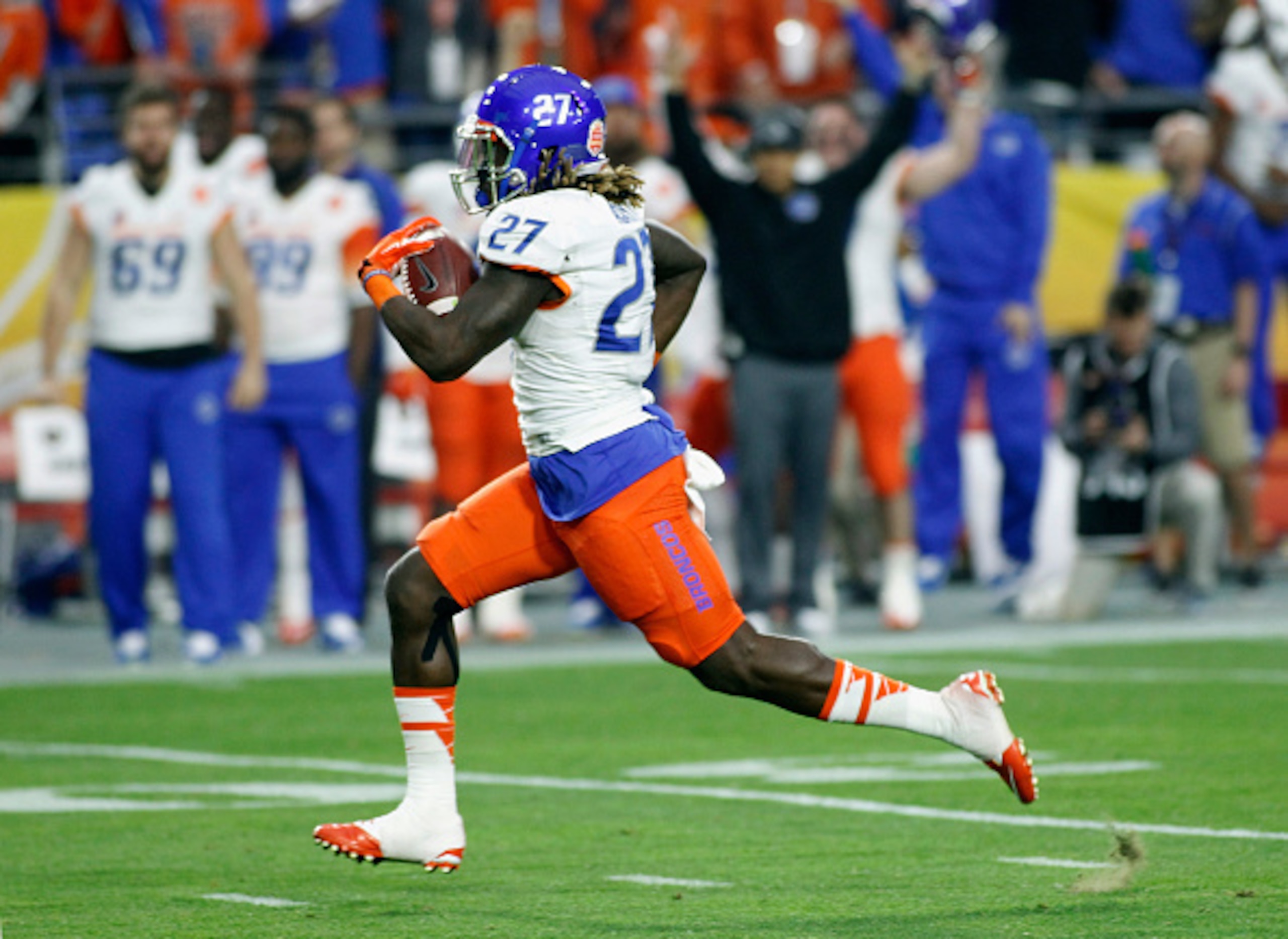
Coming off a season in which he became the first player in Football Bowl Subdivision history to accumulate at least 1,800 rushing yards and 500 receiving yards in a single season, Jay Ajayi has a case for being the most well-rounded running back in the entire draft class.
While a running back’s primary duty is to be the ball-carrier on running plays, as the name of the position suggests, Ajayi also offers great value as a pass-catcher and pass protector. He displays consistent hands as a receiver out of the backfield and is a big, strong back who recognizes blitzes well and can pick them up to keep pressure off the quarterback.
In comparison to most of the eight running backs who have already been drafted, Ajayi is not as talented as a pure runner. He is not a particularly explosive back or a player who will regularly make defenders miss in space. With that being said, he exhibits good vision to find holes out of the backfield and demonstrates toughness in working through contact to extend plays.
At a position where productive ball-carriers can be found a dime a dozen, Ajayi’s ability to contribute in other areas should have made him a second- or third-round pick.
The reason he was not, and that he could be in line to continue falling on Day 3, is that teams reportedly have “strong” concerns about his knee. According to CBS Sports’ Dane Brugler, he has dealt with cartilage issues in his right knee since 2011, and there are questions about the “how long will it hold up.”
Whenever a player is medically red-flagged by NFL teams, it is hard to predict how far he might fall. However, Ajayi played in 38 consecutive games to finish his career at Boise State, and he could be a valuable asset to an NFL offense if he is able to stay healthy going forward.
7. Kwon Alexander, LB, LSU
9 of 14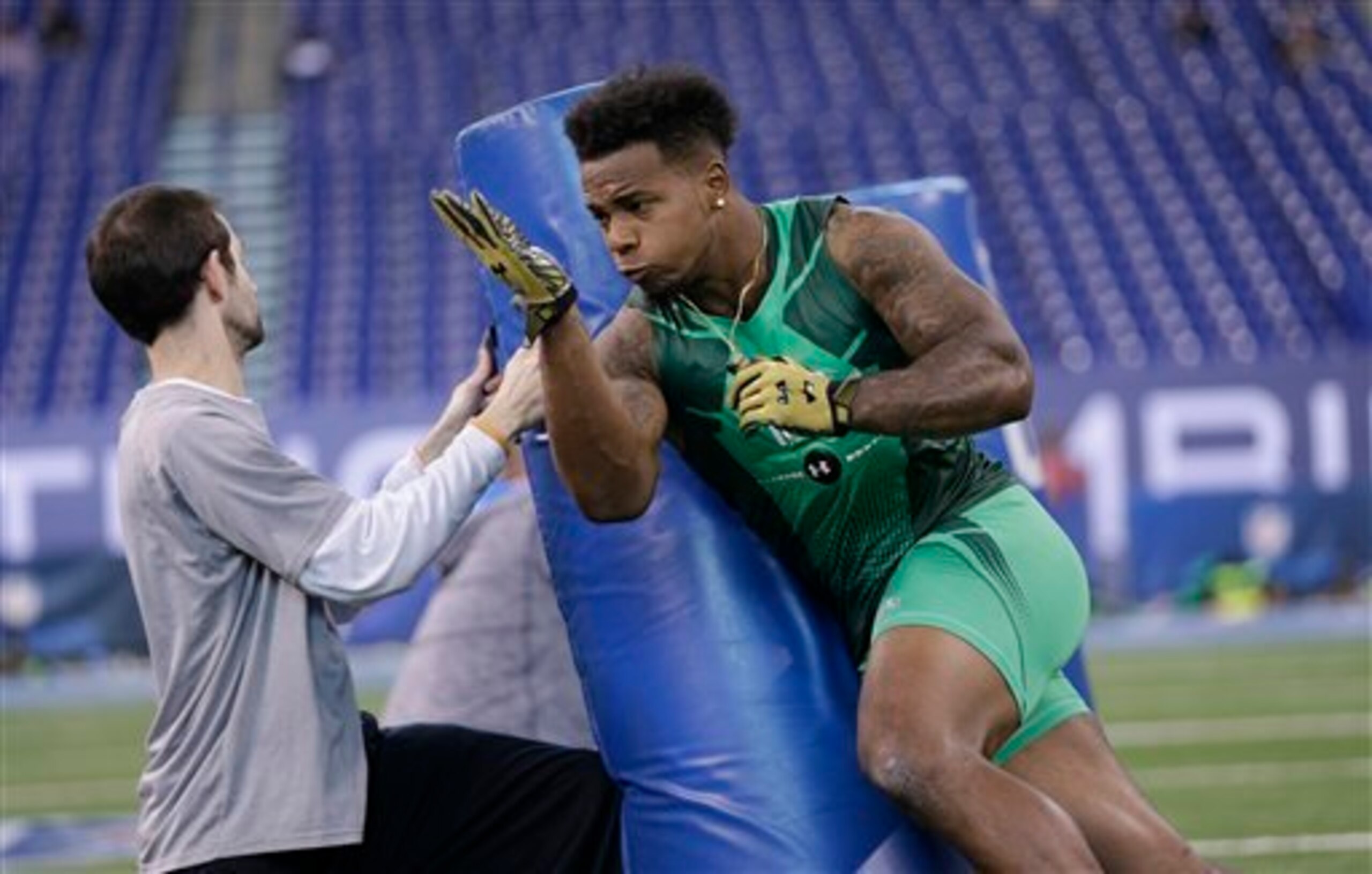
A well-rounded athlete who ran the fastest 40-yard dash (4.55 seconds) among off-ball linebacker prospects at this year’s combine, Kwon Alexander has the play speed and range coveted for a player at his position. He is able to change direction fluidly and can get himself into plays with how fast he moves in pursuit.
Truly a sideline-to-sideline player, Alexander’s athleticism gives him the potential to be a regular playmaker on both defense and special teams. Even coming off a productive year at LSU, in which he recorded 90 total tackles, Alexander’s best football is likely to be in front of him.
The flip side of that is there are numerous areas of his game in which he will have to improve to be a successful NFL linebacker. While he was able to get by on his speed at LSU, he will be need to become more instinctive and disciplined as he goes up against faster, more talented players at the professional level.
While Alexander’s athleticism moves his ceiling upward, his size is limiting. At only 6’1” and 227 pounds, Alexander is small for a linebacker and has a limited frame upon which he can bulk up.
Still, it’s somewhat surprising a team did not take a chance on him on Day 2; his physical gifts are certainly those of someone who could develop into a great playmaker. He will likely come off the board quickly on Day 3, but his fall into the fourth round likely has more to do with his flaws than any other reason.
8. Ramik Wilson, ILB, Georgia
10 of 14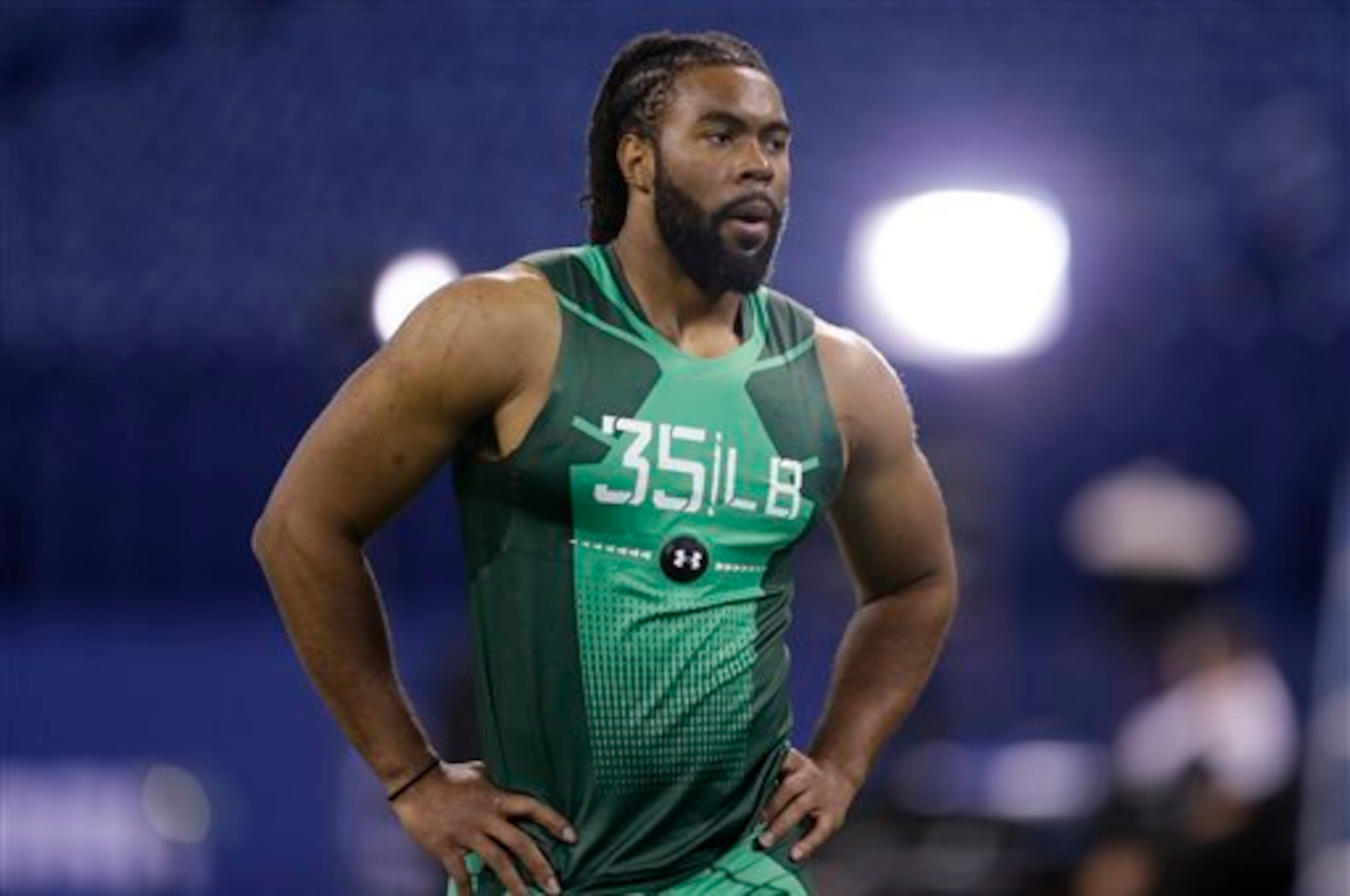
When Ramik Wilson is at his best, he can be a tackling machine. In his final two seasons at Georgia, Wilson accumulated 243 total tackles; there were nine individual games in which he recorded at least 11 total tackles.
A sure tackler, Wilson takes good angles to the ball and an ability to work his way through blocks in space. He should be able to step in on an NFL defense and immediately start making plays, while he is also a good fit to contribute on special teams.
Yet there is nothing physically spectacular about Wilson. He has decent size for an inside linebacker, 6’2” and 237 pounds, and he is well-suited to one of the two middle spots on a 3-4 defense. He has adequate speed and change-of-direction quickness but might not be a sideline-to-sideline player at the next level.
As productive as Wilson typically was in Georgia, there were numerous games last season in which he disappeared and failed to make his usual impact. He had lots of talent around him and benefited from it. Additionally, Wilson has not shown a great deal of ability to drop back into coverage and make plays.
All in all, Wilson has the skill set to be a quality rotational linebacker on an NFL defense, and he is likely to be a solid fourth-round selection as a result. In the right system, he could be one of the draft’s most productive players; the reason he is still on the board, though, seems only to be that a run on second-tier inside linebacker prospects has not yet happened.
9. David Cobb, RB, Minnesota
11 of 14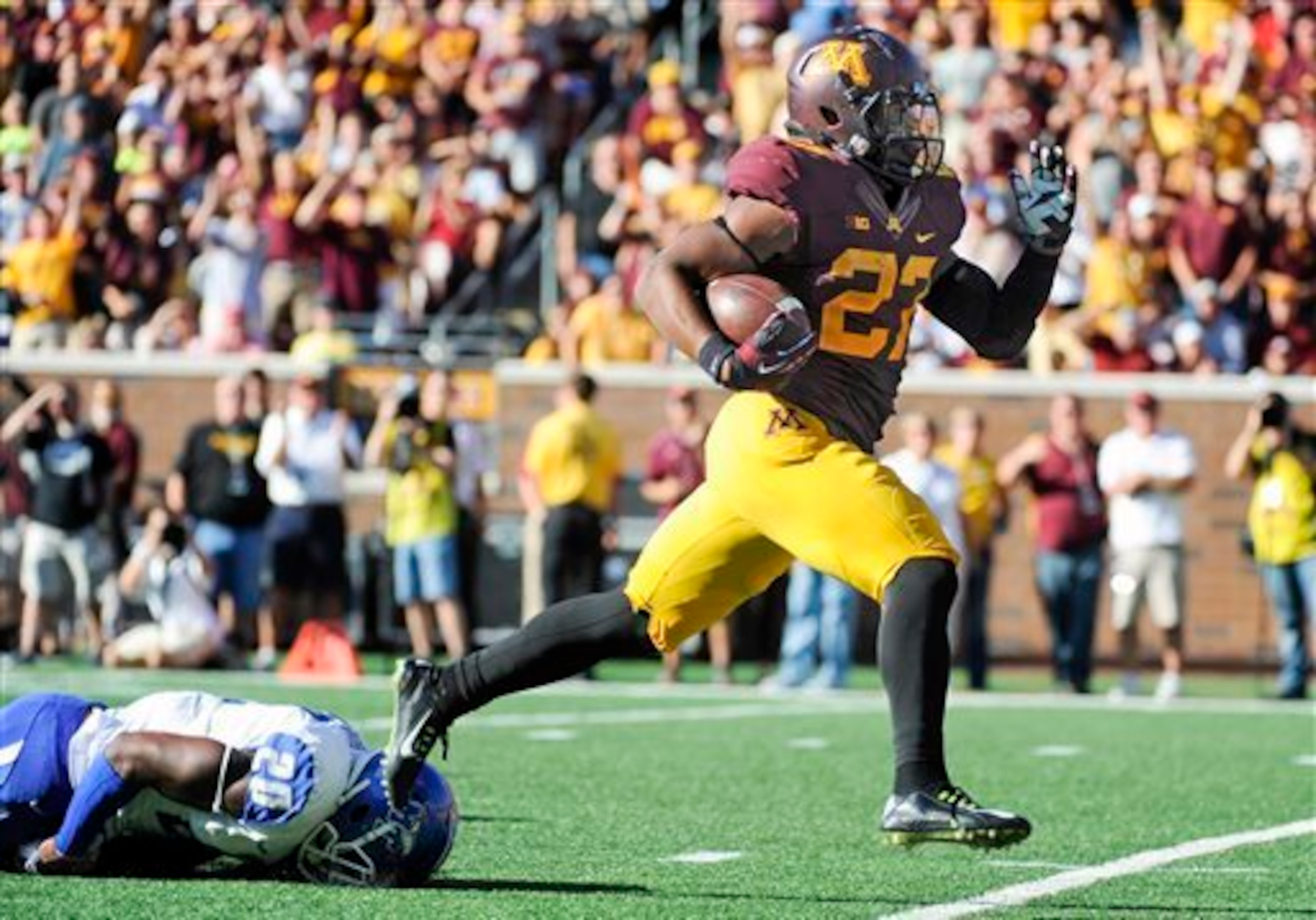
When the St. Louis Rams selected Todd Gurley at No. 10 in this year’s draft, it appeared to be good news for David Cobb. Outside of Gurley, no other running back is a better between-the-tackles power-runner than Cobb, who totaled 2,831 yards and 20 touchdowns in his final two seasons at Minnesota.
A big back at 5’11” and 229 pounds, Cobb is a hard-charging runner who has demonstrated he can keep his momentum going through contact. He also has good cutting ability for a back of his size and is a reliable pass-catcher out of the backfield.
For a team looking to get a runner who can consistently grind out tough yardage on early downs and in short-yardage/goal-line situations, Cobb could prove to be a great value out of the draft’s third day.
The biggest reason Cobb remains unselected—beyond the fact he plays a position not typically valued highly on draft boards—is his limited burst.
Cobb does not explode out of the backfield and can be stopped behind the line of scrimmage. Pulling up with an injury while running his 40-yard dash at the combine didn’t help his cause, as it cost him a prime opportunity to show he might be a better athlete than people think.
But Cobb is a strong candidate to be the next-in-line example of a mid-to-late-round draft pick who goes on to have a productive NFL career at the running back position. It happens annually, and Cobb could make a team look smart for passing up running backs early in the draft to select him for better value later.
10. Tre' Jackson, G, Florida State
12 of 14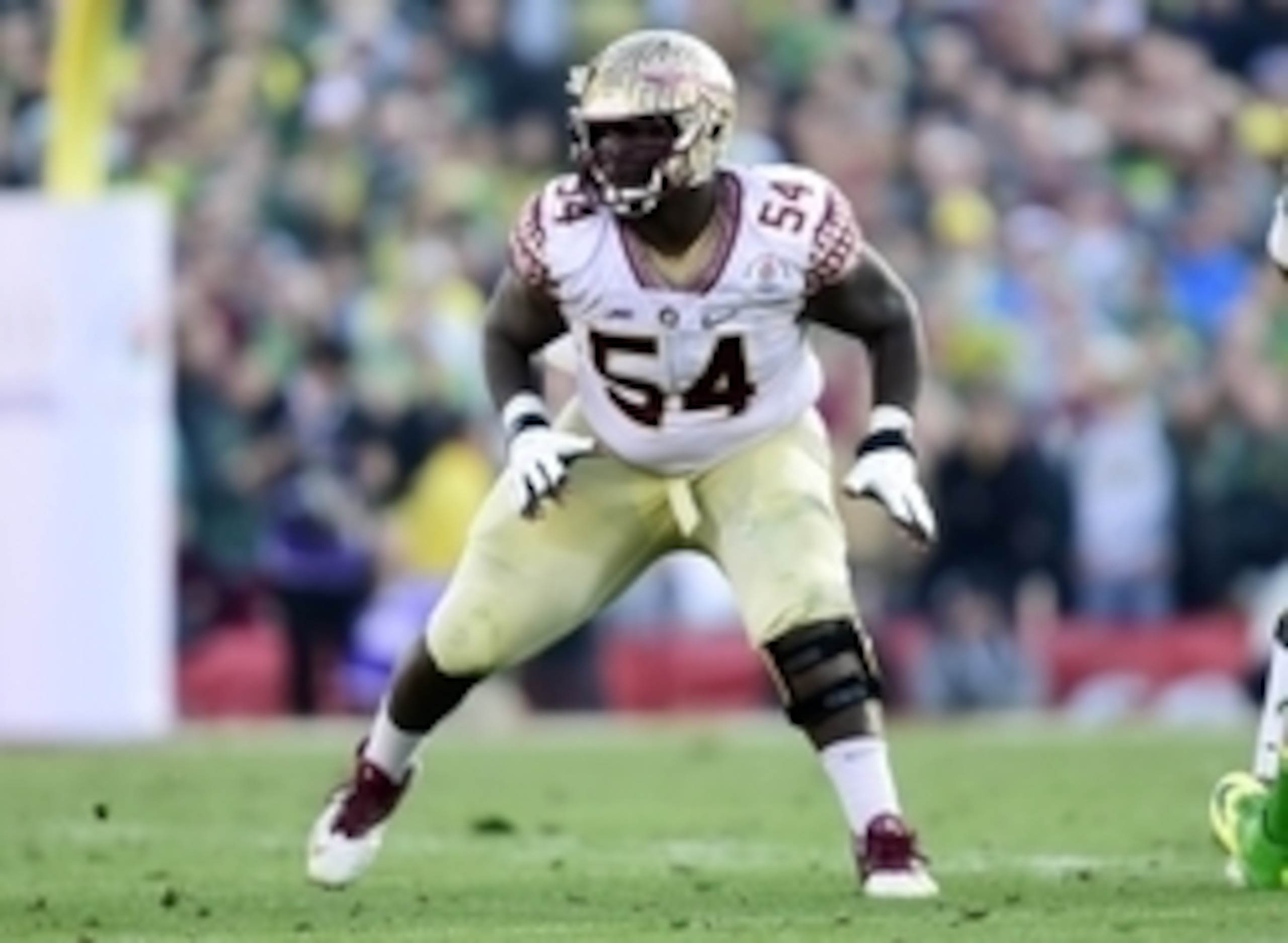
If you were going to build the prototypical guard for a power-running offense, that guard would look a lot like Tre' Jackson.
A behemoth at 6’4” and 330 pounds, Jackson is a powerful mauler who packs a strong punch and can drive block defensive linemen off the line of scrimmage. A three-year starter at Florida State, Jackson should be ready to compete for playing time right off the bat as a rookie.
There are some areas in which Jackson fails to meet the ideals of the prototype. He is not a particularly nimble athlete, and he has short arms (32 5/8 inches) for an offensive lineman. As a result, he is a linear player who will struggle to pick up multiple blocks within one play.
Viewed as a probable future first- or second-round pick going into his senior season for the Seminoles, Jackson failed to take a step forward in his game in 2014, which could leave NFL scouts concerned about his ability to make necessary improvements to his technique.
Jackson’s fall is not a surprise, however, and like a number of other prospects on this list, it’s for medical reasons. Bleacher Report’s Matt Miller reported earlier this week that Jackson had “failed multiple team physicals due to chronic knee problems.”
From a talent standpoint, Jackson is one of the best offensive line prospects still on the board. Questions about health, however, leave some doubts as to whether he will be drafted at all.
11. Brett Hundley, QB, UCLA
13 of 14Possessing arguably the best all-around physical tools of any quarterback prospect in the draft class, UCLA’s Brett Hundley looked like a sure bet to be a Day 2 draft pick. Instead, it appears as though teams throughout the NFL—or at least teams that have a need at the position—are skeptical whether Hundley can ever harness those tools to become a starting-caliber quarterback.
At 6’3” and 226 pounds with a strong arm and terrific athleticism, Hundley has the attributes to be a weapon as both a passer and a runner. He puts high velocity on his throws, has solid throwing mechanics and was a productive player in college.
In spite of all those positives, however, Hundley has been a polarizing prospect, as discussed in this November breakdown of his game.
While Hundley completed 69.1 percent of his total passes last season, charting his throws shows he feasted on shorter, wide-open passes and struggled with his ball placement on deeper throws. Hundley’s most obvious flaw, however, is that he lacks pocket presence and is too slow through his progression, which led to him being sacked with regularity throughout his collegiate career.
Hundley didn’t always get great protection from his offensive line at UCLA, especially in 2014, but if he is going to succeed in the NFL, he is going to have to get used to having pass-rushers barreling at him. If he is unable to make plays under pressure at the next level, he will never be a franchise quarterback.
Still, the fact that he has the upside to potentially emerge as a starter with development—and that all of his flaws are in areas in which he legitimately should be able to improve—should make him an enticing option for any quarterback-needy team on Day 3.
Hundley is far more physically gifted than the two signal-callers drafted in Round 3, and it would be a surprise if a team does not take a chance on him in Round 4.
12. James Sample, SS, Louisville
14 of 14
Considering this look at the best available prospects began with a Louisville safety, it seems appropriate that this list should also end with a Louisville safety. James Sample, Gerod Holliman’s partner in crime in the Louisville secondary this past season, is a player many draft analysts thought would end up hearing his name called on Day 2.
While Holliman’s pursuit of history overshadowed Sample’s play, he also had a breakout campaign in 2014. He led Louisville with 90 tackles and recorded eight passes defensed and four interceptions, proving he too has a nose for making plays on the ball.
Because he is a much better run-support player than Holliman, it’s possible he could be the first of the two Cardinals safeties drafted. That said, the two prospects should appeal to teams looking for different types of players, as Sample projects as an in-the-box strong safety while Holliman projects as a roaming free safety.
Having transferred to American River College before arriving in Louisville after starting his career at Washington, Sample has played just one full season of major college football, which makes him a project with limited tape. That one season was impressive enough for Sample to show playmaking ability and starter potential, but it was apparently not enough to prove to scouts he should be a top-100 draft pick.
It’s not a shock Sample is still on the board, as most projected him to be an early Day 3 call, although Ian Rapoport said earlier this week that Sample would “go higher than expected.” That hasn’t happened, but a team looking to add a solid strong safety and possible special teams player in the fourth or fifth round could end up getting a good value.
All measurables courtesy of NFL.com unless otherwise noted.
Dan Hope is an NFL/NFL draft featured columnist for Bleacher Report.
.jpg?w=2560 "Cowboys Packers Football")




.jpg?w=2560 "🚨 Week 8 AP Top 25 Poll")