

How Mayweather vs. Pacquiao Is Screwing over Boxing Fans
Boxing’s latest “Fight of the Century” is just days away, but when Floyd Mayweather and Manny Pacquiao make their way through the crowd to the ring on May 2 in Las Vegas, they’ll see very few of the people who helped make this dream match a reality.
Countless stories have been published by numerous media outlets in the hours, days and weeks since Mayweather, via his Shots social media account, made history by posting the signed contracts for a fight that is expected to shatter all of boxing’s revenue records.
The overwhelming majority of them have focused on the financial aspects of this fight, shifting the years-in-the-making narrative from why won’t the two best pound-for-pound fighters on the planet fight to how brilliant they were for making everyone wait this long.
TOP NEWS
Emanuel Navarrete vs. O'Shaquie Foster
.jpg?w=2560 "Chiefs Giants Football")
Mahomes Told Teammate to Leave Meeting

Brown with an all-time summary of relationship with Tatum
It’s nice that the troops are rallying behind this fight, and constantly reminding us of just how much money will be made, but something is being lost here.
Ah, yes, the fans—and we mean the real boxing fans who don’t just get their ears perked up by Mayweather and Pacquiao—who are being royally screwed by this entire process.
But you wouldn’t know that because everything you see and hear is about revenue splits and pay-per-view buys. Life blood of the industry stuff, for sure, but nowhere in that accounting will you find much about the lack of fan access to the biggest boxing event in history.
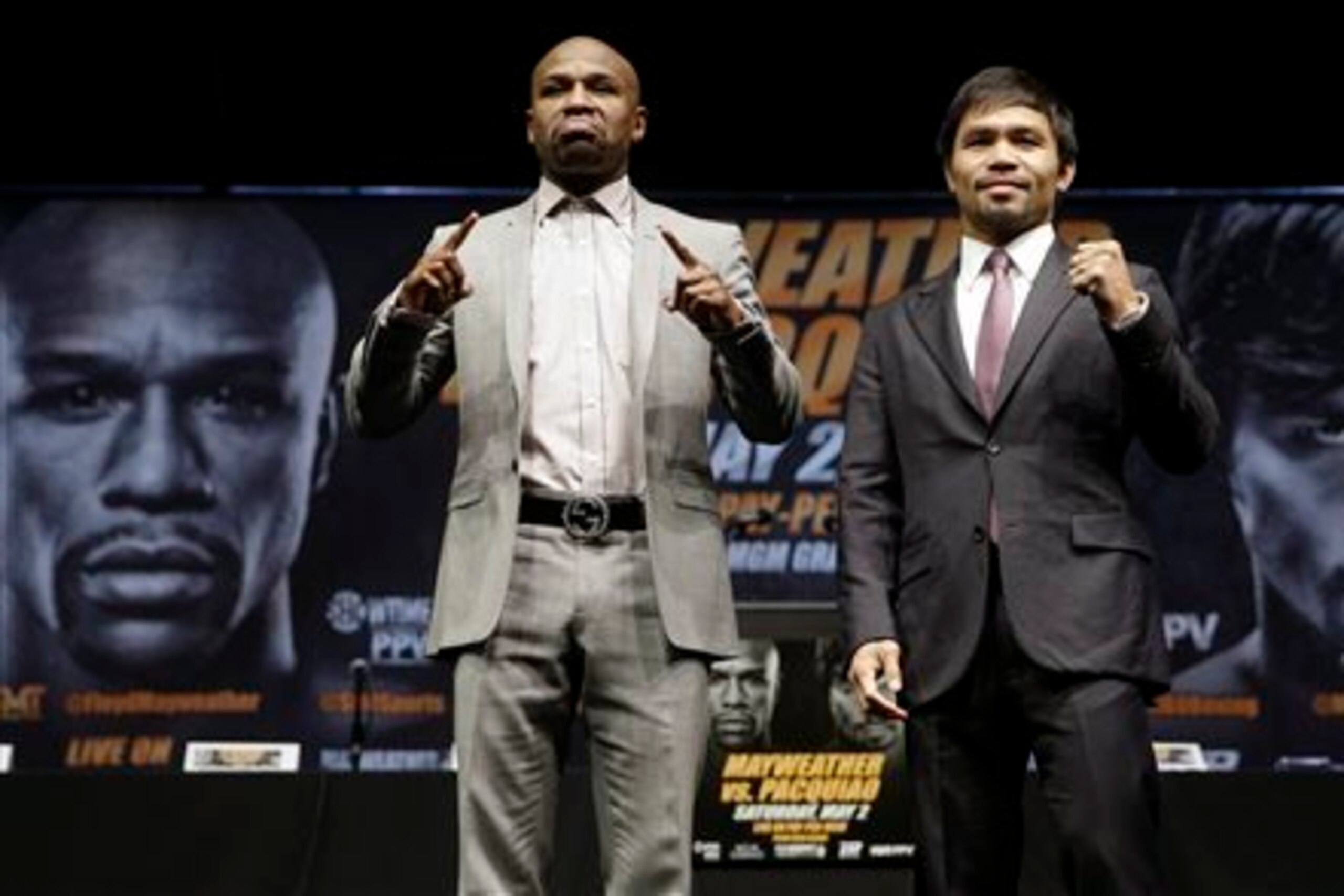
Boxing fans entered the week before fight week still unsure of whether or not the bout would actually happen—promoters' contracts with the MGM Grand had not yet been signed—and when/if any tickets would be made available for public sale.
Both of those issues were resolved on Wednesday, per Lance Pugmire of the Los Angeles Times, with a token 500 of the MGM Grand Garden Arena’s approximately 16,800 seats made available for public sale on Thursday to anyone with the requisite cash.
And you needed to have a lot of it.
Face values ranged from $1,500 for the upper-level seats all the way up to $10,000—none at this price point went on sale to the public—if you wanted to sit ringside and rub elbows with the never-before-and-never-again crowd, who likely couldn’t pick the fighters out of a lineup but want to be part of the event.
All 500 seats sold out in less than 60 seconds, but you could find plenty of them available on the secondary market (as of this writing, 339 seats were available on StubHub, starting at $5,562.75 for the nosebleeds).
Boxing fans never had a shot. The chances of scoring a ticket to the hottest fight in history, even if you had the cash, were astronomical. And that’s because it was never intended for you.
The 500 seats were little more than a symbolic gesture, a lottery ticket for the very people who, through their pressure, demand and dollars, forced the issue and turned this fight from hypothetical to reality.

The vast majority of seats will be given to the promoters—Mayweather Promotions and Top Rank—the fighters and the MGM Grand to dish out how they see fit.
A good number of those tickets will also find their way to the secondary market at substantial markups.
One of those brokers, in anonymous comments to ESPN’s Darren Rovell, explained the real tragedy to be found in the last-minute distribution of tickets: "Distributing this many tickets in this short amount of time is already a nightmare. With physical tickets, there's [sic] going to have people worth millions waiting on long lines just to get what they were promised."
Millionaires and socialites waiting in line for a ticket to a fight they didn’t care about last week?
Just like the common folk?
Well, now you've got my Irish up.
Before you dismiss this as so much sour grapes, basing your argument on the very compelling point that average fans are always shut out of major sporting events, ponder that the lack of ticket availability has come at a time when other “free” types of access have been cut from the program.
No media tour for the event?
No problem, say most in the sporting press, and who needs it?
Not us, and why bother when the event sells itself and is certain to bring in record-smashing profits—again, the focus is on the money.
True and true, even if that once again misses the forest from the trees.
Press tours are one of the truly free vehicles for fans to get access to the fighters and feel like they’ve been a part of the event.
Hundreds of thousands turned out for the 10 stops on the Mayweather-Canelo Alvarez cross-country tour to get pictures, hold signs and cheer for their guy. And that was exactly the point.
It’s not much, but for the fans who will, for lack of better terms, be there in the morning, it’s significant and meaningful.
The same can be said for the weigh-in the night before the fight.
As a public event, sanctioned by the state of Nevada, weigh-ins are considered to be public events and free to attend.
Dan Rafael of ESPN.com reported on April 17 that the Mayweather-Pacquiao weigh-in on May 1 would be the first in modern boxing history to charge an admission fee for entry.
The decision to charge, which was done in conjunction with the Nevada State Athletic Commission, was made in an effort to control the expected large crowds that want to catch a glimpse of the fighters just hours before fight night and raise money for charity.
The $10 dollar fee will be collected and donated to a charity supported by each fighter.
A noble cause, to be sure, but nominal when compared to the staggeringly large amount of money each fighter is expected to pocket.
Each man could easily write a check that they’d never notice was gone from their bank accounts and let the fans in for free, even if you wanted to hand out tickets to enhance security.
Now that’s a grand gesture, and it maintains the access of fans and eliminates the possibility that they will once again be bled on top of the $100 they’ll pay for the PPV in high definition.
You want to do a ticketed event?
Fine.
You want to donate money to charity?
Fine.
You can easily do both without bilking that money from the fans.
The lack of attention to this lack of focus on the people who keep this industry afloat has been stunning for a media that has always been closer to its fanbase than most team sports.
Maybe it’s that we all expected this to happen.
Maybe nobody is really upset and this is all wasted words in defense of a fandom that has been treated like so much gum on the bottom of your new shoes.
And maybe it just doesn’t matter.
They’re going to make millions, after all.
.jpg?w=2560 "Titans Colts Football")



.jpg?w=2560 "NFL investigating Eagles")

.jpg?w=2560 "Jonathan Taylor Landing Spots 📍")