

NFL Draft Prospects Who Could Experience Draft-Day Slides
Some of the most memorable images of NFL drafts past are those of highly touted prospects sitting in the green room, phone in hand, waiting for calls they expected to come hours earlier as they heard other players' names announced.
Such is the image that defines what has come to be known as a draft-day slide.
Every year, ESPN and NFL Network show plentiful shots of prospects waiting—either at the draft venue or at their own homes—as their actual draft stock ends up falling lower than expected by the majority of analysts.
In reality, this phenomenon is a dramatized revelation that NFL teams did not value those players as highly as draft analysts expected they would. Nonetheless, that drama is what keeps fans tuning in every year, hoping that the player projected to be selected much earlier will end up falling to their own team’s pick.
There are many reasons why a prospect can slide below expected draft position.
In some cases, these slides are related to parts of teams’ evaluations that occur behind closed doors—such as medicals and interviews—which can be tough to discern from the outside looking in. In other cases, the reasons might be more obvious—such as off-field character concerns, inconsistent on-field production or subpar measurables—but were overlooked by draft analysts due to the prospect's upside and/or ability to create highlights.
Each of the following players, for at least one of those reasons, could be left to endure the dreaded live look-in on a draft impasse, as other, less heralded players are chosen before them.
Dorial Green-Beckham, WR, Missouri
1 of 8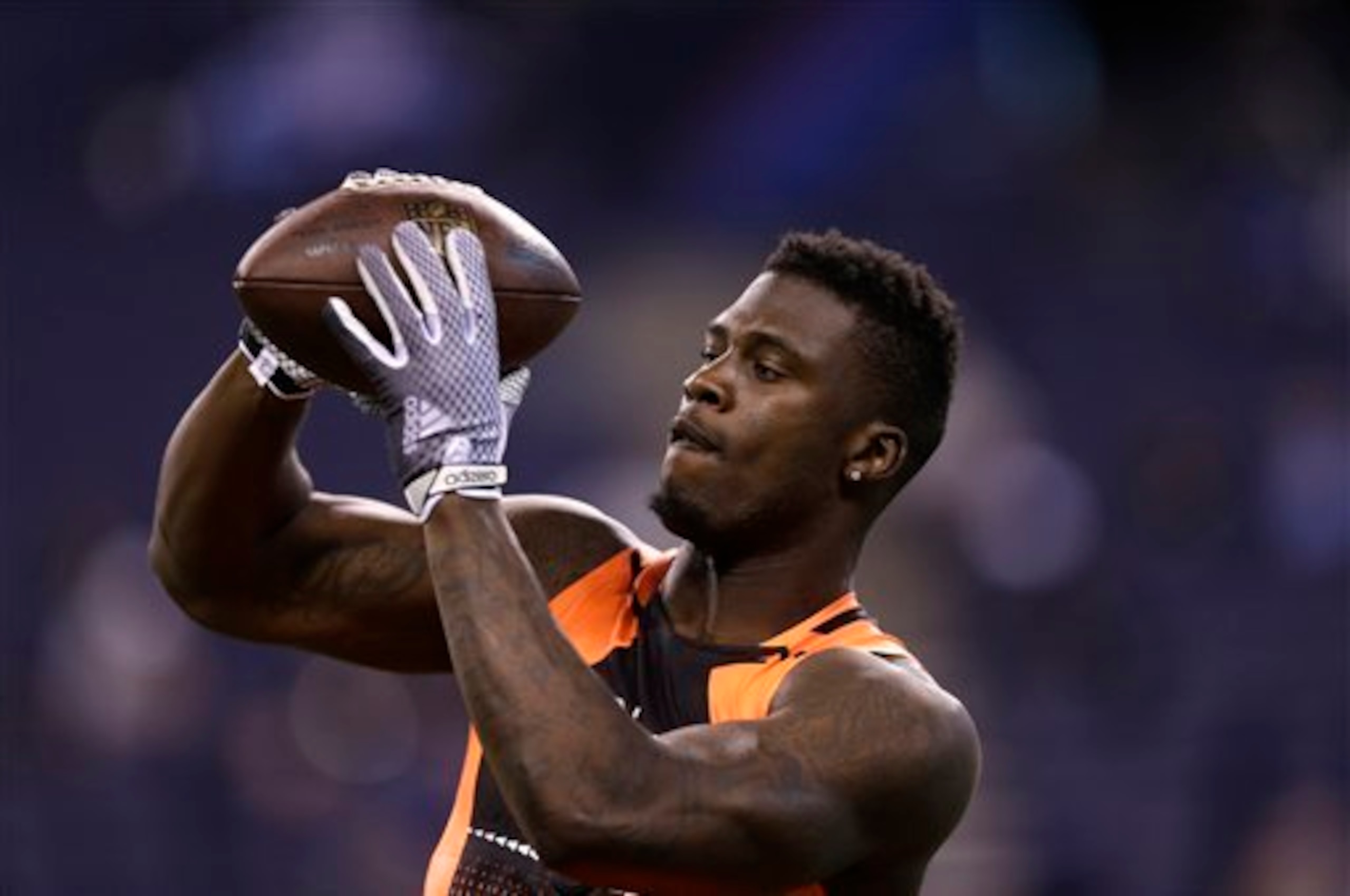
Perhaps the most obvious candidate for a draft slide, Dorial Green-Beckham has superstar potential that could make him a top-15 pick but also a damning off-field history that could cause him to drop to Day 2 or even Day 3 of the draft.
If you go back to Green-Beckham’s tape from his 2013 season at Missouri, it’s easy to see the wide receiver’s appeal. A 6’5”, 237-pound pass-catcher with great speed (4.49 40-yard dash) for his size and terrific ball skills, DGB has the potential to be a matchup nightmare and game-changer.
The problem with investing a high draft pick in Green-Beckham is that he also has the potential to be a PR nightmare.
Dismissed from Missouri’s football team in April 2014 after allegedly forcing his way into an apartment and pushing a woman down four stairs, Green-Beckham’s rap sheet also includes two marijuana-related arrests. Those off-field issues should give any team pause before drafting the talented but troubled wide receiver.
Beyond the character concerns, Green-Beckham is also not the surefire star he is made out to be on the field. While his raw tools are intriguing, he did not show much ability to run diverse routes during his two seasons at Missouri and will need to commit himself toward becoming a more complete player. The fact that he did not play a single snap of football in 2014 does not help his cause.
Truly a high-risk, high-reward selection, Green-Beckham will likely be valued lower by NFL teams—who would actually have to deal with the consequences of him getting in further off-field trouble—than he is by most media draft analysts.
Jaelen Strong, WR, Arizona State
2 of 8
Although he has the tools and background of production to be rightfully considered a No. 1 wide receiver prospect, Arizona State’s Jaelen Strong might be facing a longer wait than some of his counterparts at the position in this year’s draft.
A 6’2”, 217-pound wideout with 32 ½” arms and a 4.44-second 40-yard dash time, Strong has the size and speed that NFL scouts expect a top wideout to have. He is coming off a pair of productive seasons for the Sun Devils, between which he caught 157 passes for 2,287 yards and 17 touchdowns. He has regularly shown the ability to adjust to the ball in the air and make challenging catches.
The consensus among most draft analysts is that Strong should be a late first-round or early second-round selection. He is ranked as the No. 28 overall prospect in the draft by both NFL Media’s Daniel Jeremiah and ESPN’s Scouts Inc., while Bleacher Report’s Matt Miller slotted him as the No. 36 overall prospect on his most recent big board.
But, Strong has his detractors. In one of his most recent articles, Bleacher Report’s Cian Fahey argued that Strong “does not belong in the first round of the 2015 NFL draft,” citing Strong’s “terrible” route-running and catching inconsistency despite his impressive highlights.
Another reason teams might shy away from Strong early in the draft came to light Wednesday, when NFL Media’s Ian Rapoport reported that Strong “has a fractured bone in his wrist” and “likely needs surgery at some point.” He is headed to the NFL Scouting Combine’s medical rechecks this weekend, according to Rapoport, where the update that teams receive on his injury could impact his draft stock.
Strong downplayed Rapoport’s report on Twitter.
“Old news,” Strong tweeted. “That happened Nov 1. I'm fine. Played five games with it and I'm sure you couldn't tell. Don't believe everything you hear.”
Nonetheless, the injury could give teams one more reason for pause on a player whose status as an early-round pick has already been called into question. One of 28 prospects who is set to attend this year’s draft in Chicago, Strong could be facing a return trip to the green room for Day 2.
Maxx Williams, TE, Minnesota
3 of 8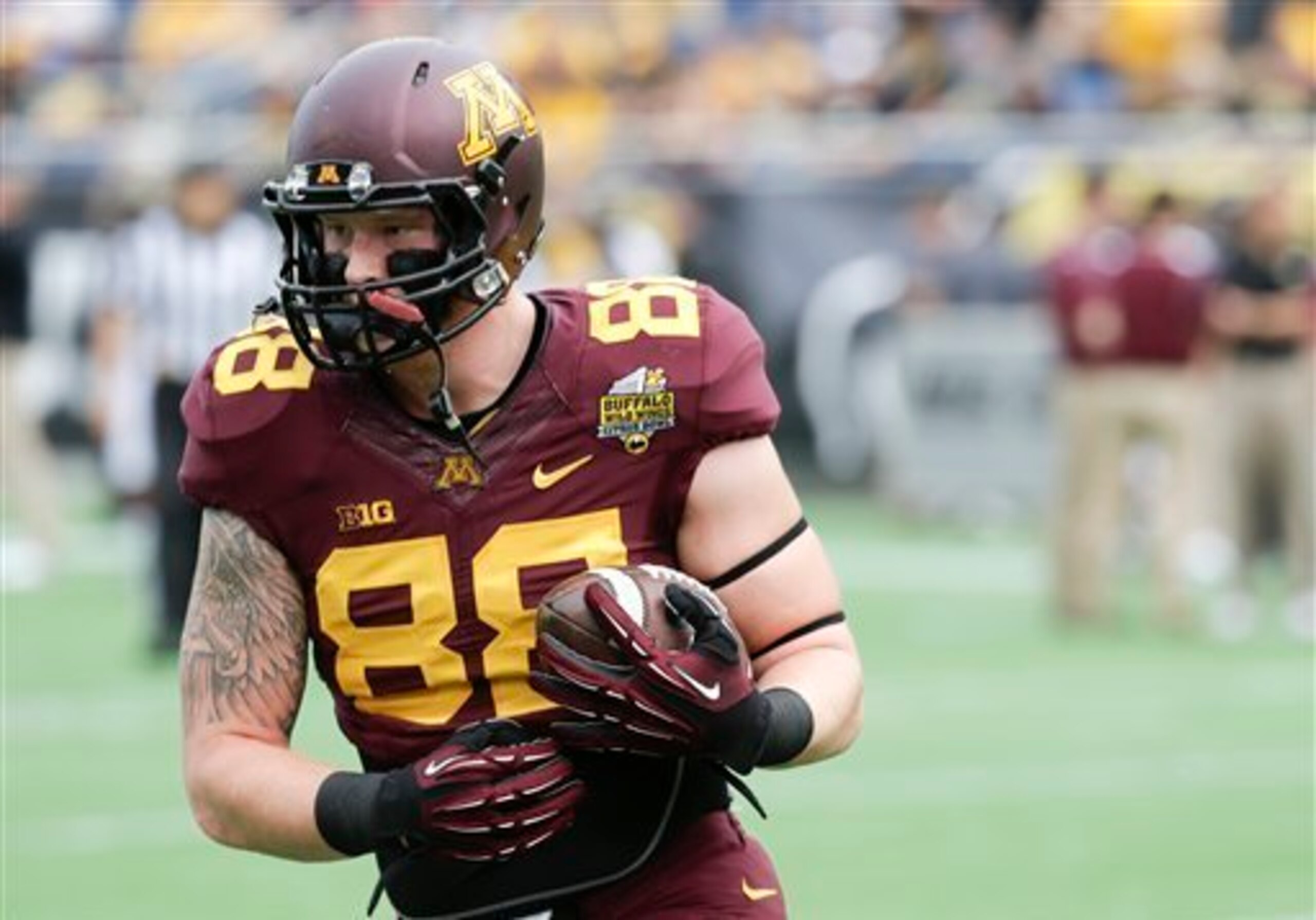
The best tight end in an unspectacular draft class at the position, Maxx Williams is widely projected to be a late first-round or early second-round pick. That makes sense, considering at least one tight end has been selected in the first round in 13 of the last 15 NFL drafts.
A glue-gloved pass-catcher with a demonstrated ability to make spectacular plays on the ball, Williams stands out as the most gifted receiving tight end in this year’s draft. He has good size and length, at 6’4” and 249 pounds with 33 ½” arms, and enough athleticism to move all around a formation and stretch the field.
Running a lackluster 4.78-second 40-yard dash at the NFL Scouting Combine, however, didn’t help Williams’ cause. Any concerns that teams have about his athleticism could limit his perceived value, as he has not shown to be a consistently effective blocker.
Another potential detriment to Williams’ draft stock: Bleacher Report’s Matt Miller wrote in his most recent Scouting Notebook that Williams “did not come across well in his interviews,” according to two separate teams. Miller quoted one source as saying that Williams was "cocky, bored and came off as too good for us."
It seems as though Williams has done little to help himself in the months leading up to the draft, and that—despite the promising playmaking ability he showed in two seasons at Minnesota—could knock him down to the middle of Round 2, even if he is to be the first tight end off the board.
.jpg?w=2560 "Chiefs Giants Football")
.jpg?w=2560 "Colts Football")
.jpg?w=2560 "Titans Colts Football")
Randy Gregory, DE/OLB, Nebraska
4 of 8In a draft class that includes five edge defenders who project as potential top-10 picks, Nebraska’s Randy Gregory has given teams a number of reasons to look in other directions in the months leading up to the draft.
A freakish athlete who exhibits rare explosiveness, Gregory has a combination of burst, length and agility that gives him the upside to be a star pass-rusher. Because of that, he has been widely projected as one of the top picks in the 2015 draft, dating all the way back to last May and continuously ever since.
Matt Miller currently has him at No. 7 on his big board.
The bad news for Gregory is that his stock might be lower going into the draft than it had been prior to the NFL Scouting Combine. Even though he displayed some impressive athleticism in Indianapolis, his time as a whole at the combine did him more harm than good. He weighed in at only 235 pounds—very small for a potential 4-3 defensive end—and tested positive for marijuana, as he told NFL.com’s Kimberly Jones.
Considering those concerns might push him out of the top 10, Gregory didn’t do himself any favors earlier this week when he upset fans of the New Orleans Saints, who could be in position to select him with the No. 13 overall pick, by sending out a tweet critical of the city.
“Idk what the big deal about new Orleans is,” Gregory tweeted. “Seems pretty boring to me lol wrong time of year maybe??”
That tweet might be a fairly trivial matter and will probably have no effect on his draft stock, but nonetheless, as ESPN’s Trey Wingo noted Tuesday, “One thing is pretty clear...Randy Gregory is not winning the predraft process.”
On top of all that, there are numerous reasons to be concerned about Gregory’s play on the field, despite the longstanding hype he has received. He lacks the strength needed to be a consistent point-of-attack run defender on the edge, and he was not consistently productive during his two playing seasons at Nebraska.
There will almost certainly still be a franchise that drafts Gregory in Round 1, because of the player he could potentially become, but he has given teams reason to be wary about making a big investment in him.
Shane Ray, DE/OLB, Missouri
5 of 8
Even if Randy Gregory’s off-field mishaps and size concerns boost Shane Ray one spot in the order in which the top edge defenders will come off the board, Ray is still in position to potentially slide further down than expected.
Coming off a season in which he ranked third in the Football Bowl Subdivision in sacks, Ray is one of the draft’s most gifted pass-rushers. His ability to beat blockers off the edge and get to the quarterback has kept the Missouri product projected highly in many mock drafts.
However, in comparison to the draft’s top four edge prospects—Florida’s Dante Fowler Jr., Clemson’s Vic Beasley, Kentucky’s Alvin “Bud” Dupree and Nebraska’s Randy Gregory—his measurables are not as impressive. While he is athletic enough to merit consideration as an early first-round pick, the 6’3”, 245-pound defensive end is neither as explosive nor as strong against the run as Fowler, Beasley and Dupree are.
Although he has unspectacular size for a 4-3 defensive end, his best chance at realizing his potential is to be drafted by a 4-3 team and to add some bulk. After posting a disappointing three-cone drill time of 7.70 seconds at his pro day, according to David Morrison of the Columbia Daily Tribune, Ray’s limited change-of-direction ability could pose a concern for 3-4 teams that would look to move him to outside linebacker.
Ray is going to be a first-round pick, and rightfully so, but it would be a surprise at this point if he is drafted ahead of Fowler, Beasley or Dupree.
Depending on how highly those players are drafted, that could push Ray out of the top 10 and potentially out of the top 20. That would be a steep fall for a player who is projected to be a top-13 pick by Bleacher Report’s Matt Miller and NFL Media’s Charles Davis (who has him going No. 6 to the Jets), among others.
Jordan Phillips, NT, Oklahoma
6 of 8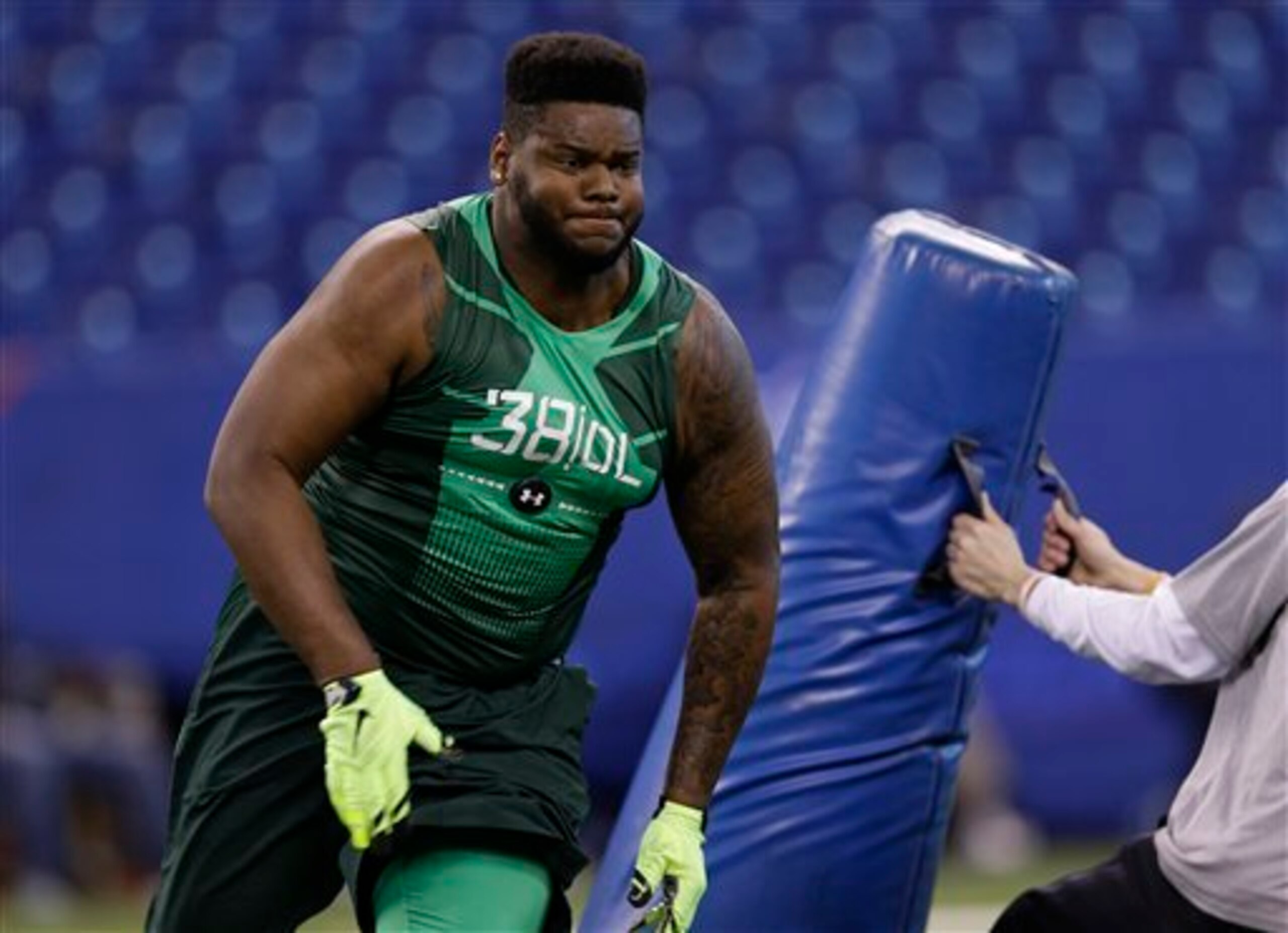
If one was to build a prototype for an NFL nose tackle, he would look a lot like Jordan Phillips. A 6’5”, 329-pound mountain of a man who exhibits excellent quickness for a player of his size, he has the power and athleticism to potentially develop into a star at his position.
Phillips’ frame, length (34 ¾” arms) and strength make him an ideal fit to be a hole-plugging anchor in the middle of a two-gap 3-4 defensive scheme. In addition to being able to occupy multiple blockers at once, he has shown the burst to occasionally penetrate gaps himself and blow up plays in the backfield.
All of those traits make Phillips one of the highest-upside prospects in this year’s draft class and an oft-projected first-round pick as a result (the majority of NFL.com's pundits predict he'll be a first-rounder).
With that being said, he was more of a flash player than a consistently dominant force at Oklahoma. Questions about his motor could make teams hesitant to draft him in Round 1, even with his immense physical gifts.
Another potential cause for concern is that he underwent surgery in 2013 for an injury termed as a chronic back issue. Should that issue recur for Phillips in the future, it could significantly shorten his career or at least affect his ability to stay on the field.
Phillips will be drafted because of what he could become rather than what he already is, and picks like that are always dangerous. The potential reward of drafting Phillips is high, considering how difficult it can be to find a stalwart nose tackle, but it shouldn’t come as a huge shock if his risk factors cause him to slide down the board into the middle or late portions of Round 2.
Marcus Peters, CB, Washington
7 of 8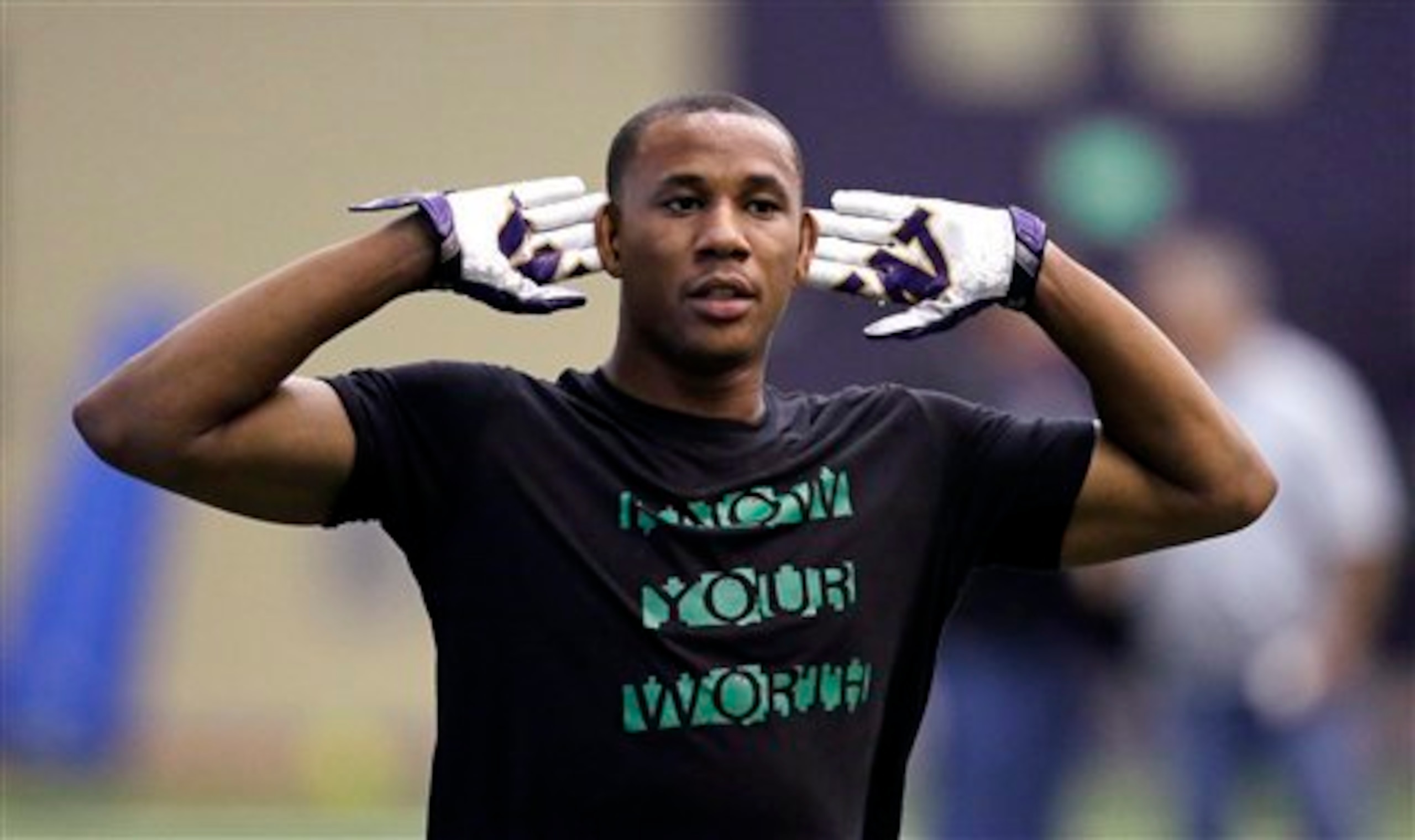
No cornerback in the 2015 draft class has better game film than Washington’s Marcus Peters, who could be a top-15 overall pick as a result. Red flags surrounding his character, however, could set him up for a fall on draft day.
Peters is a 6’0”, 197-pound cornerback who is strong and physical in press coverage, uses his length well and is adept at making plays on the ball. He has fluid hips, and while his 4.53-second 40-yard dash time is not outstanding, he still has enough speed for a cornerback with his size, competitiveness and technical skill.
The big question with Peters’ draft stock is whether teams will shy away from him because Washington dismissed him from its football program in November. Peters, who had a “series of run-ins with Washington’s new coaching staff” last season, according to Adam Jude of The Seattle Times, acknowledged in an interview with USA Today’s Tom Pelissero that he deserved to be dismissed.
"It was an avalanche ready to happen, man. It was going to collapse sooner or later," Peters told Pelissero. "I don't blame [Washington head coach Chris Petersen] for anything. All I can blame is myself, because I made those decisions and I have to live with them.”
The last thing an NFL coaching staff wants to deal with is insubordination from a rookie, so Peters’ history will likely keep some teams away from him.
Ultimately, his draft stock could be determined by how well he performed in his predraft interviews—specifically, whether Peters has been able to convince teams that he has sufficiently matured, is ready to commit himself to his NFL career and will respond.
While the consensus is that Peters and Michigan State’s Trae Waynes are the top two cornerback prospects in this year’s draft, a number of other cornerbacks—including Wake Forest’s Kevin Johnson, Connecticut’s Byron Jones, Utah’s Eric Rowe and Florida State’s Ronald Darby—have emerged as potential first-round picks with impressive workouts in the months leading up to the draft.
It’s possible that teams could opt to select those cornerbacks ahead of Peters—and push Peters down the board—in order to avoid the potential headache that could come with drafting him.
Landon Collins, SS, Alabama
8 of 8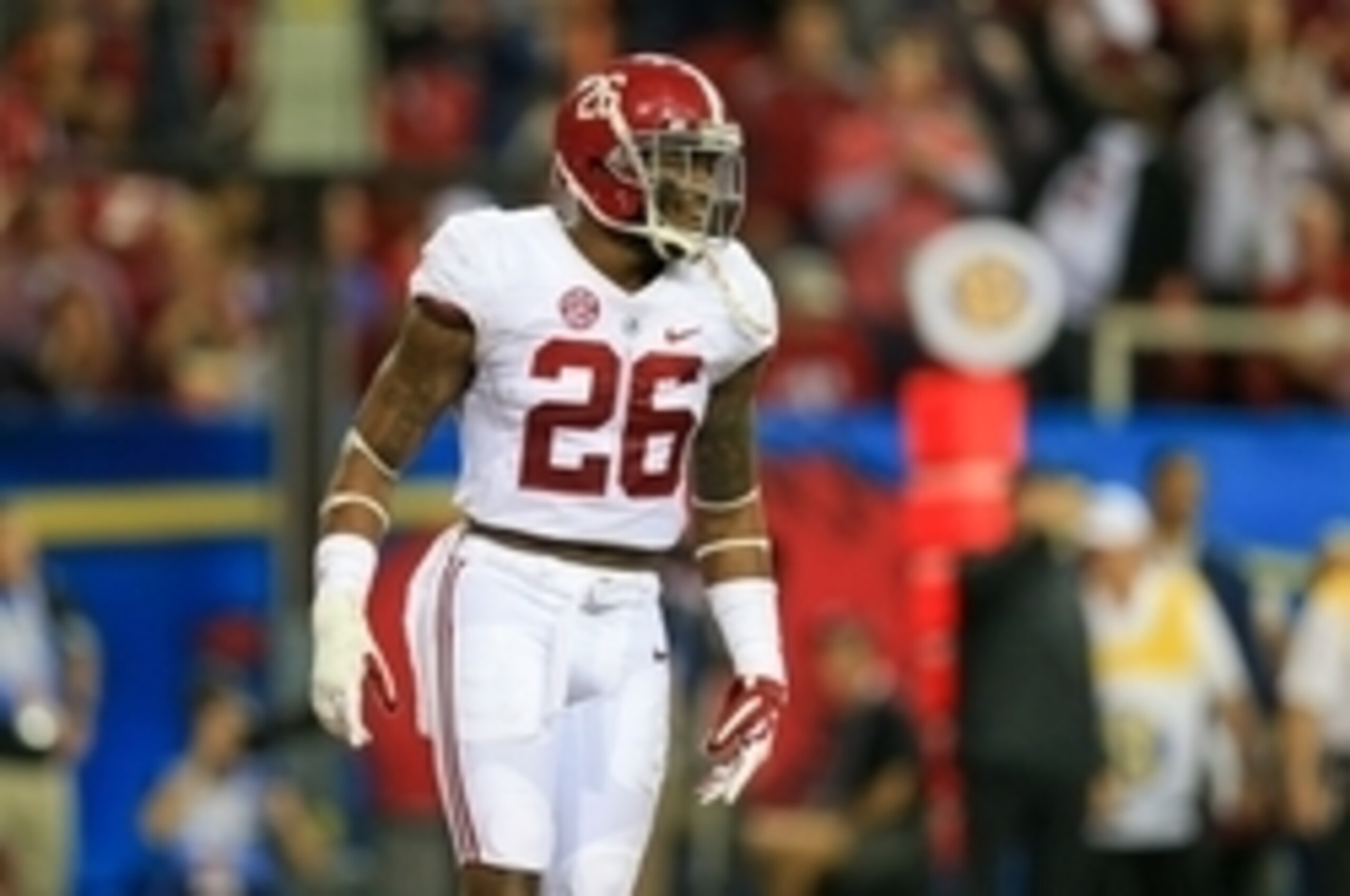
Since Nick Saban has revitalized the Alabama football program into a powerhouse, at least one Crimson Tide player each year gets overrated as a draft prospect. The player who meets that criterion this year is Landon Collins.
He can legitimately be considered the best safety in the 2015 draft class, but that’s mostly because there is a lack of top talent at the position this year. Need at the position could potentially push him up the board, but while he has been projected as highly as the No. 5 overall pick in occasional mocks, it’s probably far more likely that he will fall to Round 2 than be a top-10 choice.
As an in-the-box strong safety, Collins projects well to the NFL. He has great size for the position, at 6’0” and 228 pounds, and is a hard hitter who excels in run support. He flashed big-play ability over the course of his three-year career in Tuscaloosa and has good forward explosiveness.
Realistically, though, the most important facet of a safety’s game in the modern NFL is his ability to play in deep coverage. Collins is not great in that area. Opponents beat him unexpectedly at points in the 2014 season, and he shows some stiffness when he has to change directions and cover ground.
A player who will find the ball and make plays on it, Collins has some versatility to play free safety and even outside linebacker. Those attributes would make him a worthy late first-round selection and are likely to make him the first safety drafted, not including hybrid cornerbacks like Byron Jones and Eric Rowe who could be converted to safety.
Any team that is looking for a safety who can handle center field responsibilities on a regular basis, however, would be best going in another direction from Collins. Because those players carry more value than safeties who play closer to the line of scrimmage, he could end up staying on the draft board longer than most draft prognosticators expect.
All NFL Scouting Combine results courtesy of NFL.com.
Dan Hope is an NFL/NFL Draft Featured Columnist for Bleacher Report.
.jpg?w=2560)
.jpg?w=2560 "Cardinals Giants Football")






