

Predicting MLB's Biggest Busts for Each Position in 2015
Just as every baseball season has its breakout players, it also has its busts.
These are the players who had strong campaigns a season ago and are expected to be major contributors again in 2015. However, for one reason or several, they will become sources of disappointment.
Some of them are big-ticket free agents heading to new clubs, and some were surprise hits last season who are now being counted on to do it again. For others, injuries or their first real taste of big league ball will do them in.
Whatever the reason, at least one bust is waiting at every position. Here is Bleacher Report’s starting 10.
Pitcher: Julio Teheran, Atlanta Braves
1 of 10
The Braves are counting on Teheran, a 24-year-old right-hander, to lead their rotation this season a year after he made 33 starts and compiled a 2.89 ERA. Normally, that is a no-brainer.
The thing that gives us pause here is that Teheran had a 3.49 FIP, and his BABIP of .267 is well below the league average, which is around .300. If Teheran reverts to a BABIP closer to the average, his ERA is more likely to look like last season’s FIP rather than a repeat of his 2014 ERA.
What also will not help Teheran, or anyone on the Braves staff, is trading away supreme defensive right fielder Jason Heyward and adding Nick Markakis, who has been worth minus-25 defensive runs saved from 2009 through last season, according to FanGraphs.
Losing outs or allowing more extra-base hits because of poor outfield defense will play a part in Teheran’s 2015 backslide.
Catcher: Russell Martin, Toronto Blue Jays
2 of 10
Part of the reason the Blue Jays signed Martin, a native Canadian, is because of his defensive upside. That portion of his game is not likely to decline anytime soon.
But his bat is a different story.
Martin enjoyed a strong offensive season in 2014, hitting .290/.402/.430 with a .370 wOBA, according to FanGraphs. He also had a .336 BABIP, which was by far a career best. That mark also comes after three consecutive seasons of BABIP marks of .252, .222 and .266, respectively.
His overall offensive contributions, tracked by FanGraphs again, had been in the negative for five consecutive seasons before last year when it jumped drastically to 16.3.
That BABIP spike was a major contributor in Martin’s offensive production. It is totally reasonable to expect that number to even out and shape his overall offensive numbers.
First Base: Matt Adams, St. Louis Cardinals
3 of 10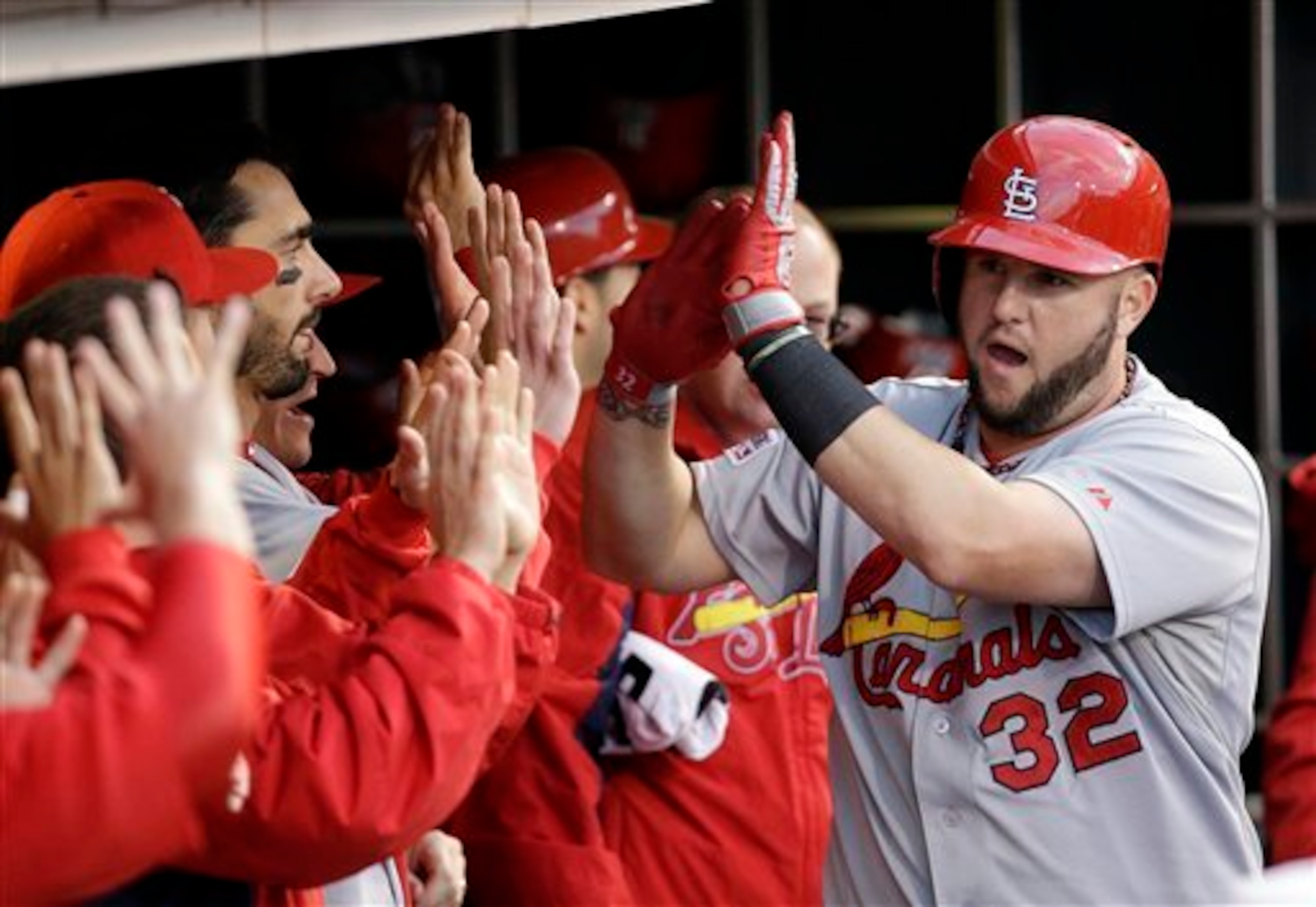
Adams was a steady offensive presence for the Cardinals over his 563 plate appearances last season, though he did not flash the power rate the team hoped he’d show. He hit 17 homers in 319 plate appearances in 2013 but managed just 15 last year.
In his two mostly full seasons in the majors, Adams has put up above-average BABIP numbers. He was at .337 in 2013 and .338 last year. He managed to do this in 2014 despite swinging at more than 42 percent of pitches outside the strike zone, according to FanGraphs. He also had a significant rise in his overall swing rate, hacking at 53 percent of pitches he saw.
Why is this significant? Well, besides being way up from 2013, the stats also point to a trend that Adams will chase. That free-swinging approach will hurt as the National League catches up to him.


Second Base: Joe Panik, San Francisco Giants
4 of 10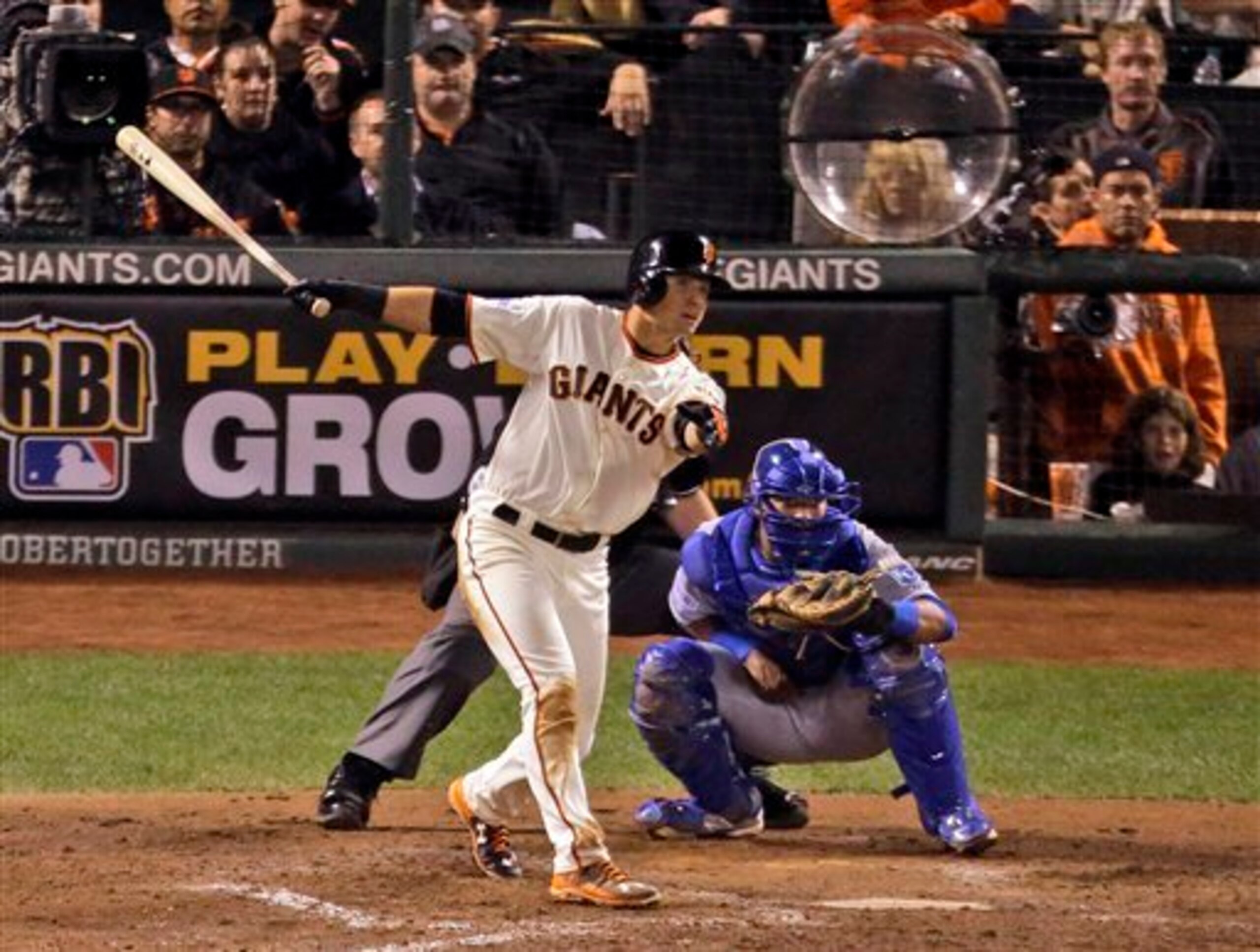
Without mincing words, Panik’s 2014 success appears completely unsustainable.
Last year San Francisco called him up for good in late June. He then went against trends by upping his strikeout rate and dropping his walk rate. Despite this, his BABIP was a ridiculously good .343, third among National League second basemen with at least 250 plate appearances. That helped his overall line of .305/.343/.368 over 287 plate appearances.
Still, he showed no power—one home run, 10 doubles—and it effectively hurt his 104 OPS-plus.
Panik has shown up-and-down BABIP numbers in the minors, but expect the league to catch up to him and start to exploit holes in his approach. The scouting report on him is thick enough that he won’t see so many strikes, and he will have to adjust to a season of at least double his major league plate appearances.
That kind of exposure can extinguish hot stretches.
Shortstop: Starlin Castro, Chicago Cubs
5 of 10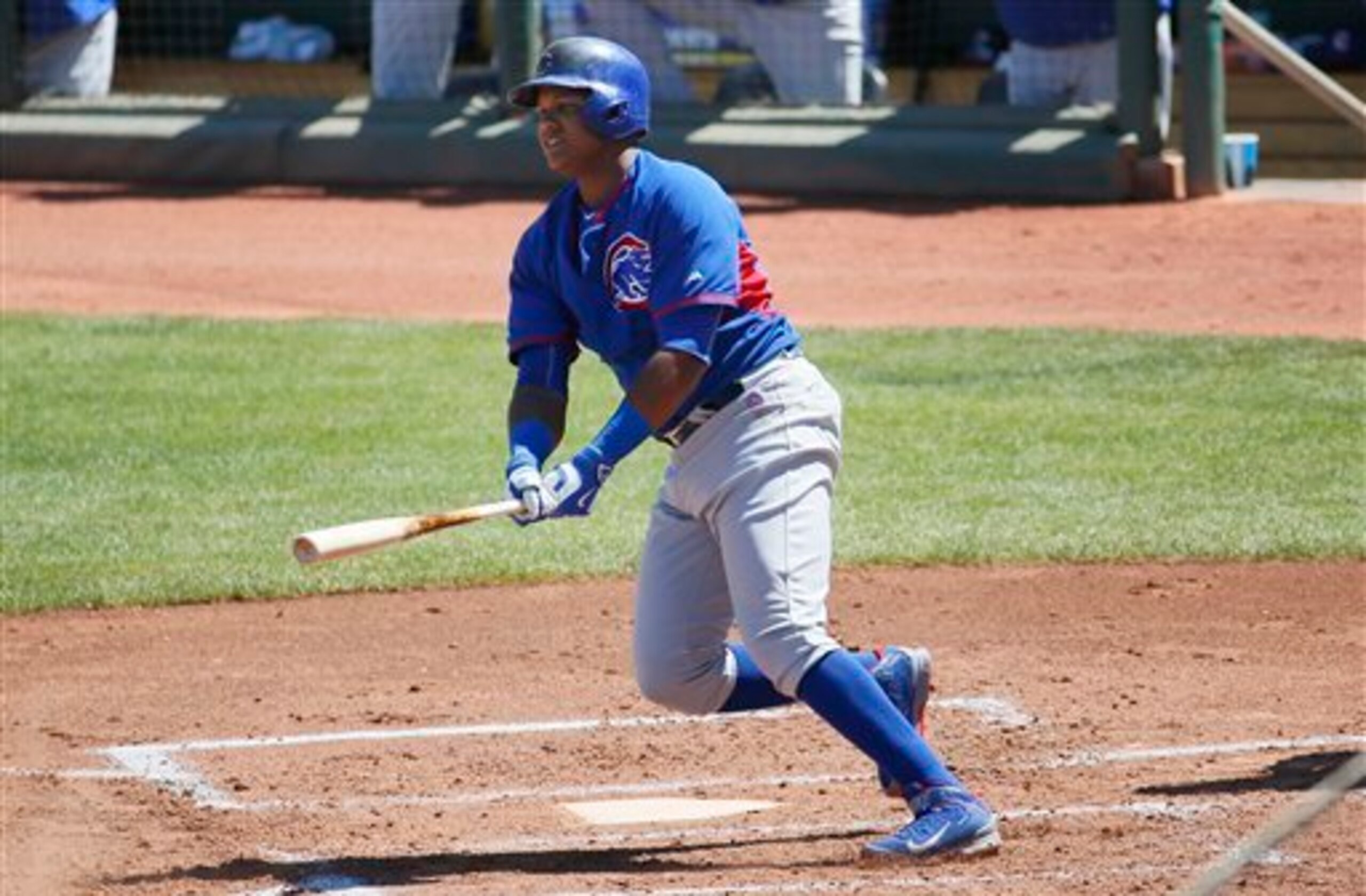
After hitting over .300 in his second season, making the All-Star team and finishing 23rd in National League MVP voting as a 21-year-old, Castro experienced a drastic fall.
He had a 102 OPS-plus in 2012 and a 73 OPS-plus in 2013. He bounced back last season with the help of a .337 BABIP. That is something he will need to duplicate to have more success, but he does not seem primed for a repeat when you consider his strikeout rate went from 13.4 in his second season to 17.6 last year, which was actually down from 18.3 in 2013, according to FanGraphs.
It is possible Castro had a really down year in 2013, and last season was him rounding back into form with a .292/.339/.438 slash line. Although ZiPS projects his BABIP to remain intact (.325), it could easily fall back into the .300 range and sink his production as expectations on the North Side skyrocket.
Third Base: Josh Harrison, Pittsburgh Pirates
6 of 10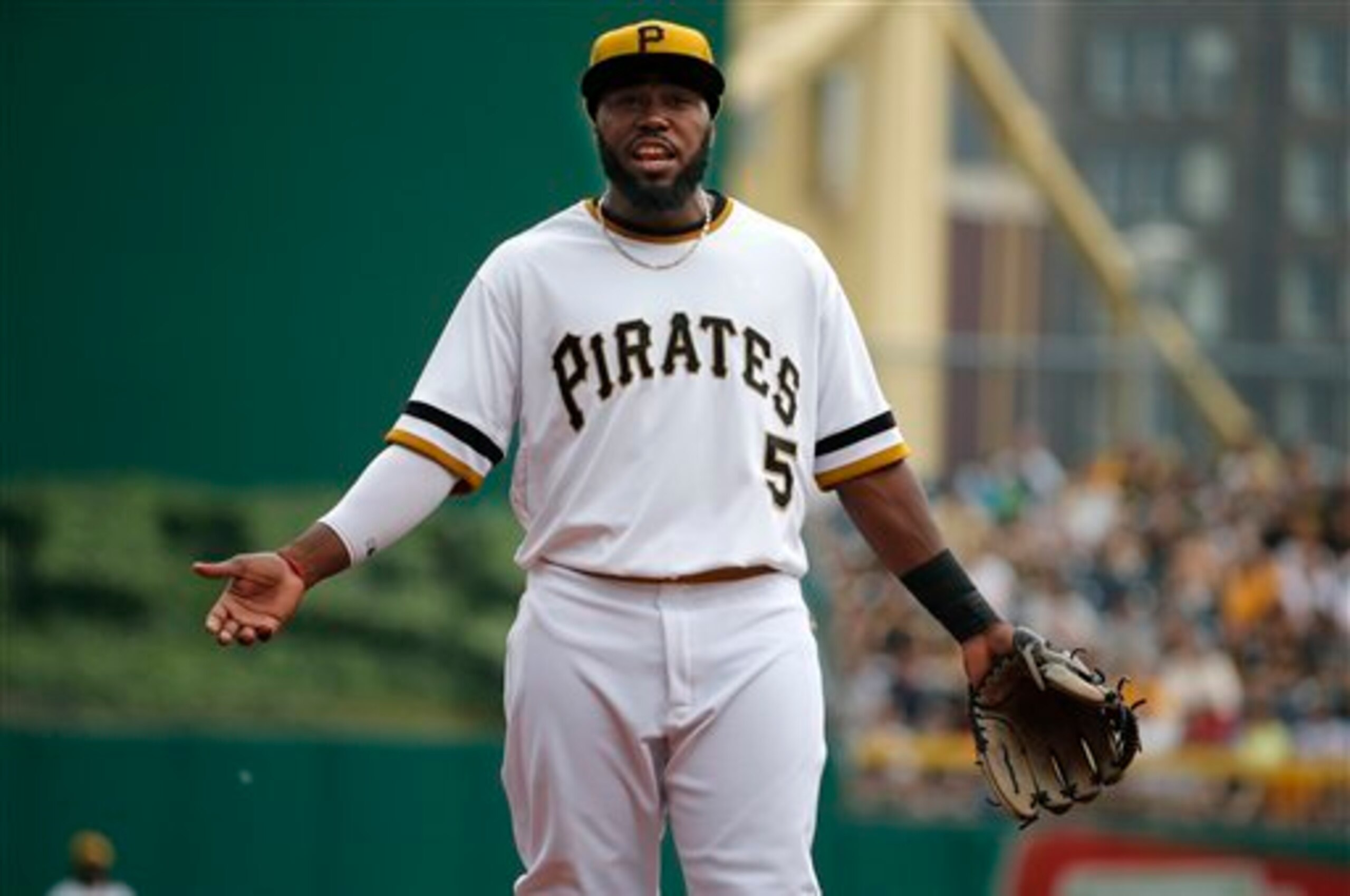
Harrison seems to be the ultimate regression candidate. Though he had limited service time before last season, his .353 BABIP was by far a career high and ninth-best in the majors, ahead of guys like Mike Trout and Miguel Cabrera.
This was due to a spiking line-drive rate of 24 percent, which was up from 18.7 the season before, according to FanGraphs. And when you see that Harrison’s strikeout rate went up while his contact rate outside the zone went down and he saw only about 48 percent of his pitches inside the zone, as FanGraphs notes, it's obvious he was a very good bad-ball hitter.
Unless something like that is all over his scouting report throughout his career, it is unlikely he turned into a bad-ball hitter in one season, and it is unsustainable. If he keeps swinging at balls out of the zone, chances are he will stop seeing hittable pitches inside it.
That would obviously lead to a correction and nothing like the hitter who finished ninth in National League MVP voting last year.
Left Field: Michael Cuddyer, New York Mets
7 of 10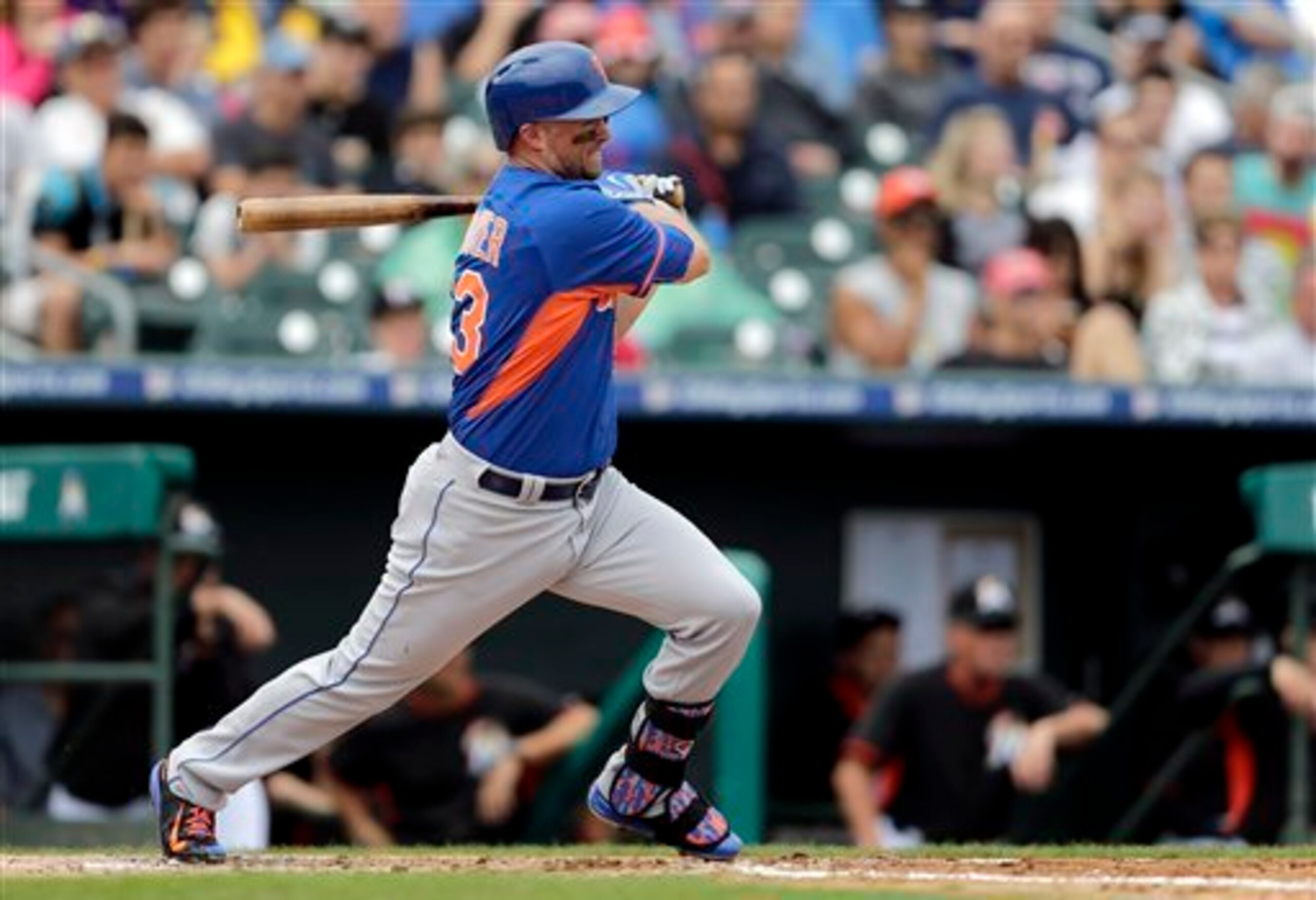
This is an easy one to figure out.
Cuddyer is going from Coors Field, where he won a batting title thanks to a .356/.414/.582 line at home, to Citi Field. And last season with the Rockies, when he was limited because of hamstring and shoulder injuries, he hit .400/.455/.800 with a 1.255 OPS at Coors Field and .282/.316/.418 with a .734 OPS on the road. It’s safe to say leaving the Rocky Mountain air will have a negative effect on his numbers.
Not only that, but he's a defensive liability, as he’s been worth minus-64 defensive runs saved in the outfield over his career, FanGraphs says.
And when he is not on the field, it is because his injury-plagued body is betraying him. Cuddyer has averaged 93 games played over the last three seasons with Colorado. And having to roam another big outfield at age 36 won't help.
Center Field: Mookie Betts, Boston Red Sox
8 of 10
Betts was a heralded prospect who put up big offensive numbers, excluding power, during his time in the minors. And when the Red Sox called him up last season, he zoomed to a 128 OPS-plus in 213 plate appearances.
That set the stage for 2015, and Betts’ strong spring training—he’s hitting .451—did nothing to quell expectations.
Now he will be called on to do it for an entire season, in the big leagues, with expectations piled high. It is not that Betts is a bad player—he most likely will be a productive one over the course of his career.
But over the course of his next 600 plate appearances, assuming he gets the time to gain that many, a lowered walk rate and a rising strikeout rate compared to his minor league numbers, via FanGraphs, could have him feeling some rookie blues.
Right Field: Jayson Werth, Washington Nationals
9 of 10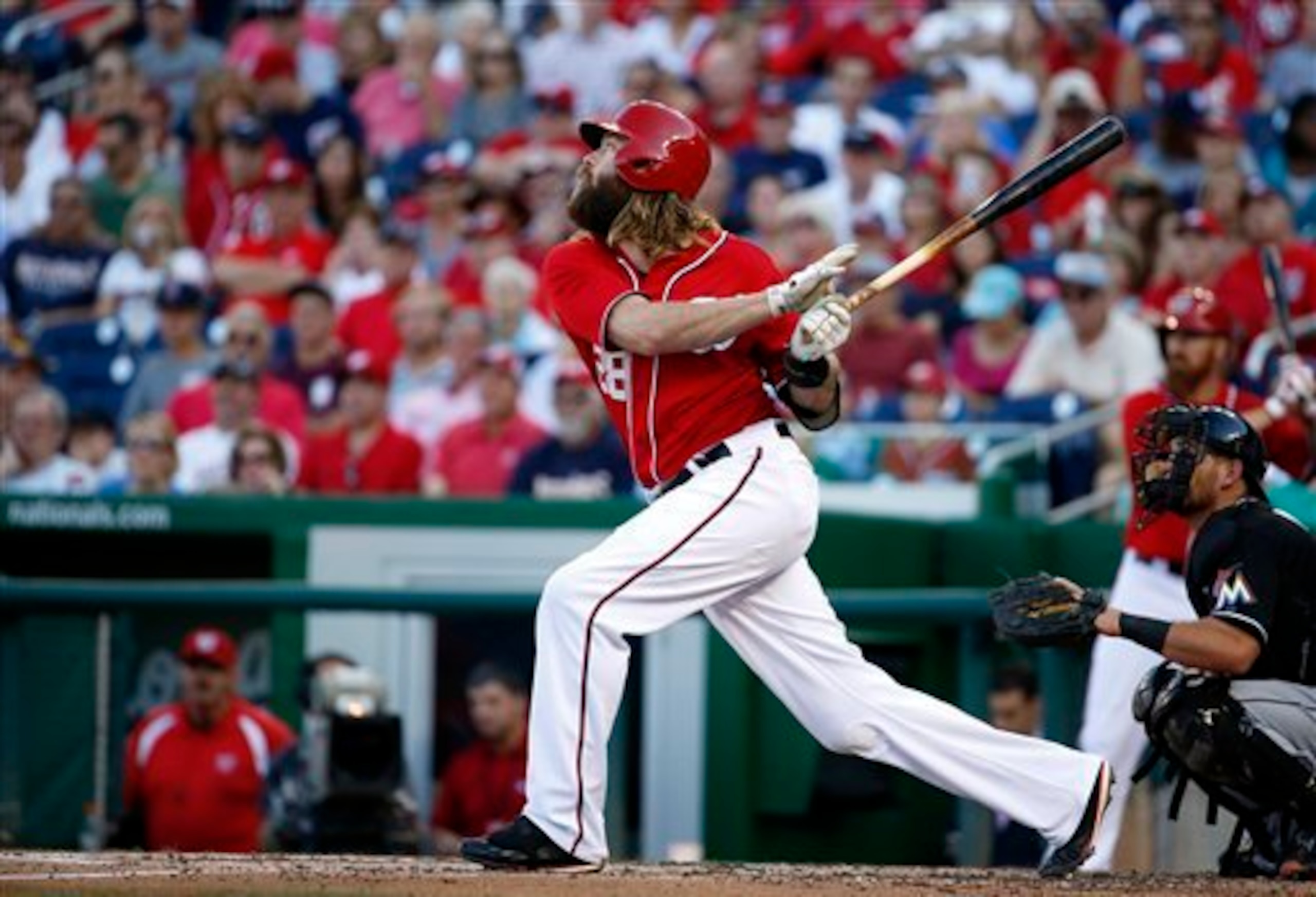
Werth being on this list has as much to do with injuries as anything else. He has been a big-time offensive contributor since joining the Nationals, but this season is already starting out sketchy for the veteran.
He missed most of spring training while recovering from offseason shoulder surgery, and he is not expected to be ready for Opening Day. There's no set timetable for his return to the Nationals, but he's making progress.
Still, shoulder injuries are tricky for hitters. While they might be well enough to swing and play, the injury can sap power and mobility in the swing. Other players have gone through similar rehabs for shoulder injuries, and it took them significant time to find normal again, most notably Matt Kemp and Hanley Ramirez.
While those players did not have the same procedure as Werth, shoulders for hitters can be like elbows for pitchers. And they are always a concern until proved otherwise.
DH: Steve Pearce, Baltimore Orioles
10 of 10
Before last season, Pearce amassed 847 career plate appearances in the major leagues. He hit .238/.318/.377 with a .694 OPS and 17 during that time span.
Last season, at age 31 and in 383 plate appearances, he hit .293/.373/.556 with a .930 OPS and 21 home runs. His fly balls turned into home runs 17.5 percent of the time, the 15th-highest mark in the American League for players with at least 350 plate appearances—behind more traditional power hitters but well above the league average.
See where we are going here? The chances that Pearce repeats that kind of season are slim, so expect some returning to earth to happen in 2015.
Advanced stats courtesy of FanGraphs.




.jpg?w=2560 "Mahomes Asked OT to Leave Meeting")
.jpg?w=2560 "Jonathan Taylor Landing Spots 📍")

.jpg?w=2560 "Five Teams Eyeing Taylor")

