

Breaking Down Every Proposed Rule Change for the NFL
BOR-RING. Boring, boring, boring.
Nobody's got time to read about a bunch of hogwash legalese mumbo-jumbo. Nobody wants to think about a committee of empty suits pushing paper around desks, debating a motion to consider ratifying the amendment to Rule 8, Section 1, Article 3 of the Official Playing Rules of the National Football League.
Breaking down proposed rules changes sounds about as fun as breaking down proposed grass-growing—and the specifications for grass-growing are in the rule book, too. Why would I waste my time writing, and you waste your time reading, analysis of proposed rules changes that may or may not even happen?
Because when your team gets eliminated from the playoffs because its star receiver failed to complete the process of the catch while going to the ground, you'll just shake your head sadly instead of throwing a remote through your flat screen.
Dez Bryant wishes he'd paid a little more attention to Rule 8, Section 1, Article 3, and all pertinent clauses, sub-clauses, accepted rulings and interpretations thereof.
Read up now, and save yourself some heartache (and a TV!). We're breaking down all the rules proposals the competition committee will consider for 2015, per NFL.com's release to the media.
New Rule, Same as the Old Rule: Unaddressed Issues
1 of 9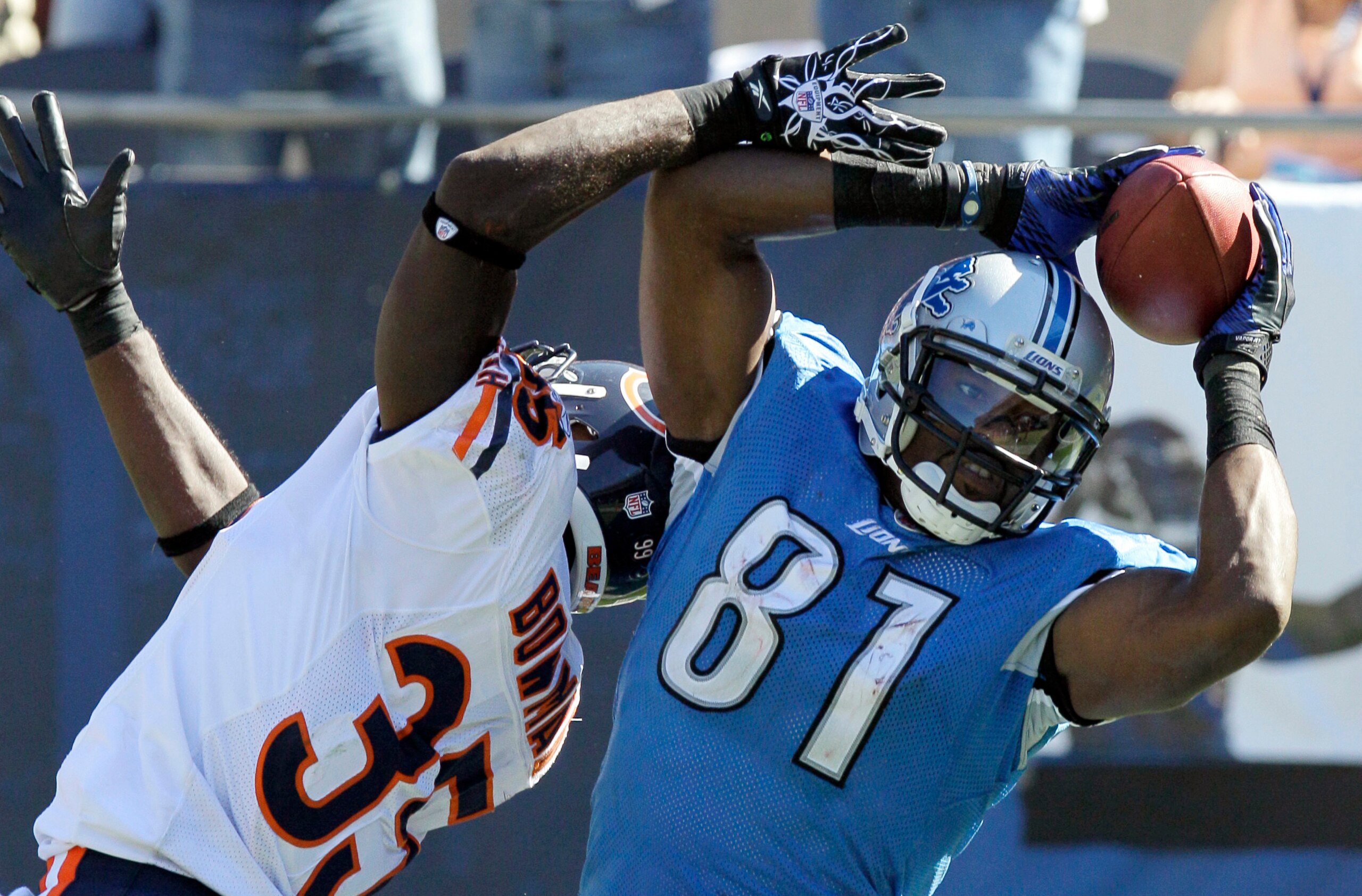
Though everyone expected a change to the so-called Calvin Johnson Rule after the Dez Bryant incident, it looks like no changes were proposed.
Rich McKay, the cochairman of the committee, told ESPN.com's Kevin Seifert there "could be some changed language" on the process rule, but he wouldn't go into detail.
There are also no proposed changes to the playoff structure, active-roster rules or rules regarding international games, despite speculation by Pro Football Talk's Mike Florio (among others) that there would be.
Despite speculation back in January, the New England Patriots' substitution trickeration won't be banned entirely; however, the committee did propose banning nominally eligible receivers from reporting as eligible and then lining up outside the tackle box.
Under this proposed change, a tight end, such as Rob Gronkowski, could report as ineligible and line up as an inline blocker but not in the slot like a wide receiver. This lessens the ploy's usefulness, which may not be necessary.
Now that every head coach is more than aware of this trick, it should be on coaches to prepare players and on players to be heads-up.
No More Challenge Flags
2 of 9
Currently, coaches can call up to three timeouts per half, plus two challenges per half, and a timeout is used for each challenge. However, a timeout used for a challenge is restored to the coach if the challenge is upheld. Further, if both challenges are successful, the coach is awarded a third challenge—but if a coach doesn't have any challenges left and throws the challenge flag, he'll be charged a timeout.
Got that?
Under this proposal, submitted by the New England Patriots, the entire system of separate challenges and timeouts is done away with completely. To challenge a play, a coach simply calls timeout and informs an official of his wish to challenge the play—and he can do it at any point in the game.
This is an uncomplicated change that makes the game simpler, easier and fairer—a win all around. But we're going to miss watching the coaches throw red flags in anger.
The Indianapolis Colts proposed going in the other direction: de-coupling challenges from timeouts completely. Challenges wouldn't result in a spent timeout at all, except when they attempt to challenge when they're out of challenges. This would be fine but also raise the specter of coaches challenging frivolously to stop the clock.
Washington proposed keeping the current system but adding an unconditional third challenge. If the Patriots' proposal isn't adopted, this one should be. An obvious official's error shouldn't be left uncorrected just because a coach got one challenge wrong (or the referee kicked a replay!).
Make Penalties Reviewable
3 of 9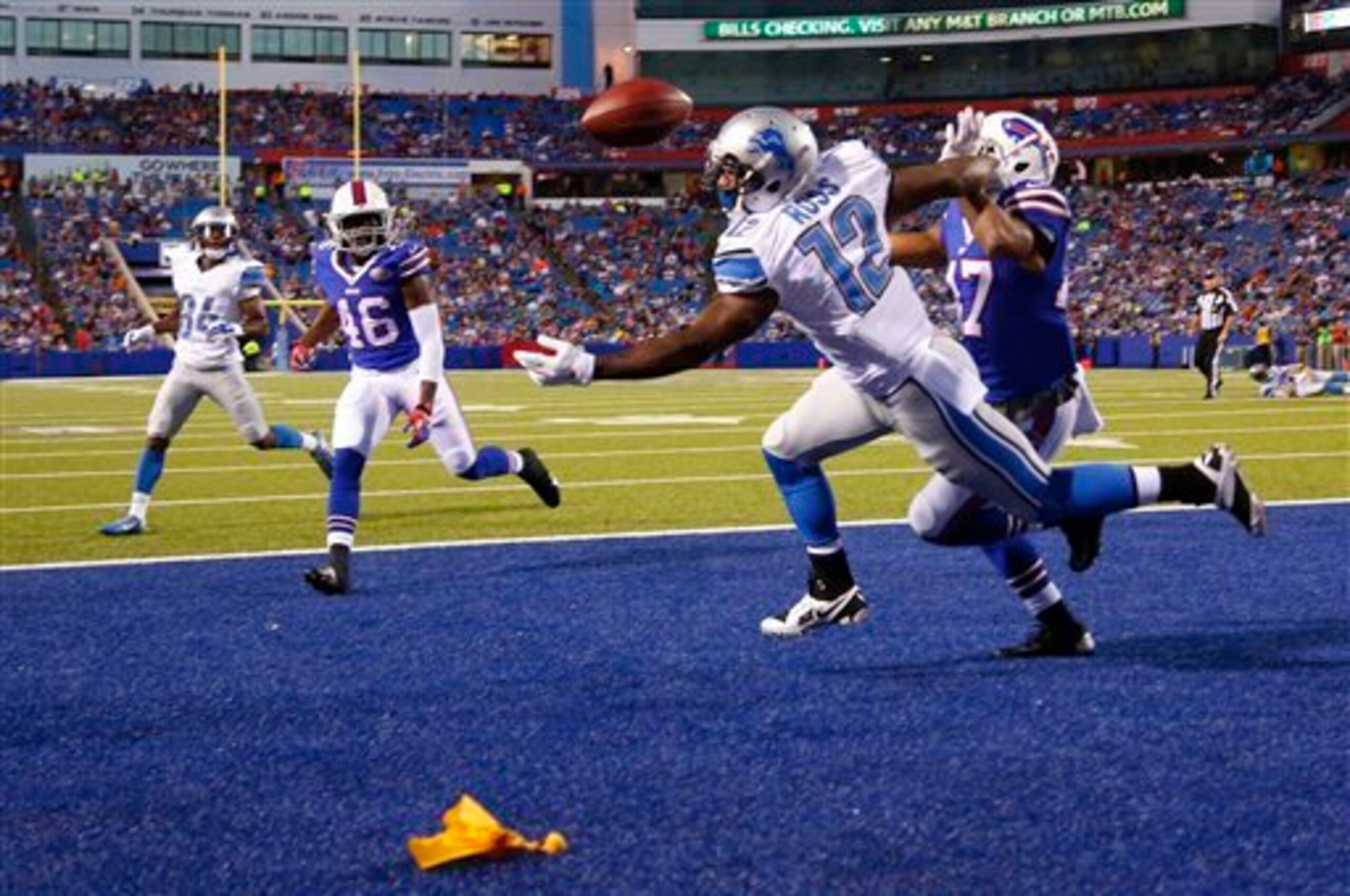
Submitted by the Detroit Lions, making all penalties reviewable seems long overdue.
Many of the most controversial penalties in football, such as pass interference and holding, aren't reviewable. That's because they rely heavily on a referee's subjective interpretation of the rules. Being able to go back and review these calls could change many games for the better.
Moreover, just like balls and strikes in baseball, or charging and blocking in basketball, there's a difference between the by-the-book definition and the human-factor feel of these judgment calls.
Some officials are tighter, some looser, and all "let 'em play" at least a little bit, because nobody wants to spend five hours marching off yardage every time any lineman holds (which happens nearly every play). This is a source of inconsistency, which is bad—but it's also a source of consistency, too. Asking someone in New York to analyze an illegal-contact call outside of the context of the game being played may not be the fairest, best way to go about it.
If we think of this as a chance for an officiating crew to supplement its post-call huddles with video evidence, fine—often, a referee will pick up a flag if he believes a member of his crew was overzealous. But if heat-of-the-moment judgment calls are constantly subject to review, it could lead to even less consistent results.
Washington submitted a change that would subject all personal-foul penalties to review, as well as any penalty that results in an automatic first down.
The Tennessee Titans submitted a very interesting tweak: Allow officials to review, identify and flag illegal hits on defenseless receivers "when the onfield ruling is reversed from a catch/fumble to an incomplete pass."
The way it's worded is very, very narrow, but this would be the first time officials could use replay to call a foul. If the NFL is going to go down that road, throwing flags based on review, it should consider it in a much broader context.


.jpg?w=2560 "Cardinals Giants Football")
Make Jersey Numbers Dumber
4 of 9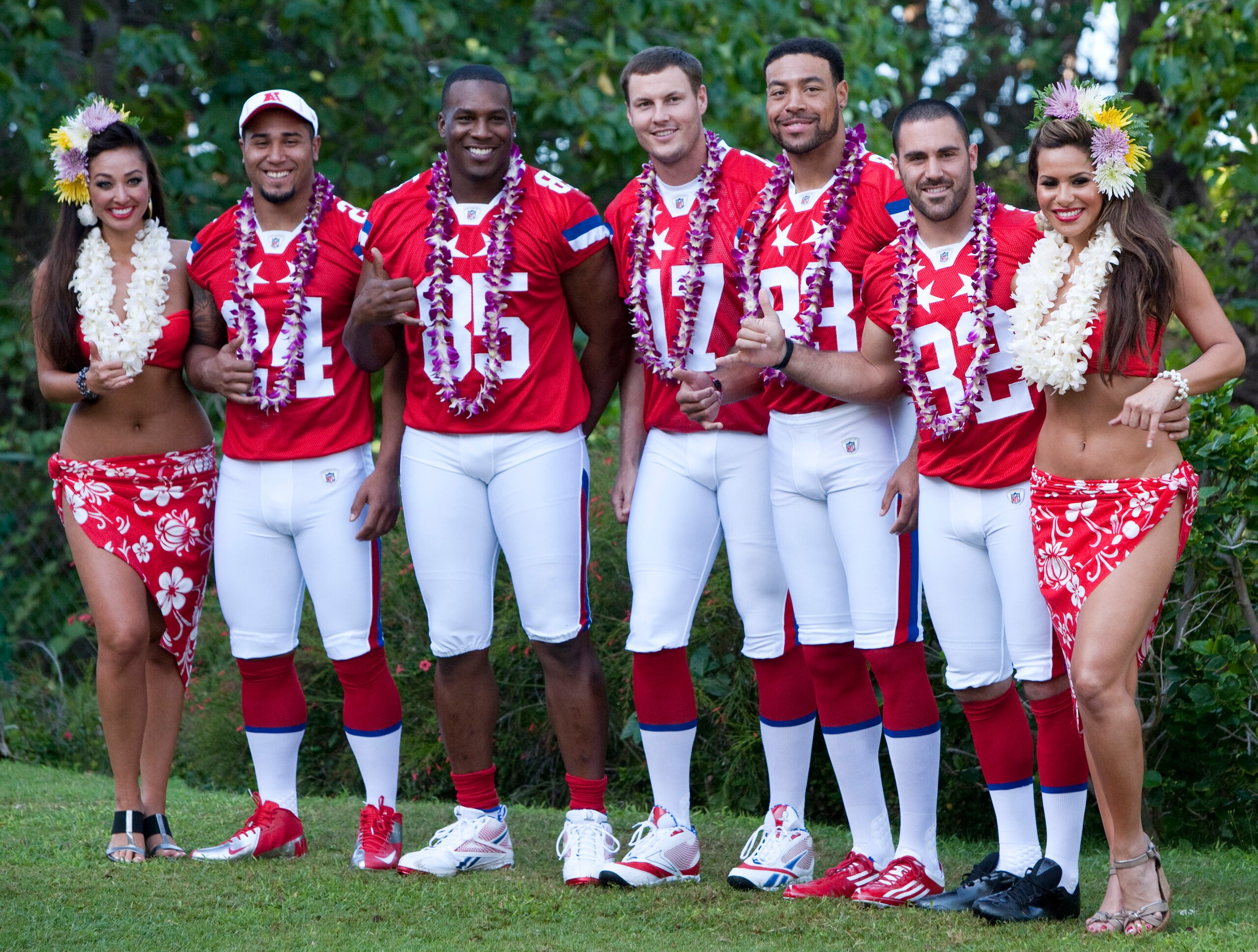
Please permit your humble columnist to go on a bit of a rant.
Jersey numbers exist for the convenience of the viewer, media member or fan. As body types evolve, positions hybridize and offensive and defensive roles blur into one another, one of the few immediate ways a person can tell one player from another is by jersey number.
In college, jersey numbers are a free-for-all, and determining who's who can be a chore. Keeping rigid, traditional number ranges for position groups is a courtesy to everyone involved.
Faced with the march of time, retired numbers and changes in how players are utilized, the competition committee is proposing that teams be allowed to assign linebackers numbers 40-49.
In all honesty, this one particular change won't be much of a problem; fullbacks, H-backs, blocking tight ends and long snappers no longer take up a lot of roster spots. Yet this change is part of a rising tide of willy-nilly number distribution, and the football-viewing public has to take a stand before it's too late.
Fix PATs
5 of 9
Point-after-touchdown tries have become all but automatic in today's NFL, and the league has tried several proposals to fix it, during meaningless contests such as preseason matchups and the Pro Bowl.
The New England Patriots have proposed moving all point-after attempts to the 15-yard line, whether that's for kicking an extra point or attempting a two-point conversion.
This seems counterintuitive; two-point conversions would become much harder, and per FiveThirtyEight.com, 20-29-yard field goals are nearly as automatic as extra points. Thirty-two-yard PAT tries (presumably, all set up in the center of the field) would likely be made at least 95 percent of the time, as opposed to nearly every time.
The Indianapolis Colts proposed a "bonus" PAT after a successful two-point conversion, not unlike a one-and-one free throw in basketball. This would dramatically incentivize going for two—but it would also make games more volatile.
Even without breaking out a slide rule and running through all the various expectancy values, it's hard to imagine an NFL where an 18-point lead could get wiped out with two plays from scrimmage.
Make Overtime "Fair," or Something
6 of 9
I've already gone on record with my plan to fix NFL overtime, but the Chicago Bears have another idea: Ensure each team gets possession in overtime no matter what.
Football fans argue about this ad nauseam, but here's the point everyone misses: Overtime is designed to end the game quickly. It's not supposed to be fair, equitable or entertaining. It's supposed to get two battered, exhausted teams off the field and into the locker room.
Don't like losing in overtime? Stop playing for overtime, and start playing to win it in regulation. Then again, the Bears' proposal strikes a huge amount of goofy, complicated nonsense from the rulebook.
Instant Replay Review Tweaks
7 of 9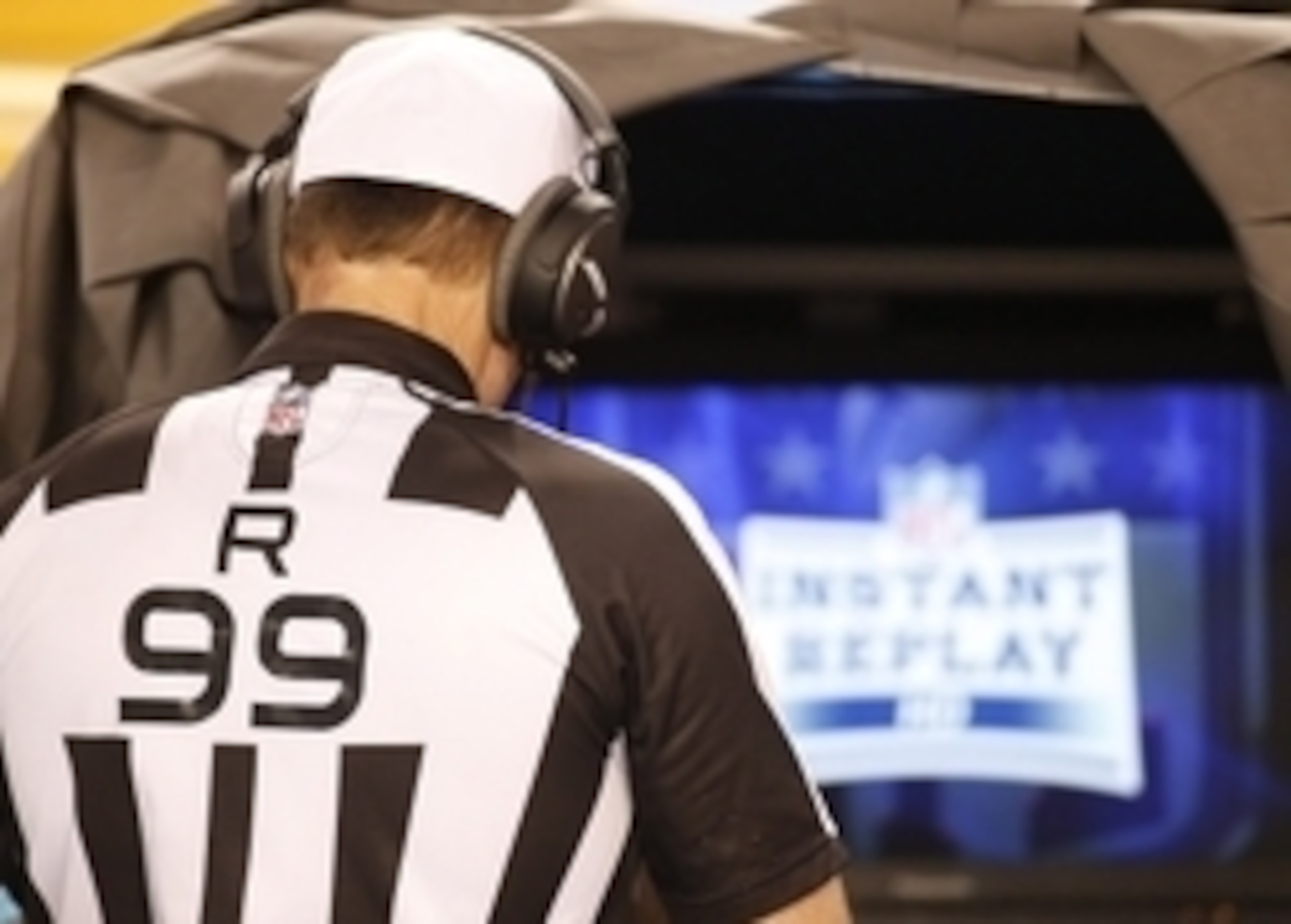
The Tennessee Titans proposed allowing replay review of whether or not the game clock had expired before a play started and to add time on the clock if not. Similarly, the Chicago Bears proposed adding a play clock overlay to instant-replay review footage, so officials can confirm whether delay of game occurred or not.
These would be low-impact, common-sense additions; fans at home will all see (and be infuriated by) timing errors such as these anyway.
The Titans also want in-stadium video available for the officials to use during review, rather than being limited to the broadcast stream. In theory, this is great; it's a travesty when the crowd sees a critical angle the officials don't have. In practice, this could require difficult technical coordination between in-house media and national broadcast trucks. Should officials really be making challenge determinations by just looking up at the Jumbotron?
The Kansas City Chiefs also proposed expanding the role of the replay official, including allowing the official to review an on-field reversal of a play that results in any of the following: a scoring play, interception, fumble or backward pass that is recovered by an opponent or goes out of bounds through an opponent's end zone, or muffed scrimmage kick recovered by the kicking team.
Yes, please. More centralized oversight, more ways to fix officials' mistakes.
Put Cameras Where Cameras Should Go
8 of 9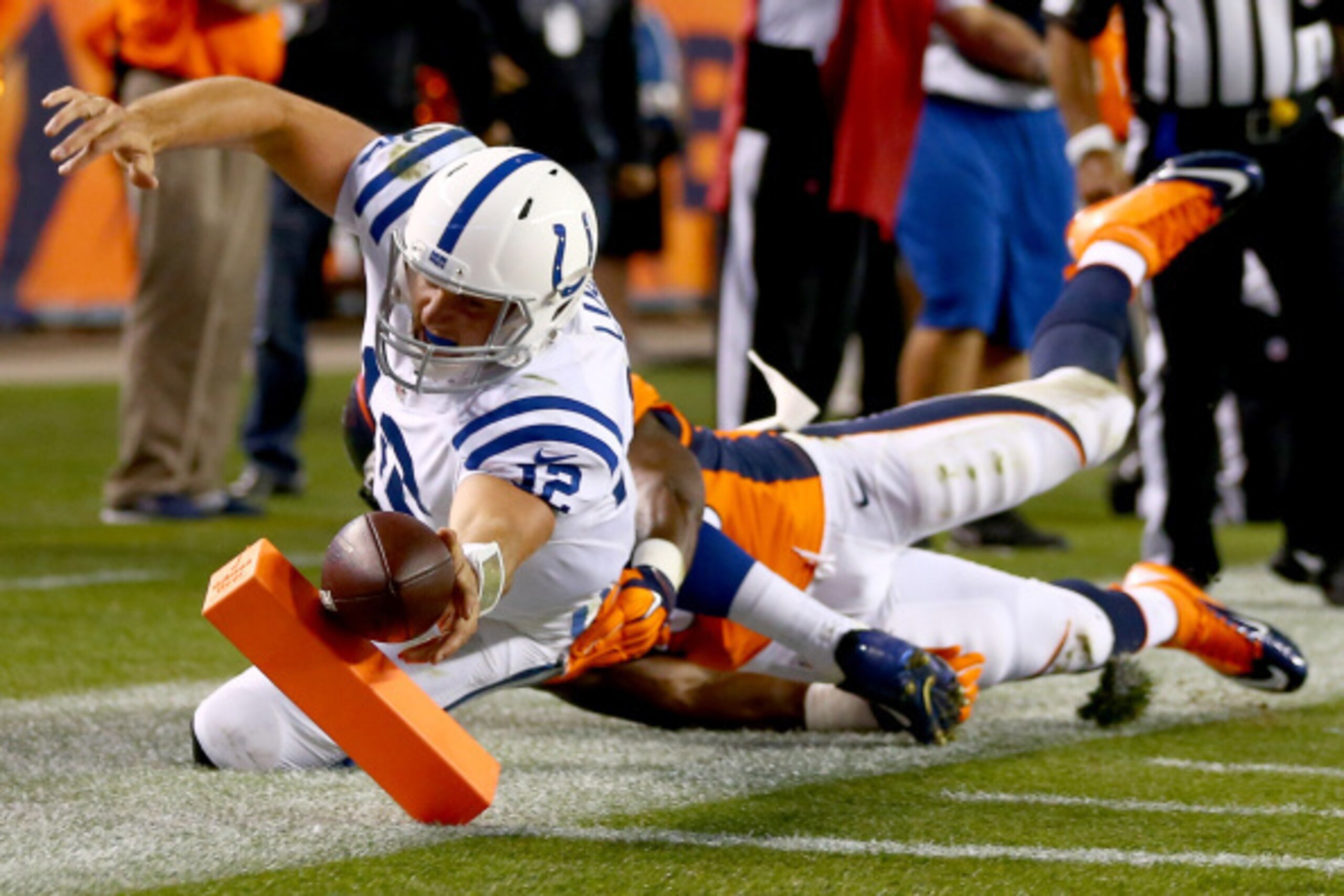
The New England Patriots proposed placing mandatory fixed-view cameras on sidelines, end lines and goal lines, so game-changing boundary replays always have a clear, no-nonsense angle with a head-on visual reference.
How is this not a thing already? What has the NFL been doing with all its $11 billion in annual revenue, per Daniel Kaplan of SportsBusiness Journal? With games turning on the result of replay decisions and high-definition cameras incredibly cheap, there's just no excuse to say no.
The only justifiable reason not to adopt this proposal would be the advent of reliable goal-line technology, as Carnegie Mellon and North Carolina State are developing.
Player Safety
9 of 9
The Baltimore Ravens proposed a tweak to the way special teams formations are policed.
Currently, players attempting to block a field goal or point-after try can't use their hands to push their teammates forward; the Ravens would ban that practice by punt-block teams as well. No objections here; that's a common-sense way to make the rule as standard as possible.
The Miami Dolphins proposed banning nasty peel-back blocks by all offensive players, not just those "aligned in the tackle box when the ball is snapped." Again, yes please—more standardization and better player safety.
The committee proposed expanding the definition of "defenseless player" to include a targeted receiver continuing his route after his intended pass was intercepted. This would penalize, say, a cornerback from jumping a route and a crossing safety immediately blowing up the inertia-bound receiver.
It's a rare situation but one in which a flag should be allowed. It's an even better rule because it maintains the interception (the cornerback in the example above wouldn't be penalized for his teammate's tee-off).
The committee also proposed eliminating one of the three situations in which a chop block is considered legal: a player originally lined up in the backfield chopping a defender engaged at the arms outside the tackle box. Many football fans thought chop blocks were already banned; one wonders why they don't just go ahead and do it. It'd be a blow for player safety and simplicity, all at once.
Finally, the competition committee proposed eliminating a current clause that says unsportsmanlike conduct or taunting fouls that occur at the end of a half are to be disregarded. If this one isn't adopted, teams will be free to taunt each other (and/or commit unsportsmanlike acts) without consequences, as long as the clock's struck zero.
It's kind of ludicrous this was ever the case. If the committee doesn't adopt this one, keep your eyes peeled for dumb stuff after the whistle.
.jpg?w=2560 "Jets Dolphins Football")


.jpg?w=2560 "Ward Nearly Walks Out of Presser ▶️")