


The majority of the prospects in attendance at the NFL Scouting Combine hail from your typical programs.
This year in Indianapolis, you'll see 12 players from Florida State, 11 from Alabama and Louisville, nine from Florida, eight from Miami, seven from Auburn, Oregon, USC and Oklahoma, six from LSU and five from Texas, Texas A&M, TCU, Georgia, Missouri and Penn State.
That's 35 percent of the Combine's 322 invites coming from 16 schools.
TOP NEWS
.jpg?w=2560 "Rams Raiders Football")
Raiders Could Start Mendoza

Geno Explains Wilson Exchange
Contenders starting to separate themselves after Week 7
The players from the schools above and the vast majority of their counterparts this week come from popular Division I programs, but approximately 750 American post-secondary institutions have varsity football teams, and each year we see a few combine prospects from colleges that are well off the beaten path toward the NFL.
This year is no exception.
Scan the list of invites for the 2015 combine, and a few mystery schools will pop out. Those include:
Harding
This private liberal arts school in Arkansas competes in the Division II Great American Conference and has had only five players drafted into the NFL in its 90-year existence, including linebacker Ty Powell, a seventh-round pick in 2013. This year, wide receiver Donatella Luckett will represent Harding at the combine.
Hobart
It's been 78 years since this private liberal arts school in New York State (enrollment: 905) could boast an NFL player. But offensive tackle Ali Marpet can change that for the Statesmen, who compete in the Division III Liberty League. For a better feel for how small this school is, Hobart's Boswell Field has a capacity of just 3,000.

Newberry
A private liberal-arts school in South Carolina with just 1,042 students, the Division II South Atlantic Conference (SAC) Wolves haven't had a player drafted since 1976. However, three of their five all-time NFL representatives are active (recently released Packers tight end Brandon Bostick, Chiefs defensive back Ron Parker and Giants receiver Corey Washington). They'll be represented in Indy by linebacker Edmond Robinson.
Norfolk State
This Virginia-based public university has had just a single player drafted into the NFL this century and is currently represented by Don Carey of the Detroit Lions. The Spartans play in the Mid-Eastern Athletic Conference (MEAC) within the Division I Football Championship Subdivision (FCS). Defensive end Lynden Trail will be in Indy on their behalf.
Prairie View A&M
Located northwest of Houston, they compete in the Division I (FCS) Southwestern Athletic Conference (SWAC). Prairie View A&M has actually sent 30 players to the pros, but that well went dry several decades ago. They haven't had a player graduate to the NFL since defensive lineman Sebastian Barrie last played in 1995. (Fun related fact: Prairie View A&M lost 80 consecutive games between 1989 and 1998, which is by far the longest losing streak in college football history.) That could change, though, if quarterback Jerry Lovelocke can put together a strong performance in Indy.
Samford
Samford is a 174-year-old private university in Alabama that plays in the Division I FCS Southern Conference and has sent 12 players to the NFL, including active cornerbacks Cortland Finnegan and Corey White. Finnegan was the school's first draft pick since 1968, but safety Jaquiski Tartt can become the third in the last 10 years.
Towson
Towson is a public university in Maryland which competes in the Division I (FCS) Colonial Athletic Association (CAA) and has two players (defensive end Ryan Delaire and cornerback Tye Smith) headed to Indy. That's the same number of players Towson currently has in the NFL (Jermon Bushrod and Terrance West).
So how the heck were these diamonds in the rough discovered? Bleacher Report spoke to several coaches from the aforementioned programs this week and the prevailing perception was that it's a combination of the following factors:
1. Most of Them Are Versatile
Luckett—who I'll remind you is now a receiver—rushed for nearly 2,000 yards as a high school senior while also leading the team in tackling. Oh, and he's a mean blocker.
"There were some plays this year where we pitched the ball around our 50-yard line going in and [Luckett] blocked his guy out of the end zone," said Harding head coach Ronnie Huckeba. "That sounds like an exaggeration but it's not."
Marpet played both football and basketball in high school. Robinson played both offense and defense and was originally signed by Newberry to play free safety. Trail was a wide receiver in high school who can play tight end but stood out as an outside linebacker/defensive end.
2. Most of Them Are Athletic
"He's got so much athletic ability that we felt if we moved him to receiver he would change the game for us," said Huckeba of Luckett. "And he did that."
I heard similar sentiments from several coaches, including Newberry defensive coordinator Stephen Flynn, who noted that he was comfortable using the 6'4", 230-pound Robinson to cover slot receivers one-on-one. In that respect, athleticism and versatility go hand-in-hand.
"At the end of the day, that alone is why all these scouts have come through Newberry," said Flynn. "He's athletic, can run and he's got that size, and that's what they look for."
Hobart head coach Mike Cragg thinks Marpet could make headlines in multiple drills at the combine, including bench press, 40-yard dash and the vertical jump.
"I've been here 30 years," said Cragg, "and I've never seen somebody like this."
And then there's Lovelocke, who is 6'5" and 248 pounds and has the size and athleticism every coach dreams to have at the quarterback position.
"I think when you look at his stature he's going to put you in the mind of a Ben Roethlisberger," said Prairie View A&M head coach Willie Simmons, who just took over for the departed Heishma Northern but coached against Lovelocke the last three years as offensive coordinator at Alcorn State. "He's one of those physically imposing quarterbacks."
3. Most of Them Are Late-Bloomers
This is the most obvious factor to consider. A lot of the guys we're looking at just weren't big or strong enough coming out of high school but have since flourished.
"He had a great frame on him," said Cragg of Marpet back when he was a high school senior, "but he wasn't being recruited by other schools because he wasn't heavy enough."
In fact, Marpet weighed about 245 pounds coming out of high school but gained about 65 pounds before his senior season with the Statesmen.
Robinson also got bigger and stronger during his time at Newberry, which Flynn attributes to the fact their school is "one of the few Division III schools that actually has their own strength coach."
At this stage, the little things can make a world of difference.
4. Most of Them Are Squeaky Clean
When you're a small-school prospect, there's no margin for error and no room for character concerns, which is why the common sentiment regarding these players is that they're good dudes.
Now, of course that's what you'll hear when talking to coaches who would like to see their former pupils succeed, but it's not as though it's uncommon for college coaches to not say anything about bad apples. In those cases, their silence speaks volumes.
What's undeniable is that a lot of the schools listed above don't offer full athletic scholarships and must emphasize academics. Thus, their players have to be on the ball.
"One of the hardest majors here at [Hobart] is economics," said Cragg when discussing Marpet, "and he's so good of a student and he's so far ahead in all of his economics classes that all he really has is some electives left."
Flynn spoke glowingly of Robinson's perma-smile, calling him a "breath of fresh air." And according to Newberry athletic director Matt Finley, Robinson actually graduated in December.
No silver spoons here.
5. The Floodgate Factor
Some of these guys have certainly benefited from the fact that players from some of their schools have recently defied the odds and hit it big.
Powell left Harding two years ago, posted top-five results in the vertical jump and three-cone drill at the combine and became the first-ever Bison player to play in the NFL. He played in 14 games with the Buffalo Bills in 2014, registering 10 tackles as well as his first career sack.
"The fact that Ty did make it and is playing now in the NFL, that certainly didn't hurt," said Huckeba. "People know about Harding now. We've got relationships with scouts and agents. And all that has to be a factor in helping him get more exposure."
Newberry hadn't had an alumni in the NFL since 1987 before Parker, Bostick and Washington broke through in 2011, 2012 and 2014, respectively. Parker became a starter this year with the Kansas City Chiefs, and Washington made waves when he caught four preseason touchdown passes with the New York Giants.

Finnegan and White, both of whom were drafted and have become regular or at least semi-regular starters, paved the way for Tartt at Samford, which seems to be developing a reputation for grooming defensive backs.
It also probably helps Towson that Bushrod has become a regular NFL starter at left tackle while West became a third-round pick and had a solid rookie season with the Cleveland Browns in 2014.
6. Dumb Luck
It's not always what you know, but it's often who you know. They tell that to kids breaking into any industry, but it frequently applies when we're talking about roster spots at Division II or Division III colleges.
Take Luckett, who found a home at Harding because one of his high school coaches was brothers with one of the coaches on the Bison staff. Luckett was heavily recruited but failed to qualify academically for Division I, so Huckeba and his staff gave him a shot.
The rest is history.
In Robinson's case, it came down to the fact that the player in question was a standout at an off-the-radar high school within their recruiting range. They happened to have a recruiter in the Charleston area who dropped in to catch a game involving a tiny school named Saint John's.
"At the time," said Flynn, "Saint John's High School just didn't get a lot of foot traffic from college recruiters, especially at the bigger schools."
No surprise, considering it had fewer than 300 students. The recruiter stopped by to check out a running back, but Robinson was in the right place at the right time.
7. The Snowball Effect
| Jerry Rice | Miss. Valley St. | 17 | 3 |
| John Stallworth | Alabama A&M | 11 | 3 |
| Emmitt Thomas | Bishop | 8 | 2 |
| London Fletcher | John Carroll | 4 | 1 |
| Phil Simms | Morehead State | 3 | 1 |
| Andre Reed | Kutztown Pennsylvania | 2 | 1 |
| Larry Allen | Sonoma State | 2 | 1 |
| Shannon Sharpe | Savannah State | 1 | 1 |
It's also important to note what these types of breakthroughs can do for these relatively obscure football programs. In the eight years before Jerry Rice was drafted by the San Francisco 49ers, his alma mater, Mississippi Valley State, had zero players drafted. In the subsequent eight years, NFL teams drafted five players hailing from that unknown school.
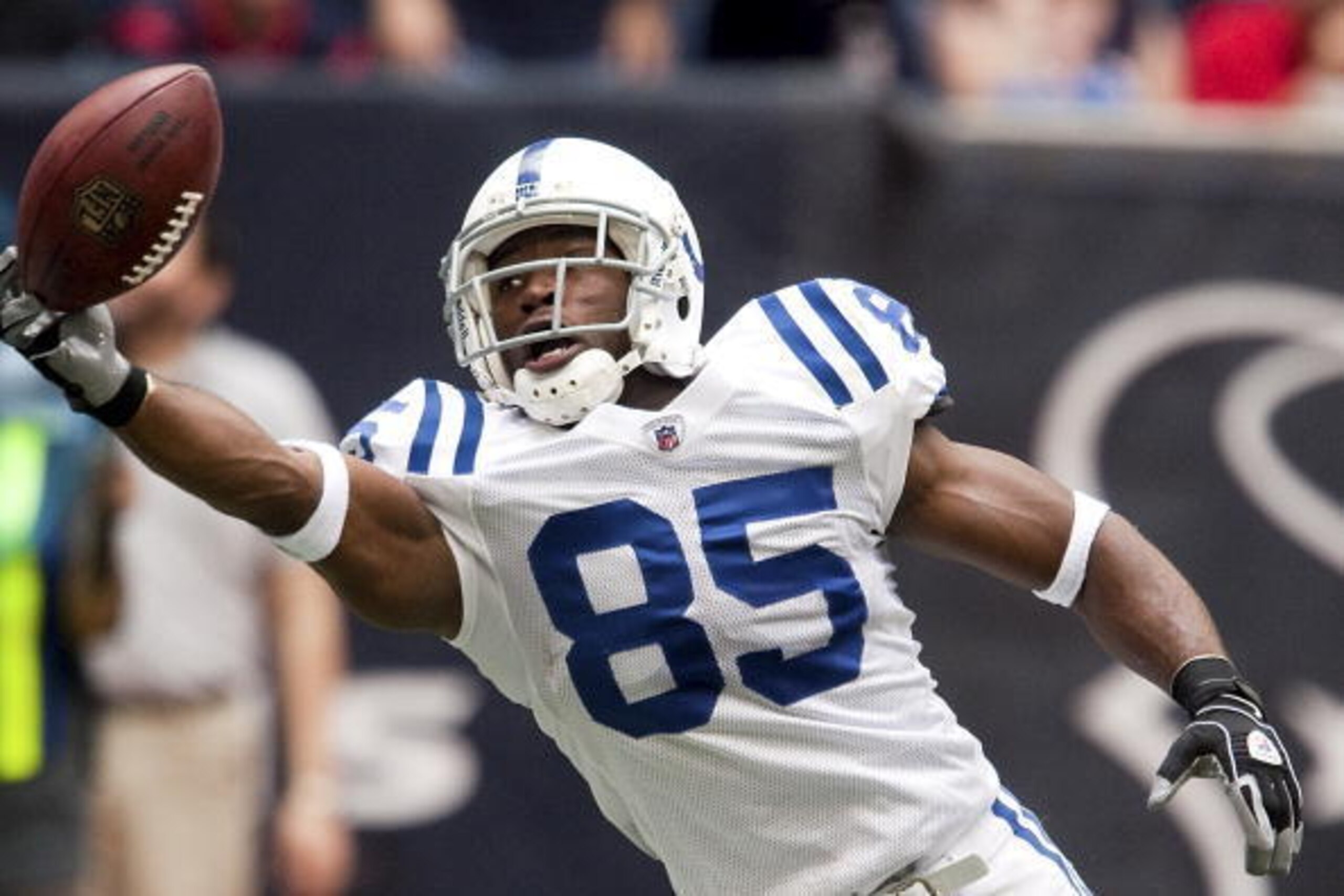
We're already seeing the same thing happen to Samford, Newberry and—to a lesser degree—Harding. We also saw it a few years ago to Division III Mount Union (enrollment: 2,200) which became known after Pierre Garcon's sixth-round selection. NFL teams have taken shots at three Mount Union players since then, including 2011 Jacksonville Jaguars draft pick Cecil Shorts. The school's sports information director, Leonard Reich, conceded that Garcon probably helped Shorts receive a combine invitation that year.
"I think they see those guys and they say, 'Damn, it is possible at Newberry College,'" said Flynn of what's happening as more players from his school pop up on NFL radar, thanks mainly to Parker and Washington. "You don't have to be at a University of South Carolina or a Clemson or a Notre Dame or Southern Cal or what have you to go to the NFL. Because the NFL does a very good job of finding these guys. They aren't going to leave any stone unturned."
Underneath those particularly far-reaching stones this year are eight lucky yet talented prospects from seven schools that most of us have never heard of. But their presence could make a world of difference for a lot of players and coaches.
"We can tell [recruits] now that we have a player that has gone to the NFL combine," said Simmons. "It brings instant credibility to our institution."
Brad Gagnon has covered the NFL for Bleacher Report since 2012.
.jpg?w=2560 "Steelers Saints Football")



.jpg?w=2560 "🚨 Week 8 AP Top 25 Poll")
