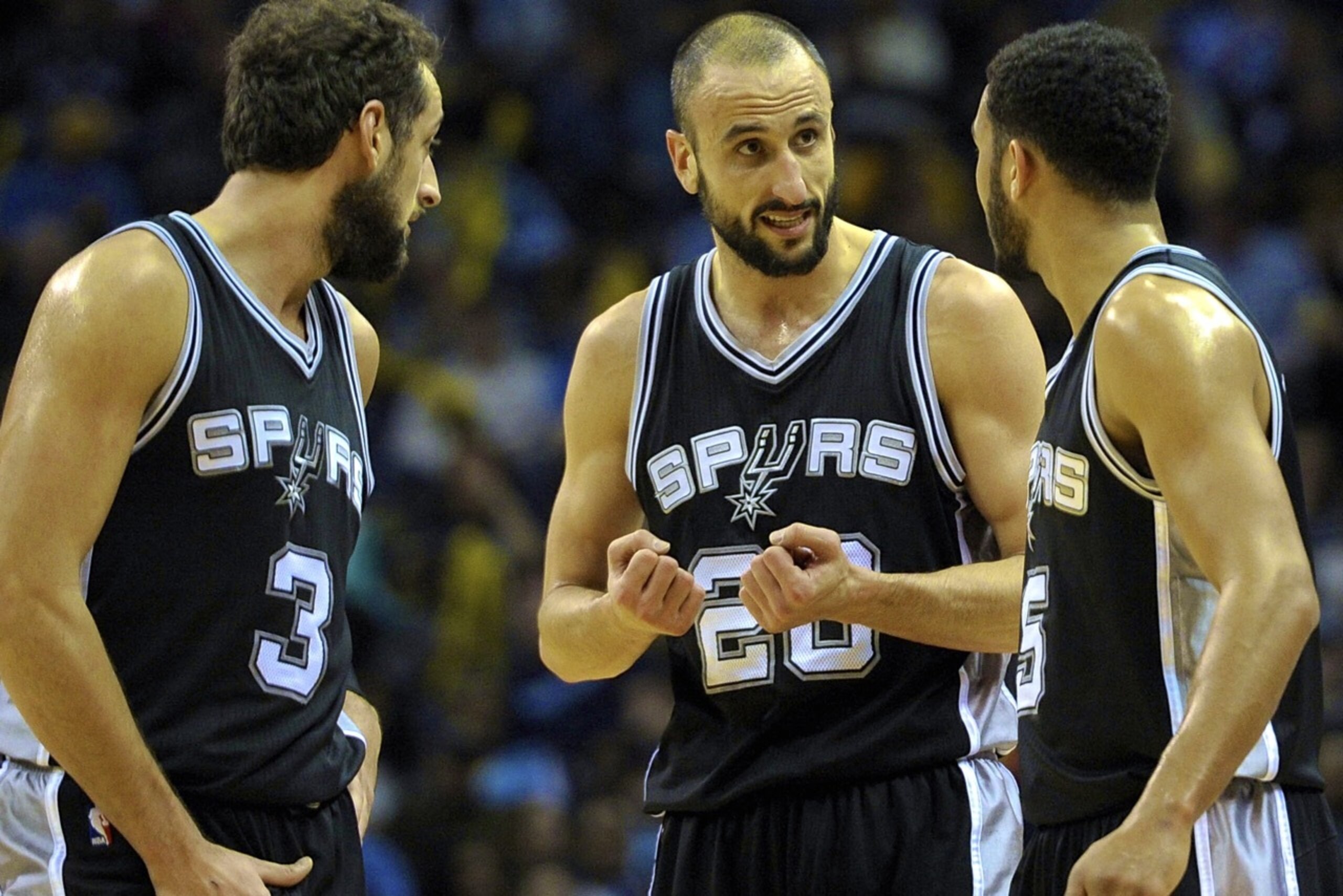


The San Antonio Spurs' second unit was a critical component of the team's run to an NBA championship last year, and Gregg Popovich needs his reserves to repeat that performance in 2014-15.
But so far, the reserves haven't matched their achievements from a season ago. For the franchise to make another deep playoff run, San Antonio's backups must start contributing at a higher level.
The front office could add a piece through the trade market, but the Spurs still have a sufficient bench. They simply need it to become more efficient.



During the 2014 postseason, San Antonio led all NBA benches with 41.6 points and 10.3 assists per game, connecting on 46.8 percent of all attempts and 39.6 from outside—which both ranked second, per hoopsstats.com.
In 2014-15, the scoring and assist numbers have remained generally consistent, but the bench's shooting has dropped to 44.1 and 34.4 percent, respectively. While the differences aren't panic-inducing, they're not exactly negligible.
Especially because they're not alone, either.
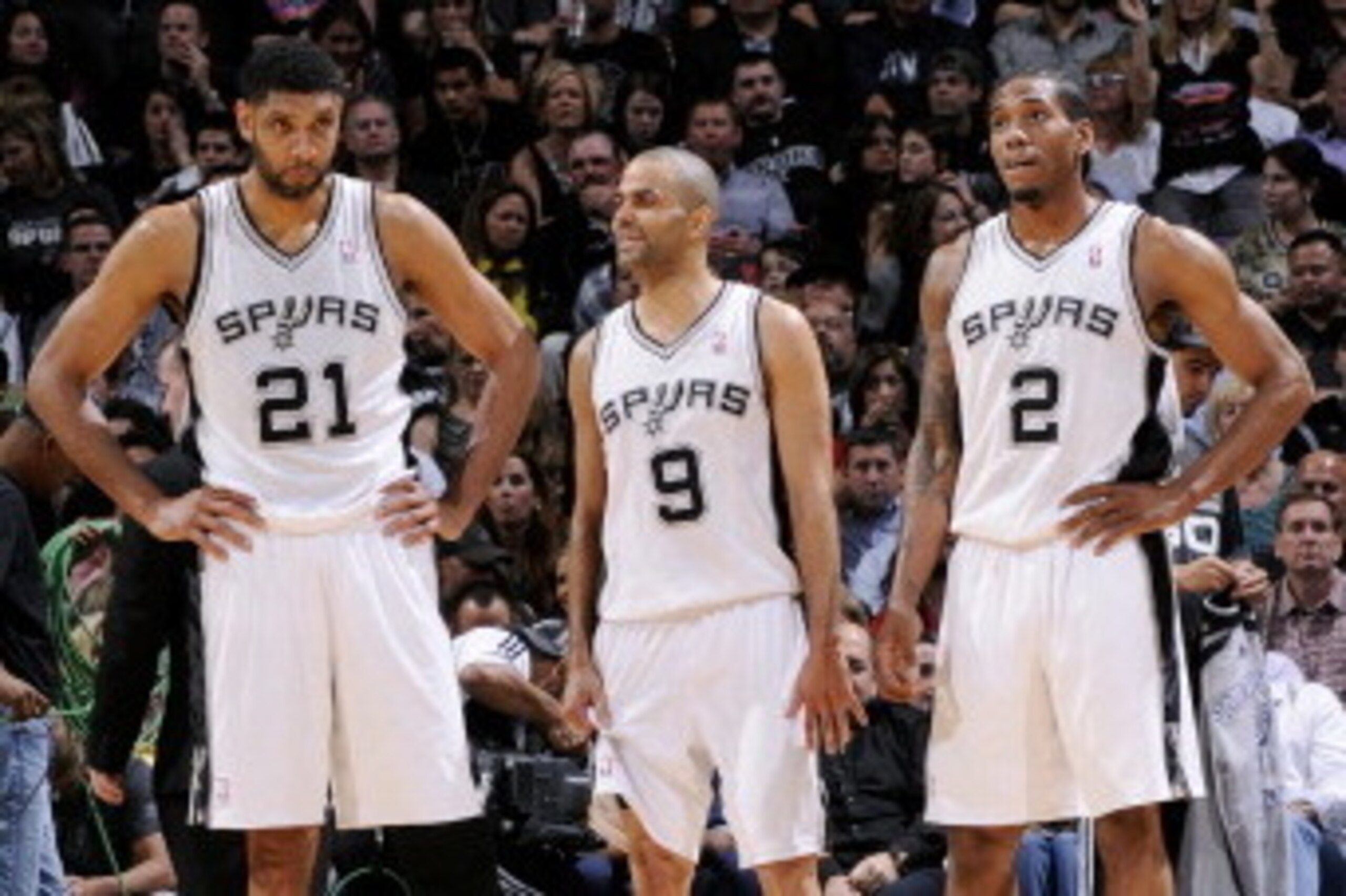
This year, San Antonio's starting lineup has provided almost exactly similar defense statistically. Opponents have tallied an equal field-goal percentage at 44.3 and their three-point mark has fallen just two-hundredths from 36.2 to 36.0.
But the offense has seen its overall shooting percentage drop from 49.3 to 46.5 and long-range clip slide from a league-leading 40.5 to 38.8.
Again, the differences aren't earth-shattering by any means, but the Spurs have handled nearly two fewer possessions per game. When the slower pace is combined with shooting drops, the result is obviously fewer points—which has bitten the team often this season.
Through 48 games, San Antonio is 8-8 in games decided by five points or less. Last year, however, the Spurs boasted a 10-1 record in such contests—they just weren't involved in many tight situations due to their collective offensive prowess.
In a supremely competitive Western Conference, it's a safe bet San Antonio will be forced to finish strong during a handful of highly contested showdowns this postseason.
So, the bench has a couple of issues to address in preparation for that time, but the change in Boris Diaw's shooting can swing the whole conversation.
In 2013-14, Diaw established himself as a reliable option from the corner and near the top of the key. The stretch 4 was constantly rotating into vacated areas as defenders chased the ball, subsequently knocking down open triples, 18-footers or driving the lane.
| 2013-14 | 257 | 468 | .549 | 45 | 112 | .402 | .521 |
| 2014-15 | 128 | 249 | .514 | 32 | 107 | .299 | .449 |
As the accompanying table shows, his long-distance shooting has plummeted this season. Diaw is launching one more per game (1.4 to 2.3) but netting a similar amount (0.6 to 0.7).
While he's continuing to take generally uncontested looks, the shots just aren't falling as often. The 12th-year pro has never been consistent from outside, and the 2014-15 campaign is exemplifying his roller-coaster production as a three-point man.
As a rookie, Diaw converted 23.1 percent before slipping to 18.0 the next year. Four seasons later, he shot a career-best 41.4 percent, then tanked to 31.3 within three years. Diaw hopped back up to 40.2 in 2013-14 and looks to be repeating his career-long trend.
The following heat maps from Basketball-Reference.com show Diaw's struggles this season compared to last. His 2013-14 chart shows a greater range of scoring, especially from 18 feet and farther.
Note via Basketball-Reference.com: "The coloring is based on points scored, so areas with fewer points scored will have a blue shade while areas with more points scored will have a red shade."

What's more, Diaw has logged the third-most minutes by any Spur during the final frame, according to NBA.com. Ultimately, his late-game offense is largely absent despite being in the game regularly.
He's 2-of-10 from three-point range when the score is within five points during the fourth quarter and 0-of-12 in the final six minutes of a contest, per Basketball-Reference.com.
Consequent to Diaw's struggles from the perimeter, Patty Mills is really the lone threat from outside. He's nailed 46.6 percent of his triples following a sluggish 1-of-13 start that occurred immediately after his return from shoulder injury.

Marco Belinelli has been absent for 19 games, but the bigger negatives are his lack of defense and mediocre 36.7 mark from beyond the arc. The Italian is a one-dimensional player, but he's not excelling in that spot.
Though Manu Ginobili has buried 35.3 percent from long range, the sixth man has hardly strayed from the mark over the last three seasons. Ginobili's main responsibility is initiating the pick-and-roll offense anyway, so his limited three-point impact is neither a problem nor a surprise.
Yet despite what seems logical since he's not a long-distance threat, Cory Joseph has actually held his own in the shooting-happy second unit. The Ginobili-Joseph-Mills backcourt has outscored opponents by 0.56 points per minute played, whereas the Ginobili-Mills-Belinelli combination tallied 0.51 last year.
Joseph doesn't space the floor like the reigning three-point contest champion. However, the numbers show he's been an equally efficient piece in the backcourt. While a 0.05 difference isn't an eye-opening change, the point is Joseph really isn't limiting the reserves much.
Instead of almost exclusively launching threes, Joseph drives the lane, consistently knocks down mid-range jumpers and provides exponentially better defense.
Additionally, Aron Baynes has continued to show signs of improvement when called upon, though the 6'11" powerhouse is sharing time with Matt Bonner. Regardless, the duo (11.3 ppg, 6.2 rpg) has bested what Jeff Ayres and Bonner (6.5 ppg, 5.6 rpg) added last year.
And so, everything has cycled back to one player. With the exception of Diaw, San Antonio's second unit is almost no different than the championship-winning group from the 2013-14 campaign.
If Diaw can break out of this poor-shooting streak, he'll personally negate the bench's scoring deficiencies and minimize the impact of Belinelli's issues, too.
The Spurs have an adequate reserve unit to accompany the starters through another deep postseason run, but for that to happen, they're relying on Diaw to shed a half-season slump.
Unless otherwise noted, stats are courtesy of Basketball-Reference.com and are accurate as of Feb. 2.
Follow Bleacher Report NBA writer David Kenyon on Twitter: @Kenyon19_BR.

.jpg?w=2560 "Raiders Could Start Mendoza")

.jpg?w=2560 "Rodgers Iced Out on Plane 💎")
.jpg?w=2560 "🚨 Week 8 AP Top 25 Poll")
.jpg?w=2560 "Packers Safety Slams Refs 🤬")

.jpg?w=2560 "Fantasy Waiver Wire Stars 🤩")