

How Much Will Scholarship Guarantees Really Change College Football?
Two years from now, the college football coach will look at the 6'6" specimen—his signing day gem from Feb. 4, 2015—and mutter, "He's of more use as a light-bulb changer than a tight end."
They teach you in regular school the world is round, and in The School of Coaching they teach you another fundamental: Manage your roster. Let that 6'6" light-bulb changer leave and be a football player again at another D-I school, or maybe a D-II one.
Coaching 101 allowed Phillip Sims, once the nation's No. 1 quarterback recruit, to exit Alabama in 2012 because AJ McCarron was too good. Bryce Brown was the star running back at Tennessee for Lane Kiffin in 2009, stayed one year, was unhappy and left for Kansas State.

.png?w=2560)
Will 65 autonomous coaches of the Power Five conference teams (plus Notre Dame) still be able to do that with the new rule that guarantees scholarships inside the five-year eligibility window?
Try and use some common sense here.
Can you see a football player who turned out not to be as skilled as intended sticking his tongue out at Nick Saban or Urban Meyer and saying, "Nah, nah, nah, nah, you can't get rid of me now"?
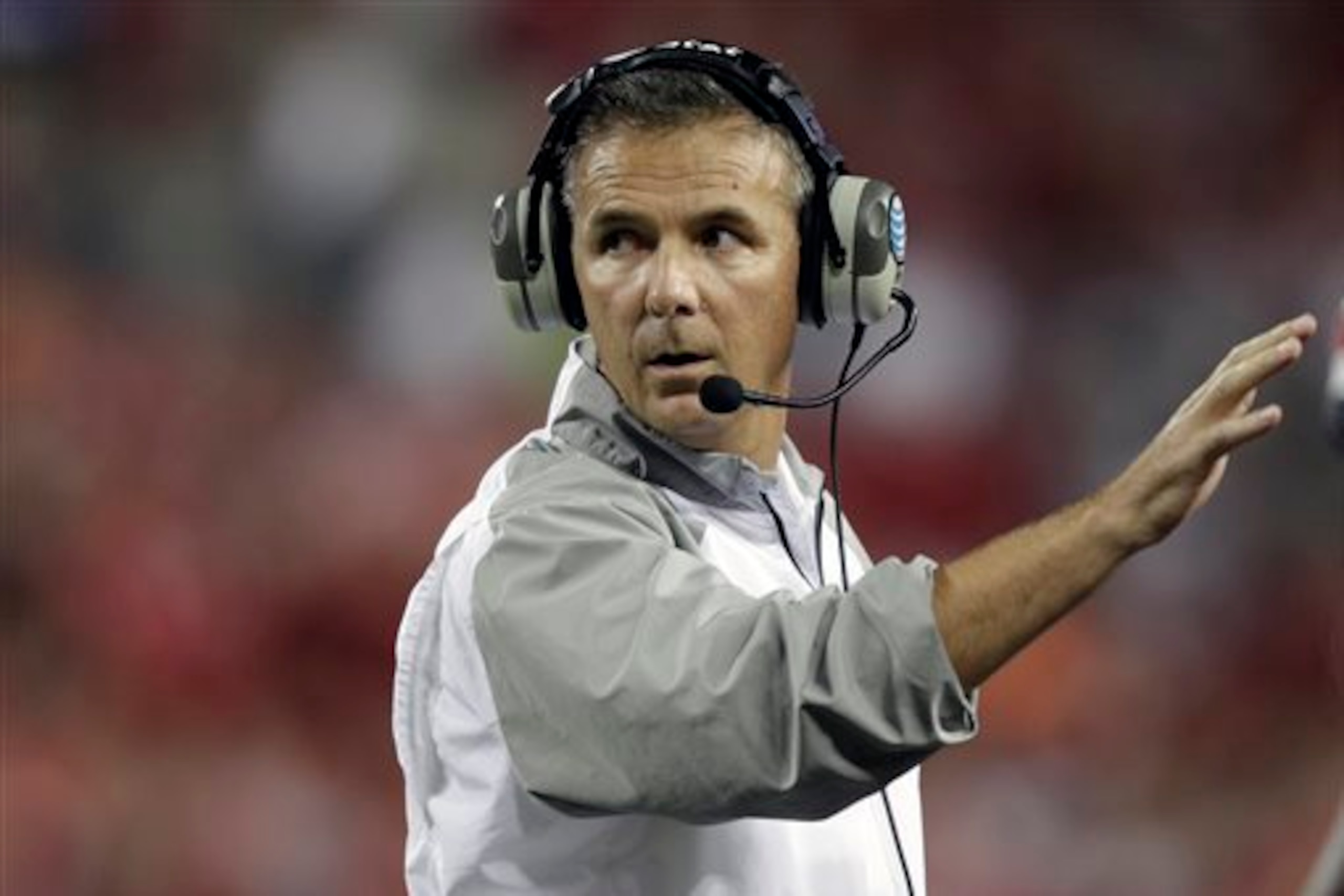
There will be whiffs in recruiting, and when those players show up for their sophomore season, Saban, Meyer and a dozen other coaches I can think of will have a remedy.
A gun was put to the head of major college programs—unionization of Northwestern athletes, lawsuits—that forced them to offer multiyear scholarships, but there is fine print, and there are unwritten rules, in this scholarship agreement.
Coaches have told me so.
There will be medical retirements of players—"That knee is just kinda messed up, son"—and when that happens, the player will not be a "counter" to the 85-scholarship limit. He will get to keep his scholarship money, and the program will be able to find a better player.
There will also be banishment to the scout team. "Entombed" is a good word here. There will be eye-to-eye talks between the player and the most important man on campus—the head football coach—and there will be some convincing to move on to Division II. Some guys will be encouraged to take jobs as student assistant coaches.
There is one last remedy, and it is not sinister at all. It is a player's competitiveness and zeal for the game. Call it the Cardale Jones Rule. The Ohio State quarterback declared on Twitter in October that players go to college to play football, not go to class. The whiffs in recruiting just might take care of themselves. A player will go where he can play football and leave on his own.

So in the end, there will be roster transitions in Division I football, same as before. Tell me I'm wrong.
There will also still be this: admiration. College football is full of coaches who were benchwarmers who wouldn't quit. They will coach up the kid who is not fulfilling his destiny and can't be convinced to give it up; the coach will see what he can squeeze out of this kid.
Somebody like, oh, Blake Sims might just pop out and save a season.
There is so much money from TV in the game now that schools may end up with 100 players on scholarship, with 15 of them not "counters" on the program's 85 limit. They are players who were persuaded to take a knee with an injury that might be serious, or might not be serious. Some college coaches have told me that there will be more players "medical'd" when it is determined they just don't belong at a high major, skill-wise.
Is that OK? Sure it is. The kid keeps his scholarship, the coach reloads, and schools waste more of the money they haul in from TV. Same as always.
Some schools, the more ruthless ones, might just have a hard time with the multiyear scholarship rule. "There may be some schools who are in the habit of dropping players who underperform after a year or two that may look at their signees a little more closely," an SEC coach told me. That's a good thing.
Two weeks ago, the vote on guaranteed scholarships did not go down very well. Coaches want players to be hungry. The vote was 50-29-1, which means it barely passed the threshold to become NCAA law.
I just don't think the coach has to worry. He will find a way to manage his roster, just like before. You watch.
Many of you probably think it's wrong for an athlete to get a multiyear deal when the student who has an academic scholarship has to make good on his grades year to year or else lose his academic aid. In Georgia, the Hope Scholarship is maintained with a "B" average, year to year—which in the football equivalent means you have to make 14 out of 20 field goals and make all of them inside 30 yards.
The difference between the student academic scholarship and the student athletic scholarship is that the athlete is working a 30-40-hour job for the highest-paid guy on campus (the football coach). The player is tied to football from 2 in the afternoon until 8, or longer, on weekdays, I have been told by players. And it goes without saying a player has football obligations on weekends.
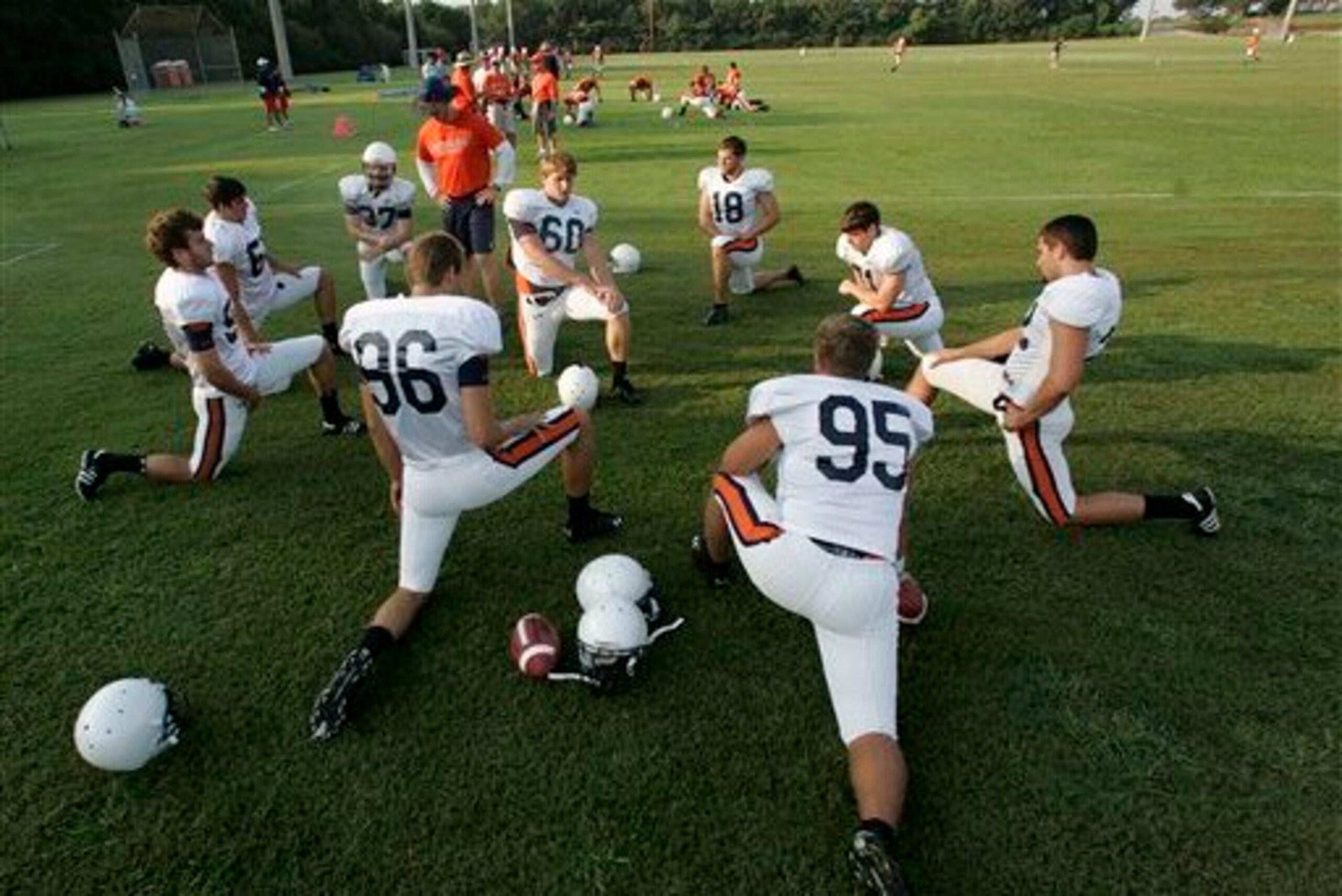
His position coach is pushing cut-ups to the player's team-issued iPad at 7 a.m. The film is of the guy he has to block on Saturday. The coach wants the film studied before practice.
Monday through Friday, the student who is an athlete is engulfed by the hype of the big game. How do you focus in that 24/7 cauldron? In the offseason, he is required—voluntarily—to be on campus for strength and conditioning. Yes, he has access to tutors, but it doesn't make up for all the time he spends in his sport. There is a significant difference between an academic scholarship and an athletic scholarship.
It comes down to this: What is the right thing to do? It is a confusing question for some people. It shouldn't be.
When mistakes are made in recruiting, the player can move to a lower division. If he wants to stay and be a good teammate and work hard, he should be able to stay. Plenty of head coaches and assistant coaches will hold that athlete up as an example and say, "Here is a guy who won't quit. He's worth keeping around."
Ray Glier covers college football for Bleacher Report.
.png?w=2560)

.jpg?w=2560 "Chiefs, Steelers Eye WR Trades")

.jpg?w=2560 "WWE Raw Live Grades 🔠")
.jpg?w=2560 "Multiple NFL Trades Predicted")

