
Ranking the Most Exciting Matches in Australian Open History
Rafael Nadal's gritty, second-round, five-set victory over Tim Smyczek this week provided some exciting tennis, but it pales in comparison to several matches of past Australian Opens.
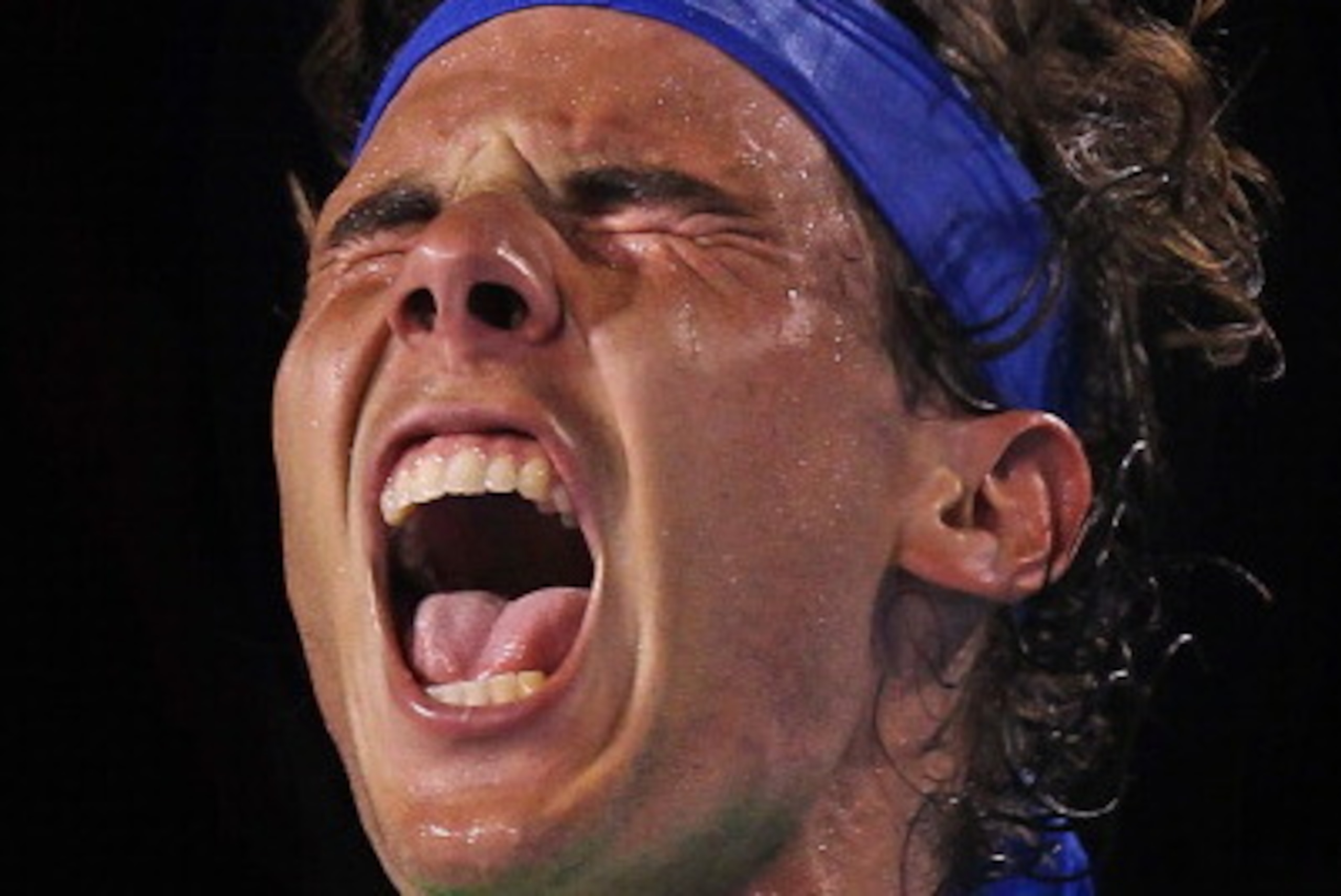
The Australian Open has given us some of the most riveting matches in the Open era, and several of them were recent. Nadal showed the emotion involved in one of those classics in the above photograph taken during the 2012 final.
Although the most exciting matches are often the most memorable, the terms are not synonymous. Circumstances, unusual occurrences or outside factors may make a match memorable, while the tennis itself is what makes a match exciting. Whether it be the quality of play or an unlikely comeback or the tense nature of the contest, some matches hold spectators spellbound. When they occur at a Grand Slam event, those matches become special.
In ranking the 12 most exciting matches in Australian Open history, we opted to include no more than one match between the same two players.
12. Rod Laver vs. Tony Roche, 1969 Semifinals
1 of 12Rod Laver's marathon semifinal victory over Tony Roche in 1969 was played in a different era and should be considered in that context. The Australian Open was contested on grass courts until 1987, and grass-court tennis at the time was strictly a serve-and-volley game. Players used wooden rackets in 1969, limiting the power players could impart, and tiebreakers had not yet been invented.
Matches were played at a much faster pace then, with players taking virtually no time between points or between games. Laver sat down briefly during one change-over, and that was against the rules at the time. But because the match was played in 105-degree heat, the chair umpire allowed it.
Those factors tended to shorten points, limit drama and minimize exceptional shot-making. But Laver and Roche squeezed as much excitement out of their 1969 semifinal meeting as the times would permit.
Laver won the first set 7-5, then took the seemingly endless and memorable second set 22-20. Roche had two set points at 11-12 of the second set, but Laver held serve with some brilliant shot-making. Laver finally broke serve in the 41st game of the set with some extraordinary returns, then served out the set.
When Laver broke serve to take a 3-2 lead in the third set, it seemed the match was over, given how rare service breaks were on grass in that era. However, Roche rallied to take the third set 11-9 and dominated the fourth set, winning the first five games before capturing the set 6-1.
Now it was time for Laver to rally. Despite being 31 years old, seven years older than Roche, and despite being dominated in the fourth set, Laver found enough energy in the crippling heat to win the deciding set 6-3. A questionable call with Roche serving at 3-4 in the final set turned things Laver's way, according to a World Tennis account from a Laver biography.
A decade later, such a call probably would have resulted in a huge argument. Today, an electronic review would have settled the issue. In this case, Roche merely stared briefly at the linesman who had called Laver's shot good, giving Laver a 15-40 lead and the break opportunity he needed.
This was the first Australian Open after years of the Australian Championship being open only to amateurs. It also turned out to be the first leg of Laver's second Grand Slam, matching the one he completed in 1962 before turning pro.
11. Chanda Rubin vs. Arantxa Sanchez Vicario, 1996 Quarterfinals
2 of 12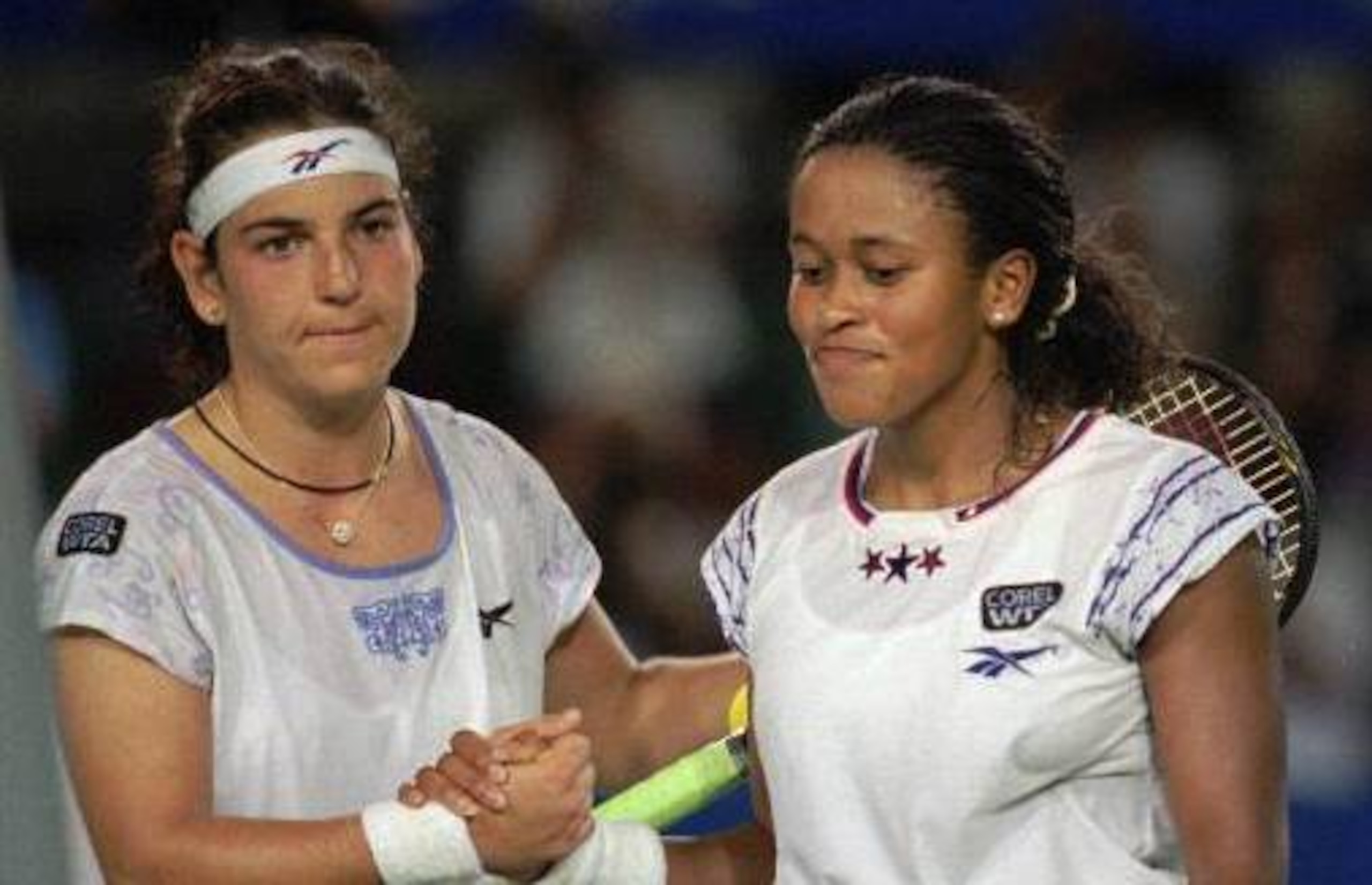
Chanda Rubin's 6-4, 2-6, 16-14 upset of Arantxa Sanchez Vicario in the 1996 quarterfinals was engrossing for two reasons. Not only did it last three hours and 33 minutes, making it the longest women's match in Australian Open history, but it featured an intriguing matchup of a big hitter in Rubin against the scrappy Sanchez Vicario, who could run down almost anything.
Rubin had played two matches the previous year that might have been more exciting than this one. She rallied from being down 0-5, 0-40 in the third set to beat Jana Novotna in the French Open, saving nine match points to win. At Wimbledon, Rubin beat Patricia Hy-Boulais 7-6, 6-7, 17-15 in another heart-stopper.
But this one at the Australian Open had its own kind of drama.
Rubin led 4-1 in the third set with a break opportunity that could have made it 5-1. She failed to convert that chance, then blew two match point opportunities on Sanchez Vicario's serve at 5-4.
Rubin had two more match points on Sanchez Vicario's serve in the 28th game. Sanchez Vicario saved both, although Rubin let a shot by Sanchez Vicario go on the second one because she thought the ball was out.
"I felt like I basically won the match, and they wouldn't give it to me," Rubin said, according to the New York Times account. "It was very frustrating and disappointing, but I tried to just stay calm."
Rubin finally finished off the match by breaking Sanchez Vicario in the 30th game of the set.
10. Serena Williams vs. Kim Clijsters, 2003 Semifinals
3 of 12
Serena Williams' remarkable comeback in her 2003 semifinal victory over Kim Clijsters made it an enthralling piece of tennis.
The top-seeded Williams was seeking her fourth straight Grand Slam title, but she did not play her best against the fourth-seeded, 19-year-old Clijsters. Williams made 65 unforced errors in the match compared with 33 for Clijsters. Williams also received treatment for blisters on her foot in the third set, and she was on the brink of defeat several times.
Williams trailed 5-1 in the deciding set, and, after holding serve to make it 5-2, she fought off two match points against her in the eighth game.
Clijsters still had a chance to serve out the match at 5-4 but double faulted on the first two points. She got the score back to 30-30 but could not hold off Williams, who won that game in the course of winning six straight games to finish off a 4-6, 6-3, 7-5 victory.
"It was just an unbelievable battle out there," Williams said, per the New York Times. "I thought, 'I don't want to lose 6-1.' Then I said, 'I don't want to lose 6-2.' So I just kept fighting. Next thing I know, I came back."
.jpg?w=2560)
9. Rafael Nadal vs. Roger Federer, 2009 Finals
4 of 12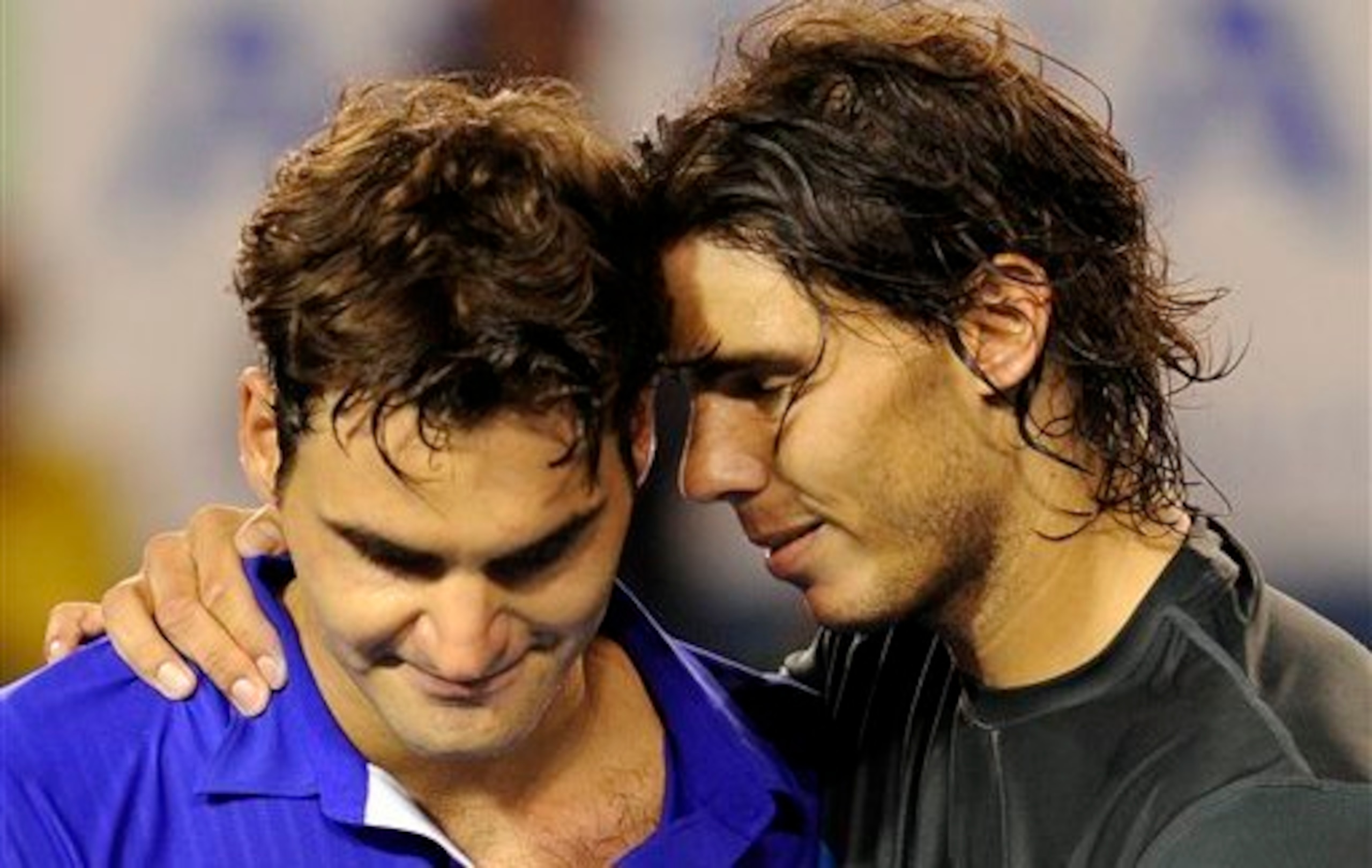
Rafael Nadal's victory over Roger Federer in the 2009 finals may be the most memorable Australian Open match because a devastated Federer began crying uncontrollably during the trophy presentations.
The match itself was somewhat less enthralling, although it certainly provided plenty of exciting moments.
Nadal and Federer had established themselves as the world's two best players, and their epic five-set duel in the 2008 Wimbledon finals had set the stage for their much anticipated meeting in Australia. This one could not match the level of their Wimbledon masterpiece, but it was not bad.
It was not the quality of play as much as the rivalry of the two players, the intense nature of the match, and Nadal's resiliency that made the 2009 Australian Open final a riveting affair.
Nadal had to rally from 2-4 down to win the first set, breaking Federer's serve with two remarkable winners on the run. After Federer won the second set, Nadal saved all six break points he faced in the third set, twice getting treatment for his right thigh while winning that set.
Federer rallied to win the fourth set, but he was too spent in the final set to put up much of fight. Nadal won just one more point than Federer in the match, which Nadal won, 7-5, 3-6, 7-6 (3), 3-6, 6-2.
Federer could not hold back the tears during his on-court speech while accepting the runner-up trophy. "God, it's killing me," he said, according to the New York Times.
8. Jennifer Capriati vs. Martina Hingis, 2002 Finals
5 of 12
Jennifer Capriati's 4-6, 7-6 (7), 6-2 victory over Martina Hingis in the 2002 Australian Open finals was called "one of the greatest displays of resiliency in the modern era" in an ESPN.com account.
Capriati provided the excitement in the way of a remarkable comeback, fighting off four match points against her in the second set.
The first half of the match was far from entertaining, as Hingis marched to a 6-4, 4-0 lead. Capriati had lost her composure during that second set, yelling at the chair umpire after a disputed call, then yelling at the crowd when it jeered her, according to a BBC account. It seemed it would be another routine Grand Slam victory for the 21-year-old Hingis.
Somehow Capriati regained control of herself and got back into the match. Hingis had her first match point while serving at 5-3. Capriati used a backhand winner to stave off that chance. Hingis had two more match-point opportunities with Capriati serving at 5-6, but a Hingis error and an aggressive volley by Capriati erased those. Capriati got the second set to a tiebreaker, and Hingis had her fourth match point at 7-6 of the breaker. Hingis failed to take advantage of that one too, and Capriati eventually won the tiebreaker 9-7.
Both players looked worn out, but Hingis was the weaker player in the third set, which Capriati dominated.
"I really don't know how I managed to win today," Capriati said, per the BBC.
7. Martina Navratilova vs. Chris Evert, 1981 Finals
6 of 12
The 45th of the 80 matches between Martina Navratilova and Chris Evert was probably the most exciting. Navratilova won the see-saw affair in the 1981 Australian Open finals 6-7, 6-4, 7-5, with the momentum seemingly changing constantly.
Tennis historian Steve Flink rates the 1981 Australian Open finals and the 1985 French Open finals won by Evert as the two most significant matches of the Evert-Navratilova rivalry, according to a World Tennis article.
The Australian Open was still played on grass, and the rackets were still made of wood when Evert and Navratilova met in 1981 in Melbourne.
The play was at a high level in the tense first set with neither player gaining an edge until they were tied 4-4 in the tiebreaker. Evert then won three straight points to take the first set, and she forged a 4-3 lead in the second. At that point, Navratilova switched the momentum, winning the next three games to close out the second set.
Navratilova rode that momentum to a 5-1 lead in the third set and seemed on the verge of victory.
However, Evert rallied to tie the match 5-5 and was serving at 30-30 in the 11th game when she hit a forehand long. On break point, Evert tried to surprise Navratilova by making a rare foray to the net. The point ended with both players at net, Navratilova finishing it off for the break. Navratilova held serve to complete the victory.
It gave Navratilova her 16th victory over Evert, who still held the edge with 29 wins in head-to-head encounters.
6. Pete Sampras vs. Andre Agassi, 2000 Semifinals
7 of 12The accompanying video of the fourth-set tiebreaker in Andre Agassi's five-set victory over Pete Sampras in the 2000 semifinals provides one of the most exciting segments of tennis ever seen.
The players' rivalry and contrasting styles made any match between Agassi and Sampras intriguing, and this one was probably the best in terms of entertainment. Agassi and Sampras played each other 34 times, but only two went to five sets. This was one of them.
Sampras fired 37 aces in the match and seemed to have control after taking the third-set tiebreaker 7-0 to go up two sets to one. But Agassi refused to buckle and forced the fourth set into a tiebreaker. Sampras hit two second-serve aces and an amazing cross-court forehand passing shot on the run to grab a 5-4 lead in that tiebreaker. But Agassi hit two big serves and a forehand passing shot to win the tiebreaker and even the match.
The match was all but decided on a remarkable backhand passing shot by Agassi that provided him with a service break and 2-0 lead in the fifth set. The excitement waned in the final four games, as Sampras was too worn down physically and mentally to compete with the momentum Agassi had built. Agassi finished off a 6–4, 3–6, 6–7 (0), 7–6 (5), 6–1 victory.
"We have played each other 30 times or so, and this was definitely one of the better ones," said Sampras, according to the Washington Post.
Some may feel Sampras' 1995 quarterfinal victory over Jim Courier should rank higher than this Sampras-Agassi contest.
Indeed, the Sampras-Courier match probably was more memorable because Sampras broke down and started crying in the fifth set and rallied to win after losing the first two sets. Later it was discovered that Sampras was reacting to the fact that his good friend and coach Tim Gullikson had just been hospitalized after collapsing, later being diagnosed with brain cancer.
The emotional element of the Sampras-Courier match etched it in many fans' minds. But the level of excitement did not reach the heights attained in the nail-biting Sampras-Agassi match in 2000.
5. Boris Becker vs. Omar Camporese, 1991 Third Round
8 of 12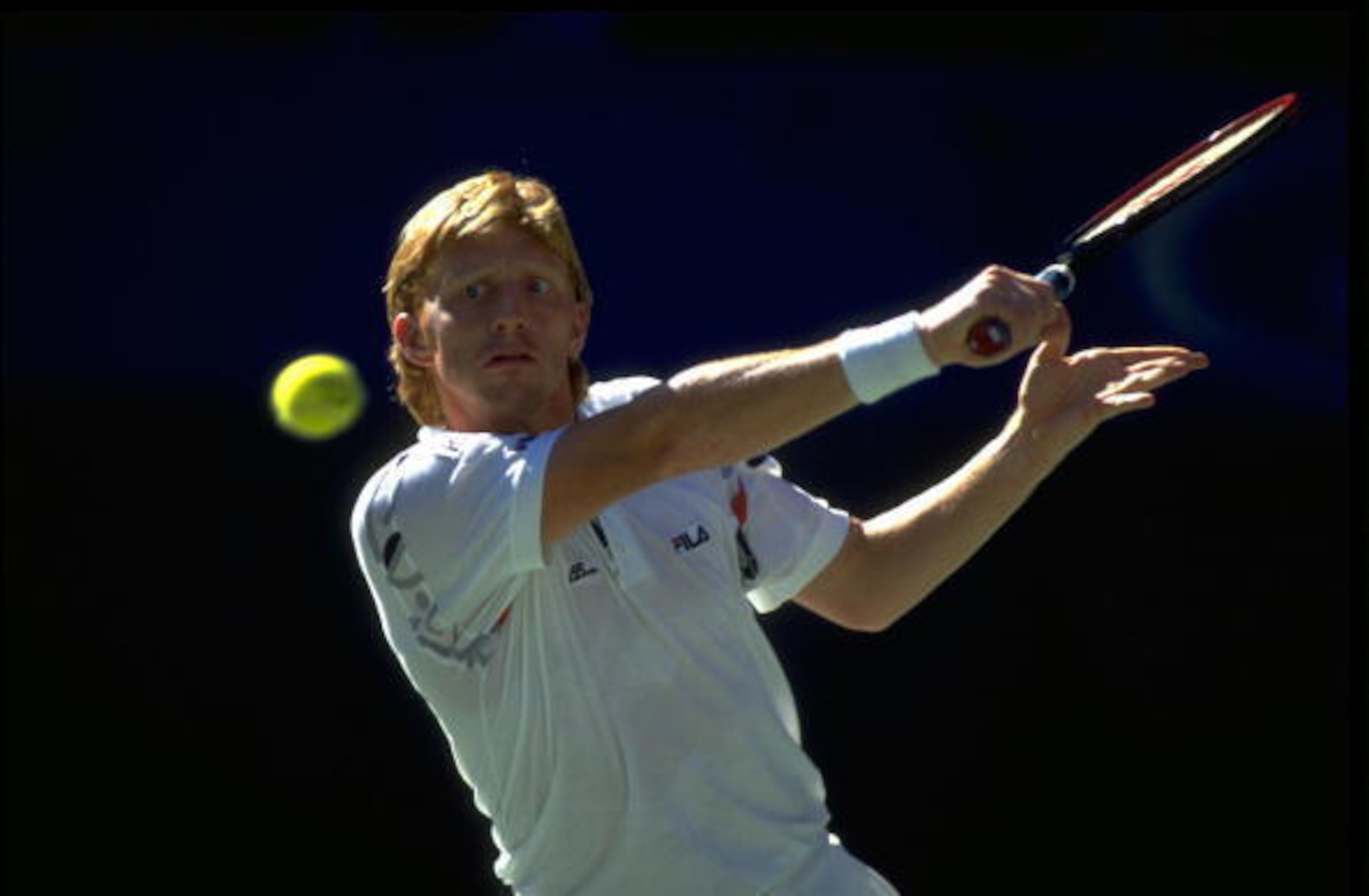
The Court One crowd was mesmerized when 22-year-old Omar Camporese, ranked No. 45 at the time, almost pulled off one of the most remarkable comebacks in tennis history in the third round of the 1991 Australian Open.
Not only did Camporese come back from a two-sets-to-none deficit to force a fifth set against the heavily favored No. 2-seeded Boris Becker, but Camporese then fought off a triple match point with Becker serving at 40-0 in the 22nd game of the marathon final set to prolong the match.
After losing the first two sets in tiebreakers, Camporese rolled past Becker in the third set. Becker seemed in control of the fourth set, but Camporese always found a way to hold serve. Three times in that set Camporese was down 0-30 on his serve, yet held. In the final game of the set, he trailed 0-40 but pulled out the game to win the set 6-4 and even the match.
The final set lasted more than two hours, as both held serve through the first 20 games. Becker finally broke Camporese's serve in the 21st game and was serving at 40-0 in the 22nd game with a chance to close out the match. Becker had one of the game's most powerful and effective serves, and it seemed impossible that Camporese could escape this predicament.
"Five hours I was playing; I just said to myself, 'Let's try,' " Camporese said, according to the New York Times, of facing triple match point. "I hit five fantastic returns."
Camporese saved all three match points and won five consecutive points, the last coming on a backhand winner to even the fifth set at 11-11.
Becker broke serve again to go up 12-11, but again Camporese broke back, this time at love.
Then it was Becker's turn to mount a comeback. Camporese held a 40-0 lead on his serve in the 25th game, but Becker rallied to break serve. Becker then served out the match, cracking aces on the final two points to complete a 7-6 (4), 7-6 (5), 0-6, 6-4, 14-12 victory that took more than five hours to complete.
4. Andy Roddick vs. Younes El Aynaoui, 2003 Quarterfinals
9 of 12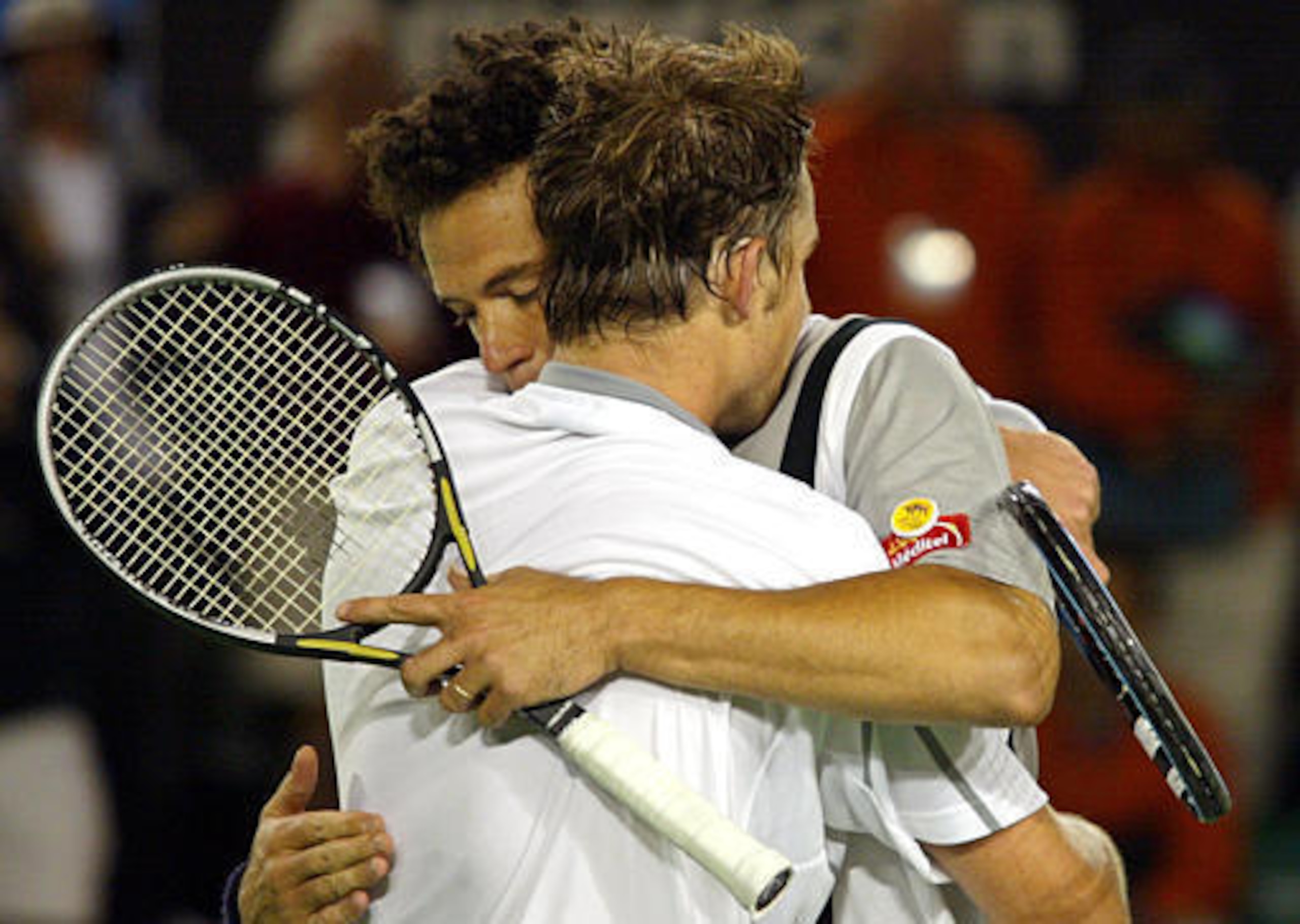
Both Andy Roddick and Younes El Aynaoui had won marathon fourth-round matches to reach the 2003 quarterfinals, but they had enough energy left to provide enthralling entertainment in Roddick's 4-6, 7-6, 4-6, 6-4, 21-19 victory.
It lasted a minute less than five hours and was the longest Australian Open match at the time.
Roddick, 20, was 11 years younger than his Moroccan opponent, but by the fifth set both players showed the physical toll taken by their previous matches as well as the first four tight sets played in their quarterfinal battle.
The final set alone lasted two hours and 23 minutes, and the play in that set took the match to another level of excitement.
El Aynaoui had a match point on Roddick's serve at 4-5 in the fifth set, but Roddick saved it with an exquisite inside-out forehand winner from deep in the backcourt. Roddick punctuated the shot with a celebratory yell and gesticulation.
The shot-making was extraordinary as each attacking player took his turn putting away shots at the net or drilling passing shots.
Roddick served for the match at 11-10 after breaking El Aynaoui's serve in the 21st game. However, El Aynaoui broke Roddick's serve in the 22nd game, and the match continued as the crowd became more and more involved.
At 19-19, the players took a brief rest, handing their rackets to ball boys, who had a short rally during the pause in play.
Roddick broke serve in the next game, then served out the match, with Roddick taking the final point when El Aynaoui netted a forehand with both players at net.
"My respect level for him just grew and grew through the match," Roddick said, according to an ESPN.com article. "We could see each other 10 years down the line and know we shared something special."
3. Novak Djokovic vs. Stan Wawrinka, 2013 Fourth Round
10 of 12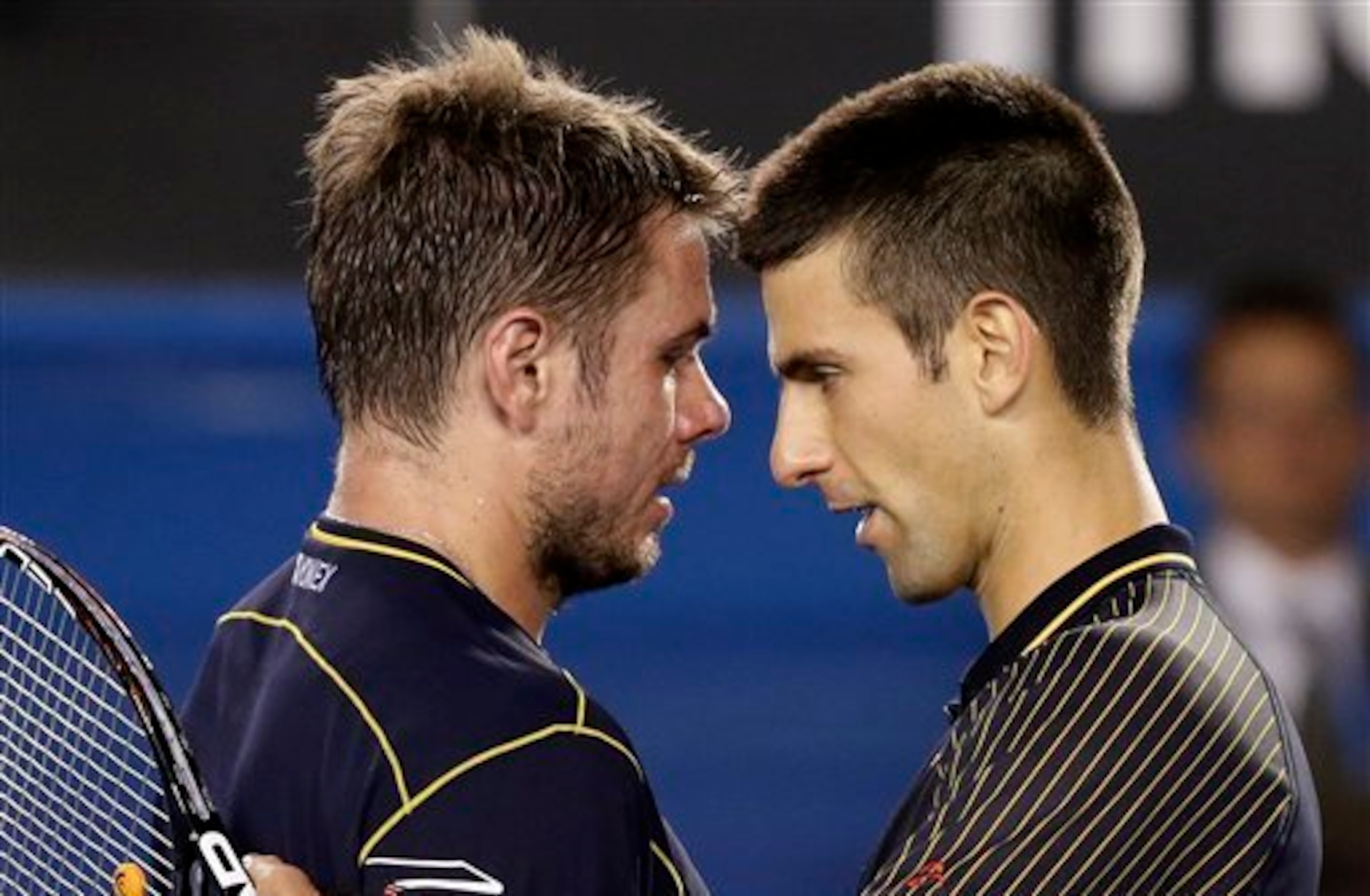
Even though Stan Wawrinka lost to Novak Djokovic in the fourth round of the 2013 Australian Open, his 1-6, 7-5, 6-4, 6-7 (5), 12-10 defeat signaled his breakthrough to the elite level. It was certainly an entertaining affair, with tennis historian Steve Flink ranking it among the best in history.
“Wawrinka played the match of his life and still lost,” Flink said in a World Tennis article. “His ground game has never been better and he stayed toe to toe with Djokovic for more than five hours. The standard was incredibly high from his side of the net.”
Wawrinka led 6-1, 5-2 before Djokovic mounted his dramatic comeback. Djokovic won the second and third sets, but Wawrinka rallied to take the fourth set in a tiebreaker to set up the marathon final set.
The match was punctuated by a riveting final point after Wawrinka had fought off two match points against him with big backhands. On the third match point, Djokovic scrambled to return two monster groundstrokes by Wawrinka as the crowd oohed and aahed during play. Djokovic finally ended the breathtaking 20-stroke rally with a feathery, perfectly placed cross-court backhand passing shot.
"I tried to enjoy the moment and couldn't ask for more," Djokovic said, according to an ESPN.com article. "What a match point ... unbelievable."
Wawrinka admitted it was the best match he had ever played, and the caliber of tennis made that 2013 match a bit more exciting than Wawrinka's five-set victory over Djokovic in the 2014 Australian Open quarterfinals.
“The match touched greatness but it was not an epic," Flink said of Wawrinka's 2014 victory in another World Tennis article. "It was a terrific match but not an all-time classic because the level of play fluctuated considerably, particularly Djokovic’s performance."
2. Marat Safin vs. Roger Federer, 2005 Semifinals
11 of 12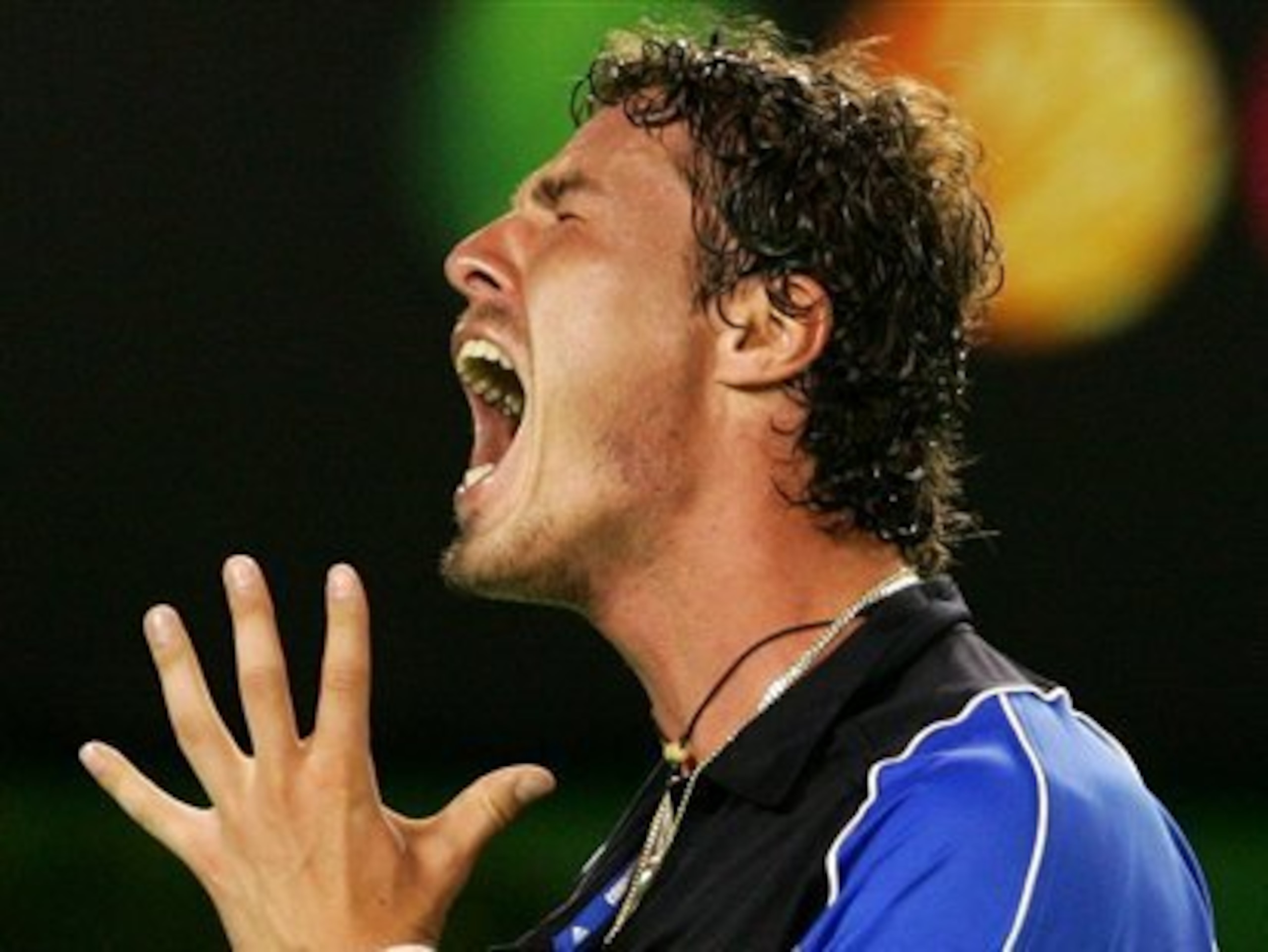
People tend to forget that Marat Safin was ranked No. 1 for nine weeks in 2000 and 2001. What they remember is that there were times when the volatile Safin could play tennis at such a high level and with so much power that he was almost unbeatable. The 2005 Australian Open semifinals was one of those times.
Roger Federer was 23 years old and in his prime at the time, having been ranked No. 1 for 11 months. He had won the past two Grand Slam events and four of the past six, including the 2004 Australian Open. Only once in the four-year span from 2004 to 2007 did he fail to win the Australian Open, Wimbledon and the U.S. Open. He lost only one match in that stretch of 12 fast-court majors.
This match against Safin was the lone exception.
The significant thing is that Federer did not play poorly. Perhaps he was not at his absolute best, but he certainly played well enough to beat virtually anyone in the world at the time. And the resiliency Federer showed in the fifth set, when he battled back from 5-2 down and fought off six match points, made this a riveting contest of big hitters.
Safin was just a little bit better. He showed his poise in the fourth set when Federer had a match point in this back-and-forth struggle.
Ranked No. 4, Safin had beaten some unseeded 17-year-old named Novak Djokovic in the opening round with the loss of just three games, and he was playing outstanding tennis when he met Federer.
Federer had not lost a set in his five matches in the tournament and was riding a 26-match winning streak.
Every point against Safin was a struggle as the two gifted all-around players displayed their full arsenal. But Federer eked out two of the first three sets, and it seemed his streak would continue when he took a 5-2 lead in the fourth-set tiebreaker. Safin won three straight points, but Federer won the next one to have a match point at 6-5. Safin saved it with an extraordinary lob that Federer unsuccessfully tried to return by hitting the ball between his legs. Safin won the next two points to take the set.
Safin seemed to be in control of the final set, bolting to a 5-2 lead. Federer was tiring and had to have treatment for a sore back and elbow. Safin served for the match at 5-3, but Federer fought off two match points to get to 5-4. In the 10th game, Federer survived a third match point before tying the match at 5-5.
Federer faced double match point against him at 6-7, 15-40 in the 14th game, but again he stayed alive to tie the final set at 7-7.
Serving at 7-8, 15-40, Federer served an ace to erase a sixth match point against him, but he couldn't save the seventh as he fell while retrieving a Safin shot.
The level of tennis in Safin's 5-7, 6-4, 5-7, 7-6, 9-7 victory was extraordinarily high throughout. The drama provided by the comebacks by both players made it one of the most exciting tennis matches ever.
"It was a stupendous performance, full of inspiration, dazzle, and grit," tennis historian Steve Flink said in a Tennis Channel article.
1. Novak Djokovic vs. Rafael Nadal, 2012 Finals
12 of 12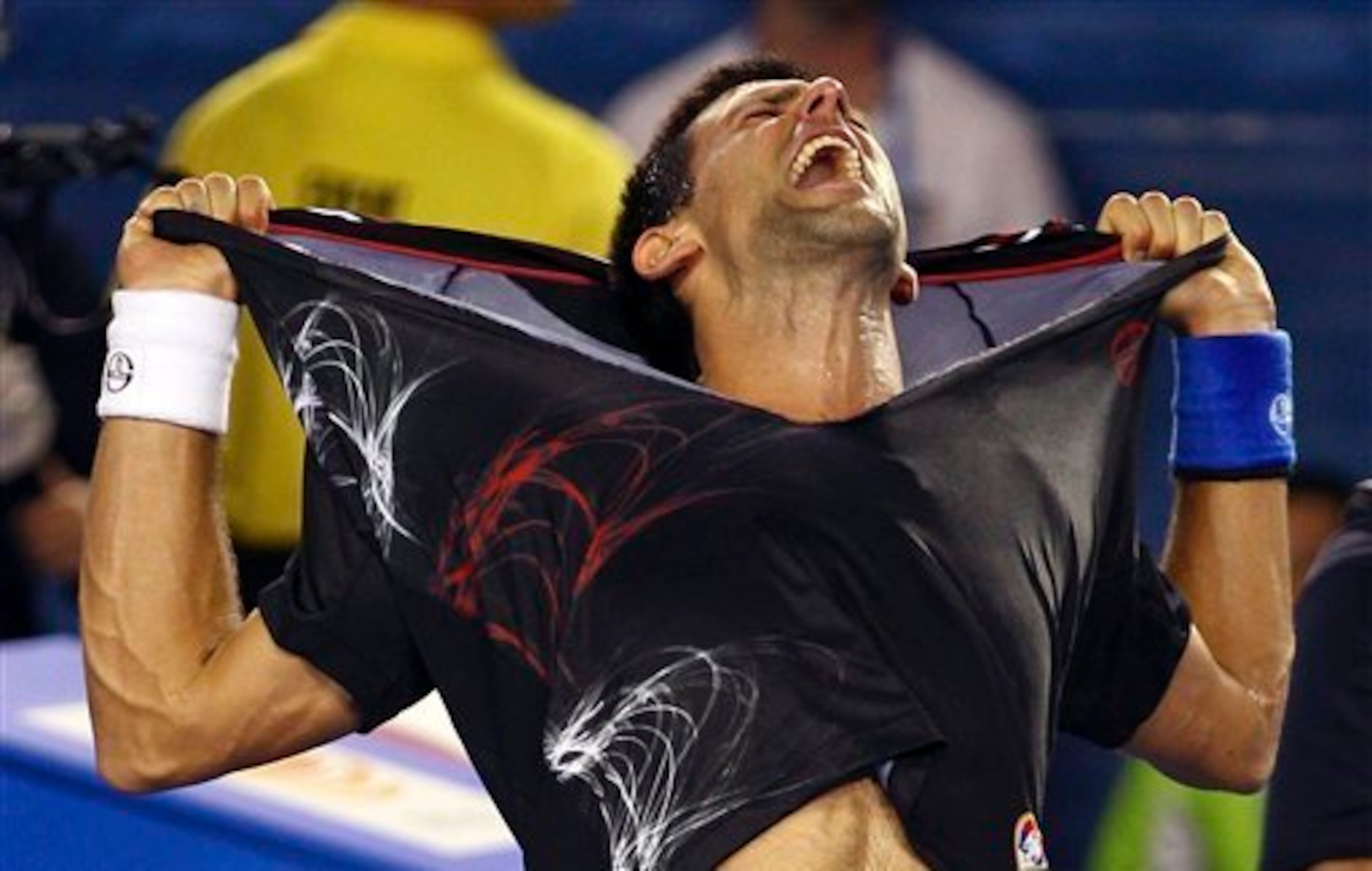
The 2012 final had everything: long rallies, remarkable shot-making, tense moments, unlikely comebacks, displays of emotion and entertaining competition that went on and on until 1:37 a.m. It was wrapped up in a contest between the top two players in the world, who were meeting in the finals of a third straight Grand Slam event.
Tennis historian Steve Flink had to make a last-minute addition to his book, The Greatest Tennis Matches of All Time, to include the 2012 Australian Open final between Novak Djokovic and Rafael Nadal, which he mentioned in a World Tennis article.
"This was definitely one of the greatest matches of all time – easily one of the ten best since the Open Era of tennis started in 1968. Djokovic and Nadal both showed boundless energy and determination. They moved beyond themselves time and again, finding reserves of willpower they never knew existed. It was a match that will stand the test of time. It was riveting theatre and I am looking forward to documenting it in my book THE GREATEST TENNIS MATCHES OF ALL TIME.
"
The final score of Djokovic's 5-7, 6-4, 6-2, 6-7(5), 7-5 victory, which took five hours, 53 minutes to complete, does not reflect how fascinating the match was.
Nadal, who had lost his last six matches against Djokovic, knew he had to start fast. He burst to a 4-2 lead, only to see Djokovic win the next three games for a 5-4 edge. Nadal jumped back in front and was serving for the set at 6-5, 40-15. Djokovic fought off two set points to get it back to deuce, but Nadal won the set on his third opportunity.
Djokovic charged to a 5-2 lead in the second set and had a set point in the eighth game. Nadal survived that and also survived a double set point against him with Djokovic serving at 5-3, 40-15. Djokovic eventually won the set in the 10th game, coming back from a 40-30 deficit to break serve.
Djokovic seemed poised to finish the match when he held a 4-3 lead with Nadal serving at 0-40 in the third set. But Nadal rallied to hold serve, and the two were tied 5-5 when rain interrupted the match.
With the roof now closed, Djokovic took a 5-3 lead in the fourth-set tiebreaker, leaving him two points from victory. But Nadal won four straight points to take the fourth set and fell flat on his back in celebration, an act usually reserved for a match-clinching shot.
With momentum now on his side, Nadal took a 4-2 lead in the final set and was serving at 30-15 in the seventh game. But it was Djokovic's turn to rally, as he broke serve and eventually tied the match at 4-4.
Nadal won a breathtaking 32-shot rally to open the ninth game and held serve to take a 5-4 lead. Djokovic easily held serve in the 10th game and broke serve to grab a 6-5 advantage. Serving for the match, Djokovic took a quick 30-0 lead before Nadal made one last stand, winning three points in a row to earn a break-point opportunity. However, Djokovic won the next three points, ripping off his shirt when he finished it on his first match-point opportunity.
The match may have lacked some of the shot-making brilliance of some of the other Australian Open classics, but the twists and turns of the 2012 final as well as the emotion and gritty determination shown by two of the best players in history made it the most exciting of the bunch.
.jpg?w=2560 "Chargers Chiefs Football")