

Barcelona vs. Elche: Tactical Review of Copa Del Rey Game
Barcelona returned to winning ways in the Copa del Rey on Thursday, beating poor, beleaguered Elche 5-0 at Camp Nou. A late first-half capitulation from the away side—in which they conceded an astonishing three goals in 10 minutes—sealed their fate.
Let's take a tactical look at how this game was decided.
Formations and XIs
TOP NEWS
Alexia Wins Ballon d'Or 🏆

Live Ballon d'Or Ceremony Winners 🎉

Final Men's Ballon d'Or Rankings 📊

Barcelona went for their usual 4-3-3, with Luis Suarez continuing to relieve Lionel Messi at the top of the formation. Marc Bartra, Sergi Roberto and Marc-Andre ter Stegen were the only "reserve" options on the field.
Elche moved away from their typical 4-2-3-1 formation and left star striker Jonathas on the bench. Instead, manager Fran Escriba opted for a 5-3-2 formation with seven designated defenders on the pitch.
1. Elche's Approach
Elche's back three/five was a step away from what they usually run. In fact, speaking strictly in terms of La Liga, Opta (via WhoScored?) are yet to clock them in that formation this season.

That showed, as the outside centre-backs Enzo Roco and Edu Albacar struggled deciding when to come out and engage in space and when to drop in. They weren't the smoothest on the ball either, and Elche managed very few attacks without skipping the lines completely by hitting a long ball.
Otherwise, the plan was clear: Keep it tight, pull the wing-backs right in and place David Lomban in a holding-midfield role ahead of the defence as an extra shield. His task was to occupy the "No. 10 space" and prevent Barca from finding joy in that area.

Both strikers played high and on the shoulder, desperate for a clearance to try and latch on to. All three central midfielders were workmanlike and played deep, meaning the gap between midfield and attack was, at times, close to 30 yards.
2. Barca's Initial Struggle
As discussed in the preview for this game, Barcelona have been struggling against deep-set teams and low blocks this season. Despite the attacking might of Suarez, Messi and Neymar, Luis Enrique's 4-3-3 setup often lacks the speed or the width to break minnows down.
Initially, this issue flared up in glorified form: The passing was pedestrian and slow, the movement was laboured and Barca failed to get anyone in behind Elche's lines.
Jordi Alba provided two strong moments by surging past Damian Suarez (RWB) and Roco, but both low crosses from the byline were swamped and cleared by a mass of green-and-white bodies.
3. The Neymar Outlet
At the 30-minute mark it was still 0-0 and memories of Real Sociedad, Celta Vigo and Getafe (all losses or blanks) were being conjured, but Neymar rose to the challenge and provided the tactical difference. Suarez will get plenty of plaudits for a decisive game, but it was the Brazilian who changed this game.
His presence as an out-ball on the left, his willingness to stay wide and stretch the formation and his runs off the shoulder of Roco were keys to taking the lead. Barca found a wonderful balance in their front three eventually, with Neymar the vertical threat, Suarez the occupier and Messi the playmaker, pinging passes in behind.
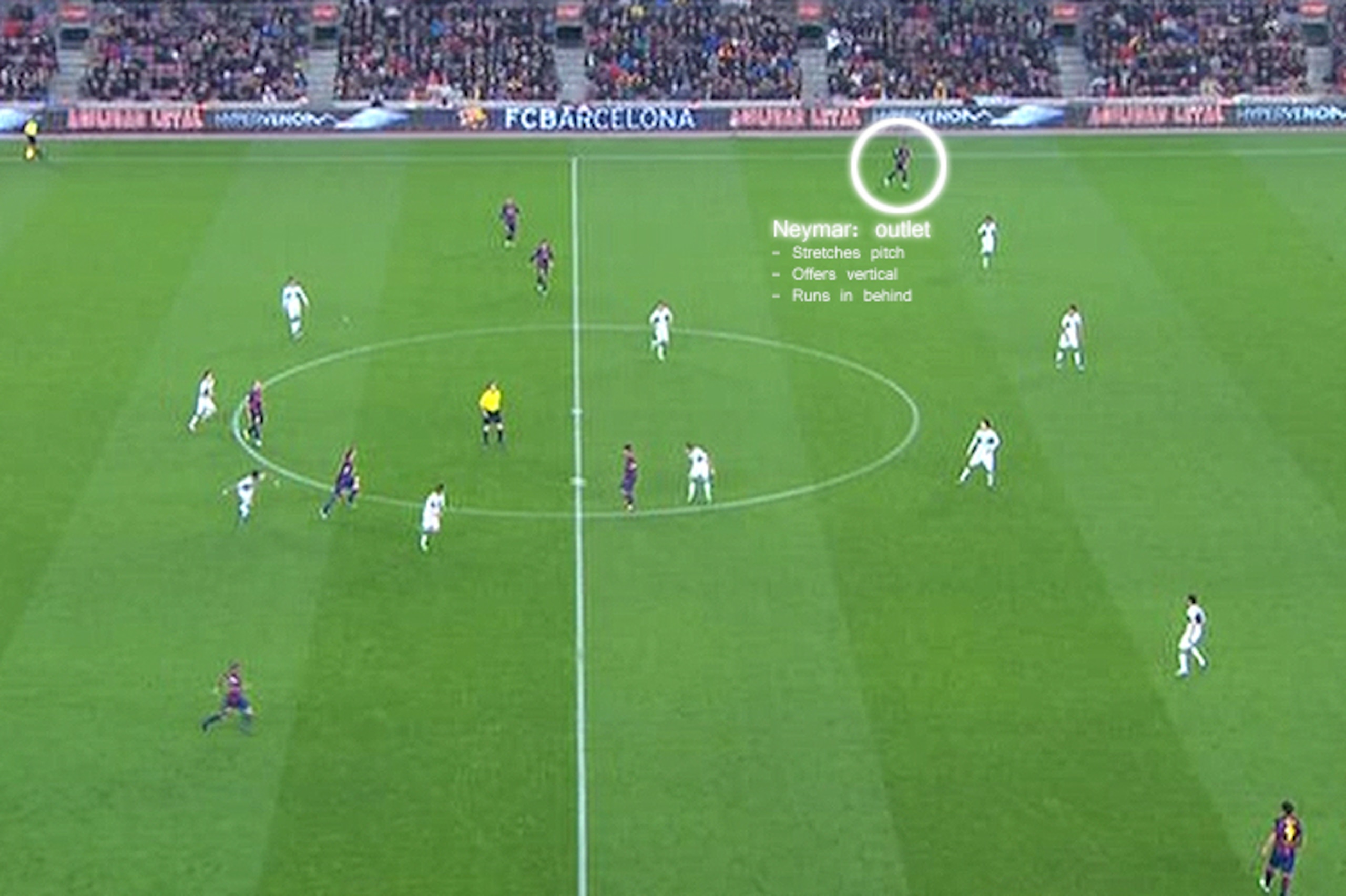
Both Neymar and Messi began picking up the pace of their play after the half-hour mark, and soon after Neymar made a few tacklers miss—thus opening up space to set, shoot, or pass—Barca found their groove.
Directly after the first goal by the Brazilian, who stayed wide enough despite a crowded box to invite the pass and fire home, Elche pushed forward just a tinge. Neymar began steaming in behind and punishing them; he won the penalty in this fashion, and Suarez followed suit before firing home his incredible solo finish.
4. Messi the Playmaker
In the second half Escriba brought on little-used Aaron and star man Jonathas, but Alba had already made it 4-0 with a cutting run and finish soon after the second half had begun.
The move saw Messi drop in to a No. 10 position and pick a sublime pass through a crowd to play the runner in, and it was the Argentine's average position and role that caught the eye in the second period.
Neymar continued to threaten on the shoulder and over the top in tight situations, Alba's runs never ceased. Suarez kept busy and the midfield kept whirring, with Roberto and Rakitic almost solely reduced to picking up stray balls and half clearances and recycling them back to Messi.
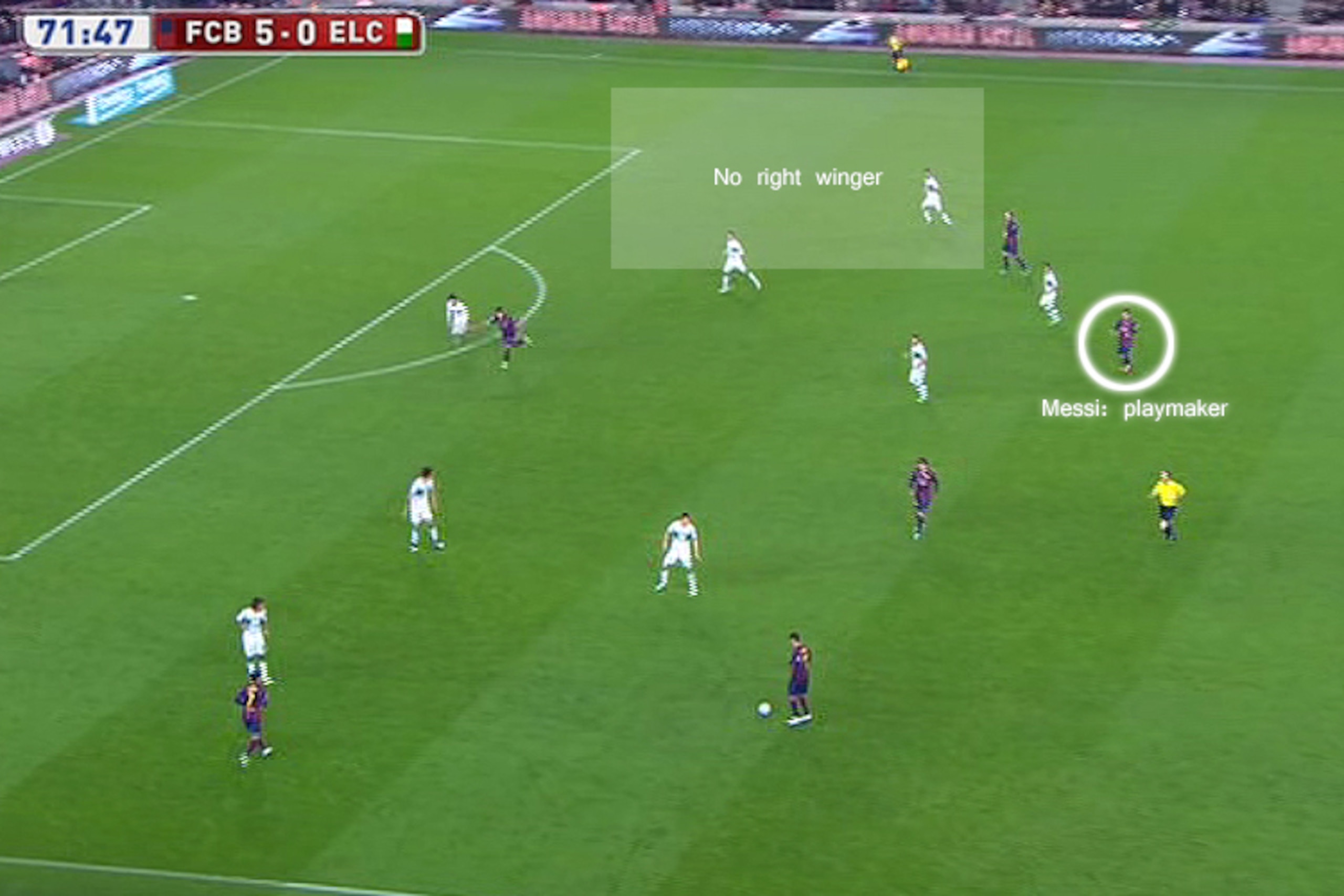
He dropped into a permanently central position, thus rendering Barcelona right winger-less for the remainder of the game. Pedro came on late, but played from a left-sided position in place of Neymar.
We've seen bits of pieces of Barca in this mode—almost 4-3-1-2-ish, with Messi behind two forwards and ahead of three central midfielders—and it's clearly a variant Luis Enrique likes. Is it the future of Barca, should "Lucho" keep his job?

.jpg?w=2560 "Seahawks Chiefs Football")





