
Jon Jones and the 4 Most Creative Fighters in MMA
It's tempting to think that mixed martial arts has reached its final form. Once dominated by specialists of one fighting style or another, the sport has evolved to require at least a basic understanding of several core disciplines.
Despite what Royce Gracie thinks, the notion that anyone can succeed at the highest level of MMA with an exclusive expertise in Brazilian jiu-jitsu is eye-rollingly silly. Indeed, this fact applies to any single style of martial arts.
It has been the general consensus for many years now that a combination of wrestling, Brazilian jiu-jitsu, boxing, muay thai and kickboxing is required to compete at the elite level. There are certainly other relevant disciplines, but the basic goal is to become proficient at striking and grappling, both vertically and horizontally.
As I argued back in 2013, this combination proved so successful that MMA “theory” was rendered largely stagnant. Settling down to watch a UFC pay-per-view in the mid-to-late 2000s yielded few technical surprises. There were great fights galore, but game-changing creativity was far from abundant.
It is only in the last few years that MMA has started to move beyond this period of developmental dormancy. "Different" is so commonplace now that it’s debatable whether the current preponderance of creativity can even be called different.
Fighters are more willing than ever to take creative risks; styles that were previously dismissed as fantasy martial arts have been adapted to MMA in unique and interesting ways; techniques that were only ever successfully employed by Jean-Claude Van Damme in '80s action flicks are now a firm fixture of reality.
With that in mind, let’s take a few minutes to celebrate those fighters who continue to push the creative envelope with their aptitude for violence.
Dominick Cruz
1 of 6
You might well wonder why Dominick Cruz is on this list. He doesn’t leap off the cage with kicks and knees, nor does he throw an abundance of eye-catching spinning techniques.
What he has done, though, is develop a style of movement that was practically unique until recently—T.J. Dillashaw, among others, has adopted this style. For a time, some viewed Cruz’s footwork as exhaustingly redundant, movement for movement’s sake.
However, his constant motion clearly has purpose, as this excellent video by BJJ Scout explains.
The former UFC bantamweight king has studied boxing greats like Willie Pep and Muhammad Ali to create a style of movement and striking that is ideally suited for MMA and its many constituent parts.
It would be a terrible irony if the movement that has helped make Cruz so successful is also responsible for the ACL issues that have plagued the latter part of his career.
Ronda Rousey
2 of 6
Like the previous entry, Ronda Rousey isn’t known for spectacular striking techniques. But we’re discussing mixed martial arts, and I would be remiss if I didn’t include a grappler on the list.
There are a number of grapplers and submission artists who deserve praise for their creativity, such as Shinya Aoki, Rousimar Palhares, Minowaman and many more besides. However, Rousey deserves special recognition for how she has adapted her judo to MMA.
Of course, judokas like Karo Parisyan have translated their skills to MMA with some success, but none have done it quite like the UFC women’s bantamweight champion.
A number of Olympic-level judokas have competed in MMA, but the resultant pressure testing suggested that judo wasn’t fit to lick the boots of wrestling as a base for the sport.
That was until Rousey came along.
Her ability to rapidly chain together techniques and throws, leverage her opponent’s momentum to her advantage and a mastery of newaza has set her apart from her predecessors.
Whether Rousey simply has a style of judo that is uniquely suited to MMA remains to be seen, but there’s no question she has opened many eyes to how effective judo can be when properly applied.
Anderson Silva
3 of 6
Anderson Silva was truly an anomaly when he burst onto the UFC scene. He emerged at a time when the sport was ruled by fighters with a solid but unspectacular understanding of MMA’s core disciplines.
There was no one else quite like The Spider in the mid-to-late 2000s. To the eyes of many MMA fans, his fight-ending combinations were no less poetic than anything from the pen of Keats.
Whether he was making Forrest Griffin swing at thin air or front kicking Vitor Belfort in the kisser, convention was rarely on the cards whenever Silva stepped inside the Octagon.
Silva’s success demonstrated that the homogenization of the talent pool was not the sport’s final form but merely a phase of its evolution.

Jon Jones
4 of 6
Jon Jones is a freak in the most positive sense of the word. His physique looks like it was designed for MMA competition.
When looking at most fighters, identifying potential strengths and weaknesses usually isn’t too difficult. For example, a fighter with short legs is unlikely to possess a potent guard game, while a fighter with short arms and a compact build will generally excel on the inside/clinch, etc.
But throughout his career, Jones has appeared to excel in every position, and he often demonstrates this fact when it isn’t necessarily to his best advantage—fights with Glover Teixeira and Chael Sonnen come to mind.
The only position he hasn’t been tested in is on the bottom—this may be where Daniel Cormier comes in. However, Jones’ long limbs make it almost impossible to imagine him being anything less than a demon off his back.
Watching him manage distance and outstrike the best the sport has to offer, it’s easy to forget that Jones’ MMA base is Greco-Roman wrestling and whatever he could glean from martial arts videos on YouTube.
That he was able to develop so rapidly and become the UFC light heavyweight champion within 3 years of his MMA debut is an astonishing achievement.
But more astonishing still is the style with which he goes about his business inside the cage. Jones doesn’t just win fights—he does so while putting on an exhibition of pure novelty. The techniques he performs, from knees to elbows to kicks, are a triumph of imagination.
Anthony Pettis
5 of 6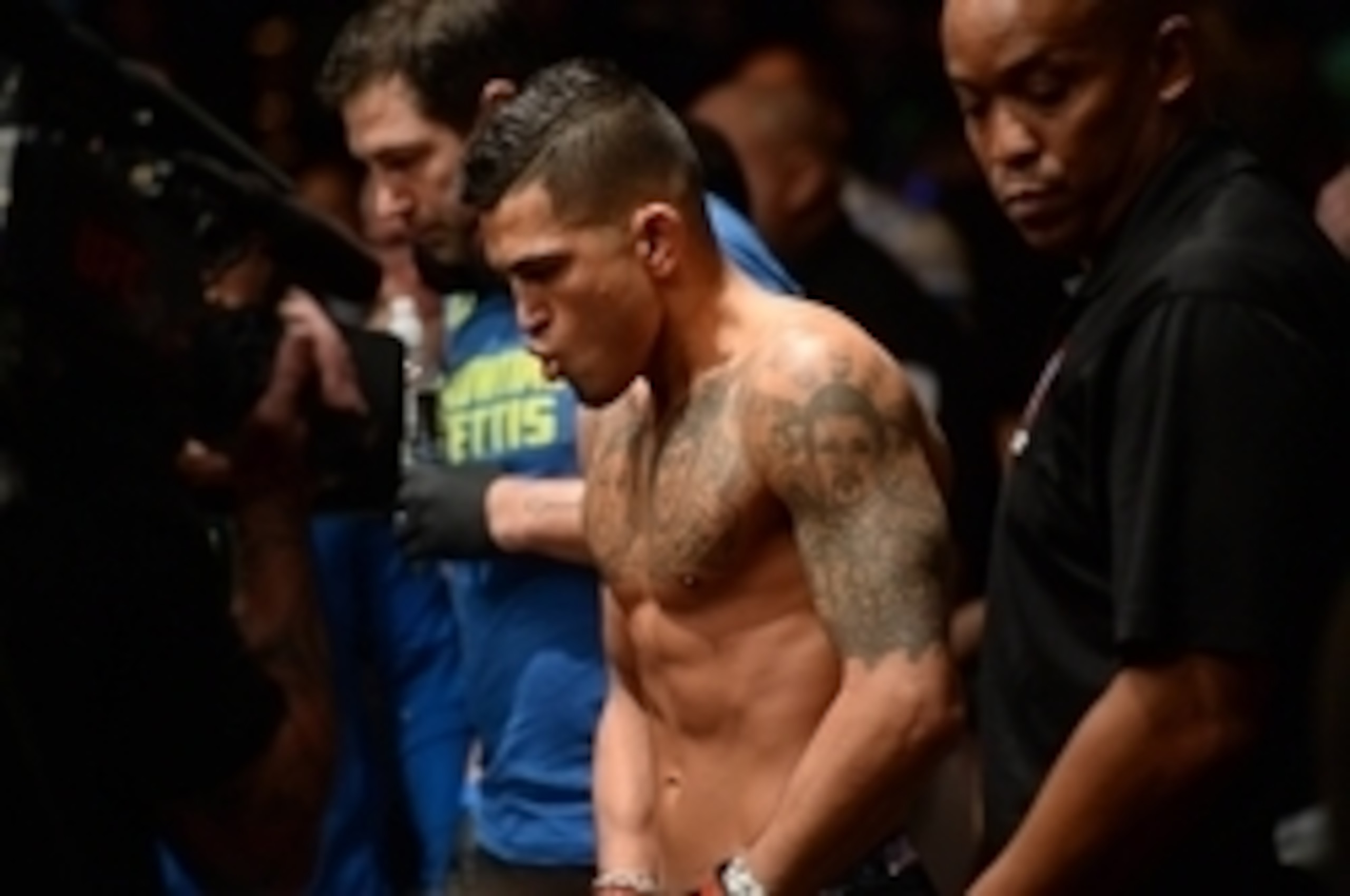
Watching Anthony Pettis perform is a welcome reminder of how awe-inspiring MMA can be when done right. When most fans think of creative violence, the UFC lightweight champion is probably the first fighter who comes to mind.
Pettis’ MMA game is brimming with creativity in almost every position, but his unique blend of kickboxing, taekwondo and parkour has routinely left our collective jaws agape over the years.
Whether it’s a punch, a roundhouse kick, a switch kick or a flying knee, Showtime’s ability to propel himself off the cage and perform these techniques marks a stage in the sport’s evolution that previously defied our imagination.
Oh, and he isn’t too shabby on the ground. His knack of snatching and finishing submissions is too often overlooked. Just ask recent victims Gilbert Melendez and Benson Henderson.
If MMA continues to evolve in this fashion and Pettis ceases to be the exception, we may have to redefine what it means to be creative in the future.
Honorable Mentions
6 of 6
Some names had to be omitted from the list, but here are some honorable mentions:
Lyoto Machida
Rousimar Palhares
Edson Barboza
Shinya Aoki
Minowaman
Michael Page
Daron Cruickshank
Conor McGregor

.jpg?w=2560 "Malik Beasley Negotiating Plea Deal (AP)")

.jpg?w=2560 "Jonathan Taylor Landing Spots")

.jpg?w=2560 "Aikman Blasts Cowboys WR 🫣")