Hurt Michael Clarke Honours Phillip Hughes, Gets Through to Tea and Plays On
"We must dig in and get through to tea. And we must play on."
Two weeks ago, Michael Clarke wouldn't have. Not like this.
His body is battered and broken. His spirit is exhausted. His emotions are strained.
.jpg?w=2560 "Titans Giants Football")

Indeed, his eyes are those of a man carrying an entire game's grief. His back creaks like that dodgy floorboard on an old staircase. And it's only getting louder, like those boards seem to as the day becomes night.
Going on would normally be senseless, perhaps even selfish. But these are not normal circumstances.
The presence of a four-match Test series means little to Clarke right now. Neither does a subsequent one-day campaign. Nor a looming World Cup.
It's all immaterial at present. Preserving his deteriorating body wasn't an option. Bad back and all, his heart hurting even more than his vertebrae and feeling considerably heavier than his bat, he simply had to go on.
For Clarke, who delivered the most touching tribute to the late Phillip Hughes, had said it himself.
"We must dig in and get through to tea. And we must play on."
So he did.
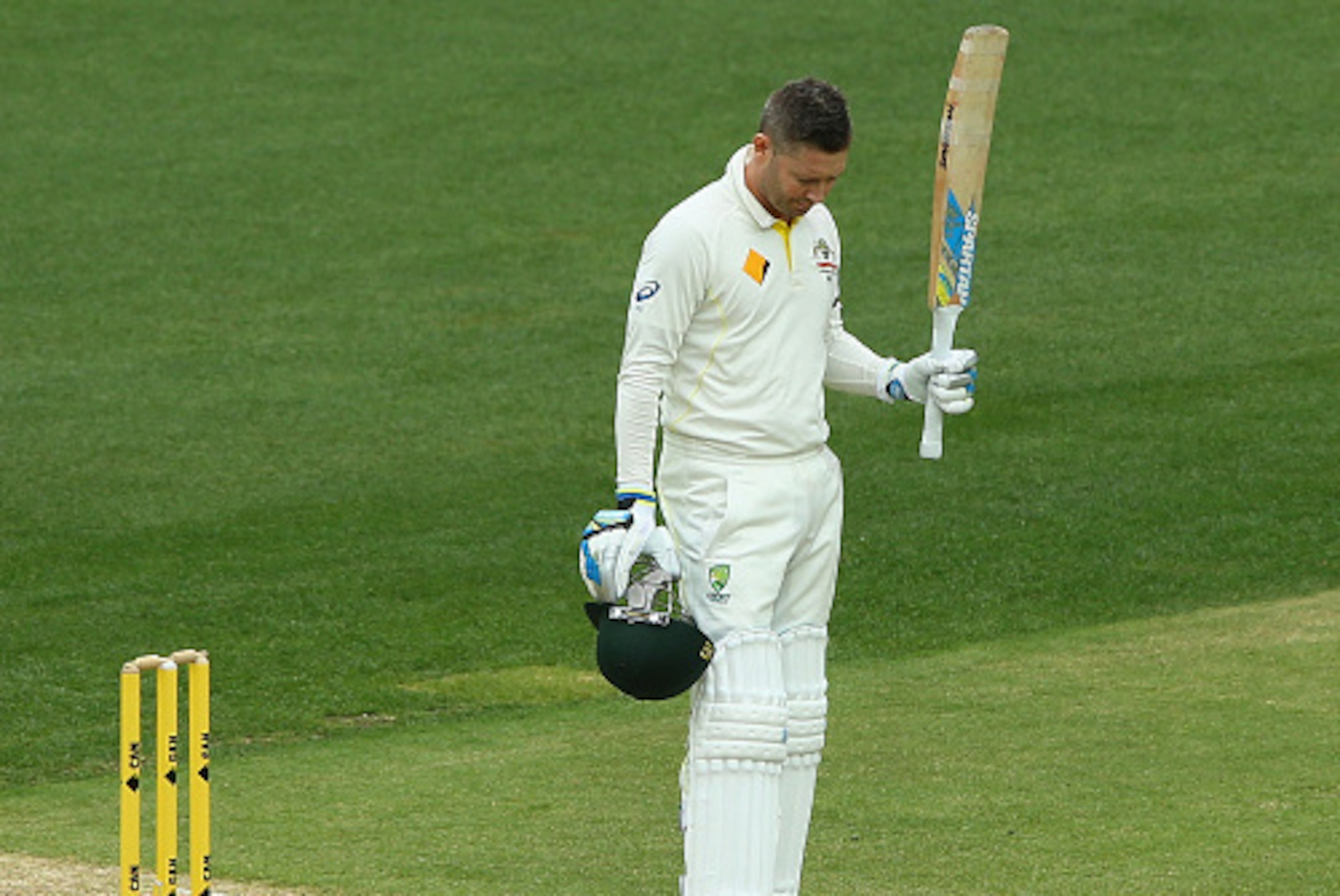
It was a moving tribute in itself. Perhaps not as tear-jerking as his eulogy for Hughes but every bit as inspiring.
He walked out to the crease alongside the sprightly Steve Smith looking not 33 but 73. The back brace under his shirt, one making him look a little round, heightened such a sense. He was so stiff, so brittle—so un-Clarke. If the Indians couldn't topple him, the wind surely would.
He was a picture of vulnerability, the sort sportspeople typically do all they can to hide. He could barely run, duck, sway or even get out of the way.
Such exposed weaknesses, those that everyone is aware of, are the biggest demons for men like Clarke. They tear away at one's conviction. They dissolve one's clarity of purpose. And they buoy an opponent.
But Clarke had to play on. Honour his friend.
Any damp eyes present were accompanied by warm hearts.

Under normal circumstances, this wouldn't have been an innings for the purists. Not by any stretch. For Clarke was as awkward as he was defiant. As unconventional as he was unbendable.
He flashed balls through—and over—the off-side field with his feet rooted to the spot. Just the way you're taught not to.
He rigidly stood up to short balls demanding to be ducked. He cut full balls demanding to be driven. He paddled pull-shots like he was gingerly trying to close a high window.
He went back when he'd normally go forward. He went toward leg when he'd normally go toward off. He inside-edged practically everything. He ran only in the notional sense of the word.
He defied his back crying out for rest. The back which often prevents him from playing truly freely even at the best of times.
Because he had to get to tea. Play on.
In these circumstances, it was one for the purists. As pure as it can get.
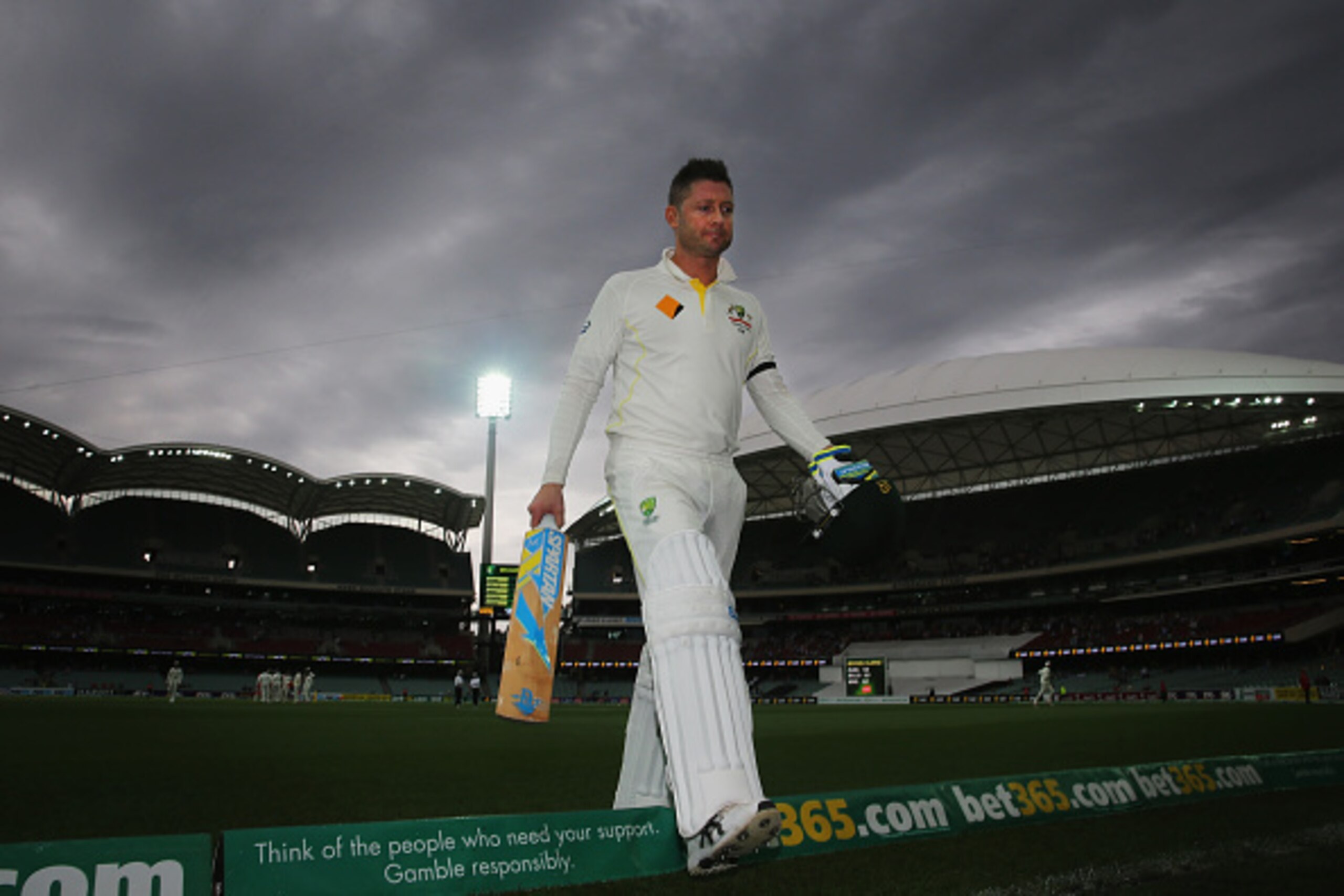
In time, when the moment for reflection arrives, we're likely to look back upon this innings as Clarke's finest. The one that defined him. The Clarke knock.
Though completed by a shadow of the dashing cricketer he is, the game has never appreciated Clarke like it does now. Through hardship and despair, a cricketing legend has been born. Albeit one with a shoddy back.
In his own pain, he united those in grief. But not because it was the right thing to do, or what he was asked to do. But because it was what he had to do.
He got through to tea.
He played on.




.jpg?w=2560 "NFL investigating referee after viral exchange with player")