
Ranking the NCAA Title-Winning Teams of the 2000s
Now that the turkey has settled and you've no doubt been in a tryptophan-induced food coma for the past few days, why not add one more heaping plate full of college basketball?
Fifteen champions have been crowned since 2000, and not all of them are created equal. Many have similar records, but that doesn't necessarily tell the entire story. So, how does this near-Sweet 16 of champions rank?
Is the team with the best overall record, the 2012 Kentucky Wildcats (38-2), No. 1? Or could it be the 2005 or 2009 North Carolina Tar Heels?
Hey, this is serious stuff. With teams such as Duke, Florida, Connecticut, Kansas and Syracuse in the mix, which team stands above the rest?
For starters, the recipe we used was a stew of All-Americans, regular-season rankings, big wins over the course of the regular season and paths through the NCAA Tournament. Turn up the heat, and let this cauldron boil.
Read on to see how the championship teams from the 2000s rank.
15. UConn, 2011
1 of 15
Shabazz Napier, the hero of UConn’s 2014 title run, took solid notes in 2011.
Kemba Walker, the junior first-team All-American guard for the Huskies, did much of the heavy lifting for UConn during its 2011 title run. Heck, he did most of the heavy lifting all season.
Walker averaged 23.5 points, 5.4 rebounds and 4.5 assists per game for the Huskies. He was practically unguardable, especially when March came around.
UConn had a 21-9 record entering the Big East tournament and won all five games before rattling off another six in the Big Dance. In the NCAA tournament, UConn beat No. 2 seed San Diego State, No. 5 seed Arizona, No. 4 seed Kentucky and No. 8 seed Butler to win the title.
Sure, UConn’s 53 points to beat Butler were the fewest of any title-winning team since 1949, but the team got the job done as best it could.
"Yeah, you'd like a few more baskets made, certainly," UConn coach Jim Calhoun said, per ESPN.com. "But it was two teams that weren't going to give into each other, and finally our superiority took over. But damn, I loved it in the sense of the fight, the competitiveness between the two teams."
14. UConn, 2014
2 of 15
Was there ever a more inexplicable and unpredictable winner of an NCAA tournament than UConn in 2014? First-team All-American point guard Shabazz Napier got in the tugboat and towed this team to its third title of the 2000s.
This UConn team struggled to remain in the Top 25 all season, which made its run through March and early April all the more impressive.
Its 32 wins also make it one of the least prolific winning teams in this 15-year window. As a result, UConn was rewarded with one of the hardest trips to the NCAA summit.
The Huskies needed overtime to beat Saint Joseph’s 89-81 in their second-round game. UConn then defeated No. 2 seed Villanova, No. 3 seed Iowa State, No. 4 seed Michigan State and No. 1 seed Florida in the Final Four.
Everest’s Hillary Step looks benign in comparison.
13. Duke, 2010
3 of 15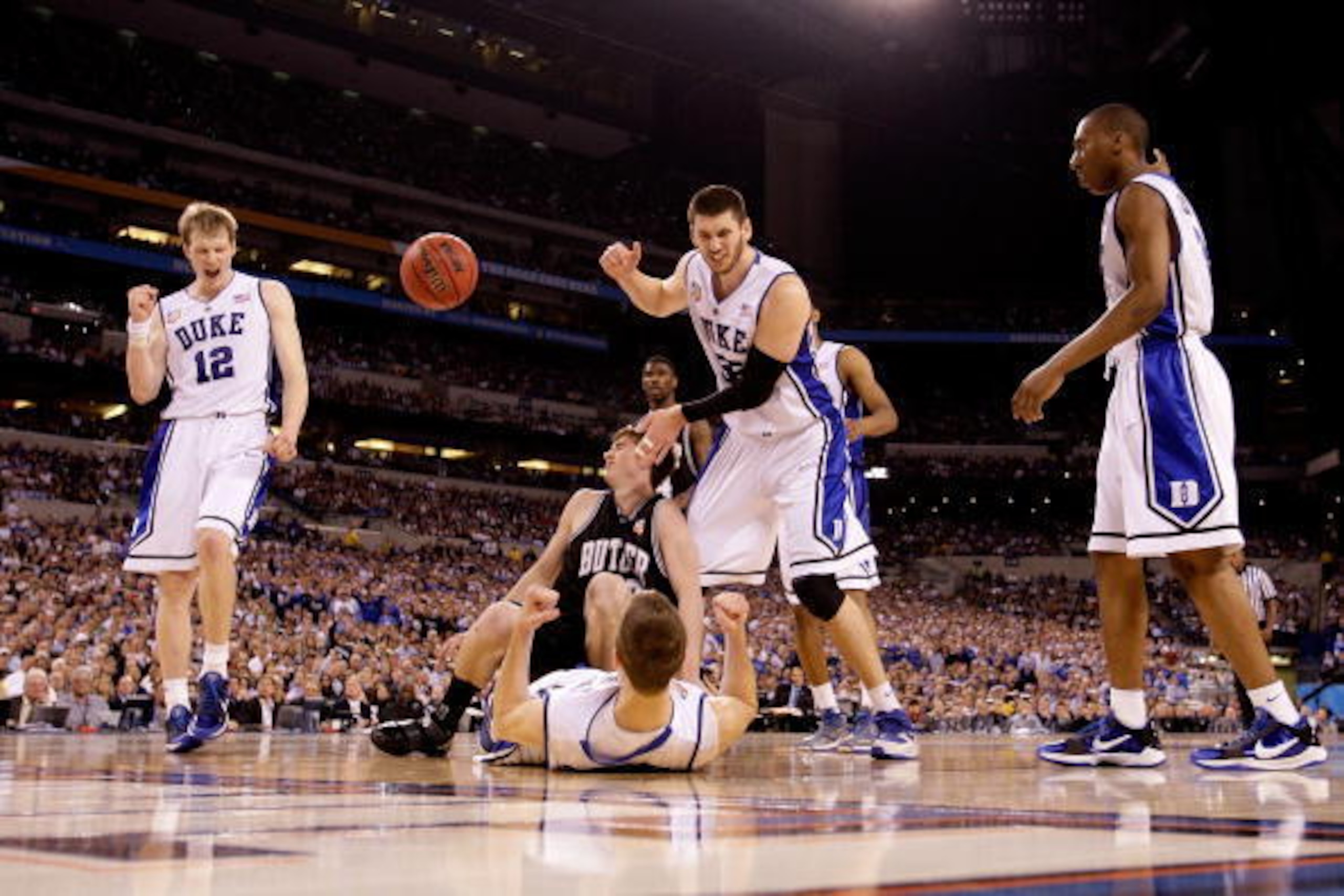
The 2010 edition of the Duke Blue Devils had a three-headed attack led by second-team All-American Jon Scheyer.
Scheyer was reminiscent of J.J. Reddick, a sharpshooter who helped spread the floor. Scheyer led his team with 18.2 points per game, with Kyle Singler (17.7 points) and Nolan Smith (17.4 points) right behind him.
This Duke team was never dominant, despite its 35-5 record. It played above its means and tested the coaching prowess of Mike Krzyzewski. Sure, Duke finished with 35 wins, but it had a weaker-than-normal schedule and cracked the Top Five just four times before the tournament (never higher than No. 4).
The Blue Devils did earn a No. 1 seed in the tournament and never had to face a No. 1 seed. Their toughest game came in the finals against No. 5 seed Butler in a thrilling 61-59 win.

12. Maryland, 2002
4 of 15
Maryland benefited from having first-team All-American Juan Dixon in its lineup in 2002. Dixon averaged 20.4 points per game to lead a Terrapins team that was in the Top Five—with the exception of three weeks—all year long.
During its title run, Maryland defeated No. 2 seed Connecticut in the Elite Eight and No. 1 seed Kansas to reach the final.
11. Louisville, 2013
5 of 15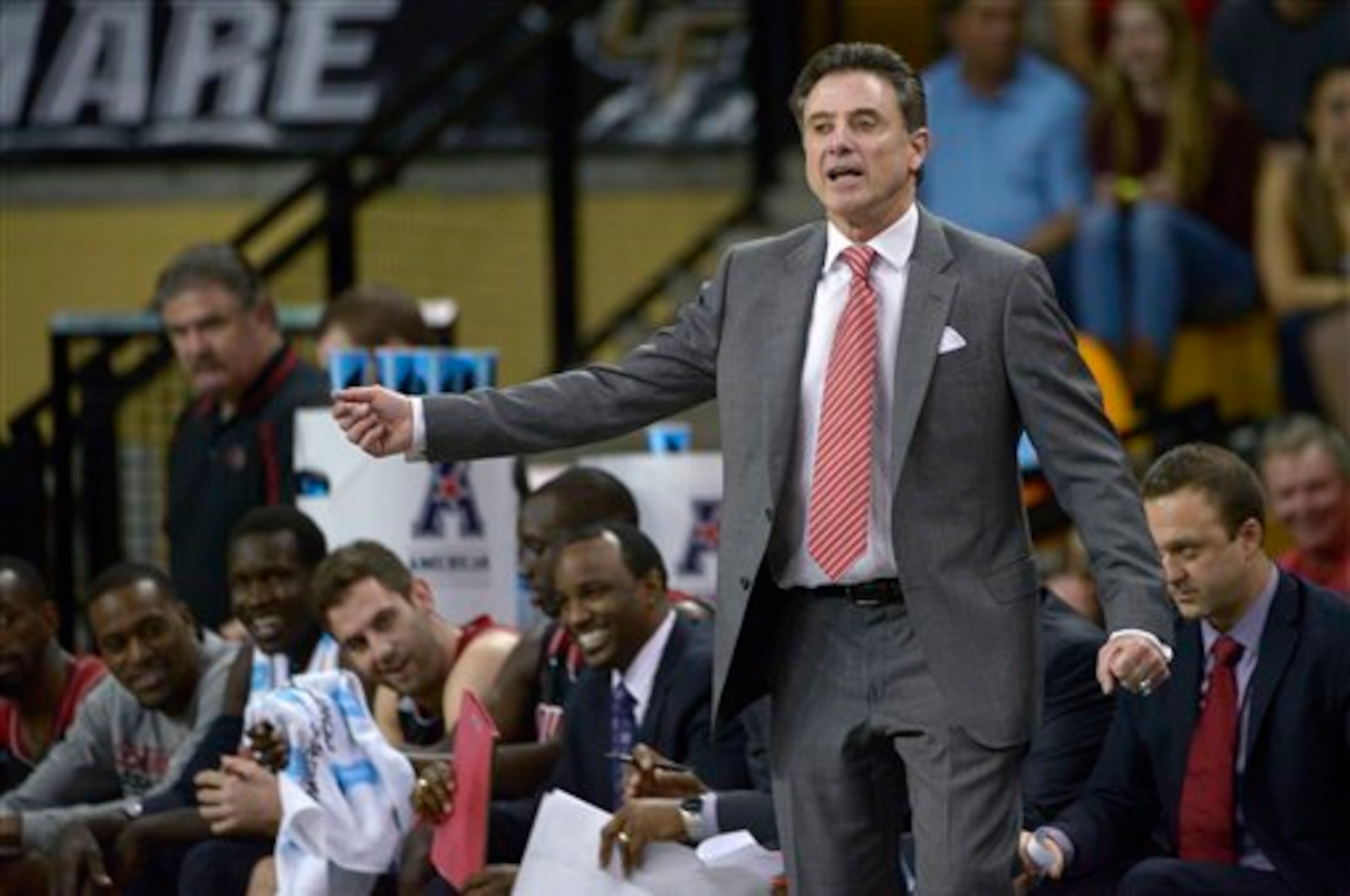
The Cardinals finished the season 35-5 with the fourth-hardest strength of schedule and no All-Americans.
Louisville cruised through the tournament, even after it lost Kevin Ware. Ware suffered a gruesome leg injury during the Elite Eight against No. 2 seed Duke.
"The bone's six inches out of his leg and all he's yelling is, 'Win the game, win the game,'" Louisville head coach Rick Pitino said, per ESPN.com. "I've not seen that in my life. ... Pretty special young man.”
And win it the Cardinals did. They beat Duke 85-63 and then took down Wichita State and Michigan.
Louisville reached No. 1 in the country for just one week in January before losing three Big East games in a row. That effectively tanked its chances for an elite ranking, but it still managed to plow through the tournament, galvanized by Ware’s resolve.
10. Syracuse, 2003
6 of 15
When it came time for the NCAA tournament, Syracuse was a Big 12 killer. In its six tournament wins, four were over Big 12 teams, including three in a row in the Elite Eight, Final Four and title game.
Syracuse beat No. 1 seed Oklahoma in the Elite Eight, a team that finished the year ranked third. The Orangemen then beat No. 1 seed Texas in the Final Four, a top-five team for almost the entire year.
Lastly, ’Cuse defeated No. 1 seed Kansas, a highly ranked team early and late in the season (not so much in the middle). That’s chopping your way to the top.
Oh, and Syracuse had a guy named Carmelo Anthony, the second-team All-American who cut through first-team All-Americans TJ Ford and Nick Collison to win the title.
Syracuse’s record (30-8) isn’t the most flattering, and it took all season just to crack into the Top 25. Despite winning the title, it finished the season ranked No. 13 in the AP Poll, thus proving it’s not always the best team on paper that wins the tournament.
9. Kansas, 2008
7 of 15
Kansas was never No. 1 in 2008, but it was in the top five for all but one week during the 2007-08 season. There it slipped to No. 6.
The Jayhawks started the season with 20 straight wins and finished the season with a 37-3 record, this on a team with no All-Americans.
While Kansas couldn’t boast any All-Americans, it had the season’s biggest play. Mario Chalmers drilled a three-pointer with 2.1 seconds left in regulation of the National Championship Game to send it into overtime. There, Kansas outscored No. 1 seed Memphis and Derrick Rose 12-5 en route to a 75-68 victory.
“It'll probably be the biggest shot ever made in Kansas history," Kansas coach Bill Self said on ESPN.com.
The loss put Memphis at 38-2 on the year. Memphis was No. 1 overall for five weeks and never slipped below No. 2 from December 3 on.
To get to the championship game, Kansas defeated No. 1 seed North Carolina.
8. Michigan State, 2000
8 of 15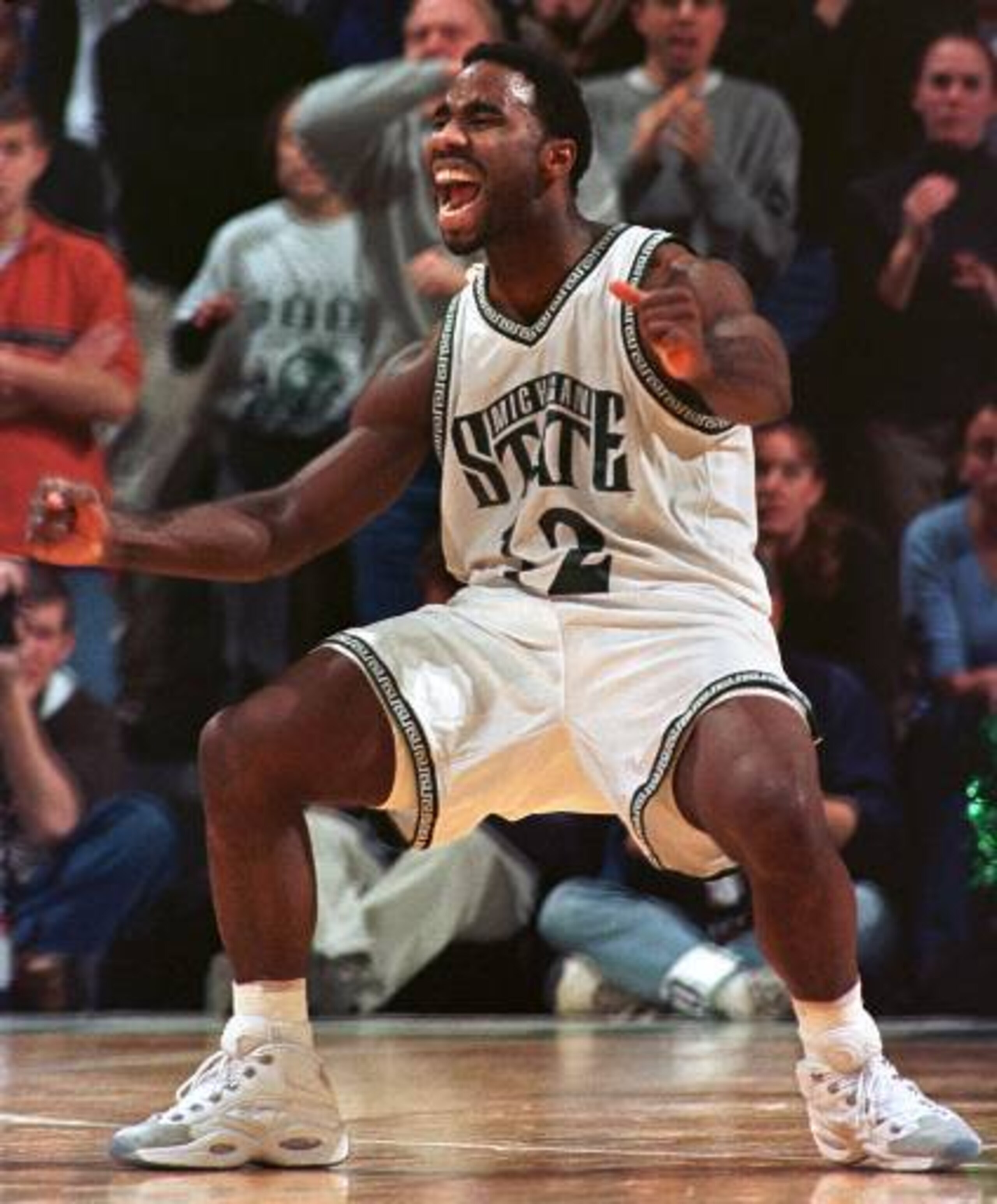
Mateen Cleaves and Morris Peterson earned second-team All-American honors for this squad, one that didn’t necessarily dominate like some others on this list, but nonetheless had big-game players.
Despite being injured, a Cleaves-less Spartans team defeated No. 2-ranked North Carolina in Chapel Hill in the home opener. That set the tone for the season.
Even in the tournament, this team stood down adversity. It beat No. 2 seed Iowa State in the Elite Eight, this after being down eight points with 11 minutes remaining.
The Spartans started the season ranked No. 2 and slipped its way down to 11. Through February and into March, the Spartans climbed into the top 10, then the top five and then cut down the nets as the No. 2 team.
7. UNC, 2005
9 of 15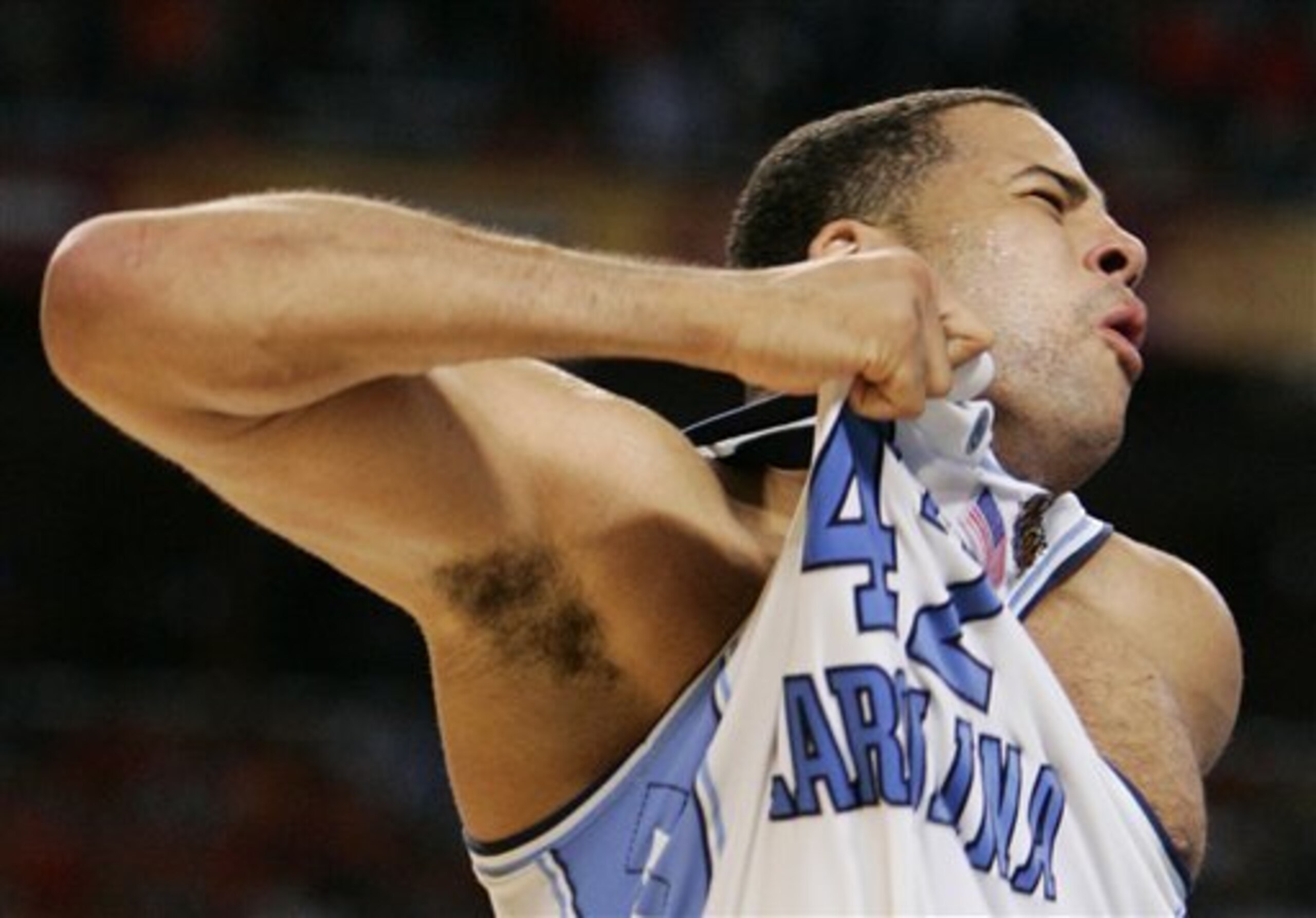
North Carolina was a No. 1 seed, played like a No. 1 seed and beat No. 1 seed Illinois in the final en route to the championship in 2005.
Sean May, a senior who scored 17.5 points and pulled down 10.7 rebounds per game, represented UNC’s only All-American (second team), but this team was still loaded with talent (Raymond Felton, Rashad McCants and Marvin Williams).
As good as this team was, it never ranked higher than two in the AP Poll all season. That’s largely due to Illinois, who was ranked No. 1 from December 7 until very end of the season (finishing 37-2).
May told The Associated Press, “A lot of people said we were just talented, but not a team. But when times got tough, we banded together and came through. We showed we're not just talented. We're a team."
As a team, UNC may have defeated the best team not to win the title in the past 15 years.
6. UConn, 2004
10 of 15
The big body in the middle, Emeka Okafor, powered this first of three Huskies titles in this 15-year stretch. Okafor was a first-team All-American for Jim Calhoun, a coach in his 32nd year of coaching.
Okafor averaged 17.6 points and 11.5 rebounds per game and received a great deal of help from Ben Gordon, a guard who averaged 18.5 points per game. It was an inside-out and outside-in schizophrenia that proved far too much for Georgia Tech in the final.
UConn, a preseason No. 1, finished 33-6 and plowed through the tournament with wins over No. 1 Duke (a team ranked No. 1 in the land for a four-week stretch late in the season) and No. 3 seed Georgia Tech in the final.
ESPN’s Dick Vitale said of UConn:
"UConn put on an impressive performance in defeating a gritty, gutty and determined Georgia Tech team. It was simply a matter of the Huskies' tandem of Ben Gordon and Emeka Okafor being too much for the Yellow Jackets. Gordon was especially hot in the first half, hitting three trifectas in the first 10 minutes while Okafor was a man possessed in dominating Luke Schenscher in the lane.
"
This UConn squad became the first preseason No. 1 to win the tournament since Kentucky in 1996.
5. Florida, 2006
11 of 15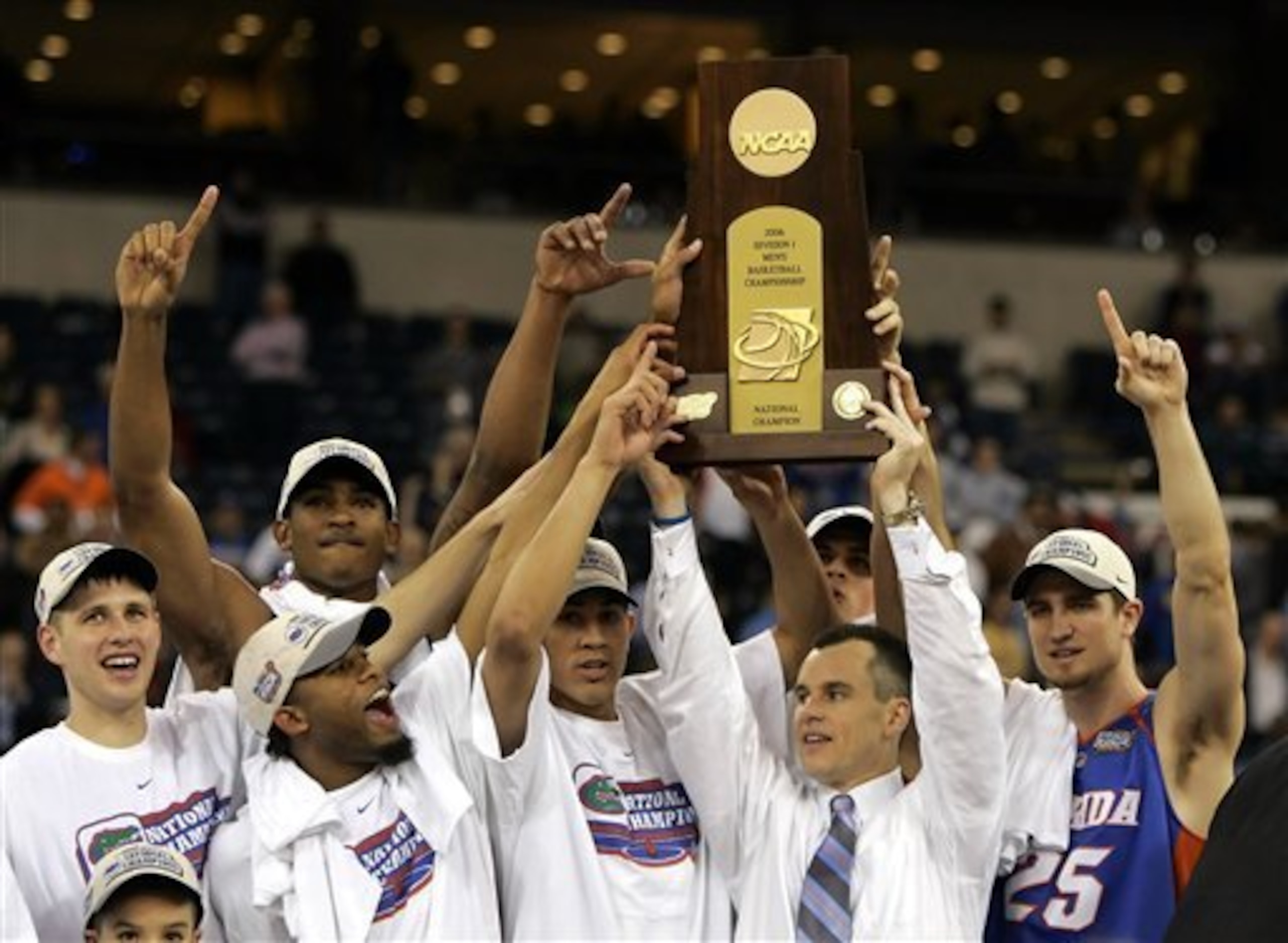
This Gators team sets the table for—spoiler alert—the next Gators team on this list.
A force in its own right, the 2006 Gators went 33-6 with no first- or second-team All-Americans. It won on heart and by subsequently drubbing No. 1 seed Villanova in the Elite Eight and No. 2 seed UCLA in the final.
The Gators opened the season on a 17-game winning streak largely on the back of weaker nonconference games. A late-season skid dropped Florida in the polls to No. 17 overall, but it somehow found a championship gear.
Joakim Noah, the tournament’s most outstanding player, put his team on his shoulders and dunked, rebounded and swatted the Gators to its first-ever basketball title.
4. Florida, 2007
12 of 15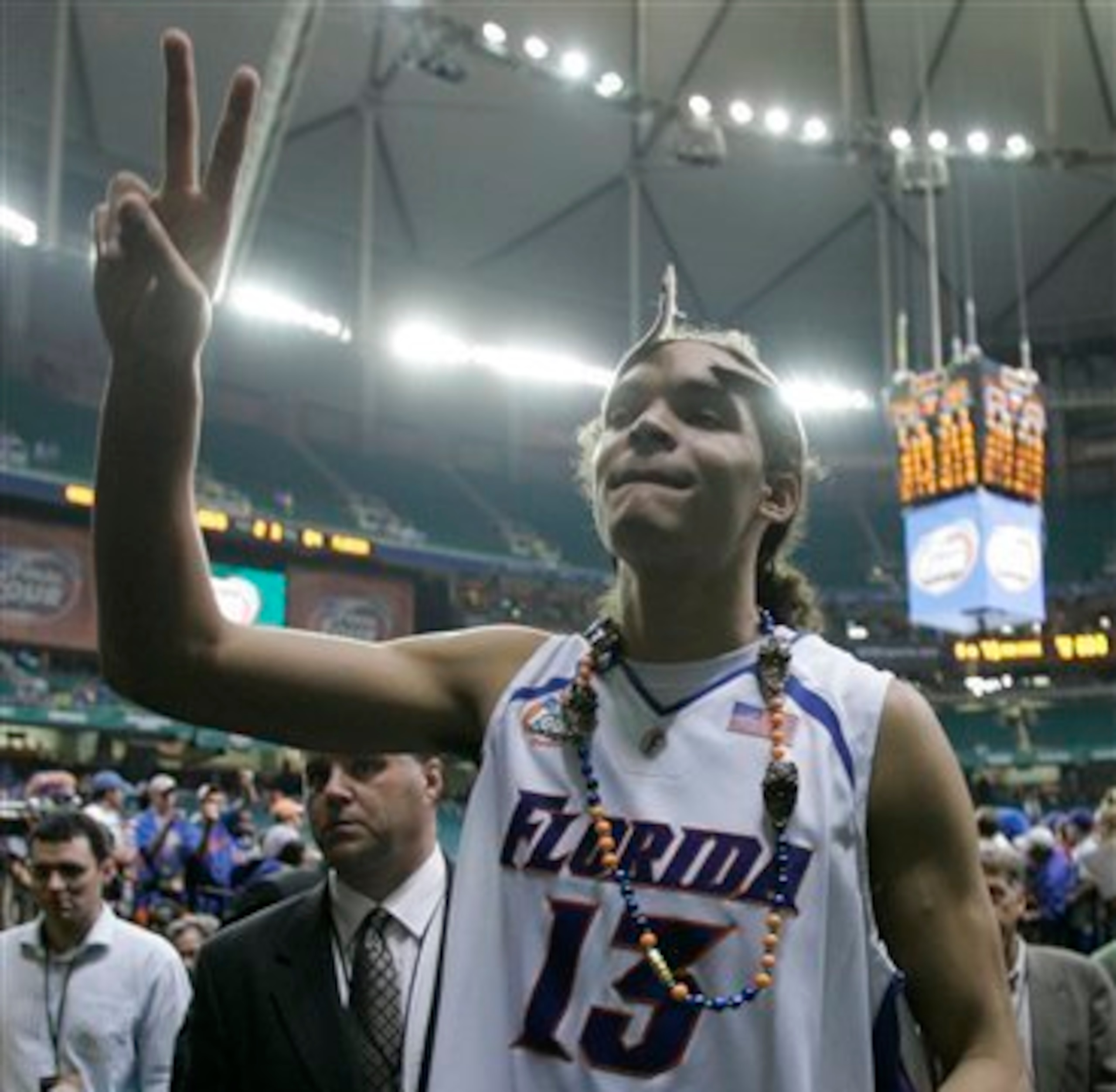
The ’07 Gators did not have the strongest schedule in college basketball, just 38th, but it accomplished one of the more impressive feats in all of modern sport: repeated as champions.
Florida was a preseason No. 1, lost its grip on that early in the season, then reclaimed it for a five-week stretch from January to February. Florida lost three of its five remaining regular-season games, which snuffed out its fire as possibly the best team on this list. Still, Florida regained its form and won when it mattered most.
Joakim Noah was Florida’s only All-American, and that was on the second team. His fiery play vaulted the Gators over Greg Oden and No. 1 seed Ohio State in the final.
Billy Donovan, Florida’s head coach, summed it up well when he told The Associated Press, “I think this team should go down as one of the best teams in college basketball history. Not as the most talented, and not on style points—but because they encompassed what the word 'team' means."
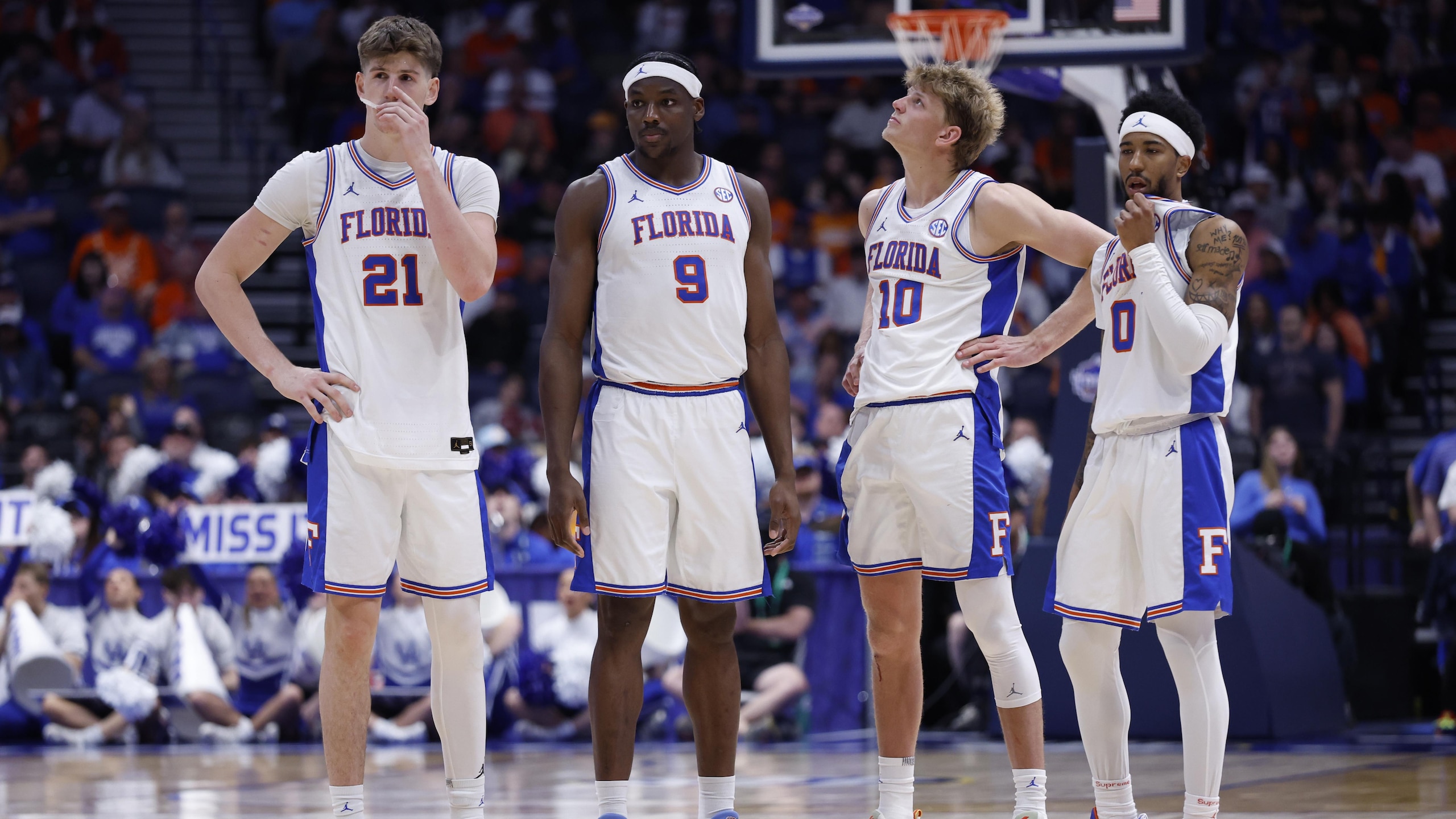
3. Kentucky, 2012
13 of 15
These Wildcats boast the best overall record of any of the champions on this list, going an inexplicable 38-2 over the course of the season. They were No. 1 from January 23 through the NCAA finals.
Kentucky registered its only regular-season loss on December 19 to Indiana by one point. It then took a 24-game win streak into the SEC tournament, where it lost to Vanderbilt. Game over, folks, because it won its next six NCAA tournament games by an average of 11.8 points per game.
John Calipari said on ESPN.com, “I wanted everybody to see, we were the best team this season. We were the best team. I wanted this to be one for the ages.”
Anthony Davis was named a first-team All-American, and he averaged 14.2 points and 10.4 rebounds per game. Michael Kidd-Gilchrist was a second-team All-American, averaging 11.9 points and 7.4 rebounds per game in 2012.
2. Duke, 2001
14 of 15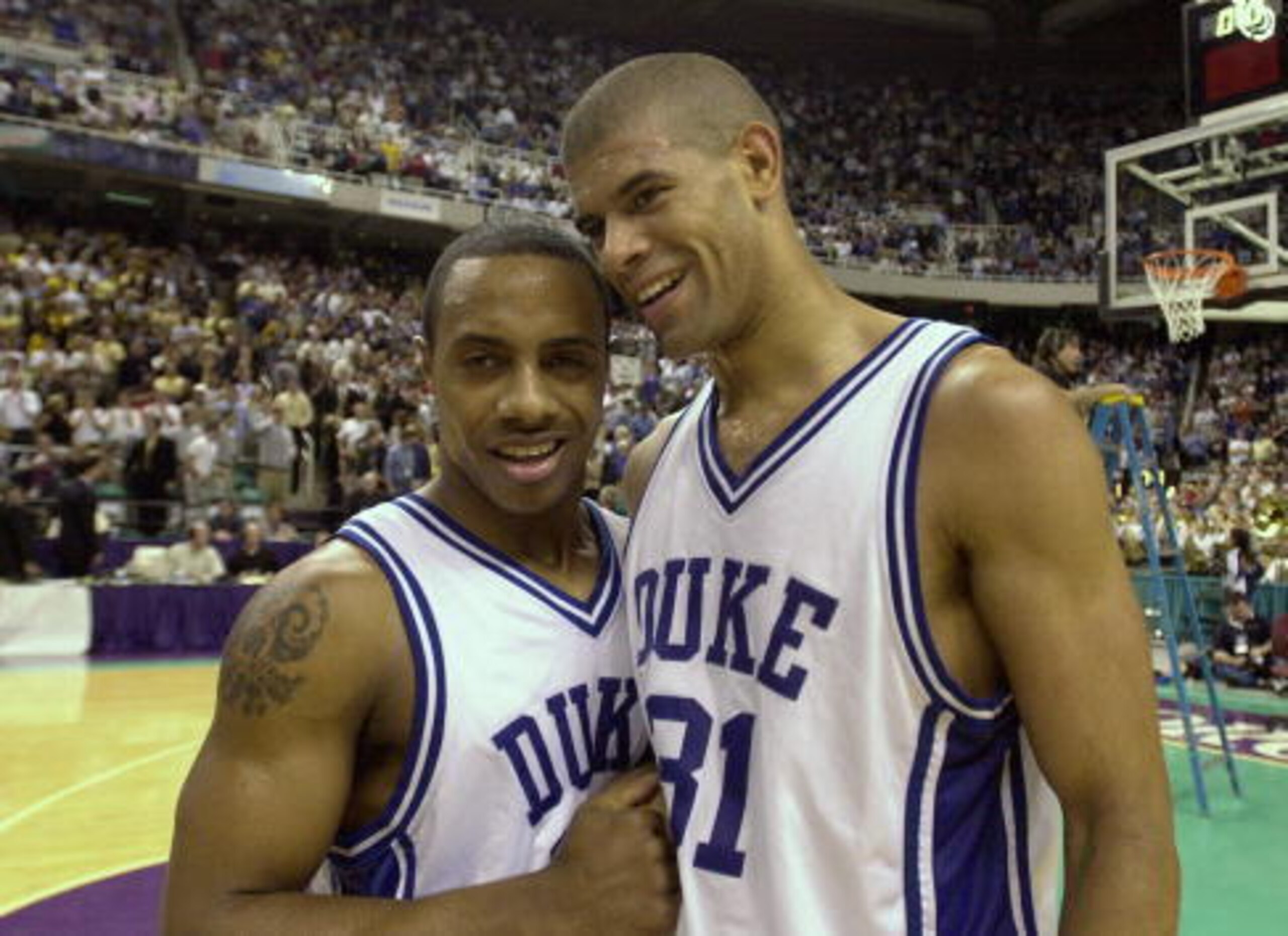
This Blue Devils team went 35-4 with five players averaging double figures in points. Here’s a short list of some of their players: Jay Williams, Shane Battier, Carlos Boozer, Mike Dunleavy Jr. and Nate James.
Duke was No. 1 for four straight weeks earlier in the season and held strong at No. 2 or 3 through much of the winter. Entering the NCAA tournament, Duke was ranked third in the country overall.
The lineup, at a glance, is petrifying. It boasted two first-team All-Americans in Battier and Williams. Yet they didn’t scare everyone, least of all the Maryland Terrapins. Duke needed overtime to beat Maryland at Maryland and lost at home to the Terps, 91-80.
Maybe Duke’s most memorable feat was coming back from a 22-point deficit in the Final Four to Maryland. Great teams find ways to win. Sometimes they make inferior teams fold.
This team was No. 1 in field goals (1,217) and three-point field goals (407) and fourth in free throws made (697). Duke scored the second most points per game (90.7)
Williams, as a sophomore, led the team with 21.6 points per game with Battier averaging 19.9.
Duke capped off its thrilling title run with a 10-point win over No. 2 seed Arizona, a team entering 2000 as the preseason No. 1.
1. UNC, 2009
15 of 15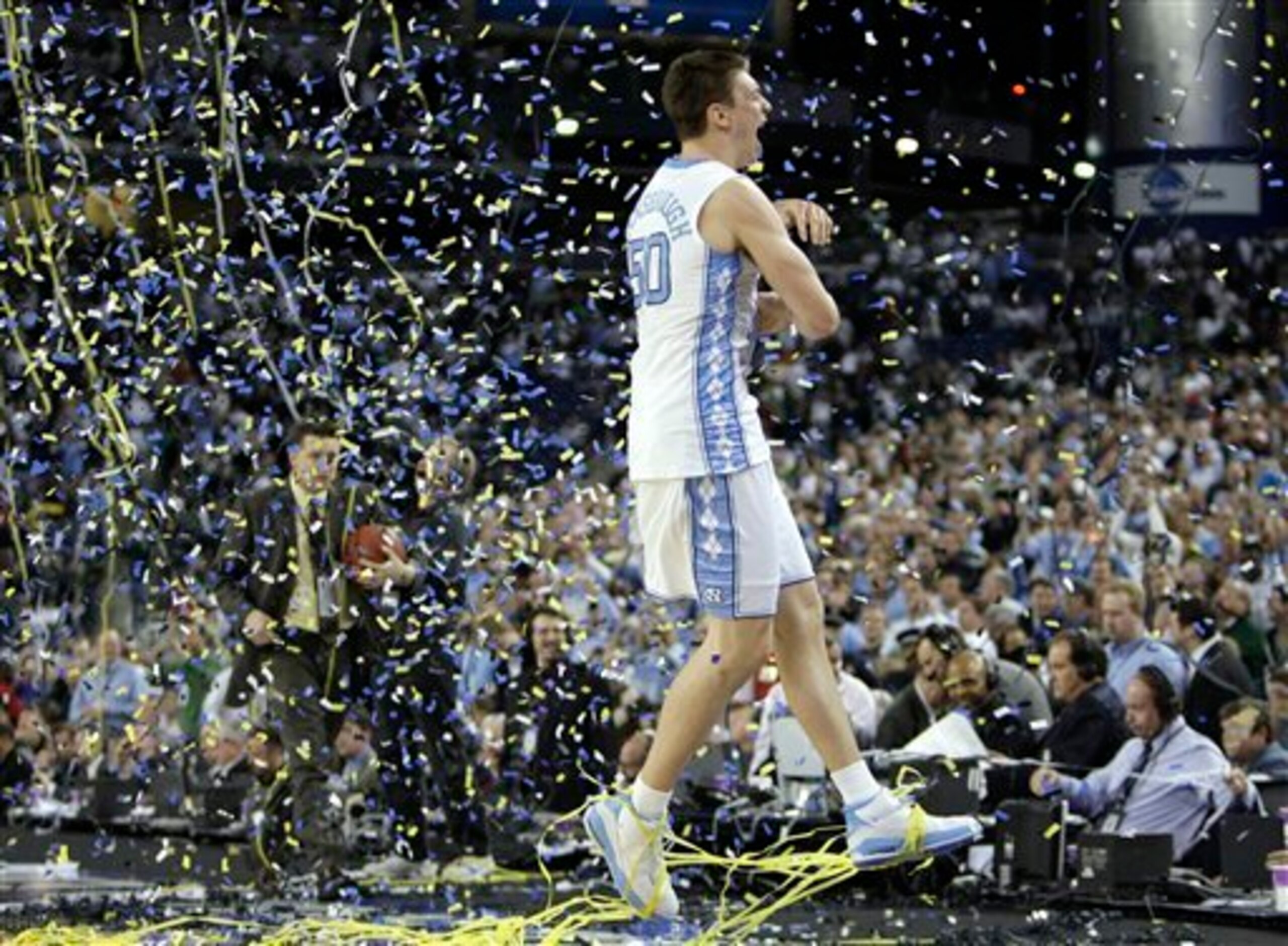
Roy Williams had something special with this squad. UNC was the preseason No. 1 and held that ranking through January 5, the day after it lost to Boston College, 85-78, for its first loss of the season.
Just a week later, UNC lost again, this time to Wake Forest to slip to No. 5 in the polls. UNC also defeated a top-10 Duke team twice that year.
Led by senior All-American Tyler Hansbrough and second-team All-American Ty Lawson, these Tar Heels rolled through the NCAA tournament like a combine through corn.
UNC won all its games by 12 points or more during its title run. It also won by an average of 20.2 points per game. In the Elite Eight, it beat a No. 2-seeded, Blake Griffin-led Sooners team, 72-60.
In the finals, UNC never let No. 2 seed Michigan State, who basically had a home game there in Detroit, in the game.
Eddie Pells of The Associated Press wrote, “This time, North Carolina led 36-13 around the time "Dancing With The Stars" was starting on another network. At least nobody knew how that one was going to end.”
This was a Tar Heel team which was mightily embarrassed a year earlier in the Final Four by Kansas, and they came back stronger, hungrier and, as the saying goes, took no prisoners.
All stats came courtesy of Sports-Reference.com.
By all means reach out to me on Twitter @BrendanOMeara.