Phil Hughes Blow an Ugly by-Product of the Use of Modern Helmets in Cricket
Reactions have been diverse to the blow to Phil Hughes' head during Tuesday's Sheffield Shield match in Sydney that has left the batsman hospitalised in a critical condition.
Of course, there's universal concern for the Australian as the cricketing community unites in hope for Hughes' recovery after such a sickening incident.
But there's been an array of other reactions, too. And among them, one view has been extremely notable: Something like this has been coming for some time now.
TOP NEWS
.jpg?w=2560 "Chargers Mack")
Every Trade's Best Trade Asset 🔁
.jpg?w=2560 "Green Bay Steelers Football")
Insiders: Cowboys Overpaid for Porter
Houston's Space Helmets 🧑🚀
Such a thought is a sobering one, an ugly reminder that the game can be as dangerous as it is compelling. But cricket, like many other sports that use protectional equipment, suffers from a strange contradiction; there's a conflict between the theory of the use of that equipment and the effect it yields.
Helmets, lamentably, have made us more cavalier. More complacent.
The perceived safety provided by a helmet has dampened a batsman's instincts for self-preservation.
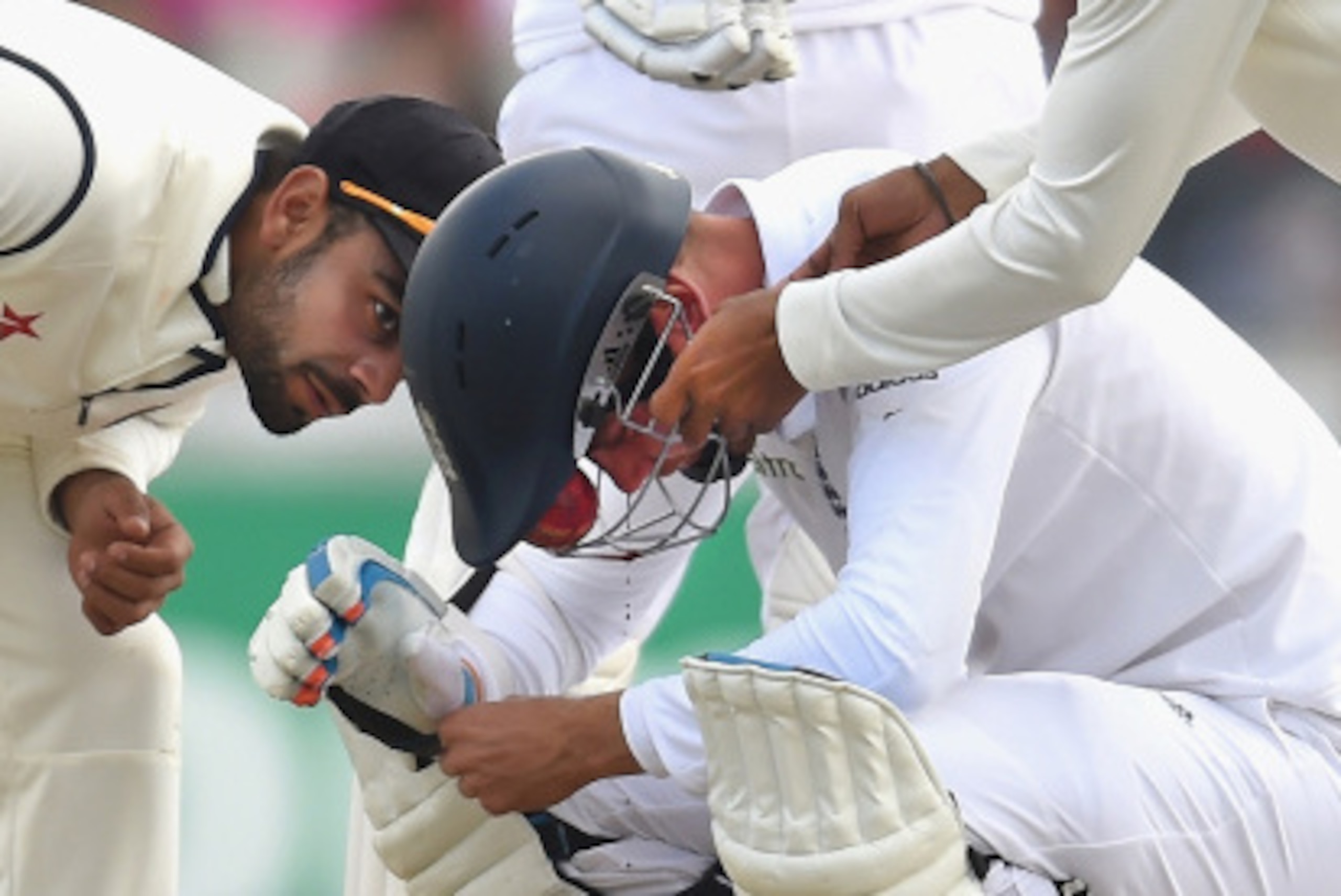
Michael Atherton has always been vocal about the effect of modern helmets on batting.
A former England captain, the now-prominent journalist insists a certain disregard for danger has been born in batsmen due to their use, as he explained in his column for The Times (subscription required) on Tuesday when reflecting on the incident involving Hughes:
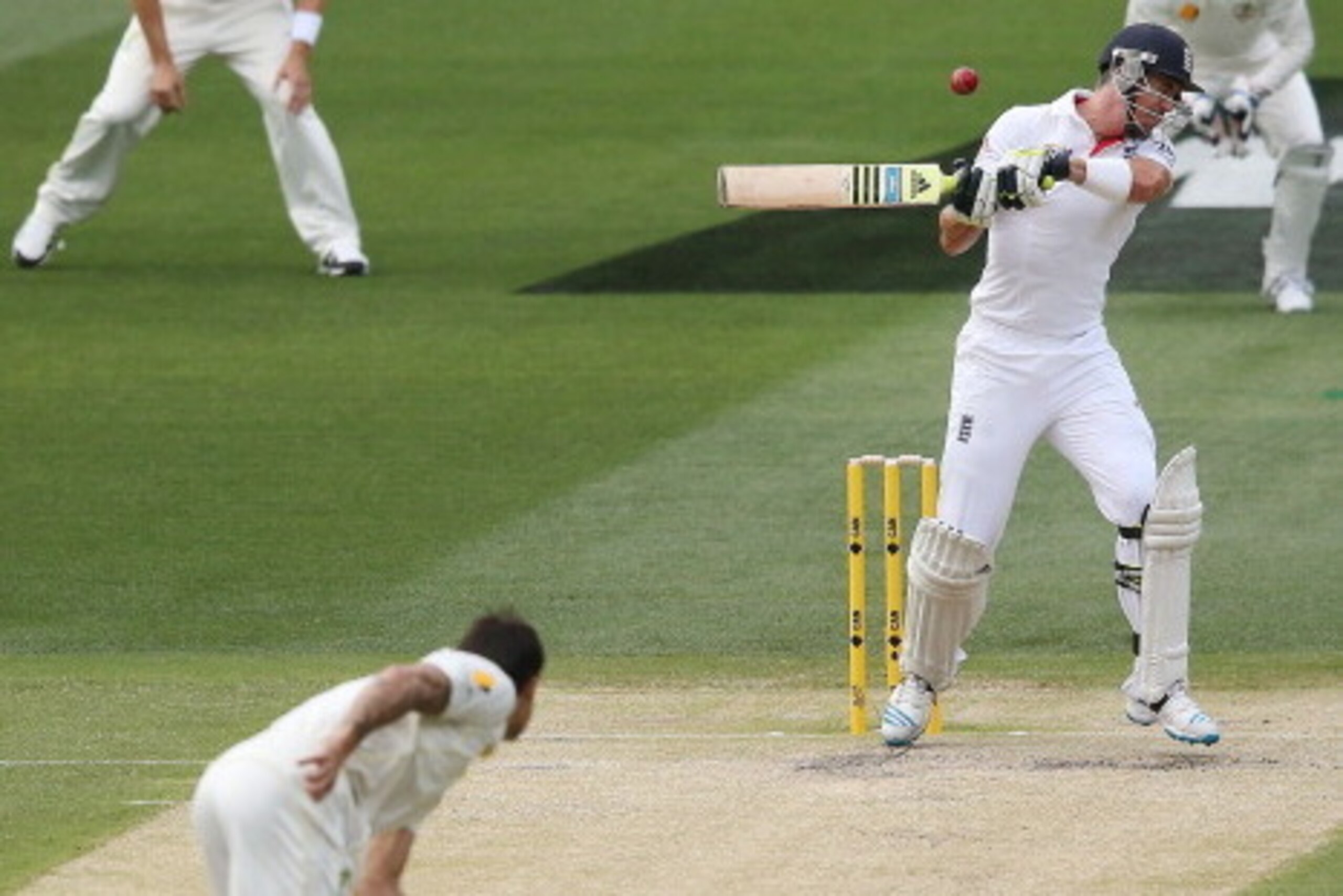
"Helmets changed the way batsmen play, and in doing so altered the dynamic of the game fundamentally. Whereas, pre-helmets, batsmen tended to move back and across initially, post-helmets, they advanced to the bowler more; whereas, pre-helmets, batsman hooked cautiously, infrequently and off the back foot, giving themselves a fraction longer to see the ball, post-helmets (think, above all, Matthew Hayden here) they hooked off the front foot with added danger. The balance between bat and ball, aggressor and defender, shifted: batsmen are now, figuratively and literally, on the front foot.
"
Such a stance was mirrored by The Guardian's Mike Selvey, who discussed cricket's "curious paradox" that only appears to be growing:
"Thus, the better protected they are to the head, the more they seem to get hit: to the extent a blow on the head is accepted as a perfectly normal, generally low-risk hazard of the game that often brings little more discomfort than a ringing in the ears and produces a leg bye.
"
Part of the response to the Hughes incident has seen the batsman's helmet manufacturer, Masuri, seeking extensive video footage of the blow to drive potential improvements in the design of their helmets, according to a report by Paul Bolton in The Telegraph.
Professional Cricketers' Association chief executive Angus Porter also said that the PCA, the England and Wales Cricket Board and the International Cricket Council have all been working hard on improving the standard of protective equipment and expects that superior helmets meeting new standards will be in use as early as next summer, per Sky Sports.
But Porter, while speaking positively of the progress being made, wasn't under any illusions. He knows the dangers of batting can't be eradicated.
"The balls are hard and they travel fast. No design will eliminate risk completely," he said.
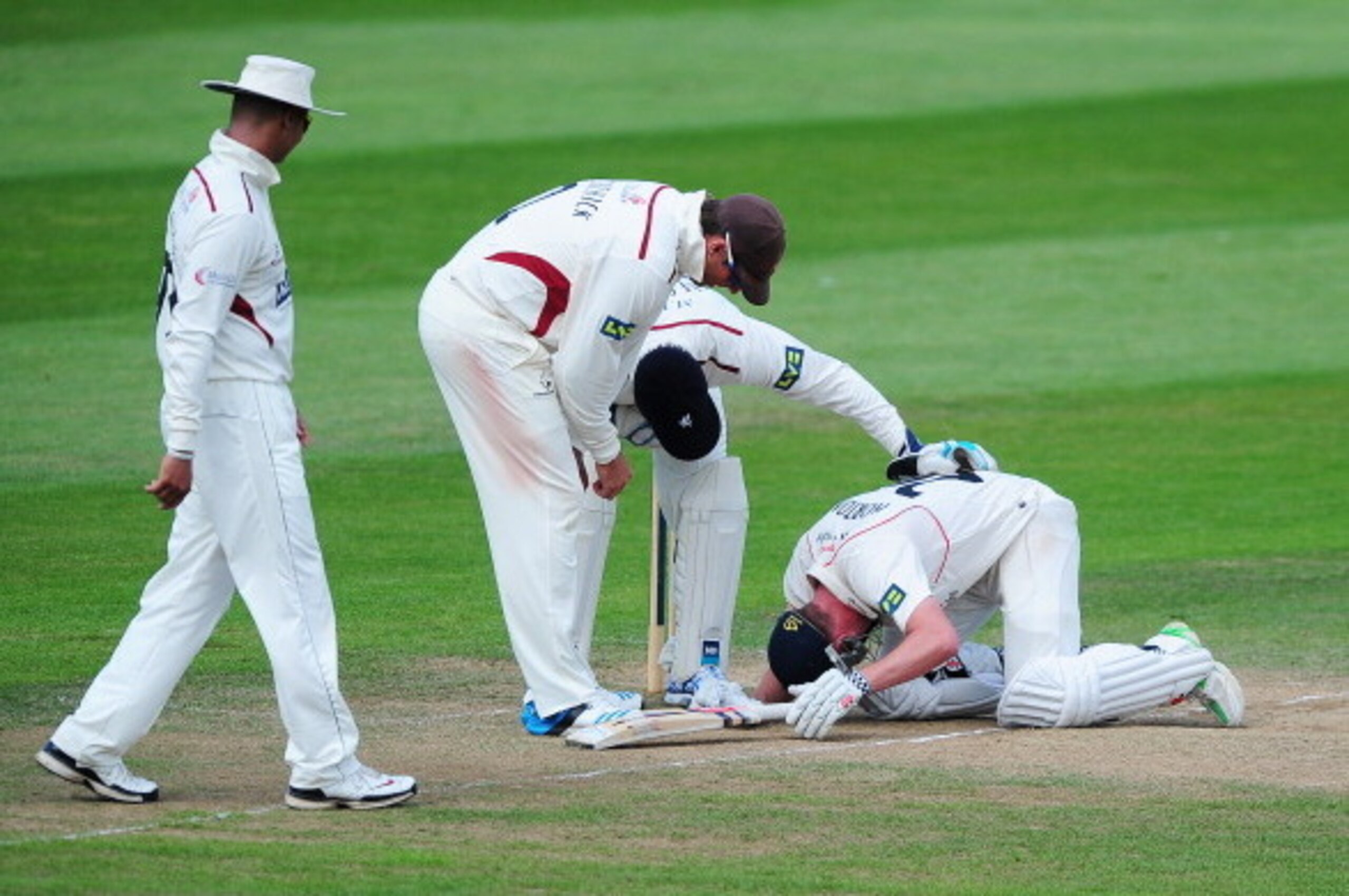
Of course, no one is advocating some sort of ban on helmets, as if they're actually heightening the dangers of batting. There'd certainly be no one willing to face up to Mitchell Johnson without one.
Instead, we're simply forced to accept an inescapable reality: Helmets protect batsmen from the overwhelming majority of blows to the head, but with their use, batsmen are also prepared to risk more of them.
So while we hope Hughes makes a full recovery, we are, at the same time, bracing ourselves for more of the same.


.jpg?w=2560 "MHJ's Potential Trade Value 📉")