Manny Pacquiao Would Be Wise to Switch Weight Class for Future Bouts
Manny Pacquiao needs to fight Floyd Mayweather. It's the best possible thing for both fighters' careers, boxing fans and the sport as a whole.
Should this elusive bout ever take place, it would almost assuredly take place in the welterweight division, the same weight class in which Pacquiao (57-5-2, 38 KOs) recently dismantled challenger Chris Algieri (20-1-0, 7 KOs) in a six-knockdown victory by unanimous decision in Macau, China.
Of course, Mayweather-Pacquiao is a contest that hasn't come to fruition in five years of hoping and wishing and waiting from boxing fans.
TOP NEWS

Omari Jones Stays Undefeated 📈
.jpg?w=2560 "Chargers Mack")
Every Trade's Best Trade Asset 🔁
.jpg?w=2560 "Green Bay Steelers Football")
Insiders: Cowboys Overpaid for Porter
Assuming this mega-bout never comes together, Pacquiao, who has recently made comments suggesting a move down in weight class is imminent, would indeed be smart to cut weight and take on challengers in the light welterweight division. As an aging boxer, this is where he can best preserve his speed, agility and legacy as a versatile brawler.
Prior to the Algieri demolition, Pacquiao spoke at length about his reason for fighting the welterweight bout with a catchweight of 144 pounds (the regular limit is 147). According to ESPN.com's Dan Rafael, Pacquiao had the weight limit in place to find out how well he "performed at a lower weight."
Surely, the 143-pound Pacquiao was happy with the results against Algieri. The New York native was pretty much helpless during the fight, his longer arms unable to fend off a pouncing Pacquiao and his lightning-quick hands and combinations. Ring Magazine's Ryan Songalia noted the obvious discrepancy in talent and ability:
As for Pac Man's other motivations for moving down in weight, there is also a bit of nostalgia at work here. A lighter, quicker Pacquiao enjoyed the best stretch of his career, from 2006-2009, fighting mostly in the super featherweight and lightweight division. In the Rafael interview, Pacquiao went on to list some of his better performances at lower weights:
"I could be faster than when I fought at welterweight and (junior middleweight) and if my power remains the same, I may be able to score more knockouts at lower weights. I weighed 138 when I knocked out Ricky Hatton, 142 when I stopped Oscar De La Hoya and 144 when I scored a TKO of Miguel Cotto. Many people consider those fights some of my best, so why not go back down if that is where the bigger and better fights are going to be fought?
"
An added benefit for Pacquiao is that having recently dabbled in the welterweight ranks, he may be less likely to suffer a knockout at a lower weight class.
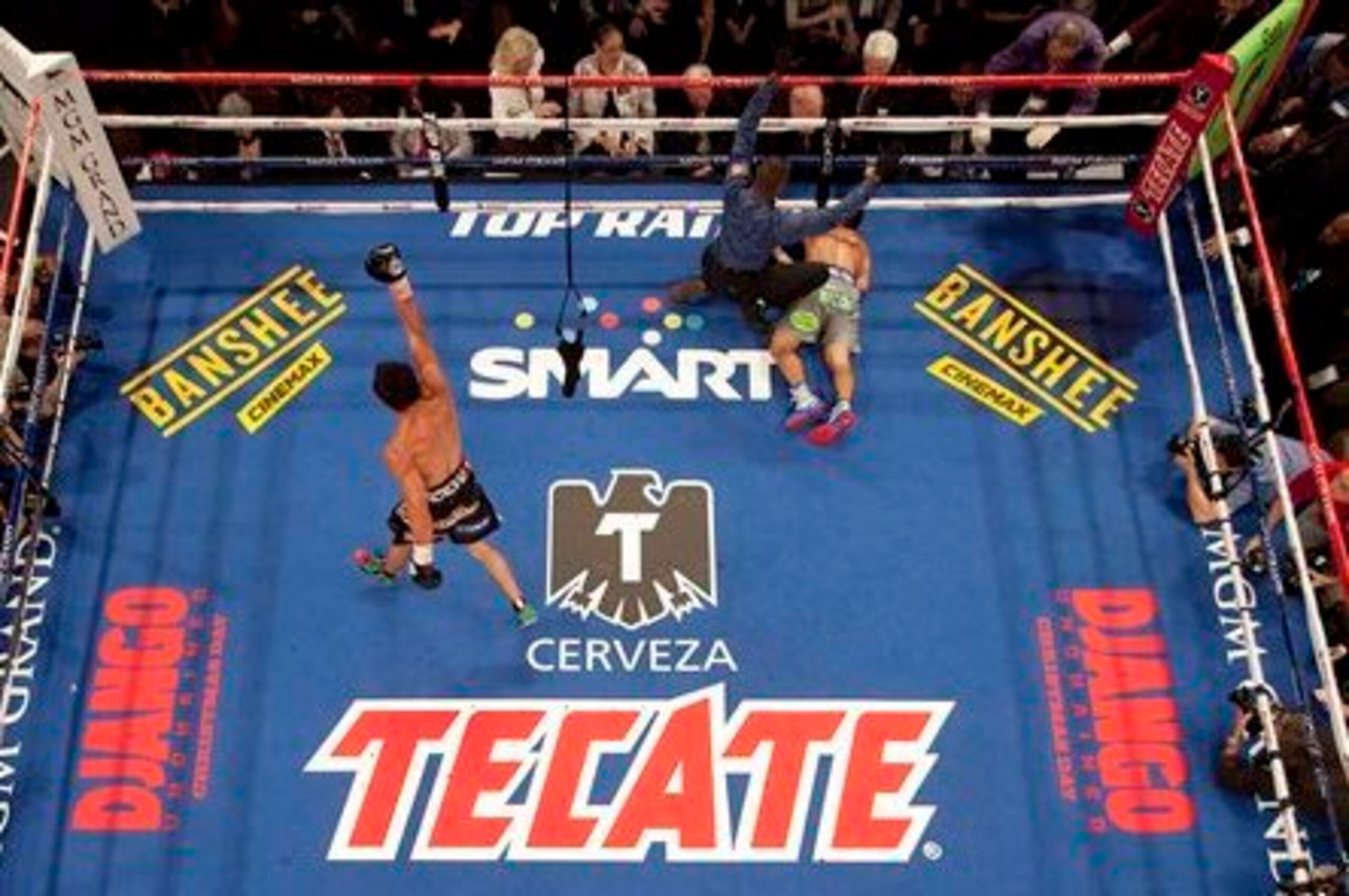
The image of a prone, lifeless Pacquiao after Marquez knocked him out in 2012—a fight in which Pacquiao had landed more blows and at a higher rate, per CompuBox—is likely still fresh in the minds of many boxing fans. This ignominious defeat came in a welterweight bout with Pacquiao at 147 pounds, per BoxRec.com (Marquez was 143 pounds).
Marquez won that match with a truly thunderous right hook, one Pacquiao might not see as much of in a lower weight class. Pacquiao's loss to Timothy Bradley, just prior to the Marquez debacle, was also in a welterweight battle. Having beaten Bradley and destroying Algieri in this division, Pacquiao could move to the lower ranks knowing that he finished things as a welterweight on his own terms.

There are also a few quality opponents for Pacquiao to face at the lower ranks and keep raking in money. Jessie Vargas, who beat Antonio DeMarco on the Pacquiao-Algieri undercard, is one such boxer. He wasn't able to dominate DeMarco on Saturday, but he did demonstrate an improvement in his ability to slip through his opponents' defenses and connect with uppercuts.
The undefeated Vargas (26-0-0, 9 KOs) was quick to call out Pacquiao after his decision win over DeMarco, per Songalia:
Vargas still doesn't have the Q rating to create much fanfare, but he's still a quality opponent and a young fighter capable of testing Pacquiao, especially if the former improves his power punching under the tutelage of Roy Jones Jr.
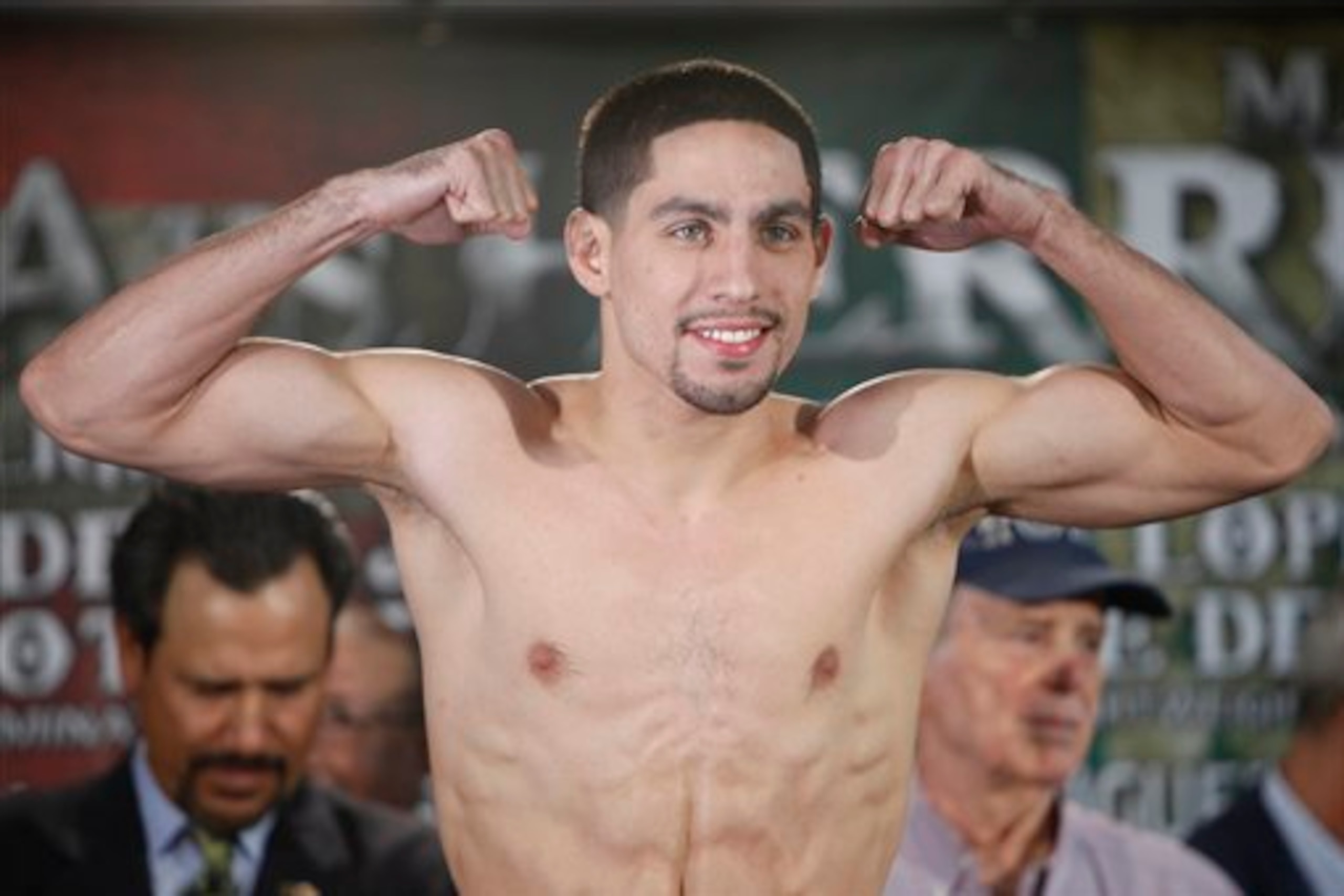
Another interesting opponent would be Danny Garcia, whom Bleacher Report's own Lyle Fitzsimmons noted has done plenty to deserve a high-profile bout:
"No fighter at 140 pounds has done more over the last handful of years than Garcia, who's racked up a pair of sanctioning body title belts while beating big names like Amir Khan, Lucas Matthysse and Erik Morales.
He rode sidesaddle on Mayweather's pay-per-view show with Canelo Alvarez last year and handled the spotlight well, and he's got a talkative father who'd no doubt love to get the full-on complement of 24/7 microphones that'd presumably accompany an HBO broadcast with the Filipino.
"
There are also, of course, the likes of Lucas Martin Matthysee, Adrien Broner and Ruslan Provodnikov as potential high-profile bouts at the light welterweight level.
Pacquiao's best asset in the Algieri fight was his speed, something that can be preserved if he moves to a lower weight class. MMA journalist David Kano noticed the 35-year-old prizefighter wasn't at his swiftest against Algieri:
He still has a decent bit of power to go along with his agility, but it's the combination of the two that makes him such a dangerous fighter. Pacquiao isn't likely to ever completely ditch his aggressive, brawler mentality. In order for the world's toughest congressman to score a few more victories before he hangs up the gloves, his best assets should be maintained at all costs.
So yes, a move to a lower division would preserve and perhaps prolong Pacquiao's career—a loss to a scrub of an opponent, should one get booked, could bring up whispers of retirement—but it likely wouldn't be in the best interest of fans. They would miss out on any chance at a Mayweather fight, or even a potential fifth meeting against Marquez.
Pacquiao is one of the best pound-for-pound fighters in the world, and even though it makes sense for his career to shave a few, it might not be the best thing for the sport.
.jpg?w=2560 "Top NFL Trade Targets")