

Most college basketball teams have only played about 15 percent of the games on their 2014-15 schedule, but that's the perfect time to go searching for head-turning stats that put players on the national radar.
Few things about numbers are more fun than extrapolating small sample sizes. Using current college basketball stats to predict future events is roughly the equivalent of looking at an NFL quarterback's stats after Week 2, multiplying by eight and calling it a season.
We all know it's stupid, but we all do it anyway.
There won't be any extrapolating here, though. We're merely pointing out statistics that make you feel like you need to check the game log to make sure they're accurate.
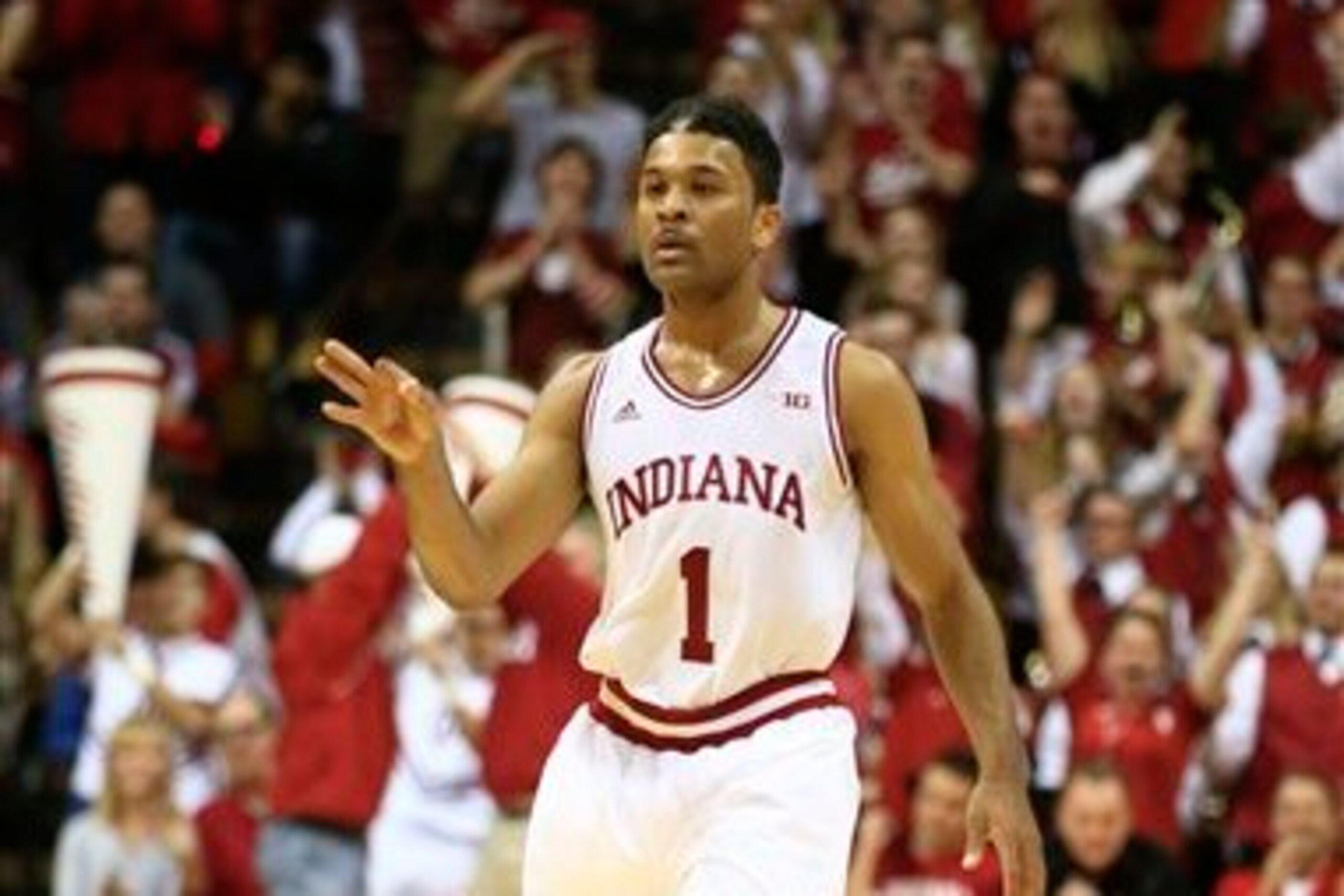
We found numbers like Indiana's James Blackmon Jr. shooting 64.3 percent from three-point range and averaging better than 20 points per game—making him the highest-scoring freshman in the nation. Through the end of play on Monday, he was the only player in the country shooting at least 58 percent from behind the arc while attempting at least 25 triples.
And his start to the season isn't anywhere near as ridiculous as some of the ones listed here.
Shannon Scott's Assists
1 of 10
Shannon Scott's assists per game: 13.7
Shannon Scott had been a solid secondary point guard for the Buckeyes over the past three seasons, but who knew they had the second coming of Chris Paul backing up Aaron Craft?
Through three games, Scott has 41 assists. He has at least 11 dimes in each game and has set a new career high for assists in three consecutive games, culminating in Sunday's 16-assist game against Sacred Heart.
The Buckeyes haven't exactly been playing the best teams in the country, but they are averaging 91 points per game and shooting 60.8 percent from the field. Through the end of play on Monday night, that was a full 3.0 percent better than any other team in the country.
All summer we worried about Ohio State's offense. The Buckeyes lost the three leading scorers from a 2013-14 team that had already struggled to put the ball in the hoop. We had faith in D'Angelo Russell but noted that he might need to score 25 points per game for Ohio State to finish above .500.
As it turns out, though, the Buckeyes have plenty of scorers. They just needed someone to distribute the ball.
Scott is also a terrific defender. He's averaging 2.3 steals per game in addition to running an incredibly efficient offense. Were it not for Frank Kaminsky's start to the season, Scott would be the early favorite for Big Ten Player of the Year.
Illinois' Scoring
2 of 10
Illinois' points per game: 97.5
Let's make one thing perfectly clear up front: Illinois has not faced a challenge yet this season. The Illini have played four homes games against teams ranked outside the top 200, according to KenPom.com (subscription required).
Let's make one other thing clear, too: Illinois had one of the worst offenses in the country last year. Northwestern took the cake at 59.5 points per game, but the Illini had the second-lowest scoring offense in the Big Ten at 64.2 points.
Through four games, though, they have increased their scoring average by 52 percent to 97.5 points.
Transfers Aaron Cosby and Ahmad Starks have combined to score 25.6 points on average. Freshman forward Leron Black has been good for 10.5 points in just 17.5 minutes per game—thanks in part to three personal fouls per game. Sophomore guard Malcolm Hill has scored at least 11 points in each game after reaching that mark only once last season.
Kendrick Nunn (9.8 PPG) might be the best player on the roster, and he's currently sixth on the team in scoring.
Most ridiculous of all, Rayvonte Rice is shooting 69.2 percent (9-of-13) from three-point range. In each of his first three seasons, he shot below 30.0 percent from beyond the arc. Heck, he only had three individual games last season in which he shot better than 50.0 percent from three-point range.
The Illini will eventually come back to earth as the competition improves, but how much? This has been a great defensive team for a long time running, but it has been more than a decade since the Illini averaged better than 71.0 points per game in a season. If they can keep their scoring average in the 70s, they should make the tournament.
Cinmeon Bowers' Double-Doubles
3 of 10
Cinmeon Bowers' scoring and rebounding: 16.5 PPG, 14.3 RPG
You might not know the name Cinmeon Bowers yet, but you will.
Bowers spent his first two years at Chipola College before being rated as the No. 1 player in this year's class of JUCO players by 247Sports.
JUCO players don't get anywhere near the hype of top freshmen, but recent greats like Delon Wright, Cleanthony Early, Marshall Henderson, Chris Jones and Deandre Mathieu all came from junior college, so Bowers' hot start to the season may well be much more than smoke and mirrors.
Through four games, Bowers has four double-doubles. In two of those games, he had at least 15 points and 15 rebounds.
Auburn had an absolutely awful showing against Tulsa on Monday night, losing by a score of 53-35. However, Bowers had 17 points and 15 rebounds and had already recorded a double-double 38 seconds into the second half.
The Tigers have a lot of work to do. Even with Bowers manning the post, they have a minus-six rebounding margin. K.C. Ross-Miller has more turnovers than made field goals. Antoine Mason has missed the last three games with an ankle sprain.
We weren't expecting flawless November execution from a team built heavily on the backs of new transfers, but Bowers should help make up for a lot of wrongs in the long run.
(One other double-double machine: Stony Brook's Jameel Warney. The Seawolves' 6'8" wrecking ball has opened the season with five straight double-doubles, averaging 16.0 points and 13.6 rebounds. That's not nearly as surprising as Bowers, though, as Warney averaged 14.5 points and 8.0 rebounds last year.)

Briante Weber's Steals
4 of 10
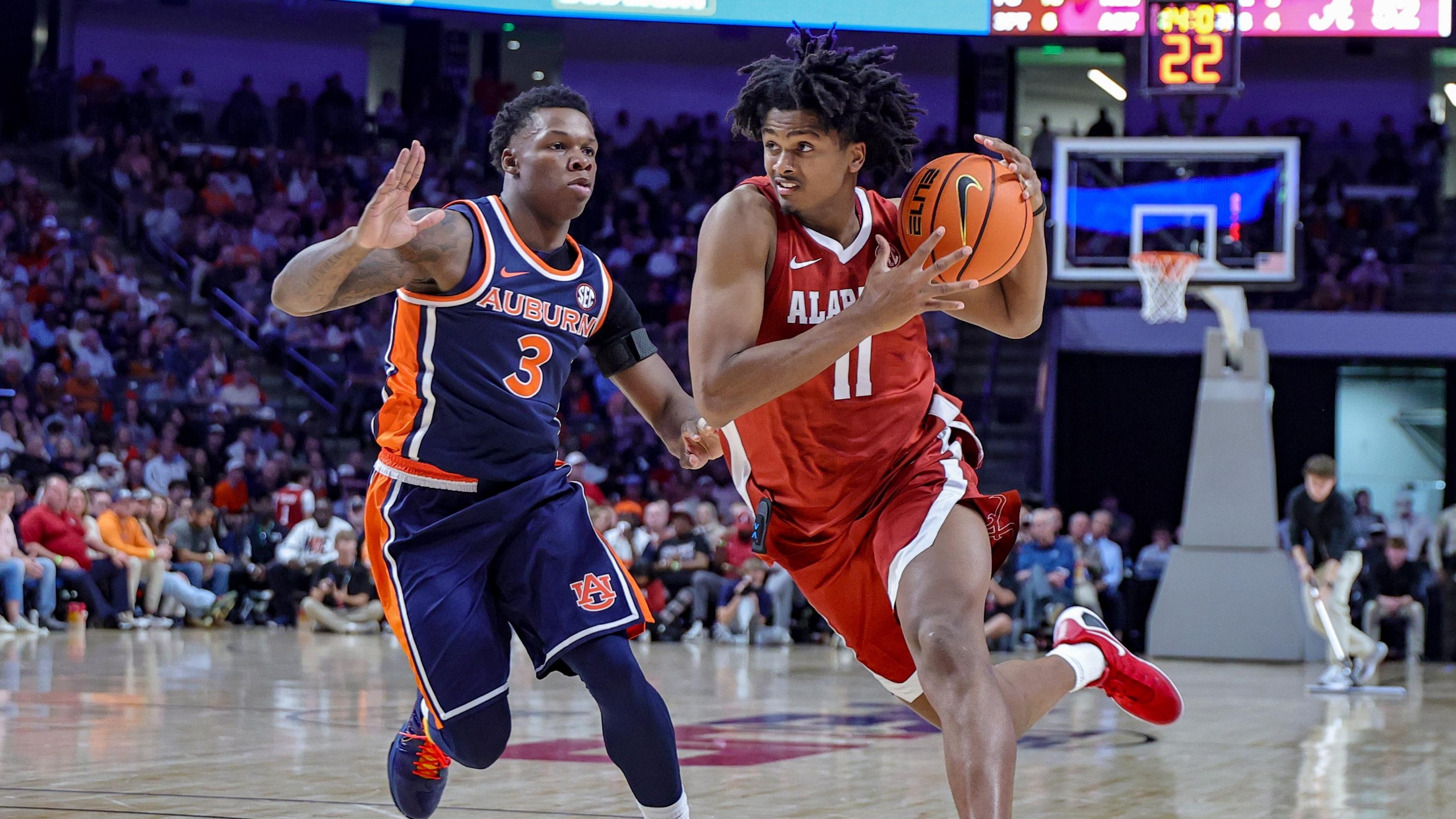
Briante Weber's steals: 6.7 per 40 minutes
Several times this summer, I wrote about Briante Weber being possibly the greatest on-ball defender in college basketball history.
In his first game of the year, he promptly came out and recorded nine steals against a Toledo team that averaged just 10.2 turnovers per game last season.
After the game, Toledo's head coach Tod Kowalczyk said of Weber, "He's an absolute game-changer. If he's not the best defensive player in this country, I want to see who is."
Weber is averaging 4.3 steals per game, but that isn't helped by the fact that he played just 11 minutes in a blowout win over Maryland-Eastern Shore. Per 40 minutes, though, he's averaging 6.7 steals.
To put that number in perspective, Weber had 26 more steals than any other player last season while averaging "only" 4.8 steals per 40 minutes. He's on pace for a pretty ridiculous number of pilfers.
He's more than just a defensive wizard, too. Weber darn near had a quadruple-double in that win over Toledo and is averaging 17.3 points, 9.4 assists and 7.5 rebounds per 40 minutes.
James Blackmon Jr.'s Shooting
5 of 10
James Blackmon Jr.'s three-point percentage: 64.3
We have already fallen hopelessly in love with a lot of freshmen.
Karl-Anthony Towns has been a block machine for Kentucky. Myles Turner has been an incredible asset for Texas. Stanley Johnson might lead Arizona in scoring this year. Duke's three starting freshmen could all be All-Americans.
There are so many great freshmen on great teams that possibly the best freshman in the country is being overlooked.
James Blackmon Jr. is averaging 20.2 points per game for the Indiana Hoosiers—he was at 22.8 PPG before the surprising loss to Eastern Washington on Monday night.
Blackmon is shooting 64.3 percent from three-point range and 92.0 percent from the free-throw line. His best game came against the best competition, as Blackmon went for 26 points and seven rebounds in Indiana's upset of SMU.
This isn't one of those early scoring averages that are likely to fade throughout the season, either. Indiana has little choice but to rely on Blackmon and Yogi Ferrell to shoulder the scoring load. The shooting percentages will inevitably return to earth, but don't be surprised if Blackmon is the highest-scoring freshman in the country at the end of the year.
West Virginia's Offensive Rebounding
6 of 10
West Virginia's offensive rebounds per game: 21.6
We can probably all agree that Kentucky is the standard bearer for offensive rebounds. The Wildcats were one of the best in the country at grabbing their own misses last season, and they are right back there at the top of that category again this year. Through five games, Big Blue Nation is corralling 16.8 offensive rebounds per game.
West Virginia is nearly 30 percent better at 21.6 offensive rebounds per game.
Opportunities have a lot to do with that. Kentucky is missing just 33.6 shots per game, while West Virginia is missing 41.6. There are also missed free throws to account for, but West Virginia is grabbing just less than 50 percent of possible offensive rebounds.
The November-defining win over Connecticut was actually the worst rebounding effort by the Mountaineers. They had just 13 offensive rebounds as opposed to 24 defensive rebounds for the Huskies. In every other game, though, they have at least 19 offensive rebounds, including 30 in the season opener against Monmouth.
To an extent, it's a backhanded compliment. Grabbing the most offensive rebounds is like picking off the most runners in baseball, killing the most penalties in hockey or forcing the most red-zone field goals in football. The best teams don't find themselves in those situations as often as the mediocre teams do.
But even though the Mountaineers are shooting 39.2 percent from the field, they're 5-0. It must be reassuring to know that Juwan Staten doesn't need to make every shot he takes for West Virginia to win games.
Marcus Marshall's Shooting
7 of 10
Marcus Marshall's three-point percentage: 72.2
As great as James Blackmon Jr. has been for Indiana, he isn't the best shooter in the country.
At the moment, that honor goes to Missouri State's Marcus Marshall.
The best thing about Marshall is that his worst game came in Missouri State's game against D-II Avila College.
How often do we look through a high scorer's game log and see a couple of 38-point games against D-II competition? That isn't the case with Marshall. He played just 16 minutes against Avila and had a season-low 13 points.
Against D-I competition (Eastern Illinois and Texas Tech), Marshall has averaged 32.5 points per game while hitting 11 of 15 three-pointers.
Marshall hasn't exactly appeared out of left field, either. He scored in double figures in 10 of his 11 healthy games last season after averaging 11.5 points per game two years ago as a freshman.
Keep an eye on Missouri State's box scores this weekend in the Great Alaska Shootout. The Bears open with a very good Colorado State team before a second-round game against either Pacific or Alaska-Anchorage that could produce a 40-point game for Marshall.
Bryce Alford's Sophomore Season
8 of 10
Bryce Alford's points and assists: 20.0 PPG, 9.8 APG
UCLA lost an awful lot this offseason. Kyle Anderson, Jordan Adams and Zach LaVine all left early for the NBA. David Wear and Travis Wear graduated. The Bruins even lost new players when freshman Jonah Bolden was ruled ineligible for the entire year and Colorado State transfer Jon Octeus was denied admission.
Even iconic programs suffer setbacks, and certainly no one would have blamed UCLA if it had gotten out to a slow start.
Instead, the Bruins are 4-0 and enter the Battle 4 Atlantis averaging 95.3 points per game because of sophomore combo guard Bryce Alford.
Norman Powell actually leads the team in scoring at 21.3 points per game, but Alford is nearly averaging a double-double with 20.0 points and 9.8 assists. In last week's rout of Nicholls State, Alford had 28 points and 13 assists. He hit six of 11 three-pointers to pace UCLA to a 107-74 win.
There were signs last year that a breakout season could be coming for Alford. In a game against Oregon in which Anderson and Adams were suspended, Alford had 31 points and six assists. Despite being nothing close to the team's first option on offense, Alford scored in double figures in 10 games as a freshman.
Still, it's pretty incredible what he's accomplished so far.
The game already will have occurred by the time you read this, but Wednesday afternoon's battle between Alford and Oklahoma's Buddy Hield could be one of the most entertaining pairings of the season.
Robert Upshaw's Blocks
9 of 10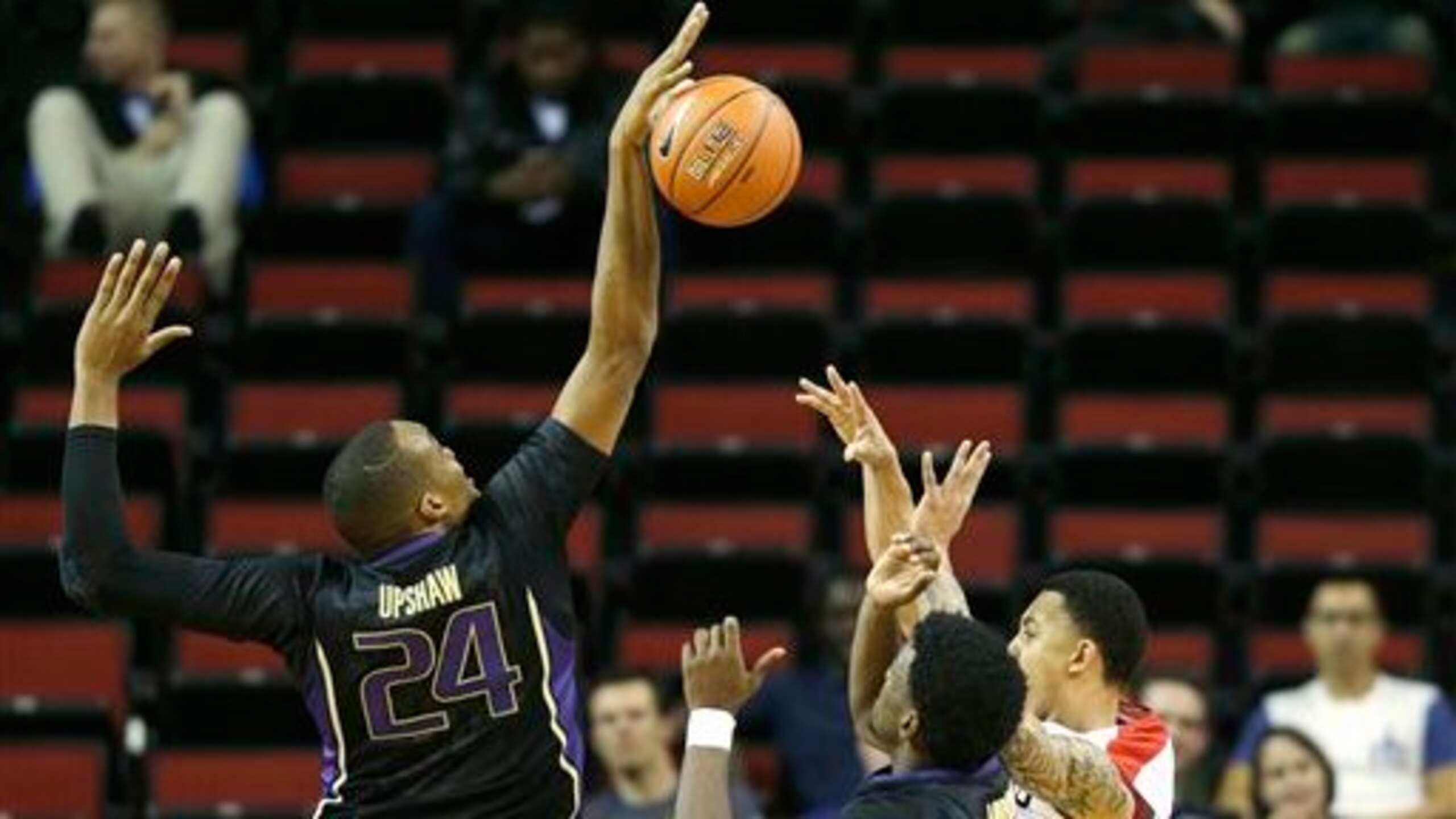
Robert Upshaw's blocks per 40 minutes: 8.9
Last year, the Washington Huskies averaged a pithy 2.9 blocks per game. C.J. Wilcox stood just 6'5", but he was the only player to average at least one block per game, posting 32 rejections in 32 games.
Help was on the way, though.
Robert Upshaw transferred from Fresno State and signed with Washington in September 2013. He was required to sit out last season, but he averaged 4.3 blocks per 40 minutes as a freshman with the Bulldogs in 2012-13.
Already this year with Washington, the 7'0" Upshaw has a block rate twice as high as he did with Fresno State, averaging 8.9 blocks per 40 minutes. Aside from McNeese State's Austin Lewis—who has 18 of his 20 blocks against D-II programs—that's the highest per-40 rate in the country.
Upshaw was useless in Washington's most recent game against Pacific, playing just eight minutes before fouling out. He had two points and no blocks.
In his first two games of the season, though, he had 23 points, 13 rebounds, 10 blocked shots and no fouls.
Which Upshaw shows up for the rest of the season?
If Washington can regularly get the version of Upshaw that protects the rim without foolishly fouling out of games, these Huskies might be every bit as good as the Connecticut Huskies will be if they get similar production out of Amida Brimah.
Eastern Kentucky's Turnover Ratio
10 of 10
Eastern Kentucky's turnover ratio: plus-24.7 per game
Try as I might, I don't have all 351 D-I schedules committed to memory.
However, I'm willing to say with utmost certainty that Eastern Kentucky has played the weakest schedule in the entire country. The Colonels opened the season at home against a Savannah State team that just scored 26 points in a game against Louisville. They have since played two D-II teams.
Even game No. 4 on Wednesday night will be a joke, as they play Southern Utah fresh off a 2-27 season.
Still, their turnover margin is just plain silly.
Entering play on Tuesday, West Virginia and Eastern Kentucky were the only teams in the country forcing at least 10.0 more turnovers per game than they committed.
In five games, the Mountaineers have a total turnover margin of 50 (10.0 per game).
In three games, the Colonels have a total turnover margin of 74 (24.7 per game).
Each of Eastern Kentucky's three opponents committed at least 32 turnovers with the total count standing at 101. The Colonels have 53 steals and only 27 turnovers.
Obviously, a lot of that is due to the schedule, but Eastern Kentucky has been one of the best teams at forcing turnovers in recent years. According to KenPom.com, the Colonels ranked third in the nation in defensive turnover percentage last season and sixth two seasons ago.
They're well on their way to a first-place finish this season thanks to some shrewd scheduling.
Statistics on the following slides current through end of play on Tuesday, November 25 and courtesy of ESPN.com, Sports-Reference.com and NCAA.com.
Kerry Miller covers college basketball for Bleacher Report. You can follow him on Twitter @kerrancejames.


.jpg?w=2560 "Reported Details of Seahawks-K9 Split ⛓️💥")