We don't see every star college basketball player coming. None of us. Every season features a few names that transcend their expected footnote status to become primary subjects in the story of that year.
Early on in the 2014-15 season, we can already note a few potential surprises. Whether surrounded by more renowned teammates or simply on teams that weren't getting a lot of discussion nationally, these players—presented alphabetically—weren't supposed to be major parts of the national conversation.
They now look like they could be key pieces on teams that show signs of life. Learn their names now, because you might need to know them later.
Zach Auguste, Notre Dame
1 of 10
Notre Dame has had a series of superb power forwards in its recent past. Names like Troy Murphy, Luke Harangody and Jack Cooley have contributed to solid seasons for the Fighting Irish over the past 15 years.
Now it's Zach Auguste's turn.
The 6'10" junior is second on the team in both scoring (16.3 points per game) and rebounding (6.2 RPG), while shooting a superb 71.7 percent from the field. He's spent a great deal of time above the rim, slamming home 14 dunks over ND's first five games.
Just as important to his scoring output, Auguste has made himself a stronger foul shooter than the yips-ridden 53 percent shooter of his first two seasons. This year, he's up to 71 percent, thanks to a much steadier diet of attempts.
Auguste is playing with radically increased confidence this season, setting career-high scoring marks in each of his first three games and recording his second career double-double in the fourth. If he continues to play this powerfully in ACC action, the Irish have a tremendous chance to emerge from a crowded middle of the conference and reach the NCAA tournament.
Dillon Brooks, Oregon
2 of 10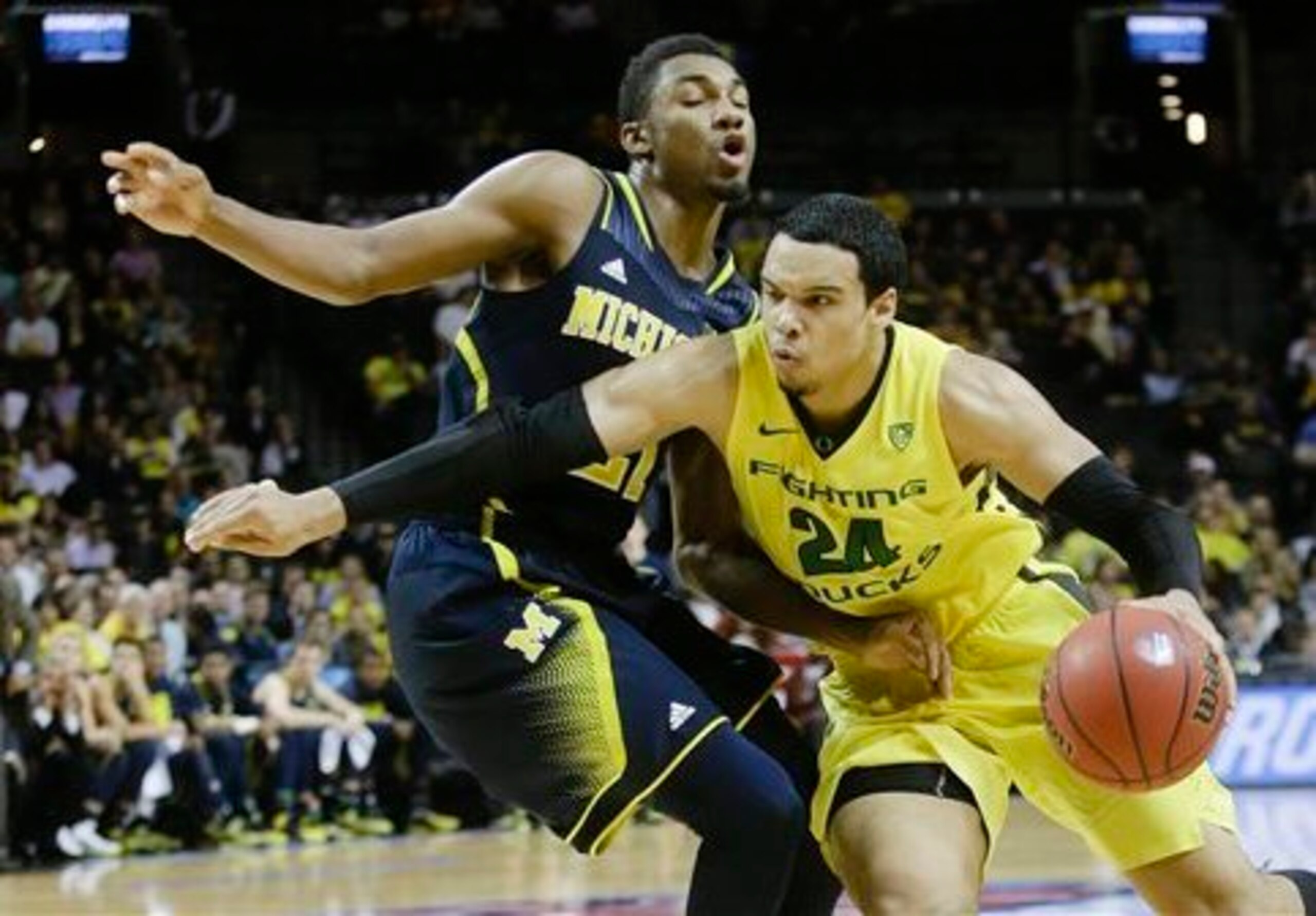
With only three contributors back from last season's team, Oregon coach Dana Altman knew he'd have to rely extensively on freshmen and junior-college transfers to compete in the Pac-12. The Ducks are expected to struggle, but young players such Canadian freshman Dillon Brooks are getting valuable experience in the process.
Brooks has scored 10 or more points in all of his first five games, producing a combined 29 points, 10 rebounds and five assists in Oregon's losses to Michigan and VCU at the Progressive Legends Classic in Brooklyn.
Perhaps most importantly, Brooks has helped buoy the Oregon perimeter attack, while star guard Joseph Young has struggled in the early going. Brooks' nine three-pointers are second on the team to Young's 13, but Brooks has hit 45 percent of his attempts compared to Young making approximately 30 percent.
Oregon probably isn't deep enough to consistently thrive in Pac-12 action, but Altman is proving that he can stitch together several new pieces into a competent lineup. Expect Brooks to continue playing well while defenses are forced to respect Young's explosive potential.
Isaac Haas, Purdue
3 of 10
Purdue's 7'0", 260-pound center A.J. Hammons is an impressively large land-based mammal. His backup, 7'2", 297-pound freshman Isaac Haas, makes him look like a small forward. And if Hammons isn't careful, Haas will also start making him look like a walk-on by taking his minutes away.
Through Purdue's first six games, Haas has outdone Hammons in nearly every way, but the Boilermakers' excursion to the Maui Invitational has truly driven home the point.
Over the three games in Hawaii, Hammons played only 48 minutes due to foul trouble, allowing Haas to outscore him 37-30 and outrebound him 16-12. Haas' true shooting percentage was a robust 70.1 percent to Hammons' still-solid 59.1. Keeping the pair rotating will keep opponents swooning, as long as Hammons can avoid personal-space violations better than he did in Maui.
Where Haas has quickly become a crowd favorite is in his attitude. He's a more aggressive fighter than Hammons on the glass and has no problem with diving on the floor to retrieve loose balls, a throwback to hustling Boilermakers like Brian Cardinal. It's been a long time, though, since Purdue had a mastodon with Haas' dimensions, and it may never have had one with his blend of size and game.

Malcolm Hill, Illinois
4 of 10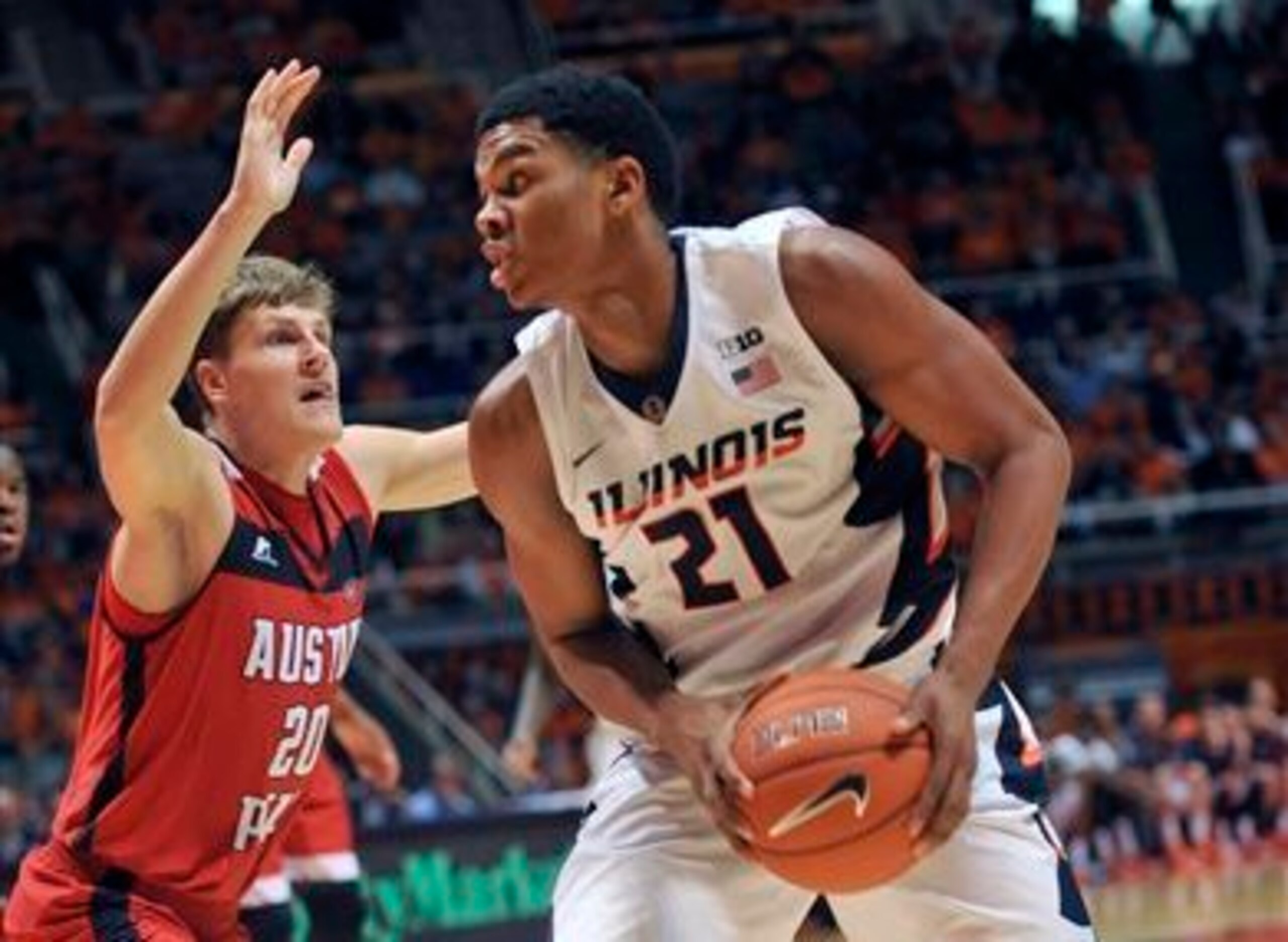
After a miserable start to last season's Big Ten slate, Illinois hit a minor groove when then-freshmen Malcolm Hill and Kendrick Nunn were added to the starting lineup. Through five games this year, the roll has continued, and Hill is a major reason why.
The 6'6", 230-pound forward has no qualms with chasing contact, getting himself to the foul line 32 times to 37 field-goal attempts. He's second on the team in both scoring and rebounding, and he's among Ken Pomeroy's top 50 nationwide in offensive-rebounding percentage (subscription required).
Hill, along with freshman Leron Black, has helped the Illini remain solid in the paint, while senior center Nnanna Egwu tries to find a rhythm in the offense and on the glass.
Of course, Illinois' schedule thus far has been Charmin-soft, but battles with Baylor, Miami (FL), Villanova and potentially Memphis still loom as legitimate tests. If Hill shows out strongly against those frontcourts, he'll put himself and Illinois firmly on the national radar.
Jonathan Holton, West Virginia
5 of 10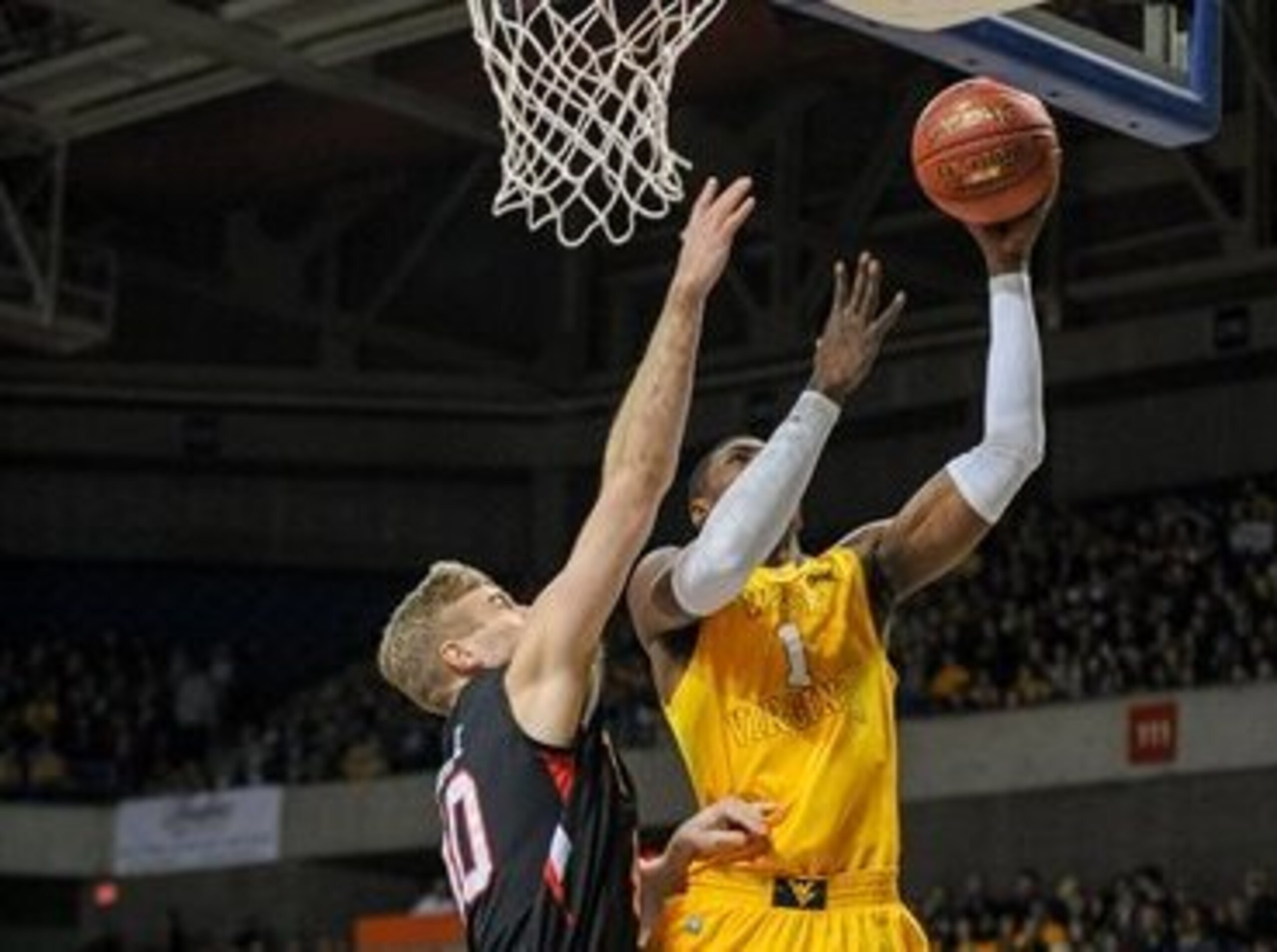
We're not yet sure if West Virginia is one of the 25 best teams in the nation, but the Mountaineers have leaped into most top 25 rankings during their 6-0 start. All-American candidate Juwan Staten has played his expected lead role, but supporting players such as Jonathan Holton will ultimately determine how big a competitor WVU can be, both in the Big 12 and nationally.
Holton has hit the ground running in his first six games at West Virginia, affecting games on both ends with his length and quickness. He led the Mountaineers in scoring in back-to-back games, adding 15 rebounds in the first, a home win over Lafayette. Holton also swatted four shots in an impressive 103-72 win over VMI.
The former Rhode Island Ram has found a comfort zone after pressing in his debut against Monmouth, a game in which he managed only two points on 1-of-9 shooting. Since then, he's shot 58.3 percent from the floor, while leading the team in blocks and sitting second in steals.
Between Staten, Holton and sophomore rebounding machine Devin Williams, WVU has a solid Big Three that may propel it to a surprising top-half Big 12 finish.
ShawnDre' Jones, Richmond
6 of 10
Speedy 5'10" guard ShawnDre' Jones played a major role late last season when Richmond lost primary point guard Cedrick Lindsay. With Lindsay out of eligibility, Jones is expected to maintain his pivotal importance in the Spiders' lineup.
Through the first four games, Jones has a team-leading 16 assists against only one turnover. Both of Richmond's losses have been games Jones would like to have back, with foul trouble haunting him against Old Dominion and his shot not falling against NC State.
Actually, Jones' shooting has been a bugaboo for the entire season so far, with the guy who shot 38.2 percent from deep as a freshman struggling to make 30 percent during UR's 2-2 start. Once the shots start to drop, Jones and senior Kendall Anthony (himself only 5'8") will form the most dangerous pound-for-pound backcourt in America.
Hassan Martin, Rhode Island
7 of 10
If you think that Rhode Island beating Nebraska was an upset, you obviously live within 100 miles of Lincoln or work for Athlon Sports. (Seriously? No. 11?)
While sophomore E.C. Matthews justifiably draws the attention, his classmate Hassan Martin is the muscle behind the hustle. Martin produced eight points, 12 rebounds and four blocks before fouling out in the win over the Huskers. Considering the competition, that's more impressive than his 39 points and 16 rebounds in wins over Pace and UMass-Lowell.
The next step for Martin will be to acquit himself better against the truly elite competition such as Kansas. He and the rest of the Rams (senior Gilvydas Biruta excepted) struggled against the Jayhawks at the Orlando Classic.
Martin will continue to assert himself as one of the Atlantic 10's best rim protectors after he led the league with 2.5 swats per game last year. If his scoring comes around more consistently, don't be surprised to see URI earn a single-digit seed in the NCAA tournament.
Dwayne Polee II, San Diego State
8 of 10
The San Diego State Aztecs still can't score. (Sorry, Aztec fan, but it's true. The team needed 10 extra minutes to break 70 against BYU.)
Senior guard Dwayne Polee was supposed to help with that problem this year after a hot finish to 2013-14. So far, it hasn't come about, as Polee's effective field-goal percentage is a mere 38.5 percent so far. But defense is what wins the Aztecs games, and Polee is enforcing his will on that end.
Polee has ripped 14 steals during SDSU's first six games, helping to mitigate his ugly shooting. A good 10-point first half against Arizona was followed by a second with only one shot attempt, leading to a two-point loss in the Maui Invitational championship game.
Steve Fisher is one of college basketball's best motivators, and he'll find a way to shake Polee out of his slump. Once that happens, State may manage to break 60 more than once out of every two games and will certainly impose its will on the rest of the Mountain West.
Mike Young, Pittsburgh
9 of 10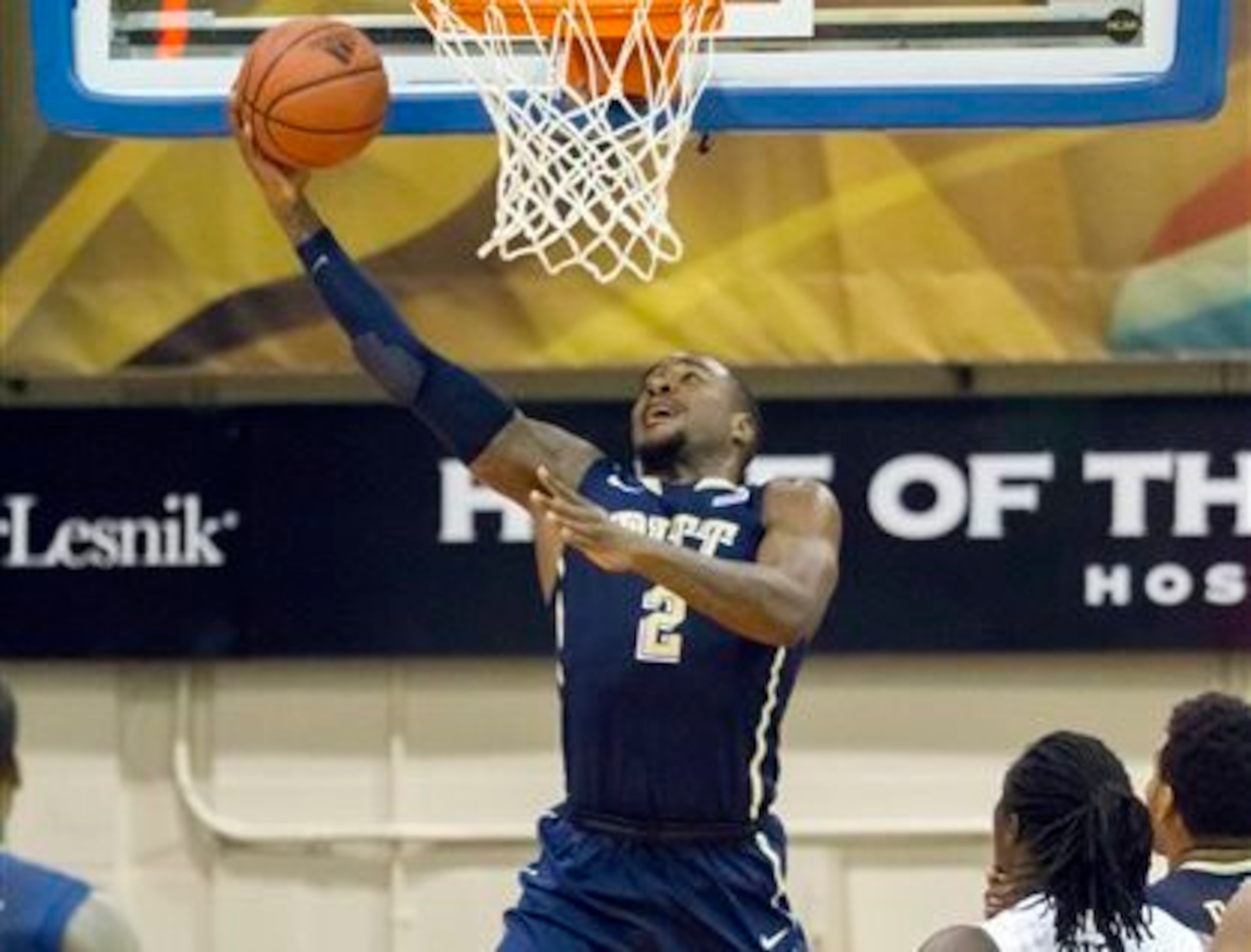
As a freshman, Mike Young was inconsistent at best. Occasional solid scoring nights—though Young never scored more than 13 points—were interspersed with two-point, two-rebound disappearing acts. A lingering back injury contributed to his struggles, but the offseason brought time for Young to heal and improve his body.
He knew as much as anyone that much more was needed from him as a sophomore if Pitt was going to return to the NCAA tournament.
Young's produced more this year, but there are still questions to answer. His two best games have come against Samford and Chaminade. San Diego State held him to eight points, and a bounce-back effort in the Maui Invitational third-place game produced 13 points and seven rebounds in a resounding win over Kansas State.
Young leads the Panthers in scoring and rebounding (14.7 points, 8.3 rebounds), but leave out Samford and Chaminade and those averages drop to 10.3 and 7.5. The potential is there for Young to become a dominant player in the ACC, but he has to show he can produce against ACC competition. SDSU and K-State are much closer to that level than Samford and Chaminade.
Isaiah Zierden, Creighton
10 of 10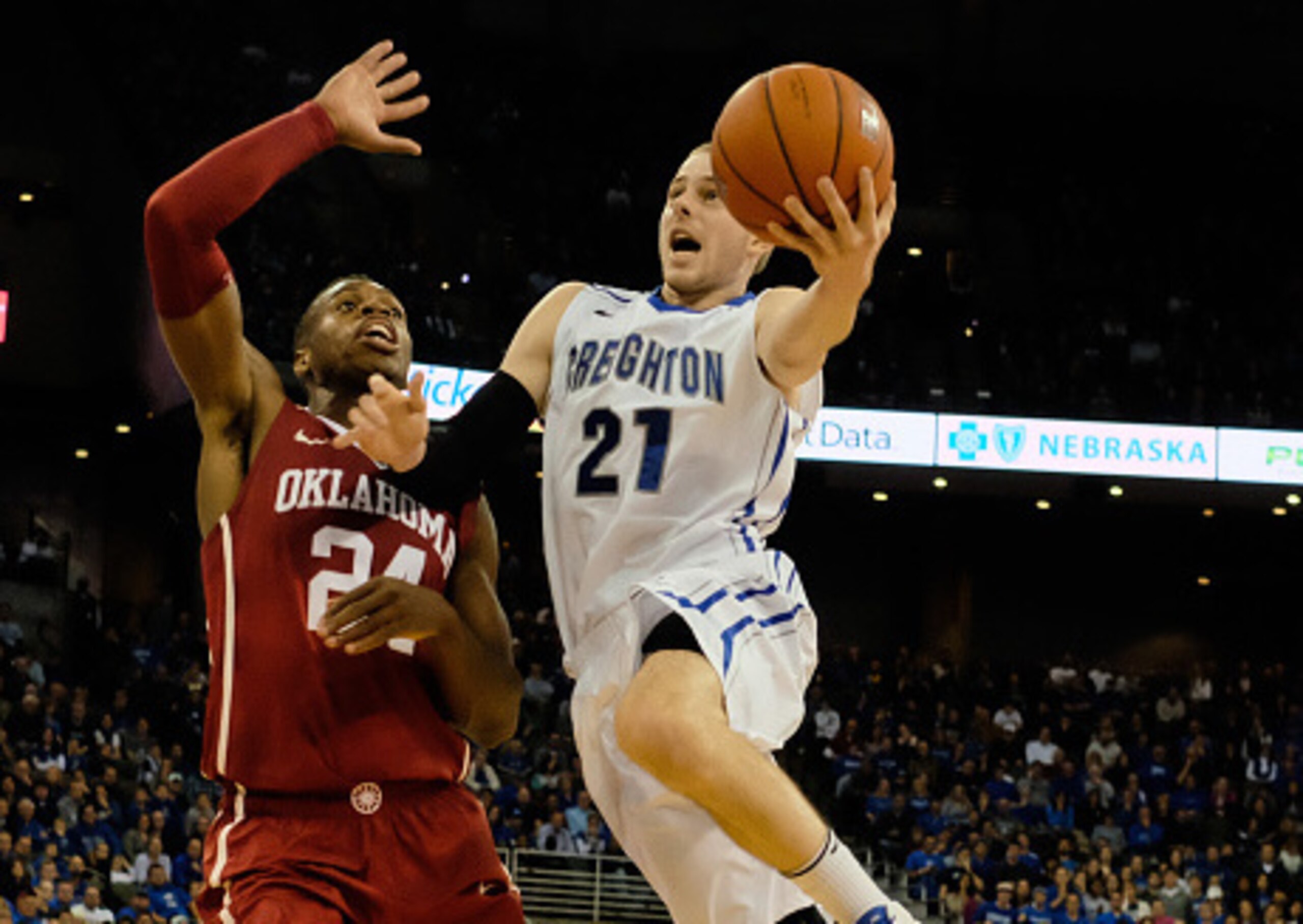
The three-point shot defined Creighton basketball last season. When bombs from the hands of players such as Ethan Wragge and Doug McDermott were falling—see both meetings with eventual Big East champion Villanova—the Bluejays were hard to stop. When they didn't—see the NCAA tournament loss to Baylor—Creighton bowed out meekly.
More of the same may be the case this year, and sophomore Isaiah Zierden has stepped forward to lead the bomb squad early. Zierden has stroked 19 three-pointers in Creighton's first six games and also leads the team at 14.5 points per game. Hardly a McBuckets pace, but he has certainly produced when called upon.
Unlike one-dimensional perimeter threats such as Wragge or Jahenns Manigat, Zierden has also shown the ability to find the charity stripe. He's already put up 20 free-throw attempts in 156 minutes. Manigat took that many in 993 minutes last year. Wragge didn't reach 20 FTAs until Feb. 9 of last season.
The Jays still don't have a dominant big man, so raining threes will still be their key to victory. As long as Zierden keeps connecting on his long-distance efforts, Creighton can still have a puncher's chance in the Big East.