2014-15 NBA Rookies Who Are Already Making Us Rewrite Their Scouting Reports
The 2014-15 NBA season is still young, but it's time to rethink and rewrite the scouting reports of some top rookies.
For the most part, the league's crop of newcomers has been disappointing and injury-riddled. It's fallen short of lofty expectations thus far. Among the letdowns and unimpressive stats, however, are some promising transformations that call for updated repertoires.
Throughout the months prior to the draft and the predraft process, scouts and media form opinions and draw conclusions about how prospects will translate to the Association. Sometimes all it takes is a handful of regular-season games on the big stage to realize players have changed parts of their game (for better or worse) or added new skills.
Some players aren't as dangerous in certain aspects as we thought. Others are more efficient than we anticipated. And some have added new skills to bring a new dimension to the table.
What is different about Jabari Parker's game? How has K.J. McDaniels managed to outperform many peers drafted ahead of him? What areas have Andrew Wiggins and Aaron Gordon transformed?
It's time to get out the red pen and white-out as we revise these youngsters' scouting reports.
Jabari Parker, Milwaukee Bucks F
1 of 6
2014-15 Stats: 29.1 MPG, 10.6 PPG, 5.6 RPG, 42% FG, 23% 3FG, 10.8 PER
Change(s) to Scouting Report: Extra burst
The production isn't there yet for Milwaukee Bucks rookie Jabari Parker. The star-type impact and dominance aren't there yet. He's not carrying the squad offensively and he's having trouble shooting efficiently, especially from the perimeter.
Regardless of his underwhelming start, there has been a bright spot in his playing style and physical tools: explosiveness.
His burst isn't at the level of Andrew Wiggins or Zach LaVine, but he's noticeably quicker and bouncier than he was during the predraft process, and probably more than any other point in his life.
During summer league, his sluggishness and lack of pop was a bit unnerving. B/R's Jonathan Wasserman did a great breakdown showing the different ways Parker's slow-footedness hindered his productivity.
As the preseason concluded and the regular season commenced, Parker has looked like a much different athlete. He's turning the corner on drives, elevating easily without a running start and accelerating in the open floor. These clips against the Detroit Pistons are prime evidence.
I'm not the only one who's noticed the distinct change:
- "Jabari Parker looks so much faster than he did in Summer League," noted ESPN's Ethan Strauss.
- "(His) speed for his size pops off the screen even at the NBA level," added Nate Duncan of Basketball Insiders. "Hard to imagine he doesn't become a great scorer someday."
Best of luck to all challengers once he finds his scoring rhythm.
Andrew Wiggins, Minnesota Timberwolves SG/SF
2 of 6
2014-15 Stats: 26.9 MPG, 10.6 PPG, 3.3 RPG, 46% FG, 56% 3FG, 10.0 PER
Change(s) to Scouting Report: Improved/Legitimate outside shooting
Although Andrew Wiggins wasn't necessarily considered a poor shooter during the draft process, he was regarded as a streaky, unreliable resource who would struggle early in his pro career.
After all, he shot an underwhelming 34 percent from the college three-point line in 2013-14, and he hit just 34 percent of his two-point jumpers, per Hoop-Math.com.
Leading up to draft night, an NBA scout simply told ESPN's Ryen Russillo, "don't trust his shot."
Fast forward to his opening stretch for the Minnesota Timberwolves, and he's shooting confidently and cleanly on mid-range attempts and NBA-range triples. He's connected on 56 percent of his attempts from beyond the arc over a small sample size, and his mid-range shot chart is pretty thus far.
Wiggins elevates so high and so quickly on jumpers that he seldom worries about getting blocked—or even bothered—by defenders. He's hitting a respectable 41 percent of his pull-up tosses, and he's sinking 50 percent of all catch-and-shoot tries.
He'll undoubtedly cool off from three-point land, but his overall outside shooting display warrants a revised scouting report.
K.J. McDaniels, Philadelphia 76ers SF
3 of 6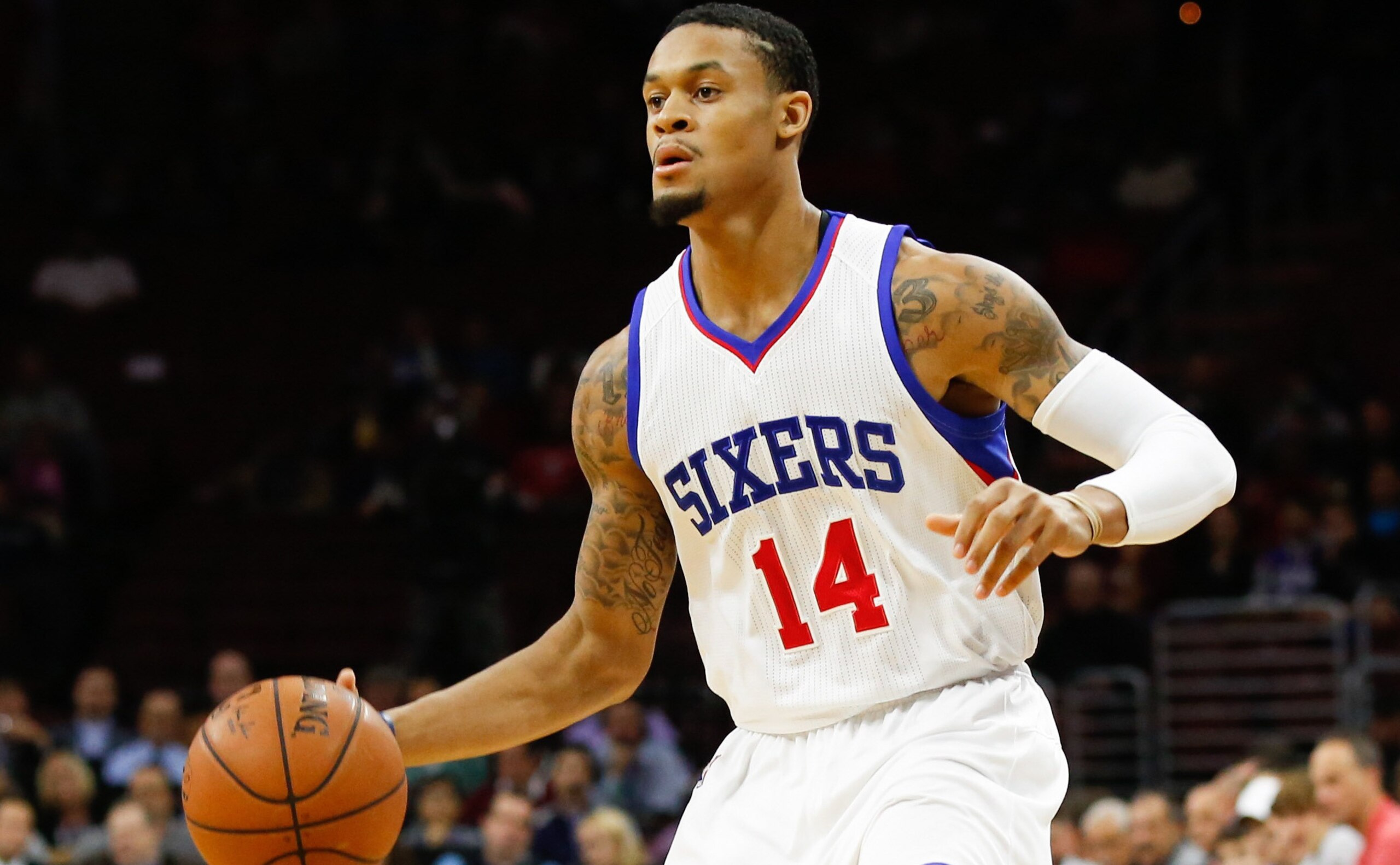
2014-15 Stats: 23.1 MPG, 8.5 PPG, 2.7 RPG, 1.4 BPG, 44% FG, 35% 3FG
Change(s) to Scouting Report: Offensive tools/Outside shooting
Everyone who watched K.J. McDaniels at Clemson knew he'd be a rangy, athletic defender who could play above the rim and block shots.
His offense was much more of a question mark, which caused him to fall into the second round of the draft. The 6'6" small forward was considered an unpolished scoring threat who couldn't shoot or consistently generate buckets. In his third year of college hoops, he shot just 30 percent from three-point land.
In Philadelphia, his acrobatic finishes and shot-blocking skills are garnering a lot of attention, but the most pleasant surprise for the 76ers is his outside shooting and intermittent creativity.
Not only is he confidently airing it out from NBA range, McDaniels has been more effective than he was from the NCAA stripe. Prior to an off night at San Antonio, the youngster was shooting 40 percent from deep.
A sizable chunk of McDaniels' offense still comes from lobs and put-backs, but he's shown the ability to create separation off the bounce. It's led to unexpected scoring chances and some dimes for teammates, including a four-assist outing against Chicago.
McDaniels' college exploits earned late-first-round projections, and ultimately, he landed in the early second round. As the season unfolds, however, he's looking more talented and impactful than several lottery picks.

Aaron Gordon, Orlando Magic PF
4 of 6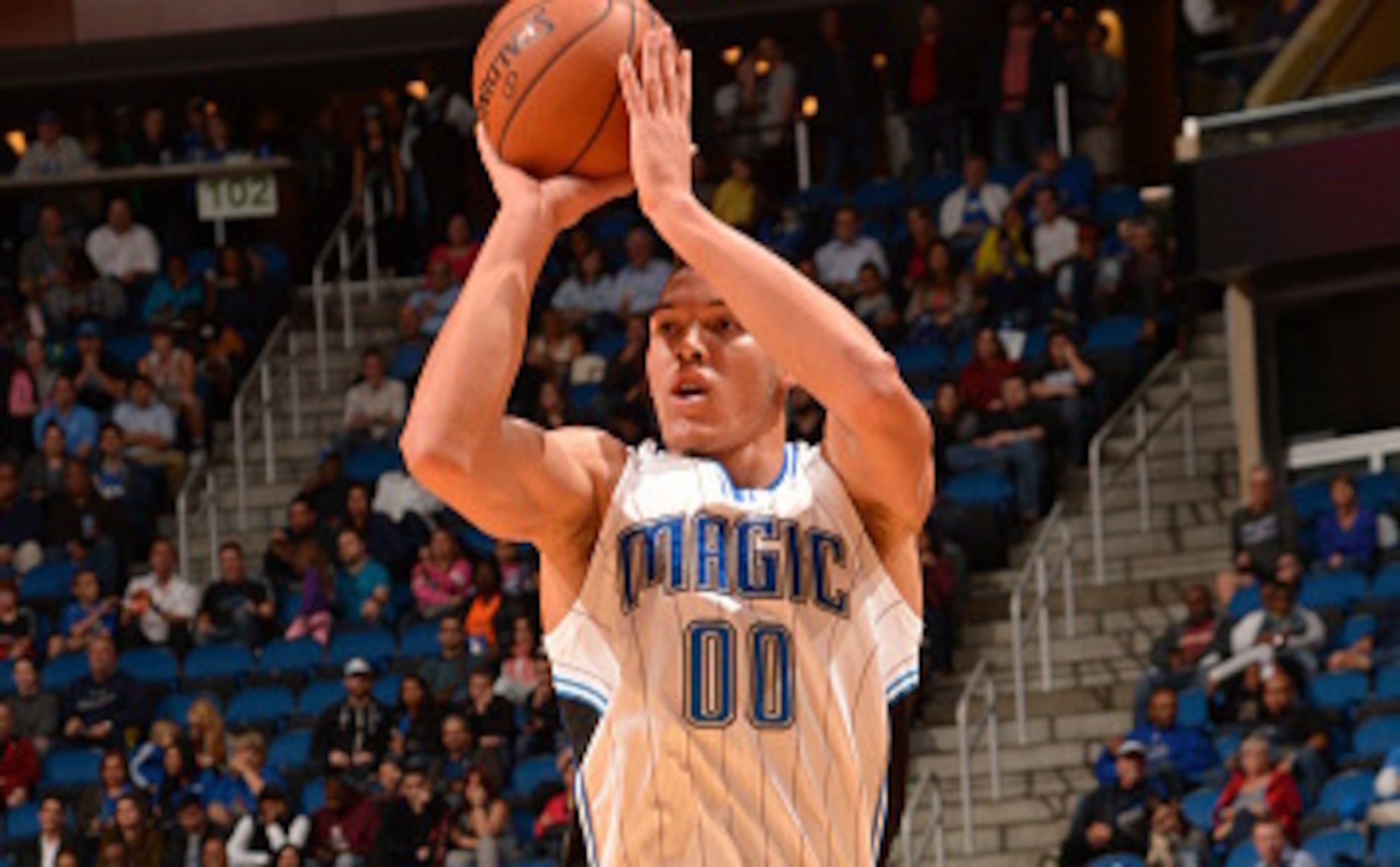
2014-15 Stats: 15.0 MPG, 5.8 PPG, 3.0 RPG, 58% FG, 50% 3FG, 15.3 PER
Change(s) to Scouting Report: Offensive polish and shooting
Much like K.J. McDaniels, Aaron Gordon entered the NBA with high expectations defensively and was raw on offense. Despite his recent fractured foot that will sideline him indefinitely, his first few games showed that we'll have to rewrite his offensive scouting report
There's not one colossally dominant skill that jumped out at us during his pre-injury outings with the Orlando Magic. He was just a notch smoother and better in each little facet of offense.
Gordon sets up his drives and finishes more fluidly than he did in the spring, and his jump shot is noticeably improved.
He exhibits a more streamlined and fundamentally sound delivery, and the results are encouraging: 50 percent on three-pointers, 67 percent on free throws (compared to 42 percent at Arizona) and 62 percent effective field-goal percentage on jumpers (according to 82games.com).
Sam Vecenie of CBS Sports explained how the upgraded shooting changes Gordon's approach to the game:
"Last season, Gordon's shot threatened to derail what was often a stellar campaign at Arizona because of its effect on his confidence. It seemed like sometimes he would decide not to attack the defense becuase he was afraid of getting fouled and going to the free throw line, where he shot 42 percent. This season, Gordon has totally refigured his shot, getting much more arc on it than he ever did with the Wildcats. It's paying dividends
"
Now that he knows he can complement his forays to the rim with outside shooting and decent free-throw conversion, he can attack more dynamically. His all-around improved ball skills are quickly transforming him into a different asset than the raw prospect Orlando gambled on in June.
Dante Exum, Utah Jazz G
5 of 6
2014-15 Stats: 18.9 MPG, 5.5 PPG, 2.5 APG, 43% FG, 31% 3FG, 10.7 PER
Change(s) to Scouting Report: Infrequent drives/slashing
When it comes to long-term scouting reports and projections, Utah Jazz guard Dante Exum has the wherewithal to match everyone's expectations. He possesses the tools and mentality to become an extremely versatile weapon.
His early career playing style is a bit different than we anticipated, however.
In high school and international play, he was an overwhelmingly successful slasher who often weaved through defenses. This knack for attacking the rim to score or dish was viewed as one of his most translatable traits. Through the first few weeks, we haven't seen him drive eagerly or dynamically often.
"Dante's really tentative right now to go to the basket," said Jazz radio play-by-play man David Locke. "I would like to see him start driving and going to the basket...There are still huge holes in his game."
He's made just 21 drives to the tin so far this season, resulting in 15 points*. The majority of his activity thus far is passing from the perimeter, shooting spot-up jumpers or deferring to his teammates.
Just because his tendencies are different doesn't mean he's having a disappointing season. Exum makes great reads and superb passes in Quin Snyder's offense, rarely takes an ill-advised shot and supplies versatile defense. Once he sprinkles in a few more aggressive drives per quarter, he'll be a formidable playmaker.
*As of Nov. 17.
Zach LaVine, Minnesota Timberwolves G
6 of 6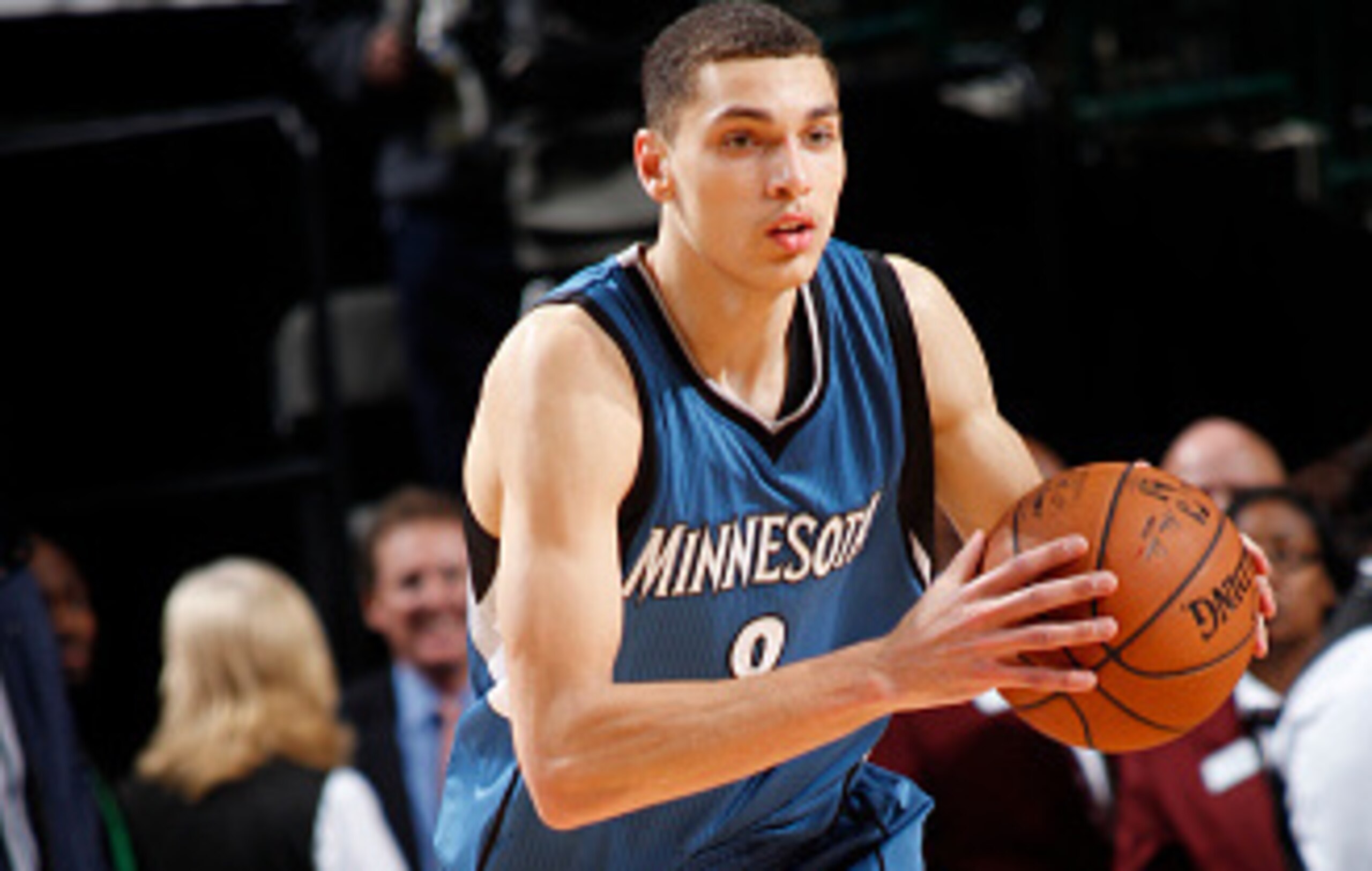
2014-15 Stats: 20.5 MPG, 5.7 PPG, 2.7 APG, 35% FG, 13% 3FG, 5.1 PER
Change(s) to Scouting Report: Point guard experience
Zach LaVine's scouting report is changing by necessity.
By the end of Ricky Rubio's ankle-induced absence, he will have a bunch of on-the-job point guard training under his belt. He'll own new skills and a heightened grasp of the Minnesota Timberwolves offense.
He's having a roller-coaster rookie year so far, and he's struggling like most of us thought he would. The high-flying prodigy is an unrefined, inexperienced specimen.
But despite LaVine's woeful shooting, questionable decision-making and inconsistent facilitating, he's evolving. The youngster is tackling his new role with moxie, and amid the mixed results there are some noticeable developments.
He's averaging a modest 4.7 assists per 36 minutes; however, his assist percentage is 19.5, which is a good number for a score-first type of player. LaVine can dish the rock effectively when afforded opportunities (and when he's not busy hoisting ill-advised jumpers). He's making a lot of turnovers as well (3.8 per 36 minutes), but that's part of the learning process which will empower him.
"What (LaVine) does bring you is he brings you great pace in the game," coach Flip Saunders told Zach Harper of CBS Sports. "As he gets more comfortable being able to give you pace and maybe become a decision-maker, his minutes might get extended."
Due to Rubio's injury, LaVine's role is much bigger and different than anyone expected. His increased versatility as a combo guard is something his teammates and opponents must keep in mind, even after Rubio returns to the helm.
All statistics gathered from NBA.com unless otherwise noted and are accurate as of Nov. 17.
Follow Dan O'Brien on Twitter for more NBA and NBA draft coverage: @DanielO_BR
.jpg?w=2560 "Every Trade's Best Trade Asset 🔁")
.jpg?w=2560 "Insiders: Cowboys Overpaid for Porter")
.jpg?w=2560 "Top NFL Trade Targets")