
The Signature Move for College Basketball's Top Stars in 2014-15
The best players in college basketball are considered as such for many reasons including their skill level, effort, drive and dedication—and the kind of moves they can break out at a moment's notice.
Just being able to hit a shot, grab a rebound or make a pass isn't what makes them so highly regarded. It's being able to do these things at a high level, often in a way that few others can.
And all of college basketball's top stars have particular moves that stands out, what you might call signature moves. It's what got them to this point and what's likely to get them to the next level as professionals.
Willie Cauley-Stein, Kentucky
1 of 10The Move: The swat
On Kentucky's crowded roster of superstar talent, each player needs to have something he does as well (or better) than the rest in order to stand out. For junior forward Willie Cauley-Stein, that's being able to protect the rim like a mamma bird guarding her chicks in the nest.
The 7'0" Cauley-Stein made a name for himself as a freshman by blocking 2.1 shots per game. He upped that to 4.0 per contest last season, sending away 12.3 percent of opposing field-goal attempts when he was on the floor.
And this season, with the Wildcats employing a platoon system that will severely limit his time on the court, Cauley-Stein continues to make the blocked shot his go-to move. In two games this weekend, he blocked five shots in 49 minutes of action.
Jerian Grant, Notre Dame
2 of 10The Move: The pull-up jumper
As one of the most prolific scorers Notre Dame has had in recent memory, Jerian Grant is able to get his points in a variety of manners. But none seem to be as hard to defend as his ability to stop his momentum on a dime and pull up for a clean jump shot.
At 6'5", he's able to rise up above most defenders to give himself a built-in advantage, but the quickness with which he gets into a shooting motion just adds to it. Throw in that he's a great driver, and defenders are forced to guard him closely, which he exploits often for the pull-up.
When Grant was lost to an academic suspension last December, the loss of his skills crushed Notre Dame's season. His return this year gives the Fighting Irish raised expectations, and so far he's done his part by averaging 15.5 points along with 5.5 rebounds and 7.5 assists per game.
He's only 3-of-13 on three-pointers to this point, but as the season goes on look for the jumper to start to click more.
Montrezl Harrell, Louisville
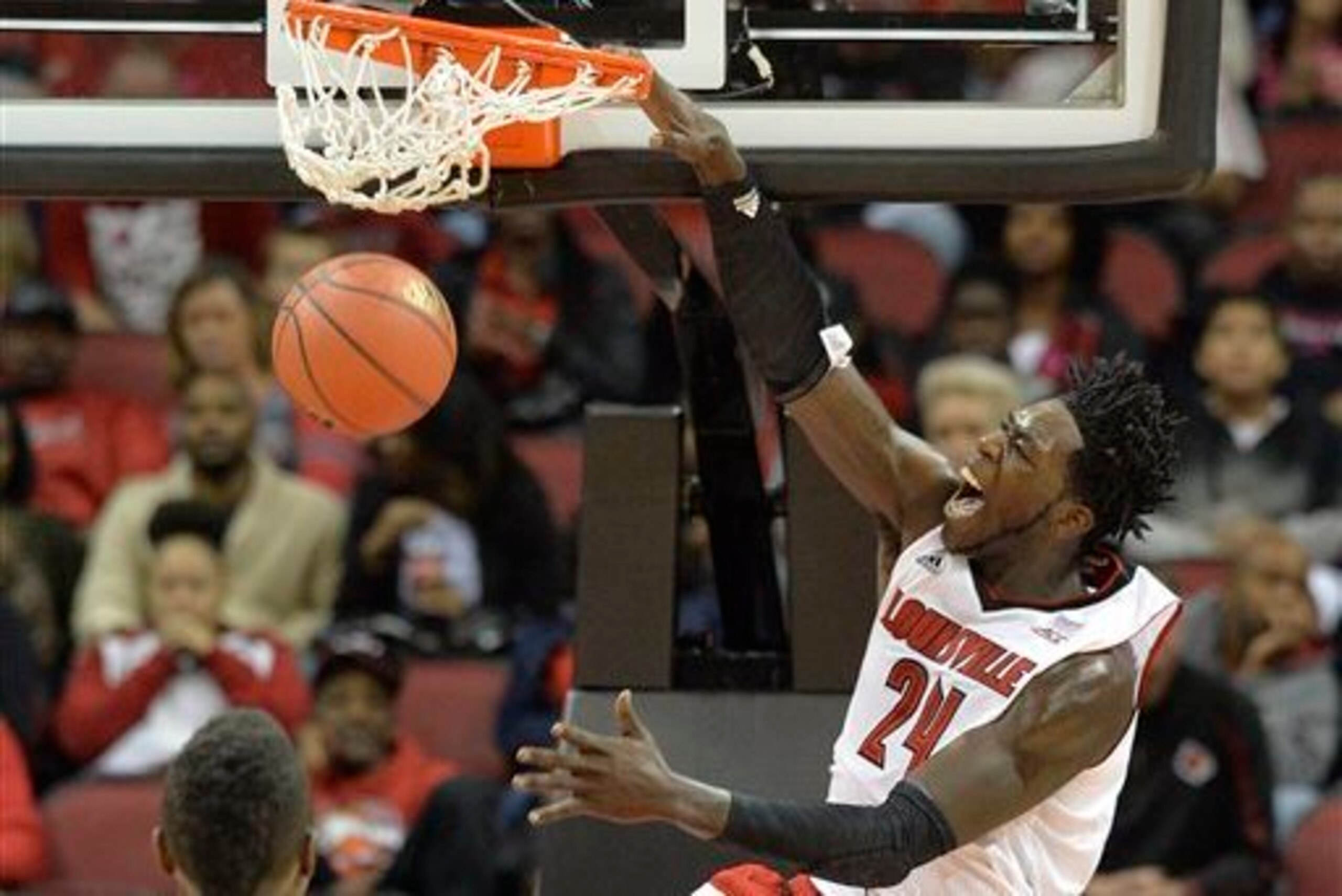
3 of 10The Move: Monster dunks
Sweat soaked the converted airplane hangar in Puerto Rico for Friday night's game between Louisville and Minnesota, but Minnesota players' perspiration was due not so much to the conditions as to the prospect of dealing with Montrezl Harrell.
Harrell, who had 30 points and seven assists in the opening victory, was dominant all over the court. He owned the paint, and when given the chance to throw down he did not disappoint, as was the case throughout last season.
At 6'8" and 240 pounds, Harrell is a load to handle when he's on the floor. But when he decides to take it to the basket, a defender's best bet is to step out of the way or risk getting on the wrong end of a poster.

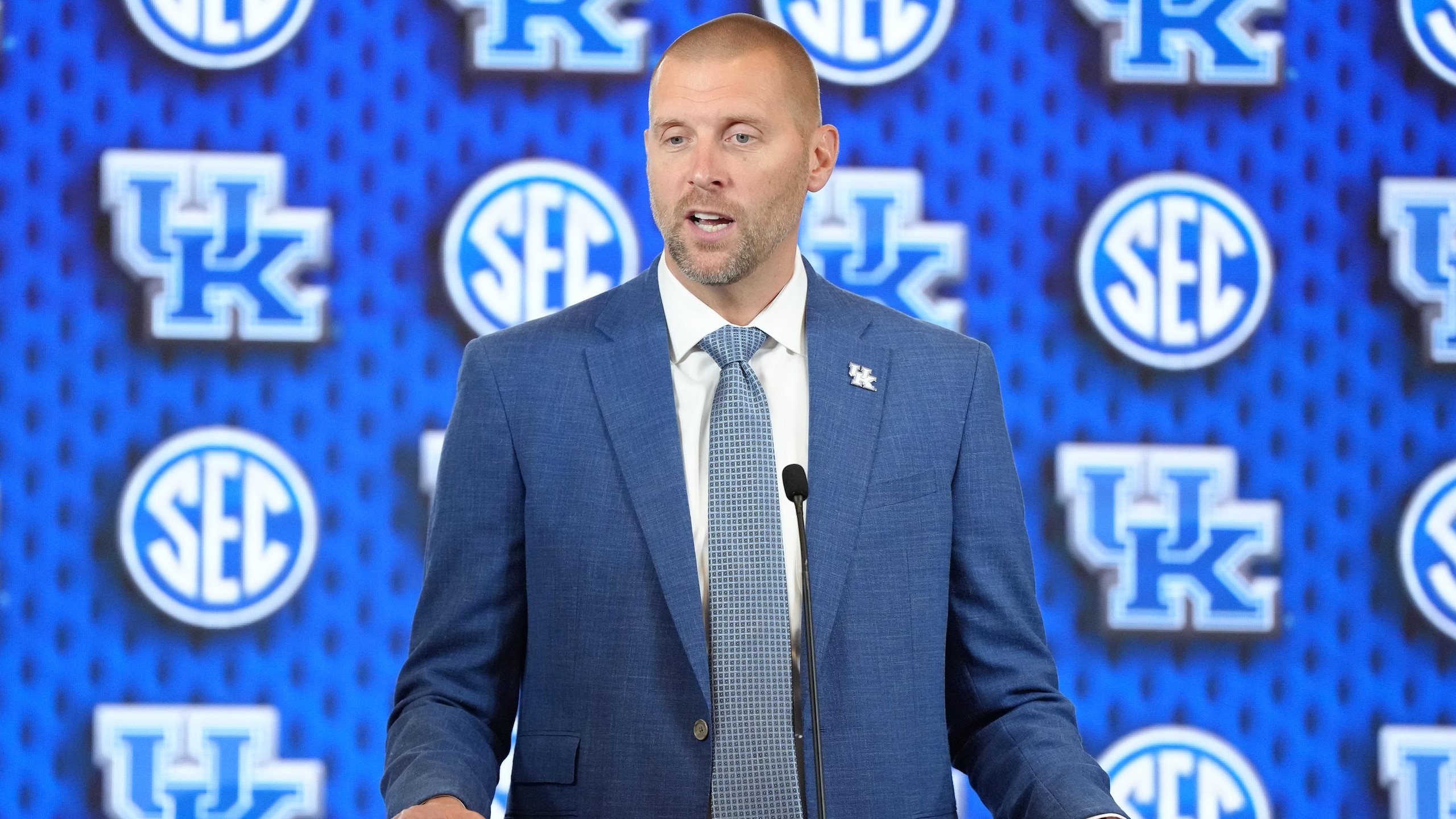
Aaron Harrison, Kentucky
4 of 10The Move: Clutch three-pointers
For the purpose of this article, our definition of a signature "move" is a bit liberal. It's more a matter of describing something players have a knack for doing well, usually better than others.
In Aaron Harrison's short college career, there's little doubt about his signature moves: a big-time shot from outside in a clutch situation.
His 35.6 three-point shooting percentage last season as a freshman won't wow you, but what will is his ability to ramp up that rate in critical moments.
And there were few more pivotal situations than in the waning moments of both the Elite Eight game against Michigan and the Final Four clash with Wisconsin. Both required Kentucky to hit a big shot in the final moments, and both times it was Harrison who came through.
Against Michigan, the game-winning three with 2.3 seconds left was the fourth he made in the final eight minutes. To beat Wisconsin with 5.7 seconds left, he attempted (and made) his only outside shot of the game.
Frank Kaminsky, Wisconsin
5 of 10The Move: The pick-and-pop
The modern day 7-footer can't just be a back-to-the-basket guy who sets up camp in the vicinity of the paint and spends all his time waiting for feeds from teammates. In today's game, he's got to be able to shoot, and the further from the basket the better.
This is something that Wisconsin's Frank Kaminsky does better than any big man in college and was a big part of his breakout junior year in 2013-14. Of particular value is his ability to convert the pick-and-pop play by rolling off a screen and then hitting a wide-open jumper from various places on the court.
Kaminsky made these shots seemingly in every game, especially down the stretch as the Badgers made their first Final Four appearance since 2000.
Georges Niang, Iowa State
6 of 10The Move: The baby hook
One of the most difficult guys to guard in college thanks to his versatility, Georges Niang can score from anywhere on the floor. He'll drive it, pull up or bang around inside, handling each scenario by using his 6'8", 230-pound frame to make it look effortless.
In no way is he more natural-looking then when he puts up a baby hook in the paint, something that just seems impossible to stop.
Niang used all manner of scoring techniques to average 16.7 points per game last season, as well as to drop 30 in Iowa State's opener on Friday night. The hook is the one thing that couldn't be replaced by anyone else on the team, as was noticeable during the 2014 NCAA tournament when his foot injury knocked him out of action.
Jahlil Okafor, Duke
7 of 10The Move: The spin
As mentioned in the intro, signature moves are often what helped get these players to this point in their careers.
Jahlil Okafor's (likely) short college tenure has just started, but from what we saw during international play this past summer and in the early games for Duke in the preseason and this weekend, he's got a spin move that is as good as any seen in the NBA.
His ability to feel the extra bit of leaning that a defender is doing to gain position and quickly turn that to his advantage by twitching off them and toward the basket is beautiful to watch. It's even more spectacular in knowing that this 6'11", 270-pound freshman (who leads the Blue Devils in scoring at 18 points per game) is only 18 years old and is only going to get better.
He won't be around long, so even for the biggest of anti-Duke basketball fans, it might be worth catching one of the Blue Devils' many nationally televised games to check out how he controls the baseline.
Marcus Paige, North Carolina
8 of 10The Move: Second-half surge
For most of the players on this list, their "signature move" involves a particular shot or, well, movement. For Marcus Paige, it's more a state of mind than any particular play, because when he gets going there are few moves he's unable to make.
And adding to his dramatics is that this most often happens in the second half. Last season, when he emerged as North Carolina's go-to player, there were many games where it seemed like he was invisible before halftime only to become the leading scorer when the final buzzer sounded.
Though not a complete list, since SB Nation's Tar Heel Blog published it in late February last season, the numbers compiled show just how much of a second-half player Paige was. He made up more than 65 percent of the Tar Heels' points in the second half of games and more than 63 percent of their scoring in the last 10 minutes of the second half.
That hasn't had to be the case yet in UNC's first two games against North Carolina Central and Robert Morris. But with the upcoming Battle 4 Atlantis tournament, tough nonconference clashes with Iowa, Kentucky and Ohio State and the ACC slate, look for this second-half surge to resurface.
Alan Williams, UCSB
9 of 10
The Move: The putback
You don't find a lot of 6'8", 265-pound guys in college who aren't on the roster of a power-conference teams. Alan Williams is one of the exceptions, and he's been playing his entire career like an exception by dominating the paint and the boards no matter who he's matched up against.
UC Santa Barbara doesn't get many chances to play big-name teams, but when it has Williams has been just as impressive as when facing teams in the low-end Big West Conference. He was one of only a handful of players to average a double-double last season at 21.5 points and 11.3 rebounds per game, and in the Gauchos' season opener he put up 22 and 13 in a loss at Kansas.
Williams scores a lot of his points off rebounds, mastering the ability to go up and get an offensive board, come down with it and quickly get back up with a quality putback. His 15.6 offensive rebound percentage was seventh-best in the country last year, and he'll probably top that in 2014-15.
Delon Wright, Utah
10 of 10The Move: Finishing at the rim
As the only player on this list whose college career began at the junior college ranks, Delon Wright needed to learn how to make himself desirable for four-year schools when it came time for him to transfer. That's why the 6'5" guard is so adept at all facets of the game, including rebounding and dishing it out while also scoring more than anyone else on Utah's team.
But where Wright really learned to make a name for himself, and where he continues to do so, is with his ability to get to the rim and finish the job. His long arms and lanky frame enable him to maneuver in ways that can't easily be guarded, which he exploits.
Last season, Wright got a significant amount of his 15.5 points per game on drives to the basket. It enabled him to shoot a stellar 56.1 percent from the field and helped make up for an outside jumper that's not very good in comparison to everything else he does.
Follow Brian J. Pedersen on Twitter at @realBJP.