
Analyzing the Key Reasons for the San Jose Sharks' Recent Slump
The San Jose Sharks got off to a 4-0-1 start to the 2014-15 NHL season. But after 18 games, they have a 9-7-2 record. That means the team has gone a mediocre 5-7-1 since its first five games.
There have been several reasons for the team's inconsistency. Here is a look at the top five reasons for the Sharks' recent mediocre play.
There are many factors involved in the team's struggles, but these are the top five.
As an honorable mention, the fact that some players are still adjusting to new roles this season—whether in a new leadership position or a new position on the ice—has to be mentioned. The fact that the leadership issue will not be settled until the playoffs and is currently unresolved kept it from making our final five factors.
Feel free to comment on any one of these reasons or to add one of your own that was not included here. As always, indicate why you feel the way you do.
5. Too Many Road Games
1 of 5
The schedule has not been kind to the Sharks in the early part of this season.
Western Conference teams often have travel issues, but 16 of the Sharks' first 21 games this season are road contests.
The usual goal of most NHL teams is to play .500 or slightly better hockey on the road and to dominate at home. Last season, for example, the Sharks were 29-7-5 at home while finishing 22-15-4 away from the Shark Tank.
This year, Team Teal's road record is a solid 7-4-2, but the change of time zones, extended time away from home and limited practice time have resulted in some uneven play.
Teams also often struggle in their first game home after a long road trip due to fatigue and the change in time zones.
The good news is that 35 of the Sharks' final 61 games will be at home. That should benefit the Sharks when the playoff race heats up down the homestretch.
4. Injury to Alex Stalock
2 of 5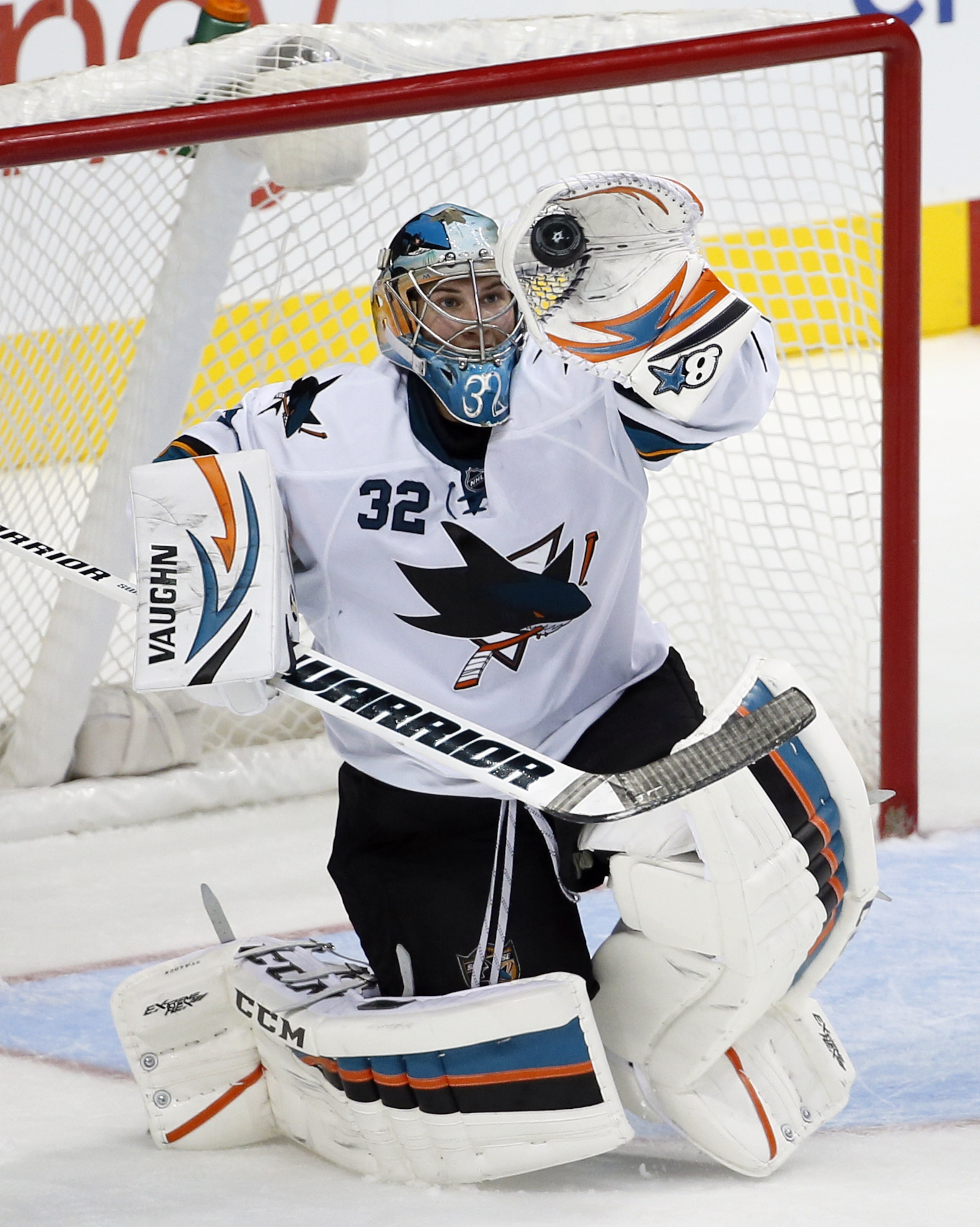
The Sharks were pleased with their depth in goal when the season started with veteran Antti Niemi and Alex Stalock competing for playing time.
Niemi won the starting job and got most of the early starts, but Stalock got hurt and had to undergo minor knee surgery.
As a result of Stalock's injury, Niemi has started eight of the last nine games. Add the extensive travel due to the road-heavy schedule, and Niemi has been a bit overworked.
His numbers have been OK but far from spectacular. His save percentage is .916 and his GAA is 2.65.
A more rested Niemi should put up better numbers and keep him fresher come the spring. For now, the Sharks have to await Stalock's return.
3. Lack of Scoring Depth
3 of 5
The Sharks struggle when they get little or no offense from their bottom-six forwards.
Throughout the season, the fourth line has been shuffled, and many players have been sent down to the AHL and then recalled after a few games.
Tomas Hertl struggled on the first line, was demoted to the fourth line and was then put back on the first line after playing a bit better.
"Tomas Hertl is on the #SJSharks first like with Thornton and Pavelski! #FantasyHockey
— Alex (@edgexalex) November 14, 2014"
Other than Tommy Wingels, who got off to a hot start, the bottom-six forwards have failed to produce much offense.
The Sharks also have to decide the type of player they want on the fourth line. John Scott is a fighter but provides little else. Adam Burish is a pest but also provides almost no offense to speak of. Mike Brown also adds some grit and takes a lot of penalties, but he cannot spark the attack.
Against the Tampa Bay Lightning, coach Todd McLellan played a fourth line of Tyler Kennedy, Tye McGinn and Andrew Desjardins. Kennedy scored the game-winning goal, and the line was a plus-one for the night.
While the top-six forwards will provide most of the scoring, more consistent production and even more scoring chances from the third and fourth lines would help the Sharks' overall record.



2. Allowing Too Many 3rd Period Goals
4 of 5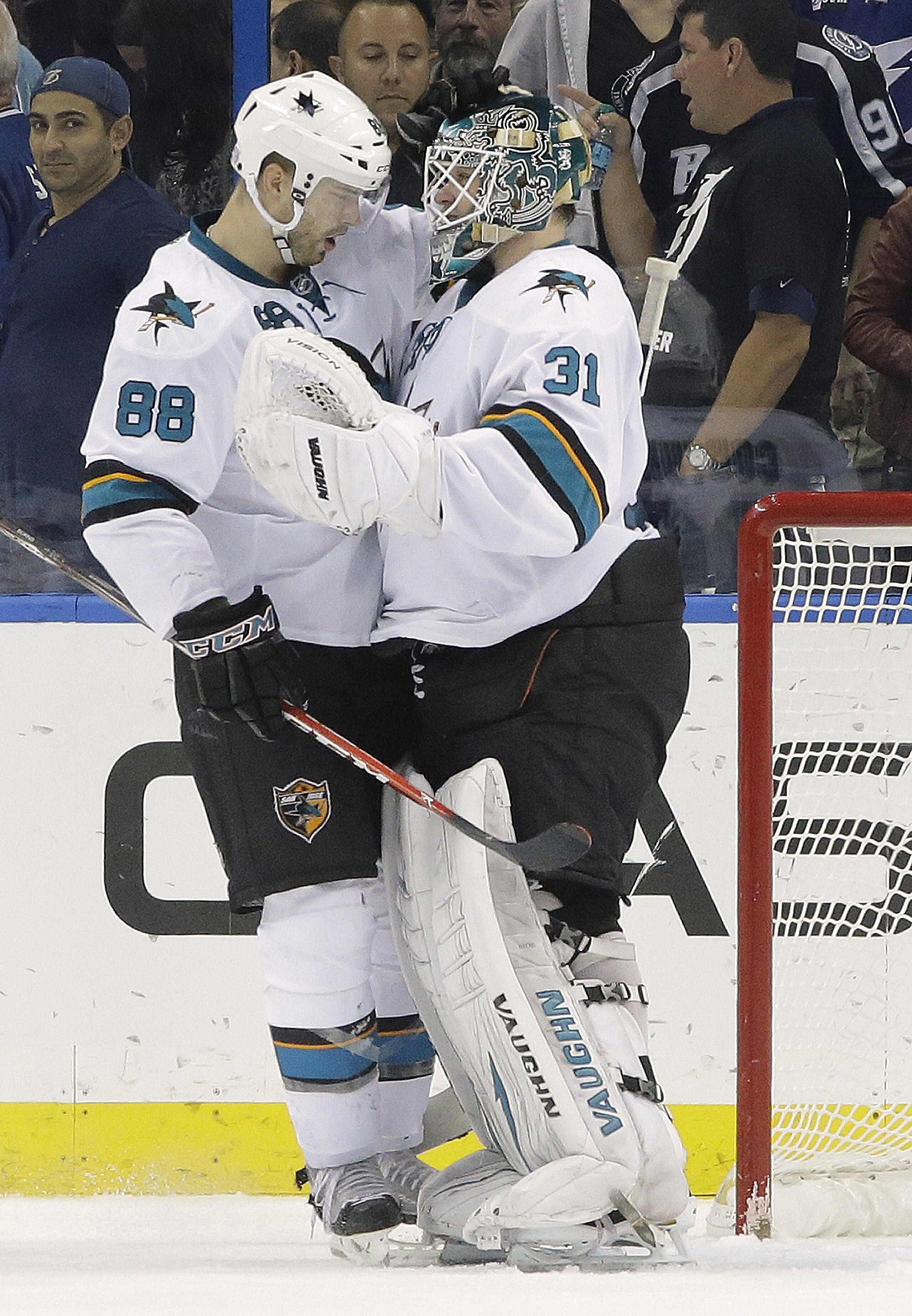
This season, the Sharks have been fast starters and play well in the first period. But they have struggled in the third period.
Entering Friday's play, San Jose had allowed 22 goals in the third period. Only the lowly Buffalo Sabres allowed more this season. In the first period, San Jose had allowed only 10 goals, and it permitted 17 goals in the second period.
Whether it's a conditioning issue, the failure of inexperienced players to come through in the clutch or a general failure to play a tighter and more defensive style, the coaching staff must figure out the cause of the third-period failures and correct them.
Games are won and lost in the final 20 minutes, and the Sharks cannot continue to struggle in the clutch.
1. Mediocre Team Defense
5 of 5
The Sharks' overall team defense is the team's biggest reason for its inconsistent play of late.
San Jose is allowing an average of 32.1 shots on goal per game, which ranks the team a disappointing 24th in the league.
Opponents are simply getting too many scoring chances against the Sharks this season.
Thus far, the move of Brent Burns back to the blue line has resulted in very good offensive production from him. However, his defensive play has been uneven.
The bottom pair of defensemen has been particularly inconsistent in its own zone.
The Sharks feature many explosive, talented, offensive-minded forwards, but these players need to be more responsible on defense, especially when the Sharks are protecting a lead.
Unless the Sharks reduce the number of scoring chances they allow their opponents, they will struggle to improve their mediocre start to this season.