
Everything You Need to Know About the 2014-15 College Basketball Season
At 11 a.m. ET on Friday, the tipoff between Texas Southern and Eastern Washington will signal the beginning of the 2014-15 college basketball season.
Finally.
It's been a very long 250 days since Connecticut beat Kentucky in the 2014 national championship. But whether you've spent that time forgetting what a basketball looks like or gobbling up all the stories we've been feeding you, this is your one-stop shop for a refresher course on the big stories you need to know for the upcoming year.
TOP NEWS
Hakeem's Son Going to SMU
.jpg?w=2560 "Chargers Mack")
Every Trade's Best Trade Asset 🔁
.jpg?w=2560 "Green Bay Steelers Football")
Insiders: Cowboys Overpaid for Porter
Does Connecticut have any hope of repeating? Could a team enter the tournament undefeated for a second straight season? Which coaches are on the hot seat while Mike Krzyzewski chases the 1,000th win of his illustrious career? And what the blazes is going on away from the court at North Carolina?
Let's dive right in with the question that has been permeating most college basketball discussions for the past six months.
So, Just How Good Is Kentucky?
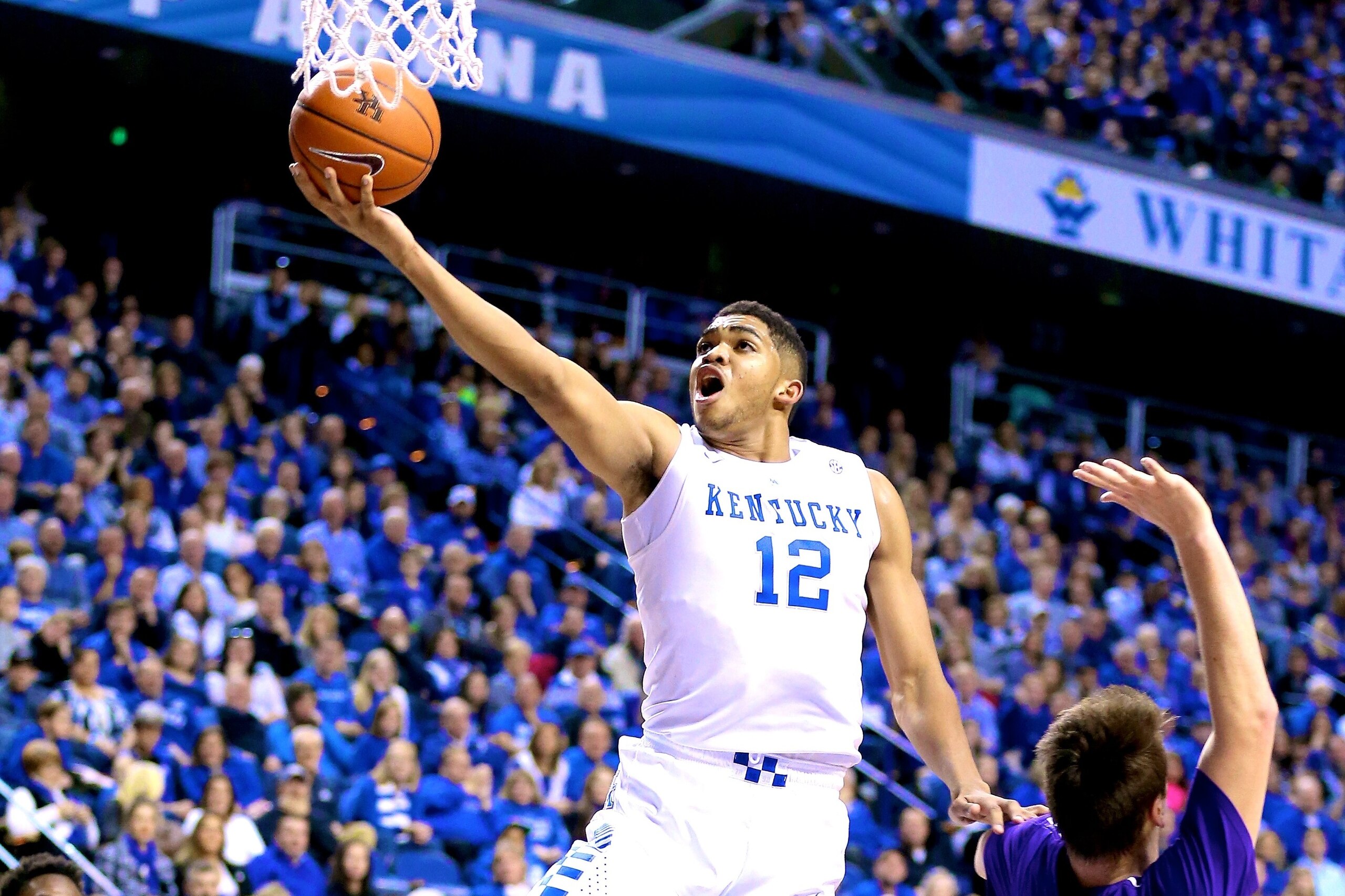
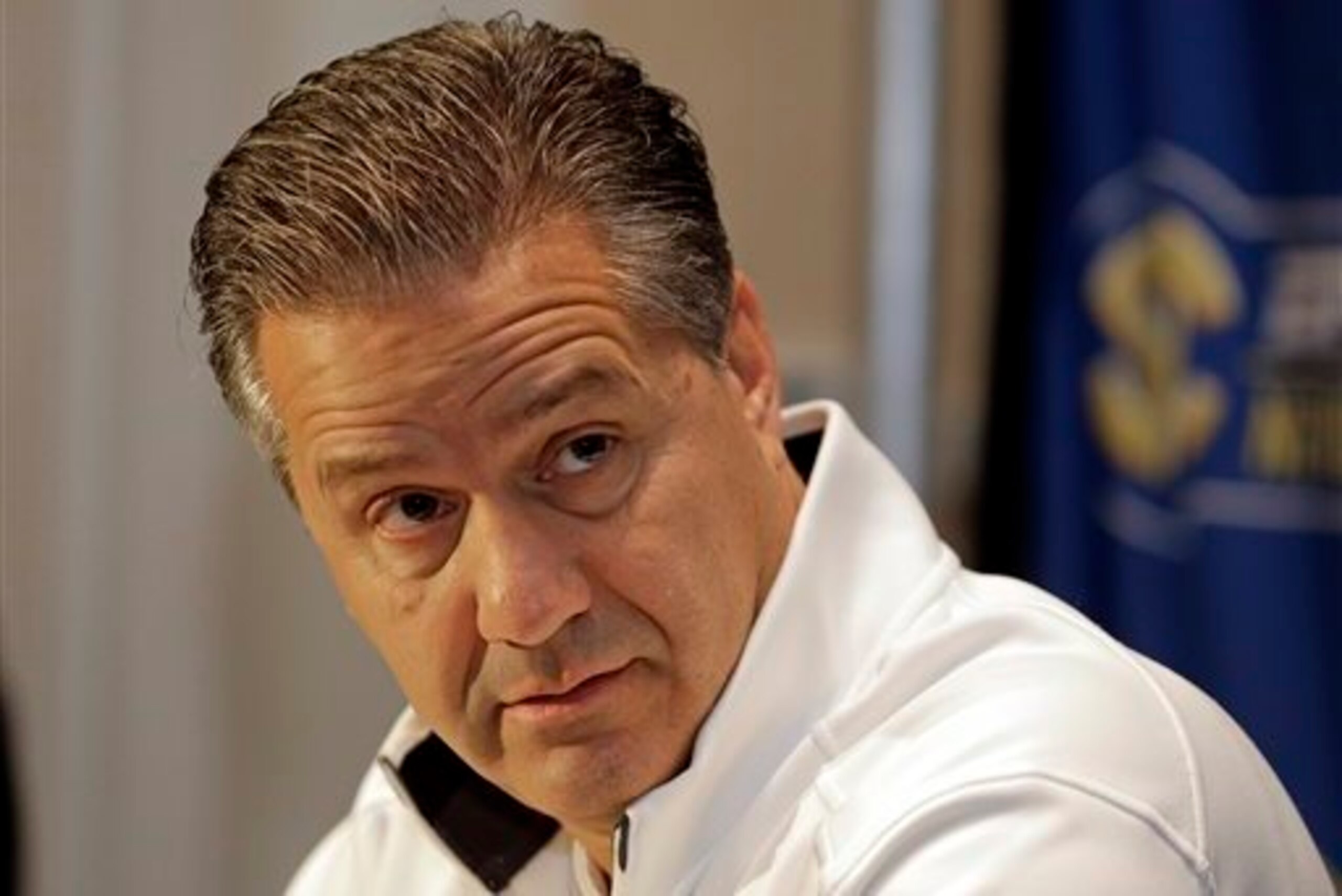
Since the moment John Calipari arrived in Lexington, expectations for Kentucky have been nothing short of massive.
For the most part, so have the results.
In this his sixth season as Big Blue Nation's fearless leader, Calipari has led the Wildcats to four Elite Eights, three Final Fours, two championship games and one title.
But every snarky Joe Schmo on the Internet wants to talk about the one year that didn't exactly go according to plan.
Even including that Robert Morris fiasco, Kentucky has averaged 30.4 wins per year under Calipari. The Wildcats open the season ranked in the Top Four for the fifth time in six years. Before Calipari's arrival, they had gone seven straight preseasons without being ranked in the Top Eight.
But enough about Kentucky's past, because its present is even more ridiculous.
A starting five of Tyler Ulis, Devin Booker, Marcus Lee, Trey Lyles and Dakari Johnson could easily be one of the five best teams in the country.
Too bad that's Kentucky's bench.
Including this year, Calipari has brought in an average of 3.8 McDonald's All-Americans per season since the fall of 2010, and that pipeline has finally hit a bit of a backlog. With the Harrison twins (Aaron and Andrew), Lee and Johnson returning for a second season and Alex Poythress coming back for a third year, the Wildcats have nine McDonald's All-Americans on their roster.
That's right. Nine.
Connecticut—the team that has won four of the last 16 national championships—has signed only eight McDonald's All-Americans in the past 22 years.
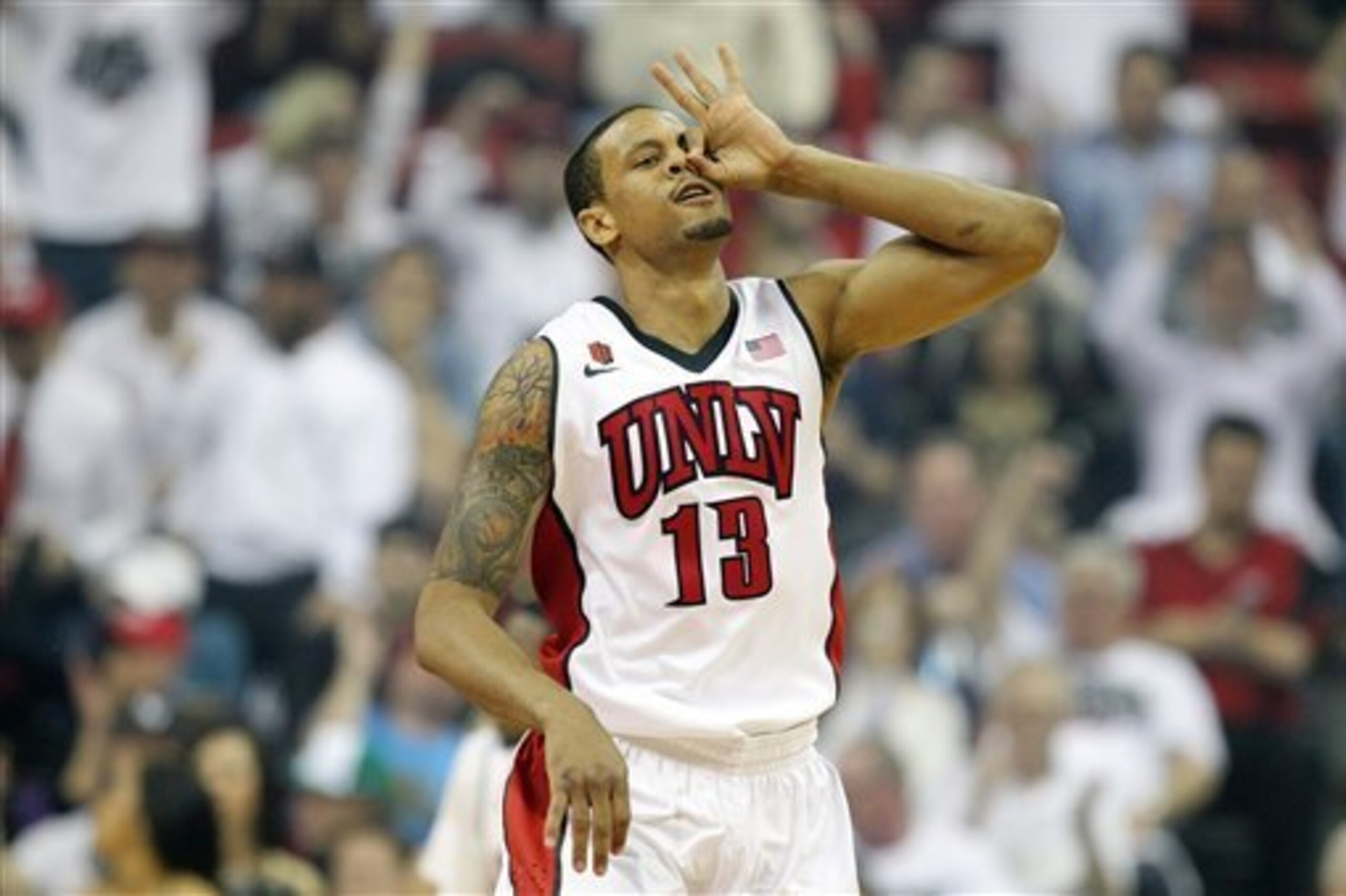
This truly might be the best team assembled since Jerry Tarkanian's Rebels of UNLV in 1990-91. That team opened the season with 34 consecutive wins, winning by an average of 27.6 points per game.
But even that giant wasn't too big to fall, getting knocked off by Duke in the Final Four.
Can the Wildcats go 40-0 and finish the job UNLV could not?
Probably not. Even the greatest team in history would have a tough time avoiding a loss in a schedule that includes games against Florida (at least twice), Kansas, Louisville, North Carolina, UCLA and Texas.
Don't let the inevitable loss or two fool you, though. We could be witnessing a once-in-a-lifetime collection of college basketball talent.
Something Old
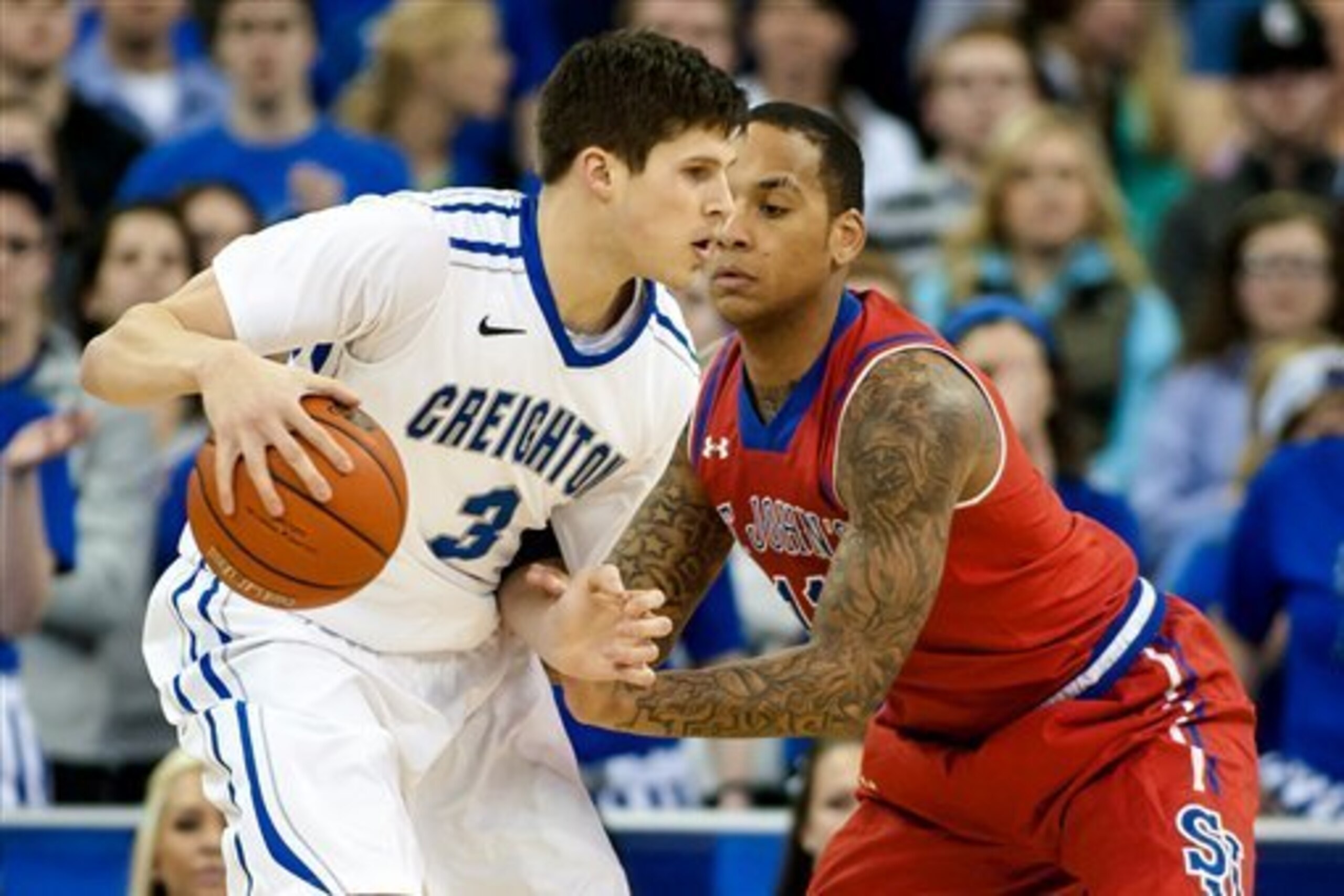
They say you never truly appreciate what you have until it's gone, but we sure tried to appreciate the heck out of Doug McDermott last season.
In a world obsessed with freshmen and players who jump to the NBA before required, we had ourselves a fine group of outstanding seniors last year. In addition to Dougie McBuckets, players such as Russ Smith, Shabazz Napier, Sean Kilpatrick, C.J. Fair, DeAndre Kane and Cleanthony Early captured our uninterrupted attention in their final year of eligibility.
Though those stars are gone, the great thing about college hoops is that there's a new batch of incredible seniors each year.

Kilpatrick made headlines when he scored his 2,000th career point, but that's a milestone Chasson Randle (Stanford), Keifer Sykes (Green Bay), D'Angelo Harrison (St. John's) and Joseph Young (Oregon) should each eclipse with room to spare as seniors.
Alan Williams (UC Santa Barbara) is all but unanimously headed for the unofficial honor of mid-major player of the year as the greatest stat-sheet stuffer few of us have ever seen play.
Frank Kaminsky (Wisconsin) and Delon Wright (Utah) are seniors on the very short list of players who might win the 2015 Wooden Award.
(Could you even imagine if I had written that last sentence 12 months ago? This game is awesome.)
Throw in Ryan Boatright trying to fill the shoes of both Kemba Walker and Shabazz Napier while Wesley Saunders tries to lead Harvard to a fourth consecutive NCAA tournament berth, and we've got more than enough compelling seniors to forget about ol' Doug McWhat'sHisName in no time.
Something New

As much as we enjoy talking about four-year players, there's just something about new and shiny freshmen that really sets our hearts atwitter.
Much of that excitement is due to the fact that we spend seven months' worth of offseason needing to believe that our favorite teams have found and signed players who can either turn things around or keep them going in the right direction.
Until those freshmen actually play a regular-season game, our anticipation just continues to build.
Who wants to talk about a senior who might improve his scoring average by two points per game when you can instead fantasize about what players such as Isaiah Whitehead and Rashad Vaughn can bring to the table?
Another reason we're preoccupied with freshmen is that they're better than ever before.
While some would argue that single-sport specialization is to blame for the rise in Tommy John surgeries in baseball, the plus side is that it has led to guys honing their basketball craft in organized environments on a nearly year-round basis.
Finding a truly raw freshman in this day and age is about as rare as finding a restaurant that doesn't advertise gluten-free menu options.
So it's not much of a surprise that Jahlil Okafor (Duke) is being heralded as a favorite for the 2015 Wooden Award before ever playing a regular-season college game.
His talent and potential are not lost on his head coach either, as Mike Krzyzewski told ESPN earlier this month, that the Blue Devils, "won't have [Okafor] very long."
"We'll have him this year and then he'll be one of the top [NBA] picks...He's really one of the great kids. He's 6-10, about 265. He has huge hands. So the ball is small in his hands. Part of that hurts him some because he's accustomed to rebounding with one hand, and rebounding is better with two hands. But scoring-wise he's able to do it. He's got incredible touch and really good feet.
"
Guys such as Stanley Johnson (Arizona), Cliff Alexander (Kansas), Myles Turner (Texas), Justin Jackson (North Carolina) and Kentucky's entire freshman class aren't quite as lauded as Andrew Wiggins and Jabari Parker were a season ago, but they will be at the forefront this season—not just as great college basketball players but also as likely lottery picks in the 2015 NBA draft.
Something Borrowed
Love it or hate it, transfers are as much a part of college basketball in 2014 as recruiting and three-point shooting.
According to the list ESPN Insider Jeff Goodman has been updating, in the past 12 months, nearly 700 D-I players have either transferred to a new school or at least filed the paperwork to transfer. That's roughly two players per team in a sport with rosters that run an average of only 14 players.
In terms of percentage of the population affected, transferring is practically a pandemic. And that doesn't include the dozens of players who transfer from junior college to D-I.
Let's be honest, though: At least 85 percent of players fail to do anything more at their new schools than they accomplished at their old ones. For every Ryan Harrow (transferred from Kentucky to Georgia State) and DeAndre Kane (transferred from Marshall to Iowa State), there are dozens of disgruntled players who don't suddenly become superstars.
So rather than focusing on the sheer volume of guys switching uniforms, you'll want to key in on a few players who are going to make an impact at their new schools.
Rodney Purvis could be the most important piece for a Connecticut team looking to defend a title it won without him.
Kyle Wiltjer and Byron Wesley are high-major talents joining forces at a mid-major program in Gonzaga and hoping to get America's favorite Cinderella team back to the tournament as a No. 1 seed for the second time in three years.
Bryce Dejean-Jones, Jameel McKay and Abdel Nader join a long list of impact players to transfer to Iowa State in the past few years.
Each transfer will play a huge role this year—not just on his new team but also on the entire landscape of the 2014-15 college basketball season.
And on the less discussed side of the coin, what type of negative impact could some of this transferring have on big-name programs?
Say what you will about each player who left, but Kansas appears to be lacking in backcourt depth after seeing Conner Frankamp and Andrew White III transfer this summer and Naadir Tharpe head to the NBA D-League rather than sit out a year. And while Auburn added almost an entire roster via transfers, teams such as Maryland and Oregon lost that many players.
If you think it's bad now, just wait until Florida goes out and wins 28 games with a roster that is nearly 50 percent former transfers. Unless the NCAA finally cracks the whip and makes players get the degrees they claim to be transferring to receive, we may be seeing just the tip of the transfer iceberg.
Something Blew

Speaking of degrees, Rashad McCants blew the whistle on North Carolina's complete disregard for the academic part of being a student-athlete.
What started out looking like an "innocent" get-rich-quick scheme by a former player blossomed throughout the summer into a full-blown campus-wide scandal.
Just days ago, Tydreke Powell, a former defensive tackle for UNC's football team, called into a radio show and poured more gasoline on the fire by accusing head coach Butch Davis of saying, among other things, "If y'all came here for an education, you should've went to Harvard."
That came after Kenneth Wainstein published his findings from months of research into North Carolina's academic integrity.
Here's the link if you care to read the full 130-page report. Taking the title—"Investigation of Irregular Classes in the Department of African and Afro-American Studies at the University of North Carolina at Chapel Hill"—in conjunction with those comments from McCants and Powell, you get the gist of the kind of mess going on at North Carolina.
Now for the question we're most interested in: What sanctions are coming North Carolina's way?
This thing isn't going away anytime soon, and there's no chance it ends well for North Carolina. So are we talking vacated wins and championships from previous seasons and a probation period in which classes are closely monitored, or are the Tar Heels headed for some type of death penalty effective immediately?
We've seen the NCAA come down with the hammer of Thor on teams and coaches who defile the amateur nature of student-athletes by paying them, but a years-long farcical treatment of education is a whole new ball of wax.
Teams get banned from the postseason for low APR scores, but what about teams with fraudulent APR scores?
Coaches on the Hot Seat
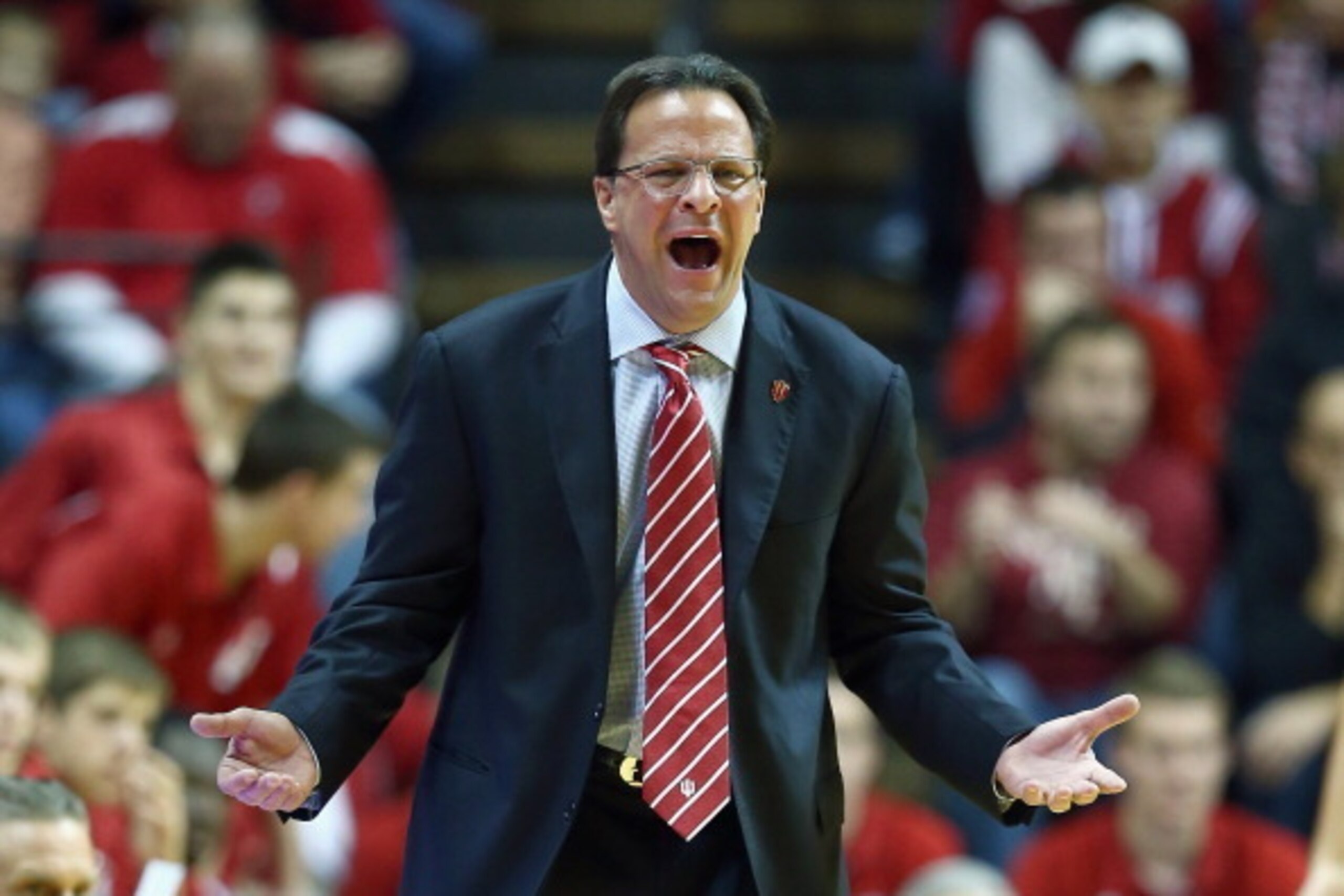
The NCAA's discipline committee will likely determine whether Roy Williams still has a job at North Carolina after (during?) this season, but there are quite a few other coaches whose fates will depend on the success of their basketball programs.
One name that has been more popular than usual is Indiana's Tom Crean.
He has lost a ton of transfers over the past few seasons, and more than a couple of his players have dealt with off-the-court issues over the past several months, leading many to believe Crean has completely lost control of things at Indiana. Never mind the fact the Hoosiers' winning percentage dropped by 275 points last year.
Another (new) Big Ten coach facing similar problems is Maryland's Mark Turgeon.
In total, five players transferred away from the school, and a highly rated recruit (Trayvon Reed) was dismissed from the program after committing petty theft at a convenience store. And it's not as if Maryland was exactly on the up and up to begin with, posting a mediocre 17-15 record in its final year in the ACC.

Lest you think we're just picking on the Big Ten, Kevin Willard (Seton Hall) and Billy Kennedy (Texas A&M) could be in some serious trouble if they don't lead their respective teams to the tournament this year. And you better believe Oliver Purnell (DePaul) and Tom Pecora (Fordham) will be on the chopping block if they don't at least show signs of turning around their perennially awful programs.
Those are just the coaches from major or pseudo-major conference programs you've probably at least heard of in your lifetime. There are dozens of others in the minor conference ranks living in fear of the ax.
Really, though, is anyone safe? This offseason, there were 47 head coaching changes among the 351 D-I programs. Last year, there were 46, so it's not out of the ordinary to see more than 13 percent of the nation's head coaches bite the dust.
Well, At Least One Coach Is Safe

Unless things go unfathomably sour, Mike Krzyzewski will be reaching a milestone this season that no other men's college basketball coach has ever reached.
With 983 wins in his remarkable career, Coach K is a mere 17 wins away from reaching 1,000.
Should the Blue Devils decide to go undefeated for the first two months of the season, he could reach that 1,000th win on January 19 at home against Pittsburgh. That is, at best, an improbable proposition, though. More likely, he'll get there in the final days of January or the first week of February.
Regardless of when it happens—hopefully in a home game, because, come on, who wants to make history away from home?—you will hear about it nonstop for approximately 10 days before and two days after the fact.
"Is Mike Krzyzewski the greatest coach in college basketball history?"
"Is Coach K the greatest coach in the history of sports?"
Get ready for all sorts of stat-driven pieces with titles along those lines.
Also, get ready for people to start referring to him as Coach 1K once he reaches that milestone. Has that idea been trademarked yet, or can I call dibs on it?
Who Is This Year's Connecticut?
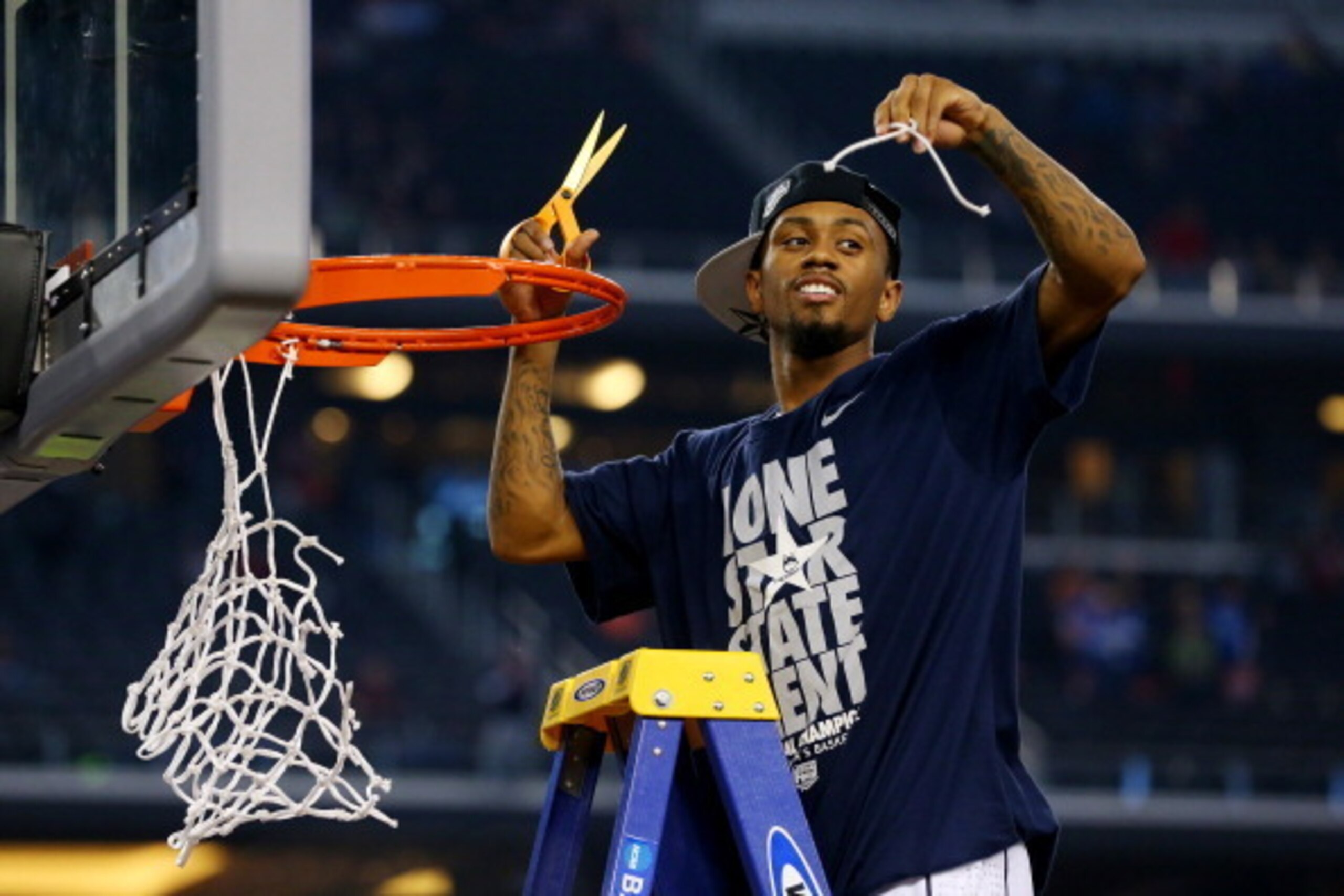
What the Huskies did last season was unprecedented. Only one other No. 7 seed had even advanced as far as the Final Four, and it had been 30 years since Virginia pulled that off in 1984.
So no, we're not looking another No. 7 seed that can make an unlikely run to win it all.
But which fringe Top 25 team has likable players, a young, animated coach and a snowball's chance of completely ruining your bracket?
Could it be Connecticut for a second straight season?
After losing Napier, DeAndre Daniels, Niels Giffey, Lasan Kromah and Tyler Olander, it seems unlikely. The Huskies might win the AAC title, but another national championship is a long shot at best.
In his AAC preview, CBSSports.com's Matt Norlander wrote, "Will Ryan Boatright be the type of leading man in the backcourt that Napier was? Will he revert to some of his erratic ways without that mentor? Can he accept this role? ... The Huskies will be interesting again, but it could take them a little while to be undeniably good."

Could it be one of Connecticut's conference rivals?
For as loosely specific as those criteria were, Memphis certainly seems to check all the boxes.
In their first year in a "major" conference, the Tigers kind of nondescriptly coasted through the 2013-14 season but showed occasional signs of serious promise—a season sweep of Louisville, for example. A lot of people are writing them off after losing all those senior guards, but with Shaq Goodwin and Austin Nichols leading the way in the paint, they'll be solid.
Another great option could be Utah. Led by Wright and Jordan Loveridge, the Utes won't be the favorites in the Pac-12, but they're plenty capable of putting together a nice streak of wins against quality opponents.
Who Is This Year's Wichita State?

What Wichita State did last season was even more unprecedented than what Connecticut did. No other team has ever won 35 consecutive games in the same season.
The odds of it happening in back-to-back seasons are astronomical. It'll never happen. Blah, blah, blah.
Where's your sense of adventure?
Instead of being a Debbie Downer, let's assume there will be an undefeated team again this year and go looking for the top candidate.
The bold choice is Arizona. Though the Wildcats play in a major conference, they have a very forgiving schedule until road games against Utah and Colorado in late February.
According to KenPom.com (subscription required), Arizona has at least a 59 percent chance of winning each individual game it plays—and really, let's call it 63 percent, because there's no way Oregon has the best chance of beating Arizona this season.
KenPom.com's formulas estimate that Arizona has a 0.3 percent chance of going undefeated. That doesn't include Arizona's second and third games in the Maui Invitational or its Pac-12 tournament games, but, hey, it's literally better than nothing.
The less bold choice is Harvard. The Crimson play one extremely difficult road game against Virginia and a somewhat difficult road game against Arizona State. Outside of that, a home game against Massachusetts is the only game they play against any team with realistic NCAA tournament aspirations.
Another reason it's a less-bold choice is that Harvard plays only 28 games before the NCAA tournament, as opposed to 34 for the vast majority of teams that win their conference tournaments. Harvard can't possibly go 35-0, even if it wins the national championship, but entering the tournament with an undefeated record might not be a completely insane suggestion.
Until the season begins, anything remains possible.
And One Last Thing...
Five teams that made the 2014 NCAA tournament as single-digit seeds but likely won't be dancing this year: Creighton (No. 3), Saint Louis (No. 5), Oregon (No. 7), New Mexico (No. 7) and Oklahoma State (No. 9).
The five teams most likely to take their places: Utah, Iowa, Georgetown, SMU and Arkansas.
Now bring on Texas Southern vs. Eastern Washington!
Kerry Miller covers college basketball for Bleacher Report. You can follow him on Twitter @kerrancejames.
.jpg?w=2560 "MHJ's Potential Trade Value 📉")