

In our second and final preseason 2015 NCAA tournament bracket projection, the Kentucky Wildcats remain the No. 1 overall team, while Arizona and Wisconsin hold down top seeds.
However, there'll be no more need for guesswork, as the 2014-15 regular season finally starts this week. After more than seven months of down time, we are joyfully getting bombarded with 157 games on Friday.
Before that glorious day arrives, though, it's time for one more look at the projected tournament field. Though there haven't been any games played since the bracket we posted back in July, there were some significant movers—Iowa and Stanford moving up, Minnesota and SMU moving down, to name a few.
During the season, seeding will be determined by concrete things like wins, losses, RPI, BPI and strength of schedule. In lieu of that in-season data, this bracket's seeding is based largely on an entire offseason's worth of off-the-court news, preseason rankings and a crippling addiction to YouTube mixtapes of the nation's top freshmen.
As was the case throughout last season, we'll take a look at the last five teams into the field, the first five out and another few on the horizon.
After that, we'll present each seeded region, including the subregional locations in which each pod would be played and some commentary on the teams who moved the most since the last bracket. Then we'll provide the ranking of the No. 1 seeds followed by a summary of the entire field broken up by conference.
Last 5 In
1 of 9
Last Team In: Seton Hall (Previous: First Five Out)
I've been on the fence about Seton Hall for the entire offseason.
The Pirates are a middle-of-the-road team in arguably one of the weakest major conferences. Outside of a road game against Wichita State, they play a pretty nondescript nonconference schedule. A potential pairing with LSU in the Paradise Jam championship game might be their second-best game until Big East play begins.
As far as the computer profile goes, Seton Hall could be headed for something nearly identical to what SMU submitted to the selection committee last season. Only time will tell whether the Pirates can avoid the disastrous late-season losses that the Mustangs suffered.
Second-to-Last Team: Tulsa (Previous: 10)
Lather, rinse, repeat, right down to the fact that Tulsa's best nonconference game is a road tilt against Wichita State.
The Golden Hurricane do have a marginally better nonconference schedule than Seton Hall. They have big home games against Oklahoma and Creighton as well as an incredibly bubbly neutral-court pairing with Auburn in the MGM Grand Main Event on November 24.
However, there's no telling how Tulsa will deal with the move from Conference USA to the American while simultaneously adjusting to life under a new head coach. Frank Haith does get just about everyone back from Danny Manning's squad that earned a No. 13 seed, but we'll see how this team fares against the likes of Connecticut, SMU, Memphis and Cincinnati.
Third-to-Last Team: Miami (Previous: First Five Out)
Miami is "only" the seventh team into the field from the ACC, but there's at least an outside shot that conference sends as many as 10 entrants to the tournament.
The problem with admitting that many teams right now, though, is that the middle tier of the conference is so convoluted. Along with Florida State, Notre Dame, North Carolina State and Pittsburgh, Miami could finish anywhere between sixth and 10th in the ACC without any surprise whatsoever.
But we like the Hurricanes because they look nothing like last year's 17-16 team. Led by Angel Rodriguez, Ja'Quan Newton and Ivan Cruz Uceda, they have seven new players this season who could each play a huge role in improving this squad in a hurry.
Fourth-to-Last Team: Ole Miss (Previous: 10)
Fifth-to-Last Team: Auburn (Previous: 12)
There's a similar thought process for these two SEC teams as the one for Miami.
Kentucky and Florida are locks for the tournament. Arkansas is hardly a lock, but the Razorbacks are certainly looking good.
Beyond that is a cluster of four to seven SEC teams with reasonable aspirations for a tournament berth.
For the time being, Ole Miss and Auburn appear to be at the head of that pack.
Both teams loaded up in a huge way this summer through transfers. Ole Miss added Terence Smith and M.J. Rhett from D-I programs as well as Stefan Moody and Rod Lawrence from the JUCO ranks. Auburn got Antoine Mason and K.C. Ross-Miller from D-I teams, Cinmeon Bowers from JUCO and Trayvon Reed as a freshman after he was dismissed by Maryland.
The concern for Kentucky over the past few seasons has always been the unknown of how well and how quickly all the new players will mesh together. Similarly, these two conglomerates could crash and burn in a hurry, but we're optimistic enough about their potential to have them both in the field at the start of the season.
First 5 Out
2 of 9
First Team Out: Baylor (Previous: Next Five Out)
The Bears have a ton of holes to fill after losing Isaiah Austin, Brady Heslip, Cory Jefferson and Gary Franklin, but added playing time for Rico Gathers and Royce O'Neale can't possibly be a bad thing.
Maybe you feel West Virginia or Oklahoma State is more deserving of this spot, but it's going to be tough for the selection committee to exclude the sixth-best team in the Big 12. For now, Baylor seems to be that team.
Second Team Out: UNLV (Previous: Last Five In)
It was probably overly optimistic of us to suggest that UNLV should dance after losing all five of its leading scorers from last season, but we're pretty excited about freshmen Rashad Vaughn, Dwayne Morgan and Goodluck Okonoboh. San Francisco transfer Cody Doolin is a pretty huge addition too.
It could be a down year for the Mountain West. San Diego State is dealing with a lot of injuries while trying to adjust to playing without Xavier Thames, and New Mexico lost all three of its leading scorers without adding much to replace them. The Rebels might not win the conference, but they should be competitive enough to get onto the bubble.
Third Team Out: LSU (Previous: None)
Between Jarell Martin, Jordan Mickey and Elbert Robinson III, LSU has one of the most physically imposing starting frontcourts in the country. If Keith Hornsby and Josh Gray can come in as transfers and immediately steer the ship in the backcourt, the Tigers could be a very dangerous team.
Fourth Team Out: Butler (Previous: 11)
Thanks to Roosevelt Jones' return, we had Butler in the field a few months ago. However, Brandon Miller's medical leave of absence leaves the Bulldogs playing under a new head coach for the second time in two years.
Maybe it doesn't end up being a huge difference, but it doesn't take much to bounce around the bubble in the preseason.
Fifth Team Out: BYU (Previous: None)
BYU was left completely out of the discussion back in July, but that was largely because of the complete unknown regarding Kyle Collinsworth's health.
The Cougars' point forward tore his ACL in March, but he appears to be rounding into game shape and could be at nearly full health by the time they play their first meaningful game of the season.
BYU also has key incoming transfers in Chase Fischer (Wake Forest) and Jamal Aytes (UNLV—eligible December 20). Despite losing Matt Carlino to Marquette and playing without Eric Mika while he's on his Latter-Day Saints mission, this could be a deep, complete team.
December will be the key for the Cougars. They play home games against Utah, Stanford, Massachusetts and Gonzaga in a span of 18 days.
Next 10 Out
3 of 9
During the season, this will drop down to the next five out, but we're going rapid-fire through 10 teams with a remote shot at the tournament.
Florida State and Pittsburgh
Feel free to replace the names of these schools with "ACC eighth place" and "ACC ninth place." This is arguably the best conference in the country, and it's highly unlikely that the best conference would send less than 50 percent of its teams to the tournament.
Rhode Island, Richmond, George Washington and Massachusetts
The Atlantic 10 is nowhere near the conference that the ACC is, but we currently only have two teams in the field from a conference that sent six last year. One of these four schools will inevitably make the tournament, but perhaps all four could even go, depending on what happens elsewhere in the country.
California
There has to be a bubbly Pac-12 team. It could be Washington. It might be Oregon. But if Kingsley Okoroh can handle life in the paint as a freshman, the Bears could have a pretty solid starting five made up of Tyrone Wallace, Jordan Mathews, Jabari Bird, David Kravish and Okoroh.
UTEP
We're projecting Louisiana Tech to earn the Conference USA's auto bid, but UTEP will be right there battling for it as well. At any rate, Tim Floyd needs the Miners to make the tournament. This is the fifth year of his reign, and Floyd has dealt with more gambling scandals than NCAA tournaments.
Cleveland State
If the Vikings hadn't lost Bryn Forbes to Michigan State, they'd be knocking down the door for a bid. Still, this is a team that returns a ton of juniors and seniors from a 21-win campaign. If nothing else, road games against Louisville, Virginia and VCU will give Cleveland State a good enough RPI to hang around the bubble discussion for a good while.
Texas A&M
The season starts this week, and we still don't know if Danuel House will be eligible to play this year after transferring from Houston. If he does play, the Aggies could be the third-best team in the SEC.


East Region (Syracuse)
4 of 9
Omaha, Nebraska
No. 1 Wisconsin (Previous: 1) vs. No. 16 Winthrop/Hofstra (Previous: 16/16)
No. 8 UCLA (Previous: 6) vs. No. 9 Georgia State (Previous: 10)
Louisville, Kentucky
No. 4 Wichita State (Previous: 4) vs. No. 13 Murray State (Previous: 13)
No. 5 Virginia (Previous: 5) vs. No. 12 Auburn (Previous: 12)
Columbus, Ohio
No. 3 Virginia Commonwealth (Previous: 3) vs. No. 14 UC Santa Barbara (Previous: 14)
No. 6 Colorado (Previous: 7) vs. No. 11 St. John's (Previous: Last Five In)
Charlotte, North Carolina
No. 2 North Carolina (Previous: 1) vs. No. 15 Eastern Washington (Previous: 15)
No. 7 Kansas State (Previous: 7) vs. No. 10 Minnesota (Previous: 7)
Who Moved and Why?
North Carolina dropped from the top line to a No. 2 seed. I still feel this is the third- or fourth-most talented team in the country, but it's looking more likely that the Tar Heels are headed for some sort of postseason ban in the aftermath of the Wainstein report.
This past weekend, Dan Kane of The News & Observer reported that the 2005 national championship team took 35 credits of fake classes during its title run. That isn't much different from what we already knew or expected to hear, but now it's a concrete number for people to gauge just how disgusted they are or aren't about the whole thing.
Even if it doesn't lead to sanctions that ban this year's team from the tournament, it could be enough of a distraction to keep Marcus Paige and Co. from earning a No. 1 seed.
Another noteworthy drop is Minnesota falling three lines to a No. 10. Nothing really changed with the Golden Gophers, but our perspective on other teams in the Big Ten (particularly Iowa) has shifted enough that it seems unlikely Minnesota finishes as high in the conference as we once thought.
Also, Minnesota's nonconference schedule is pretty awful. Outside of the season opener against Louisville, the two games the Golden Gophers play against St. John's and either Gonzaga or Georgia in the NIT Tip-Off are the only games they play against teams with any hope of an at-large bid.
The other big mover in this region was UCLA, which dropped two spots to a No. 8 seed. As was the case with Minnesota, much of this move has to do with changed perceptions elsewhere in the conference. For Stanford and Colorado to move up, it felt necessary to move UCLA down.
The Bruins also learned since the last bracket was released that Jonah Bolden is ineligible to play this season, leaving an already young team with less depth in the paint. They should still make the tournament, but they're not as close to the Top 25 fringe as they were a few months ago.
Midwest Region (Cleveland)
5 of 9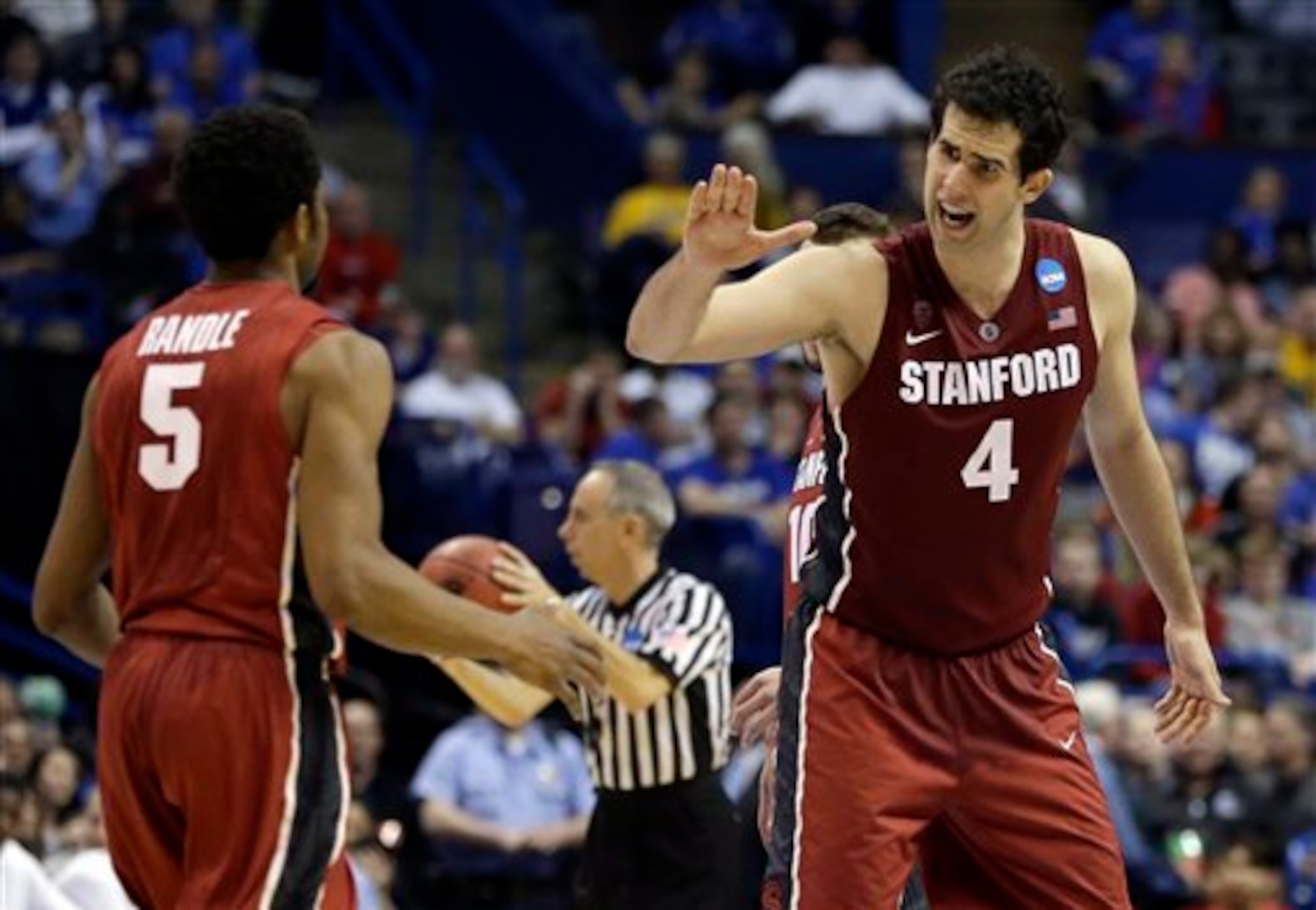
Louisville, Kentucky
No. 1 Kentucky (Previous: 1) vs. No. 16 St. Francis NY (Previous: 16)
No. 8 Nebraska (Previous: 8) vs. No. 9 Oklahoma (Previous: 7)
Seattle, Washington
No. 4 Connecticut (Previous: 3) vs. No. 13 Toledo (Previous: 13)
No. 5 Utah (Previous: 5) vs. No. 12 Tulsa/Ole Miss (Previous: 10/10)
Pittsburgh, Pennsylvania
No. 3 Villanova (Previous: 2) vs. No. 14 New Mexico State (Previous: 14)
No. 6 Michigan (Previous: 6) vs. No. 11 Northern Iowa (Previous: Last Five In)
Jacksonville, Florida
No. 2 Florida (Previous: 3) vs. No. 15 Mercer (Previous: 14)
No. 7 Stanford (Previous: 11) vs. No. 10 North Carolina State (Previous: Last Five In)
Who Moved and Why?
The changes in the East Region were nothing but negative, so let's start out the Midwest by focusing on the No. 7 vs. No. 10 game that pits two big risers against one another.
Stanford moves up four spots to a No. 7 seed simply because we disrespected the Cardinal in July. Yes, they lost Dwight Powell and Josh Huestis to the NBA, but a senior core of Chasson Randle, Anthony Brown and Stefan Nastic is good enough to deserve a single-digit seed.
Head coach Johnny Dawkins adds four great freshmen, one of which—Reid Travis—is all but a lock to start and outmuscle everyone in the paint like Julius Randle did last season at Kentucky.
They aren't as deep as some teams, but the Cardinal legitimately have five frontcourt options and five backcourt options to choose from. This Stanford team could finish in second place in the Pac-12 behind Arizona.
Stanford's projected opponent is the sixth team into the field from the ACC—a designation we didn't respect nearly enough over the summer. With five ACC teams projected for spots on the top six lines, some other team from that conference will have a good enough RPI and ample quality wins to comfortably make the tournament, and the Wolfpack should be that team.
Another slight riser is Florida, which replaces Villanova on the No. 2 line. Those two teams were ranked eighth and ninth overall for the last bracket but they swapped in this one because the Gators are going to finish the season with a drastically better strength of schedule—especially if they play Wisconsin and North Carolina in the Battle 4 Atlantis.
One noteworthy drop in this region is Oklahoma, which slips two spots to a No. 9 seed. TaShawn Thomas announced his decision to transfer to Oklahoma on May 27, and yet, we still haven't heard whether he'll be eligible to play this season. With waiting games like these, though, the longer it takes, the more you have to assume he won't play.
Without Thomas, the Sooners could struggle in the paint. Ryan Spangler was a great addition last season, but he can't do it alone. Dante Buford and D.J. Bennett will do what they can, but Thomas would be a real game-changer.
South Region (Houston)
6 of 9
Charlotte, North Carolina
No. 1 Duke (Previous: 2) vs. No. 16 Arkansas-Pine Bluff/North Carolina Central (Previous: 16/16)
No. 8 Memphis (Previous: 8) vs. No. 9 Arkansas (Previous: 9)
Portland, Oregon
No. 4 San Diego State (Previous: 4) vs. No. 13 Green Bay (Previous: 13)
No. 5 Michigan State (Previous: 5) vs. No. 12 Cincinnati (Previous: Last Five In)
Columbus, Ohio
No. 3 Louisville (Previous: 4) vs. No. 14 Florida Gulf Coast (Previous: 15)
No. 6 Harvard (Previous: 8) vs. No. 11 Dayton (Previous: 9)
Omaha, Nebraska
No. 2 Kansas (Previous: 2) vs. No. 15 IPFW (Previous: 15)
No. 7 Georgetown (Previous: 6) vs. No. 10 Illinois (Previous: 10)
Who Moved and Why?
Duke replaces North Carolina on the top line, but only because of the concerns about the Tar Heels addressed in the East Region slide.
Other than that, there weren't any huge movers in this region. The two biggest are confined to the No. 6 vs. No. 11 game.
Harvard jumps two spots because the Crimson will be at the forefront of our attention from the outset this season after being ranked in a tie for 25th place in the preseason AP Top 25. They play a pretty weak schedule that won't help their computer profile, but it could keep them ranked for the entire season.
Back-to-back tournament upsets won't hurt their stock with the selection committee, either.
Conversely, the Dayton Flyers drop two spots.
After last year's run to the Elite Eight, there sure are a lot of people giving Archie Miller's squad a free pass to second place in the A-10. Let's keep in mind, though, that Dayton barely eked into the tournament last year and lost four of its top-six scorers this offseason.
We love Jordan Sibert and Dyshawn Pierre, but who else can this team go to when it needs a bucket?
West Region (Los Angeles)
7 of 9
Portland, Oregon
No. 1 Arizona (Previous: 1) vs. No. 16 Stony Brook (Previous: 16)
No. 8 SMU (Previous: 5) vs. No. 9 Colorado State (Previous: 9)
Pittsburgh, Pennsylvania
No. 4 Iowa State (Previous: 4) vs. No. 13 Stephen F. Austin (Previous: 13)
No. 5 Ohio State (Previous: 6) vs. No. 12 Seton Hall/Miami (Previous: First Five Out/First Five Out)
Seattle, Washington
No. 3 Gonzaga (Previous: 3) vs. No. 14 Iona (Previous: 14)
No. 6 Syracuse (Previous: 8) vs. No. 11 Louisiana Tech (Previous: 11)
Jacksonville, Florida
No. 2 Texas (Previous: 2) vs. No. 15 American (Previous: 15)
No. 7 Iowa (Previous: 11) vs. No. 10 Xavier (Previous: 9)
Commentary
Even though the first bracket was published after the huge offseason news that Emmanuel Mudiay would forgo a (probably ineligible) season at SMU by instead playing in China, SMU suffered the biggest drop.
The Mustangs are still ranked in the AP Top 25 at No. 22, but we get the impression that the voters didn't pay much attention to the news that Markus Kennedy is currently academically ineligible to play this season. Once thought to possess one of the premier inside-outside duos for the 2014-15 season, SMU could be without both Mudiay and Kennedy this year.
If that doesn't cause a team to drop a few spots, nothing does.
The rest of the news in this region is of the good variety.
Iowa joins Stanford as one of the two teams to jump four lines since the midsummer bracket and for similar reasons. We put too much stock in the loss of Roy Devyn Marble, overlooking the fact that the Hawkeyes are still a very experienced, talented team.
Led by Aaron White, Mike Gesell and Jarrod Uthoff, Iowa could conceivably be the second-best team in the Big Ten. At any rate, the Hawkeyes belong in that discussion with Michigan, Michigan State and Ohio State.
Syracuse was the other multiline mover in this region, jumping two spots to a No. 6 seed. Don't think we're doing the Orange any favors, though, by giving them a path to the Final Four that runs through Seattle and Los Angeles.
Their increased stock really came down to an enhanced belief in Chris McCullough. He might be the most athletic freshman in the entire country. Syracuse will probably struggle to score this season, but having McCullough and Rakeem Christmas anchoring Jim Boeheim's 2-3 zone could give the Orange the best defense in the nation.
Ranking the No. 1 Seeds
8 of 9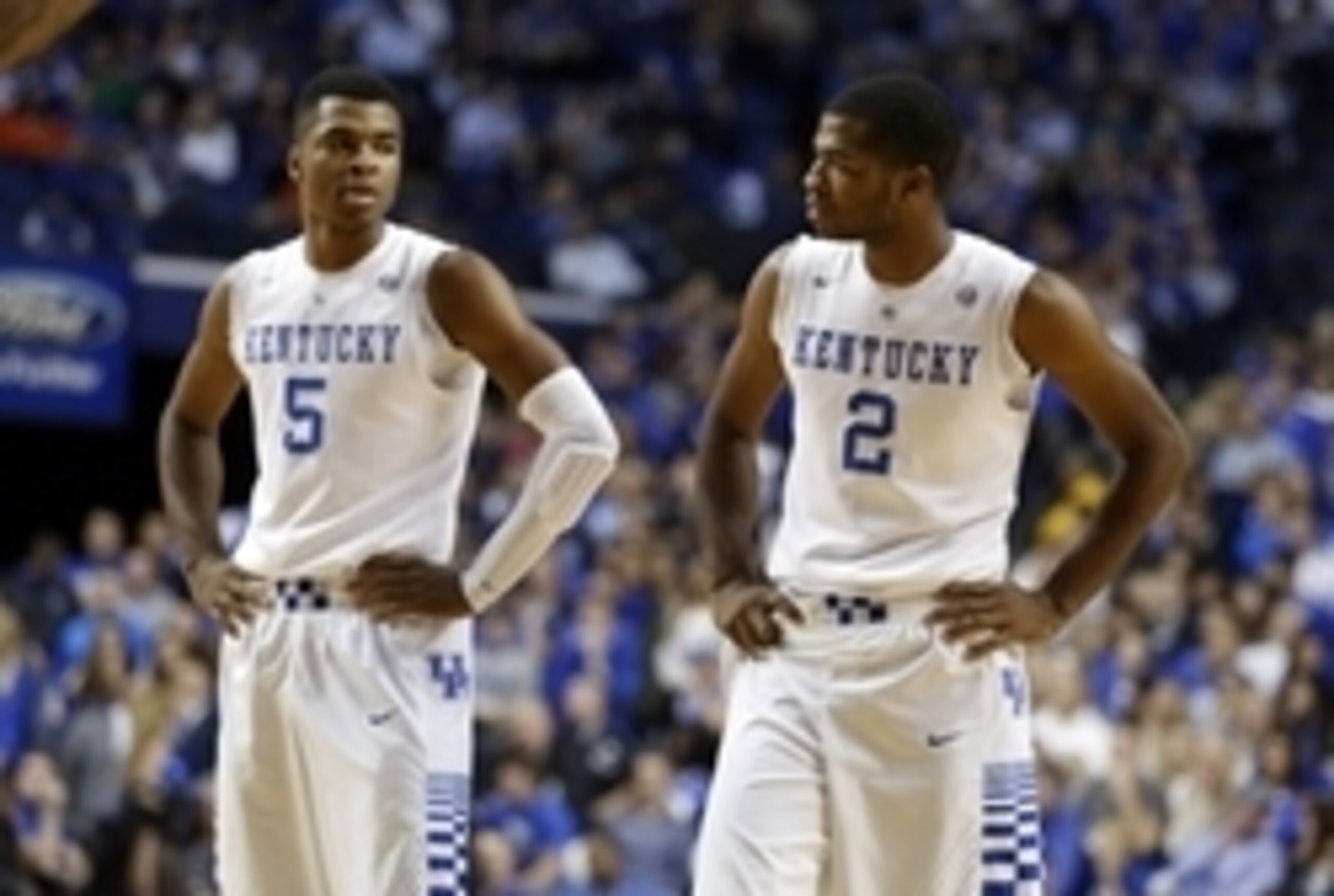
No. 4: Duke
For the time being, the top three spots are set in stone. Any projected bracket that doesn't have Kentucky, Arizona and Wisconsin as No. 1 seeds is just trolling for comments.
This fourth spot, however, is relatively up for grabs. Duke, Kansas, North Carolina and Texas could each make a compelling argument for a No. 1 seed. That essentially means this comes down to a debate between the ACC champion and the Big 12 champion.
Whether it's Duke or Kansas, you're talking about a young team playing a very difficult schedule.
We're going with Duke, though. While both teams have a decision to make at point guard, Duke's problem is that it has too many excellent options. Kansas, on the other hand, is hoping something pans out with Devonte Graham or Frank Mason.
Also, if we're going to compare these young teams, it's worth noting that Duke has the best recruiting class in the country, per 247Sports. The Blue Devils may be young with Jahlil Okafor, Tyus Jones, Justise Winslow and Grayson Allen playing significant minutes, but they're loaded with talent.
No. 3: Wisconsin
Wisconsin's starting five is immensely talented, but the Badgers don't have the depth of Arizona or Kentucky.
One Frank Kaminsky twisted ankle or a couple bad shooting nights from Sam Dekker and the Badgers are in some trouble.
Are any individual players really that crucial to the success of either sets of Wildcats?
While the Badgers are without question one of the three best teams in the country, they're also without question not on the same level as Arizona or Kentucky.
No. 2: Arizona
We're splitting hairs that don't even matter. Whether Arizona is the best or worst No. 1 seed, it's getting the top spot in the West Region.
Though these Wildcats will likely win it all, the boys in blue should be the ones earning the No. 1 overall seed—if only because Kentucky plays a significantly better schedule.
Arizona does play a couple of quality nonconference opponents, but both Gonzaga and Michigan are the ones traveling for those games. Arizona also has the luxury of only playing UCLA at home, lessening the difficulty of its conference slate.
Meanwhile, Kentucky plays Kansas and UCLA on neutral courts and road games against Louisville and Florida. When we get to the time of year when people start bursting arteries over strength-of-schedule arguments, Kentucky should have a clear advantage over Arizona.
No. 1: Kentucky
When everyone in the business has to write about whether a team is going to go 40-0 or whether it could win a game against the Philadelphia 76ers, just put that team in the No. 1 overall spot and move along.
As Sports Illustrated's Seth Davis wrote in his preseason "burning questions" piece, "At the very least, you’d have to say the Wildcats have a pretty good shot at finishing perfect in league play."
You can argue all you want about past seasons or the pros and cons of platoon lineups, but Kentucky is the team to beat this year.
Summary
9 of 9
In case you lost track of how many teams from each conference received bids, here's the whole field in one snapshot.
One-bid conferences: 19
- America East (Stony Brook: 16)
- Atlantic Sun (Florida Gulf Coast: 14)
- Big Sky (Eastern Washington: 15)
- Big South (Winthrop: 16)
- Big West (UC Santa Barbara: 14)
- Colonial (Hofstra: 16)
- Ivy (Harvard: 6)
- MAAC (Iona: 14)
- MAC (Toledo: 13)
- MEAC (North Carolina Central: 16)
- NEC (St. Francis, NY: 16)
- OVC (Murray State: 13)
- Patriot (American: 15)
- Southern (Mercer: 15)
- Southland (Stephen F. Austin: 13)
- Summit (IPFW: 15)
- Sun Belt (Georgia State: 9)
- SWAC (Arkansas-Pine Bluff: 16)
- WAC (New Mexico State: 14)
Multi-bid conferences: 13
American: Connecticut (4), Southern Methodist (8), Memphis (8), Cincinnati (12), Tulsa (last five in)
Atlantic 10: Virginia Commonwealth (3), Dayton (11), Richmond (Next 10 out), George Washington (next 10 out), Rhode Island (next 10 out), Massachusetts (next 10 out)
ACC: Duke (1) North Carolina (2), Louisville (3), Virginia (5), Syracuse (6), NC State (10), Miami (last five in), Pittsburgh (next 10 out), Florida State (next 10 out)
Big East: Villanova (3), Georgetown (7), Xavier (10), St. John's (11), Seton Hall (last five in), Butler (first five out)
Big Ten: Wisconsin (1), Michigan State (5), Ohio State (5), Michigan (6), Iowa (7), Nebraska (8), Minnesota (10), Illinois (10)
Big 12: Kansas (2), Texas (2), Iowa State (4), Kansas State (7), Oklahoma (9), Baylor (first five out)
C-USA: Louisiana Tech (11), UTEP (next 10 out)
Horizon: Green Bay (13), Cleveland State (next 10 out)
Missouri Valley: Wichita State (4), Northern Iowa (11)
Mountain West: San Diego State (4), Colorado State (9), UNLV (first five out)
Pac 12: Arizona (1), Utah (5), Colorado (6), Stanford (7), UCLA (8), California (next 10 out)
SEC: Kentucky (1), Florida (2), Arkansas (9), Ole Miss (last five In), Auburn (last five In), LSU (first five out), Texas A&M (next 10 out)
West Coast: Gonzaga (3), BYU (first five out)
Kerry Miller covers college basketball for Bleacher Report. You can follow him on Twitter @kerrancejames.
.jpg?w=2560 "NBA Gambling Charges")
.jpg?w=2560 "Aikman Blasts Cowboys WR 🫣")

.jpg?w=2560 "Jonathan Taylor Landing Spots")