The Kansas Jayhawks are once again the favorites to win the Big 12, but Rick Barnes and the Texas Longhorns might finally be the team that puts an end to Bill Self's reign of terror.
Sound familiar?
It's a narrative that we've been recycling for the past five preseasons.

Texas hasn't always been the top challenger. However, "We obviously like the Jayhawks this year, but (insert second-best Big 12 team) could conceivably end their streak of (insert number) consecutive Big 12 titles" has basically become a preseason college basketball Mad Lib.
Last season, Oklahoma State and Marcus Smart were the ones we all thought had a great shot at a Big 12 title. The year before that, we liked Baylor in Pierre Jackson's final season with super frosh Isaiah Austin as his running mate. In 2011-12—before defecting to the SEC—the Texas A&M Aggies were working on a streak of six straight seasons with at least 22 wins and were viewed as a serious threat to Kansas.
Not only did those teams fail to dethrone Kansas, but they crashed and burned in fairly spectacular fashion after flying too close to the sun. Not a single one of those teams even finished above .500 in Big 12 play.
But this year will be different because this is the most complete roster that Barnes has had in his 28 years as a head coach.
Ridiculous Depth
The only thing more absurd than the plethora of quality players at Texas is the minimal amount of attention it has received on the national level.
Yes. Kentucky is deep. Its bench could beat most teams in the country.
We get it.
That doesn't mean the Wildcats should have a monopoly on the 10-man rotation discussion.
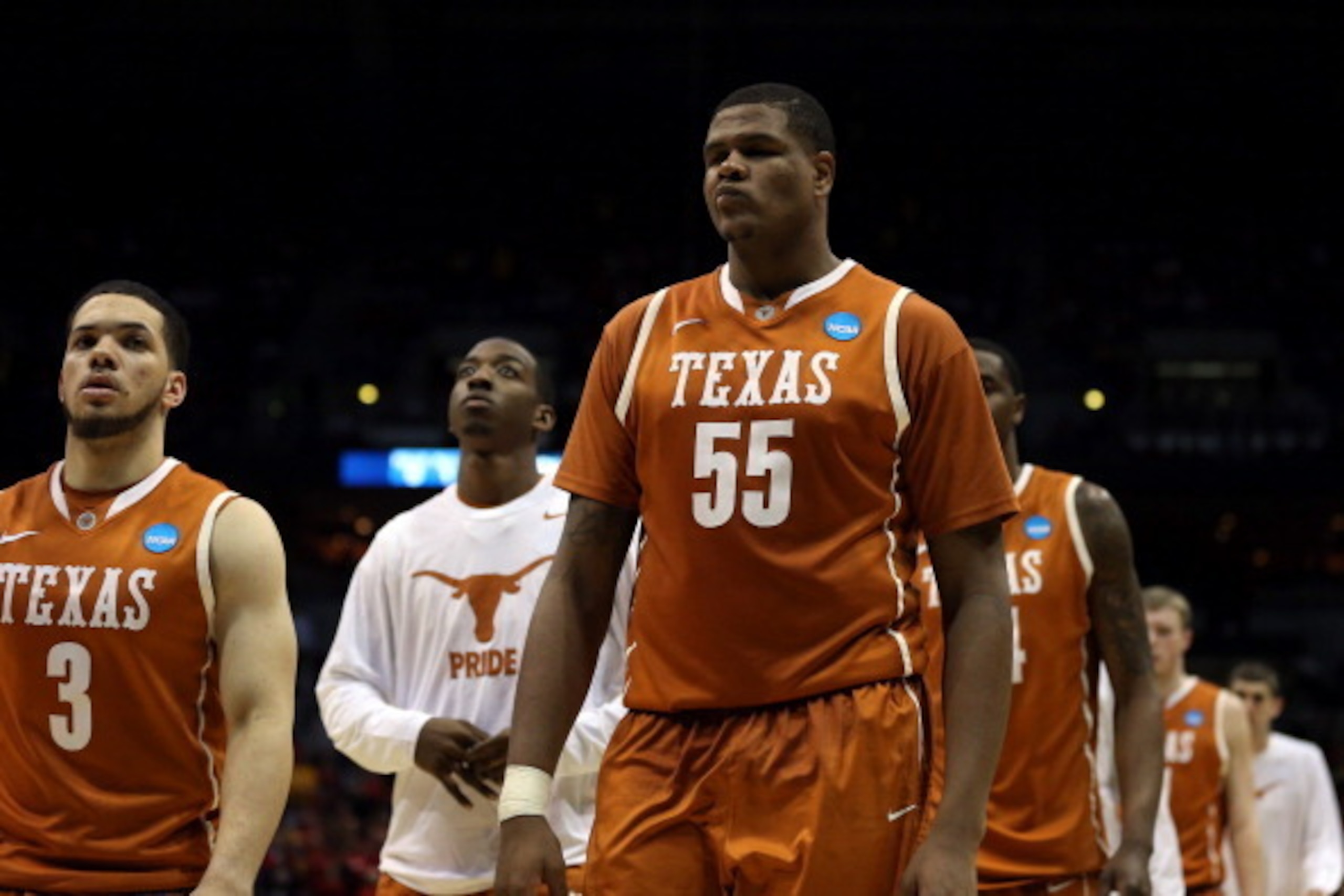
Just look at what the Longhorns are bringing to the table this season. They are legitimately two deep at every position.
| Position | Starter | Reserve | Others |
| Point Guard | Isaiah Taylor | Kendal Yancy | |
| Shooting Guard | Demarcus Holland | Javan Felix | Damarcus Croaker |
| Small Forward | Jonathan Holmes | Jordan Barnett | |
| Power Forward | Myles Turner | Connor Lammert | Danny Newsome |
| Center | Cameron Ridley | Prince Ibeh |
What's more, several of those players can serve at multiple positions. Jonathan Holmes, Connor Lammert and Myles Turner might be the best three-point shooters on the team. Because of that, the Longhorns have already been experimenting with a four-bigs lineup.
Frankly, that might be the only way for everyone in this frontcourt to get something close to the number of minutes they deserve.
Lammert would be a star(ter) at most other schools, but without that four-bigs lineup, he's only getting as many minutes as Turner and Cameron Ridley are willing to spend on the bench.
Prince Ibeh was one of the best shot-blockers in the country last season. Had he played enough minutes to qualify, his 13.8 block percentage would have ranked seventh in the nation. And yet, he's either fifth or sixth in Texas' frontcourt pecking order.
Feel bad for Ibeh, but feel worse for every team Texas plays this season. There's no such thing as fatigue or foul trouble when you're this deep.
Turner's Turn
The main reason Texas has too many options to choose from is because of Turner's decision to join the club.
For pretty much the entire 2013-14 season, Turner was the primary blue-chip recruit who remained unsigned. When Rashad Vaughn committed to UNLV on Feb. 11, it became Turner or bust for every other school looking to land a big name.
In the end, the Longhorns won the lottery, getting a commitment from Turner on April 30.
(If you want to feel old, one of the things written about Turner in that announcement is that his "favorite player growing up was former Longhorns star Kevin Durant.")
Let's not get carried away and recklessly ask if he could be as important to Texas as Durant was during his one season, but could he become LaMarcus Aldridge 2.0?
Aldridge averaged 17.8 points, 10.8 rebounds and 2.4 blocks per 40 minutes in his two seasons with the Longhorns. He and P.J. Tucker were the anchors in the paint for the 2005-06 team that tied for the Big 12 title and spent the entire season ranked in the top 15.
That season, Texas ranked fifth in the nation in both offensive and defensive rebounding percentage.
Who's to say Turner and Ridley couldn't do even better? Both present-day Turner and college-aged Aldridge stand 6'11" and 240 pounds, while Ridley (6'9", 285 pounds) makes Tucker (6'5", 225 pounds) look like an Oompa Loompa.
It's blasphemous to put them ahead of Kentucky, but these Longhorns really could have the best frontcourt in the country. They were good last year, but they might be great with Turner.
Turner wasn't quite the best recruit in this year's class—ESPN had him at No. 2 and 247Sports ranked him No. 6 overall—but it wouldn't be a big surprise if the big man with three-point range ended up being the nation's most valuable freshman this season.
Achilles' Heel No More?
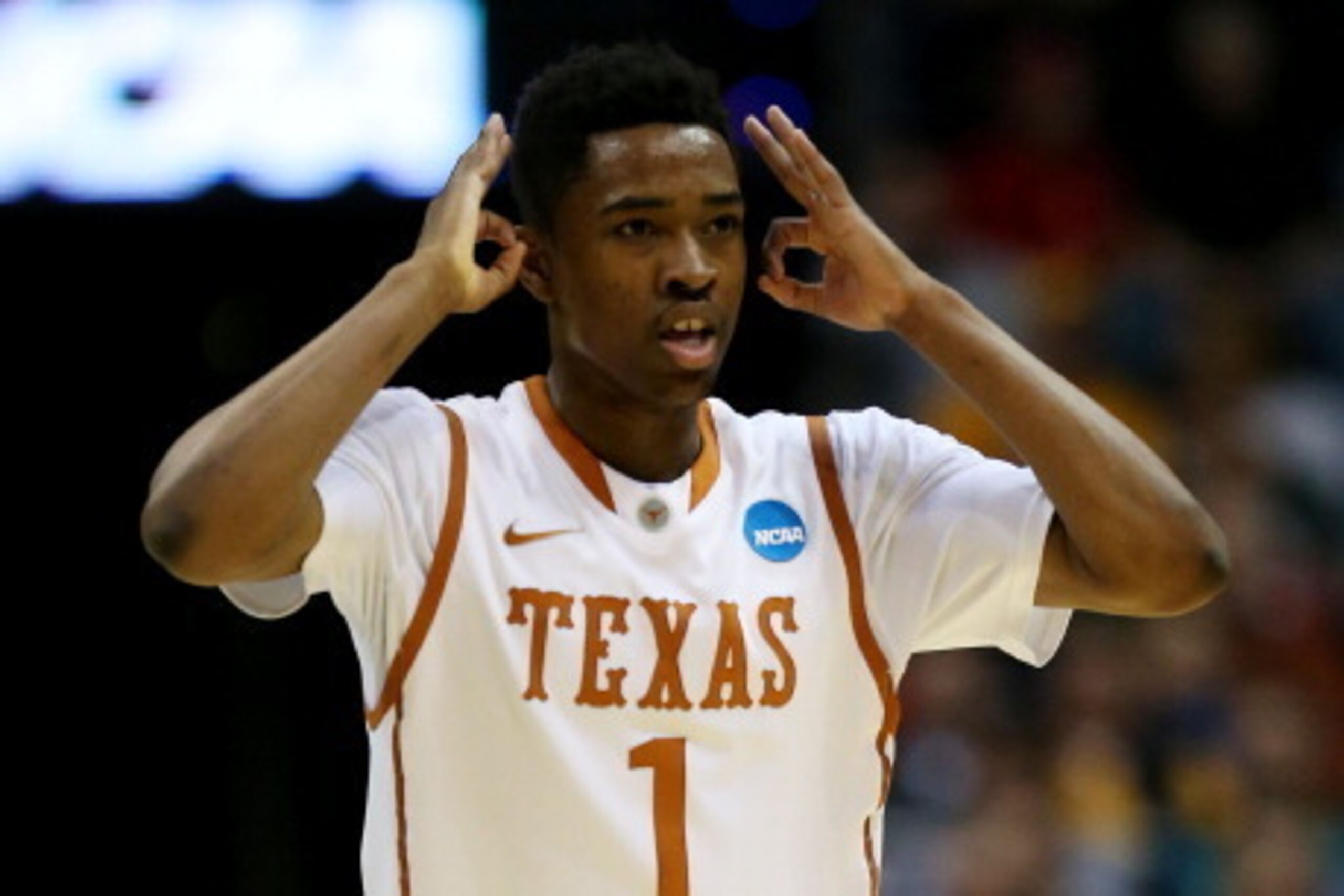
Isaiah Taylor was a terrible shooter last season.
Harsh words for a player who averaged 12.7 PPG as a freshman, but it's the truth. He shot just 39.1 percent from the field and 26.3 percent from three-point range. More than 34 percent of his points came from the free-throw line, while most of his made field goals were either layups or floaters.
But much like Rondae Hollis-Jefferson at Arizona, if you simply remove the poor jump shot from the equation, he was an outstanding player.

While regularly sharing a backcourt with a player (Javan Felix) who averaged 4.1 assists per game in 2012-13, Taylor averaged better than 5.3 assists per 40 minutes—this despite the fact that Texas shot just 43.2 percent from the field as a team and manufactured a lot of unassisted buckets by being one of the best offensive rebounding teams in the nation.
Taylor was also a capable defender, averaging 1.1 steals per game, trailing only Demarcus Holland for the team lead in steals.
In many ways, Taylor reminds us of the player he helped eliminate in the second round of last year's NCAA tournament.
As a freshman, Arizona State's Jahii Carson led his team in scoring while averaging 5.4 assists per 40 minutes and 1.2 steals per game. However, Carson wasn't a great shooter. At 32.0 percent from three-point range, he was better than Taylor, but he did the vast majority of his damage in the paint on layups and floaters.
Aside from improving as a three-point shooter (39.1 percent as a sophomore), hopefully that's where the comparison ends for Taylor, because Carson took a step backward in virtually every other aspect of his game last season.
Taylor doesn't even need to turn into a long-range assassin. If he can merely develop enough of a jump shot to keep the defense honest, he could be the brightest star on this roster.
Were it not for Kansas' decade of dominance, we would be viewing the Big 12 the same way we're viewing the ACC—four outstanding teams up top and a fifth that arguably belongs in the AP Top 25, all of which could legitimately win the conference.
But if Turner is as good as advertised and Taylor improves even marginally as a sophomore, the Longhorns aren't just the favorite to win the Big 12 regular-season title.
They could be the ones cutting down the nets in Indianapolis in April.
All advanced stats via KenPom.com (subscription required) and Sports-Reference.com.
Kerry Miller covers college basketball for Bleacher Report. You can follow him on Twitter: @kerrancejames.


.jpg?w=2560 "Reported Details of Seahawks-K9 Split ⛓️💥")