Top 25 Test Innings at Lord's
A total of 228 Test centuries have been scored at Lord's since England faced Australia in 1884. As cricket's most famous venue celebrates its bicentenary, we've singled out the best of them, counting down the top 25 Test innings recorded at the ground.
As expected, the list includes some legendary figures from the game as well as some less illustrious names.
Predictably, the countdown is dominated by Englishmen. There are also representatives from Australia, New Zealand, Pakistan, South Africa, Sri Lanka and the West Indies. No batsman from India features, which may be surprising given their recent firepower.
Read on to see who has made the cut. There's a metaphorical gold star on offer to anyone who can name all 25.
Stats courtesy of ESPNcricinfo and Howstat.com.
25. Dennis Amiss (England)
1 of 25188 vs. India 1974
England's match against India in 1974 is best remembered for the visitors being skittled for just 42 in their second innings.
The eventual margin of victory of an innings and 285 runs was largely down to a massive total of 629 all out for the home side.
Skipper Mike Denness and future captain Tony Greig both recorded centuries, but neither could match Dennis Amiss, who scored 188 from 303 balls.
The century against India was one of Amiss' rare successes at Lord's. In 15 Test innings at headquarters, the Warwickshire man passed 50 just twice and averaged 29.38.
His effort in 1974 is the 25th-highest Test score at the home of cricket.
24. Bill Edrich (England)
2 of 25189 vs. South Africa 1947
Bill Edrich scored so many runs for Middlesex that they eventually named a stand after him. His Test record was impressive too, as he scored scored 2,440 runs at an average of 40.00 in a career that stretched from 1938 until 1955.
Surprisingly, Edrich's record at Lord's in the Test game was pretty ordinary. In 10 innings, he passed 10 just three times. He certainly made it count in 1947, though.
Edrich and Middlesex colleague Denis Compton put on a then-world-record partnership of 370 for the third wicket to set up a 10-wicket win over the visiting South Africans.
23. Sidath Wettimuny (Sri Lanka)
3 of 25190 vs. England 1984
After being smashed to all parts during a West Indian blackwash, England's bowlers must have hoped for easier pickings when novices Sri Lanka arrived for their first-ever Test in England.
Opening batsman Sidath Wettimuny had other ideas. The opener batted for almost 11 hours en route to a career-best score of 190 as Sri Lanka declared on 491 for seven in their first innings.
Wettimuny's marathon helped the visitors to a draw in their maiden Test appearance at Lord's.

22. Tillakaratne Dilshan (Sri Lanka)
4 of 25193 vs. England 2011
If Wettimuny's century in 1984 was a model of restraint and consideration, Tillakaratne Dilshan's 2011 effort was just the opposite.
Packed full of attacking shots, the opener's 193 came of 253 balls and included 20 fours and two sixes.
Batting second after England compiled 486 in their first innings, Dilshan helped the visitors get to within seven runs of the hosts' total. The honours were shared in what turned into a high-scoring draw.
Dilshan's 2011 knock remains the highest total by a Sri Lankan batsman in a Test match at Lord's.
21. Warren Bardsley (Australia)
5 of 25193* vs. England 1926
Warren Bardsley probably isn't a name that immediately trips off the tongue when one thinks about the best-ever innings at Lord's.
The Australian enjoyed a superb record at England's most famous venue. In seven innings there, Bardsley averaged 115, scoring two fifties and two centuries.
The left-hander saved the best for last. His career-best score of 193* came in his last Test appearance at Lord's and at the ripe old age of 43.
20. Marcus Trescothick (England)
6 of 25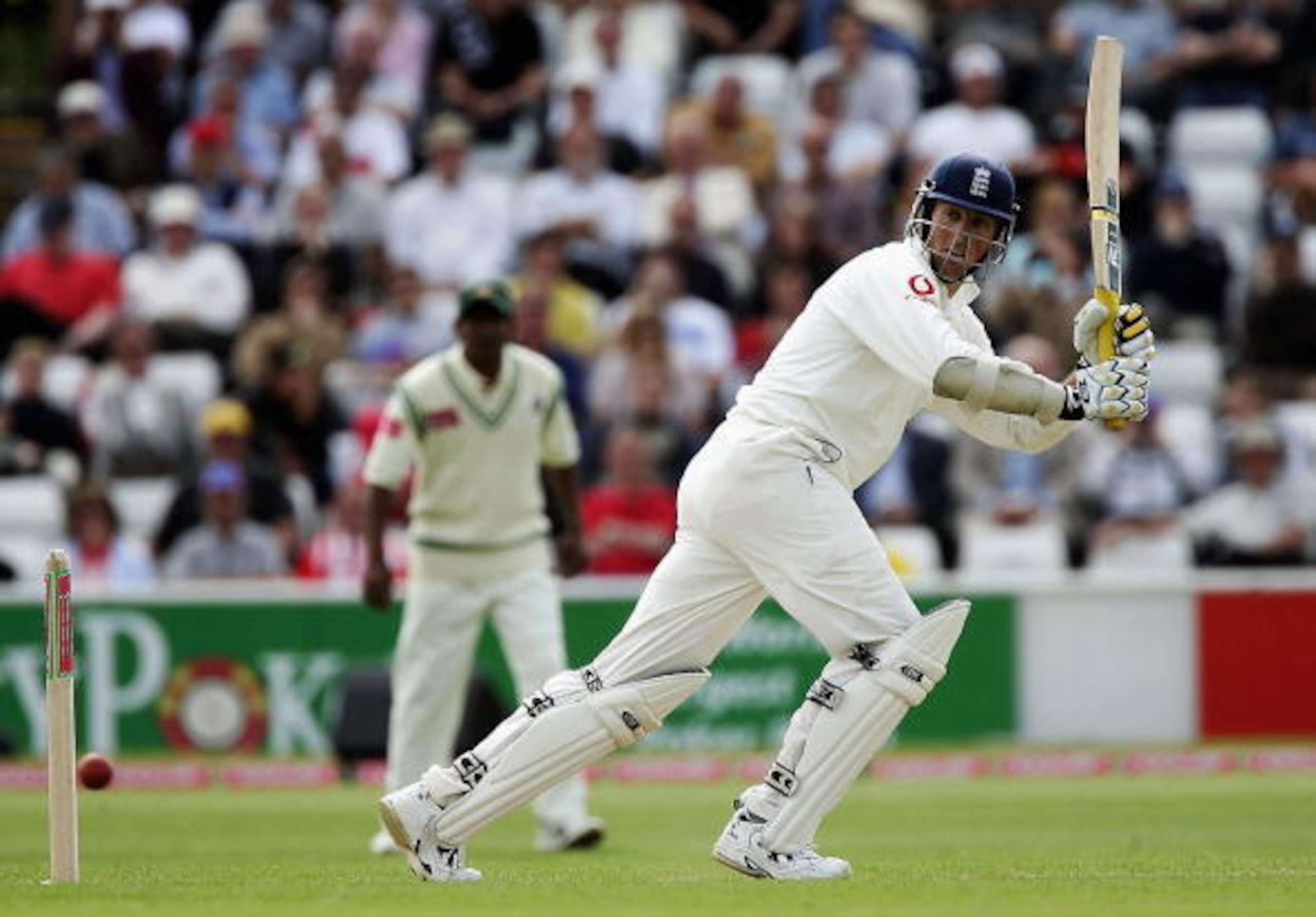
194 vs. Bangladesh 2005
Given the fireworks that followed against Australia later in the year, it's easy to overlook England's 2005 series against Bangladesh.
Michael Vaughan's side warmed up for their clash with the old enemy by dispatching the Bengalis with ease.
England's win of an innings and 261 runs in the first Test at Lord's was helped by a superb effort from Marcus Trescothick. The Somerset opener's 194 was his second-highest score in Test cricket and proved to be his best effort at Lord's.
18. Allan Border (1985)
7 of 25196 vs. England 1985
The 1985 tour of England would end in disappointment for the Australians, but they looked in good shape after tying the series at one apiece following a win at Lord's.
Skipper Allan Border was the architect of the Aussie triumph, as his 196 helped the visitors to a big first-innings lead. Despite a second-innings wobble, Border's men sneaked home by four wickets to level the series.
The man with the least original nickname in cricket enjoyed a fine record at Lord's, averaging over 100 in his five Test appearances there.
18. Len Hutton (England)
8 of 25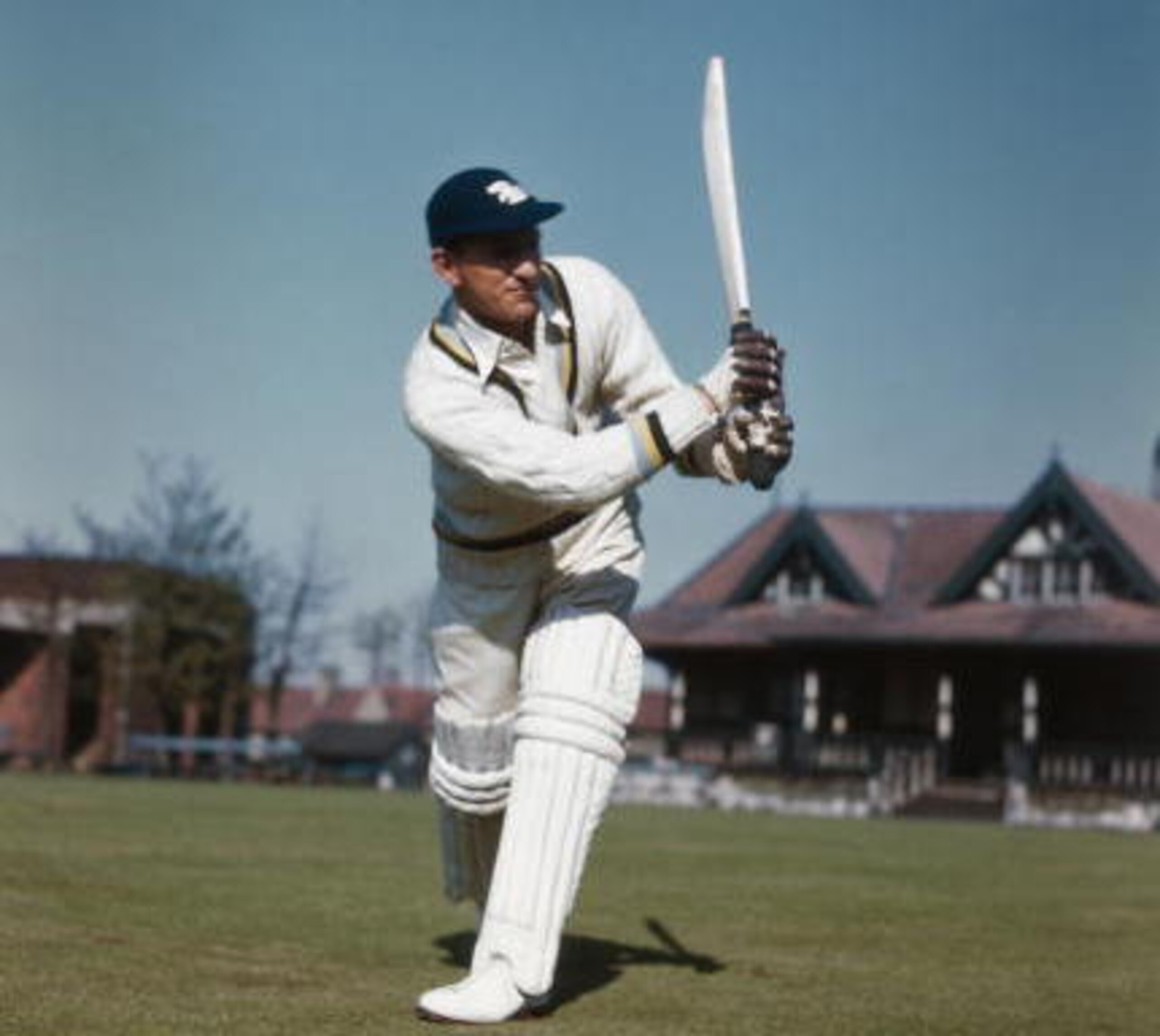
196 vs. West Indies 1939
With the spectre of World War II looming, Len Hutton provided Lord's with a perfect distraction from the devastation that was to come with this masterclass against the West Indies.
Arguably England's greatest-ever batsman, he scored his first Test century at Lord's as England beat the tourists by eight wickets.
The Yorkshireman would add two more at headquarters, first against India in 1952 and then against Australia in 1953.
17. Ian Bell (England)
9 of 25
199 vs. South Africa 2008
The only player to date to have missed out on a Test match double century at Lord's by just one run is Ian Bell. The Warwickshire stylist fell tantalizingly close during the 2008 Test against Graeme Smith's South Africans.
Despite building a massive first-innings total of 593 for eight declared and then bowling the visitors out for just 247, England couldn't seal the win.
On an increasingly benign surface, Smith, Neil McKenzie and Hashim Amla all scored centuries as the tourists saved the game with ease.
Lord's has proved one of Bell's happiest hunting grounds. The 32-year-old has scored more Test centuries in St. John's Wood than at any other venue.
16. Mohsin Khan (Pakistan)
10 of 25200 vs. England 1982
The first of two Pakistanis to make the top 25 is Mohsin Khan. The opener's first and only Test double hundred was crucial in Pakistan's maiden victory at Lord's.
After posting a first-innings total of 428 for eight declared, the visitors forced England to follow on. The home side fared little better the second time around, succumbing to Mudassar Nazar's medium-pace wobblers.
Set just 77 to win, Mohsin and Javed Miandad finished the job they'd started in the first innings as Pakistan romped to a historic 10-wicket win.
15. Joe Root (England)
11 of 25
200* vs. Sri Lanka 2014
The most recent entrant into the top 25 is Joe Root. After a torrid winter Down Under, the Yorkshireman returned to form with his maiden Test double hundred against Sri Lanka.
Despite Root's heroics, England couldn't quite force a win. The visitors were nine down when play finally drew to a close.
If previous form is anything to go by, Root will be looking forward to his next visit to Lord's. In eight innings there, the 23-year-old has two fifties and two hundreds to his name. England followers will be hoping for more of the same when the Australians return in 2015.
14. Mohammad Yousuf (Pakistan)
12 of 25202 vs. England 2006
The highest Test score by a Pakistani batsman at Lord's belongs to Mohammad Yousuf.
In response to England's impressive first-innings total of 528 for nine declared in the 2006 Test, Pakistan replied with 445, thanks largely to Yousuf's fourth Test double hundred. What could have been an exciting finish turned into a meandering draw on a tame Lord's pitch.
Yousuf made three Test appearances at Lord's in all but failed to reach 50 in his five other visits to the middle.
Matching silky style with gritty toughness, Yousuf enjoyed a fine Test career, scoring 7,530 runs at an average of 52.39.
13. Kevin Pietersen (England)
13 of 25202* vs. India 2011
Kevin Pietersen was always a batsman with an eye for the big occasion, and he delivered once again in cricket's 2,000th Test match.
India were on the receiving end of a superb display of controlled aggression and savage strokeplay. Pietersen hit 21 fours and a six while compiling an unbeaten 202 against a hapless Indian attack as England won by 196 runs.
KP's heroics set the tone for the rest of series, as England went on to rout a vaunted Indian side by four games to nil.
12. Joe Hardstaff (England)
14 of 25205* vs. India 1946
Regarded as one of the most elegant batsmen of the immediate post-war era, Joe Hardstaff recorded his highest Test score against India at Lord's in 1946.
The Nottinghamshire batsman returned to the Test arena in style after spending three years serving in Asia during World War II.
The unbeaten 205 would be the last time Hardstaff reached three figures in England colours. He won his final Test cap two years later against the invincible Australians.
11. Martin Donnelly (New Zealand)
15 of 25
206 vs. England 1949
Martin Donnelly's Test career may have only stretched to seven games, but he packed plenty into those scant appearances. Best of all was his 206 against England in 1949, as the visitors had the best of a draw against their hosts.
In addition to being the only Kiwi batsman with a double hundred at Lord's, Donnelly commanded tanks during World War II, read history at Oxford and played rugby for England.
10. Bill Brown (Australia)
16 of 25206* vs. England 1938
Bill Brown is another player whose best years were lost to World War II.
The Australian opener gave notice of his talents when he scored 105 on his first visit to Lord's in 1934. He did even better four years later, carrying his bat for an unbeaten 206 against Wally Hammond's side. That 1938 knock would prove to be Brown's final Test century.
After serving in the Australian Air Force, Brown returned to cricket after the war and was a member of the all-conquering party that toured England in 1948. He would never reach the heights of his pre-war career, though.
9. Denis Compton (England)
17 of 25208 vs. South Africa 1947
Amazingly, two of the top 25 Test scores at Lord's come from the same innings. Bill Edrich (24th on the list) and Denis Compton put on a mammoth partnership of 370 in 1947 as England went on to thrash South Africa by 10 wickets.
One of the most popular cricketers (and footballers) of the 1940s and 50s, Compton also reached figures at Lord's against the West Indies and New Zealand.
In 17 Test innings on his home ground, he scored 882 runs at an average of 58.80. Like his Middlesex colleague Edrich, there is a stand named after Compton at Lord's.
8. Jack Hobbs (England)
18 of 25211 vs. South Africa 1924
The most prolific batsman in the first-class game, Jack Hobbs scored his only Test double century at Lord's in 1924.
Aided by centuries from Herbert Sutcliffe and Frank Woolley, England comfortably defeated the tourists by an innings and 18 runs.
The Master scored another century at Lord's two years later (in the same match as Warren Bardsley's 21st-place effort) and ended up with an aggregate of 489 runs at headquarters at an average of 61.13.
Hobbs' efforts were recognized in 1953 when he became the first professional cricketer to receive a knighthood.
7. Gordon Greenidge (West Indies)
19 of 25214* vs. England 1984
England looked in good shape to pull off a shock victory over the mighty West Indies in 1984. David Gower was even bold enough to declare. Big mistake.
Set a target of 342 to win, Clive Lloyd's side romped home by nine wickets thanks largely to a truly magnificent unbeaten double century from Gordon Greenidge.
The Barbadian destroyed the England attack, smashing 29 fours and two sixes as the West Indies overhauled what looked like a challenging total in just 66.1 overs.
Greenidge made one more Test appearance at Lord's, in 1988, and scored another century. He repeated the trick while playing for the MCC against the Rest of the World in 1987.
6. Robert Key (England)
20 of 25
221 vs. West Indies 2004
Arguably the most unlikely name in the top 25 is Robert Key. The Kent batsman reached three figures just once in his 15-match Test career. The West Indies were on the receiving end as Key racked up 221 and England scored a mammoth 568 in their first innings.
Despite the best efforts of Shivnarine Chanderpaul, the men from the Caribbean were no match for an England attack of Steve Harmison, Andrew Flintoff, Matthew Hoggard, Simon Jones and Ashley Giles.
After the giddy heights of Lord's, Key's international career soon slipped away. He made his final Test appearance less than six months after his heroics against the West Indies.
5. Jonathan Trott (England)
21 of 25
226 vs. Bangladesh 2010
Jonathan Trott filled his boots against a mediocre Bangladesh attack in 2010, compiling the fourth-highest innings at Lord's.
In many ways, it was a typical Trott effort. Neat and unfussy, he gladly took whatever goodies were sent his way. Trott scored almost half of England's total of 505, and only one other batsman passed 50.
While other batsmen saw their concentration waver in the face of some ordinary bowling, Trott booked in for the duration. Despite some fireworks from Tamim Iqbal, England coasted home by eight wickets.
The Warwickshire batsman has scored much tougher runs against much more challenging opposition. His 2010 effort against Bangladesh remains his highest Test score.
4. Wally Hammond (England)
22 of 25240 vs. Australia 1938
It's not often a player scoring a double century doesn't end up as the leading scorer in a game. That fate befell Bill Brown (whose 206 is 10th in our list) in 1938.
Wally Hammond managed 240 in the same match at Lord's to take fourth place on the leaderboard.
Surprisingly, Hammond passed 50 just twice in 19 innings at Lord's. On both occasions, he made the opposition pay, though, scoring 140 against New Zealand in 1937 and then 240 against Australia in 1938.
In a stellar 85-match career, Hammond scored one triple century and six double centuries. His 1938 effort against the Aussies was his highest score on home soil.
3. Donald Bradman (Australia)
23 of 25
254 vs. England 1930
In any list concerning prolific batting, it's almost inevitable that Donald Bradman will feature prominently. This one is no exception. Perhaps the only surprise is that he's only in third place.
In reply to England's 425 all out, Australia responded by amassing a gargantuan 729 for six declared, thanks largely to Bradman's 254. Despite a solid second-innings effort, England were eventually crushed by seven wickets.
Among his many records, Bradman is the youngest player to score a Test match double century at Lord's. He played three more Tests at headquarters, amassing a total of 551 runs at an average of 78.71.
2. Graeme Smith (South Africa)
24 of 25259 vs. England 2003
England's bowlers were given a warning of what to expect during their 2003 series against South Africa when Graeme Smith smashed 277 in the first Test at Edgbaston.
The Proteas' skipper repeated the dose at Lord's. In reply to England's paltry first innings of 173 all out, the South Africans amassed an enormous 682 for six declared, with Smith accounting for 259 of them.
Andrew Flintoff finally displayed what he was capable of with the bat in England's second innings, but it was too little too late, as Smith's side won by an innings and 92 runs.
Despite scoring 719 runs during the series, Smith's side couldn't quite finish off England. Heroics from the likes of James Kirtley and Martin Bicknell helped England salvage a draw.
1. Graham Gooch (England)
25 of 25333 vs. India 1990
As dropped catches go, they don't come much more costly than Kiran More's howler at Lord's in 1990. The Indian wicketkeeper grassed a sitter when Graham Gooch was on 36.
It wasn't until 297 runs later that India finally got their man. By that stage, the England captain had scored the highest innings in the history of Test cricket at Lord's.
As a batting coach, Gooch has taught his pupils to cash in when they get in. The Essex opener scored the daddy of all hundreds as England compiled a gargantuan first-innings total of 653 for four declared.
Sadly, BBC viewers missed the moment when Gooch passed 300. Watching the horses pootle around the parade ring prior to the 4.05 at Ascot was considered more important than witnessing a piece of cricket history.
In what turned out to be an incredible game, the Indians managed to avoid the follow-on after Kapil Dev smashed Eddie Hemmings for four consecutive sixes.
Kapil's onslaught brought Gooch back to the middle. The skipper picked up where he had left off, adding another 123 runs to take his match total to a mind-blowing 456.
Set an unlikely 472 runs to win, Mohammad Azharuddin's men fell well short, losing by 247 runs.
The amazing effort against India was Gooch's finest hour as a Test batsman and remains the highest innings ever scored at Lord's.