
Fine-Wine Athletes: Stars Who Improved with Age
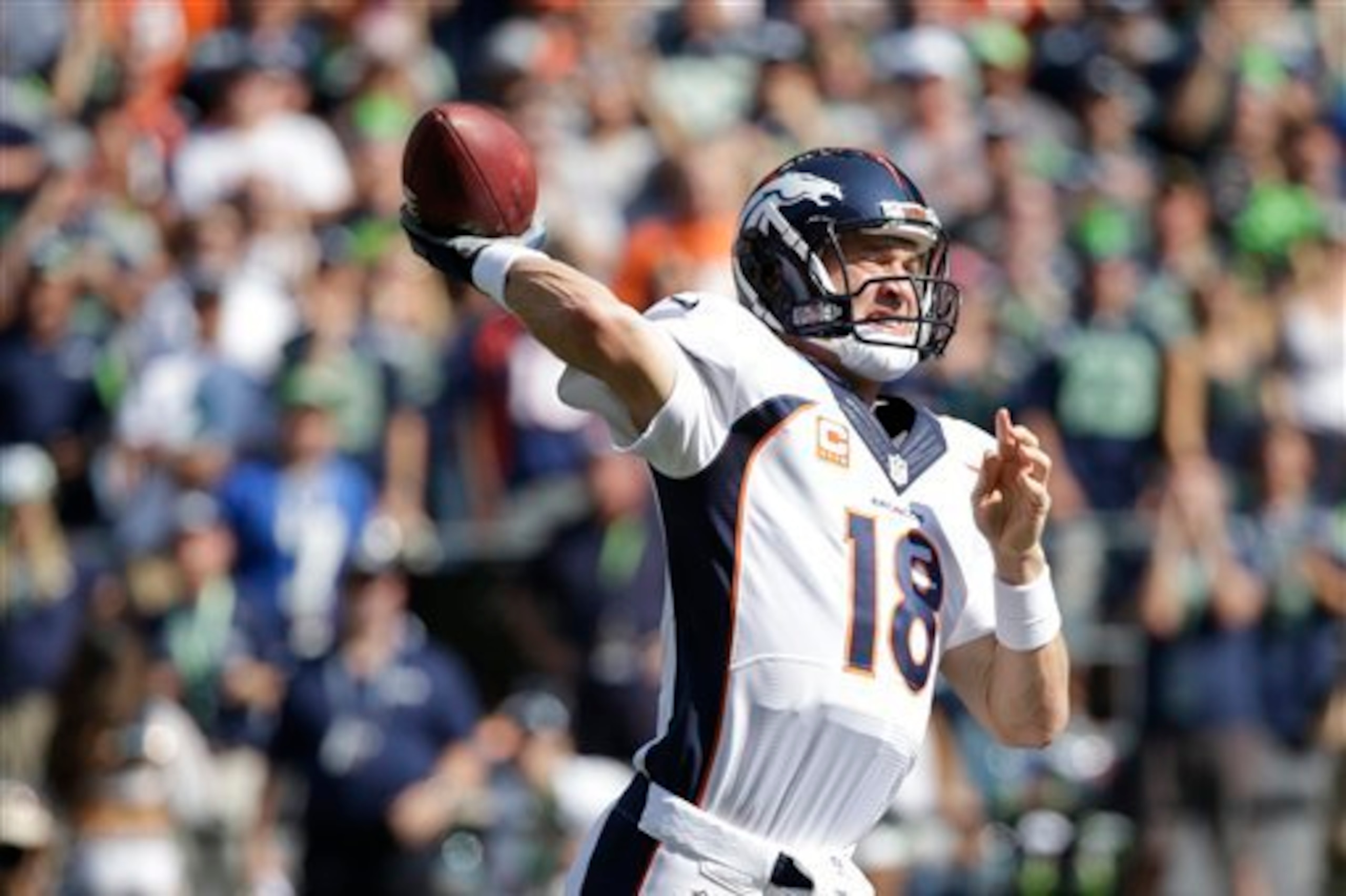
It’s hard to say exactly how but, like fine wines, some athletes actually improve with age. While a majority of even the brightest stars in sports eventually hit a wall, guys like Peyton Manning, Nicklas Lidstrom and Tim Howard rejected notions of time, hitting their grooves when most of their peers were hitting the couch (of course, Manning and Howard are still at it today).
With the aforementioned guys in mind, we decided to explore sports stars who used “old age” as an asset rather than a crutch. With just a little time and research, we’ve singled out 13 athletes who stared Father Time in the eyes, smacked him in the face and then kept on trucking.
To be sure, these aren’t simply athletes who managed to stay around past their primes. Instead, we’re featuring 13 fine-wine athletes—transcendent stars who somehow found a way to thrive and get better with every passing year.
Bernard Hopkins
1 of 10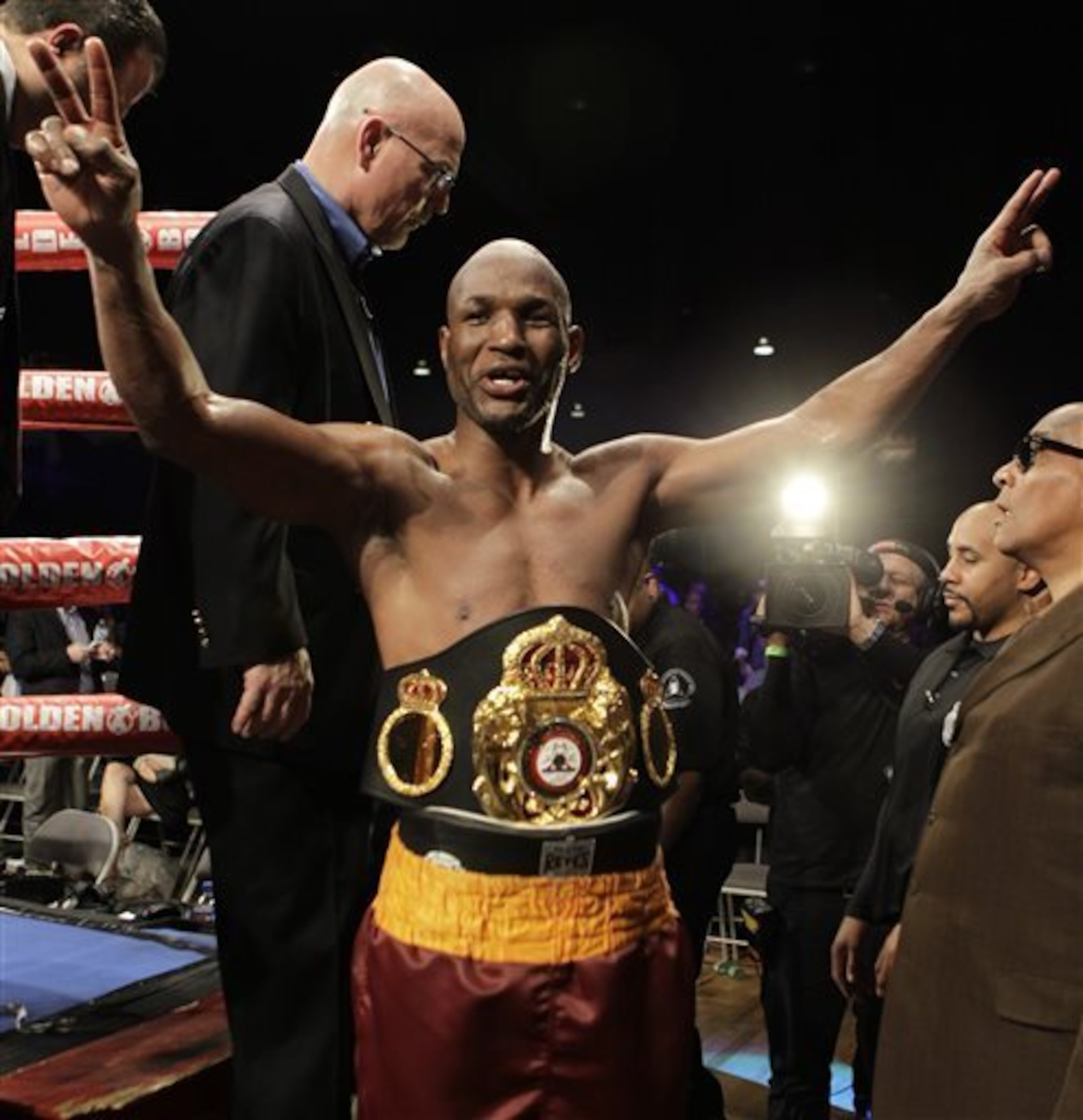
We begin with a seriously grown man (Hopkins is now 49) who competes in boxing—a grown man’s game.
The Executioner’s career longevity and success are unprecedented—he’s the oldest boxer in history to win a world title, defend a world title and to unify titles in a single weight division—and his 55 wins in 65 bouts are a testament to his overall consistency and impressive acumen in the ring.
In the twilight of his career, however, when most boxers are long retired, Hopkins is experiencing an awakening of sorts. A world-class middleweight for the vast majority of his time in the ring, the Philly product lost his title in 2005 and at that moment decided to move up to the light heavyweight division. Since then, he has been as prolific as ever.
In 2011, at 46 years of age, Hopkins won the WBC, IBO and The Ring Light Heavyweight titles. In 2013, he won the IBF Light Heavyweight title and successfully defended it as well. This year, he retained his IBF title once again and added the WBA title to his mantle.
All told, Hopkins has won three consecutive championship bouts and currently holds the same number of belts, with potentially another on the way (he has the chance to win the WBO title in November when he takes on Sergey Kovalev).
When Hopkins next takes the ring, he will be two months from 50 and just warming up.
Steve Nash
2 of 10
Nash has been sidelined with injury the better part of the last two years, but that doesn’t erase one simple fact: The Canadian point guard’s best on-court moments came at an age when the average NBAer isn't on the court at all.
In truth, the eight-time All-Star had a rather unique career arc. Nash didn’t become an everyday starter until he was 26 years old, a time at which most NBA stars enter their primes.
Nash, however, didn’t hit stride until 2005, when he was 31 and led the league in assists for the very first time.
And he was just getting started.
Nash ranked as the NBA’s best passer in four of the next six seasons (from 32 to 37 years of age) and was as good as ever at the age of 37, when he averaged nearly 15 points and 11.4 assists (not far from his career high of 11.6 APG) per game in 75 regular-season starts.
In the end, the more Nash played, the better he got, developing rather than deteriorating over time.
Tim Howard
3 of 10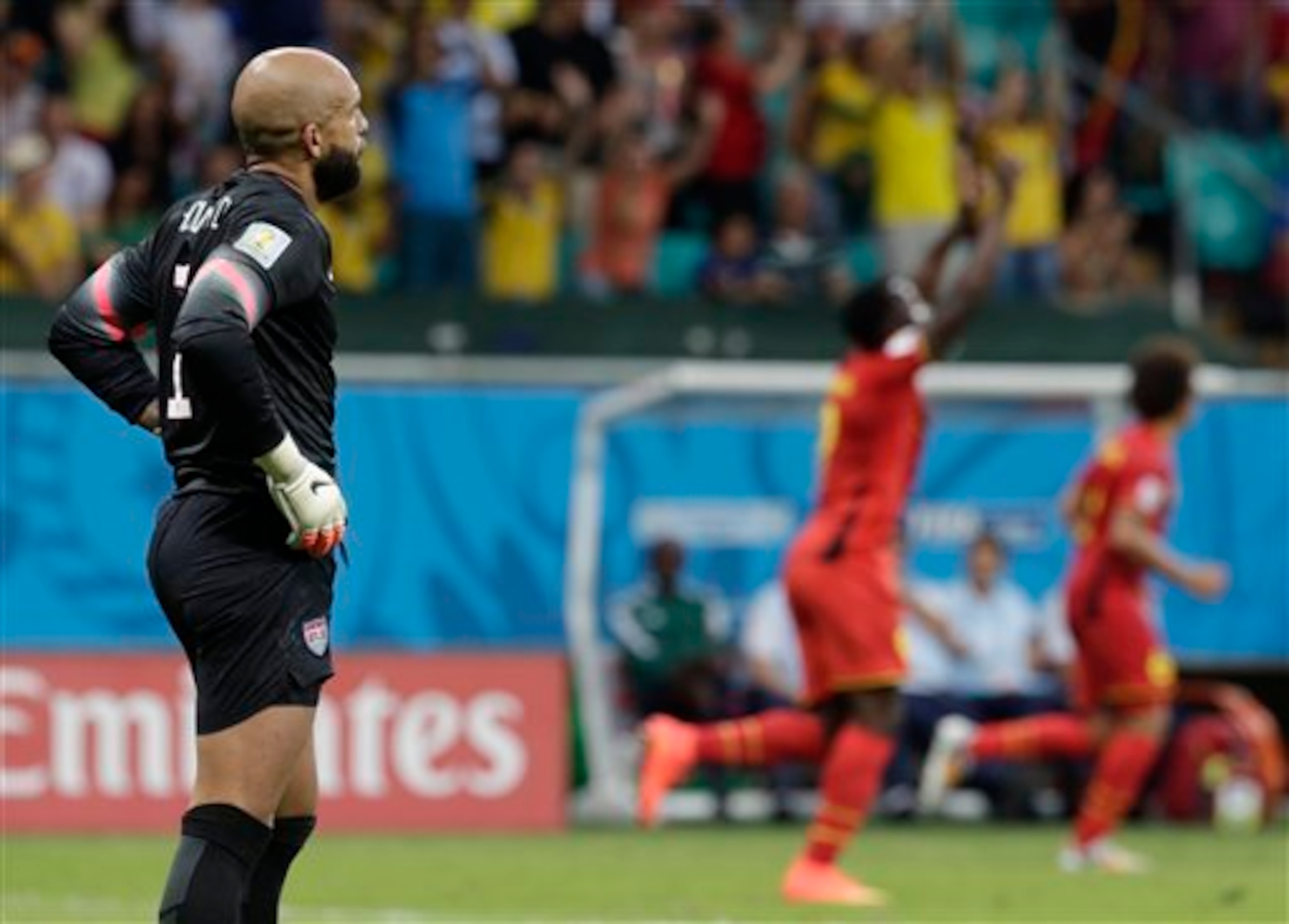
Like most sports, soccer is far from a young man’s game. Just don’t tell that to world-class goaltender Tim Howard. At the age of 35, Howard is playing better in the net than ever before.
He's best known for his role with the U.S. National team, for which he first appeared in 2002. He did not, however, become the team’s starter until 2007, sitting behind an elite goalie in Kasey Keller for roughly five years.
On the club level, Howard achieved success at an earlier date and was named MLS Goalkeeper of the Year in 2001. But this accomplishment paled in comparison to what would come.
In the 2009 FIFA Confederations Cup, a 30-year-old Howard carried the Americans to a world-shocking win over Spain and second-place finish, and he took home the tournament’s Golden Glove award as a result. Between then and 2013, Howard managed to win three more Goalkeeper of the Year awards, tripling his output prior to ’09.
Of course, he also saved his best play for 2014 and the biggest stage of all—the World Cup. Against Belgium in the round of 16, Howard put forth a legendary, career-defining performance with a World-Cup record 16 saves.
Only Howard knows when he will retire, but for now, time is clearly on his side.
.jpg?w=2560 "NFL Paris Football")
.jpg?w=2560 "Seahawks Chiefs Football")
.jpg?w=2560)
Dara Torres
4 of 10
Perhaps no one on our list belongs more than Dara Torres. The age-defying swimmer competed in a whopping five different Olympics (’84, ’88, ’92, ‘00, ’08), spanning 24 years and winning an impressive 12 medals (four gold, four silver, four bronze).
In 2008, at the age of 41, Torres became the first woman in history to swim in the Olympics past the age of 40, a significant accomplishment on its own. Believe or not, though, Torres actually reached new heights in Beijing.
In all, she took home three silver medals. More importantly, she captured her first-ever silver in an individual event (prior to 2008, Torres had won three bronze medals in four individual races), setting a new American record in the 50-meter freestyle while finishing just one one-hundredth of a second behind the winner, Britta Steffen.
During a career that spanned nearly three full decades, Torres defied logic, managing to swim faster and get older at the very same time.
Scott Stevens
5 of 10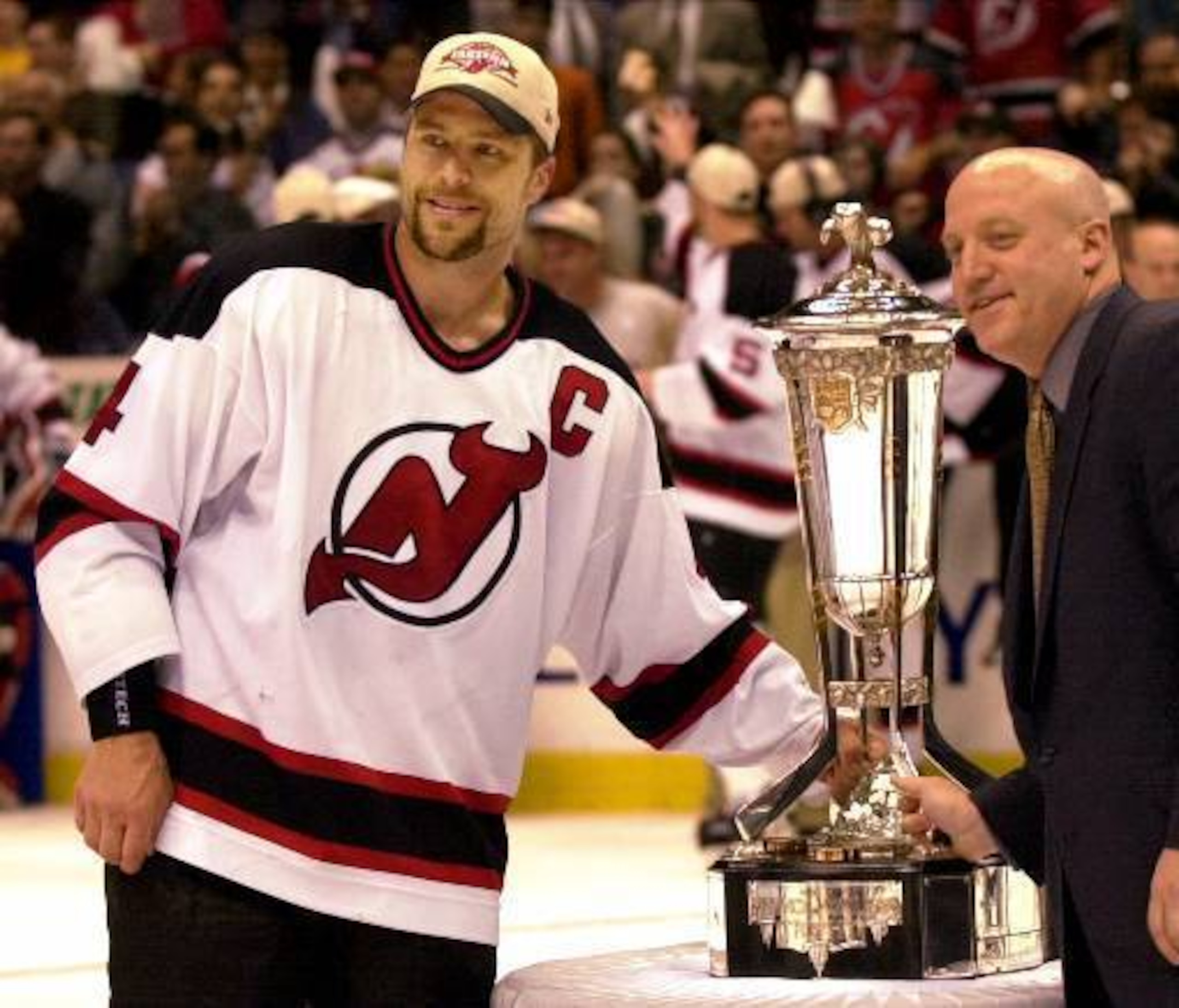
Stevens, a once-vicious defenseman, spent more than 20 years in the NHL (from 1982-2004), including 14 in New Jersey. For his Hall of Fame efforts, he was the longest reigning captain in Devils history and the first player in team history to have his number retired.
With that said, Stevens makes our list for impressive play late in his career. The 13-time All-Star excelled throughout the entirety of his playing days, but also achieved All-Star status three times in his last four seasons (missed the cut in 2002), refusing to let Father Time catch up.
Over the years, Stevens also won three Stanley Cups, but his Devils didn’t realize his true dominance until he was named captain during the final stages of his career.
With everyone looking toward Captain Crunch, he led New Jersey to titles in two of his last four seasons (2000, 2003), winning the Conn Smythe Trophy for Stanley Cup MVP in 2000, at the age of 37.
During his long illustrious career—which only got better in the end—Stevens didn’t ignore time, he embraced it.
Steffi Graf
6 of 10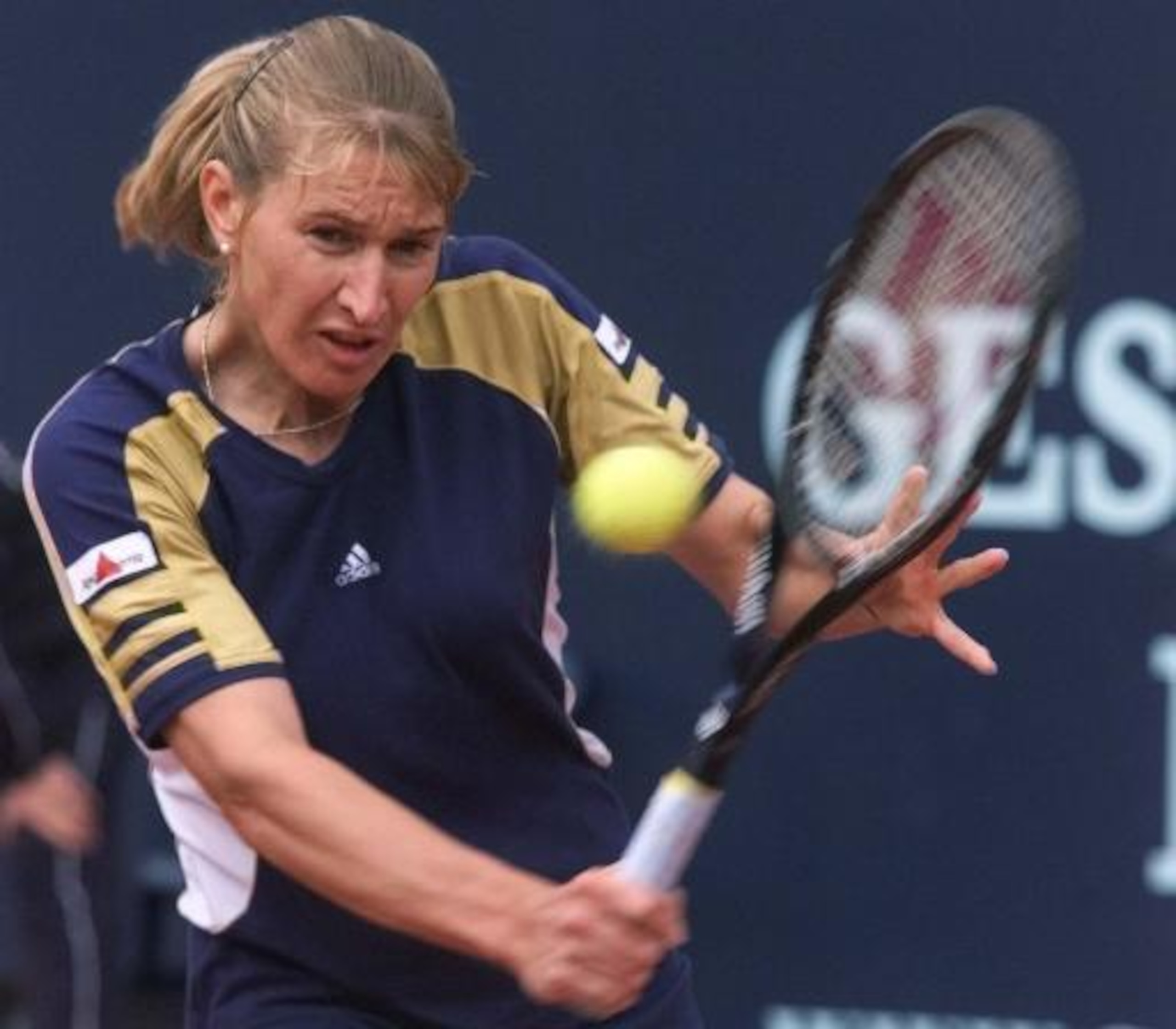
Like the list’s other members, Graf won big late in her career. In truth, she won big throughout nearly all of her career, capturing more major titles (22) than any player since the introduction of the Open Era in 1968. She’s also the only player to win at least four singles titles at each of the four Grand Slams.
There’s no doubt about it: Graf’s best year came in 1988 when she was just 19 years of age. In unprecedented fashion, she won all four Grand Slam titles and a gold medal at the Seoul Olympic Games as well.
Yet in the three years following the 1989 season, Graf hit a wall, fighting injury and fatigue to win just three Grand Slam victories in total.
As you may have guessed, though, time was Graf’s friend, and she finished off her career with a major bang. In her final four healthy years on tour (1993-96), the German-born star won an amazing 10 of a possible 16 Grand Slam titles, including three of four at Wimbledon, the French and U.S. Open.
At a time when tennis enthusiasts thought Graf was over the hill, she simply got out her bulldozer and went back to work.
Nicklas Lidstrom
7 of 10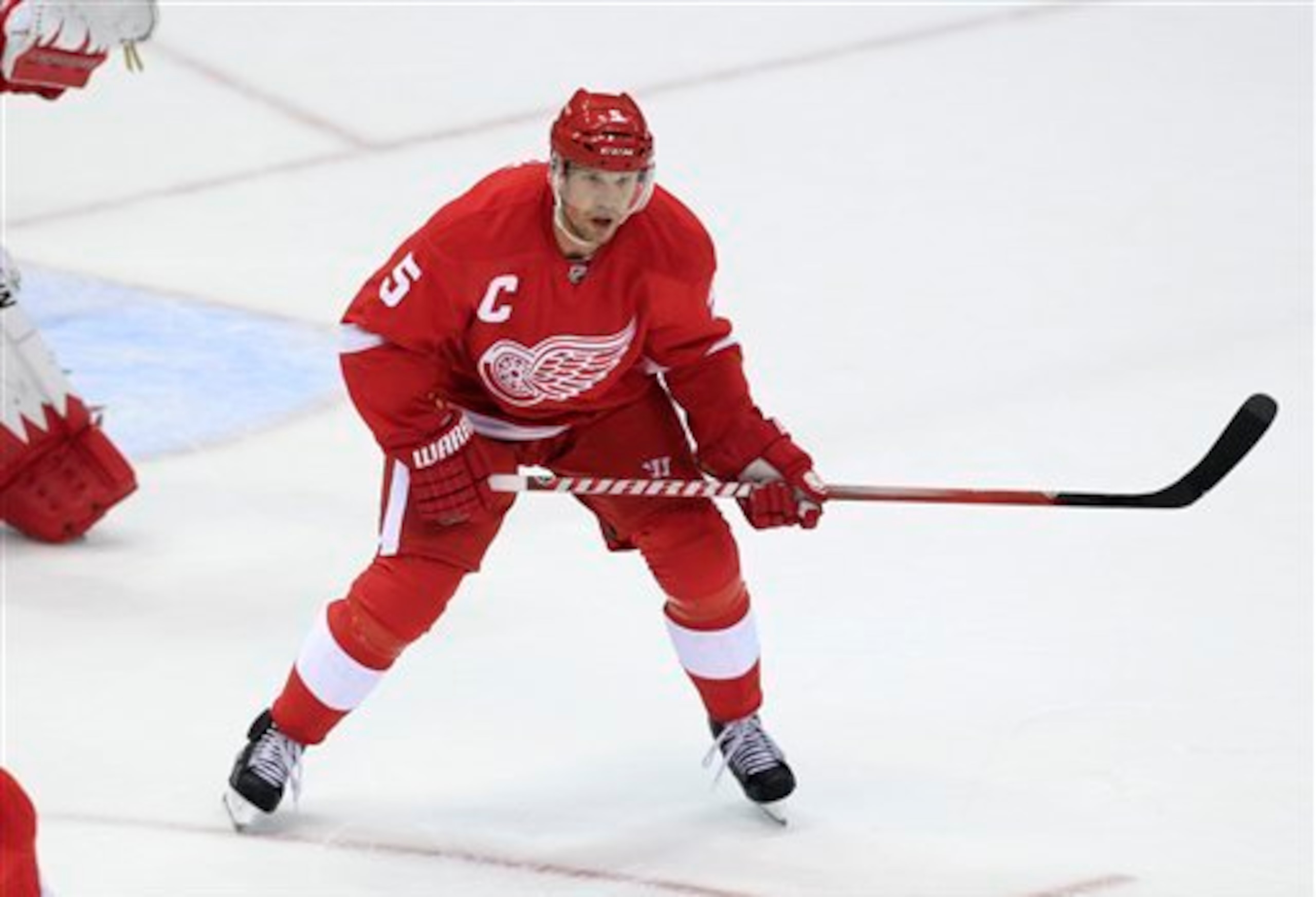
Nicklas Lidstrom played professional hockey for an incredible 25 years, 20 in the NHL, and all for the Detroit Red Wings.
Detroit drafted Lidstrom in 1989, but the defenseman didn’t find his top form until his 13th season in the league (2001). From then on, there was no slowing Mr. Perfect.
Lidstrom became the first defenseman since Bobby Orr to win three consecutive Norris Trophies (awarded to the NHL’s top defender) and ended his career winning the award in seven of his last 11 seasons, including in his final year when he 41 years old.
Like few ever have, Lidstrom defied all rules concerning age, still on top when he finally called it quits.
Martin and Sanders
8 of 10
Barry Sanders and Curtis Martin have a lot in common. Both are Hall of Fame running backs. Both hung up their cleats at relatively young ages (Martin was 32, Sanders was 30). And, despite playing a position known for wear and tear and short shelf lives, both Martin and Sanders ran wild until the day they called it quits.
On average, running backs are most productive between the ages of 26 and 27. From there, most experience a rather steady decline.
In the case of Martin, however, regression wasn’t part of the equation. In fact, the longtime Jet retired in 2005, but not before experiencing his best season of all in 2004.
In his second-to-last assault on the NFL, Martin bulled his way to a career-high 1,697 yards in addition to scoring 14 TDs, his best total in almost 10 years (he scored 17 TDs in 1996, but rushed for 545 fewer yards).
Like Martin, Barry Sanders only got stronger with age. As a result, his retirement in 1998 stunned the football world for sure.
His rushing output in his final year—1,491 yards—was better than his rushing totals in ’89, ’90, ’92 and ’93, and just nine yards shy of his output in 1995. And in 1997, his second-to-last year in the league, Sanders had his best season of all, rushing for 2,053 yards to go along with 11 TDs. He scored 37 of his 99 career TDs during his final four years in the NFL.
In much the same way, then, both Martin and Sanders departed from football well before football departed from them.
Kim Clijsters
9 of 10
This tennis star had perhaps the most unique career of any athlete on our list. Clijsters first turned pro in 1997 and, despite experiencing a modicum of success, didn’t win a single major in her first eight years on tour.
The Belgium-born star got over the hump in 2005 when she won the U.S. Open, but then surprisingly decided to retire just two short years later.
Yet Clijsters returned to tennis in 2009 and, at 27 years of age, was somehow better than ever. Simply put, she was better than everyone else, too.
In only her third tournament back, Aussie Kim managed to win her second U.S. Open title and was only getting started.
During her three-year return to tennis—from 2009-2011—Clijsters won three of her four career Grand Slam titles, including one in each season. She was named the WTA Player of the Year in 2010 and climbed all the way to No. 1 in the world in 2011.
By the end of it all, Clijsters proved age doesn’t affect everyone in quite the same way.
Elway, Manning and Warner
10 of 10
As we bring our tour to an end, we arrive at the quarterback portion of things, where we’ve grouped together three NFL legends. And while all three are unique in their own right, they share one thing in common: Each found a way to get better with every passing season (pun intended).
Unlike the other two—who simply improved as they aged—Kurt Warner didn’t actually arrive until he was already relatively old (28). He exploded onto the scene with the Rams in 1999, when he threw for 4,353 yards to go along with 41 TDs. Warner went on to have two more prolific seasons in St. Louis, which included a Super Bowl ring in 2000.
For the next five years, though, Warner was either injured or average during stints with the Rams, Giants and Cardinals.
Then, in 2007, at the age of 36, the four-time Pro Bowler rediscovered his magic. During his final three seasons in the league (’07-’09), Warner threw for nearly 12,000 yards to go along with 83 touchdowns, and in 2008, he had perhaps his best season of all (4,583 yards, 30 TDs).
Unlike Warner, Manning was a star from the moment he was drafted first overall in 1998. During his 15 complete seasons to date (he started all 16 regular-season games in each), Manning made 13 Pro Bowls. And even with his physical skills clearly diminishing by the year (he is now 38 years old), his mental growth allows him to continue getting better.
In fact, each of his last four seasons rank among his five most prolific ever (the other came in 2004). Better yet, his best performance of all came just last year when, en route to a Super Bowl appearance, he threw for an astonishing 5,477 (818 yards more than ever before) yards and 55 TDs, both NFL records.
We end our quarterback section with John Elway who, like Manning, never struggled for long. When he retired in 1999, following a 16-year career, he was statistically the second-most prolific passer in NFL history.
Elway accomplished nearly everything by 1996, including three Super Bowl appearances (all losses). He didn’t, however, put it all together until his final two seasons in the league, when he threw for 6,441 yards and 49 TDs in the midst of winning back-to-back Super Bowls.
Even in "old age," Warner found his rhythm, Manning transformed his game, and Elway reached the promised land.
Follow Janovitz on Twitter @BrainTrain9
.jpg?w=2560 "Titans Colts Football")