

Frank Wren's Firing Highlights Misguided Nostalgia for the Braves Way
For the first time in their history, the Atlanta Braves fired a General Manager.
Frank Wren, and one of his assistant GMs, Bruce Manno, were dismissed by the organization early Monday morning, less than 24 hours after the team had been eliminated from playoff contention.
Most writers and fans who follow the Braves knew that someone would be taking the blame for the team’s second half collapse—their second such collapse in the past four years. The damage has so far been limited to the front office, with manager Fredi Gonzalez and his entire coaching staff keeping their jobs.
TOP NEWS

Realistic Offseason Trade Ideas 💡

Players Who Were Worse Than You Think in 2026 ⚾
Sox Brass Met With Contreras
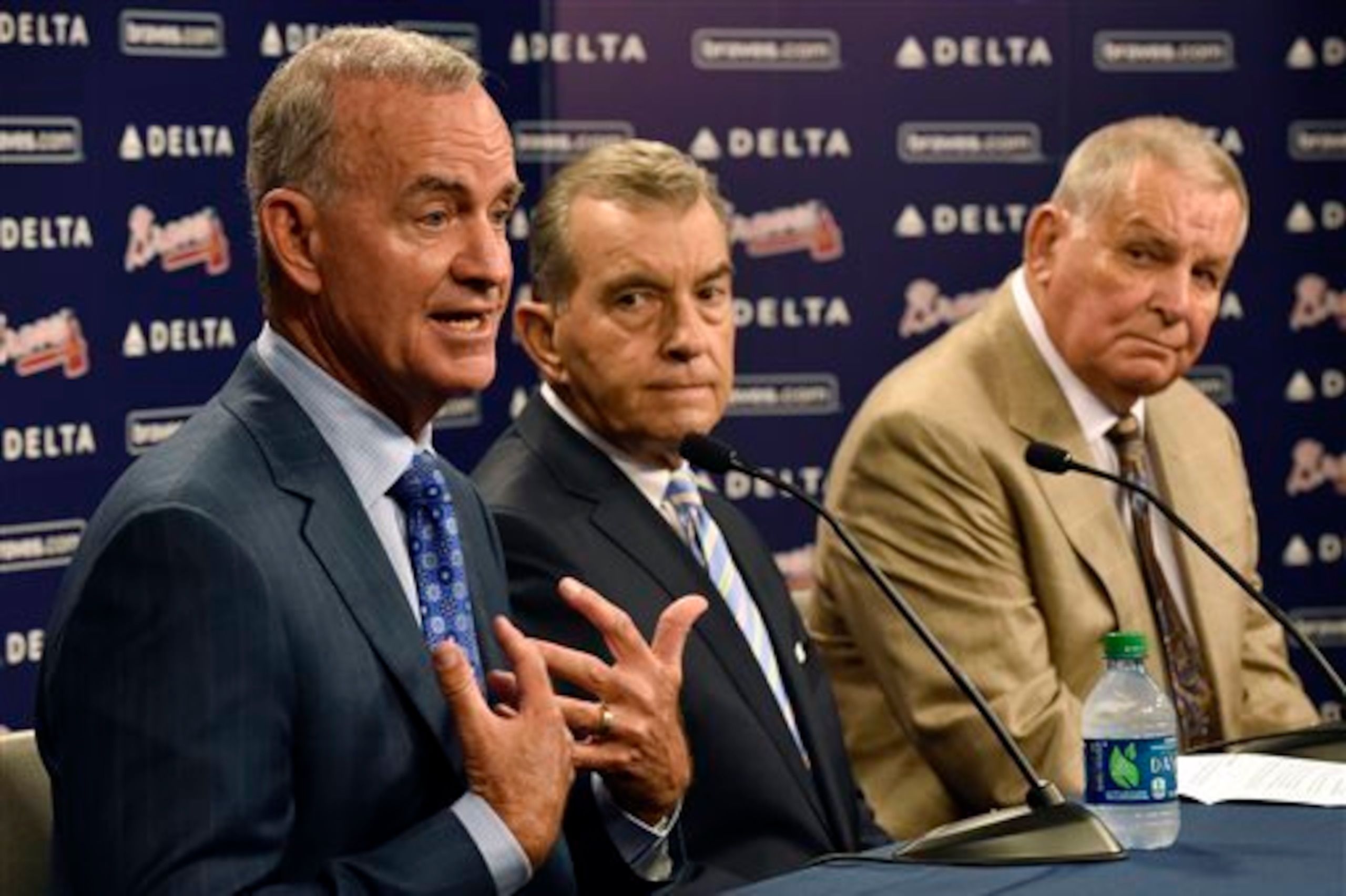
Team President John Schuerholz addressed the media in a press conference, streamed live on MLB.com on Monday. He was flanked by longtime manager Bobby Cox and special assistant, now interim GM, John Hart. Those three veteran baseball men will form the search committee that will choose the team’s next general manager.
Throughout the press conference Schuerholz continued to refer to “The Braves Way.” The biggest reason given for Wren’s dismissal was that under his leadership the organization, in Schuerholz’s opinion, had lost “The Braves Way.”
Reporters prodded him for more information, though the notoriously tight-lipped Schuerholz did not divulge any specifics, only repeating that “The Braves Way” had been lost.
Finally he was asked to define “The Braves Way,” and this is what he said:
"It’s a special way of identifying young players who you want to become part of your organization with great comfort and expectation that when they put on a Braves uniform, they’ll be taught well, instructed well. Their makeup and their character will allow them to turn into winning championship-caliber players. They’ll fill the pipeline of this organization with highly capable, high-character, young, winning men who help you win many, many championships on a major league level, year after year after year.
"
That goes beyond boilerplate sloganeering and smacks of misguided nostalgia and an unwillingness to recognize how the Braves place in the baseball landscape has changed.
Money
In the 90s when Schuerholz and Cox were winning division titles every year, the Braves were a different organization than they are today. Throughout that decade Atlanta had one of the top payrolls in baseball and were able to sign top free agents to record contracts (Greg Maddux) and trade with teams wanting to dump salary (Fred McGriff).

In 1999, the last time Atlanta was in the World Series, the team had the sixth-highest payroll in baseball. When they won the World Series in 1995, they had the third-highest payroll in baseball.
The year Frank Wren took the reigns as GM in 2008, the team had the 10th-highest payroll, at just over $102 million. Because of constraints placed on them by their corporate ownership, the team’s payroll has been lower than $100 million in every season until this year, when special permission was required to sign Ervin Santana at the last minute, pushing them over $100 million.
For the last few years their payroll has ranked somewhere in the mid-teens in all of baseball. They have become a mid-tier payroll team, no longer a top-tier payroll team.
Schuerholz can say “The Braves Way” all he wants, but a large and important part of The Braves Way was to outspend nearly everyone else.
Drafts
Another factor that played a major role in that way of the Braves, was the horrible teams of the late 80s. The poor records of those teams netted the organization high draft picks the following year.
For the latter half of the 80s, and the first year of the 90s, the Braves would use high first-round picks to collect the future cornerstones of the organization. Players like Chipper Jones, Steve Avery and Kent Mercker were products of high draft picks.
When the Braves have had high draft picks in recent years, they’ve used them successfully to select cornerstones like Jason Heyward and Mike Minor. But in the draft, and in international signing circles as well, the Braves have again been hamstrung in recent years by budgetary constraints.
Where they used to spend the money necessary to sign the additional amateur player or two, they no longer seem to have that financial flexibility. This constraint seems to have been placed on them by upper management and team ownership, and not by a decision of the GM.
Luck
Schuerholz has also not examined how lucky he was with so many of his moves, just as Wren has been extremely unlucky.

Schuerholz signed Brian Jordan to a big-money contract and got great production out of him. Wren signed B.J. Upton, and has gotten negative wins above replacement from him in two years.
Schuerholz was lucky to get two of the best years out of pitcher John Burkett at bargain prices, while Wren paid big money for Derek Lowe, who never amounted to much in Atlanta.
The luck Schuerholz had in getting players on career years was uncanny. Gary Sheffield, J.D. Drew, Jaret Wright, Chris Hammond, Darren Holmes, Russ Ortiz, the list goes on.
Wren has had some luck in finding players off the scrap heap like Eric O’Flaherty and David Carpenter, but he hasn’t been the beneficiary of the inordinate amount of career years that occurred under the Schuerholz regime.
Nor has Wren had the luxury of penciling in three Hall of Fame starting pitchers every year for the better part of a decade—an occurrence so rare we may never again see such a trio stay together for so long.
False narrative
Either something else is at fault for the soured relationship between Schuerholz and Wren, or the former simply needed to find a fall guy. To foist the blame for this season on Wren, and for the only stated reason to be a loss of this nostalgic “Braves Way,” is foolish and arrogant.
It was back in February of this year, just as the organization was extending the core of their young team, when John Schuerholz extended the contracts of both Fredi Gonzalez and Frank Wren.
Has so much really gone wrong from then until now to warrant the dismissal of that GM who was rewarded with an extension just seven months ago?
Schuerholz may believe that The Braves Way is about drafting and developing talented players who also happen to have exceptional character, but the biggest blemish on that record came under his tenure, in the form of all-star embarrassment John Rocker.
Schuerholz had the money, the luck and a rare group of future Hall of Famers all on his side as he was building The Braves Way.
To lay the blame for the team’s failures on his successor for being unable to replicate those same conditions is misguided. The Braves real problem may be holding onto the nostalgia of a golden era, instead of facing the realities of this new era.

.jpg?w=2560 "2 NFL Officials Suspended")


.jpg?w=2560 "Mahomes' Wife Trolls Kubiak 💀")

.jpg?w=2560 "Injury-stricken Seahawks signing veteran RB")
.jpg?w=2560 "Love's Body Already 'Tired'")
