
NFL Week 2 Injury Notebook
The first week of the 2014 NFL season officially came to a close Monday night. The Seattle Seahawks and Denver Broncos picked up where they left off, representing the class of the NFC and AFC, respectively.
Overall, Week 1 felt—admittedly very unscientifically—like a slightly above-average injury week.
As expected, dozens of minor bumps and bruises surfaced, but so did three Achilles tendon tears. The St. Louis Rams and San Diego Chargers lost key players, and Tyler Eifert's graphic elbow injury captured the attention of many. Elsewhere, this year's No. 1 draft pick started his NFL career off on the wrong foot.
Then again, no show-stopping neck injuries took place, and here's hoping that trend continues.
As we head into Week 2's weekend, a number of players already find themselves out of starting lineups due to injuries, but several medical questions remain throughout the league.
This article will try to find some answers.
As a reminder, this weekly slideshow collects the incomplete and imprecise publicly available medical information from the NFL media sphere and attempts to boil it down into what fans and fantasy owners need to know about 10 key players. It is current as of Friday evening and is subject to change up until kickoffs on Sunday.
To review:
- A green-light player likely faces minimal to no limitations due to his injury or should stay in fantasy football lineups in spite of it.
- Yellow-light players' injuries merit consideration in both team and fantasy league circles. They can significantly affect a given player's production.
- Red-light players should remain in fantasy lineups only in the most desperate of circumstances or are already facing an extended absence.
Let's get started.
Sports Medicine Topic of the Week: The Spine Board
1 of 12
Each week, we will look at a different sports medicine topic that may come into play during a football game. This week's topic: the spine board.
All too often, an NFL athlete goes down as a result of a hit to the head, neck or back and does not immediately get back up. When this occurs, athletic trainers and team physicians assume the worst and try to convince themselves out of it—rather than the other way around.
First, they will run out to the player and begin to ask a series of questions to attempt to determine the injury's severity. The staff will also assess for limb movement, sensation and neck or back pain.
If everything tests normal, the medical team may decide to allow the athlete to stand and walk to the sideline. However, the presence of any neck or back pain, weakness or numbness may necessitate the use of a spine board.
Once it arrives, a group of personnel will work as a team to systematically roll or lift the athlete onto the board while at least one team member focuses on keeping the athlete's neck completely still. Then, by strapping the injured player to the board, the medical staff can help prevent him from suddenly moving and potentially displacing an unstable spine injury or fracture.
After all, when the consequences of a minuscule slip of a broken cervical vertebrae can include severe and even permanent neurological damage, no amount of caution is too great.
Cam Newton, QB, Carolina Panthers (Yellow)
2 of 12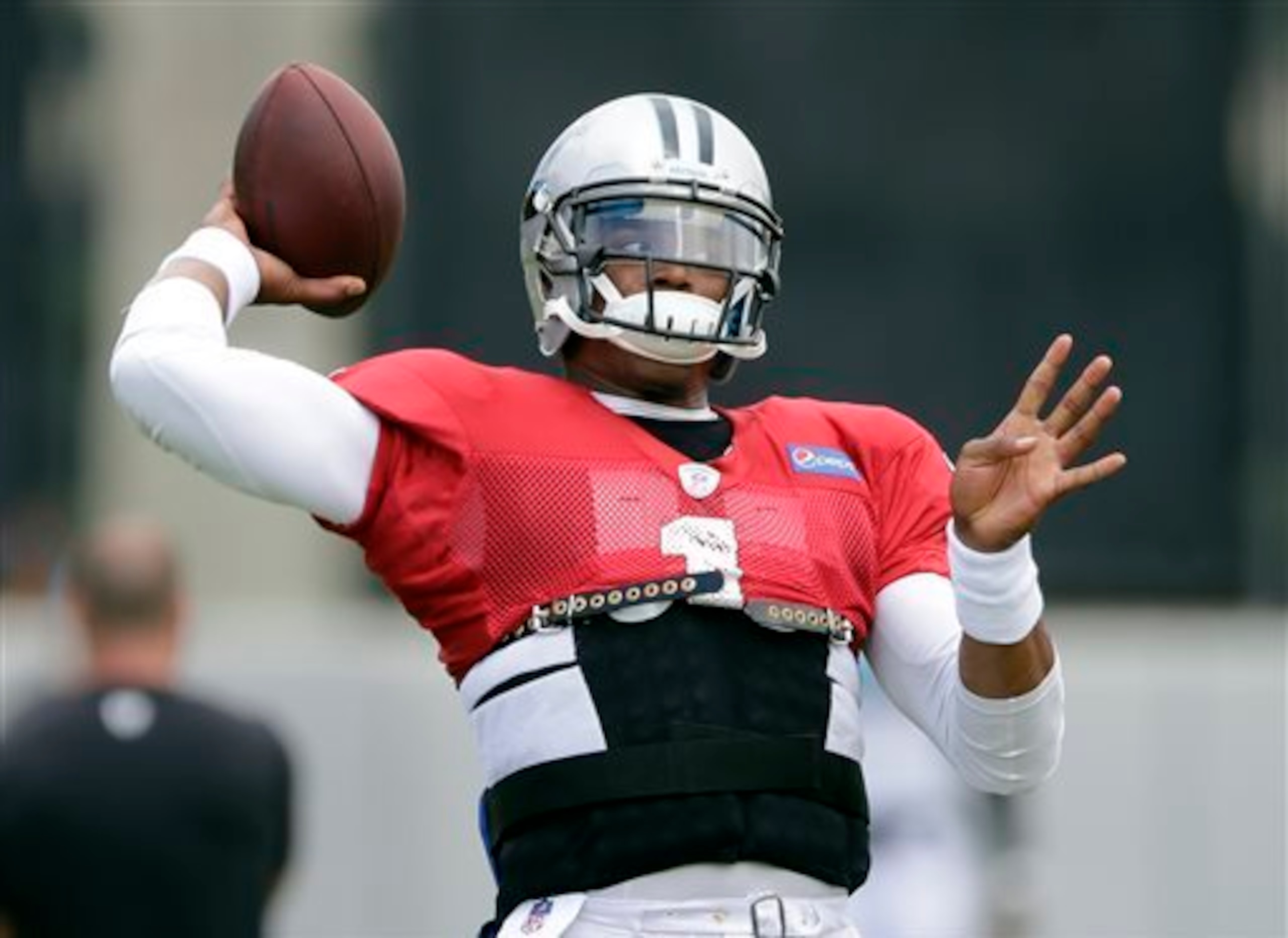
Player: Cam Newton, QB, Carolina Panthers
Injury: Rib fracture
Latest News: According to the Charlotte Observer's Joseph Person, Panthers head coach Ron Rivera "said there's 'no doubt' in his mind Newton will be ready to go against the Detroit Lions on Sunday at Bank of America Stadium."
Alert Level: Yellow
Relevant Medicine and Anatomy: Newton probably could have played through his broken rib last week, but the risk-versus-reward balance tipped too far in the wrong direction for Rivera and the Panthers medical staff. His rib continues to heal by the day, and it likely isn't yet back to 100 percent. However, another week of healing will allow it to withstand a blow that much more.
Possible On-Field Limitations and Considerations: Even though it seems Newton will take the field this week, his offensive line's job remains just as important as ever. Protecting its signal-caller from major hits to the chest and back will help him remain in the game.
Fantasy Advice: If Newton is your best option at quarterback by a good margin, start him. That said, he still remains at risk of a setback if a defender lands a blind-side hit or a shoulder to his chest. As such, owners can again justifiably choose to start a roughly equivalent option—or even a slightly inferior one—in order to see how Superman performs in his first regular-season game with his still largely untested receiving core.
Follow-Up: If Newton can avoid a significant body blow, his rib will continue to reattach itself week by week. Eventually, the fracture will fully solidify and no longer pose a threat.
Elsewhere, keep an eye out for reports of swelling in his ankle. Twinges of pain every now and then do not necessarily set off alarm bells, but recurring swelling and instability do.
Andre Ellington, RB, Arizona Cardinals (Yellow)
3 of 12
Player: Andre Ellington, RB, Arizona Cardinals
Injury: Peroneus longus strain
Latest News: Fox Sports' Mike Jurecki announced Ellington's injury involves his peroneus longus tendon. Cardinals writer Darren Urban notes that the running back should play Sunday: "Running back Andre Ellington was limited too, but he said he’s 'good to go' for Sunday and it would probably be an upset at this point if Ellington does not play."
Alert Level: Yellow
Relevant Medicine and Anatomy: The football world finally received some details on Ellington's mystery foot injury late last week, and relatively speaking, it's not nearly as bad as a foot injury could be. That said, it could linger for quite some time.
When the peroneus longus contracts, it turns the ankle outward and helps point the toes downward. Like all muscles, it does so by way of its tendon. Tendons do not have robust blood supplies and thus carry somewhat limited self-healing abilities.
Possible On-Field Limitations and Considerations: A peroneus longus injury can affect Ellington's cutting ability, especially when he tries to plant his injured foot out to the side and push off in the opposite direction.
Fantasy Advice: If you started him last week, you can do so with more confidence this week now that we know what injury he faces. However, keep an eye on the inactive list this Sunday just in case.
Follow-Up: Unfortunately, fantasy owners and Cardinals fans will likely find themselves revisiting Ellington's injury on a weekly basis for at least a few weeks—and potentially much longer. He may also sit out of practices somewhat routinely, and owners may need to get used to tweets such as this one from Urban.

.jpg?w=2560 "Commanders Eagles Football")

Eddie Lacy, RB, Green Bay Packers (Green)
4 of 12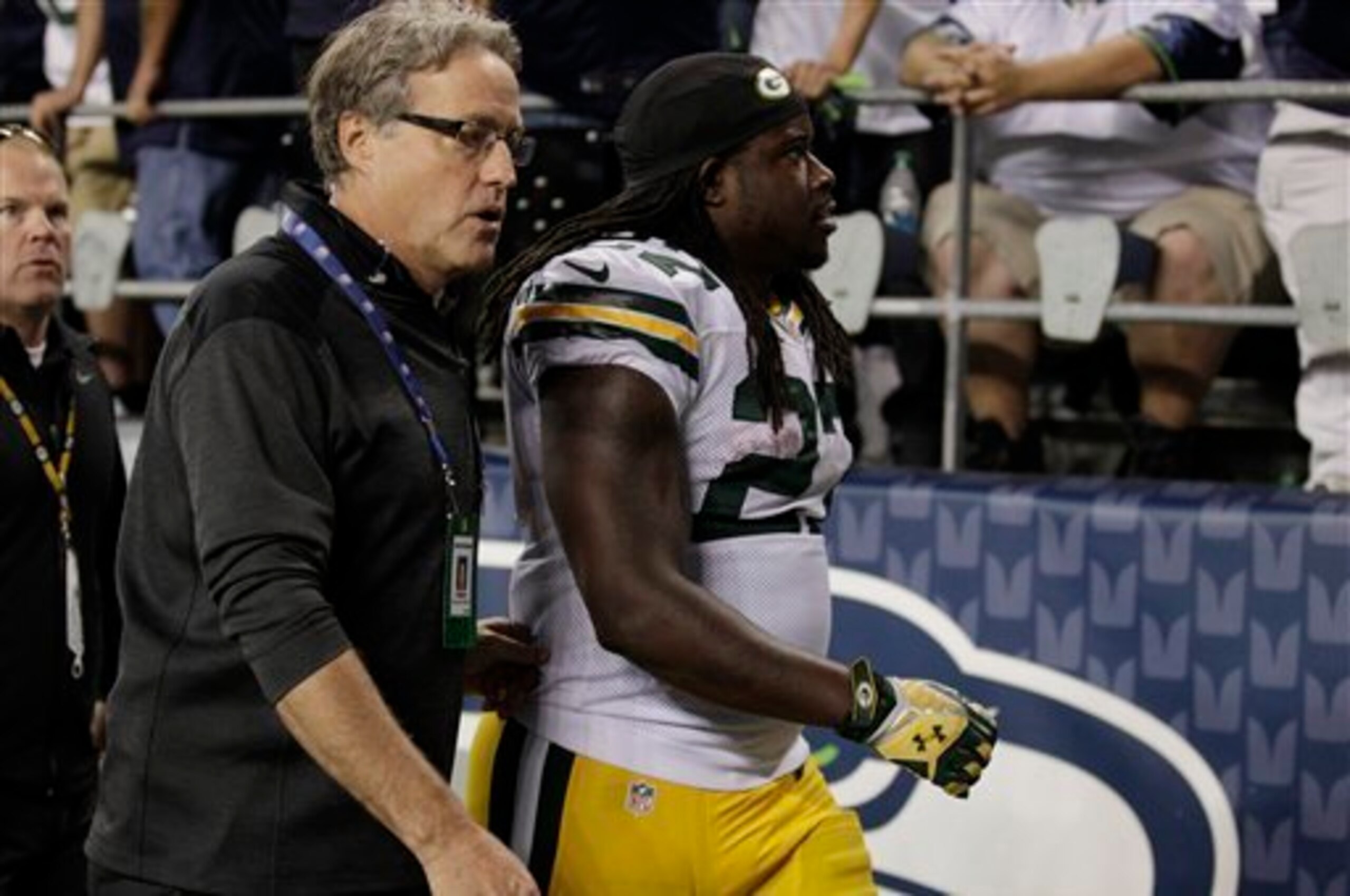
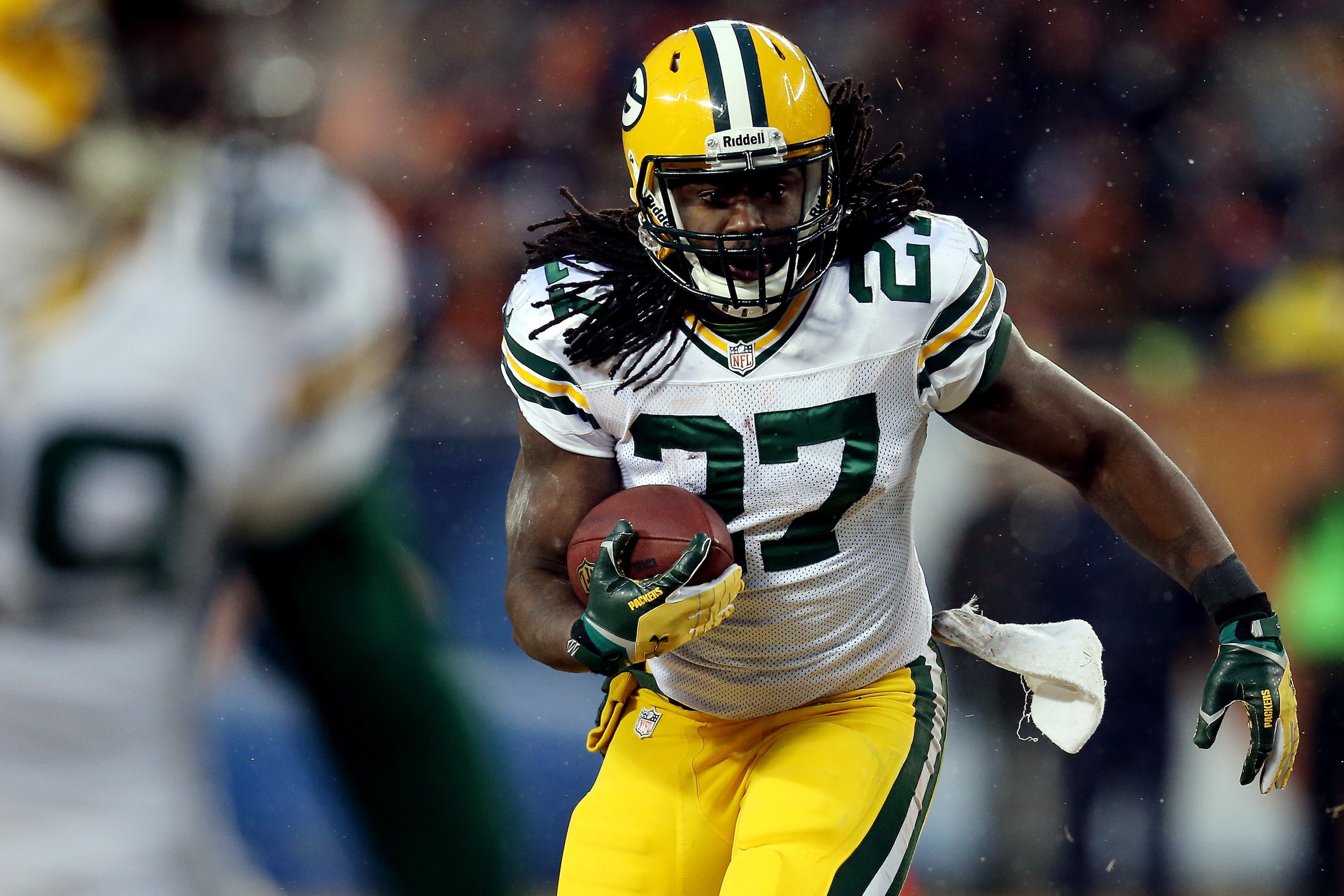
Player: Eddie Lacy, RB, Green Bay Packers
Injury: Concussion
Latest News: Packers head coach Mike McCarthy, via the official Packers Twitter account, announced Thursday that Lacy completed a "normal" practice and "is cleared." He suffered his concussion during Green Bay's season-opening contest against the Seattle Seahawks.
Alert Level: Green
Relevant Medicine and Anatomy: The large majority of concussions will heal within a week or two, and Lacy's most recent injury is no exception.
Nevertheless, concussions likely carry a cumulative effect to some degree. Current theory holds that each injury may carry a risk of longer-lasting and more severe symptoms. It may also become easier to suffer further concussions as an athlete's concussion tally increases, especially with multiple injuries over a short period of time.
Possible On-Field Limitations and Considerations: The concussion protocol monitors for the recurrence of concussion symptoms—headache and nausea, to name a few—during and after exercise of steadily increasing intensity. By achieving full medical clearance, Lacy likely exercised at or near full capacity and felt well throughout and afterward.
Fantasy Advice: It is safe to assume the former Crimson Tide standout will play at 100 percent—barring another injury, of course. Start him.
Follow-Up: While Lacy responded well to the appropriate management of his latest concussion, another head injury this year—which would be his third since joining the NFL, according to NFL.com's Gregg Rosenthal—will likely raise quite a bit of concern.
Alshon Jeffery, WR, Chicago Bears (Yellow)
5 of 12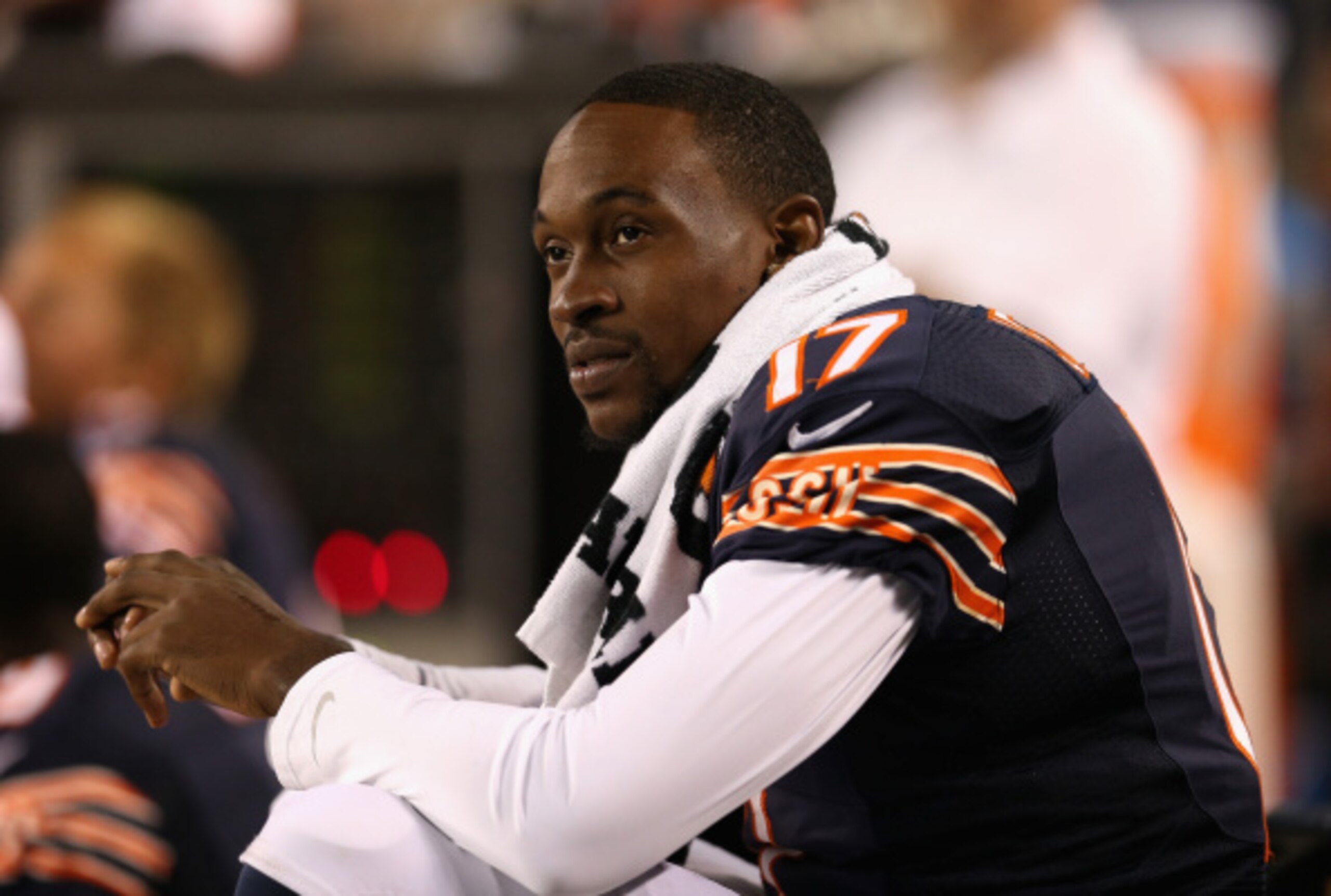
Player: Alshon Jeffery, WR, Chicago Bears
Injury: Hamstring strain
Latest News: According to the Chicago Tribune's Rich Campbell, Jeffery practiced on a limited basis on Friday. The reps were his first work this week after he suffered his injury last Sunday.
Alert Level: Yellow
Relevant Medicine and Anatomy: The three hamstring muscles primarily serve to bend the knee. When athletes sprint—the most common time an injury occurs—they rapidly cycle between maximum extension and contraction.
Predicting recovery times following a hamstring strain remains quite difficult. MRI findings do not always reliably correlate to return-to-play time, and doctors and therapists must rely on pain and other clinical signs and symptoms when making an ultimate decision. The fact that Jeffery did not practice at all until Friday hints his symptoms persisted during the early portion of the week.
To make matters worse, hamstring strains can linger, and re-injuries are common. A previous hamstring strain also statistically predisposes a player to another strain in the future.
Possible On-Field Limitations and Considerations: The last thing Bears doctors want is for Jeffery to return to action and suffer a setback, further limiting his early-season production. Several players—such as Green Bay Packers wide receiver Jordy Nelson, Packers cornerback Casey Hayward and Cleveland Browns wide receiver Miles Austin—battled recurring hamstring problems in recent years.
Fantasy Advice: If Jeffery does indeed start Week 2—a big "if" at this point—the chance that he assumes a decoy role, unfortunately, is quite real. However, his upside remains quite high when healthy, leaving fantasy owners with a tough decision if he does take the field Sunday night.
Pay very close attention to Bears injury news as the weekend moves on, as a game-time decision for Jeffery seems very likely. Regrettably, if he plays, both starting and sitting the wide receiver carry a high risk of the worst fantasy feeling of them all: the "Ah, I should have played/benched him!" moment. If only hindsight were foresight.
Follow-Up: As mentioned, hamstring injuries are notorious for lingering and recurring. Nothing suggests a serious, long-term problem as of yet, but Jeffery's injury discussion will likely persist into Week 3 at the very least.
Brandon Marshall, WR, Chicago Bears (Yellow)
6 of 12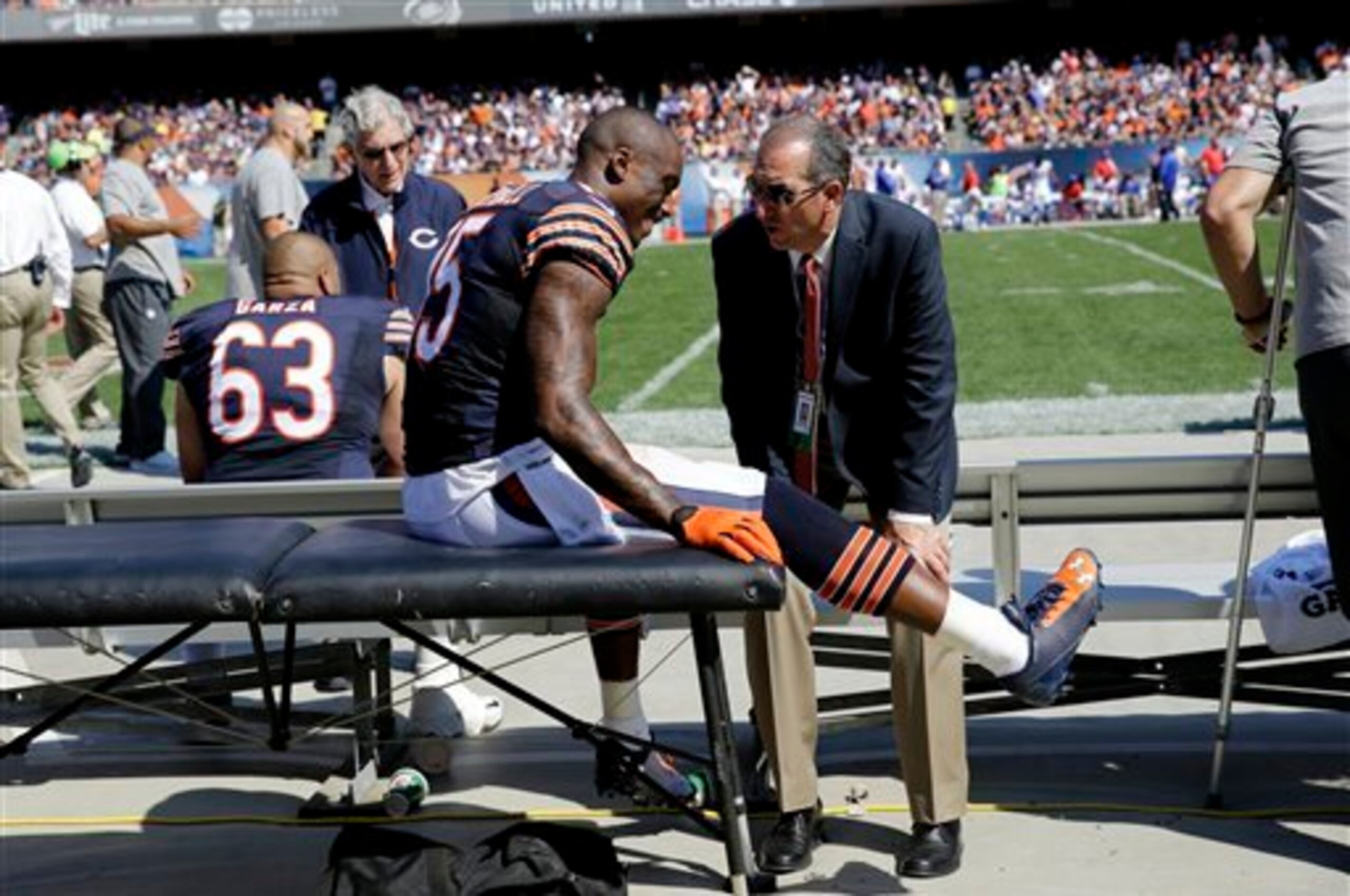
Player: Brandon Marshall, WR, Chicago Bears
Injury: Ankle sprain
Latest News: The Chicago Tribune's Rich Campbell reported Friday, via head coach Marc Trestman, that Marshall jogged on his injured ankle "but nothing more."
Alert Level: Yellow
Relevant Medicine and Anatomy: Several different ligaments keep the ankle joint stable when an athlete sprints, plants or cuts. Simple jogging does not test mild to moderate sprains very much and is thus not terribly reassuring.
Athletic trainers can use supportive taping to add some stability to the ankle. Fans may recall the picture of Denver Broncos quarterback Peyton Manning's taped ankle from late last season. However, positions that require quick changes in direction, such as wide receivers, face a different set of challenges.
Possible On-Field Limitations and Considerations: Ankle sprains not only lead to swelling and pain—which affect a player's speed and agility in their own right—but they also cause the injured ligaments to functionally weaken. As a result, they are less able to keep the joint in line during a game and likely at higher risk of further injury.
Fantasy Advice: Like his counterpart Alshon Jeffery, Marshall's status remains a bit of a question mark heading into the weekend. The Bears may decide his final outcome after evaluating him during warm-ups Sunday night. If he plays, limited work is a strong possibility.
Follow-Up: Most mild ankle sprains heal well. In some cases, multiple sprains can lead to chronically loose ligaments. Cam Newton's surgery addressed such an issue earlier this year.
Jordan Cameron, TE, Cleveland Browns (Yellow)
7 of 12
Player: Jordan Cameron, TE, Cleveland Browns
Injury: Acromioclavicular (AC) joint sprain (shoulder)
Latest News: The Akron Beacon Journal's Nate Urlich reported that Browns head coach Mike Pettine "still has hope" Cameron will play Week 2. However, Urlich also notes the tight end did not practice all week.
Alert Level: Yellow (if active)
Relevant Medicine and Anatomy: The AC joint marks the location where the clavicle—the collarbone—meets a bony extension of the shoulder blade known as the acromion. Ligaments connect the clavicle to the acromion, and a sprain occurs when they stretch or tear. In football, the injury often occurs as a result of a direct blow to the shoulder, either from another player or the ground.
The phrase "separated shoulder" refers to more serious versions of AC sprains where the ends of the clavicle and acromion separate and displace from each other.
Possible On-Field Limitations and Considerations: Athletes can play through mild AC sprains, but they run the risk of further, potentially more serious injury. Similar to last week, one big hit to the shoulder could end the tight end's day.
Fantasy Advice: If Cameron plays, the decision to start or sit the tight end this week depends largely on a fantasy owner's unique roster. After all, he remains one of the top receiving threats in Cleveland, and an injured-but-active Cameron probably still remains a better option than reaching for a distant backup.
Follow-Up: Mild AC sprains usually heal well. Cameron's recovery relies on avoiding big hits to his affected shoulder, which is, in the end, the probable reason behind why he may not suit up Week 2.
Rob Gronkowski, TE, New England Patriots (Green)
8 of 12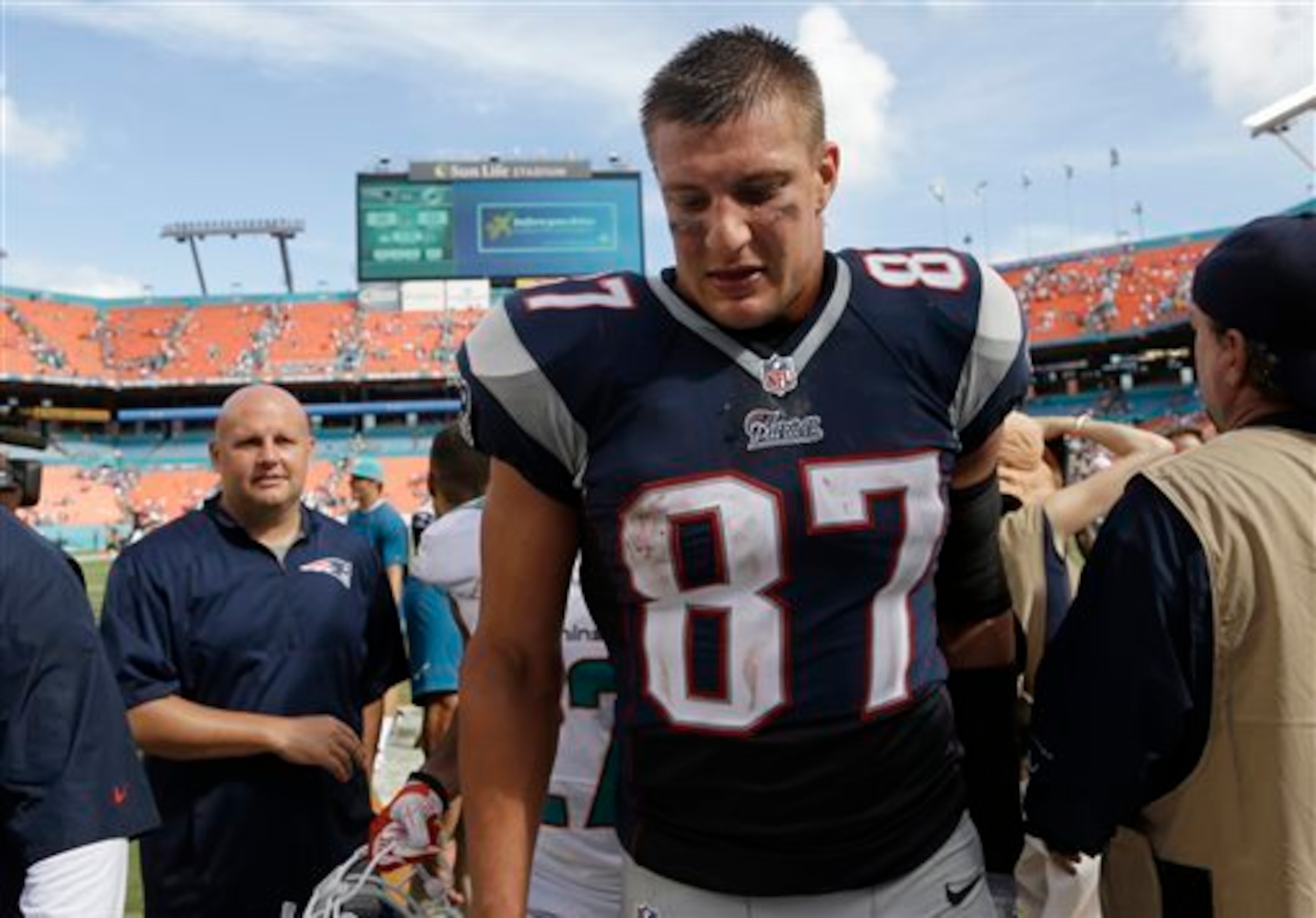
Player: Rob Gronkowski, TE, New England Patriots
Injury: Recovery from ACL, MCL tears
Latest News: Last week, Gronk amassed 40 receiving yards and one touchdown reception—10 points by standard fantasy scoring—reminding fantasy owners to start him whenever he is active. According to the Providence Journal's Mark Daniels, he played only 44 percent of the Patriots' offensive snaps.
Alert Level: Green
Relevant Medicine and Anatomy: The big tight end's new ACL will not reach full strength for some time, possibly after the season comes to a close. After all, ligament grafts continue to cement themselves within the knee well after an athlete attains full knee stability.
Possible On-Field Limitations and Considerations: Expect Gronk to continue to shake off the rust he showed at times last Sunday. The Patriots will also likely increase his workload with each setback-free week. The chance of a bad-luck repeat injury always exists, though.
Fantasy Advice: Start him once the Patriots list him as active—do not think twice. That said, do confirm his active status Sunday morning. A surprise scratch isn't impossible yet.
Follow-Up: If the Patriots increase Gronk's snap count this week and no knee complications arise, the elite tight end will likely move to the "quick hits" slide of this slideshow—and eventually off it altogether.
Vontaze Burfict, LB, Cincinnati Bengals (Yellow)
9 of 12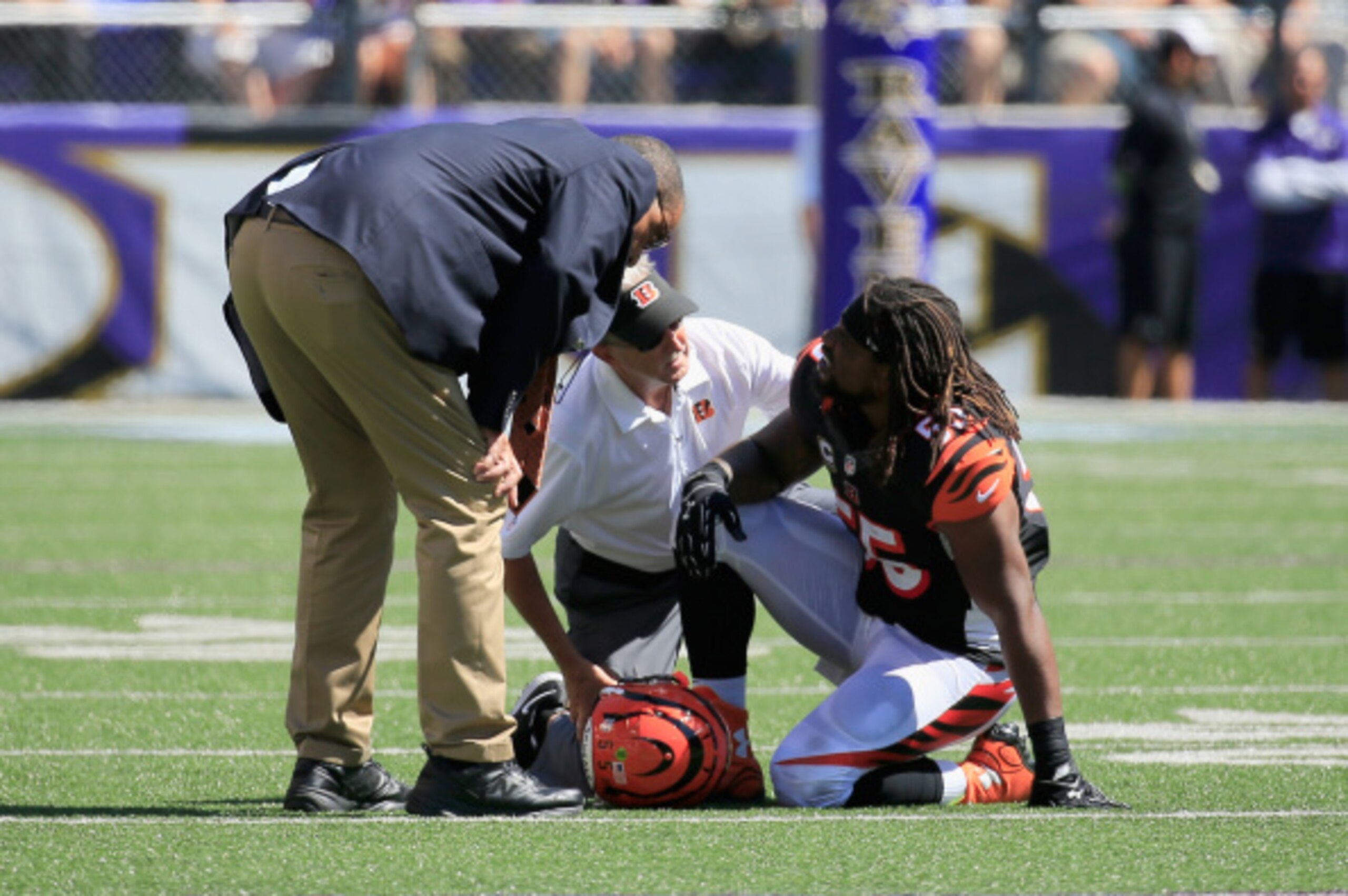
Player: Vontaze Burfict, LB, Cincinnati Bengals
Injury: Concussion
Latest News: The Cincinnati Enquirer's Paul Dehner Jr. reported Burfict returned to practice on Friday. The Bengals injury report lists him as questionable for Week 2.
Alert Level: Yellow
Relevant Medicine and Anatomy: The concussion protocol comes to a close when a player can return to practice without re-experiencing symptoms.
Why is that the case?
If a concussed athlete can reach maximum exertion—thereby diverting the largest possible amounts of blood and energy to the rest of his body—without overwhelming his healing brain, current widely accepted medical practice states he is ready to return to action. Such clearance assumes the athlete returned to his cognitive baseline, as well.
Possible On-Field Limitations and Considerations: Like Eddie Lacy, another concussion could set Burfict back significantly. However, if he plays, Bengals fans can expect him to play at 100 percent.
Fantasy Advice: The Bengals defense faces a very tough Atlanta Falcons offensive unit this week. It will need all of the help it can get.
Follow-Up: The longer an athlete can go between concussions, the better. As also mentioned with Lacy, concussions probably lead to longer-lasting and more severe symptoms with each injury. Hopefully, Burfict does not go down again anytime soon.
Jadeveon Clowney, LB, Houston Texans (Red)
10 of 12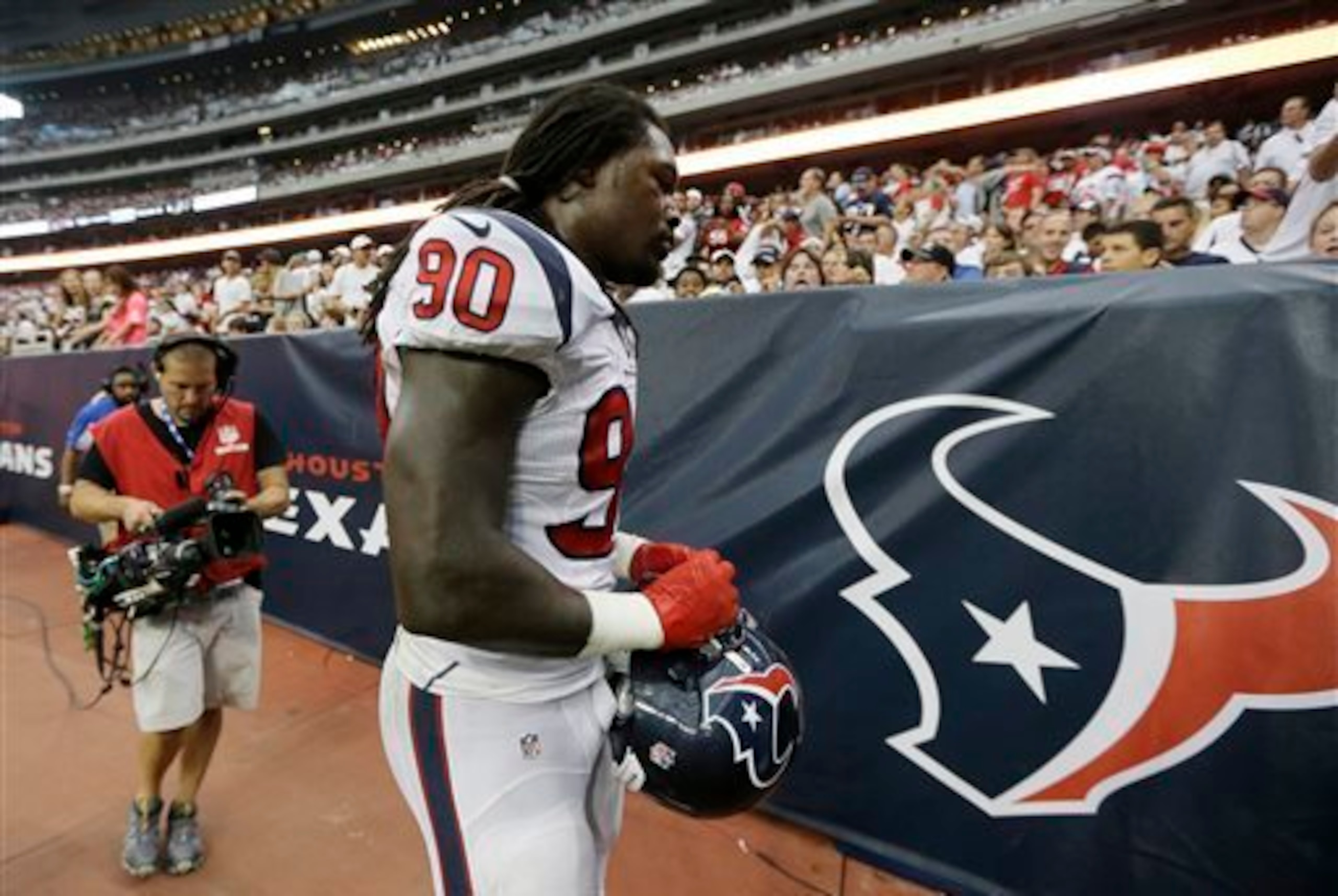
Player: Jadeveon Clowney, LB, Houston Texans
Injury: Lateral meniscus tear, arthroscopic surgery
Latest News: Brian T. Smith of the Houston Chronicle reported this week that Clowney underwent arthroscopic knee surgery due to his torn meniscus, receiving a projected recovery time of four to six weeks. According to NBC Sports (via Yahoo Sports) a source told Comcast Sports Net Houston that the former No. 1 pick suffered a tear to his lateral meniscus.
Alert Level: Red
Relevant Medicine and Anatomy: The meniscus sits between the femur and tibia—or thigh bone and shin bone, respectively. It functions as a shock-absorbing cartilage cushion.
The medial meniscus cushions the inner portion of the knee, and the lateral meniscus the outer portion. When an athlete lands or twists his knee awkwardly, the cartilage can tear. Frayed pieces can hang into the joint space, leading to swelling, pain and range of motion limitations.
The exact size, shape and location of a meniscus tear—as well as, ultimately, an athlete's preferences—will determine the injury's ultimate treatment. Generally speaking, a surgeon can either remove or repair the torn area.
Meniscus repairs usually require a long recovery—sometimes up to six months—but can better preserve the knee's structural integrity. On the other hand, rehab following a removal often proceeds over the course of a few to several weeks at the expense of a higher risk of quicker long-term degeneration.
Possible On-Field Limitations and Considerations: Partial meniscus removals often address the underlying problem quite well.
Fantasy Advice: The Texans defense goes up against a struggling Oakland Raiders offense this week and thus remains a strong start despite Clowney's looming absence.
Follow-Up: Keep an eye out for reports of ongoing knee swelling in the weeks to come, which could signify a lingering issue. At this point, there is no reason to expect such a complication—especially given the caliber of Clowney's medical and rehabilitation staffs.
Tyrann Mathieu, DB, Arizona Cardinals (Yellow)
11 of 12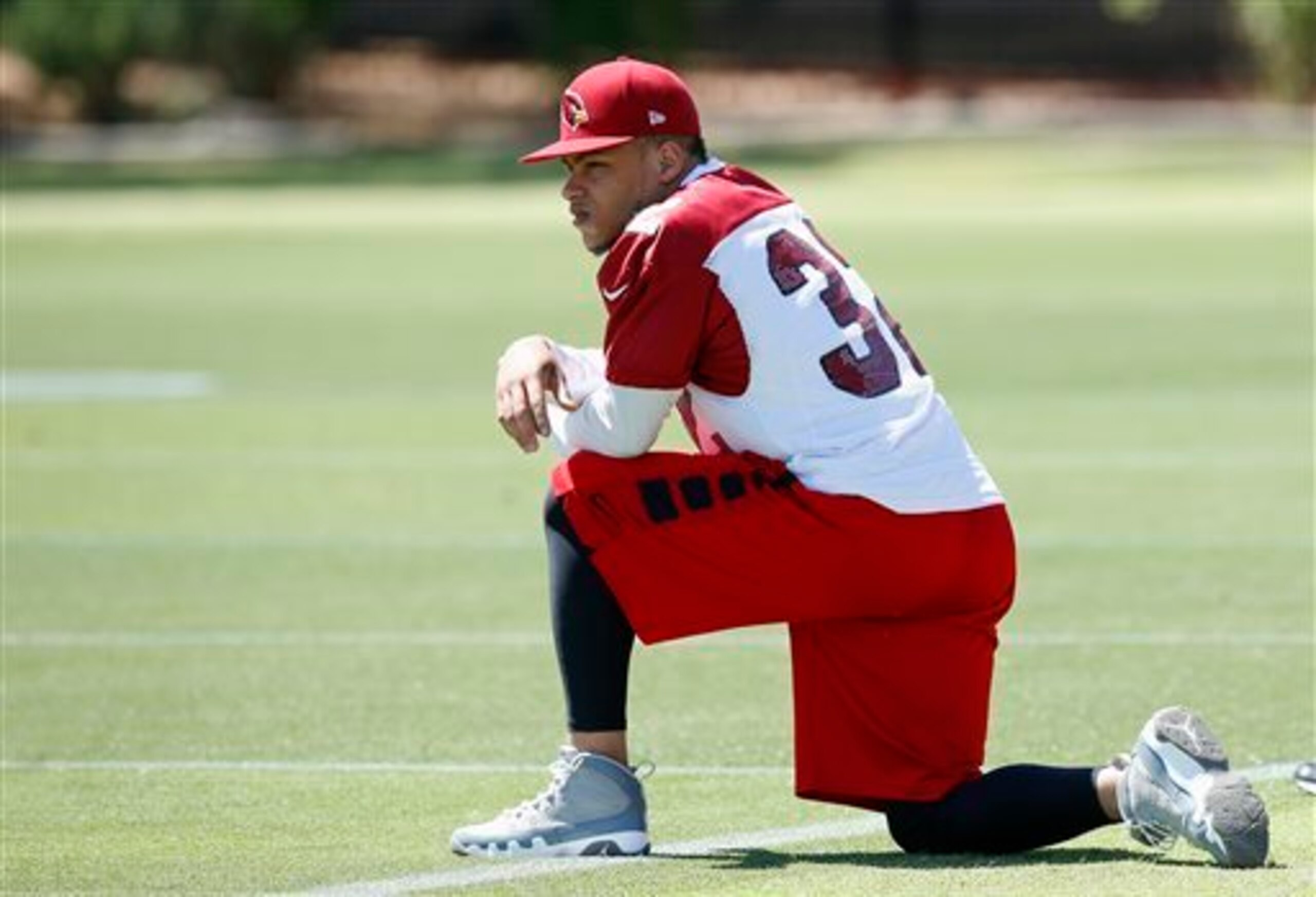
Player: Tyrann Mathieu, DB, Arizona Cardinals
Injury: Torn ACL, LCL
Latest News: After tearing his ACL and LCL late last year, Mathieu may make his season debut on Sunday. According to the Cardinals injury report, he is probable for Week 2.
Alert Level: Yellow
Relevant Medicine and Anatomy: Most fans know about the ACL by now. The LCL, on the other hand, does not grab as much media attention. With a full name of "lateral collateral ligament," it runs along the outside of the knee joint and prevents it from buckling outward.
Possible On-Field Limitations and Considerations: If Mathieu does indeed return this week after a nine-month layoff, he may show some rust. Furthermore, like Rob Gronkowski, his ACL graft will continue to strengthen in the weeks and months to come. That said, medical clearance implies a stable and strong knee.
Nevertheless, do not be surprised if the Cardinals decide to give him limited work this week.
Fantasy Advice: Facing the New York Giants, the Cardinals defense is a must-start unit this week in all fantasy leagues. Mathieu will only help its cause.
Follow-Up: As long as he can avoid significant contact to his healing knee, Mathieu will only become quicker and stronger as the season presses on.
Quick Hits
12 of 12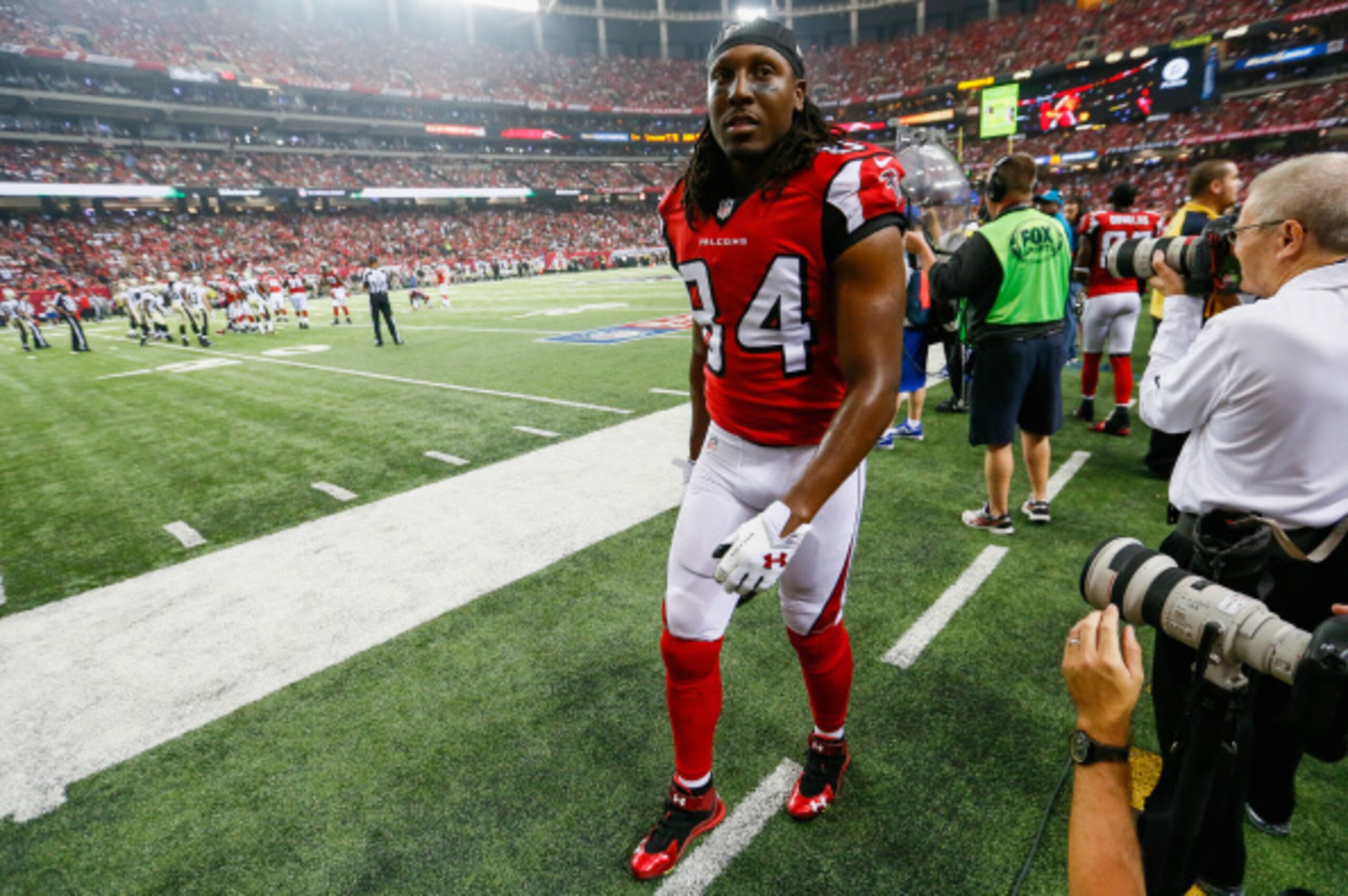
Quarterbacks
- New England Patriots quarterback Tom Brady does not appear on the official Patriots injury report this week. We may never know the degree to which his calf injury affected him last week, but both lead and plant leg calf injuries can affect throwing accuracy.
- According to Arizona Cardinals writer Darren Urban, quarterback Carson Palmer is battling a shoulder injury. That said, on Friday, head coach Bruce Arians "expressed confidence he'll be fine."
- Last week, I offered some caution that Dallas Cowboys quarterback Tony Romo might struggle in his first regular-season action since undergoing back surgery last year. Luckily, the Fort Worth Star-Telegram's Clarence E. Hill Jr. reports his back feels great—even after taking three more sacks Week 1.
Running backs
- According to the Florida Times-Union's Ryan O'Halloran, Jacksonville Jaguars running back Toby Gerhart will likely play through his ankle sprain this week. Presumably, it is a minor sprain, but fantasy owners should temper expectations a bit.
- CSN Bay Area's Scott Bair reported Thursday that Oakland Raiders running back Maurice Jones-Drew will likely miss Week 2 after undergoing hand surgery this week. Medical details are scarce.
- The Tampa Bay Buccaneers injury report lists running back Doug Martin as questionable for Week 2 with a knee injury. The nature of the injury is not clear, but he practiced on Thursday and Friday.
- Citing a source, NFL Network's Ian Rapoport projected a two-to-four week recovery for Cleveland Browns running back Ben Tate's knee sprain.
- ESPN's Ed Werder reports Carolina Panthers running back DeAngelo Williams is "not likely" to play this week. He is dealing with a thigh injury—which likely implies a quadriceps strain. The door opens once again for Jonathan Stewart—if he can stay healthy.
Wide receivers
- Jacksonville Jaguars writer John Oehser tweeted Friday that wide receiver Cecil Shorts III did not practice. He continues to battle a hamstring issue.
- Miami Dolphins wide receiver Mike Wallace is also dealing with a hamstring injury. The team injury report shows his practice participation trended upward as the week went on, offering some reassurance.
- Atlanta Falcons wide receiver Roddy White popped up on the team's injury report with a knee issue this week. However, he practiced in full on Friday. Consider him a safe fantasy start.
Tight ends
- According to ESPN.com's Coley Harvey, Cincinnati Bengals tight end Tyler Eifert hopes to return to action in November. He suffered a somewhat gruesome elbow dislocation last Sunday.
- Washington Redskins tight end Jordan Reed will miss at least Week 2 with a hamstring strain. The Associated Press' Mark Long tweeted the news earlier this week.
Others
- According to NFL.com's Dan Hanzus, the San Diego Chargers placed offensive line staple Nick Hardwick on injured reserve with a neck injury. The Chargers will miss his leadership, and the NFL community certainly wishes him the best.
- ESPN's Adam Schefter reported this week that St. Louis Rams defensive lineman Chris Long will need eight to 10 weeks to recover from ankle surgery. He suffered his injury Week 1.
Dr. Dave Siebert is a second-year resident physician at the University of Washington and a member of the Professional Football Writers of America. He plans to pursue fellowship training in Primary Care (non-operative) Sports Medicine.
Stats were obtained from NFL.com official statistics.
Questions about players on this list? Not on this list? Send 'em to Dave on Twitter.
.jpg?w=2560 "Chiefs Dolphins Football")
.jpg?w=2560 "Cardinals Giants Football")