

Ranking the 10 Most Surprising Runs in US Open History
Shuai Peng stunned everyone with her impressive showing at this year's U.S. Open, reminding us of some of the most surprising runs in the event's history.
Does Peng's performance measure up to some of the surprising and awe-inspiring runs of the past?
In compiling our list of the 10 most surprising runs in U.S. Open history, we considered only performances that occurred since the U.S. Championships became the U.S. Open in 1968. We based our rankings on the player's seeding or world ranking, his success leading up to the U.S. Open, how far he advanced in the tournament and the caliber of competition he faced.
It's worth noting that some of tennis' big names made our list.
We begin with seven performances that are worth noting but did not quite make the cut. Then we present our list of the 10 most surprising runs in U.S. Open history.
Honorable Mention
1 of 11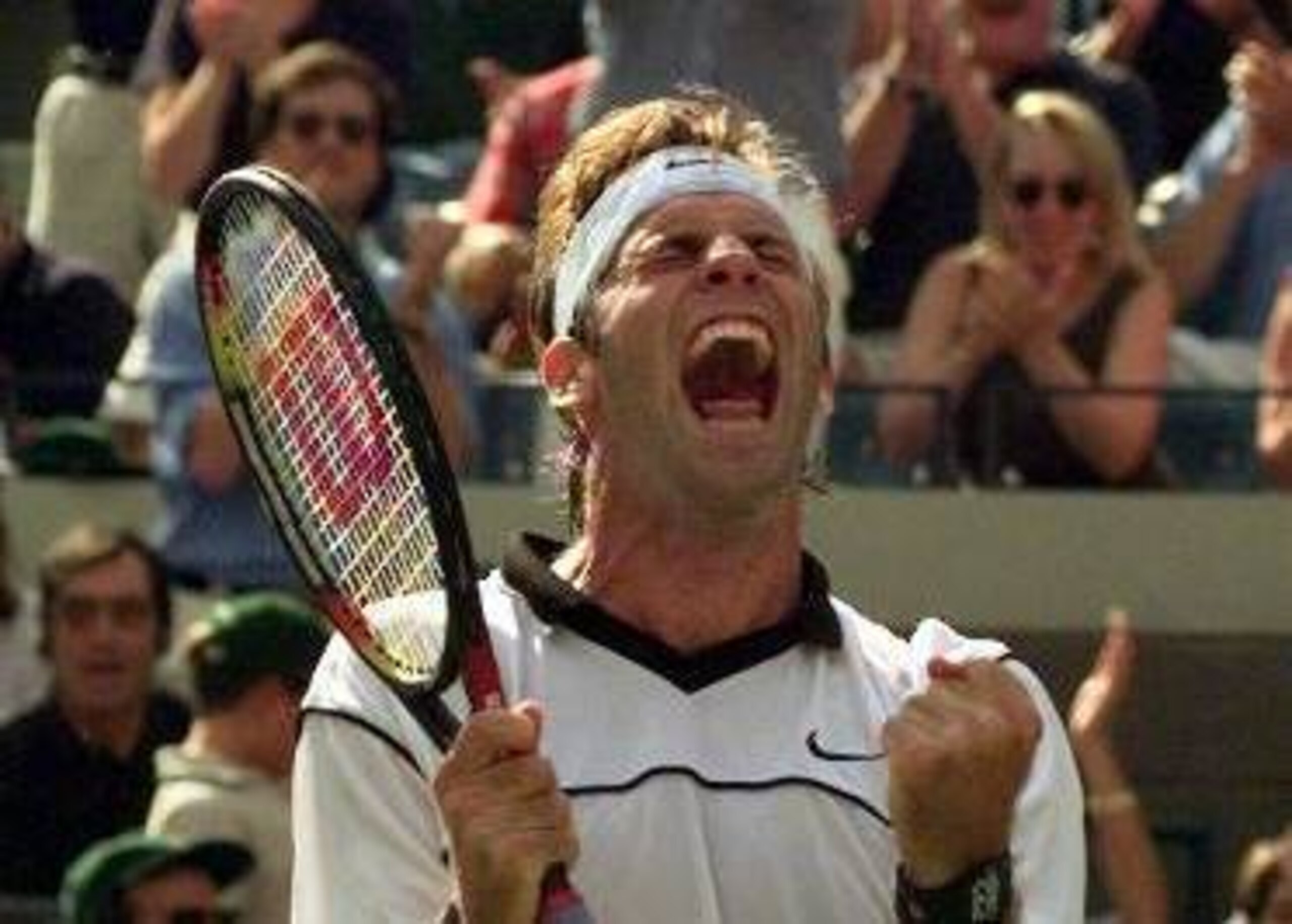
Bill Scanlon, 1983
Seeded No. 16, Bill Scanlon upset No. 1 John McEnroe on his way to the semifinals in 1983.
Monica Seles, 1995
Because Seles was seeded No. 2, it may seem silly to include her. But the U.S. Open was just her second tournament following a 28-month absence from the tour after being stabbed in April 1993. Seles got to the finals of the 1995 U.S. Open, losing in three sets to No. 1 Steffi Graf.
Greg Rusedski, 1997
Although technically he was unseeded, Rusedski (pictured above) was placed in the draw like a seed when two seeded players withdrew just before the start of the 1997 Open. Rusedski, ranked No. 20, did not beat any seeded players to get to the finals before losing to Patrick Rafter.
Serena Williams, 1999
Although Williams was seeded No. 7 when she won the 1999 U.S. Open for her first Grand Slam title, she was just 17 years old and had never advanced past the fourth round in a major before. The real surprise was that she beat No. 4-seeded Monica Seles, No. 2-seeded Lindsay Davenport and No. 1-seeded Martina Hingis in succession to do it.
Robby Ginepri, 2005
Unseeded and ranked No. 46, Ginepri beat three seeded players, including No. 8 Guillermo Coria, before losing to Andre Agassi in the 2005 semifinals.
Gilles Muller, 2008
Muller only got to the quarterfinals in 2008, but to get that far, Muller, who was ranked No. 130, had to win three qualifying matches and four main-draw matches, including an upset of No. 5-seeded Nikolay Davydenko in the fourth round.
Angelique Kerber, 2011
Kerber was ranked No. 92 when she reached the semifinals in 2011, although No. 12 Agnieszka Radwanska was the only top-25 player she beat to get there.
10. Chris Evert, 1971 Semifinals
2 of 11
Chris Evert was an unseeded 16-year-old amateur playing in her first Grand Slam tournament when she got to the semifinals of 1971 U.S. Open.
Evert had shown in several previous matches that she was capable of holding her own against the top women players despite her youth. However, the U.S. Open was her first experience on a big stage, and the grass-court surface featured at the U.S. Open at the time did not favor Evert's baseline game.
Evert's toughness was on full display in her second-round match against Mary Ann Eisel. After losing the first set 6-4, Evert fought off six match points against her in the second set, including a triple match point at 6-5, 40-0 in the 12th game. Evert won that match 4–6, 7–6, 6–1.
Evert had to rally again in her next match to defeat the No. 5 seed, Francoise Durr, 2-6, 6-2, 6-3. Evert lost the first set once again to Lesley Hunt in the quarterfinals before prevailing 4-6, 6-2, 6-3.
Evert's first Grand Slam experience ended when eventual champion and No. 1 seed Billie Jean King beat her 6-2, 6-3.
"The whole thing was like a fairytale for me," Evert told Steve Flink years later in a Tennis Channel story. "I was just a school girl from St. Thomas Aquinas in Fort Lauderdale and when I got home the whole school and the band came out to the airport. I was more nervous about that than for my matches at the Open.”
9. Mikhail Youzhny, 2006 Semifinals
3 of 11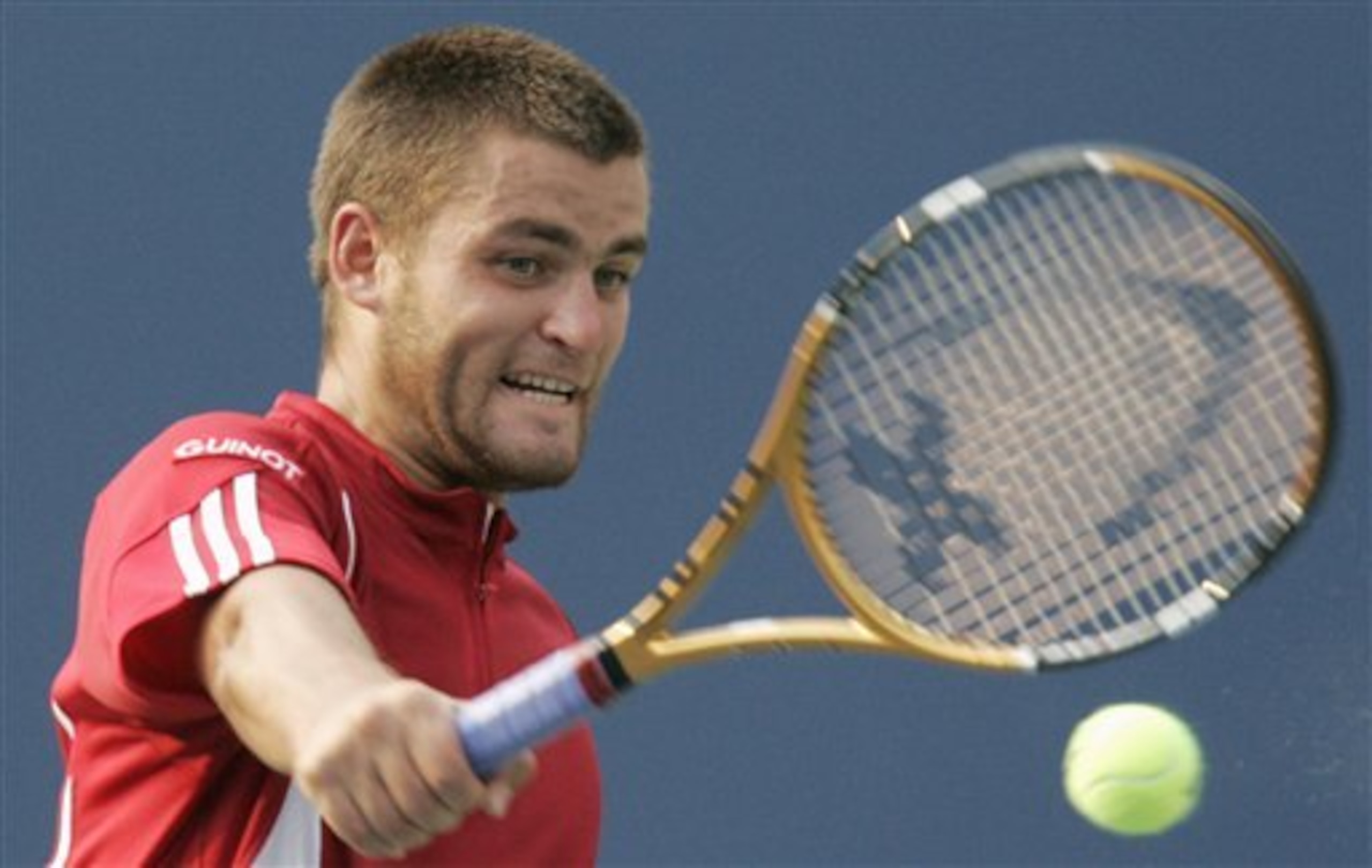
Mikhail Youzhny was ranked No. 54 and unseeded when he eliminated four seeded players to reach the semifinals of the 2006 U.S. Open.
Youzhny had never advanced past the fourth round in his previous 22 appearances in Grand Slam events, and he had lost in the first round of the other hard-court major in 2006, the Australian Open.
He was beaten in the first round in seven of his previous 14 tournaments heading into the U.S. Open, and had lost in the second round of his two hard-court tuneup events.
Youzhny started his 2006 U.S. Open with a straight-sets upset of No. 19-seeded Dominik Hrbaty, then eliminated 2004 Olympic gold medalist Nicolas Massu despite losing the first two sets.
Youzhny pulled off his first big upset by knocking off No. 11-seeded David Ferrer in the third round, and followed that by destroying No. 6-seeded Tommy Robredo 6-2, 6-0, 6-1.
That dominant showing against Robredo turned out to be small potatoes compared to what he did in the quarterfinals against Rafael Nadal.
Nadal, who was ranked No. 2 in the world at the time, had won the French Open that year and had lost a four-set final to Roger Federer at Wimbledon a few weeks earlier. However, Youzhny took him out in the quarterfinals 6-3, 5-7, 7-6, 6-1.
"It was one of the best matches in my career,'' said Youzhny, according to the Hartford Courant. "I think it was my best match because I play the same tennis from first point until last.''
Youzhny won the first set of his semifinal match against Andy Roddick, but Roddick outlasted him in four sets.
Since then, Youzhny has reached the semifinals of only one other Grand Slam event, the 2010 U.S. Open.

.jpg?w=2560 "Steelers Saints Football")
.jpg?w=2560 "Rams Raiders Football")
8. Flavia Pennetta, 2013 Semifinals
4 of 11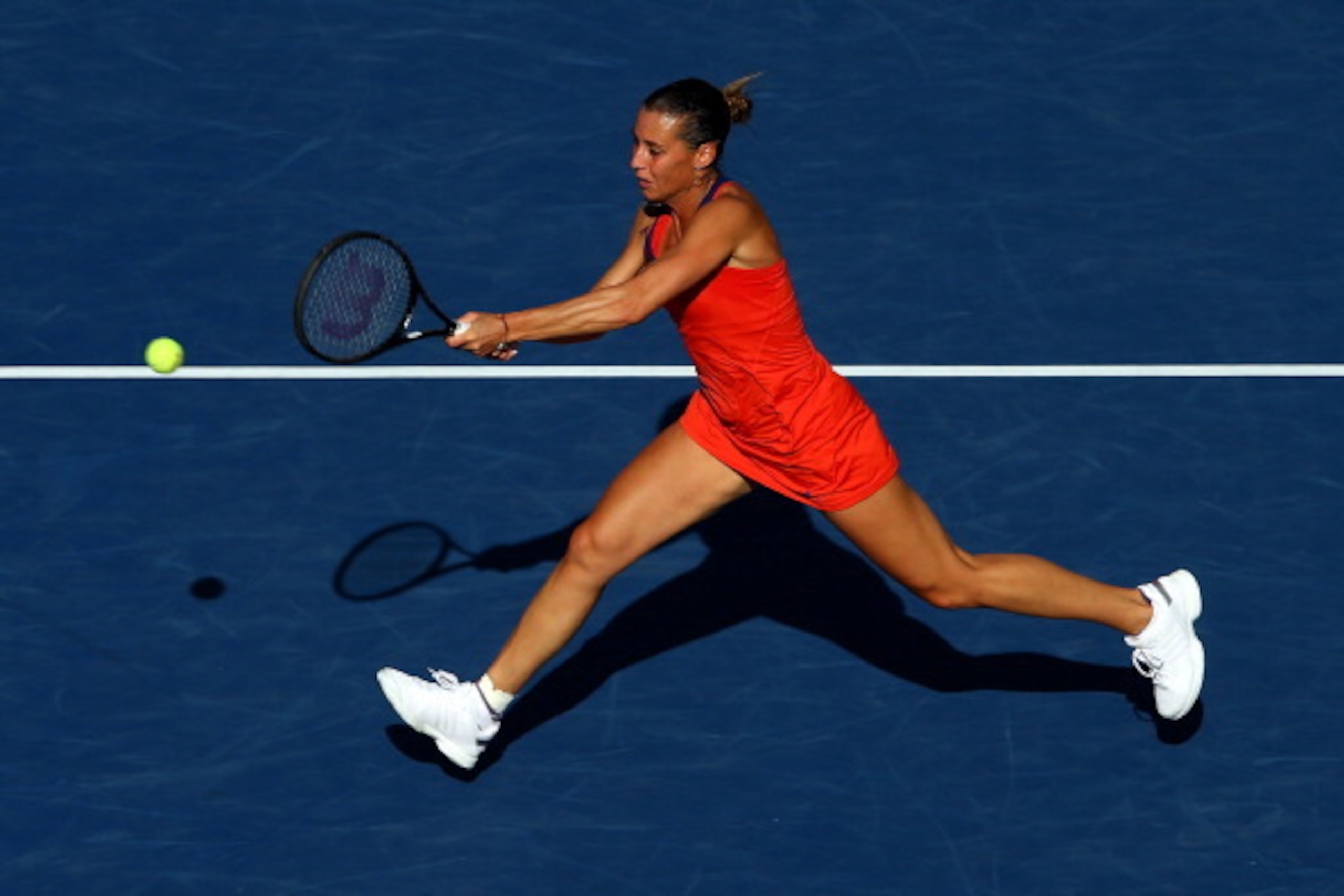
Nothing in Flavia Pennetta's resume suggested she would get to the second week of the 2013 U.S. Open, much less reach the semifinals by beating four seeded players.
Pennetta had risen to the top 10 in 2009, but she had experienced a downward spiral since then. At age 31, she was not much of a factor on the tour.
She had missed much of 2012 and the early part of the 2013 season with a wrist injury. Pennetta came into the 2013 U.S. Open ranked No. 86, having lost in the first round at Cincinnati and in qualifying at New Haven in her final two hard-court tuneup events.
Just beating wild-card entrant Nicole Gibbs in the first round of the U.S. Open seemed to represent an accomplishment for Pennetta. But when she dominated No. 4-seeded Sara Errani 6-3, 6-1 in the second round, people took notice.
She beat No. 27 seed Svetlana Kuznetsova, who had won two Grand Slam singles titles in her career, and then took out fast-rising Simona Halep, the No. 21 seed, in the fourth round.
Pennetta put on another dominating performance in the quarterfinals, beating 10th-seeded Roberta Vinci 6-4, 6-1.
By the time she faced No. 2 Victoria Azarenka in the semifinals, Pennetta had taken out four seeded players without the loss of a set.
"I'm proud of me now," Pennetta said in an ESPN.com story following her victory over Vinci. "I'm 31, and physically I feel good finally. I'm in the first semifinal in a Grand Slam."
Pennetta's run came to an end with a 6-4, 6-2 loss to Azarenka in the semifinals. However, it was the first time she reached the semifinals of a major event, and it occurred at an unlikely time.
7. Andre Agassi, 1994 Champion
5 of 11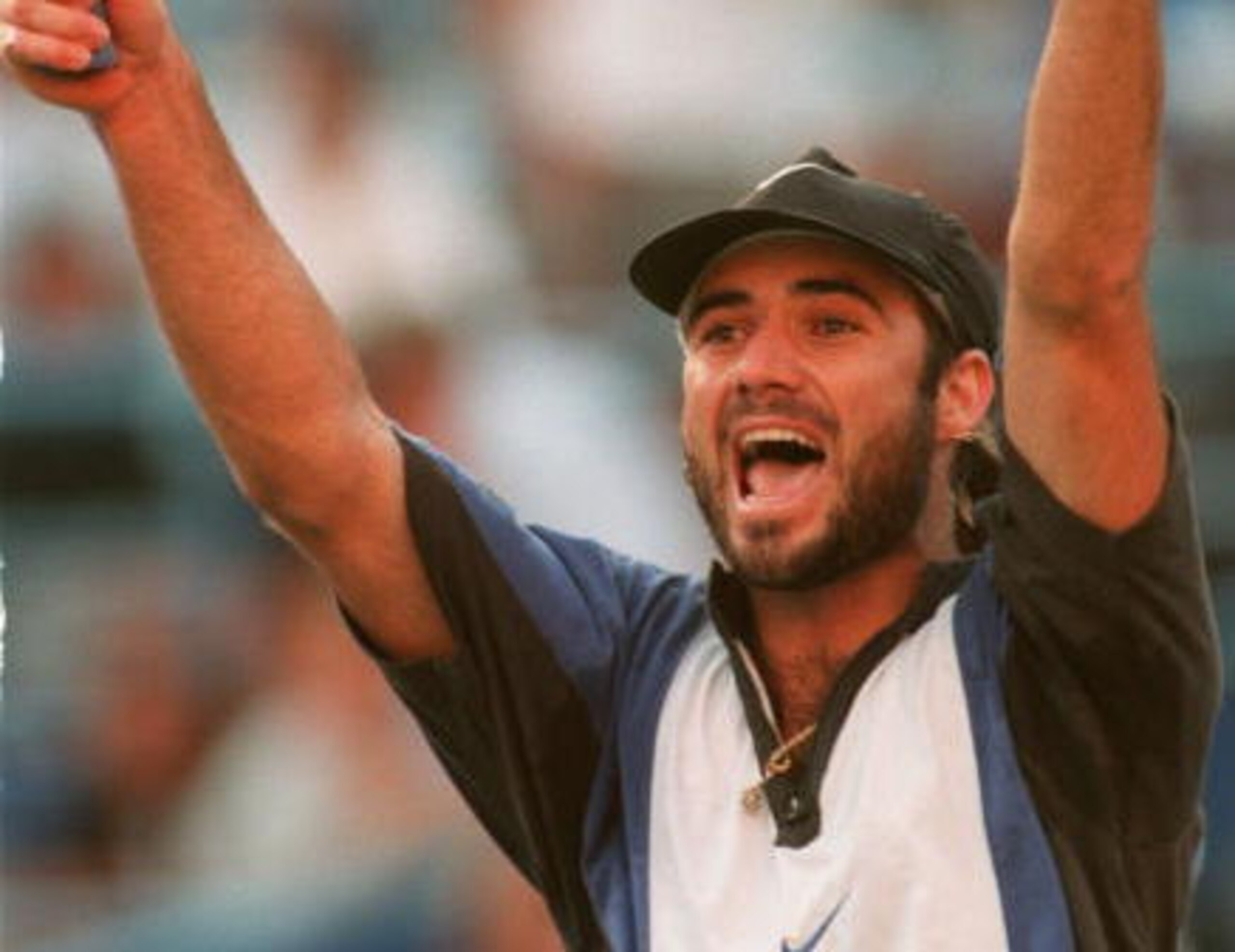
It may seem odd to see Andre Agassi's name on this list for a 1994 feat. After all the 24-year-old Agassi had won Wimbledon in 1992, and had been ranked as high as No. 3 five years earlier.
However, things were different for Agassi entering the 1994 U.S. Open, starting with the fact that he had wrist surgery in fall 1993, forcing him to miss several months of competition.
Agassi had lost in the first round of the U.S. Open two of the previous three years, and he had done little to suggest his comeback would lead to a title in 1994. Agassi was beaten in the second round of the French Open that year and in the fourth round at Wimbledon. In his final hard-court tuneup tournament before the U.S. Open, Agassi lost his opening match to Jan Siemerink, who was ranked No. 113.
Agassi entered the 1994 U.S. Open unseeded and ranked No. 20.
But everything clicked for Agassi in New York that year. He became the first unseeded male to beat more than three seeded players in the 114-year history of the U.S. Championships when he knocked off five seeded players in a row on his way to the 1994 title. The New York Times labeled him the Upset King in one of its headlines that year.
After beating a qualifier in the first round, Agassi got by dangerous Guy Forget, who was ranked No. 33 and had reached the quarterfinals at Wimbledon that year. Then Agassi began his run of victories over seeds, taking out No. 12 seed Wayne Ferreira, No. 6 seed Michael Chang, No. 13 seed Thomas Muster and No. 9 seed Todd Martin before finishing it off with a straight-sets victory over No. 4-seeded Michael Stich in the finals.
Agassi is still the only unseeded male to win the U.S. Championships in the Open Era, and just the third to do in the history of the event, joining Fred Stolle (1966) and Mal Anderson (1957). Only eight players were seeded when Stolle and Anderson did it.
6. Pete Sampras, 1990 Champion
6 of 11
Pete Sampras was still a teenager and not even a top-10 player when he captured his first Grand Slam title at the 1990 U.S. Open. And the accomplishment was not as surprising as the dominating fashion in which he achieved it, beating Thomas Muster, Ivan Lendl, John McEnroe and Andre Agassi in succession.
Sampras finished 1989 ranked No. 81, but steadily moved up the rankings in 1990, owning the No. 12 spot when the U.S. Open rolled around. But he was still just 19 years old, had never reached the quarterfinals of a major and had lost in straight sets to unseeded Christo Van Rensberg in his first-round match at Wimbledon that year.
It suddenly all came together for Sampras in New York. Sampras' serve-and-volley game made quick work of his first three opponents, Dan Goldie, Peter Lundgren and Jakob Hlasek, all of whom were dispatched in straight sets.
Sampras then served notice that he would be a factor in the tournament when he took out the No. 6-seeded Muster in four sets.
Sampras backed that up with a five-set quarterfinal victory over No. 3-seeded Lendl, ending Lendl's streak of reaching the U.S. Open finals eight consecutive years.
No one seemed more surprised by that upset than Sampras. "I really don't think I know where I am yet," Sampras said afterward, per the Philadelphia Inquirer.
Sampras figured out where he was in time to beat McEnroe in four sets in the semifinals.
Sampras was once again the underdog in the finals against the No. 4-seeded Agassi, who had upset No. 2-seeded Boris Becker in the semifinals.
Sampras not only beat Agassi, but made it look easy in a 6-4, 6-3, 6-2 rout that made Sampras the youngest male singles champion in U.S. Open history.
"It's not like I lost it; I got my [butt] kicked," said Agassi, according to the Baltimore Sun. "This was just an old-fashioned street mugging out there."
It would be another three years before Sampras won the second of his 14 Grand Slam singles crowns.
5. Kim Clijsters, 2009 Champion
7 of 11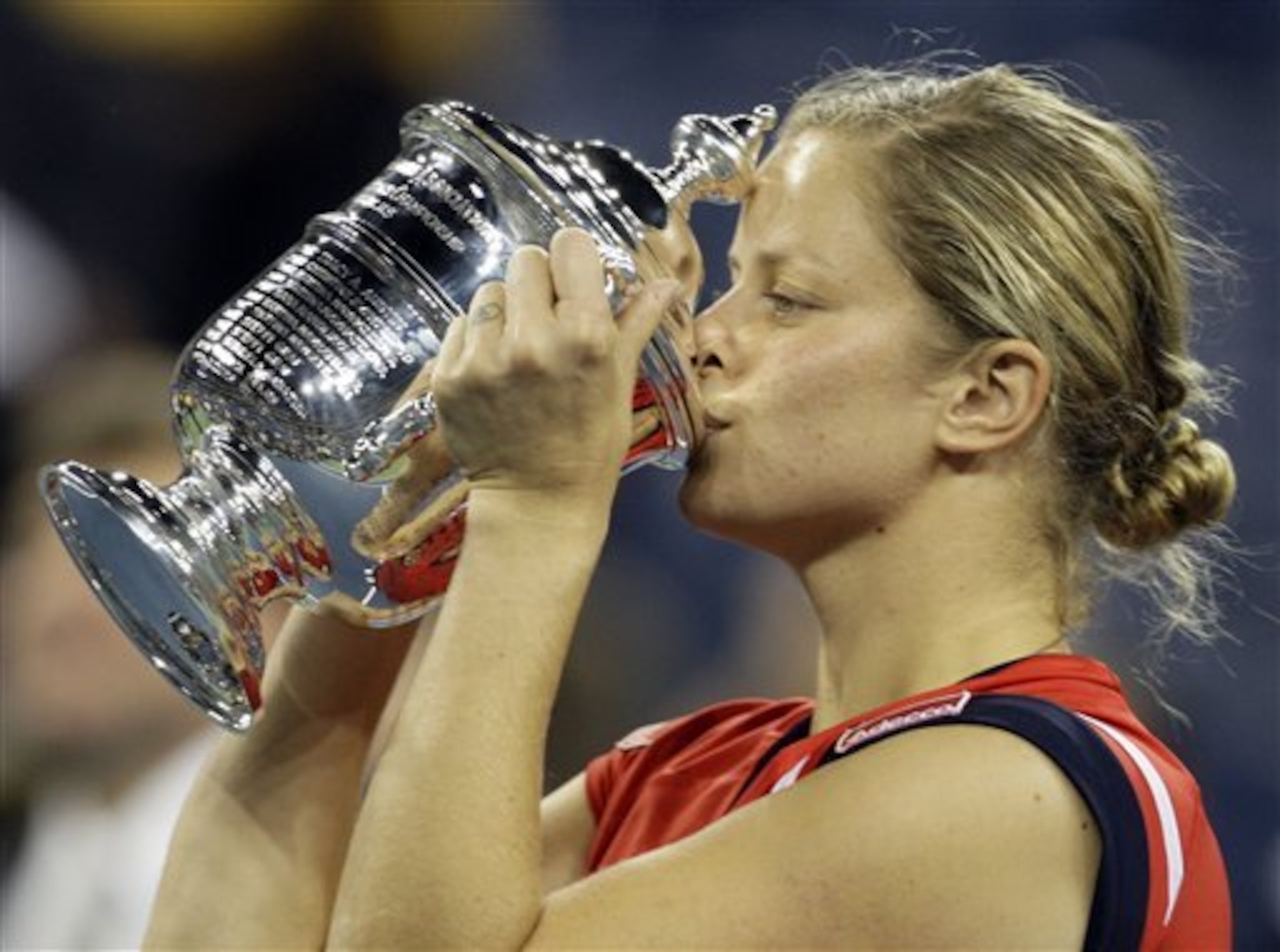
Even Kim Clijsters doubted she could win the 2009 U.S. Open. She had entered just so she could be better prepared for the 2010 Open.
“I can’t believe this has happened, it’s still so surreal, that in my third tournament back I won my second Grand Slam,” Clijsters said, according to the New York Times, after beating Caroline Wozniacki, 7-5, 6-3 in the 2009 Open finals. “It’s a great feeling to have, but it’s confusing in a lot of ways that it happened so quickly. This has been so exciting for me, it was not really our plan. I just wanted to get back into the rhythm of playing tennis.”
The original plan did not have Clijsters playing any tennis in 2009. Bothered by injuries, Clijsters had retired from tennis in May 2007 at the age of 24 with a No. 4 world ranking. She got married and had a baby, but got the itch to play again when she participated in an exhibition at Wimbledon in January 2009. Two months later she announced her return to competitive tennis.
She played two tournaments, both in August, and failed to get past the quarterfinals in either one before playing in the U.S. Open as a wild-card entrant.
Without the pressure of expectations, the unseeded Clijsters rolled through the U.S. Open. She had to go three sets to beat No. 14 seed Marion Bartoli in the second round, then upset No. 3-seeded Venus Williams in three sets in the fourth round.
Clijsters' run continued with a straight-sets victory over No. 18-seeded Li Na in the quarterfinals to set up a semifinal match against No. 2-seeded Serena Williams, the defending U.S. Open champion and the reigning Wimbledon champ.
Even before her retirement, Clijsters had had trouble with Williams, who had won seven of their eight previous meetings, all on hard courts.
However, Clijsters controlled the 2009 semifinals, which ended in bizarre fashion. Clijsters was awarded a penalty point on match point when Williams berated a line judge, completing Clijsters' 6-4, 7-5 victory.
Clijsters then beat the No. 9 seed, Wozniacki, in straight sets to claim her second U.S. Open title. No one was more surprised than Clijsters, who punctuated the moment by bringing her 18-month-old daughter onto the court with her during the award presentations.
4. Pam Shriver, 1978 Finalist
8 of 11
Pam Shriver had turned 16 just a month before she played in the U.S. Open for the first time in 1978. She had played in only one previous Grand Slam event, losing in the third round of Wimbledon earlier that year.
Shriver was still an amateur, deciding whether to turn pro or enroll at Stanford, and as the No. 16 seed she was not expected to be a major threat with the likes of Martina Navratilova and Chris Evert entered. The bigger American teenage threat was supposed to be 15-year-old Tracy Austin, who was the No. 5 seed and had beaten Shriver all nine times they had met in junior tournaments
Shriver's most distinctive attributes were her age, her height (6'), and her racket. While most players, including Evert and Navratilova, were still using wooden rackets with the smaller heads, Shriver wielded an oversized metal Prince racket.
The fact that the U.S. Open surface had changed from clay to hard courts that year benefited Shriver and her aggressive serve-and-volley game.
Still, it was a surprise when she beat 1977 Australian Open champion and No. 8 seed Kerry Melville Reid in straight sets in the fourth round. Shiver continued her impressive run with a 6-2, 6-0 victory over Lesley Hunt to advance to the semifinals, where she would meet No. 1-ranked Navratilova, the reigning Wimbledon champion.
Shriver pulled off the shocker of the tournament when she knocked off Navratilova in straight sets, 7-6, 7-6, becoming the youngest player ever to play in the U.S. Championship finals.
Her run ended there, although she certainly did not embarrass herself in the 7-5, 6-4 loss to Evert in the finals.
It turned out to be the high point of Shriver's career, as she never reached the finals of a Grand Slam singles event again. Much of the attention she received after that came in doubles as she partnered with Navratilova to dominate women's doubles for years.
3. Jan Kodes, 1971 Finalist
9 of 11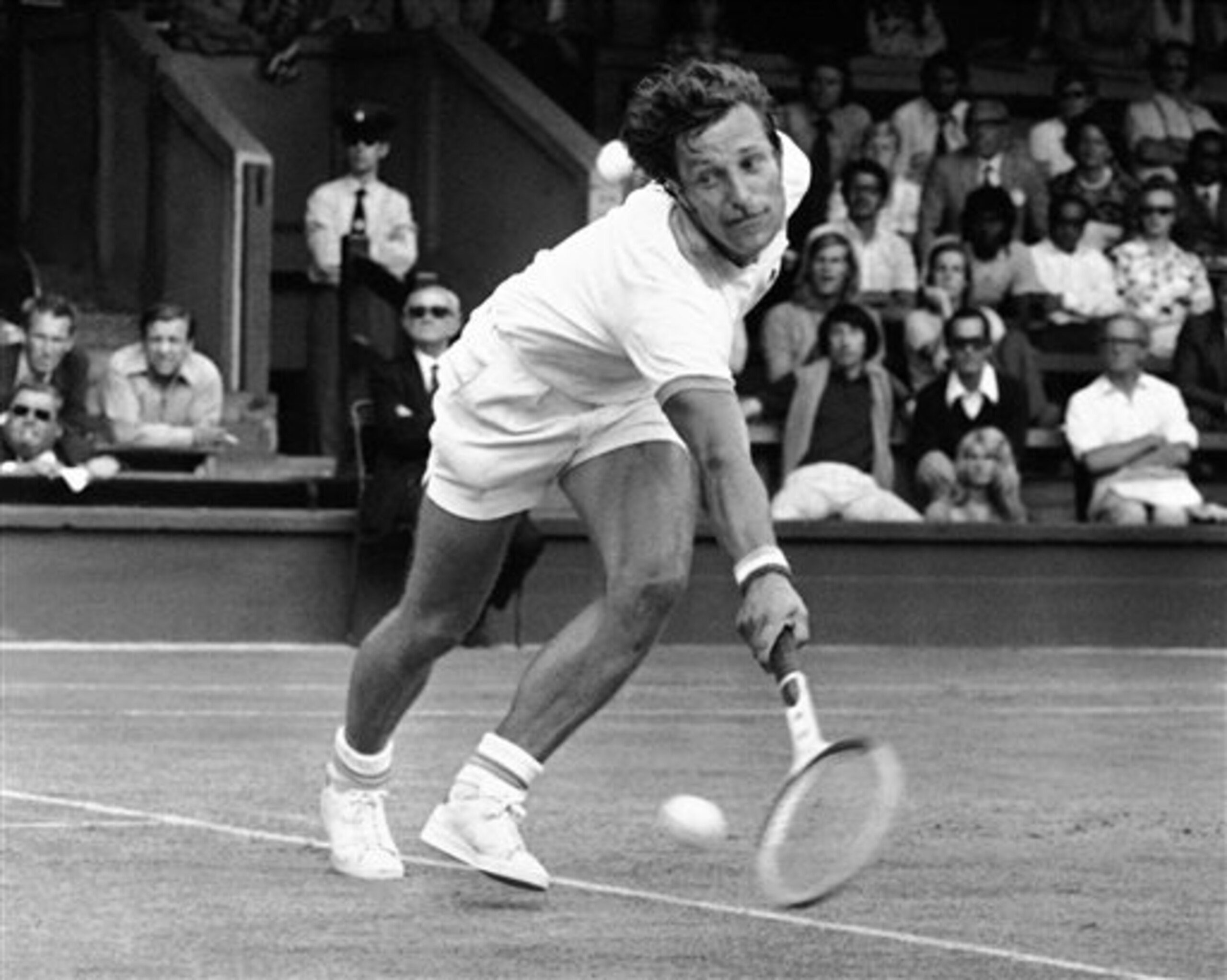
In the early 1970s, there was a sharp distinction between the baseliners who excelled on clay and the serve-and-volley players who dominated on grass courts. Few players at the time had the all-around game to be proficient on both surfaces.
Kodes was the consummate clay-court player, winning the French Open in 1970 and again in 1971. But he seemed lost on grass, which was the surface on which the U.S. Open was played in 1971. He had lost in the first round at Wimbledon that year and had won only one match in the six times he had entered Wimbledon.
He had bothered to play the U.S. Open only once previously, losing in the second round in 1969.
Kodes showed up to play the U.S. Open for a second time in 1971, but there was no reason to believe his luck on grass would change. He was unseeded despite winning a second French Open title a few months earlier.
However, Kodes pulled off the shocker of the 1971 U.S. Open in the first round, knocking off top-seeded John Newcombe, a master of grass-court tennis who had won Wimbledon for the third time a month earlier.
After that four-set upset, Kodes proceeded to eliminate Pierre Barthes in five sets after losing the first two sets. Kodes then began feeling at home on grass, beating Butch Seewagen, Bob Lutz and Frank Froehling in straight sets to earn a semifinal berth against Arthur Ashe, the 1968 U.S. Open champ.
Ashe was seeded No. 3 and had lost just one set while winning his first five matches of the tournament. But Kodes recorded his second stunning victory, taking out Ashe in five sets.
Kodes won the first set of the finals against No. 2-seeded Stan Smith, but Kodes' run ended in a 3-6, 6-2, 6-3, 7-6 loss to Smith in the title match.
Kodes proved his berth in the 1971 U.S. Open finals was no fluke when he won Wimbledon in 1973, although a boycott by most of the top players watered down that field considerably.
2. Venus Williams, 1997 Finalist
10 of 11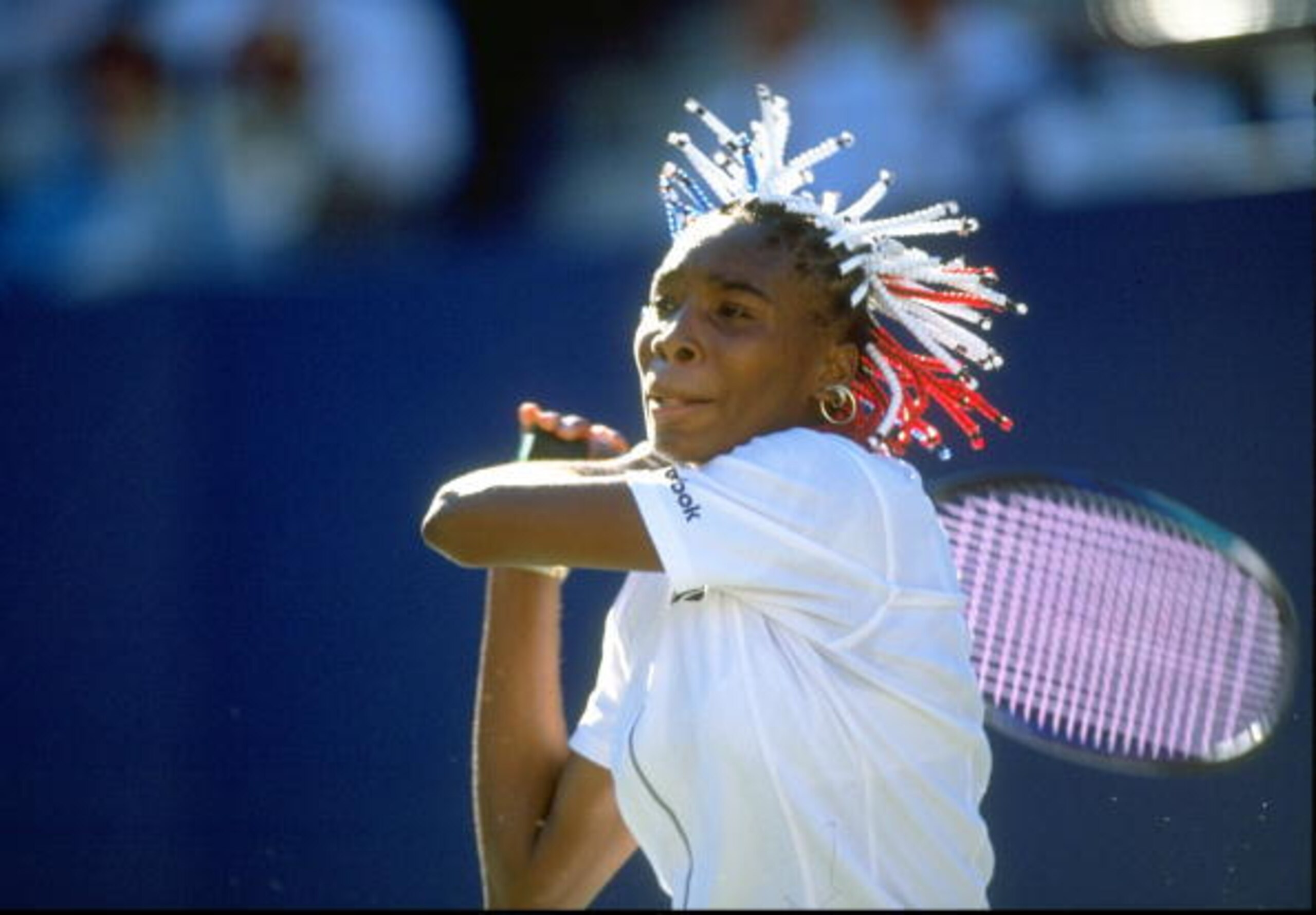
Venus Williams was 17 years old, unseeded and ranked No. 53 when she played in the U.S. Open for the first time in 1997.
Although she had shown promise, Williams had lost in the second round of the French Open that year and in the first round at Wimbledon, suggesting it would be a while before she made noise in a Grand Slam event.
In a hard-court warmup event in Toronto immediately before the 1997 U.S. Open, Williams lost in the first round to Nathalie Dechy, who was ranked No. 115.
There was no indication that Williams would become the first unseeded woman to reach the U.S. Open finals, which is what she accomplished in 1997.
Williams certainly did not start the tournament as if she would get to the finals, losing the first set of her first-round match to Larisa Neiland, who was ranked No. 112. Williams rallied to take the next two sets decisively, and eased through her second-round match.
Williams' first upset came in the third round, when she knocked off the No. 8 seed, Anke Huber, in straight sets, before she eliminated Joannette Kruger to get to the quarterfinals.
Williams then ousted a pair of top-20 players to get to the finals, defeating Sandrine Testud in the quarterfinals and No. 11-seeded Irina Spirlea in the semifinals. The latter was a long, three-set match Williams won 7-6 (5), 4-6, 7-6 (7) and included an incident in which Spirlea bumped into Williams during a changeover, according to the Los Angeles Times.
Martina Hingis, the No. 1-ranked player and the reigning Wimbledon champ, was too much for Williams in the finals, as Hingis won 6-0, 6-4. Hingis was a year younger than Williams, but Hingis' berth in the finals was no surprise. However, Williams getting to the finals of her first U.S. Open certainly was.
1. Jimmy Connors, 1991 Semifinals
11 of 11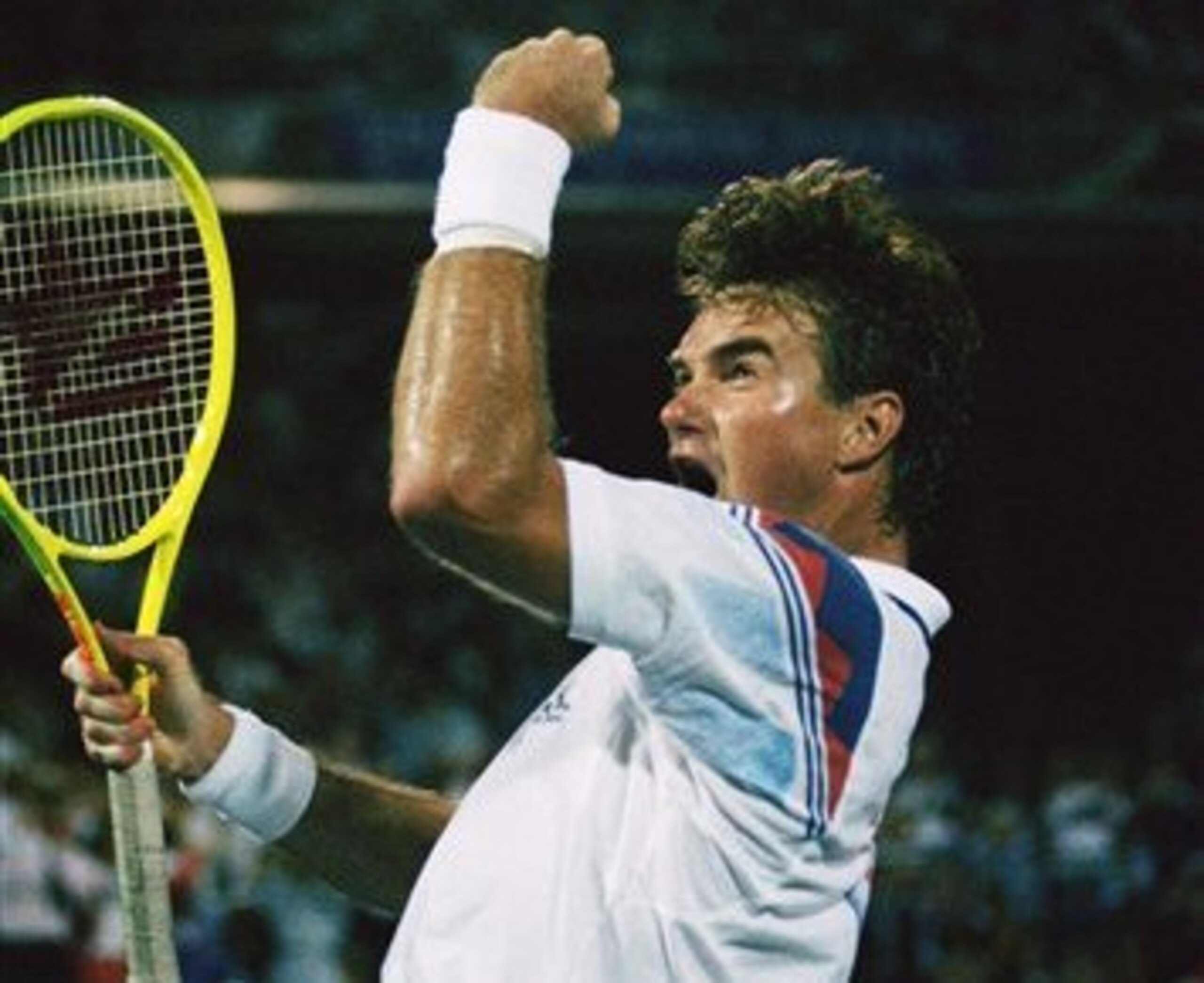
You can debate whether Jimmy Connors' run to the 1991 semifinals was the most surprising. However, there is little debate that it was the most memorable.
Connors was virtually washed up coming into that U.S. Open. He had played in only three tournaments in 1990 and lost in the first round of all three. He then had wrist surgery in the fall of that year.
He returned to competition in February 1991 but failed to get past the quarterfinals or beat a player of significance in any of his nine tournaments leading up to the Open.
Connors needed a wild card just to get into the 1991 U.S. Open because he was ranked No. 174 at the time. But the aging star, who had won his first Grand Slam title 17 years earlier, was the crowd favorite this time, and Connors milked it for all it was worth.
Connors was nearly ousted in the first round. He was down two sets to Patrick McEnroe, who led 3-0 and 0-40 on Connors serve in the third. Somehow Connors won the match, riding the emotion of the raucous night crowd to a 4-6, 6-7, 6-4, 6-2, 6-4 victory that ended at 1:35 a.m.
Connors then beat Michiel Schapers in straight sets in the second round and recorded his biggest upset in the third round, taking out No. 10-seeded Karel Novacek in straight sets.
Connors then pulled off another memorable comeback in the fourth round on his 39th birthday. Aaron Krickstein, who had reached at least the quarterfinals in each of his three previous U.S. Opens, led 5-2 in the fifth set, but the fist-pumping Connors rode the emotion of the crowd for a 3-6, 7-6, 1-6, 6-3, 7-6 triumph.
In the quarterfinals, Connors again found himself down to Paul Haarhuis, who had taken out top-seeded Boris Becker in straight sets earlier in the tournament. Connors lost the first set to Haarhuis and trailed 5-4 in the second before rallying for a 4-6, 7-6, 6-4, 6-2 victory.
Connors' unlikely run finally ended in the semifinals, when he lost in straight sets to No. 4-seeded Jim Courier.
.jpg?w=2560 "Chiefs Giants Football")
.jpg?w=2560 "AP Poll Top Five Week 9")


.jpg?w=2560 "Lamar Being Out Shocked Ravens")
.jpg?w=2560 "Packers Safety Slams Refs 🤬")