
The 5 Strangest Diets in Football
The diet of a professional footballer has changed a lot over the years. No longer are they fuelled by oranges at half-time and no longer will you expect to see “a bottle of brandy or whisky to be in the dressing room, either to settle the nerves or to warm up the players,” to quote the Daily Mail.
Instead, many teams embrace the dietary revolution that was arguably started by Dr Robert Haas' influential book Eat to Win. A revolution that was later pioneered in England by individuals such as Arsene Wenger in 1996, according to Arsenal’s website.
But among the scientifically supported diets and sports supplements there are also some less conventional nutritional protocols. From surprisingly good home remedies prescribed by the Italian legend Dino Zoff’s grandparents, to the shocking prenatal nutrition of Cristiano Ronaldo.
But just how much do players' food choices affect their performances, and would all great players still be as good if they were fueled by a dietitian's nightmare? Here we look at the research surrounding the five strangest diets in football to decide nutrition's impact on the game.
5. Dino Zoff’s Egg Diet
1 of 5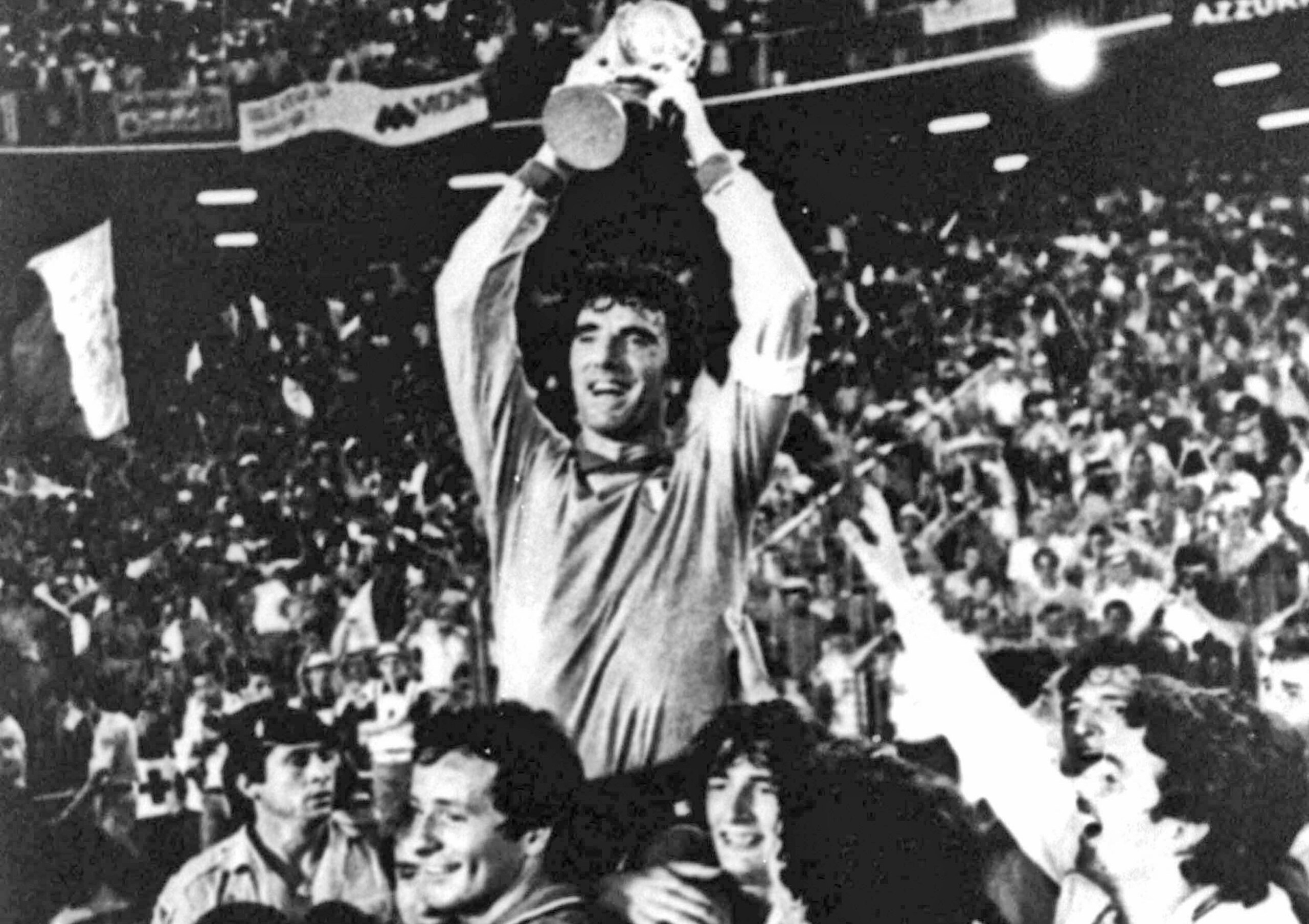
Dino Zoff is an Italian legend. In 1982, at the age of 40 years, four months and 13 days, he became the oldest player to win the World Cup. What’s more, to this day he holds the record for the longest playing time without conceding a goal in international tournaments—1,142 minutes, set between 1972 and 1974.
But Zoff wasn’t always destined for greatness. According to the FIFA website:
"When he was rejected by Inter Milan and Juventus as a 14-year-old—with the time-honoured excuse that he was too small—Zoff's grandmother Adelaide had the answer: to feed him up on eggs.
"
Five years—and eight eggs a day—later. he had grown “33 centimetres to 1.82 metres” and his performance for his village team, Marianese, caught the attention of scouts at nearby Udinese. The rest, as they say, is history. But did grandma Zoff really help?
Researchers at the University of Cambridge think so:
"In modern western societies about 20 per cent of variation in body height is due to environmental variation. The most important non-genetic factors affecting growth and adult body height are nutrition and disease.
"
4. Masahiko Inoha's Ice-Cream Addiction
2 of 5
Japanese international Masahiko Inoha is instead better known for his obsession with frozen snacks than his performances on the pitch. According to The Guardian, Inoha would eat three ice creams a day, “two at the clubhouse, one after bath time." But is ice cream really that bad for a professional player training up to six hours a day or will he burn it off?
Research published in the Journal of Applied Physiology might just support Inoha’s right to eat his chosen frozen delicacy. This is because scientists discovered that sugary, high-glycaemic index carbohydrates—like those found in ice cream—were better for refuelling the muscles after “prolonged exercise” than healthier, low-glycaemic index carbohydrates like oats for example.
Obviously there’s a counterargument that ice cream isn’t exactly loaded with the vitamins and minerals needed for recovery. But equally it can be argued that Inoha is just practicing an efficient form of refuelling based on the research from the Journal of Applied Physiology.
3. Brian Clough
3 of 5
Very few people would argue with Brian Clough’s achievements as a manager. There are, however, a few sports nutritionists who would argue with the diet he prescribed to his players. Clough famously fuelled Nottingham Forest’s 1979 League Cup final with a plentiful supply of bitter, lager and champagne. Quoted in the Daily Mail, centre-forward Garry Birtles recalls:
"The night before the League Cup final against Southampton in 1979 we were blotto. We had everything we could possibly have wanted to drink. Bitter, lager, mild, champagne. There were people who could hardly stand by the time we went to bed. But Clough insisted on it. Archie Gemmill wanted to go to bed. He wouldn't let him. We were 1-0 down at half-time the next day, but once we sobered up we were OK. We won 3-2.
"
While research published in the American Journal of Clinical Nutrition does correctly address the calorie and nutrient contribution of alcoholic beverages, it doesn’t take into account negative neurological effects.
In their article entitled Alcohol, Athletic Performance and Recovery, researchers Luke D. Villa and David Cameron-Smith from the Deakin University claim:
"Alcohol has been repeatedly shown to exhibit a dose-dependent impairment of balance, reaction time, visual search, recognition, memory and accuracy of fine motor skills.
"
Which probably explains exactly what Birtles was experiencing during the first half of the League Cup final.
2. Glen Johnson Stimulant Assisted
4 of 5
Back in 2012, England international Glen Johnson sparked controversy by telling the Daily Telegraph (h/t Sky Sports) most of his teammates were playing while chemically enhanced with caffeine.
"A lot of the lads take ProPlus tablets before the game and we all took that for the game. Then the game is off and no one can sleep.
"
Though clearly not good for sleep and recovery, it must be noted that at present caffeine is only on the WADA 2014 Monitoring Program. What this means is the World Anti-Doping Agency only monitors caffeine use in athletes to make sure they aren’t abusing it, it’s not necessarily illegal or banned all together.
This seems for good reason, too, since the performance-enhancing benefits of caffeine have long been known and used by athletes. Research published in the journal of Medicine and Science in Sports found in a study conducted on nine trained cyclists that the ingestion of caffeine and carbohydrates reduced “the rate of fatigue over the last 30 minutes of cycling” during a 90 minute time trial.
What’s more, research published in the Journal of Strength and Conditioning found that as little as 200 milligrams of caffeine could reduce athlete’s perception to fatigue. It’s believed it does this by stimulating the production of the neurotransmitter beta-endorphin, which studies show can reduce pain and perceived fatigue.
So while caffeine’s place on the banned substance list still remains a topic of debate, it seems there was logic to support Glen Johnson and his teammates' use of supplements.
1. Cristiano Ronaldo Prenatal Nutrition
5 of 5
But the strangest diet in footballing history belongs to Cristiano Ronaldo, or to be more specific, his mother's and his prenatal nutrition. That’s because in her new autobiography, Mae Coragem—which translates to “Mother Courage”—she revealed she attempted to abort him while pregnant.
According to Spanish newspaper La Razon, via The Independent she said:
"Doctors disagreed with her decision to terminate her pregnancy and refused to carry out the procedure. She apparently turned to hard exercise and home remedies—including drinking warm beer and 'running until she dropped'—in desperation.
"
Which makes what Ronaldo has achieved all that more impressive, since according research published in the journal of Alcoholism: Clinical and Experimental Research:
"Children who were exposed prenatally to alcohol were smaller in weight, length, and head circumference. They also had an increased number of minor physical anomalies.
"
In summary, it’s hard to know just how much each strange diet really affects footballers' performances. Sports nutritionists would, of course, argue a lot, whereas others might say the rules of science don’t apply so strictly to people as naturally talented as Ronaldo and Brian Clough.