What Are the NFL's Most Devastating Injuries?
They are the phrases no NFL fan wants to hear during a TV or radio broadcast.
"Player X is shaken up."
"Player Y is slow to get up."
TOP NEWS

Stephen A. Apologizes After Lane Johnson Comments
Ravens Trade for Eagles Pro Bowl OL 🚨
.jpg?w=2560 "Cowboys Texans Football")
Dak to Stroud: Get Some Wins 💯
"Here comes the cart."
Next comes the waiting. The Twitter rumors. The MRI results.
Then, finally, a projected recovery time.

NFL injuries come in many shapes and sizes, ranging from minor bumps and bruises to bona fide career-threatening conditions. The former may limit a player minimally, while the latter can sideline him indefinitely.
When a team announces a player's ultimate diagnosis—or when it leaks to the press—many fans will look immediately for the rehab timeline. All too often, that timeline surpasses the remainder of the season.
Yet the story doesn't end there. Following a serious injury, medical staffs must utilize precise medical, surgical and physical therapy treatment regimens as well as strict rehabilitation protocols before the injured player can safely return to play.
Much of the time, that player—with the help of the outstanding medical personnel throughout the NFL—will eventually make a triumphant return to the field.
But not always.
Some injuries, even with the best medical care by the best medical professionals, can carry a shaky prognosis. Rare complications—surgical infections, for example—can also muddy the picture. For simplicity's sake, this article leaves them for another conversation. It also will not discuss some of the specialized orthopedic injuries in an effort to keep a broader perspective.
With that in mind, let's take a look at some of the NFL's most potentially devastating injuries.
The Multi-Ligament Knee Injury or Dislocation
Regrettably, ACL tears dot NFL news feeds on a somewhat regular basis.
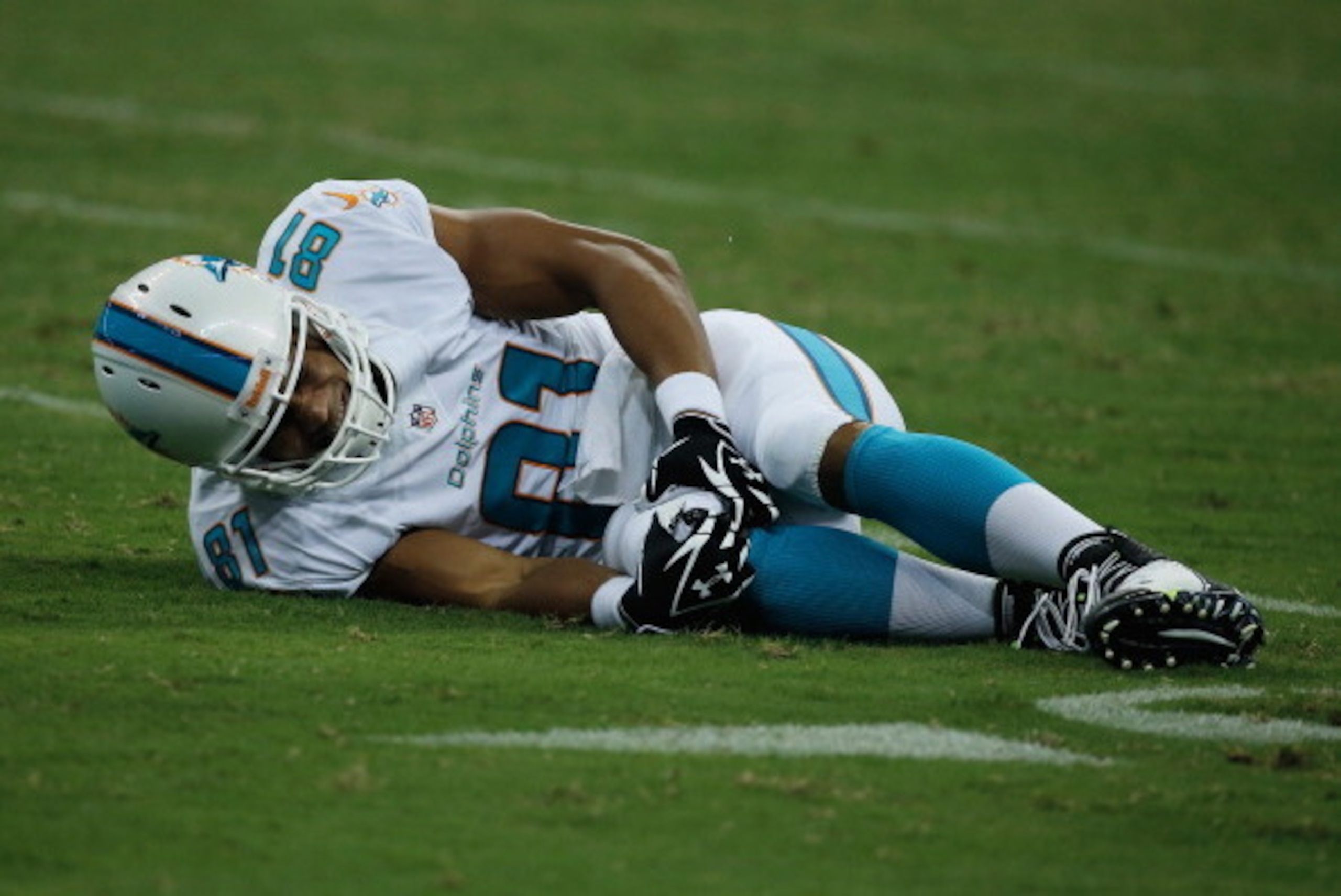
Contact ACL injuries often occur when another player hits the knee of a planted leg. Non-contact injuries can arise from a sharp-but-awkward plant and cut that leads to a mismatch of momentum and joint mechanics—one strong enough to overwhelm the ligament.
The result? An unstable knee—one that makes playing in the NFL all but impossible.
ACL tears frequently come with simultaneous injury to one or more of the other main knee ligaments, a meniscus—the shock-absorbing cartilage cushions within the knee joint—or both.
Miraculously, thanks to surgeons like Dr. James Andrews and others throughout the country, such a seemingly disastrous injury constellation no longer represents an automatic threat to a career. In rare cases, it does not even necessarily end a player's upcoming season if it occurs early enough in the year.
Even so, some knee-injury combinations can prove especially devastating. For example, knee dislocations—where the joint surfaces of the femur and tibia separate—constitute true orthopedic emergencies and require immediate action.

When a knee dislocates, the shifting bones can threaten other structures within the joint—not to mention the ACL, PCL, MCL and LCL. In extreme cases, a dislocation can compress or tear the popliteal artery—the main blood supply of the lower leg—as it runs through the knee. Unless a doctor sets—or "reduces"—the dislocation, the compromised blood flow can cause tissue damage or death beyond the site of the injury.
Furthermore, outward-directed dislocations can stretch and damage the common peroneal nerve—the nerve responsible for controlling sensation and movement in the lower leg.
Fortunately, knee dislocations in the highest levels of football remain rare—though they do exist. When they occur, the complicated and lengthy rehab, shear extent of damage and potential for setbacks, long-term complications or incomplete healing make for quite the uphill battle.
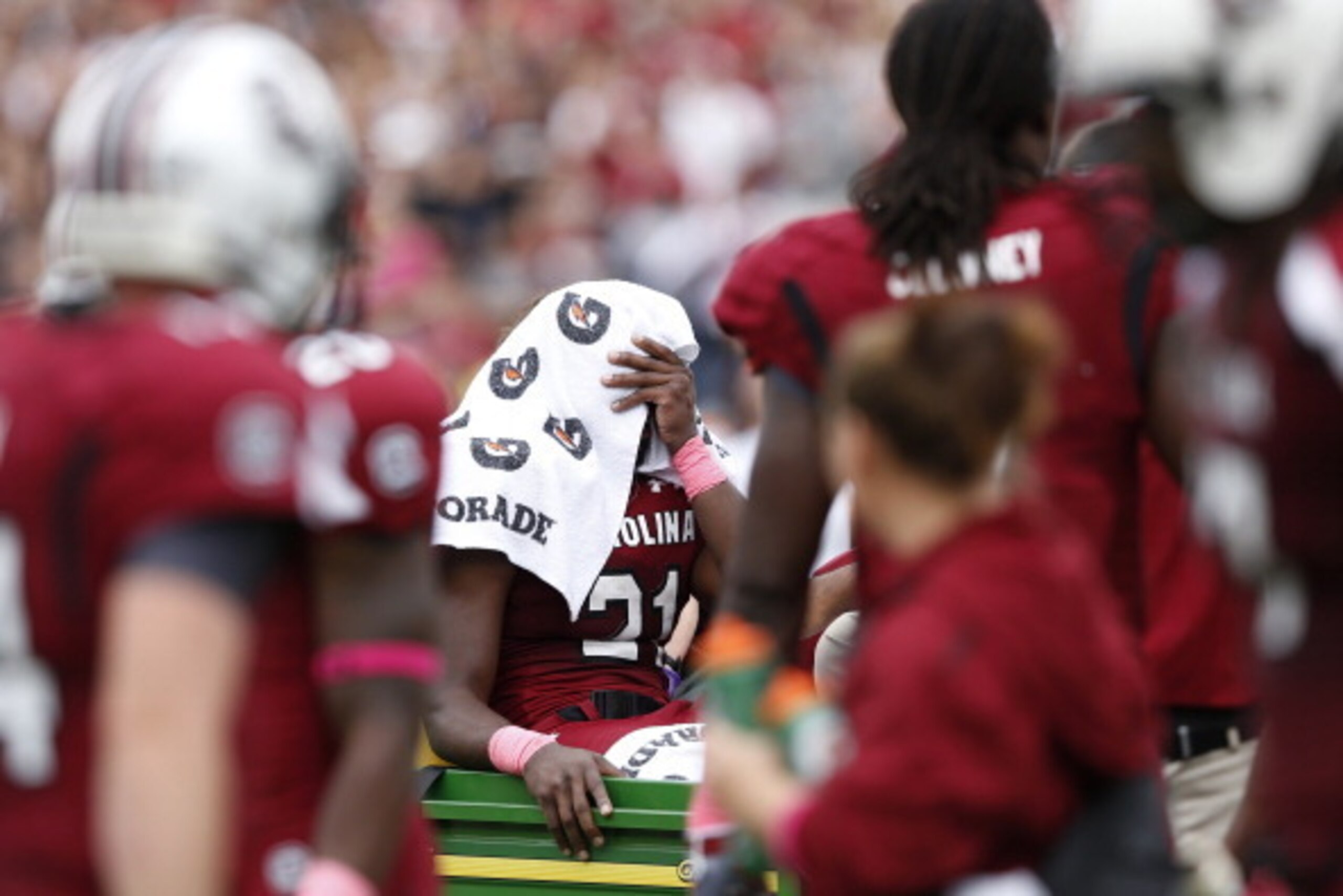
In Oct. 2012, former University of South Carolina running back Marcus Lattimore suffered a right knee dislocation—one that, according to Sports Illustrated's Andy Staples, tore his ACL, PCL and LCL.
The San Francisco 49ers drafted Lattimore in 2013. He is still recovering, but according to Matt Barrows of The Sacramento Bee, he is taking part in 49ers OTAs.
Former Los Angeles Raiders fullback Napoleon McCallum was not so lucky.
As Jerry Crowe wrote in 2010 for The Los Angeles Times, McCallum tore three ligaments in his knee and "suffered nerve and artery damage" in addition to muscle injuries. He never played in the NFL again. With today's advancing medical care and surgical technique, such a heartbreaking scenario is hopefully becoming less and less likely.
Intra-Abdominal or Intra-Thoracic Injuries
Compared to joint or muscle injuries, internal organ damage occurs infrequently in football. However, for somewhat obvious reasons, any such injury can turn dire very quickly
When it comes to abdominal injuries, the wrong hit at the wrong angle—in the wrong place at the wrong time—is usually to blame. Direct blows to the midsection can injure the spleen or other abdominal organs, while strong hits to the chest can bruise the lungs.
For instance, in 2012, Dallas Cowboys tight end Jason Witten suffered a lacerated spleen at the hands of Oakland Raiders linebacker Rolando McClain. He did not need surgery, but in the case of an outright splenic rupture, a surgeon may need to perform a splenic artery embolization—purposefully cutting off an artery to stop the bleeding—or a complete splenectomy.
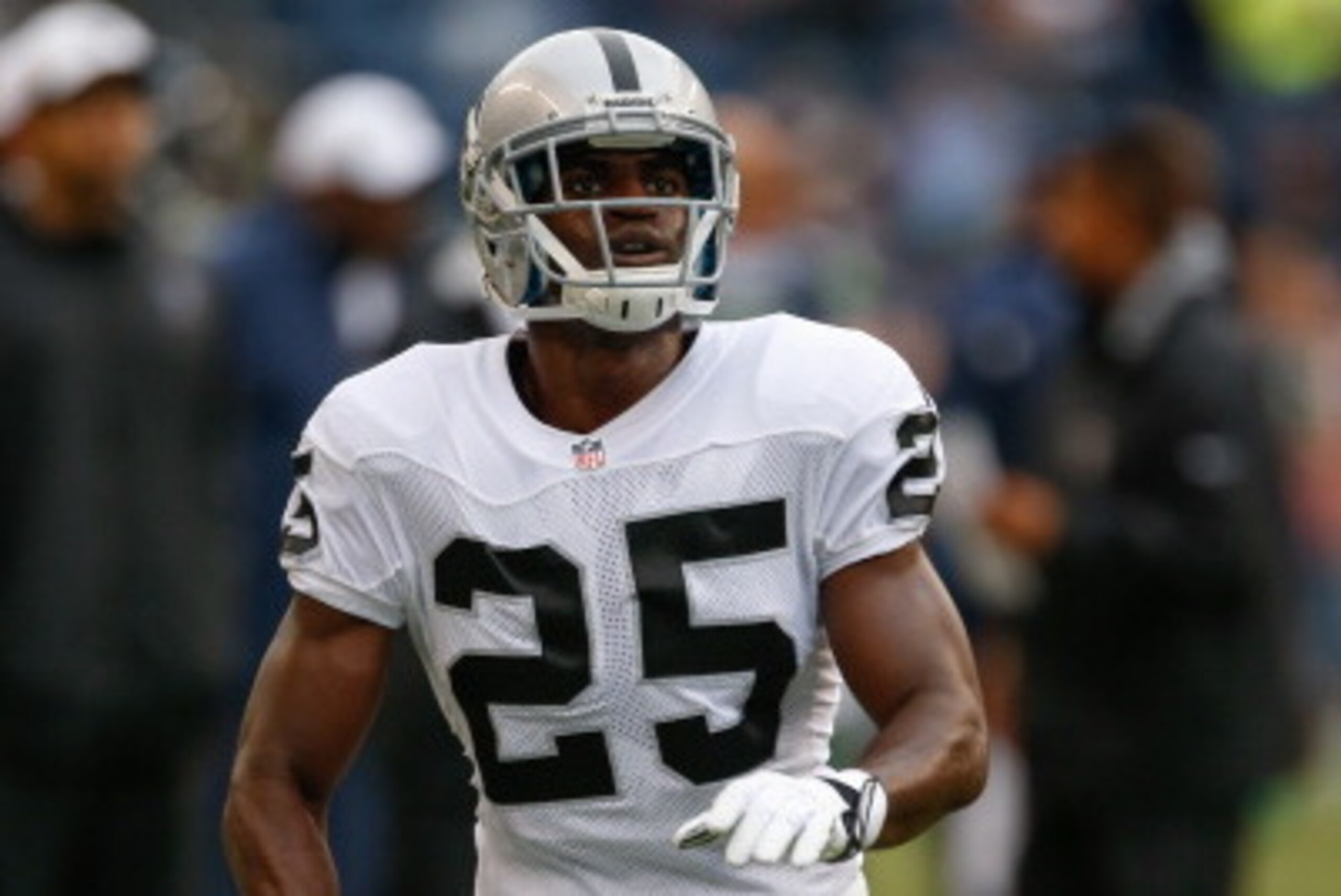
More recently, current Oakland Raiders cornerback D.J. Hayden recovered from a hit to the torso that nearly completely severed his inferior vena cava—the large vein that collects all of the blood from the lower body and brings it back to the heart. The injury nearly took is life—and probably should have—and Hayden's recovery remains one of the most impressive injury comebacks in recent memory.
The chest can also fall victim to serious injury. Last season saw a small flurry of pulmonary contusions—or lung bruises. Cleveland Browns linebacker Barkevious Mingo missed the early part of the 2013 season after suffering the injury in August.
Thankfully, Mingo recovered relatively quickly and still played in 15 games last season.

The severity of pulmonary contusions ranges widely—from insignificant to life-threatening—depending on the extent of lung involved, but a player with a contusion must usually rest until it fully resolves. A second contusion on top of a not-yet-healed injury could turn a minor respiratory issue into a suffocating one—literally.

Elsewhere, Ben Roethlisberger's 2012 first rib dislocation probably surprised many health care professionals across the country. A first rib dislocation occurs incredibly rarely—and typically in situations like motor-vehicle accidents, not football games.
Roethlisberger's unstable first rib threatened his aorta—the body's largest artery that leaves the heart to delivery blood to the rest of the body.
Somewhat similarly, in 2013, Minnesota Vikings quarterback Christian Ponder missed a start due to a broken rib in close proximity to his heart. If another hit displaced the fracture further inward, the injury could have threatened his heart or the surrounding vasculature.
Major Leg Muscle Tendon Ruptures
Broadly speaking, a tendon attaches a muscle body to bone. When the muscle contracts, it pulls on the tendon—which in turn pulls on the bone—producing movement.
Tendons somewhat resemble a rubber band. They can stretch to a certain degree, but if a tackle forces one to extend beyond its capacity, it can rupture and pull away from the bone.
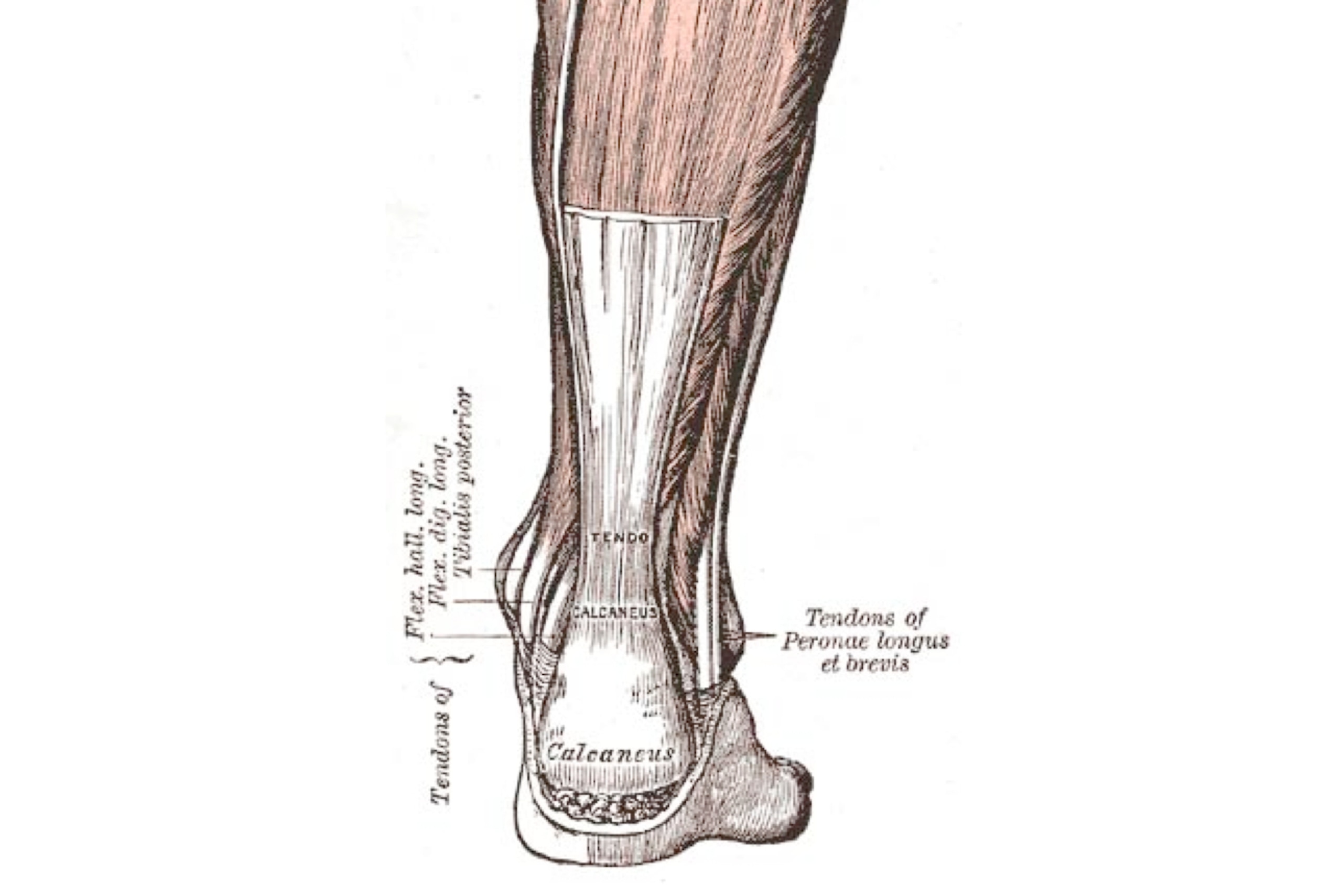
For example, if an athlete forcefully plants his toes behind him while another athlete pushes him back and causes him to drive his heel to the ground, the Achilles tendon can pull off the back of the heel.
Most medical staffs elect to surgically reattach an Achilles tendon to the bone following a tear. The rehabilitation process is often successful, but it is also lengthy—almost always ending the player's season. He must slowly work back into shape by placing gradually increasing amounts of stress on the healing tissue during his recovery.
New England lineman Vince Wilfork is still rehabbing his Achilles tendon injury from September of last year.
Similar to Achilles injuries, hamstring tendon ruptures all but certainly end a player's season—as do quadriceps and patellar tendon tears. Each has its own unique set of challenges to overcome, and if a player cannot return to full strength, his performance will suffer.
Free-agent linebacker Desmond Bishop missed the entire 2012 season following a hamstring tendon rupture, likely leading to his 2013 release from the Green Bay Packers. He then had a brief stint with the Minnesota Vikings before tearing his ACL.
The relationship of Desmond's injuries is not clear, though at least one study—published in The American Journal of Orthopedics by Mansour and colleagues—suggests proximal hamstring tendon ruptures might be a harbinger of "elite-level physical deterioration." The study is a retrospective review of a small sample of players—both significant limitations—but it is worth noting.
Severe Cervical Spine Injuries
A few times per season, an NFL player goes down after a helmet-to-helmet collision, and the crowd falls silent. Football comes to a pause, and the thoughts of the football community turn to the fallen player's well-being.
After severe neck trauma, a player can experience brief loss of sensation or paralysis—a process known as neurapraxia. It usually resolves, but following the injury, fluid can collect in the spinal canal and place pressure on the spinal cord—a process known as a spinal-cord contusion. If contusion symptoms such as numbness, weakness or pain persist, a player may decide to undergo a spinal fusion—similar to current free-agent tight end Jermichael Finley in 2013.
In the worst-case scenario, a hit directly damages the spinal cord directly via a displaced vertebral fracture. Thankfully, such a catastrophic injury is quite rare—but not unheard of. In 2010, a hit to the head and neck tragically paralyzed former Rutgers University defensive tackle Eric Legrand.
As Finley knows, receiving medical clearance following a severe neck injury can be a difficult and lengthy process. The stability of his neck and size of his spinal canal fall under the microscope—as does his entire neurological exam. Any abnormalities or lingering problems can tip the risk-versus-reward balance much too far in the wrong direction.
Multiple Concussions
Even with the ever-intensifying focus on concussions, one such injury may fall by the wayside without much thought—as may a second and even a third.
However, players with a history of multiple concussions—such as Jay Cutler and Michael Vick, among many others—face a special set of circumstances.
Though concussion research and science are still in their relative infancy, many physicians believe that with each concussion, symptoms can become more severe and may last longer—not to mention the still-unclear long-term consequences of multiple head injuries. Each concussion may also make it easier to suffer another injury in the future.
That said, every concussion is unique, and generalizing one player's history to another's is inappropriate.
Recently, former Buffalo Bills quarterback Kevin Kolb suffered an apparently career-threatening concussion—the latest of multiple injuries in his past. He landed on injured reserve shortly thereafter, and as of now, his return remains in doubt. He remains a free agent.
Former Detroit Lions running back Jahvid Best went through a similar sequence of events. Multiple concussions—stemming back to college—eventually led to doctors feeling uncomfortable giving him medical clearance to take the field once again. The Lions released the former University of California standout in June of last year.
Dr. Dave Siebert is a resident physician at the University of Washington who plans to pursue fellowship training in Primary Care (non-operative) Sports Medicine. The medical discussion above is for informational purposes only.
.jpg?w=2560 "Browns Jaguars Football")