

Are College Football Spring Games Becoming Irrelevant?
As spring football games wrap up this week, think about what the biggest, most memorable story of college football’s spring was.
Think about it, and think hard. Was it a player emerging as a superstar? A key position battle? A team that looked lost?
Or was it a cat?


If you said a cat, you’d probably be correct. Nebraska coach Bo Pelini blew up Twitter during the BCS national championship game when he interacted with parody account @FauxPelini, famous for its avatar featuring Pelini and a cat.
And the Huskers’ combustible coach took the joke to the next level last week, when he entered Nebraska’s spring game holding his cat over his head, Lion King-style.
Was it funny? Yes. Did it show wry, self-deprecating humor? Absolutely.
Did it have any impact on what the Huskers will become or could become this fall? Nope. Nada. Zip. Zilch.
The fact that Pelini and his furry, feline friend were the biggest story of spring games shows just how irrelevant those games truly are. Sure, they create buzz and serve as an oasis in the middle of spring for pigskin-starved college football fans. But the stories that come out of them are few and far between.
If college football programs really wanted to reward their fans, they’d end spring football with real, meaningful competition, something that doesn’t truly exist.
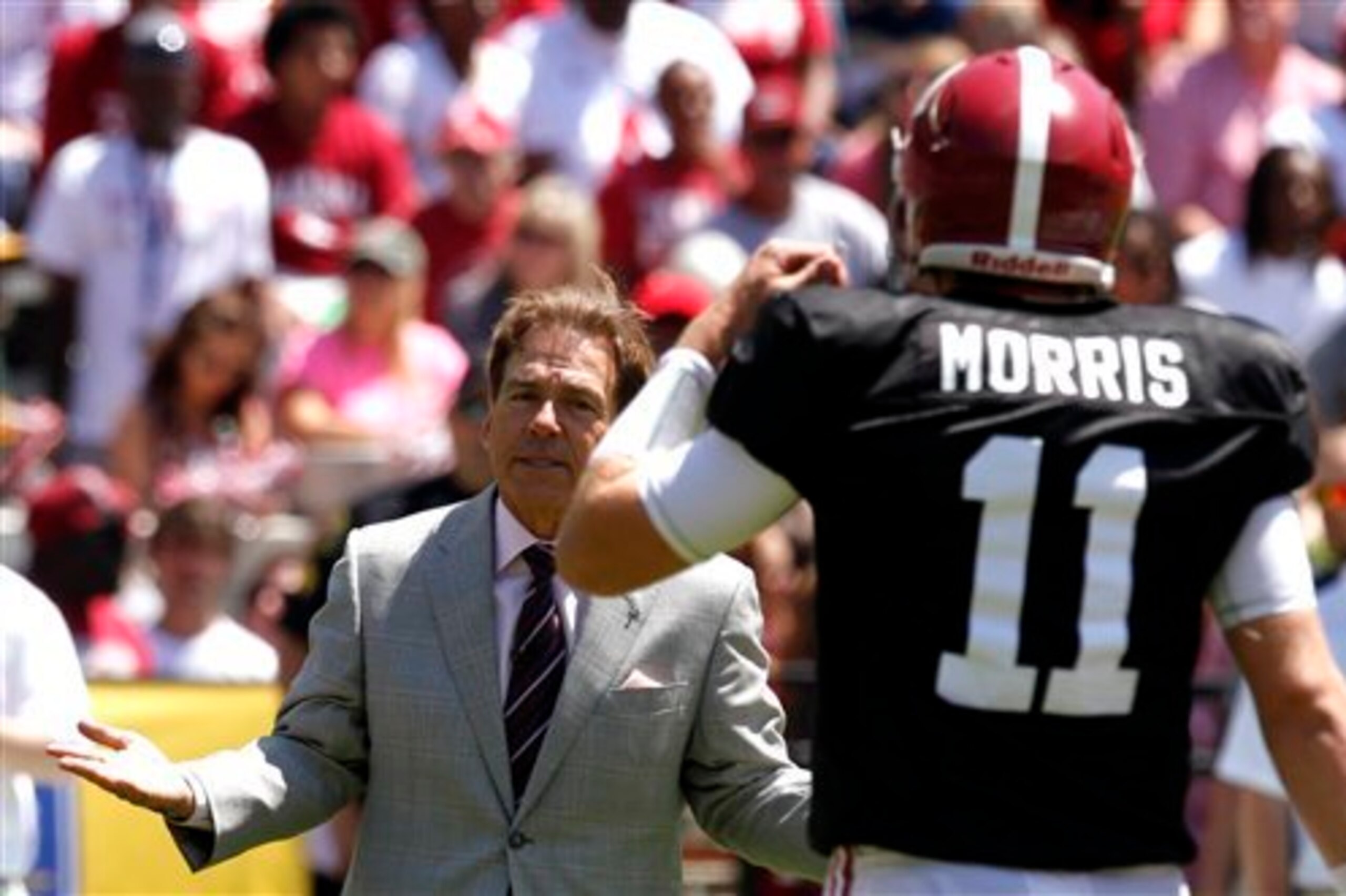
Make no mistake, fans do care about spring football, which is borne out just by looking at attendance figures. Alabama’s A-Day game attracted 73,506 fans (which was 19,000 below the program’s previous high of 92,310, set three years ago). Across the state, Auburn drew 70,465 fans, and Penn State drew 72,000 for James Franklin’s first spring game as Nittany Lions head coach.
25 programs attracted at least 10,000 fans.
But what do those who show up get for their troubles? Not much.
With most spring games televised or available online, cautious coaches have little reason to give their fall opponents anything to study. Offenses are vanilla, with few flashy plays or new concepts.
Defenses are basic as well.
Due to fear of injury, quarterbacks are rarely “live.” Clemson’s defense piled up 14 “sacks” in its spring game without ever tackling a quarterback.
Squads are often mixed and matched, with some programs “drafting” their teams from the available roster and others pitting their No. 1 offense against their No. 2 defense and vice versa.
| Program | Attendance |
| Alabama | 73,506 |
| Penn State | 72,000 |
| Auburn | 70,465 |
| Tennessee | 68,548 |
| Nebraska | 61,172 |
| Ohio State | 61,058 |
| Georgia | 46,073 |
| Oklahoma | 43,500 |
| South Carolina | 36,412 |
| Florida State | 36,000 |
By the middle of the third quarter, the clock is running, the fans have decamped to their tailgates and players who make even the sharpest of beat writers say “Who?” are in the game and making plays. Better get a look at them now, because they won’t have any impact in the fall.
The final score is often utterly meaningless as well. Maryland, for example, saw the White team defeat the Red team by a final score of 187-143.
How did that happen, you ask? Coach Randy Edsall used a scoring system that counted plays from previous practices and scrimmages, rewarding both the offense and the defense for big plays.
Here’s a hint: If you need a scorecard to keep score in your spring game, those in attendance are going to be lost, too.
How do you fix spring games, you ask?
Make them matter by turning them into outside competition.
How much fun would it have been to see Clemson-Auburn this weekend? How about Alabama-Florida State? Is that something you might be interested in? Of course it is.
Giving teams an opportunity to finish spring with a controlled scrimmage against a regional rival is an idea that would give college football fans something special to savor in spring.
With college football moving toward expanded conference schedules and the need for many programs to play seven home games to maximize revenue, regional rivalries are few and far between.

A home-and-home series like Clemson-Georgia is the exception, not the rule, and both programs had to work hard to fit the series into their slates. Neutral-site games like the Chick-fil-A Kickoff and Cowboys Classic are far more common. They’re exciting, but they’re typically one-game contracts, keeping rivalries from blooming.
Even with restrictions, seeing Alabama travel to Florida State for a spring showdown (Jimbo vs. Saban) would be fascinating. Fans could surely handle quarterbacks not being “live” if it meant seeing Jameis Winston squaring off against the Crimson Tide’s stingy defense.
Programs could sign two-year home-and-home contracts. ESPN would froth at the mouth to televise the concept and add revenue to programs’ coffers (ideally, programs could charge a reduced rate and split the gate).
But what of the fans who’d be robbed of a chance to see their local team on their turf? Simple. The spring game is the 15th practice of spring. Turn the 10th or 14th practice into a stadium practice and throw open the gates, inviting all inside.
It’d increase visibility and goodwill for programs and give fans something to truly get excited about during spring.
Outside competition would be fun and meaningful, and it is the best way to fix a concept which is quickly becoming irrelevant.

.jpg?w=2560 "Rams troll Jameis, Giants on social media")

.jpg?w=2560 "WWE Raw Live Grades 🔠")