Unruly Fans and Court-Stormings Make for Volatile Mix in College Basketball
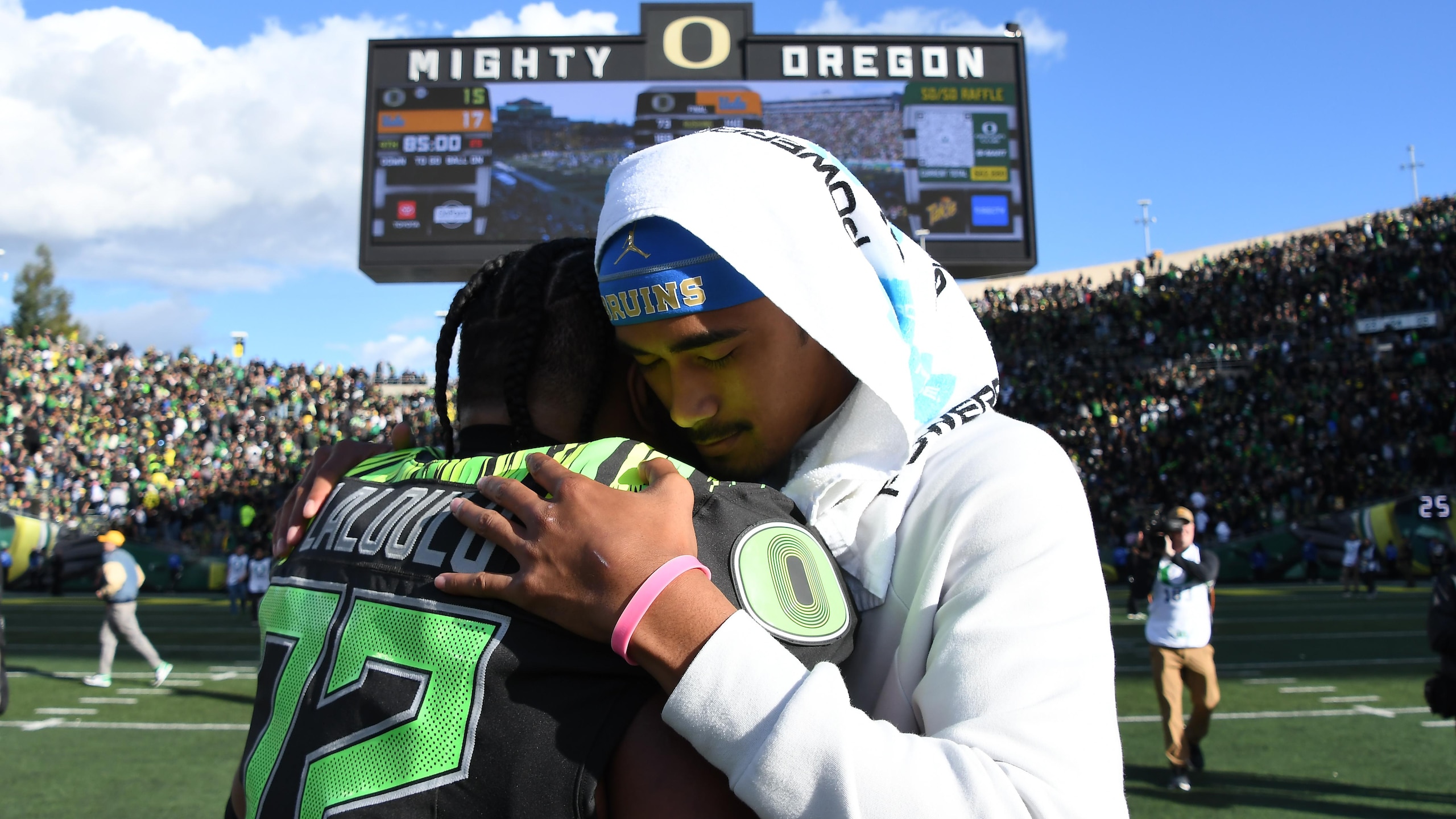
The television screen is filled with jubilant fans who have stormed the college basketball court after a win. The merriment is supposed to be what college is all about. Rush the court, then run home, find the top of your head on SportsCenter and congratulate yourself and your friends.
That’s one scene. Here is another: The visiting team’s manager hurries to collect water bottles around the bench area while being jeered or mocked by the home team’s students as they climb over chairs to get to the floor.
Or another: The visiting team’s players try to be as gentle as they can as they push through the crowd to get to their locker room, while getting f-bombed all the way.
.jpg?w=2560)
.png?w=2560)

Or what about this scene: referees running for their lives with their heads down toward an exit tunnel, hoping they don’t get sideswiped by some drunk kid.
Or this one: a fan runs out of the stands and onto the court during a timeout, confronting a coach face-to-face.
The rushing of the court is not as dangerous as the Running of the Bulls, but just wait, some administrators say. Just wait. One of these days there is going to be an incident, a blow to the back of the head, a 130-pound student caught in a stampede, a 240-pound athlete fed up with the abuse, a fan bent on violence. Then these overenthusiastic fans will not seem so innocent.
“Unfortunately, it might be that something tragic is going to happen to get the point across that these court-stormings are serious business,” said Greg McGarity, the athletic director at Georgia.
Having witnessed many at-the-buzzer celebrations at Florida, where he was an athletic administrator for 18 years, McGarity said, “it is absolutely dangerous...It is like a ticking time bomb. What you fear is exactly what happened in Utah.”
What happened in Orem, Utah, on February 27 was a court-storming that occurred at the same instant New Mexico State's K.C. Ross-Miller threw a basketball at Utah Valley’s Holton Hunsaker in a fit of anger after the Aggies lost a crucial game. The home fans detoured for Ross-Miller and began throwing punches. Suddenly, New Mexico State's entire team was paying the price for Ross-Miller's actions, and they had to fight off the crowd.
“So the next day, are we even talking about the game?” said McGarity. “Now we’re talking about the fight, not a big win, and how it was accomplished. That’s just another problem with rushing the court. You just forget about the game.”
The phenomenon of fans tangling with players and coaches accelerated in college basketball during this past regular season. It's not a major concern during the NCAA tournament, when there are no home teams and the most zealous fans are less likely to be courtside, but it's a problem confronting the sport as it prepares for next season.
And some administrators are anticipating the worst. A player from an opposing team—Duke, Kentucky, Kansas and North Carolina are frequent victims—is caught in the middle of a court rush, gets shoved just because of the name on the front of his jersey and retaliates. Mike Krzyzewski, the Duke coach, worries that one of these days, his player will be forced to defend himself. It will be late in the season, and after the player unloads on a student from another school, he'll be suspended for the NCAA tournament.
“We have protection (the staff), but the players are not protected,” said Mike Cragg, the deputy director of athletics/operations at Duke. “There is no way to protect them and they get caught out there in mayhem, so you see things that have happened around the country and it does not surprise me at all. For somebody who has been in it 27 years and has seen it a lot, it is very, very dangerous.”
South Carolina thought it had measures in place to thwart postgame mayhem March 1 against Kentucky. The first was a Southeastern Conference deterrent: a three-tiered fine system of $5,000, $25,000 and $50,000 levied against the school for fans entering the field of play after a game, which is in place for football and basketball. The SEC is the only one of the five major conferences with the system.
South Carolina had its public-address announcer make frequent announcements late in the game warning students of the SEC penalty. The school had two security guards at every aisle exit to the floor. The guards even held a yellow nylon rope.
So what happened when the Gamecocks defeated then-No. 17 Kentucky? Students still rushed the court.
They gathered at aisle entry points and were about to overwhelm security guards who were holding a rope. South Carolina made the only decision it could. It had security people drop the rope and step aside at the final horn. The school did not sign up its security people to be stampeded. The referees were quickly ushered off the court through a pre-arranged tunnel and Kentucky players got off the floor as well.
“It is an adrenaline rush,” said a South Carolina student, a freshman, who rushed the floor and did not even want to give his first name because of the $25,000 fine the school received. “It just took one person to say ‘Hey, let’s storm the court’ and people started getting up from their seats and getting in the aisles and walking down toward the floor.
“It was great.”
It is not always so great. Sometimes it can be treacherous.
“We had just finished a game and a player from the home team—the home team, not the visiting team—had fallen to the floor,” said a veteran referee, who is not permitted by the conferences he works for to be quoted by name by the media. “The students—his own fans—were jumping over him trying to get on the court. He was on the ground trying to get up from an injury. He was 15 feet away from me and I couldn’t get to him because of the crowd. Thankfully, his managers and teammates got him out of there. You can get hurt in these rushes of the court.”
Fans getting in the face of a player, when it is national news, becomes a bigger issue when it emboldens the next guy, like the UC Santa Barbara student who strolled onto the floor during a game with Hawaii on March 6. The student confronted Hawaii head coach Gib Arnold before two players pushed him away. He walked right back to his seat before an athletics department official hauled him off. According to the student paper, he spent the night in jail and faces a school judicial hearing.
The media plays a role in encouraging these events, McGarity said. “The media publicizes it and they honor it and they celebrate it,” he said. “They are encouraging that type of action because it is good for TV. It probably never would have started if it wasn’t on TV.”
McGarity said schools must educate students and then count on a show of force as a deterrent. No matter if it is for football or basketball, he said security needs to make its presence known at timeouts by standing up, ringing the court, and showing their numbers to the crowd. McGarity also remembers an incident at Florida when several students ran on the field. Police handcuffed them and then put them on display in the middle of the field for all to see—perhaps even for their mothers to see at home.
“They can be charged with trespassing,” McGarity said, “and they can have their privileges to attend athletic events revoked.”
It could be that other conferences are forced to adapt the hefty fines the SEC has in place when it comes to court-stormings. But that is only part of the problem. You can fine schools, or put a moat around the floor, but what about muzzles for the fans and students? The court-stormings are made more dangerous because of the abuse visiting teams' players take from home fans.
Stephan Van Treese, a 6'9" post player for Louisville, said the home team’s students who are put behind the visitors’ bench are obscenely obnoxious. The antagonizing has been so bad, Van Treese said, he has wanted to go into the stands after a fan, but he knows it is not wise to be like Oklahoma State’s Marcus Smart, who went into the stands and shoved Texas Tech fan Jeff Orr after Orr called him a “piece of crap.” Smart was chastised nationally and suspended three games.
“At UNLV, the fans were right behind our bench and it was brutal,” Van Treese said. “The language is so bad. The things people can say. If they said that in public, can they get arrested?”
Think about that. A fan spit on an Oregon player as he left the court at Arizona State on February 8. If it happened outside the arena, could the spitter be arrested? Sure he could.
John Adams, the NCAA's national coordinator for basketball officials, said he has received more feedback from officials this season about unruly fan behavior than in any of the six seasons he has been on the job. Everybody seems to think they have a license to be mean, Adams said.
“I’ve had referees tell me they are more scared about their personal safety than ever before,” Adams said. “It comes from storming the court and the fans sitting in the Gucci seats courtside. Having one of those seats is not a license to say whatever you want to officials and players. Generally, the cooperation between officials and game management has been incredibly good at getting officials off the floor at the court rush and removing abusive fans.
“A few can ruin it for everybody. It’s not an epidemic, but it is certainly worth talking about and keeping an eye on. I think it is deeper than basketball. It has a lot to do with how we treat one another in society these days.”
The last month of the 2013-14 season was a build-up to March Madness and a tear down of sportsmanship. You can understand the shove between players on the court and their trading of barbs. Players do that.
But the fans, the ones sitting courtside, or the students stretched baseline to baseline, seem to be trying to inject themselves too far into the game with heckling. Once they see their raging coach and the devoted declare, “Let’s get behind our guy,” they unleash a torrent of abuse.
The veteran referee said the behavior at college basketball games this season is the worst he has seen.
“These people get a ticket and they think they can yell anything they want,” the ref said. “Since when did f--k become so acceptable to say in public? You know that sportsmanship code they read before the game? I’ve talked to other guys (referees), and they say ‘why bother reading that.’ It’s like that at a lot of places.”
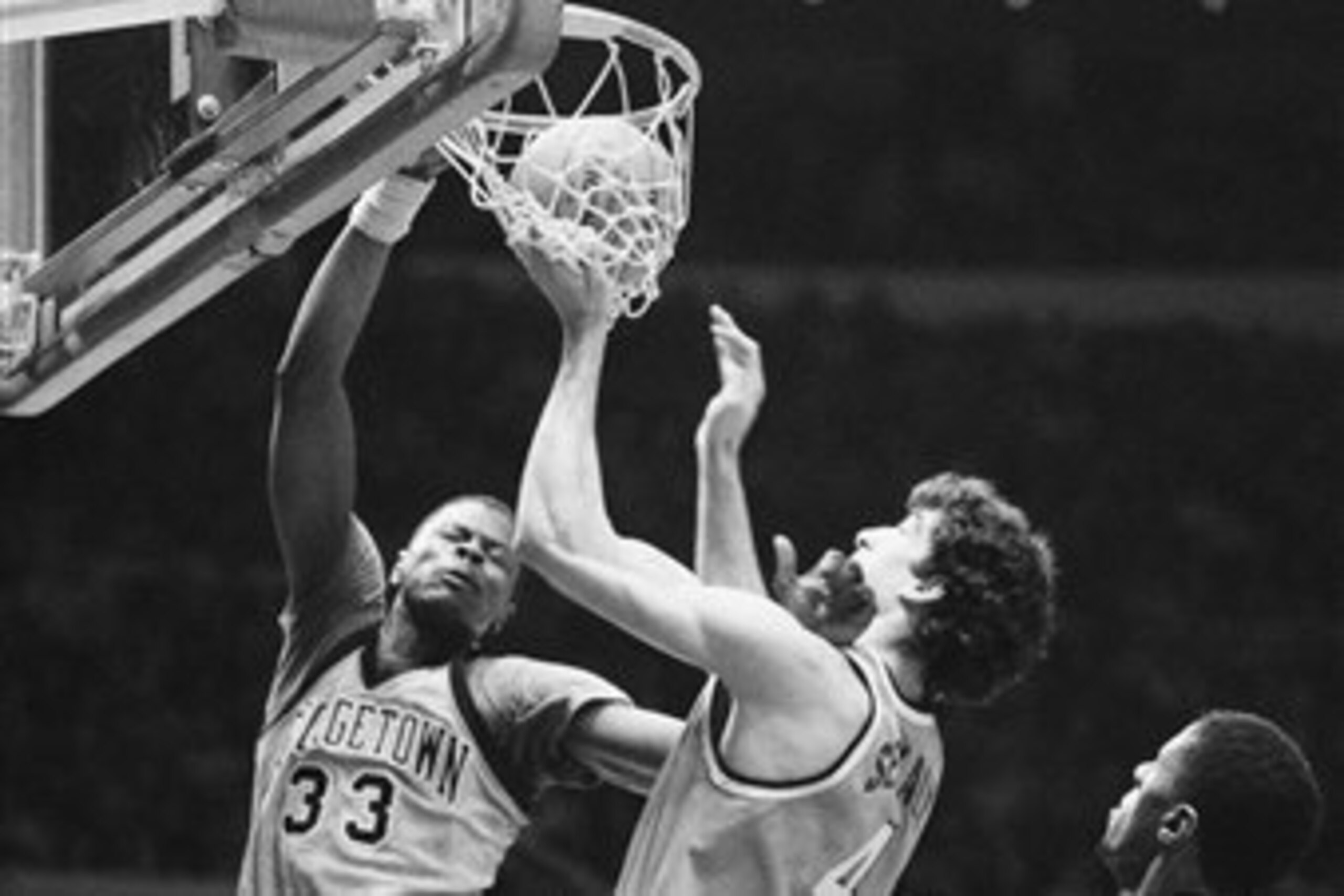
Anybody who was around to see the bitterness and nastiness of the Big East in the 1980s—the signs calling Georgetown center Patrick Ewing an ape, elbows flying, and coaches nose-to-nose—would consider some of this season’s hijinks merely two 4-year-olds throwing sand at each other on the playground.
But it has gone too far, said the ref, a veteran who is working the NCAA tournament. There has to be a truce.
“Those students are put down close to the floor for two reasons,” he said, “to intimidate the other team and to intimidate the officials. They yell anything. Sometimes we can get somebody thrown out of the game for vulgarity, game management will work for us. Other times…”
Rick Byrd, the chairman of the NCAA Men’s Basketball Rules Committee and the head coach at Belmont, said he has heard plenty of abusive language this season. It is not anything he heard 20 years ago, either. This meanness is a more recent phenomenon.
He has heard coaches on other teams curse their players and he has heard student sections curse the opposing team’s players. Byrd said pep bands have even gotten into the act of harassing the opponent with quips and chants. He has seen pep bands put behind the bench of visiting teams so the players cannot hear the coach during timeouts.
“I’m concerned about coaches who use profanity in their business talking to players,” Byrd said. “I don’t think the history professor or English professor would be allowed to do that, and we shouldn’t. We’re in the educational business. We’re not the NBA D-League. There are people all over our business where using profanity is okay, apparently.”
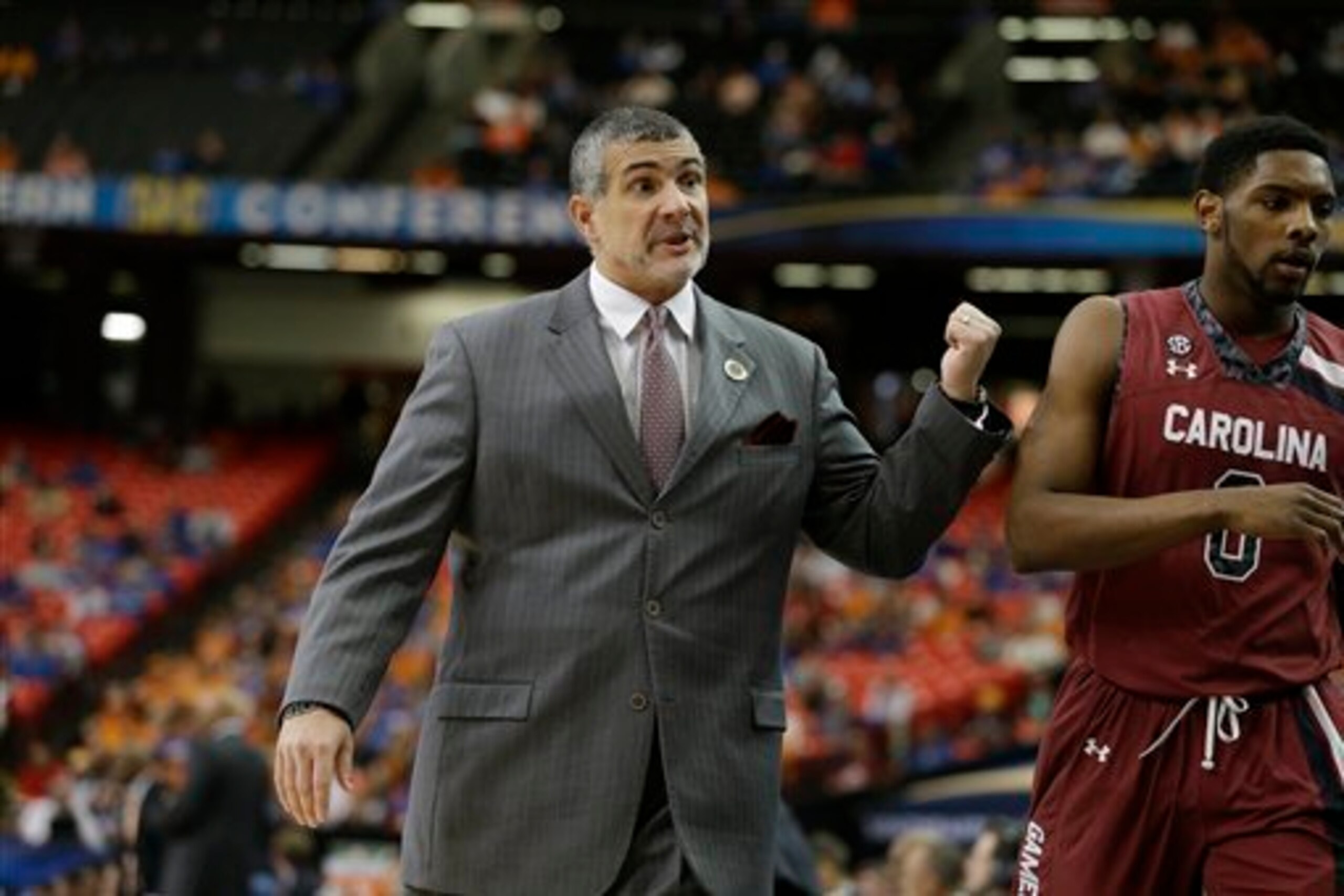
South Carolina officials punished coach Frank Martin this season for cursing at one of his players. Despite apologizing over and over, they suspended him for a game.
Martin knows he crossed a line, a line he once asked students not to cross when he was the coach at Kansas State.
“When I was at K-State, the student section a couple of times started some chants that we didn’t want them to do and I actually sent an e-mail to students asking them to stop,” Martin said.
But who tells the players to stop?
In a SEC tournament game, Auburn’s Dion Wade hit a three-point shot from the corner and was knocked down by South Carolina’s Desmond Ringer, who was called for a foul. As Wade got up, he slapped the floor with the palm of his hand and yelled, “And f-----g 1.”
However, there are consequences to taming the sport. If you strip college basketball of some of its passion, does it weaken its popularity?
The game already has been smothered by football and harmed by one-and-done freshmen who jump to the NBA. South Carolina’s Martin said the game needs the bewitchment of those 40 minutes.
“Crowds have been crazy for their teams back since I can remember starting to watch basketball. Georgetown and John Thompson playing St. John’s, and Rollie Massimino and Villanova playing Syracuse. I remember watching that as a kid and saying, ‘Wow, would I love to be in that building one day.’

“I remember watching Louie Carnesecca and Rollie Massimino coach games and Rollie’s tie was sideways, his hair standing straight up, and Louie would be doing cartwheels on the sidelines,” Martin continued. “We’re trying to take personalities away from people and that’s not right. What made me coach basketball was watching those personalities for so many years. We’re trying to get everyone to look the same, act the same, be the same, and it shouldn’t be about that.”
Billy Donovan, the coach at No. 1-ranked Florida, wonders if the fans have turned everything upside down. They don’t come to cheer, they come to jeer.
“I think it happens, like in every venue,” Donovan said. “There are going to be fans that maybe spend more time dealing with the opponent instead of maybe cheering for their own team. I think that's where the problem comes in. I'm sure our fans can be no different from anybody else's. You get to a point when the focus starts to be on the players, on the other coach's team. What ends up happening is that stuff ends up crossing the line with what's being said from the fans.”
The caretakers of college basketball are not going to push the fans back from the floor. It is a business enterprise with too much revenue at stake with the premium seating. The coaches do not want the students pushed back from the floor because they want the home-court advantage that comes with such an arrangement.
It could be the schools simply start enforcing the code of conduct, or the other conferences, one after another, adopt the SEC’s fine structure and policy of keeping students away from the visiting team’s bench.
Based on the lack of such policies, it's obvious that some college administrators do not think they have a problem. Mitch Barnhart, the athletics director at Kentucky, says there is a problem. His team is a giant in the game and, like Duke, is a magnet for derision…and court-stormings.
Barnhart insists college basketball can have it both ways: passion without the meanness.
“Nobody has ever said Rupp Arena where we play is an easy place to play. It is very loud, but you can be loud and not get carried away,” Barnhart said. “The night the kid from Texas A&M dropped 40 on us, our fans gave him and his team a standing ovation as they left the floor. That’s more what it should be like for an opposing team.
“I hope we can get to a point in our game where we create an environment where there is a home-court advantage without all the hostility. I think it’s possible. We can do it.”
Ray Glier is a journalist based in Atlanta. His work has appeared in USA Today, The New York Times, CNN, The Washington Post and Al Jazeera America.

.jpg?w=2560 "Aaron Donald Fights Bills OL😳")